



Today’s Favorite Quote: The show doesn’t go on because it’s ready; it goes on because it’s 11:30 - Lorne Michaels, Saturday Night Live Producer
Happy Birthday to those who have passed on and to those great wrestlers still with us:
In Memoriam:
Paul Boesch 1912
Waldo Von Erich 1933
Wee Willie Wilson 1948
Rodney Anoa’i\Yokozuna 1966
Happy Birthday:
Roberto Frias\El Dandy (64)
RIP Memorial: We stop & remember those who have passed on this day and gave themselves to the business for us, the fans. We salute you and thank you.
Larry Chene 10-2-1964 at the age of 40
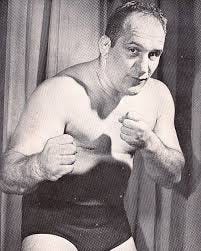
Dr. Lee Grable 10-2-2001 at the age of 84
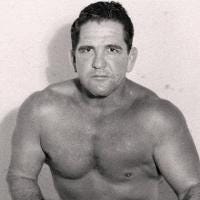
Significant Pro Debuts:
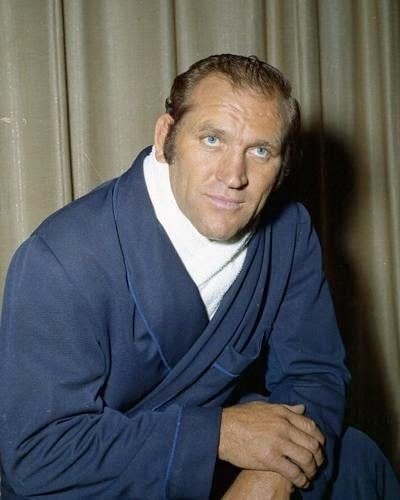
Danny Hodge 10-2-1959
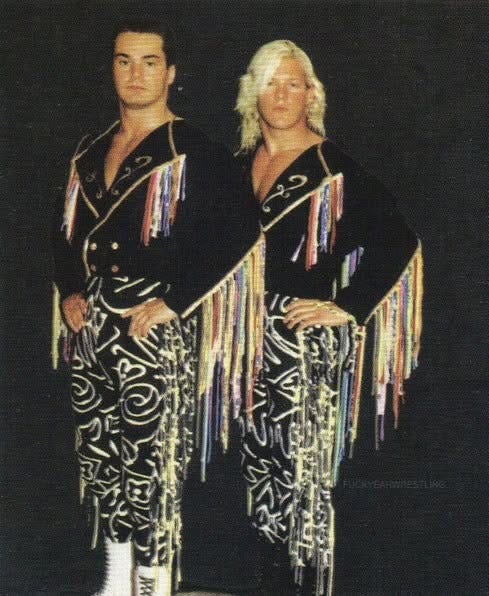
Lance Storm & Chris Jericho 10-2-1990 who wrestled each other to a 10-minute time limit draw at the Moose Hall in Panoka, Alberta, Canada
The Life and Career of Bob Geigel
Robert Frederick Geigel was born on October 1, 1924, in Algona, Iowa, to Frederick Samuel Geigel and Leota May (Hackman) Geigel. He grew up in a farming community in Kossuth County and showed early athletic promise. At Algona High School he played football and wrestled, finishing second in the Iowa state high school tournament at heavyweight. Graduation came in 1942, and he enlisted in the United States Navy. He served nearly four years in the Asiatic-Pacific Theater as a Seabee, the Navy’s construction battalions, including demolition work.
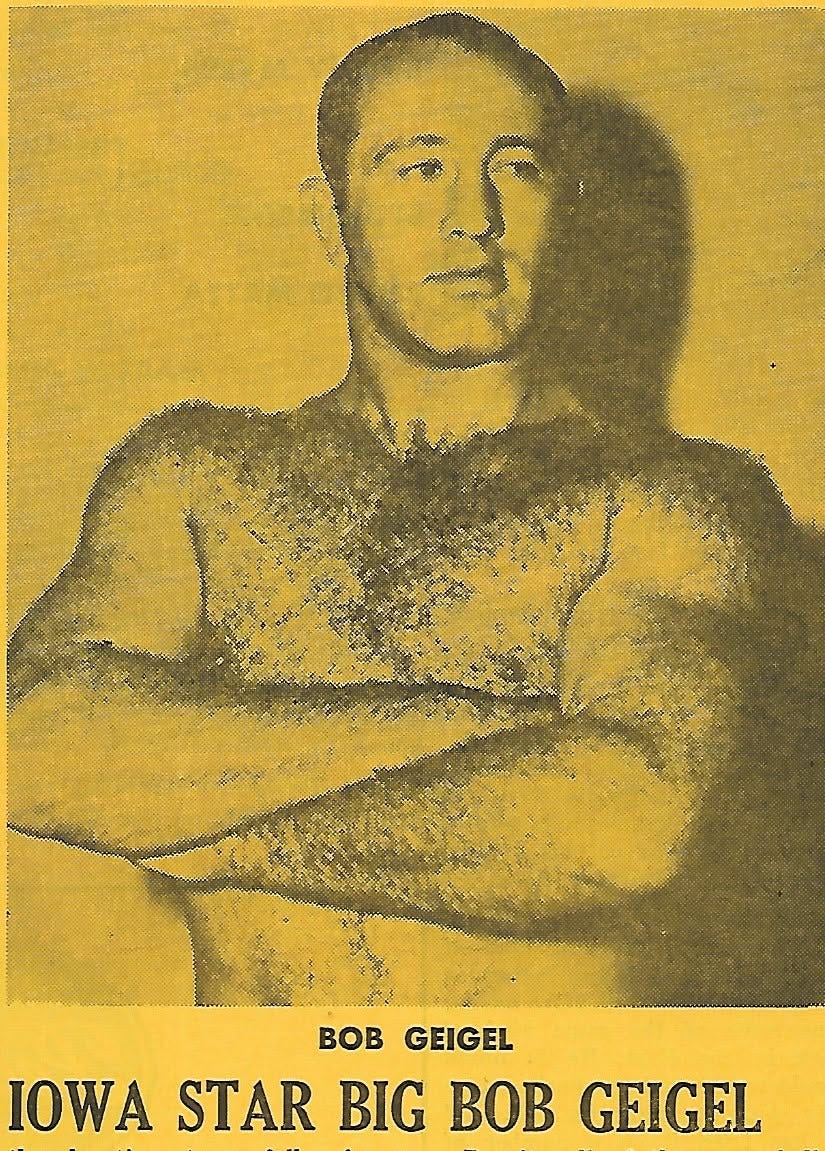
After the war he enrolled at the University of Iowa in 1946. He lettered four times in football and three times in wrestling, placed third in the 191-pound class at the 1948 NCAA Championships, and graduated in 1950 with a degree in physical education. The Chicago Cardinals of the National Football League offered him a contract reported at roughly $4,800. Alphonse “Babe” Bisignano, then connected to promoter Cowboy Luttrell, argued that professional wrestling offered better pay and less risk of a career-ending injury. Geigel took the advice.
His professional debut came in 1950, initially in Florida for Luttrell and then in Texas. For a time he worked at Cal Farley’s Boys Ranch near Amarillo, wrestling only one or two nights a week while serving as superintendent for about a year and a half. There he formed a lasting friendship with Dory Funk Sr. In 1952 he left the ranch to wrestle full time. Early road years included winters in Columbus, Ohio, summers in Nova Scotia, a brief New York run, and a longer stay in the Amarillo territory under Doc Sarpolis and the Funks. Billed as “Texas” Bob Geigel even though he was introduced from Algona, he also worked under a mask as the A-Bomber. He was listed around 5 feet 11 inches and 220–240 pounds, a stocky, legitimately tough heavyweight who could wrestle a real match or brawl as the booking required.
His title record was built largely on tag team work. In the American Wrestling Association he held the World Tag Team Championship three times—once each with Hard Boiled Haggerty, Otto von Krupp, and Stan “Krusher” Kowalski—and also won the Midwest Tag Team title with Bob “The Viking” Morse. In Western States Sports (Amarillo) he captured the NWA North American Heavyweight Championship, the Southwest Heavyweight Championship twice, the Southwest Tag Team Championship four times (twice with Dory Funk Sr.), and the Amarillo version of the World Tag Team Championship twice with Funk.
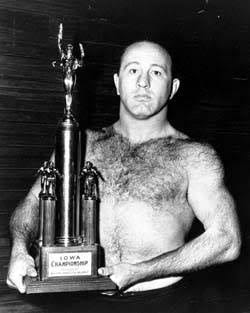
In the Central States territory that became his home he was a six-time NWA Central States Heavyweight Champion, a two-time United States Heavyweight Champion (Central States version), a four-time World Tag Team Champion (with Rufus R. Jones, Akio Sato, and Pat O’Connor), and a nine-time North American Tag Team Champion, five of those reigns with Bulldog Bob Brown. The long, sometimes bitter program with Brown became one of the territory’s signature feuds. He also held the North Dakota Heavyweight Championship. Geigel remained an active wrestler into the mid-1970s, officially retiring from full-time competition in 1976 while still making occasional appearances into the 1980s.
The shift from wrestler to promoter began in the early 1960s. After moving his family to the Kansas City area, he partnered with Pat O’Connor and Gust Karras (and at points George Simpson and later Harley Race) to acquire the local office. In 1963 they formalized the operation as Heart of America Sports Attractions, the corporate name of NWA Central States Wrestling.
The territory covered Kansas, Missouri, Iowa, Nebraska, and parts of surrounding states, with regular cards at Memorial Hall in Kansas City, Kansas, and Municipal Auditorium in Kansas City, Missouri, plus towns such as Wichita, St. Joseph, Des Moines, and Omaha. Television and a reliable crew of territory regulars—Brown, Rufus R. Jones, Harley Race, Mike George, the Interns, and a steady flow of outsiders—kept the promotion viable for more than two decades.
Geigel joined the National Wrestling Alliance board and, beginning in 1978, served three terms as NWA president: 1978–1980, 1982–1985, and 1986–1987. Those years overlapped the last period in which the Alliance still functioned as a genuine confederation of territorial promoters rather than a single national company. He was a consistent supporter of Harley Race’s multiple reigns as NWA World Heavyweight Champion; Race was also a part-owner of the Kansas City office.
NWA President for Three Administrations
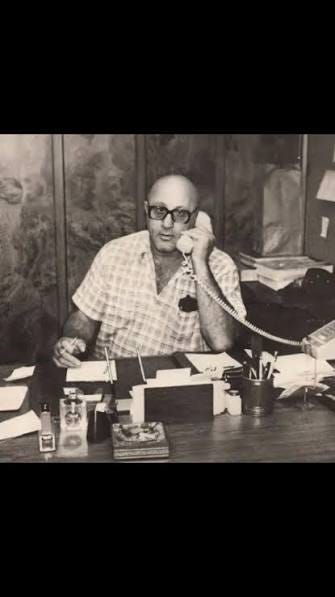
Bob Geigel’s three terms as president of the National Wrestling Alliance—1978–1980, 1982–1985, and 1986–1987—sit on the fault line between the old cooperative territory system and the national television war that destroyed it. The office itself was never a chief executive’s chair. From the Alliance’s founding in 1948, the president was the public spokesman and meeting chairman for a board of independent promoters. Real power stayed with that board: world-title switches, talent exchanges, and territorial boundaries were collective decisions. Geigel held the gavel longer than anyone in the Alliance’s final decade except Jim Crockett Jr., with whom he traded the job. He was the last president who still thought like a territorial booker.
First term, 1978–1980: protecting Harley Race
Eddie Graham left the presidency in April 1978 because of ill health. Geigel, then vice president and the Kansas City member, filled the vacancy and was formally elected later that year. His home promotion, Heart of America Sports Attractions, already counted Harley Race as a part-owner. Geigel’s first priority was keeping Race as NWA World Heavyweight Champion.
That was not a small matter. Race had already held the title in the mid-1970s and was the kind of wrestler the older promoters trusted: a credible heavyweight who would drop the belt where and when the board agreed, then win it back on the next loop. Geigel opposed any sudden change. At the August 1979 convention in Las Vegas, Race thanked the membership for the long run. The board that year included Geigel, Fritz Von Erich, Jim Barnett, Mike LeBell, Jim Crockett Jr., Dory Funk Jr., Vince McMahon Sr., Don Owen, and Fred Ward. Florida’s delegation, speaking for the absent Graham, pushed Dusty Rhodes. The board agreed, and Rhodes received the title. The episode shows how the presidency actually worked. Geigel could slow a switch and protect his partner; he could not veto the room once Florida, Georgia, and the Carolinas lined up behind Rhodes.
Jim Crockett Jr. succeeded him at the 1980 Reno convention. The alternation was already becoming a pattern: the Charlotte office and the Kansas City office passing the title back and forth while the Alliance’s larger members grew uneasy about cable.
Second term, 1982–1985: St. Louis and the McMahon break
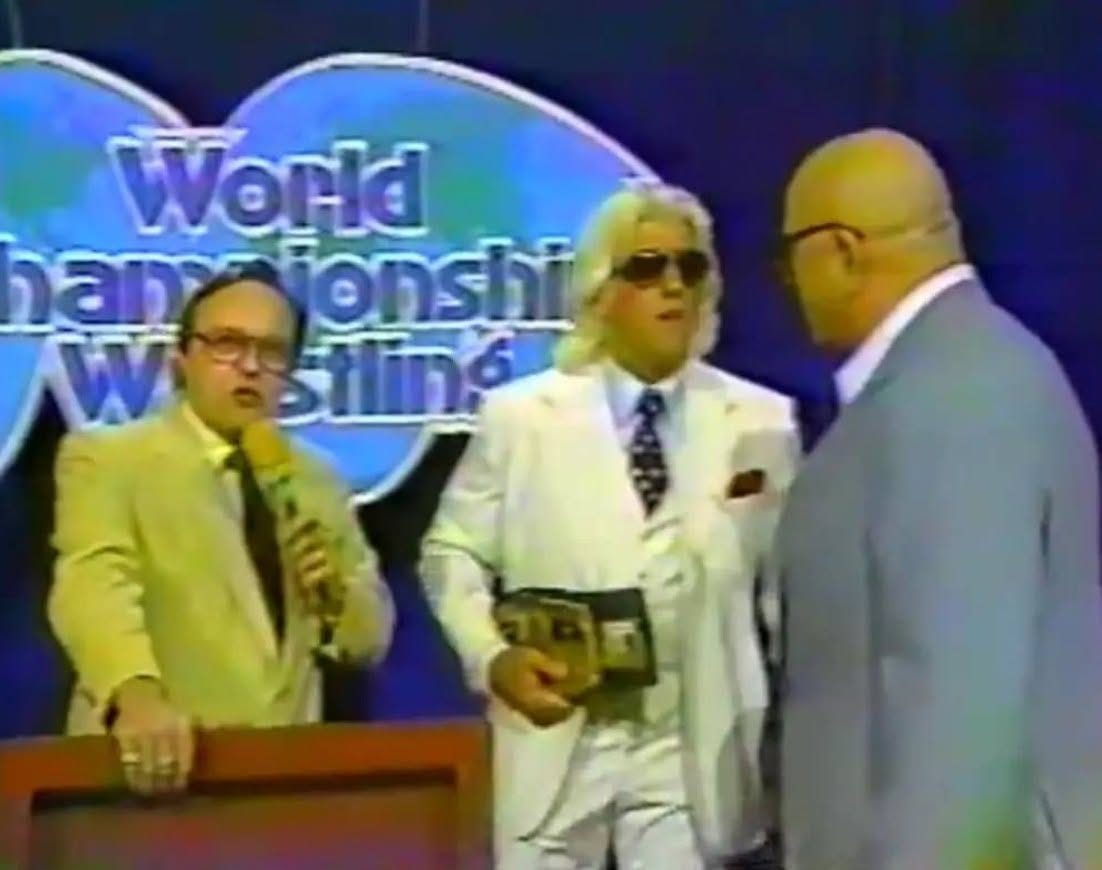
Pictured: NWA President Bob Geigel confronts NWA World Champion, Ric Flair on the set of World Championship Wrestling in 1983.
Geigel returned to the presidency at the 1982 convention in Puerto Rico. The timing was brutal. On January 1, 1982, Sam Muchnick promoted his last card at the Checkerdome—a sellout of 19,918 for Ric Flair against Dusty Rhodes—and retired. Muchnick’s interest in the St. Louis Wrestling Club passed to a group that included Geigel, Harley Race, Pat O’Connor, and Verne Gagne, with Larry Matysik still attached at the start.
St. Louis had been the Alliance’s showcase city for thirty years. Muchnick’s booking was deliberately conservative: clean finishes, protected local heroes, and the world champion treated as a visiting dignitary. Geigel and Gagne booked it more like a standard Midwest territory. Matysik, Muchnick’s longtime announcer and protégé, objected, split off, and began an opposition promotion.
In 1983 Matysik and KPLR executive Ted Koplar made a deal with Vince McMahon. The WWF took the Wrestling at the Chase television slot that had defined St. Louis wrestling. On December 27, 1983, the WWF taped at the Chase-Park Plaza in direct opposition to the Geigel office. By 1985 Hulk Hogan was the draw in the city. The last St. Louis Wrestling Club card ran on New Year’s Day 1986, with Race and Flair going to a double disqualification. Crockett absorbed what was left.
During the same term, the Capitol Wrestling / WWF resignation reached Geigel’s desk. Vince McMahon Sr. had been an NWA member and, for a stretch in the late 1970s, had even accepted a reduced status for the WWWF title inside the Alliance. His son’s 1982 takeover and the 1983 withdrawal ended that arrangement. The letter went to the sitting president. Geigel was the man who formally received the break, not the man who caused it. He had no mechanism to stop a member from leaving, raiding talent, or buying television time in another promoter’s towns. The bylaws assumed cooperation. McMahon stopped cooperating.
Hornbaker’s account of these years describes Geigel as a spokesman for harmony who occasionally clashed with Crockett. The clash was structural. Crockett had the stronger television footprint and, after the 1983 Starrcade, the more valuable champion in Flair. Geigel still believed the world title should tour. Crockett was already learning that a nationally televised champion did not need to.
Third term, 1986–1987: figurehead, then exit
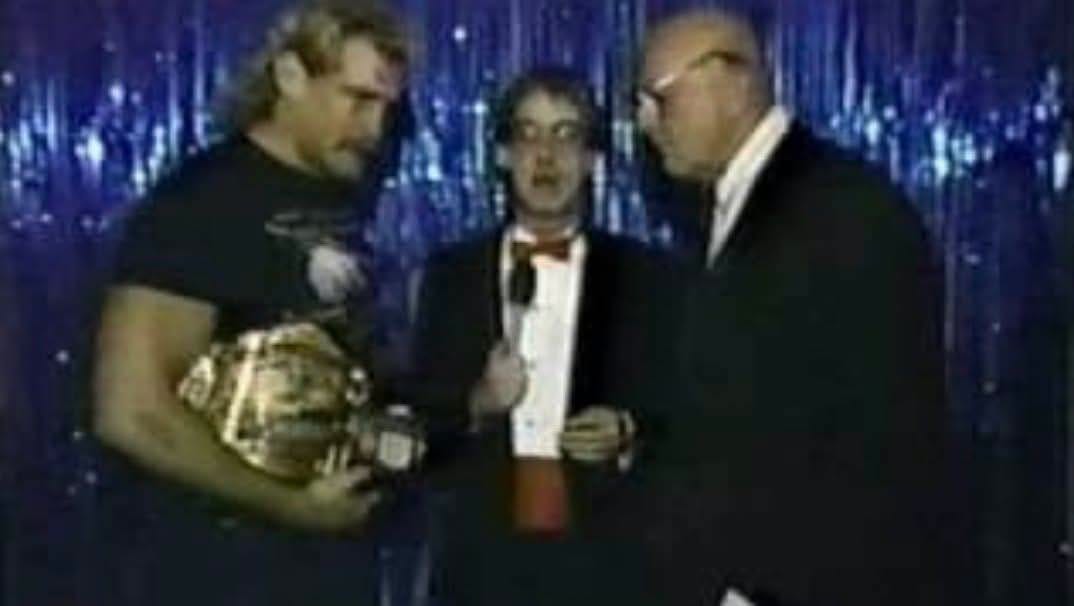
Crockett held the presidency again in 1985–86, the year TBS gave his promotion a national platform. Geigel was elected one last time in the summer of 1986. By then the office was ceremonial. He appeared on Crockett television as the Alliance authority figure, including a May 1986 angle in which Magnum T.A. hit him and knocked him off his feet. The spot was useful for Crockett’s storyline. It also advertised how little independent weight the presidency still carried.
In September 1986 Geigel sold Heart of America Sports Attractions to Jim Crockett Promotions. The contract had a reversion clause if Crockett failed to meet certain obligations. Geigel and George Petraski took the office back in early 1987 and tried another run under the Central States banner. It did not work. Crockett was buying or overwhelming Florida, the UWF, and pieces of other territories. The WWF was already national. A Kansas City office built on Memorial Hall, local television, and talent exchanges had no answer to either.
What the presidency could and could not do
Geigel’s record is easiest to misread if the office is treated like a modern wrestling CEO. He did not book the NWA World Heavyweight Championship as a company title. He chaired the meetings at which other promoters decided who would hold it. He could and did steer those meetings toward Race, and he benefited when Race’s runs raised the profile of Kansas City.
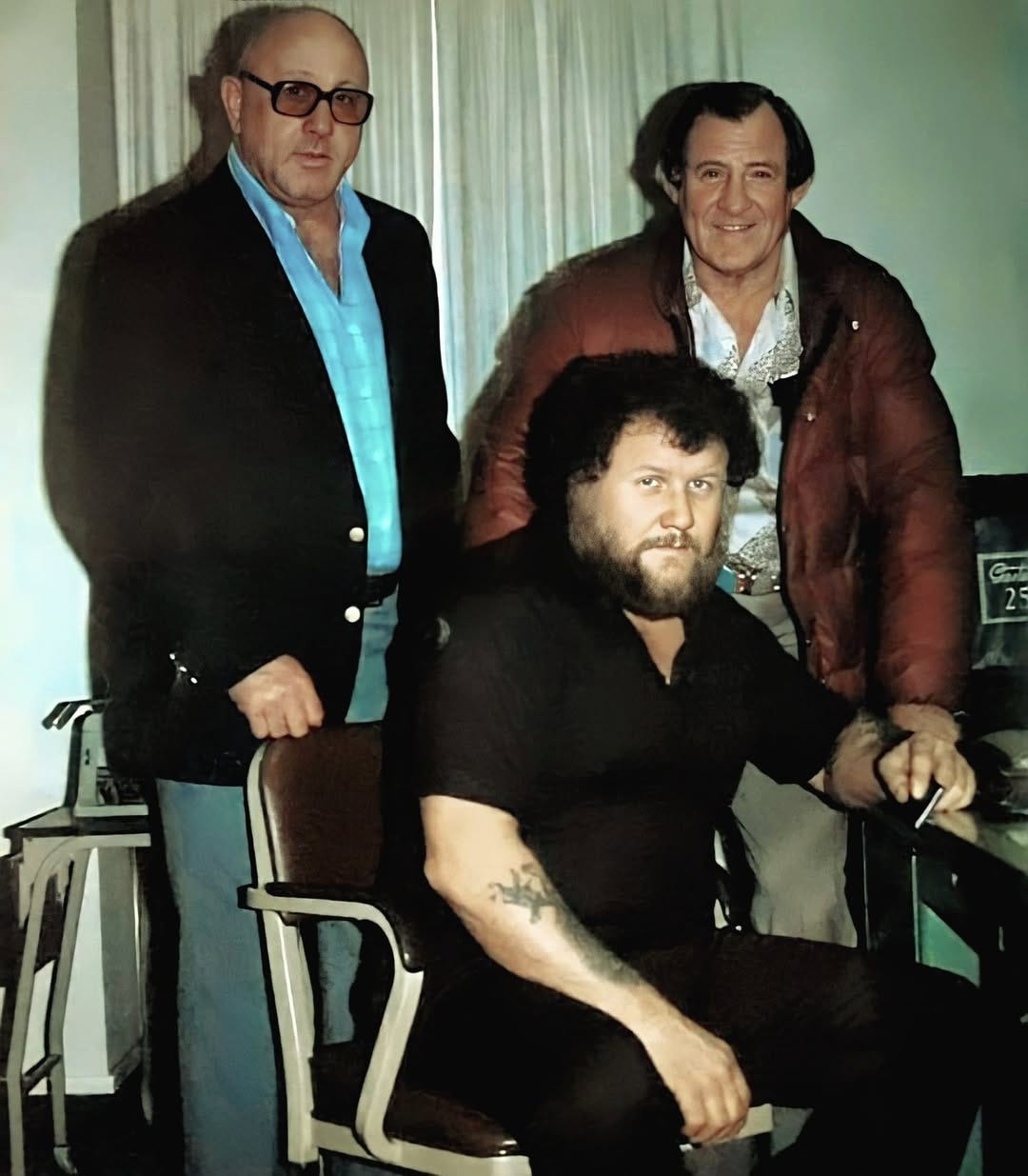
When Sam Muchnick stepped back from the St. Louis Wrestling Club, Geigel, Race, O’Connor, and Verne Gagne became involved in that historically important promotion. St. Louis, long regarded as the Alliance’s showcase city, struggled in the early 1980s under the new ownership group as national television and Vince McMahon’s expansion changed the economics of the business. Geigel
Both the Kansas City and St. Louis offices lost money. In September 1986 Geigel sold Heart of America Sports Attractions to Jim Crockett Promotions. He and partner George Petraski bought it back in February 1987 and attempted another run; the office closed for good in 1988.
Late in 1987 Geigel left the Alliance. He announced a new sanctioning body, the World Wrestling Alliance, and recognized Mike George as its world champion. The WWA was an attempt to keep a booking name over a dying territory. It drew almost no outside recognition. He closed the promotion in 1988 and left the business. Crockett, who succeeded him yet again, held the NWA presidency until Turner bought the company in 1988. After that the title meant something else entirely.
Contemporaries described Geigel as physically tough and personally low-key. J.J. Dillon called him “a man’s man.” He advanced or booked talent who later became national names, including Roddy Piper and Jesse Ventura; when Ventura ran for governor of Minnesota, Geigel declined to supply negative stories to reporters and instead described him as a reliable worker.
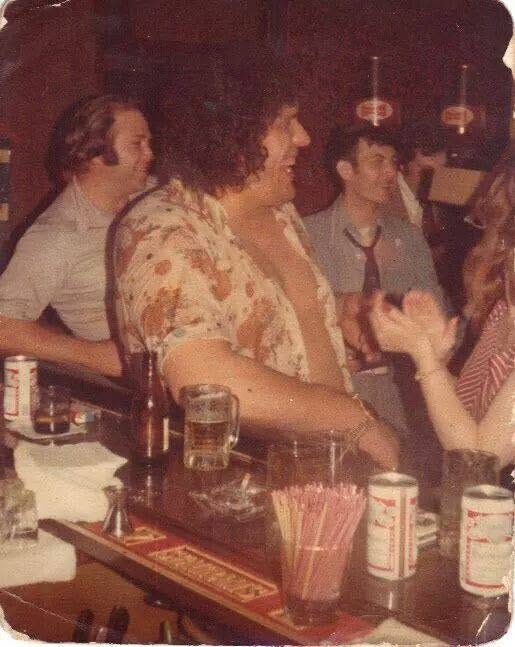
Pictured: A party at Geigel’s bar The Tender Trap in Kansas City in 1973 wuth Andre The Giant at the bar
He remained close to the Funk family for decades—their Texas properties had once adjoined—and he was a regular at Cauliflower Alley Club gatherings. In 2002 he was inducted into the George Tragos/Lou Thesz Professional Wrestling Hall of Fame. In 2007 the Cauliflower Alley Club gave him its Art Abrams Lifetime Achievement Award; his wife, daughters, and other family members attended the Las Vegas reunion.
Away from the ring he owned a Kansas City bar called The Tender Trap that served as a gathering place for wrestlers. After he left promoting he worked security at The Woodlands racetrack in Kansas City, Kansas, into his eighties, and he continued to stop by Harley Race’s World League Wrestling training sessions.
He and Vera June Lackender, whom he met at the University of Iowa, married on August 21, 1947, and remained together more than 65 years. They raised three daughters. Friends noted his habit of wearing shower shoes almost everywhere and his willingness to book and protect independent women wrestlers such as Kay Noble when other promoters were unreliable about pay.
Geigel broke a hip in early 2014 and spent his final months in a Kansas City nursing home while battling Alzheimer’s disease. He died on October 30, 2014, at the age of 90. He is buried in Algona.
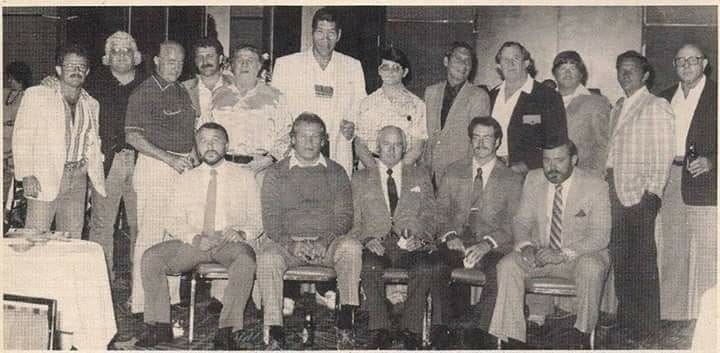
Pictured: Bob Geigel anchoring one end of the back row at an NWA Convention in the 1980s
His career spanned the full arc of the territorial system. As a wrestler he was a durable heel and tag-team specialist who could be trusted with championships in multiple NWA and AWA offices. As a promoter he kept a mid-sized Midwest territory alive from the early 1960s until the national expansion of the mid-1980s made the old model unsustainable. As NWA president during the Alliance’s final years of real authority, he sat at the center of decisions about world-title recognition and talent exchanges at the moment the cooperative structure was coming apart.
The Kansas City office never produced a worldwide superstar on the scale of the larger territories, but it was a consistent workplace for a generation of wrestlers and a stable civic attraction for fans across the Central States. That combination of in-ring credibility, long promotional tenure, and administrative role inside the National Wrestling Alliance is the core of Bob Geigel’s place in the history of the territory era.
ONE Thing I Learned About Antonio Inoki
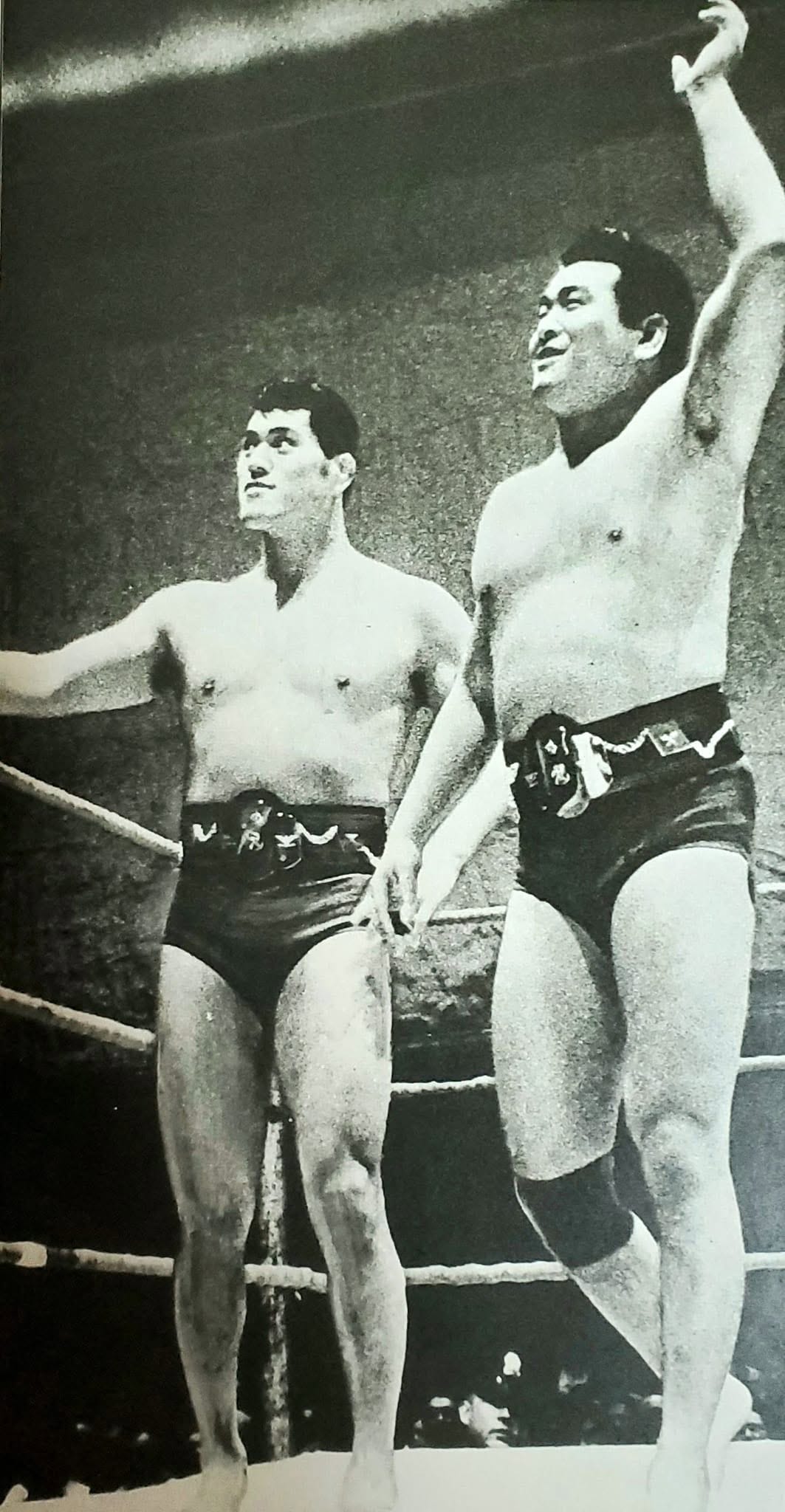
Pictured: Kanji Inoki and Hiro Matsuda, NWA World Tag Team Champions in the Tennessee Territory in 1966
Before he was Antonio Inoki, Kanji Inoki spent two years in the United States after Rikidōzan’s death and worked under a different name in almost every territory.
In Hawaii he was billed as Kanji Inoki. In the Central States he was Tokyo Tom. In Los Angeles he was Little Tokyo. In Oregon he was Mr. Kazimoto. In Texas and Tennessee he went back to his real name. The “Antonio” name, taken from Antonino Rocca, was already in use in Japan by then, but American bookers mostly ignored it.
That 1964–66 excursion is the least-known stretch of a career people usually start with the Ali match or the founding of New Japan.
Thank You for Watching and Listening
I’m Tony Richards, Pro Wrestling Historian, Author and Storyteller. I share pro wrestling historical items in each issue of the Time Tunnel Pro Wrestling History Newsletter and each episode of our podcast show. Thanks for your support! If you enjoy my information on select events, matches and insights, please share with folks you think might like to be a subscriber!
Remember, Premium subscribers get access to exclusive and special content such as some special issues including a multi-part deep dives on wrestling territories, wrestler bios and championship title histories, special audio and video interviews on territory pro wrestling and more available in the Pro Wrestling Time Tunnel for Premium Subscribers. Being a Premium Subscriber also means you support me in my efforts to document Pro Wrestling History through my research, writing, books, vidoes and podcasts. And…I have something very special planned for our Premium Subscribers on the Podcast side of things in 2026! Details soon here in the Pro Wrestling Time Tunnel.
One thing I would add is that Geigel was a very skilled technical worker with a unique grappling style. He has a match with Buck Weaver from Kohler's promotion that has survived on tape and it was worth checking out to see that.