


Today’s Favorite Quote: If you put good people in bad systems you get bad results - Stephen R. Covey
Happy Birthday to those who have passed on and to those great wrestlers still with us:
In Memoriam:
Abe Coleman 1905
Nell Stewart 1927
Red McKim 1930
Pepper Martin 1936
Don Gaston\Don Carson 1934
Steve Ketcher\Steve Gatorwolf 1957
Happy Birthday:
Tony Garea (80)
Greg Valentine (75)
Marty Lunde\Arn Anderson (68)
Scott Hudson (62)
RIP Memorial: We stop & remember those who have passed on this day and gave themselves to the business for us, the fans. We salute you and thank you.
Handsome Johnny Barend 9-20-2011 at the age of 82
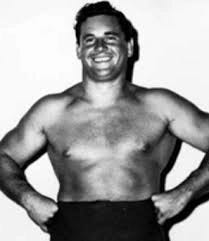
Angelo Savoldi 9-20-2013 at the age of 99
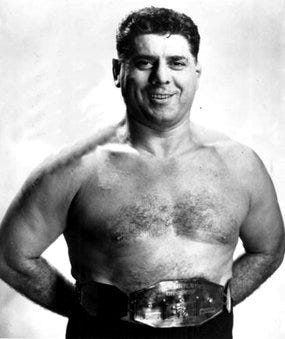
Ricki Starr 9-20-2014 at the age of 83
Luis Martinez 9-20-2013 at the age of 90
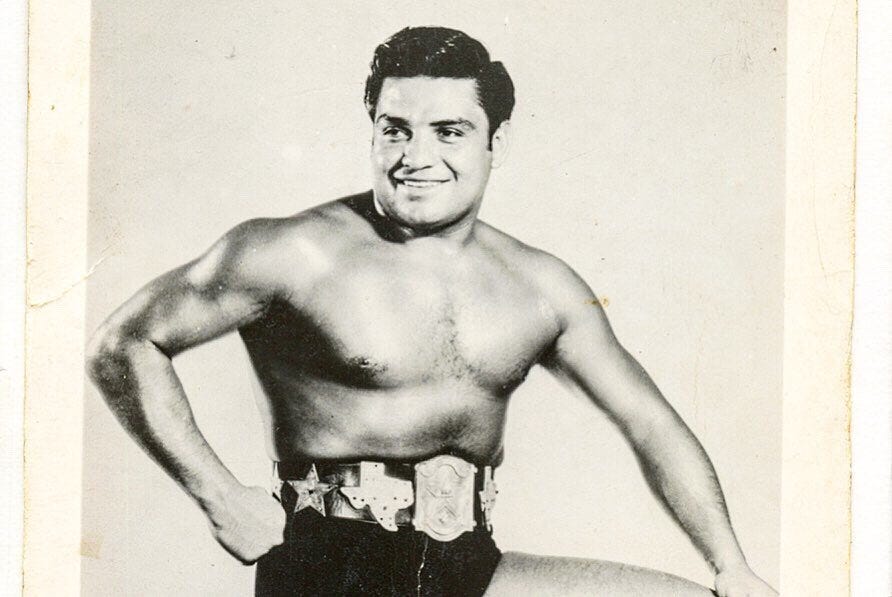
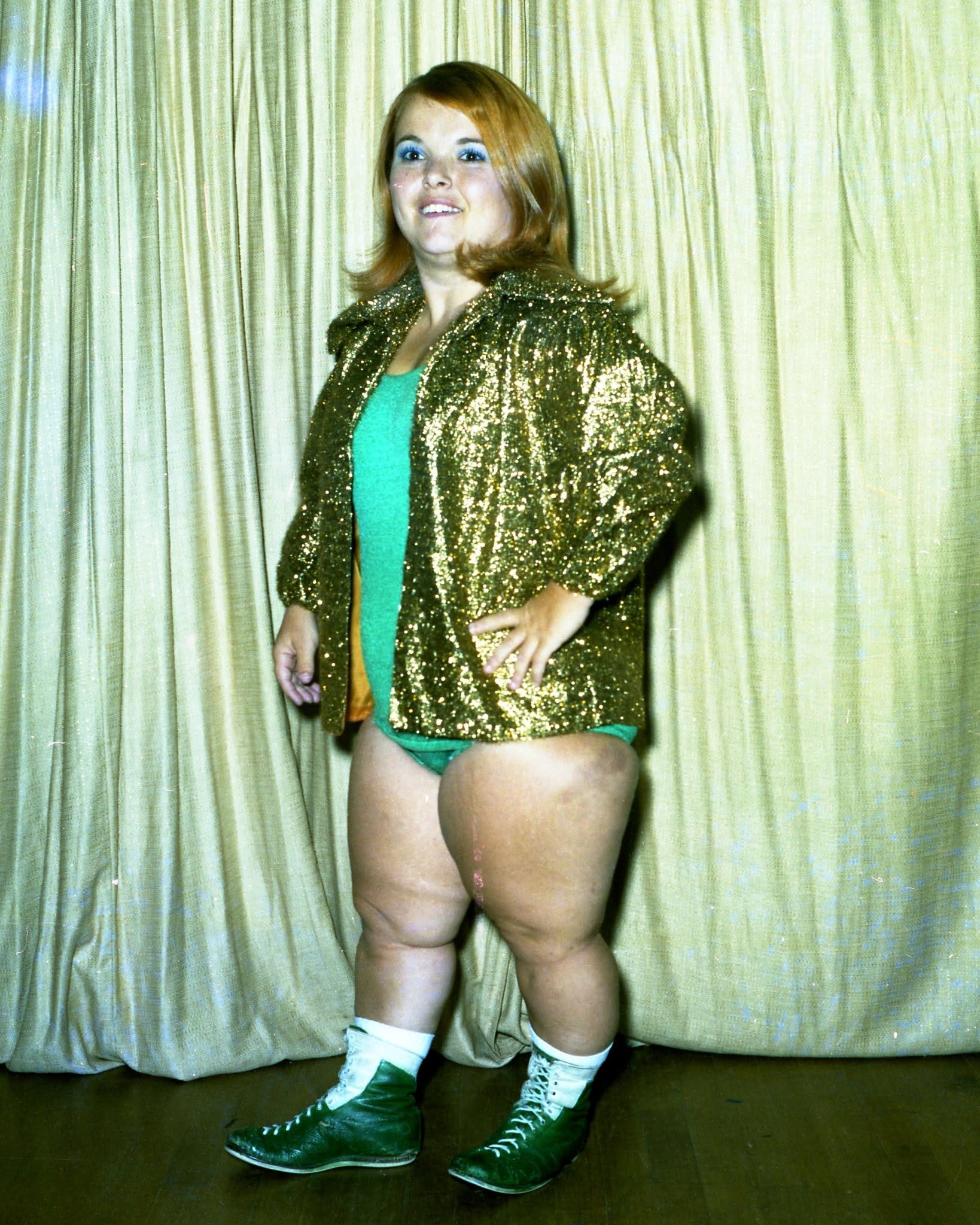
Marie LaVeau 9-20-2017 at the age of 65
Flashback 1976
Q3 Analysis
July-September
Tennessee Territory
Gulas-Welch Office
Nashville, Tennessee
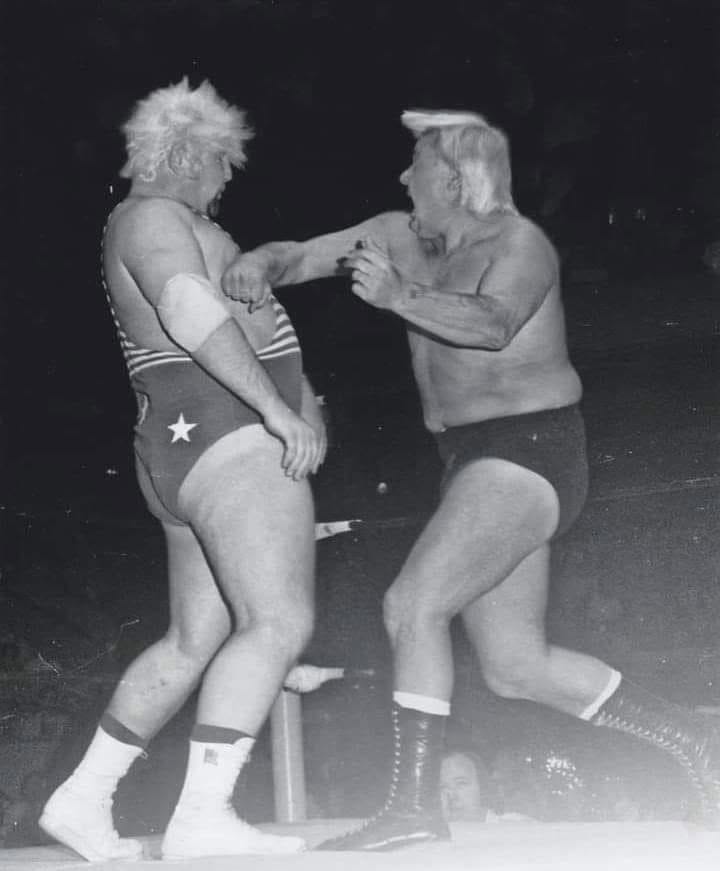
Pictured: Jackie Fargo nails Phil Hickerson during a match in 1976 in Memorial Auditorium in Chattanooga, Yennessee
The third quarter of 1976 caught Gulas-Welch Wrestling at a strange and revealing point in its life. The company still looked like a multi-state machine. Nick Gulas and Roy Welch’s name remained on the office. Jerry Jarrett booked the western loop and still owned a meaningful minority piece of the company. Television still fed a circuit that could put bodies in Memphis, Nashville, Birmingham, Chattanooga, Louisville, Evansville, Huntsville, Bowling Green, Lexington, Jackson, Tupelo and a thick undergrowth of school-gym and fairground towns from western Kentucky down into the Mississippi Delta. On paper it was one promotion. In practice it was already two booking cultures sharing one payroll.
The western towns, especially Monday nights at the Mid-South Coliseum, paid the bills. The eastern towns, especially Wednesday nights at the Nashville Fairgrounds Arena and the Saturday or midweek stops in Chattanooga and Birmingham, carried Nick Gulas’s preferred babyfaces and the titles that lived on that side of the map. Wrestlers understood the difference immediately. Pay was tied to tickets. Anyone who could get booked on the Memphis loop wanted to stay there. That tension, already visible in the first half of the year, hardened across July, August and September even as the live business in Memphis stayed hot.
A typical Gulas-Welch week in the summer of 1976 was not a single touring show. It was a booking list. Memphis and Birmingham often sat on Monday. Louisville and a handful of East Tennessee or Kentucky spots sat on Tuesday. Nashville and Evansville sat on Wednesday. Bowling Green, Lexington and often Chattanooga sat on Thursday. Friday could be Huntsville, Tupelo or a Knoxville-adjacent date, though Ron Fuller’s Knoxville office was doing well enough on its own that the old talent-sharing arrangement with Gulas was already losing its usefulness. Around those anchors sat the spot-show towns that made the territory look larger than its weekly buildings: Helena and Marvell in Arkansas, Clarksdale in Mississippi, Athens and Decatur in Alabama, Lewisburg and Pulaski in Tennessee, plus gym dates that never made the newspapers.
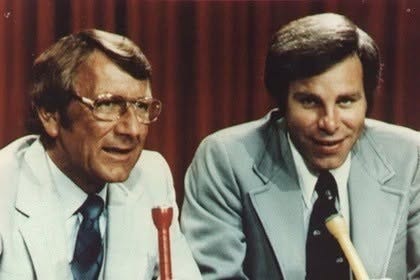
Pictured: Lance Russell and Dave Brown on WHBQ-TV13 in Memphis, Tennessee
Television was the glue. The Memphis studio show with Lance Russell and Dave Brown sold the western loop. Nashville, Chattanooga, Birmingham and Huntsville each had their own outlets. That split mattered. A man could be a main-event heel in Memphis and a midcard extra in Nashville the same week, or the reverse. Titles did not always travel cleanly from one TV market to another. That was not sloppiness so much as the old territorial habit of letting each city keep the version of the story that sold there.
Jerry Lawler was the western division star. By midsummer he was Southern Heavyweight Champion, the man the Mid-South Coliseum was built around, and the wrestler the office used whenever a special attraction needed a local foil. Jackie Fargo remained the territory’s elder statesman, still able to draw as a babyface opposite Lawler and still useful as a tag partner for Jerry Jarrett, Tojo Yamamoto, Eddie Marlin or Roughhouse Fargo. Bill Dundee was the best worker on the roster and the man who could be plugged into any program that needed heat or a title change. Tommy Rich, still only twenty, was no longer a prospect. He was the second babyface the western towns would pay to see beat Lawler.
The heel engine on that side was the Bicentennial Kings, Phil Hickerson and Dennis Condrey. They were the best regular tag team in the company: compact, mean, and good enough on the microphone to carry a months-long program against Fargo, Jarrett, Dundee and Rich. Around them worked Tommy Gilbert, who spent the quarter sliding from mixed roles into a harder heel identity opposite Cowboy Frankie Laine; The Scorpion; Don Greene; Don Anderson; Charlie Cook; Don Kernodle; Plowboy Frazier; and Rocky Johnson, who arrived as a special attraction and immediately became Lawler’s most dangerous opponent.
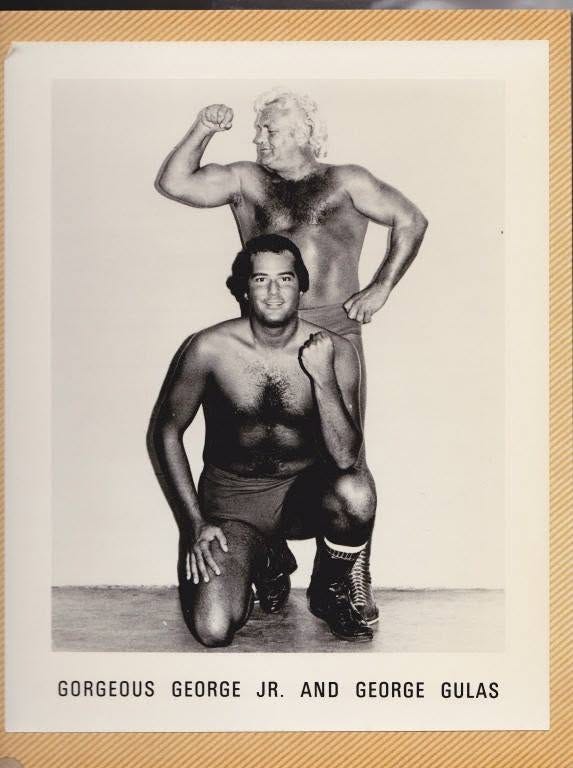
The eastern division loop had a different center of gravity. George Gulas was booked as a featured babyface in Nashville, Chattanooga and Birmingham, usually with Dennis Hall or Gorgeous George Jr. as his partner. Gorgeous George Jr., billed as the son of the 1950s star though he was not, was a legitimate draw on that side and a frequent opponent for Lawler when the two loops overlapped. David Schultz and Bill Ash were the eastern heel tag champions, holding the Southeastern Tag Team titles and working a long program against Gulas, Hall, Tojo and the Fargos. Roger Kirby gave the Mid-America Heavyweight Title a veteran sheen. Bob Armstrong and Robert Fuller drifted in from the Alabama/East Tennessee orbit and immediately looked like they belonged in main events. Big Bad John, once a babyface, was turning toward a heel run that would include a short Mid-America title reign in September. Bearcat Brown, Buddy Diamond, Butch Malone, Norvell Austin, Ken Dillinger, Duke Miller, the Masked Superstars and the last remnants of the Bounty Hunters filled out the cards.
Women and midgets still had a place on the bigger western shows. Ann Casey defended the United States Women’s title against Sylvia Hackney. Princess Little Dove took the women’s midget title from Marie LaVeau in Memphis on July 19. Cowboy Lang and Sonny Boy Hayes worked the small-man spots on the county-fair and Delta cards.
July: heat, specials, and a real death
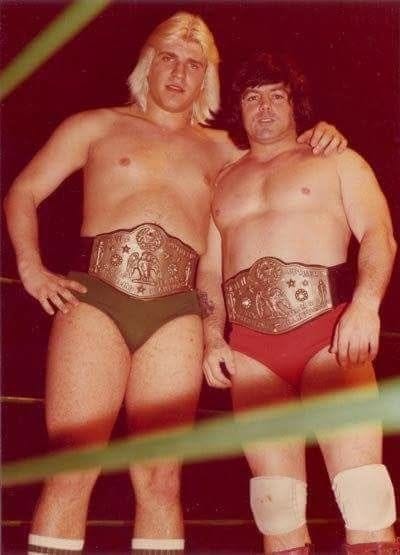
Pictured: Tommy Rich and Bill Dundee, NWA Southern Tag Team Champions
July opened with a booking inconvenience that said something about Memphis’s place in the company. Elvis Presley had the Mid-South Coliseum on Monday, July 5, so Gulas-Welch moved the weekly card to Tuesday, July 6. The building still drew 9,068. Lawler retained the Southern title over Gorgeous George Jr. Hickerson and Condrey beat Rich and Dundee. Jackie Fargo, Eddie Marlin and Tojo beat Don Greene, The Scorpion and Sam Bass. Tommy Gilbert worked a no-disqualification match with Frankie Laine, the start of a program that would get uglier as the summer went on.
The next Monday, July 12, Memphis jumped to 10,138. The office had a special that did not need a championship to sell: Rocky Johnson against Lawler in a boxing-versus-wrestling match. Johnson knocked Lawler out in the sixth round at 1:35. That result was not a throwaway. It set Johnson as the one man on the roster who could beat Lawler in a way the crowd would accept as legitimate, and it gave the western towns a feud they could keep coming back to after the visiting names went home.
July 19 was the first major title change of the quarter in Memphis. Before 8,312 fans, Hickerson and Condrey beat Jerry Jarrett and Jackie Fargo for the Southern Tag Team titles. That was the payoff of a program that had been running since spring: the Bicentennial Kings against the Fargo family and Jarrett, with Roughhouse Fargo and Don Kernodle used as extra heat when the office needed a six-man or a disqualification finish. The same card put Lawler over Bobo Brazil, brought in Ann Casey and Bill Dromo, and had Frankie Laine and Charlie Cook go to a disqualification with the visiting Superstars. Some records also show Dundee and Rich holding the Southern tags for a brief stretch later in July before the Kings took them back. Whether that change happened on a television taping or a smaller town, the story the western loop was telling was the same. Hickerson and Condrey were the team to beat.
Louisville, running on Tuesdays at the Gardens, spent July as Lawler’s second home. On July 4 he met Rocky Johnson in another boxing match. On July 11, 18 and 25 he worked Gorgeous George Jr. That is the Gulas-Welch method in miniature. Memphis got the big house and the title match. Louisville got the rematch series that kept the same program alive without burning the Memphis finish. Evansville, on the Wednesday loop with Nashville, took the overflow.
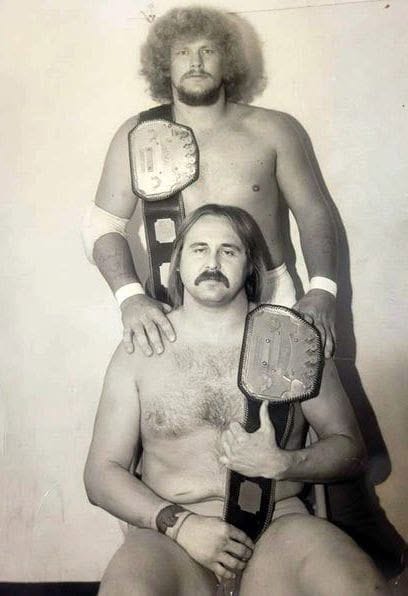
Pictured: David Schultz and Bill Ash, NWA Southeastern Tag Team Champions
The eastern towns were telling a parallel story. On July 7 at the Nashville Fairgrounds, Schultz and Ash went to a time-limit draw with Dennis Hall and George Gulas, and Gorgeous George Jr. won a battle royal over a field that included Lawler-loop names like Dundee and Rich as well as eastern regulars. On July 10 in Chattanooga, Gulas beat Ken Dillinger. On July 14 in Nashville, Gulas and Jarrett beat the Masked Superstars. On July 17 in Chattanooga and July 21 in Nashville, Gulas and Gorgeous George Jr. beat the Superstars again. On July 28 in Nashville, Schultz and Ash retained the Southeastern Tag Team titles over Gulas and George Jr. That last match is the eastern quarter in one sentence: Nick Gulas’s son and the imported “Gorgeous George” babyface, put in a title match they were not going to win against the team that actually worked like champions.
The spot-show circuit was doing the same programs at a lower price. On July 16 in Helena, Arkansas, Lawler defended the Southern title against Jackie Fargo, with Dundee and Charlie Cook against Sam Bass and The Inferno, and Ann Casey against Sylvia Hackney. Those cards did not make the Memphis numbers, but they kept the television names in front of people who would never drive to the Coliseum.
Then the territory stopped being a storyline.
On Monday night, July 26, Memphis drew only 5,479, the weakest Coliseum number of the summer. The card itself was a strong one. Lawler pinned Harley Race in 17:15 to retain the Southern title. Hickerson and Condrey went to a disqualification with Jackie and Roughhouse Fargo. After the show, Sam Bass, Frank Hester and Pepe Lopez left together for Nashville. Bass was Lawler’s manager and one of the most useful heels on the roster. Hester and Lopez were working as the Masked Dominoes under J.C. Dykes. Near Dickson, Tennessee, they came over a hill and hit a car that had already struck a bridge and sat unlit in the interstate. A truck hit them. The car burned. All three men died.
Dykes, riding separately with Pat Malone, found the wreck. The office had already lost Sir Clements in a 1975 highway accident. Whitey Caldwell had died on the road in 1972. Len Rossi’s career had been wrecked by another crash that same year. This one took a manager and a tag team in a single night. Lawler lost the man who cut his heat promos. The Dominoes program ended in a fire on I-40. The company did what wrestling companies did. It ran the next show.
For a complete deep dive on the Sam Bass, Pepe Lope and Frank Hester tragedy, check out my in depth piece here:
The Evolution of Wrestling: The Death of Sam Bass and the Impact on Tennessee Wrestling
August: world champions, a one-week title, and the western boom
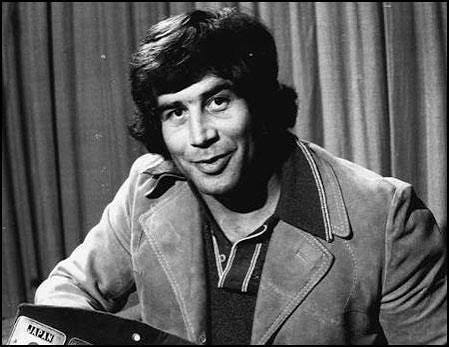
August was the best business month of the quarter in Memphis, which is another way of saying it was the month the office spent money on names the NWA would actually send.
On August 2, with attendance unreported, Lawler beat Dory Funk Jr. Hickerson and Condrey retained the Southern tags over Jackie and Roughhouse Fargo in a no-disqualification match. Dundee beat Gilbert by disqualification, keeping the Gilbert heel turn in motion. The undercard was the usual western mix: Kernodle, Dennis Hall, Frankie Laine, Charlie Cook, Don Anderson, The Scorpion, Ken Dillinger, Duke Miller.
On August 9, Memphis drew 10,098 and the office did something it only did when it wanted a short, expensive program. Jack Brisco beat Lawler for the Southern Heavyweight Title. The same night Jackie Fargo and Plowboy Frazier beat the Kings by disqualification, and Hall and Anderson beat the Bounty Hunters. A week later, August 16, the Coliseum jumped again, to 10,962. Lawler pinned Brisco in 17:56 in a bank-account-versus-title match and took the belt back. That is classic Gulas-Welch booking. Drop the local title to a former NWA World Champion for one week, advertise the rematch as Lawler putting up his money, get two $10,000 houses instead of one, and put the belt back on the man who sold the building every Monday.
Jack Brisco was not easily talked into things like this, even for a short program, after he had dropped the NWA World Title the previous December in ‘75. It wasn’t so much the title he dropped as much as it was the grueling two and a half year schjedule of dates. I’m sure Jerry Jarrett’s relationship with Eddie Graham, now the NWA President, was in play here for Brisco to do this.
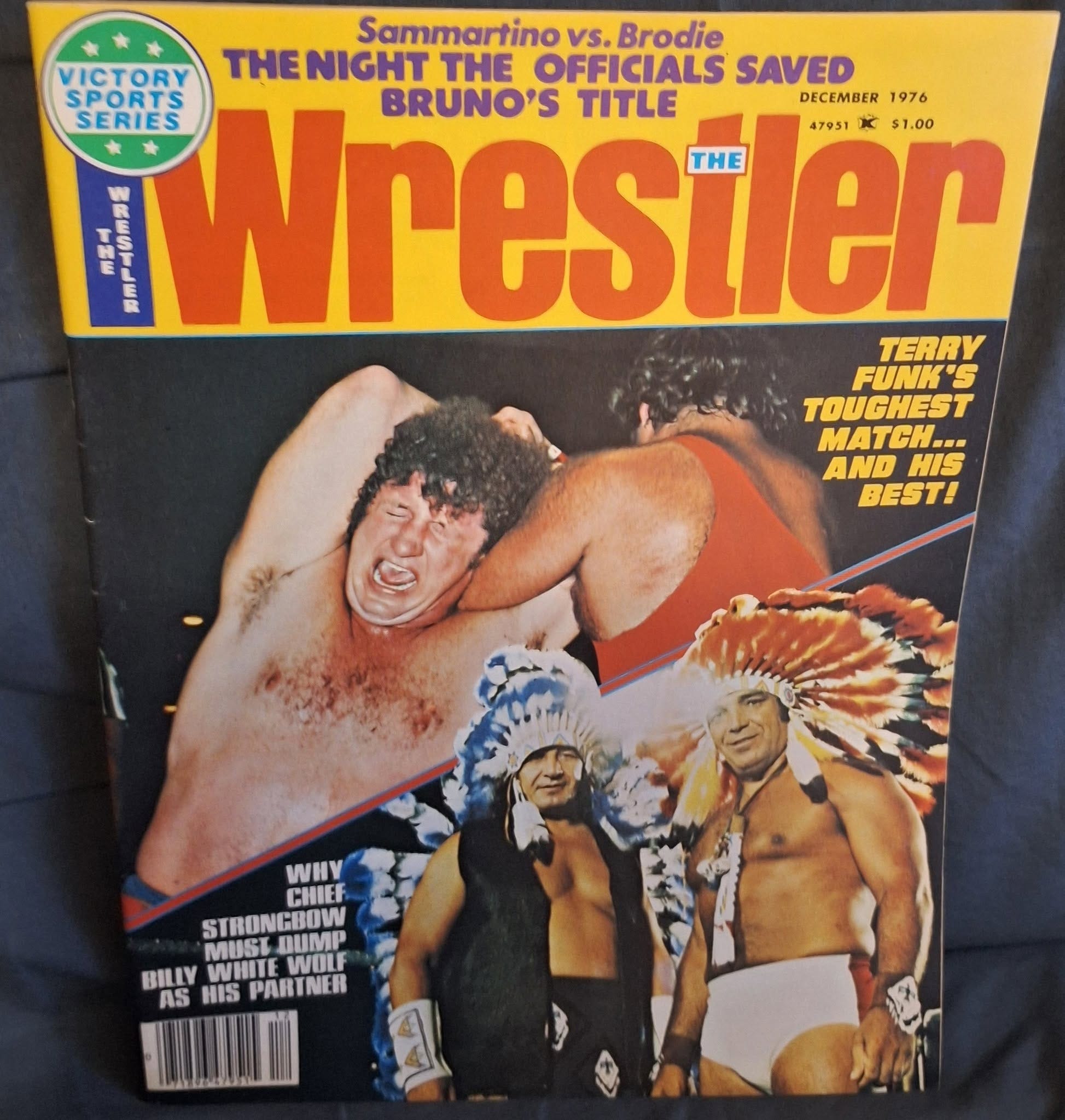
Pictured: NWA World Champion Terry Funk in a top wristlock applied by Jerry Lawler in August of 1976 at the Mid-South Coliseum in Memphis, Tennessee on the cover of the December 1976 Issue of The Wrestler
The Funk visit was not finished. The Osmonds had the Coliseum on Monday, August 23, so the office moved to Sunday, August 22, and drew 10,430 for NWA World Heavyweight Champion Terry Funk against Lawler. They went sixty minutes to a draw. That is the money match of the quarter. A world champion who could wrestle, a local champion who could talk, and a finish that protected both men. The undercard supported it: Bob Armstrong and Robert Fuller against the Masked Superstars by disqualification, Rocky Johnson and Dundee over Gilbert and David Schultz, Frazier and Hall over Norvell Austin and The Scorpion.
August 30 in Memphis is the card that shows the office trying to braid the western programs together. Lawler beat Jackie Fargo by disqualification. The Kings retained over Frazier and Don Anderson. Johnson and Dundee beat Gilbert and The Scorpion (Duffy). A six-man of Tojo, Johnson and Dundee against Hickerson, Condrey and Lawler went to a no-contest. That last match is the booking tell. Lawler, still the Southern champion, was being grouped with the heel tag team against the babyface trio. The western loop was starting to treat Lawler less as a lone wolf and more as the center of a faction, which made Rich’s coming title win easier to understand.
Louisville followed Memphis at a one-week delay. August 3 was Lawler against Dundee. August 15 was another Lawler–Gorgeous George Jr. match. The Gardens did not report the Coliseum’s numbers, but the repetition itself is the point. Tuesday night in Louisville was where the Memphis television story went to work for a second paycheck.
On the eastern side, the Mid-America Heavyweight Title finally moved. Roger Kirby had held it since mid-June, with defenses and television billing in Birmingham and Nashville. On August 14 in Chattanooga, Bob Armstrong beat Kirby. The change was repeated August 18 in Nashville and August 23 in Birmingham, the standard Gulas-Welch method of making a title switch “official” in each major eastern building. Armstrong was the right choice. He could work, he could bleed, and he did not need Nick Gulas’s last name to get over. Schultz and Ash continued to hold the southeastern tags. The Masked Superstars stayed in the mix as a traveling heel team Big Bad John could manage.
September: Rich arrives, Armstrong’s title bounces, and Memphis loses a Monday
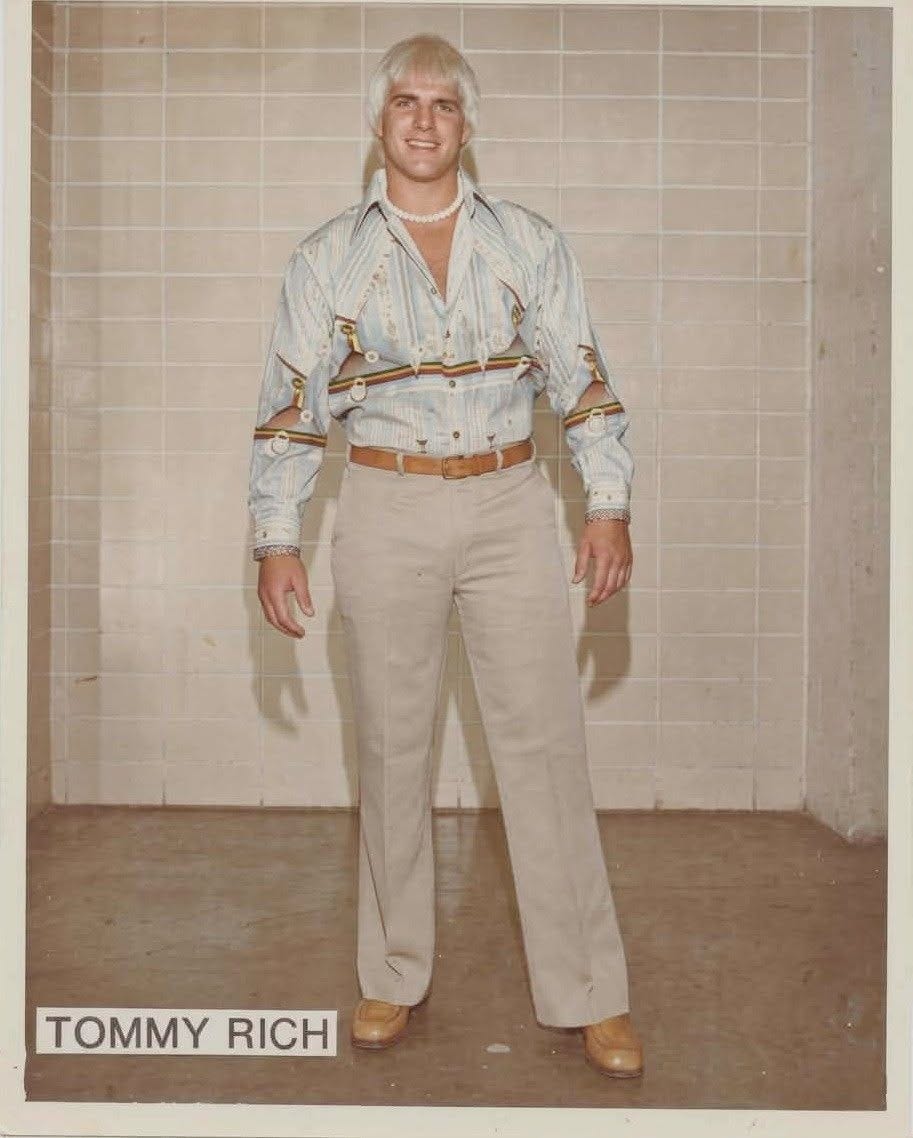
September is when the quarter’s two most important long-term stories paid off.
In Memphis on September 6, before 8,373, the office ran another no-disqualification elimination six-man: Dundee, Rocky Johnson and Tojo against Condrey, Hickerson and Lawler, ending in a no-contest at 22:13. Gilbert and The Scorpion beat Frazier and Anderson. Cowboy Lang worked with Kernodle against The Scorpion and Sonny Boy Hayes. The card was a holding pattern, and the house showed it.
September 14, a Tuesday because of building availability, drew 8,496 and changed the western championship picture. Tommy Rich, getting his second singles push of 1976, pinned Lawler to win the Southern Heavyweight Title. On the same card Tojo and Dundee beat Hickerson and Condrey in 24:25, Dundee pinning Condrey, to win the Southern Tag Team titles. Two belts moved in one night, both onto babyfaces the Memphis crowd had been trained to want. Rich had already beaten Lawler for the Southern title once, back on February 22. This second win was not a fluke. It was the office admitting that the twenty-year-old could carry Monday nights.
The follow-up, September 20, proved the point. Memphis drew 10,938, one of the best houses of the year, to see the new champion. Rich beat Tommy Gilbert. Rich and Dundee beat the Kings. Lawler went to a no-contest with Jackie Fargo, which kept the old man in the main-event mix without stepping on Rich. Bearcat Brown, Charlie Cook and Randy Fargo beat Duke Miller, Ken Dillinger and The Scorpion. That is a healthy territory card: a new champion, the old champion still on the show, the heel tag team still getting heat, and enough familiar midcard names to make the undercard feel like the same company the crowd had been watching since spring.
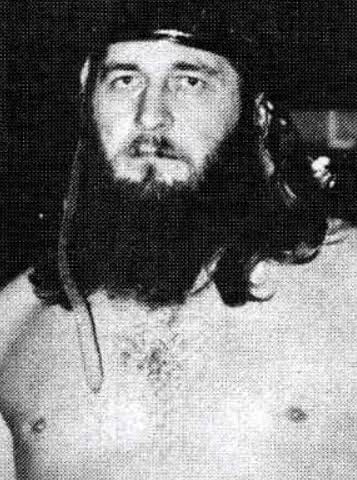
Pictured: Big Bad John, NWA Mid-America Heavyweight Champion
September 27 there was no Memphis show. The Mid-South Fair had the Coliseum. In a promotion this dependent on one building, a dark Monday was a real financial hole. The office filled the week elsewhere. Birmingham ran that Monday at Boutwell Auditorium with a card that looked entirely eastern: Frankie Laine and Butch Malone to a fifteen-minute draw, Rip Smith over Norvell Austin, Big Bad John defending the Mid-America title against Buddy Diamond, George Gulas in a handicap match against Gorgeous George Jr. and Sir Bradley, Roger Kirby against Bob Armstrong, and the Masked Superstars retaining over Laine and Robert Fuller.
The Mid-America title had a messy September, which is typical of a belt that lived on the eastern loop. Armstrong had taken it from Kirby on August 14. Big Bad John beat Armstrong on September 8 in Nashville, with the change repeated September 13 in Birmingham. Armstrong won it back September 25 in Chattanooga. Kirby would take it again in early October. The belt was doing its job. It gave Chattanooga, Nashville and Birmingham a heavyweight story that did not have to wait on Lawler’s Memphis schedule.
Louisville in September stayed with Lawler even after he dropped the Southern title. On September 5 he teamed with Hickerson and Condrey against Tojo, Frazier and Dundee, another sign that the office was willing to put Lawler with the Kings when the town needed a six-man. On September 19 he met Frazier in a hair-versus-hair match. On September 26 it was a bodyslam challenge against the same man. Those are not world-title programs. They are Tuesday-night programs, built for a building that wanted Lawler every week whether he had a belt or not.
The spot shows kept grinding. Clarksdale, Mississippi, on August 20 had Lawler against Jackie Fargo, Frazier and Randy Fargo against Duke Miller and Ken Dillinger, Charlie Cook against the Masked Invader. Marvell, Arkansas, on September 7 put Tojo against Gilbert, Cowboy Lang against Sonny Boy Hayes, and the Kings against Dundee and Buddy Wayne for the Southern tags. Decatur, Alabama, on September 10 had Sylvia Hackney against Judy Moseley and Buddy Diamond in the mix. That is how a territory this size actually made its week: one television story, ten different gyms.
Angles and storylines, side by side
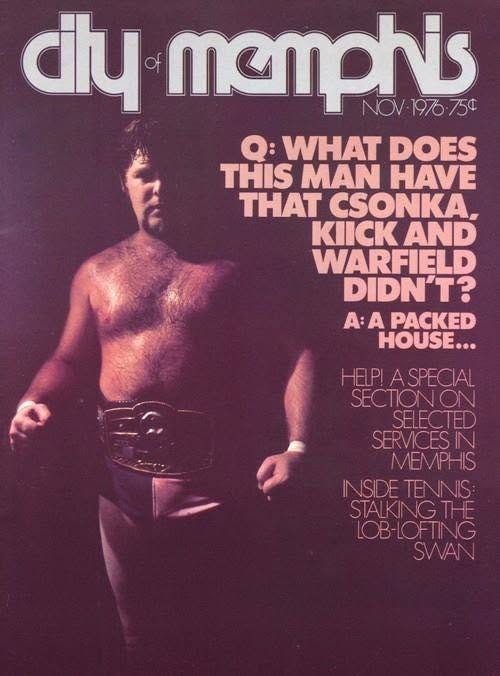
Pictured: Jerry Lawler on the cover of the City of Memphis Magazine, November 1976
The quarter had four programs that mattered.
The first was Lawler versus the world. Race on July 26, Dory Funk on August 2, Brisco for a week in mid-August, Terry Funk to a hour draw on August 22, Bobo Brazil on July 19, Gorgeous George Jr. whenever the two loops crossed, Jackie Fargo whenever the office needed a familiar main event, and Rocky Johnson in the boxing match that actually cost Lawler a finish. This was not random booking. It was the western office using the Southern title as a piece of inventory that could be defended against anyone the NWA would send, then putting it back on Lawler until Rich was ready.
The second was Rich versus Lawler. It had been building since winter. Rich’s September 14 win was the payoff the Memphis crowd had been buying tickets to see. The September 20 house, north of 10,900 with Rich as champion, is the business proof.
The third was the Bicentennial Kings against the Fargos, Jarrett, Dundee, Tojo and Rich. They won the Southern tags on July 19, kept them through the Race and Funk weeks, dropped them to Tojo and Dundee on September 14, and were still advertised as champions in Louisville two days later. That last detail is not a contradiction so much as a reminder that Louisville television and Memphis television did not always update on the same day. Hickerson and Condrey were the best long-term heel investment the company had. They could lose a title and still be the team the next town wanted to boo.
The fourth was the eastern division babyface experiment. George Gulas and Gorgeous George Jr., sometimes with Dennis Hall, sometimes with Jarrett or Tojo, against Schultz and Ash, the Masked Superstars, Dillinger and Miller. The work rate was uneven. The push was not. Gulas was on the Nashville and Chattanooga cards week after week in July. He was in title matches he did not win. He was in battle royals he did not win. He was, by September 27 in Birmingham, working a handicap match that asked the crowd to accept him as the equal of two men. The eastern towns would live with that booking. The western towns, where Jarrett was making the list, largely would not. That disagreement is the seed of the 1977 split, and it is already visible in who appears where in the third quarter of 1976.
Secondary programs filled the hours. Gilbert’s turn on Frankie Laine gave the midcard a blood feud and a specialty-match destination in the coal miner’s glove. Johnson and Dundee as a team gave the office a babyface pair that could work either with or against Lawler. Armstrong versus Kirby versus Big Bad John gave the Mid-America title a three-way that could be repeated in Chattanooga, Nashville and Birmingham without needing a Memphis finish. The women’s and midget matches were never the reason people bought a ticket in 1976, but they were still part of how a Gulas-Welch card looked like a full show.
Opposition and the edge of the map
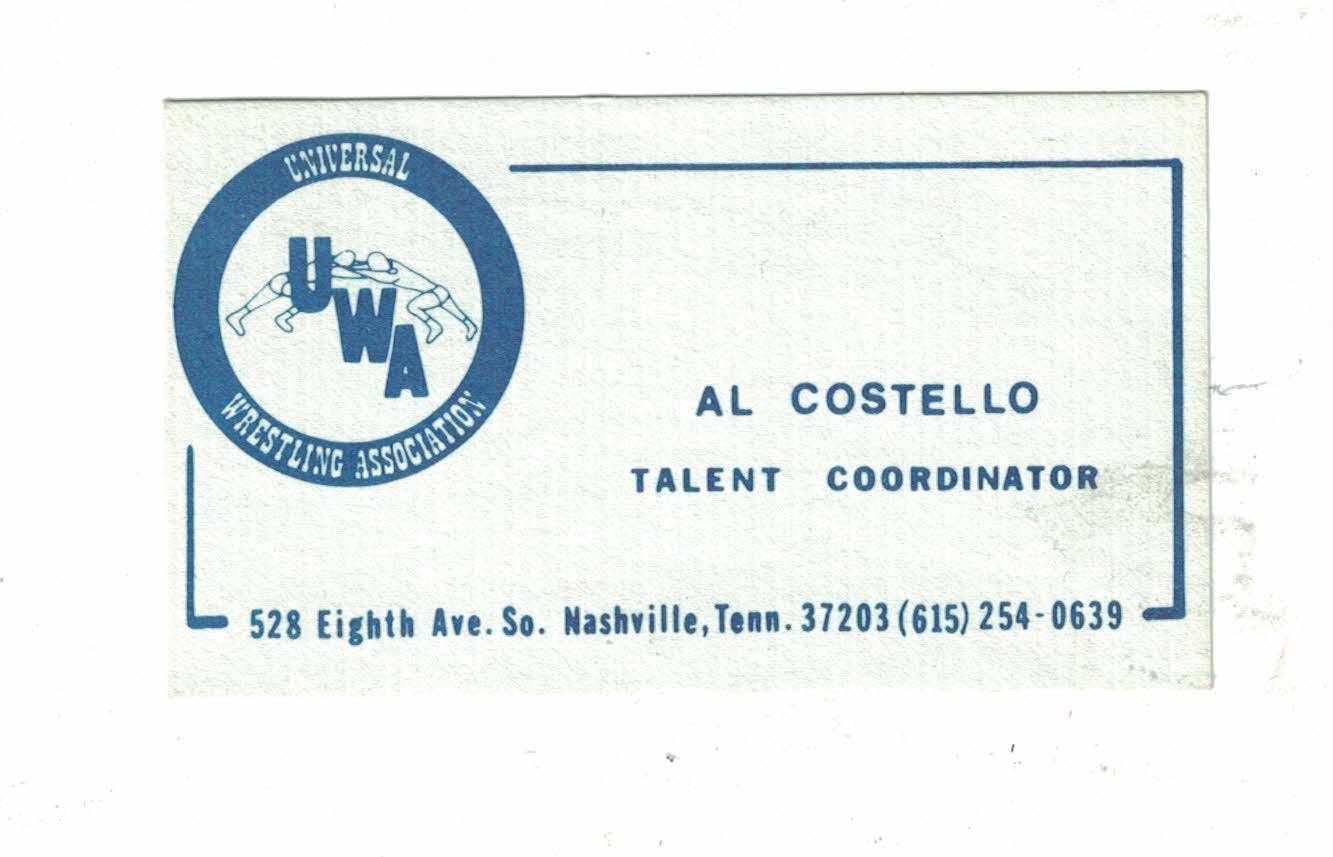
Pictured: Al Costello’s business card for the UWA in Nashville, Tennessee
The Universal Wrestling Association (UWA), the Lou Thesz–Buddy Lee–Danny Davis group that had jumped Gulas in Nashville and then Chattanooga earlier in the year, was finished as a real threat by the end of the summer. It had taken some familiar names — Saul Weingeroff, Ken Ramey, the Interns, Lorenzo Parente, Frank Morrell as the Spoiler, Pez Whatley, Afa and Sika as the Islanders — and it had television. It did not have the buildings or the staying power. By September the promotional war that had eaten part of Gulas’s attention in the first half of 1976 was over. That mattered. It meant the Nashville office could go back to fighting its own booking instincts instead of fighting a second promotion down the street.
Knoxville was a different problem. Ron Fuller’s office was doing good business with its own roster and its own titles. The old idea that Gulas-Welch and Knoxville were one talent pool was already more courtesy than fact. Back in late 1974, Ron Fuller had a conversation with his grandfather, Roy Welch about the 10% booking fee the Guals-Welch office was getting for sending talent to Knoxville. An Agreement that had been established back in the 1940s. Welch told his grandson that if he thought he could get top talent without the Nashville office feel free to try, and that’s what he did. When Armstrong and Robert Fuller showed up on Gulas-Welch cards in August, they looked like visitors from a healthy neighboring company, not like men the Nashville office could move at will.
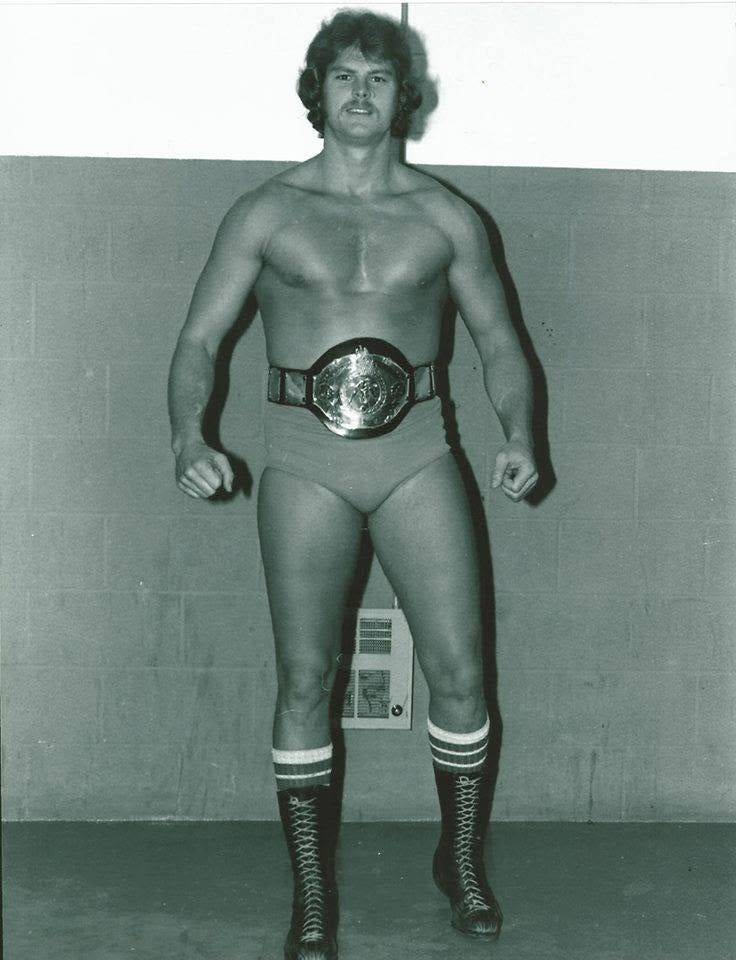
Pictured: Robert Fuller, NWA Mid-America Heavyweight Champion
Business analysis
Memphis is the only town with a clean attendance trail, and the trail is excellent.
• July 6: 9,068 (Tuesday, Elvis conflict)
• July 12: 10,138 (Johnson–Lawler boxing)
• July 19: 8,312 (Kings win the tags; Bobo)
• July 26: 5,479 (Race; the night of the crash)
• August 2: unreported (Dory Funk, Jr)
• August 9: 10,098 (Brisco wins the Southern title)
• August 16: 10,962 (Lawler regains the title)
• August 22: 10,430 (Sunday, Osmonds conflict; Terry Funk sixty-minute draw)
• August 30: unreported
• September 6: 8,373
• September 14: 8,496 (Tuesday; Rich wins the Southern title)
• September 20: 10,938 (Rich’s first week as champion)
• September 27: dark (Mid-South Fair)
The pattern is obvious. A special attraction or a title change with a name the city already knew put the Coliseum in the 10,000s. A holding-pattern card or a night the city was competing with a concert or a fair dropped the house into the mid-8,000s or, on July 26, below 5,500. The July 26 crash sits on the worst house of the quarter, which is coincidence rather than cause, but the company lost three workers and a manager at the exact moment the western loop needed bodies. The rebound in August is the more important fact. Memphis did not cool off after the accident. It ran hotter.
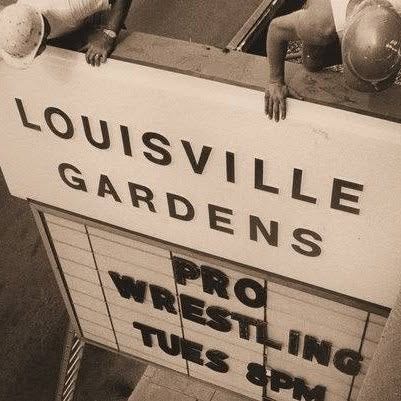
Nashville, Chattanooga, Birmingham and Louisville do not leave the same paper trail for this specific quarter. What can be said with confidence is structural. Nashville’s Fairgrounds still ran every Wednesday and still used George Gulas as a featured name. Chattanooga’s Memorial Auditorium was the building where the Mid-America title actually changed. Birmingham’s Boutwell Auditorium took the Monday overflow when Memphis did not need the whole roster and ran the eastern titles when Memphis went dark. Louisville Gardens on Tuesday was Lawler’s second paycheck, important enough that the Southern tags could still be advertised there under the previous champions two days after a Memphis title change.
The money math underneath those buildings was already splitting the company. Wrestlers were paid on the gate. Memphis at 10,000 paid like a different promotion than a Thursday in Bowling Green or a school gym in Lewisburg. Jarrett booked the towns that paid the best. Gulas booked the towns that kept wrestlers paid. Roy Welch’s name was still on the letterhead, but the day-to-day was already a two-headed office and Roy’s name was starting to disappear in certain promotional pieces in various towns. Jarrett’s share of the company in 1976 was about twenty percent. That was enough to be compensated very, very well. It was not enough to stop the junior Gulas push.
The talent market was also tightening. The Funks and Brisco and Race could be bought for a night. They could not be kept. Rocky Johnson could be kept for a short few months run, and he was the best outside addition of the quarter. Rich and Dundee were the best internal additions of the year, not because they were new, but because the office finally used them as champions instead of as tag partners. George Gulas had been added in 1973 as a wrestler and he was the addition the locker room trusted least by 1976. None of that was a secret in September 1976. It would become a more important and powerful catalyst in 1977.
What the quarter actually was
Gulas-Welch Wrestling in July, August and September of 1976 was a very profitable western loop, a politically loaded eastern loop, and a highway schedule along with some recklessness on the part of Sam Bass that had just killed three of the company’s people. The wrestling was better than the politics. Lawler against the Funks, Brisco and Race was as strong a summer of heavyweight matches as the territory had ever run. Hickerson and Condrey were a genuine and amazing tag team, not a pair of heels standing next to each other. Rich’s second Southern title win was the correct babyface payoff. Armstrong’s Mid-America title run gave the eastern towns a champion who could wrestle. The live business in Memphis, when the office gave the city a reason to come, was still in the 8,000 to 10,000s.
The warning lights, however, were all on. The UWA war had ended, but the internal war over who got to be a babyface in the towns that paid had not. The Knoxville relationship was drifting and almost gone. The title picture was split by geography. The booking list that George Gulas later described — Memphis and Birmingham on Monday, Louisville on Tuesday, Nashville and Evansville on Wednesday, Bowling Green and Lexington and Chattanooga on Thursday, Huntsville and Tupelo and the rest on Friday, plus fifteen more spots if the office could find the bodies — was still in operation.
It was also the map of a company that had long ago grown too large to be booked as one story. People had known since the Memphis purchase in 1956 that Memphis was Roy Welch’s town and Gulas was not welcome. Although the same was not true for Roy in Birmingham, he ceded that town to Gulas to keep him busy on Monday nights. That division of responsibilities worked for twenty years, but Roy Welch was very sick and not coming back. Besides, his career as a wrestling promoter was finished becasue of age any way, and Jerry Jarrett’s had only begun six year prior. Besides that, while Jarrett did not possess the absolute dominating personality that Welch did, he had his own direct and no nonsense ways and the close was ticking on the collapse of the cooperation between Jarrett and Nick Gulas.
The third quarter of 1976 did not break Gulas-Welch Wrestling. It did show, hiwever, week by week and town by town, exactly where the break would come.
Thank You for Watching and Listening
I’m Tony Richards, Pro Wrestling Historian, Author and Storyteller. I share pro wrestling historical items in each issue of the Time Tunnel Pro Wrestling History Newsletter and each episode of our podcast show. Thanks for your support! If you enjoy my information on select events, matches and insights, please share with folks you think might like to be a subscriber!
Remember, Premium subscribers get access to exclusive and special content such as some special issues including a multi-part deep dives on wrestling territories, wrestler bios and championship title histories, special audio and video interviews on territory pro wrestling and more available in the Pro Wrestling Time Tunnel for Premium Subscribers. Being a Premium Subscriber also means you support me in my efforts to document Pro Wrestling History through my research, writing, books, vidoes and podcasts. And…I have something very special planned for our Premium Subscribers on the Podcast side of things in 2026! Details soon here in the Pro Wrestling Time Tunnel.