


Profile 16: Hank Renner
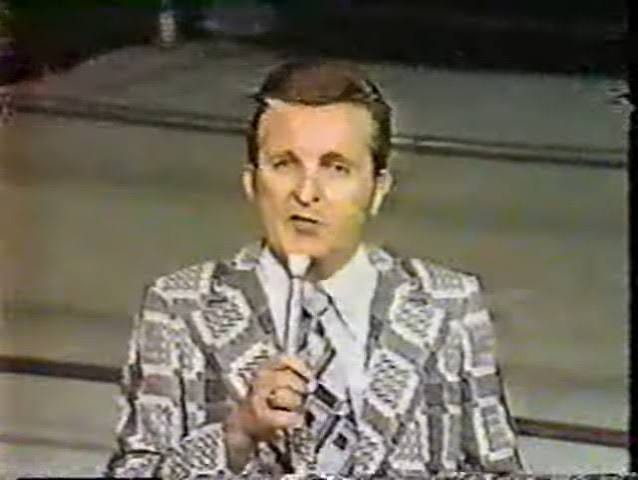
The men who sold the spectacle from ringside often last as long in a fan’s ear as the champions they described. For a generation of Northern Californians who grew up with Saturday-night television and Cow Palace cards, that voice belonged to Hank Renner. He was not a national star. He never sat beside Gorilla Monsoon or Dick Lane on a coast-to-coast network. He was something more particular and, in his territory, more essential: the play-by-play man who made Roy Shire’s Big Time Wrestling feel like an event in living rooms from Sacramento to Fresno, Las Vegas, and beyond.
The public record of Renner’s early years is thin. Unlike later celebrity announcers whose biographies were packaged for magazines and Hall of Fame speeches, he left few interviews and no memoir. What survives is the work itself and the testimony of people who sat near him. He lived in Sacramento. He knew horses. He called boxing as well as wrestling. He kept a Tiparillo in the corner of his mouth and spoke out of one side of it. Fans who never met him still remember the cadence, and the old catchphrase that leapt out of the speakers when a match turned: “Holy Toledo!”
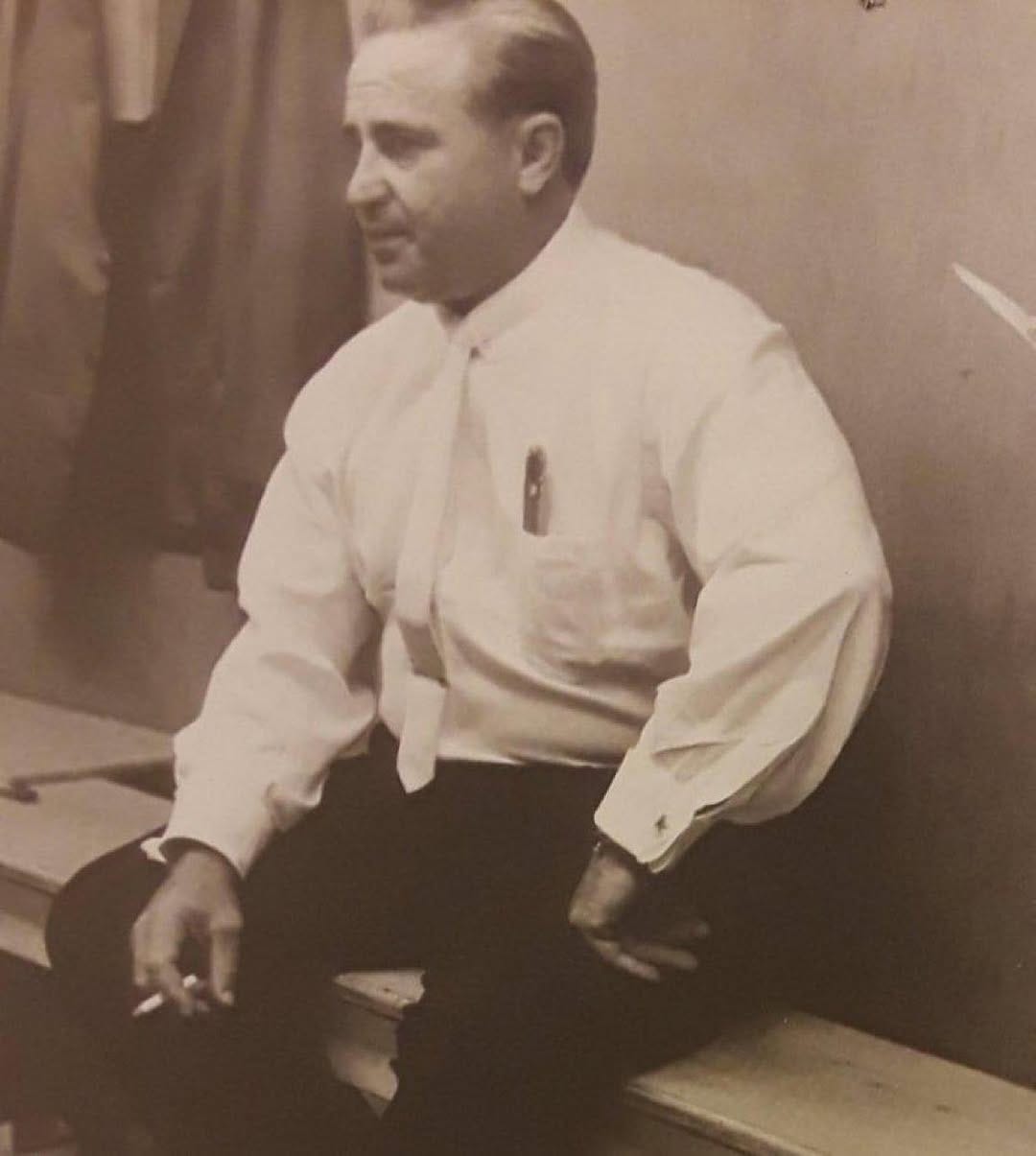
Pictured: San Francisco booking office owner and promoter, Roy Shire
The stage he inherited was one of the most successful wrestling offices on the West Coast. In 1960, former wrestler Roy Shire—billed in his ring days as “The Professor”—opened an outlaw promotion in San Francisco in defiance of Joe Malcewicz’s established NWA office. Shire’s first Cow Palace show, on March 4, 1961, drew more than sixteen thousand people and effectively ended the old regime. Television was the engine. Shire first put matches on KTVU in Oakland as National All-Star Wrestling, hosted by Bill Welsh and then by Walt Harris. A second weekly program, Big Time Wrestling, followed on KOVR and later on Sacramento stations. Harris, who also hosted the Friday live hour in the Bay Area, grew weary of the weekly drive inland for tapings. Renner, already based in Sacramento, stepped into the chair.
That chair became his for the rest of the promotion’s television life. After KTVU dropped the show in 1970, Shire moved Big Time Wrestling to KTXL Channel 40 in Sacramento, Saturday evenings at seven. The program was taped Thursday nights before a studio audience, then cut and shipped—sometimes with city-specific interviews—across Northern California and, at various points, into Utah, Nevada, Arizona, Hawaii, and Alaska. It was, for years, Channel 40’s highest-rated offering. Fans lined up early for studio tickets handed out by local sponsors. Two cameras worked the ring: one from a platform for the wide view, one on the floor for close-ups of holds, blood, and the interviews that sold the next Cow Palace or Memorial Auditorium card.
Renner’s roots in Sacramento’s boxing scene were central to his transition into professional wrestling.
By the time he became associated with Roy Shire, Renner had already established himself as a familiar ring announcer to Sacramento boxing fans. This was an important qualification in an era when wrestling promoters increasingly understood that television presentation could determine the success or failure of a territory.
Boxing and wrestling shared a common need for a professional announcer. The announcer had to introduce the competitors, establish the importance of the event, keep the audience informed and, perhaps most importantly, give the proceedings an air of legitimacy and occasion.
Renner understood that language.
That background also made him a natural fit for Sacramento, a city with a strong boxing tradition. His reputation in boxing preceded his wrestling career, and eventually his name became so closely associated with combat sports in the Sacramento area that the Sacramento Sports Hall of Fame’s biography of Tony “The Tiger” Lopez remembered Renner specifically as a famous Sacramento ring announcer and the voice of Big Time Wrestling.
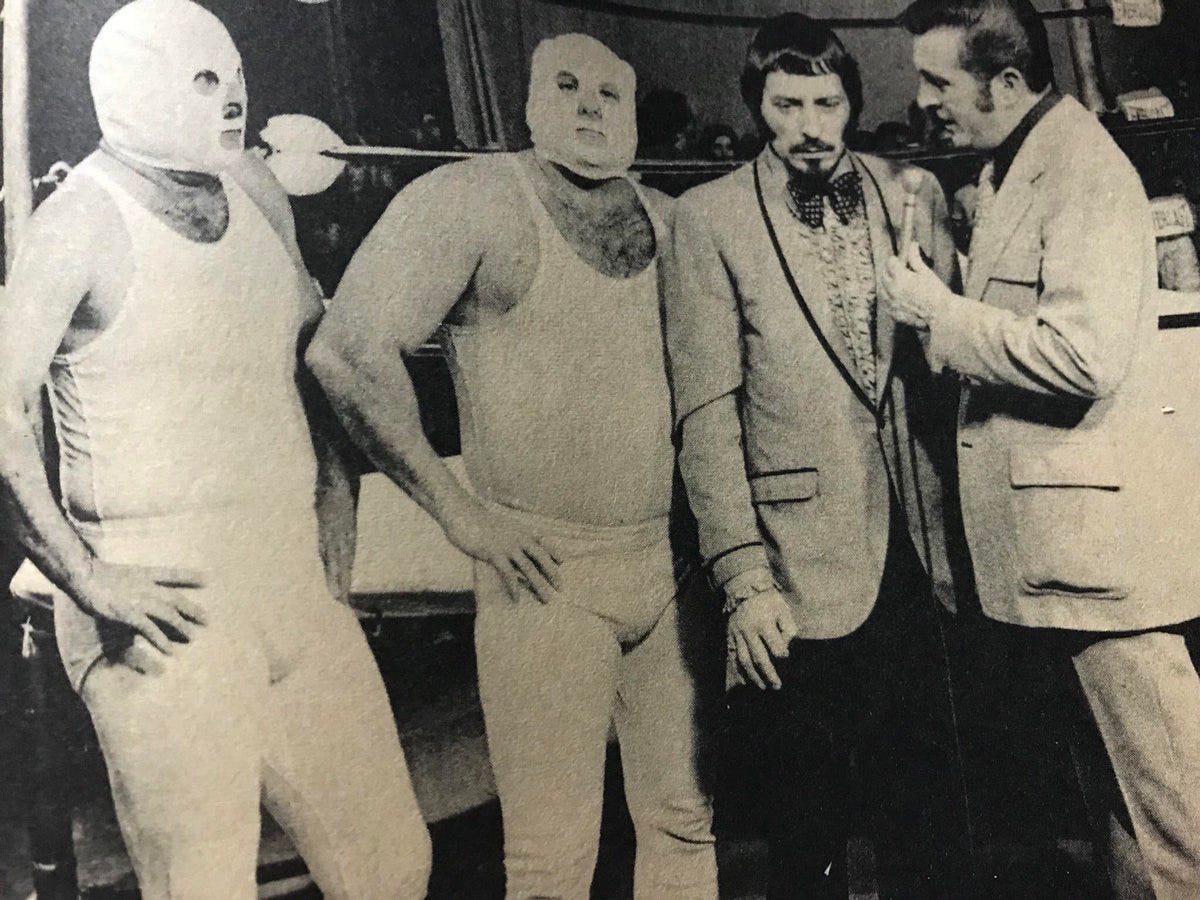
Pictured: Renner interviews Dr. Ken Ramey and The Masked Interns
Territory television of the 1960s and 1970s was not modern sports production. It was a hybrid of studio wrestling, live promo, and advertisement for the house show. The announcer had to sound authoritative without sounding like a mark, excited without sounding foolish, and loyal to the promoter’s story without giving away the finish. Renner did that week after week. He interviewed the territory’s great names as they passed through: Ray Stevens, the blond heel around whom Shire built so much of the office; Pat Patterson, first as Stevens’s partner in the Blond Bombers and later as a main-event champion; Pepper Gomez, the beloved strongman; Moondog Lonnie Mayne; Peter Maivia; Rocky Johnson; Kinji Shibuya; later arrivals such as Don Muraco, “Superstar” Billy Graham, and a young Roddy Piper. Surviving audio from a December 1972 KTXL taping captures him pressing The Great Mephisto after a loaded-boot finish on Patterson—skeptical, pointed, still playing the role of the public’s representative at the desk.
For a time he had company. Ray Stevens recommended Pepper Martin, the Canadian wrestler-turned-actor who had learned color commentary beside Dick Lane in Los Angeles. Shire flew Martin to Sacramento each week on the understanding that Martin’s film work came first. Martin brought an insider’s vocabulary and, at first, a babyface’s instinct to argue with heels during interviews. The pairing did not last. Program publisher Viktor Berry, who worked around the office, recalled that it ended without announcement: one night Renner simply came out alone, and the show returned to its familiar one-voice shape.
Berry is the closest thing Renner has to a contemporary biographer. A Sacramento teenager who sold photo yearbooks and arena programs, Berry lived a few blocks from the announcer and, too young to drive, rode with him to cards in Stockton and Sacramento. Renner “smartened him up” to the business—explained finishes and office politics—while insisting that around Shire the kid still act like a mark. The portrait Berry left is the one that has endured: the cigarillo, the sideways talk, the local celebrity who also worked boxing shows in town and who knew harness racing well enough that trips to the track with him were profitable.
In 1974, when a booking dispute kept Victor the Wrestling Bear out of a sold-out Memorial Auditorium date, Shire ordered Renner to tell the crowd the animal had died in a car crash on the way from Arizona. It was a crude piece of damage control, and it later figured in a lawsuit, but it also shows how completely the office trusted the man at the microphone to carry whatever story had to be told.
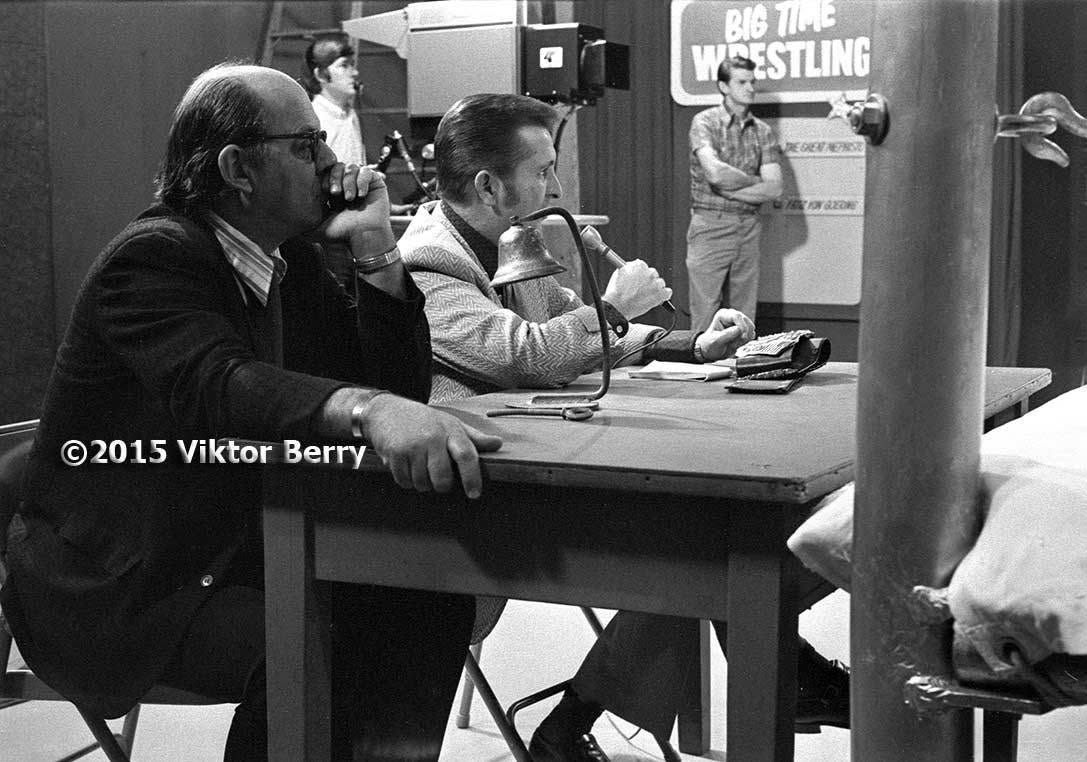
Pictured: Hank Renner calls a match, December 7th, 1972 between The Great Mephisto and Pat Patterson for the NWA United States Heavyweight Championship. Dr. Richard Russell, the attending doctor at ringside, is at the table with Renner and the title belt is on the table.
**Photo Credit: Viktor Berry
That connection produced one of the more revealing anecdotes about Renner’s announcing career. When Tony Lopez was introduced for a fight, Renner departed from the expected introduction and announced him as Tony “The Tiger” Lopez. The crowd embraced the nickname, and “The Tiger” became permanently associated with Lopez. That story tells us something important about Renner. He was not merely reading names from a card. He understood the theatrical side of announcing. He could recognize an opportunity, create a moment and give a performer an identity that could last.
That was precisely the sort of instinct that translated beautifully to professional wrestling.
Roy Shire had created Big Time Wrestling in 1960 after breaking away from Joe Malcewicz’s established San Francisco wrestling operation. Shire understood something that many promoters were only beginning to appreciate: television was not simply advertising for wrestling. Television was becoming the territory itself.
Shire’s promotion quickly developed an aggressive television strategy.
Big Time Wrestling emerged from the promotional war between Shire and Malcewicz and established the Cow Palace as its great home arena. The promotion’s television presentation was an essential part of the fight for control of Northern California. Shire’s product emphasized fast action, spectacular moves, colorful personalities and strong heel-and-babyface dynamics. The television program had to sell that product.
Initially, other announcers occupied the microphone. Walt Harris became one of the early television hosts, but eventually Harris left the position. Shire then brought in Renner.
The move made considerable sense. Renner already knew how to announce combat sports. He understood the mechanics of introducing fighters and communicating action to an audience. More importantly, he had a professional broadcasting voice that could make wrestling sound like a major sporting event.
Renner therefore represented an important bridge between two worlds: the traditional sports-announcing culture of boxing and the increasingly theatrical television culture of professional wrestling.
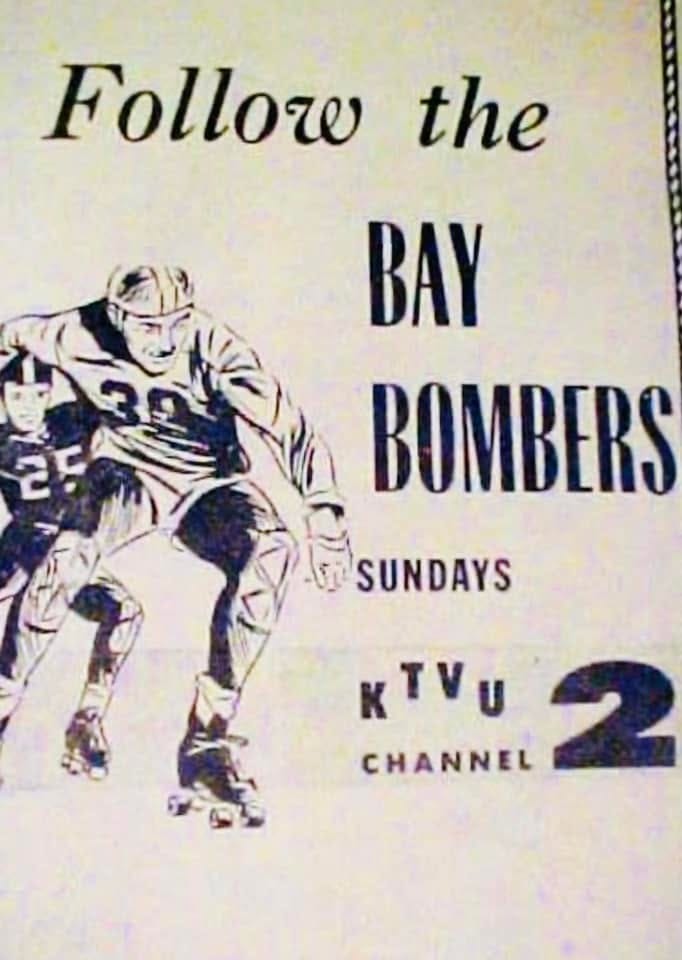
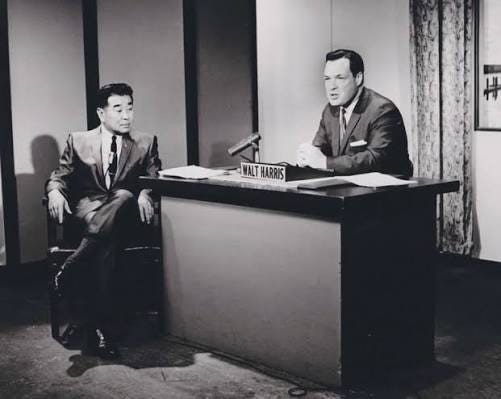
Pictured: Walt Harris, the voice of both pro wrestling and roller derby based at KTVU-TV, Channel 2 in Oakland, California
Hank Renner became the host and principal announcer of Roy Shire’s Big Time Wrestling television during the Sacramento phase of the promotion’s growth. He succeeded Walt Harris and became identified with the program. One historical account of Northern California wrestling places Renner’s arrival during the Sacramento Channel 3 period and notes that Shire selected him because of his previous reputation as a boxing ring announcer. Renner is also described as making an easy transition into wrestling announcing.
That description is significant. Renner did not have to reinvent himself.
He already understood how to introduce athletes, how to project his voice over an arena, how to maintain composure during unpredictable action and how to make an audience feel that what they were watching mattered.
Those skills were perfectly suited to Roy Shire’s product.
The Sacramento component of Big Time Wrestling is critical to understanding Renner’s importance.
Although Roy Shire’s promotional headquarters and greatest venue were associated with the San Francisco Bay Area and the Cow Palace, Sacramento became an increasingly important television center for the promotion. The relationship between Sacramento television and Big Time Wrestling eventually became one of the most productive television arrangements in the territory’s history.
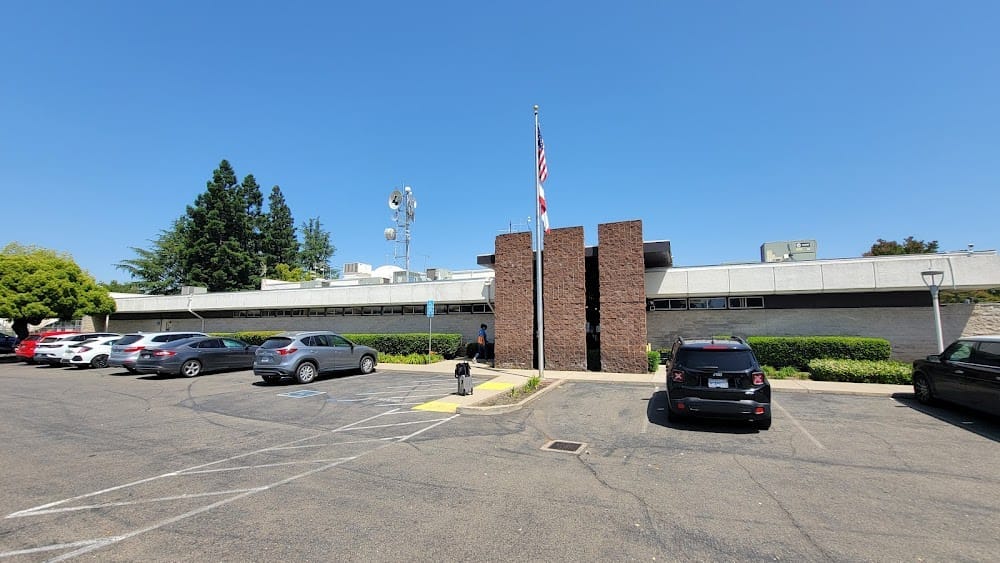
Pictured: KTXL-TV Channel 40 building in Sacramento, California
Renner became the face and voice of that operation. The transition to KTXL Channel 40 around 1969–1970 was particularly important. KTXL was a new independent Sacramento station, and Big Time Wrestling became one of its signature programs.
The show was broadcast on Saturday evenings, with Renner handling the play-by-play.
This was not merely another local wrestling program.
The KTXL signal eventually became capable of reaching a much larger audience through cable systems, and Big Time Wrestling consequently moved far beyond the immediate Sacramento market. Historical accounts of the station’s wrestling program indicate that viewers throughout portions of the western United States could encounter Renner and Big Time Wrestling through cable distribution.
That changed Renner’s reach dramatically. A man who had begun as a Sacramento boxing announcer was suddenly becoming a recognizable television personality throughout the West.
There is a particularly revealing recollection from Northern California wrestling historian Viktor Berry concerning Renner’s popularity. Renner reportedly told Berry that wherever he traveled west of the Mississippi River, people would recognize him because they had seen him on Channel 40 and its wrestling broadcasts. Whether every detail of that recollection can be independently documented is less important than what it reveals about the television culture of the era.
Before the national expansion of cable television and before the WWF’s national syndication machine, a regional television personality could become remarkably famous without ever becoming nationally known.
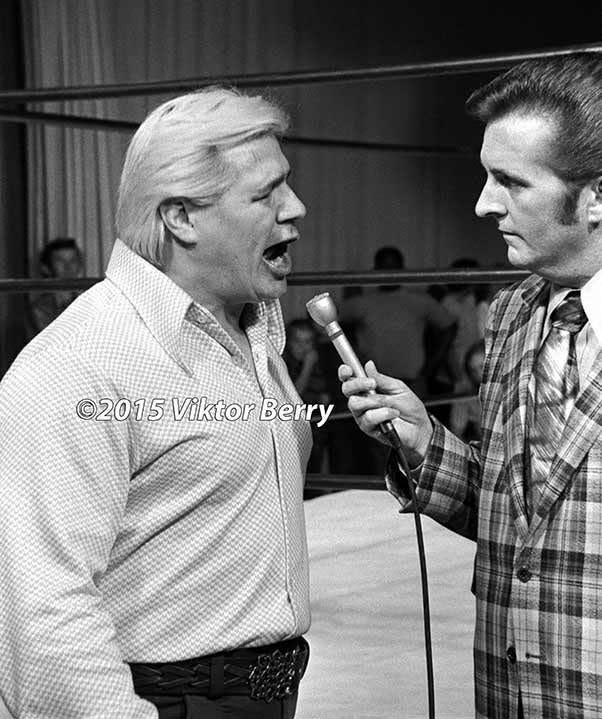
Pictured: Renner interviews one of the biggest stars of the Northern California Territory, Pat Patterson at KTXL-TV in Sacramento on June 29th, 1972.
**Photo credit: Viktor Berry
That was the territory system.
A wrestler could be a superstar in one region and virtually unknown somewhere else. The same was true of announcers. Renner belonged to Northern California. To viewers who watched Big Time Wrestling every week, his voice was part of the experience. He was the person who explained what they were seeing, identified the wrestlers and gave continuity to a constantly changing roster. And because Big Time Wrestling was built around television, Renner’s role was more important than that of a conventional ring announcer.
He was the audience’s guide into Roy Shire’s world.
The Renner Style
The surviving television material demonstrates why Renner worked so well within the Shire presentation.
Big Time Wrestling was not necessarily trying to present professional wrestling in the restrained, almost documentary style that would later become associated with Gordon Solie.
Roy Shire’s product was different.
It was colorful.
It was loud.
It was built around personalities, feuds, physicality and spectacle.
Renner’s background in boxing allowed him to maintain the tone of a sports announcer while still accommodating wrestling’s theatrical dimensions. That distinction is important. A wrestling announcer in the territory era had to walk a delicate line. He was expected to treat the performers as legitimate athletes while simultaneously participating in the dramatic world created by the promoter.
He had to explain the rules without destroying the excitement. He had to sell the villain without sounding ridiculous. He had to communicate the danger of a match without revealing the machinery behind the production. Renner was particularly valuable because he came to wrestling with an established sports-announcing identity. He did not sound like someone pretending to be a sports announcer. He already was one.
The list of performers whose matches passed through Renner’s microphone is essentially a who’s who of West Coast wrestling.
Ray Stevens was the central villain of Roy Shire’s promotion for much of its early history. Pat Patterson became one of its greatest stars. Pepper Gomez, Peter Maivia, Moondog Mayne, Chavo Guerrero, Mando Guerrero, Kinji Shibuya, Dutch Savage and many others became important components of the promotion.
Later came wrestlers who would become major figures elsewhere, including Don Muraco, Rocky Johnson, Roddy Piper, Superstar Billy Graham and Buddy Rose.
Renner’s career therefore overlaps several generations of wrestlers. That is one of the reasons his contribution deserves more attention. He wasn’t simply the announcer of one particular era of Big Time Wrestling. He helped provide continuity as the roster changed. The stars changed. The feuds changed. The television stations changed. The territory itself changed. Renner remained the familiar voice.
Pepper Martin Joins Renner
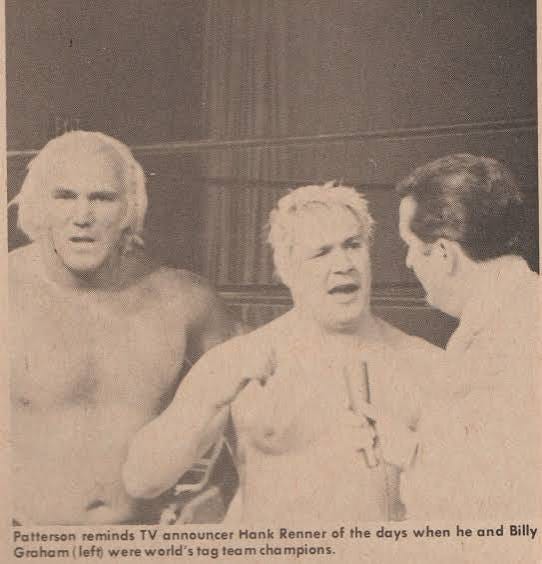
Pictured: Renner interviews Pat Patterson and Superstar Billy Graham
One of the most interesting chapters in Renner’s television career came when Pepper Martin joined him as color commentator. Martin was already an established wrestler and personality. His presence beside Renner created a very different broadcast dynamic from the conventional announcer-only presentation.
Martin could speak from the perspective of a wrestler. He could react emotionally to the performers and, at times, become personally involved in the interviews and angles Renner provided the professional broadcasting foundation. Martin provided the wrestling personality. It was a classic play-by-play/color combination, although in the territory era the roles were often much less rigid than they would become in later decades.
Martin later recalled that Ray Stevens contacted him about doing commentary with Renner on the San Francisco television show. Martin traveled to Las Vegas to meet with Roy Shire, and Shire eventually brought him into the operation. The arrangement required Martin to travel to Sacramento each week for the television tapings.
That detail underscores how important the Sacramento production had become.
The show might have been branded as San Francisco wrestling, but Sacramento was increasingly the television factory. And sitting at the center of that factory was Hank Renner.
This is where Renner’s importance becomes larger than simply “the announcer.”
Television had fundamentally altered the territory system. In the old wrestling business, a promoter needed an arena, a newspaper and a network of relationships with other promoters. By the 1950s and 1960s, television had become equally important. The promoter needed to create stars whom people recognized before they ever walked into the arena.
Renner helped do exactly that. The audience could see Ray Stevens on television before going to the Cow Palace.
They could watch Pat Patterson. They could become familiar with Pepper Gomez. They could learn the personalities of the heels and babyfaces. They could follow an angle from one week to the next. They could hear Renner explain what had happened and why the next match mattered. That is the hidden power of a territory announcer. He created continuity. Without that continuity, weekly wrestling television could become little more than a collection of unrelated matches.
With it, the program became a serialized drama.
WATCH VIDEO: Hank Renner interviews Moondog Lonnie Mayne
By the 1970s, Roy Shire’s television operation had become one of the defining regional wrestling broadcasts in the United States.
KTXL’s reach gave the program an audience far beyond Sacramento.
Fans and historians’ accounts of the period describe Big Time Wrestling as one of the station’s major attractions and indicate that the wrestling program remained among its top-rated offerings for much of its run.
That is remarkable when considered in context. KTXL was an independent station. There was no national wrestling company behind the program.
There was no nationwide cable network. There was no massive corporate advertising machine.
There was Roy Shire, his wrestlers, his production operation and Hank Renner. Yet the program could reach viewers throughout the West. This is one of the great underappreciated accomplishments of territory-era wrestling television. The regional announcer could become a quasi-national personality without ever being part of a national promotion.
The “Victor the Wrestling Bear” Incident
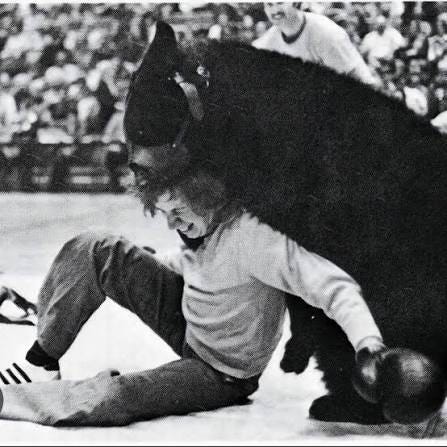
Pictured: Victor The Wrestling Bear, 8-foot 3-inches ta;; and 680 pounds wrestles with the only man ever to pin him, Eric Wayne Boyd
Perhaps the strangest surviving story involving Renner illustrates another aspect of his job.
In 1974, Roy Shire and his associates promoted an appearance by Victor, a wrestling bear, at Sacramento Memorial Auditorium. The bear became a major attraction, and tickets sold strongly. But shortly before the show, a dispute developed between Shire and the bear’s owner. The owner refused to provide the animal.
The promoter was faced with a packed building and no bear.
According to a later account in Inside Sacramento, Shire ordered Renner to tell the audience that Victor had been killed in a car accident while traveling from Arizona to Sacramento. It was an extraordinary situation, but it demonstrates how deeply Renner was trusted. The announcer was the public face of the promotion.
When something went wrong, it was his job to stand before the audience and make the promoter’s explanation believable. In another era, this might have been dismissed as an amusing wrestling anecdote. From a historical standpoint, however, it demonstrates the central role of the announcer in maintaining the territory’s illusion. Renner wasn’t just calling matches.
He was part of the machinery that kept the wrestling world functioning.
Big Time Wrestling in the Fragmentation Stage of the Territory Era
The wrestling business changed rapidly during the second half of the 1970s.
The old territorial structure was beginning to weaken. Television competition increased. Wrestlers became more mobile. Promoters faced rising costs. Audiences became harder to maintain.
Big Time Wrestling was not immune.
Yet Renner remained associated with the television presentation. Surviving recordings from the late 1970s show him continuing to provide commentary on programs produced in Sacramento. His voice can be heard calling matches involving such future stars as Roddy Piper and Buddy Rose. These recordings are particularly valuable because they preserve Renner’s work at the end of the territory era.
They also demonstrate how his career stretched across an extraordinary period of wrestling history. He had entered the business when the territory system was at its height. He remained there as television became increasingly sophisticated. And he was still announcing when the territorial structure itself was beginning to collapse.
The end came in phases.
By the late 1970s, Big Time Wrestling’s television position was deteriorating. The program was eventually removed from the air, and Roy Shire’s ability to use television to drive attendance was severely weakened. This was devastating because Shire had built his promotion around television. His great Cow Palace shows depended upon viewers seeing the wrestlers on television beforehand.
Without that weekly connection, the promotional machine lost much of its power. Shire experimented with borrowed television tapes and outside talent arrangements during his final years, but the old formula could not be recreated. Renner’s regular television career with Big Time Wrestling therefore effectively ended before Shire’s promotion itself finally closed.
That distinction matters.
The territory did not last. Ratings sagged in the late 1970s. National expansion, first from Verne Gagne’s AWA and then from Vince McMahon’s WWF, ate the old circuits. Big Time Wrestling left television in 1979. Shire suffered a heart attack in 1980 and closed the office after a final Cow Palace battle royal in January 1981. Renner stayed in Sacramento.
The end of the program was not simply the end of a television series. It represented the collapse of one of the most successful regional wrestling television operations of its generation.
The Renner Impact
WATCH VIDEO: Hank Renner commentary on Roddy Piper plaing his bagpipes and then wrestling Pete Marquez in 1978
Renner’s career should also be considered within the larger history of Sacramento sports. He was not simply a wrestling announcer who happened to work in Sacramento. He was a Sacramento combat-sports personality who moved naturally between boxing and wrestling. His work with Tony Lopez demonstrates how well known he could be within the local sports community.
The fact that a boxing personality could become the voice of professional wrestling tells us something about the sports culture of Sacramento during the territory era. Boxing and wrestling were not isolated entertainment worlds.
They shared arenas. They shared audiences. They shared announcers. They shared promoters and publicity techniques. And they shared the understanding that the announcer could elevate an event.
Renner embodied that connection.
He left no Hall of Fame plaque and no boxed DVD set with his name on the spine. What he left is the shape of a certain kind of American sports broadcasting that has almost disappeared: the local man who called the local promotion, who also knew the fights and the horses, who was famous enough in his city that a teenager could get a ride to the arena, and whose voice, for thousands of people, was wrestling. In an industry that later turned announcing into a national brand, Hank Renner remained what the territories required him to be—the man who sat at the desk in Sacramento and told Northern California what it was seeing, and why it should buy a ticket to see it again.
31 Great Territory Era Television Announcers Series
Profile 1: Larry Matysik, Wrestling At The Chase, St. Louis, Missouri
Profile 2: Sam Menacker, World Wrestling Association, Indianapolis, Indiana
Profile 3: Bob Caudle, Mid-Atlantic Championship Wrestling, Raleigh, North Carolina
Profile 5: Ed Whalen, Stampede Wrestling, Calgary, Alberta, Canada
Profile 6: Paul Boesch, Houston Wrestling, Houston, Texas
Profile 7: Ray Morgan, WWWF Washington, D.C.
Profile 8: Bill Mercer, Big Time & World Class Championship Wrestling, Dallas, Texas
Profile 9: Lord Athol Layton, Toronto, Detroit & Australia
Profile 10: Dick Lane, NWA Hollywood, Los Angeles, California
Profile 11: Marty O’Neill AWA Minneapolis, Minnesota
Profile 13: Bill Kersten, All-Star Wrestling, Kansas City, Missouri
Profile 14: Harry Thornton, Gulas-Welch Tennessee Territory, Chattanooga, Tennessee
Profile 15: Dr. Alfonso Morales, Lucha Libre Mexico
Thank You for Watching and Listening
I’m Tony Richards, Pro Wrestling Historian, Author and Storyteller. I share pro wrestling historical items in each issue of the Time Tunnel Pro Wrestling History Newsletter and each episode of our podcast show. Thanks for your support! If you enjoy my information on select events, matches and insights, please share with folks you think might like to be a subscriber!
Remember, Premium subscribers get access to exclusive and special content such as some special issues including a multi-part deep dives on wrestling territories, wrestler bios and championship title histories, special audio and video interviews on territory pro wrestling and more available in the Pro Wrestling Time Tunnel for Premium Subscribers. Being a Premium Subscriber also means you support me in my efforts to document Pro Wrestling History through my research, writing, books, vidoes and podcasts. And…I have something very special planned for our Premium Subscribers on the Podcast side of things in 2026! Details soon here in the Pro Wrestling Time Tunnel.