


The Voice of Lucha Libre: Dr. Alfonso Morales and the Soundtrack of Mexican Wrestling’s Modern Era
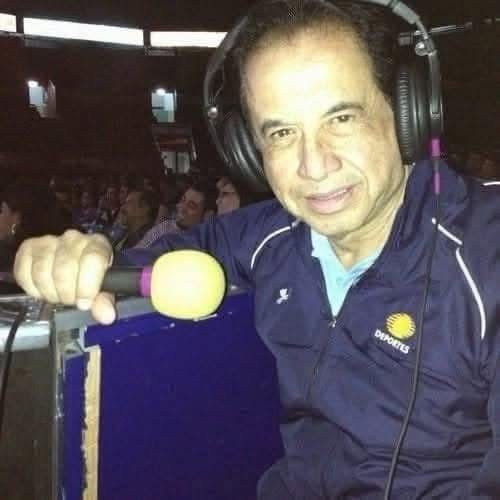
In the rich tapestry of professional wrestling history, few figures loom as large behind the microphone as Dr. Alfonso Morales. For generations of Mexican fans—and those who discovered lucha libre through Televisa’s broadcasts—his rich, passionate, and often indignant voice was synonymous with the sport itself. Born Gilberto Alfonso Morales Villela on February 4, 1949, in Huetamo, Michoacán, and standing an imposing 6 feet 2 inches tall, Morales became the authoritative narrator of lucha libre’s return to national prominence in the 1990s and its continued cultural dominance into the 21st century.
He passed away on December 17, 2020, at age 71 in Mexico City from kidney failure, leaving behind a legacy as one of the most respected and beloved sports broadcasters in Mexican history. His work spanned decades, bridged the old territorial-style lucha with the spectacle-driven boom years, and helped define how millions experienced the high-flying, dramatic world of masked warriors.
Morales grew up after his family relocated to Mexico City. He pursued higher education at the National Autonomous University of Mexico (UNAM), where he studied medicine and specialized in psychiatry, earning a doctorate. He practiced psychiatry only briefly before shifting fully to journalism and broadcasting. This medical and psychiatric training provided him with a foundation of analytical depth and a methodical, patient approach that would later infuse his commentary with psychological insight—allowing him to dissect wrestlers’ strategies, motivations, mental resilience, and the toll of high-stakes performances in a way that went beyond typical play-by-play narration.
His broadcasting career began somewhat serendipitously in the mid-1970s. While working at a college radio station—recommended by actor and producer Alonso Sordo Noriega—he played opera and classical music on the night shift. In 1975, he joined XEX radio and Channel 11. There, he was “accidentally” assigned to cover a major boxing match between Carlos Palomino and Wilfredo Benítez in San Juan, Puerto Rico. Nervous and carrying $10,000 in transmission rights fees, Morales endured a memorable airport encounter with immigration officials and even left behind a briefcase full of cash (retrieved safely). This baptism by fire launched his dual focus on boxing and professional wrestling.
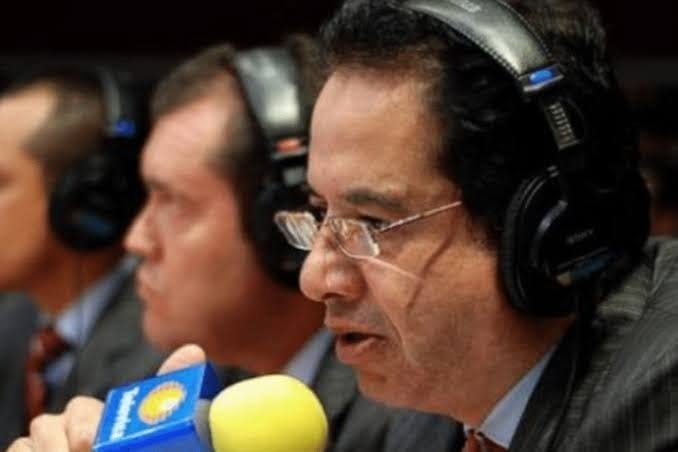
He quickly developed relationships with legends such as El Cavernario Galindo, El Santo, and Blue Demon. By 1980, he had joined Televisa, where he would spend the bulk of his career.
Lucha libre had largely disappeared from national Mexican television since the early 1950s. Its revival on Televisa in the late 1970s and especially the 1990s created a new golden age, and Morales was at the center of it. He covered pivotal early events for the network’s sports program Acción, including El Santo’s retirement show at El Toreo de Cuatro Caminos and André the Giant’s debut at Arena Coliseo.
To better understand the athleticism and risks involved, Morales trained at Arena México alongside Coloso Colosetti. He arrived early each morning; Blue Demon was often the first luchador there. This hands-on experience—combined with his psychiatric and medical background—deepened his respect for the performers. He gained direct insight into the physical demands and the mind-body connection, noting how lucha libre “produces pain and stimulates the pain threshold.” He observed that wrestlers could endure punishing moves like the desnucadora (where the brain vibrates intensely) and recover quickly to continue, contrasting it with other sports where athletes might dramatically react to lesser impacts. His conclusion captured a key insight: “Lucha libre is more real than people think.” This perspective humanized the luchadores, portraying them as athletes with genuine mental fortitude and resilience.
On weekly shows recorded at venues like Pavillon Azteca, Arena Coliseo, and Arena México, Morales worked with rotating partners. Early collaborators included Carlos Hernández Valdés on Cablevisión and the legendary Pedro “El Mago” Septién on Galavisión broadcasts to the United States starting in 1983. The announcing style evolved from strict turn-taking on falls to more dynamic, simultaneous commentary with specialists handling replays or interviews while Morales conducted in-ring segments.
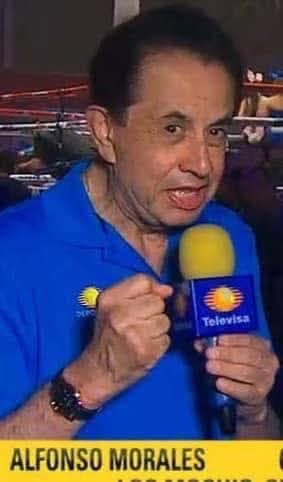
Morales brought dignity, knowledge, emotional investment, and psychological nuance to the booth. His psychiatric training contributed to an analytical depth that allowed him to explore wrestlers’ strategies, the mental toll of matches, and the emotional drama unfolding in the ring. He was the quintessential técnico (face) announcer—often appalled by the excuses or dirty tactics of rudos (heels) and their sympathetic commentators. His most famous exclamation—“¡Qué bárbaro, Magadán!”—directed at partner Leobardo Magadán, became a cultural touchstone, frequently trending on social media after his passing.
He shared duties with Arturo “Rudo” Rivera in the 1990s, creating perfect chemistry: Morales reacting with exasperation or awe while Rivera leaned into villainous perspectives. Other frequent colleagues included Miguel Linares, Andrés Maroñas, and Javier “El Gusano” Llanes. Morales often coined nicknames for wrestlers and delivered expressive praise during spectacular dives and high spots, helping amplify the drama of the 1990s lucha boom while highlighting the courage and tactics involved.
One of his signature openers was the enthusiastic “¡Por Televisa, la mejor lucha libre del mundo!”—a proud declaration that encapsulated the national pride and entertainment value Televisa brought to the product.
He wrote columns for newspapers including El Sol de México, El Heraldo de México, Ovaciones, and Récord. He served as Editor-in-Chief of Box y Lucha magazine for several years and was a founding member of Super Luchas in 1991.
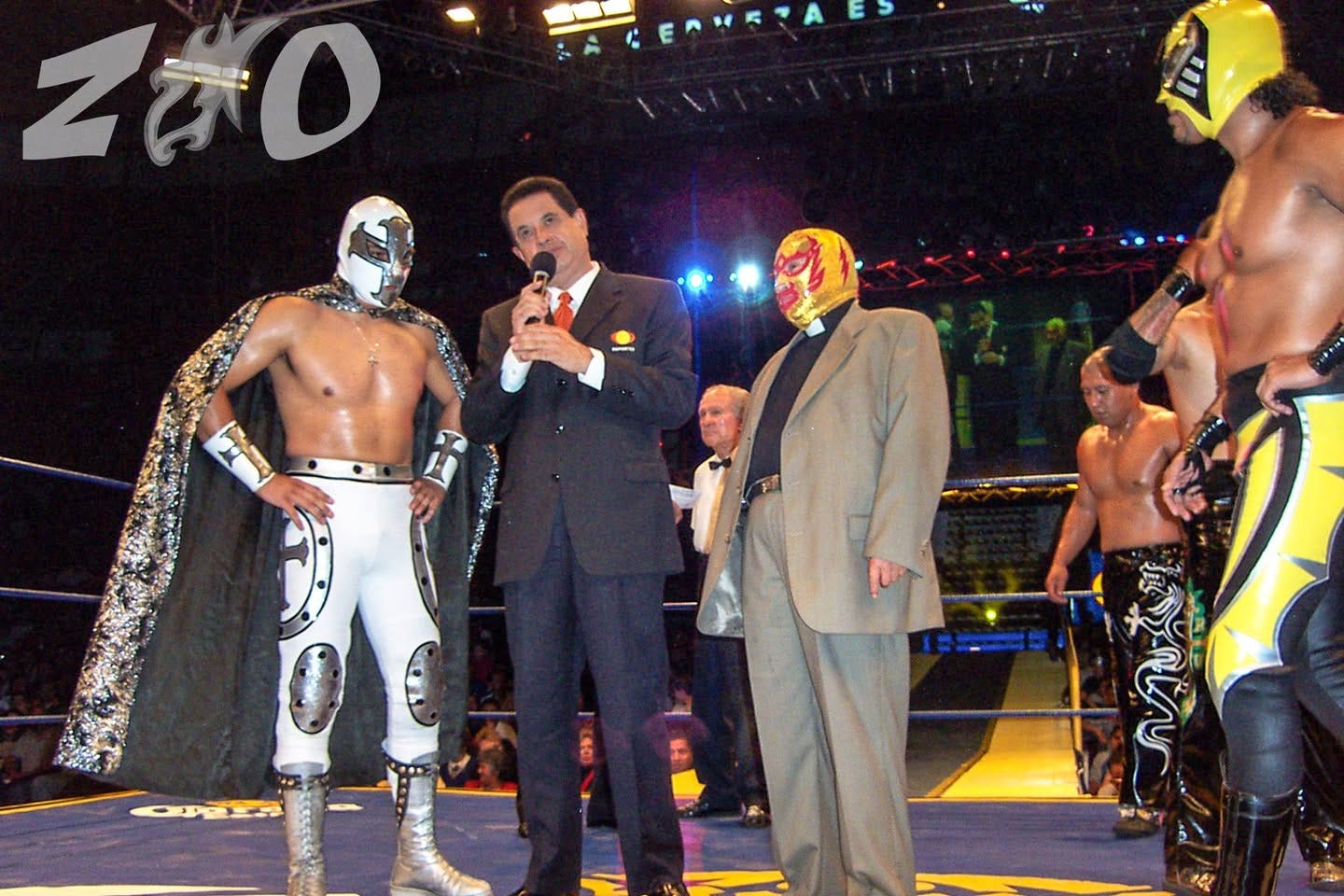
Dr. Alfonso Morales’ background as a psychiatrist (specializing after medical studies at UNAM, with only brief clinical practice before fully entering broadcasting) subtly but meaningfully shaped one of the most distinctive voices in lucha libre history. While he did not deliver overt psychological analyses or use clinical terminology on air, his training fostered a methodical, observant, empathetic, and human-centered style that set him apart. It combined clinical-like observation with passionate narration, helping fans appreciate not just the athletic spectacle but the mental and emotional layers of the performances.
A hallmark of Morales’ style was patience and attentiveness—qualities honed in psychiatric training, where listening, noticing subtle cues, and understanding underlying motivations are central. Accounts describe him employing a “methodical, patient approach,” waiting for “a telltale sign” before highlighting key moments, such as the buildup to a high-risk tope suicida (suicide dive) or a submission hold.
This allowed him to dissect strategies and psychologies in real time: the mental pressure on a wrestler in a high-stakes mask match, the tactical mind games in a feud, or the resilience required to continue after a punishing sequence. Rather than pure hype, his calls often carried insightful weight, exploring the “mental toll and tactics” of lucha libre. He blended educated, descriptive language (cultured adjectives) with accessible, streetwise phrasing rooted in his background, making complex ring psychology feel relatable and dramatic.
Morales’ psychiatric lens contributed to a dignified, empathetic tone, particularly when championing técnicos. He reacted with genuine indignation or disbelief at rudo underhanded tactics—most famously his exasperated “¡Qué bárbaro, Magadán!” aimed at partner Leobardo Magadán. This created compelling booth drama and mirrored an understanding of character motivations, crowd psychology, and the emotional investment in heroic narratives.
His commentary humanized luchadores. Informed by his Arena México training and medical insight into pain thresholds and recovery (e.g., the brain “vibrating” after a desnucadora yet the wrestler rising quickly), he conveyed respect for their mental fortitude. He emphasized that “lucha libre is more real than people think,” underscoring the genuine courage, focus, and psychological commitment behind the masks and high-flying moves. This empathetic framing elevated performers, portraying them as resilient athletes rather than mere entertainers.
Morales was highly expressive, using elongated exclamations and memorable phrases that amplified excitement while reflecting emotional awareness:
• “¡Enooooorme!” (Enormous!) for spectacular moves.
• “¡Impresionante!” (Impressive!) to underscore skill or bravery.
• The signature “¡Por Televisa, la mejor lucha libre del mundo!” as an enthusiastic opener.
These were delivered with vocal dynamism—rising intensity, timing, and passion—that engaged listeners on an emotional level. His chemistry with partners like Arturo Rivera (the rudo foil) or Magadán turned the booth into a psychological theater, with Morales often serving as the voice of reason or awe, heightening the overall drama.
His personal philosophy—rooted in positivity, realism, gratitude, and rejecting excuses—infused his work with a psychologically healthy perspective. He celebrated big moments with appreciation rather than exaggeration, helping fans connect with wrestling as a source of inspiration and catharsis. This balanced tone (optimistic yet grounded) likely stemmed from his psychiatric understanding of mental well-being and resilience.
Morales’ style shifted lucha libre commentary toward greater depth: less rote description, more insight into the human drama. It was observational and empathetic rather than sensationalist, informed by an understanding of stress, pain management, motivation, and performance psychology. While not a practicing psychiatrist analyzing wrestlers clinically on air, he brought a thoughtful, humanistic lens that made broadcasts more engaging and respectful.
This approach helped popularize the sport during its televised boom, making the psychological stakes—the courage under pressure, the battle of wills, the emotional highs—palpable for audiences. Fans and peers remember him not just for his voice, but for how he made the spectacle feel profoundly real and human.
The Enduring Tinieblas Rumor
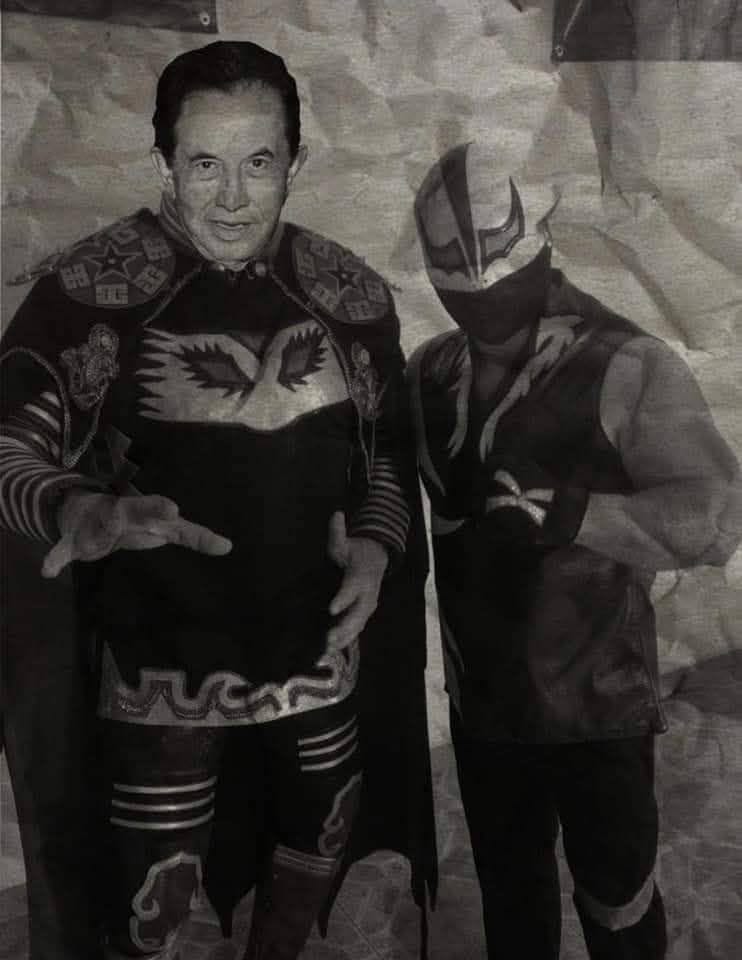
One of the most entertaining chapters in Morales’ career was the persistent urban legend that he was secretly the masked wrestler Tinieblas. Both men were tall with similar builds. The rumor gained traction in the early 1980s when Tinieblas gifted Morales a mask before a main event (Tinieblas teaming with Ringo Mendoza against El Faraón and Sangre Chicana). Rushed to the announce position still holding the mask, Morales was spotted by Septién, who joked, “Look, here it is, Tinieblas’ mask…”
Luchadores and staff played along, greeting him as “Tinieblas.” Morales amplified the fun by disappearing during Tinieblas matches. Tinieblas leaned into it too, posing with medical gowns and instruments. Morales always denied it publicly—he had commentated Tinieblas matches and even intentionally dropped the gifted mask on one occasion to fuel the bit—but the myth endured for decades, becoming a beloved inside joke in lucha circles that playfully touched on themes of identity and performance.
The return of national lucha libre television in 1990 sparked a massive boom. Stars like Perro Aguayo, Konnan, Atlantis, Rayo de Jalisco Jr., El Hijo del Santo, Vampiro, and Octagón rose to new heights. Morales was the steady voice guiding fans through it all, whether on CMLL or AAA programming (he shuttled between both after Antonio Peña’s 1992 split).
Among his favorite broadcasts were the Rayo de Jalisco Jr. vs. Cien Caras mask match in 1990 and the Atlantis vs. Villano III mask match in 2000. He also made a notable prediction: after Dr. Wagner Jr. was ejected as second in a 1999 mask-vs-mask match at Arena México, Morales declared, “Wagner, nos vemos para el 2017.” Wagner Jr. indeed lost his mask in 2017—18 years later.
In later years, Morales observed that AAA felt more fun and innovative, while CMLL had become repetitive with fewer major events.
Morales received a national announcing award in Mexico and was inducted into the Wrestling Observer Newsletter Hall of Fame in 2012. In 2018, he entered the AAA Hall of Fame and received a tribute from Televisa at Arena Coliseo recognizing his 40 years in wrestling. The government of Michoacán honored him in 2019 for his journalism and communication career.
Health issues limited his on-air work in his final years, though he made select appearances, including at Triplemanía XXVI in 2018. He stepped away from Televisa Deportes boxing coverage around 2016.
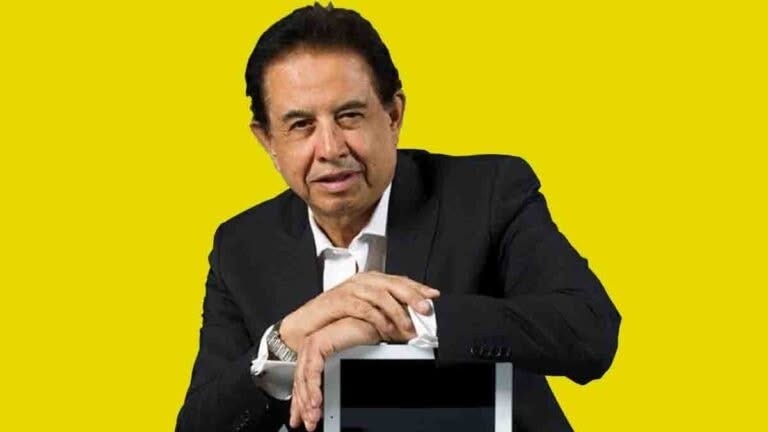
Beyond the booth, Morales was remembered as friendly, respectful, and positive. His psychiatric perspective and life philosophy carried a psychologically grounded tone emphasizing resilience and gratitude. In an interview with Super Luchas’ Ernesto O’Campo, he shared:
“In this life, we are here to be happy… There are many excuses: when it rains, when it’s hot, when it’s cold, when you climb onto public transit… Excuses for being unhappy, there are many, but we have to be in life, positive and realists. There is no other way. We must be positive and always thank God. One way of being a good Catholic is to not be bugging people!”
This outlook aligned with his empathetic view of wrestlers and fans, modeling a healthy approach to facing challenges—relevant both to performers pushing their limits and to audiences finding catharsis in the ring.
Dr. Alfonso Morales was more than an announcer—he was the soundtrack to lucha libre’s modern renaissance. His knowledge, passion, larger-than-life personality, and psychiatric-informed insights elevated the performers and made the drama accessible, substantial, and thrilling for millions. He bridged generations, connected fans to the sport’s athletic and theatrical roots, and created moments of pure joy and indignation that still echo in wrestling culture today.
His nephew, Leonardo (Leo) Riaño, announced his passing, noting he was surrounded by family. Tributes flowed from CMLL, AAA, Rey Mysterio, Tinieblas, Leobardo Magadán, Arturo Rivera, and countless fans who grew up with his voice.
For historians and fans of territorial and lucha libre wrestling, Morales represents the pinnacle of what a great announcer can achieve: not just calling the action, but becoming an inseparable part of the spectacle itself—bringing analytical depth, respect for the human element, and an understanding of resilience that enriched the entire experience. In the annals of pro wrestling broadcasting, few voices carry the weight, warmth, and unmistakable authority of Dr. Alfonso Morales. Por Televisa—and for lucha libre worldwide—he truly delivered the best wrestling in the world.
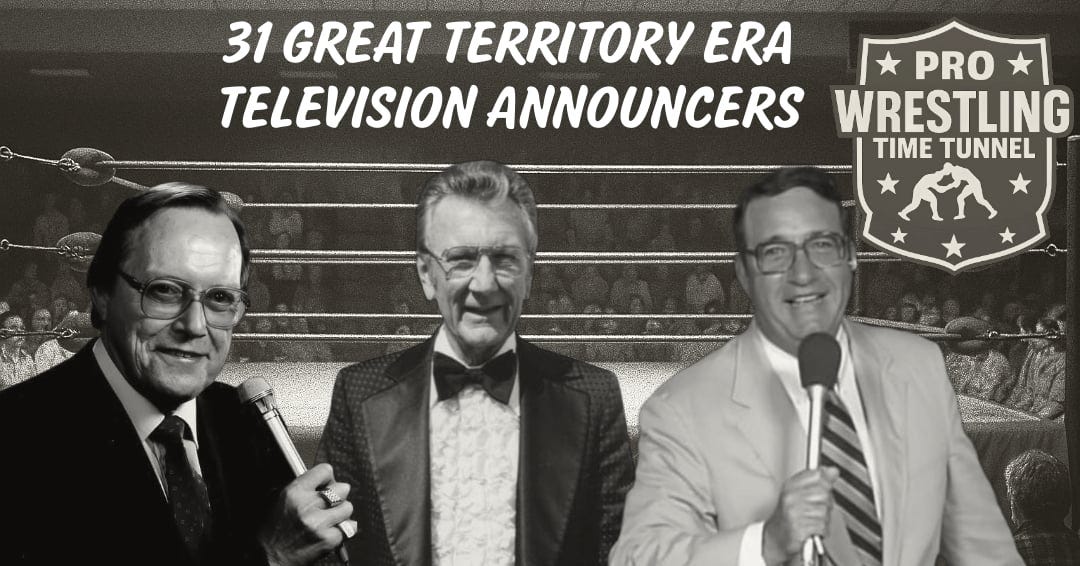
31 Great Territory Era Television Announcers Series
Profile 1: Larry Matysik, Wrestling At The Chase, St. Louis, Missouri
Profile 2: Sam Menacker, World Wrestling Association, Indianapolis, Indiana
Profile 3: Bob Caudle, Mid-Atlantic Championship Wrestling, Raleigh, North Carolina
Profile 5: Ed Whalen, Stampede Wrestling, Calgary, Alberta, Canada
Profile 6: Paul Boesch, Houston Wrestling, Houston, Texas
Profile 7: Ray Morgan, WWWF Washington, D.C.
Profile 8: Bill Mercer, Big Time & World Class Championship Wrestling, Dallas, Texas
Profile 9: Lord Athol Layton, Toronto, Detroit & Australia
Profile 10: Dick Lane, NWA Hollywood, Los Angeles, California
Profile 11: Marty O’Neill AWA Minneapolis, Minnesota
Profile 13: Bill Kersten, All-Star Wrestling, Kansas City, Missouri
Profile 14: Harry Thornton, Gulas-Welch Tennessee Territory, Chattanooga, Tennessee
Thank You for Reading, Listening and Watching
I’m Tony Richards, Pro Wrestling Historian, Author and Storyteller. I share the history of pro wrestling territory era in each content vehicle of the Pro Wrestling Time Tunnel. We publish the Week-In-Review each Sunday as a digest for our community members. If you enjoy my information on select events, matches and insights, please share it with folks you think might like to be a subscriber!
Remember, premium investors get access to exclusive and special content such as some special issues including a multi-part deep dives on wrestling territories, wrestler bios and championship title histories, special audio and video interviews on territory pro wrestling and more available in the Pro Wrestling Time Tunnel for Premium Investors who contribute and invest in the work I do to preserve the history of the territory era.