



The Fighting Champion: Territory Wars, Regional Challengers, and the Burden of the NWA World Heavyweight Championship
November 1976 found Terry Funk approaching the end of his first full calendar year as the National Wrestling Alliance World Heavyweight Champion. Eleven months earlier, on December 10, 1975, Funk had defeated Jack Brisco in Miami Beach, Florida, to capture wrestling’s most prestigious traveling championship. His victory represented more than a personal achievement. It continued the remarkable emergence of the Funk family as one of the dominant forces in professional wrestling and reinforced the importance of Amarillo, Texas, as a center of influence within the National Wrestling Alliance.
For Terry, the championship brought a demanding responsibility. Unlike the champions of organizations operating primarily within their own promotional boundaries, the NWA World Champion was expected to travel continuously, defending his title against the leading contenders selected by promoters throughout the Alliance.
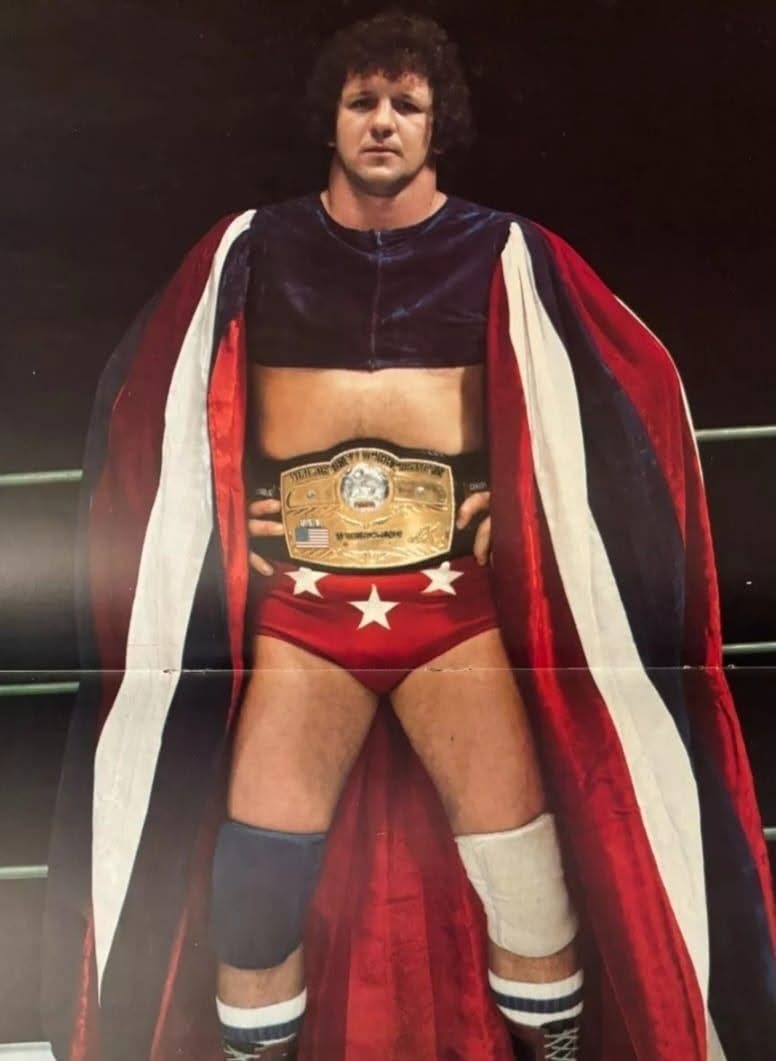
The champion’s schedule was a complicated combination of athletic performance, political obligation, business relationships, and regional storytelling. He might spend one evening facing a beloved local hero in the Midwest, another confronting an established veteran in the South, and still another defending against a rising contender whose reputation was being built around the opportunity to challenge for the world’s championship.
Every appearance had two purposes. It was supposed to strengthen the drawing power of the local promotion while maintaining the credibility and prestige of the NWA championship.
Terry Funk was particularly well suited to that assignment.
He possessed the wrestling fundamentals developed under his father, Dory Funk Sr., and sharpened through years of competition with his brother, former NWA World Champion Dory Funk Jr. Yet Terry had developed a personality and performance style distinctly different from his brother’s.
Where Dory Jr. projected discipline, technical precision, and controlled determination, Terry could be unpredictable, emotional, and explosive. He was capable of delivering an excellent scientific wrestling match, but he was equally comfortable creating the impression that a contest might disintegrate into a wild fight at any moment.
By November 1976, that combination had become one of his greatest assets as champion. Funk could adjust his approach to the territory, opponent, and expectations of the audience. He understood that the World Champion’s job was not simply to win matches. It was to make the local challenger appear capable of winning the championship, thereby giving spectators a compelling reason to purchase tickets.
The November campaign illustrates the larger economic and creative structure of the NWA during the sixth decade of the twentieth century, at a moment when the territory system remained powerful but was beginning to experience important changes.
November 1976: Stage Six — Fragmentation
In the Pro Wrestling Time Tunnel’s Seven Stages of the Territory Era, November 1976 represents Year Two, Month Eleven of Stage Six: Fragmentation, covering 1975 through 1985.