


Allan James Coage—better known to wrestling fans as Bad News Allen and Bad News Brown—embodied a rare authenticity in an industry built on illusion. Born on October 22, 1943, in Harlem, New York City, and raised in St. Albans, Queens, Coage rose from humble beginnings to become the first African American athlete to win an individual Olympic medal outside of boxing or track and field. His 1976 Montreal Olympics bronze in heavyweight judo (+93 kg) was not just a personal triumph; it was a historic barrier-breaker. He then channeled that legitimate combat prowess into a 21-year professional wrestling career, where his no-nonsense persona, stiff in-ring style, and refusal to play by anyone’s rules made him one of the most believable tough guys of his era.
Coage’s path to greatness was anything but conventional. After graduating from Thomas A. Edison High School in 1962, he worked in a bakery, eventually rising to foreman. He discovered judo at age 15 after spotting a dojo poster on the New York subway and began training under Jerome Mackey. Though his competitive career launched later—at age 22 in 1964—he earned his black belt in just two and a half years and reached 3rd dan within five. He favored classical throws like Ōuchi gari and Tai otoshi, supplemented his training with Tomiki Aikido (earning shodan), and spent two years in Japan studying at Nihon University.
His competitive résumé was elite: five-time AAU heavyweight champion (1966, 1968, 1969, 1970—also open division winner—and 1975), two-time Pan American Games gold medalist (1967 and 1975), and 1968 Pan American Judo Championships gold. A devastating knee injury in the 1972 Olympic Trials sidelined him from Munich, but he fought back for Montreal. When internal politics initially kept him off the 1976 U.S. team, the United States Judo Association filed a class-action lawsuit against the Olympic Committee on his behalf. He not only made the team but shared bronze with Japan’s Sumio Endo after a grueling campaign. At 32, Coage became the only American ever to medal in Olympic heavyweight judo and the first Black American to claim an individual Olympic medal in any sport beyond boxing or track.
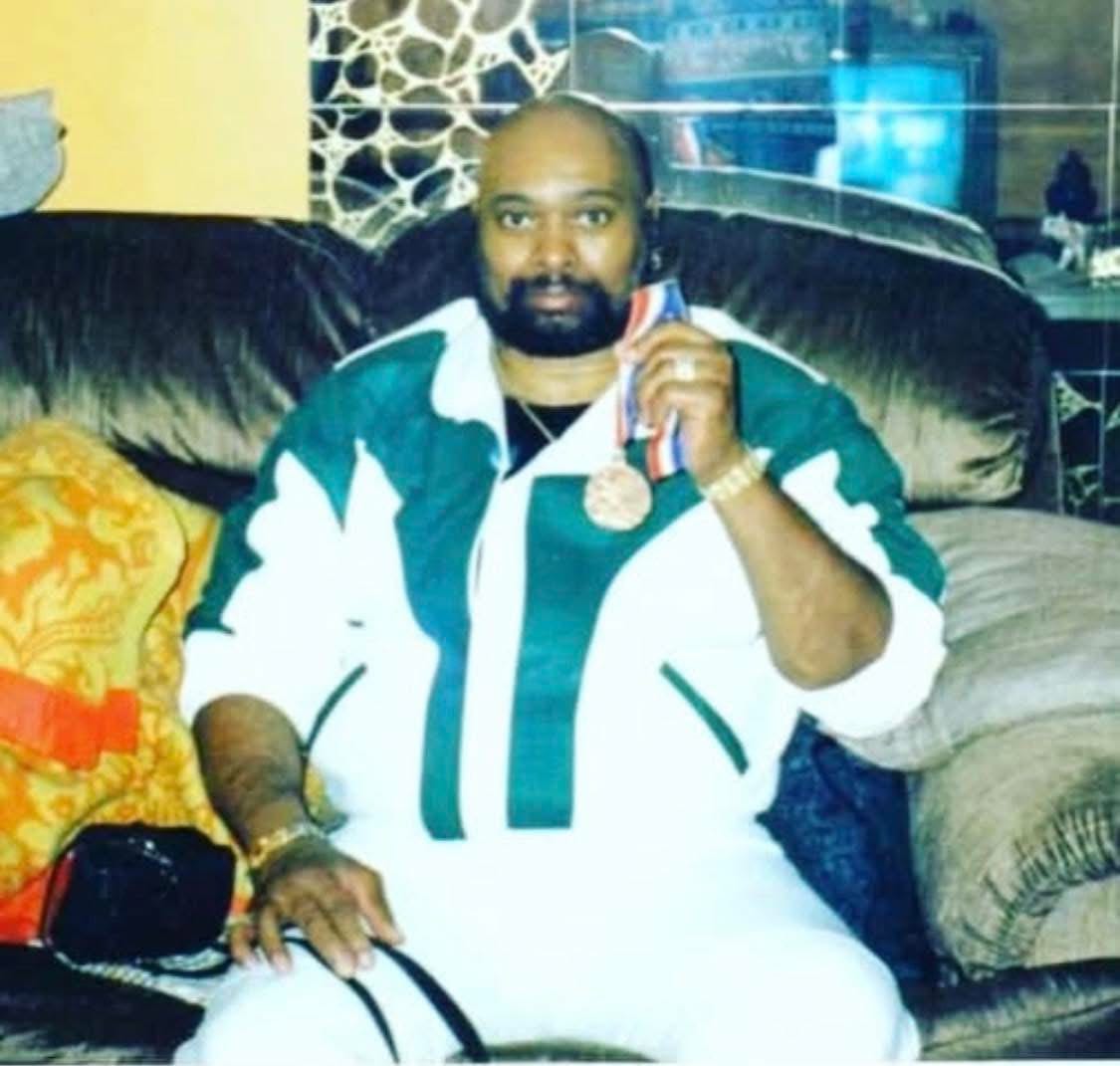
Post-Olympics, disillusioned with judo politics, Coage took odd jobs—including serving as a bodyguard for Aretha Franklin—before transitioning to pro wrestling. In 1977, he trained under Antonio Inoki in the New Japan Pro-Wrestling (NJPW) dojo and debuted on October 25, 1977, initially wrestling under his real name before adopting “Buffalo Allen.” He would appear intermittently for NJPW through 1992, bringing legitimate credibility to a promotion that prized strong-style realism.
Coage found his true wrestling home in Stu Hart’s Stampede Wrestling in Calgary, Alberta—his adopted city—where he wrestled as Bad News Allen from 1982 to 1988. He captured the Stampede North American Heavyweight Championship four times and engaged in bloody, hard-hitting feuds with stars like the Dynamite Kid and a young Bret Hart. His work in Stampede, along with tours in Australia, Florida (where he won the NWA Southern Heavyweight title), and other territories, showcased a wrestler who could brawl, suplex, and strike with frightening realism.
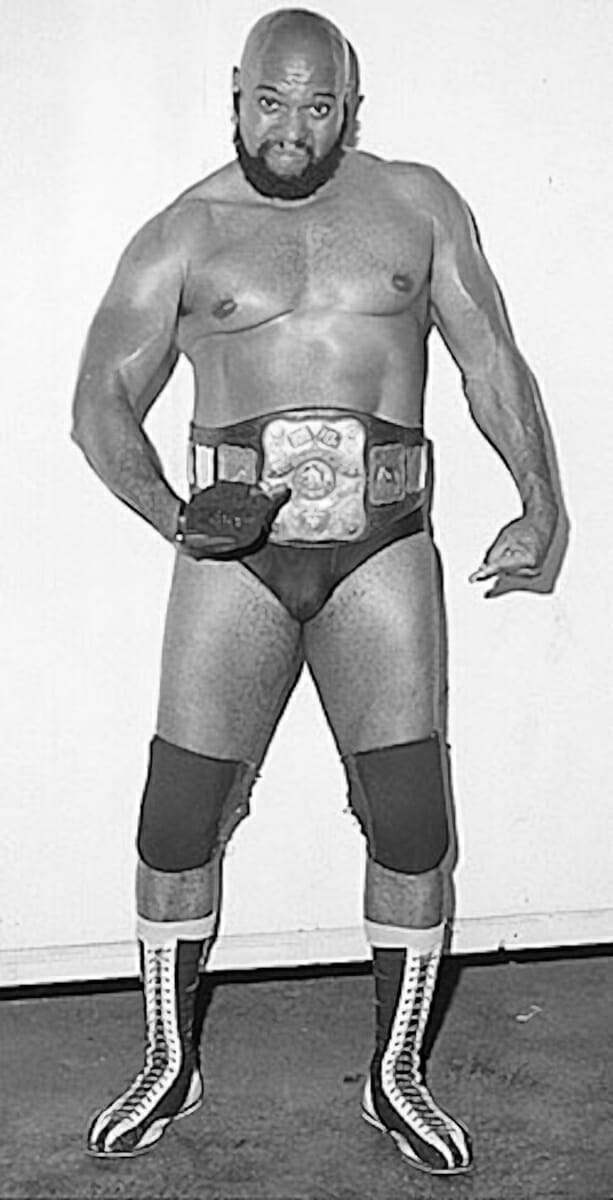
Pictured; Bad News Allen, Stampede North American Heavyweight Champion
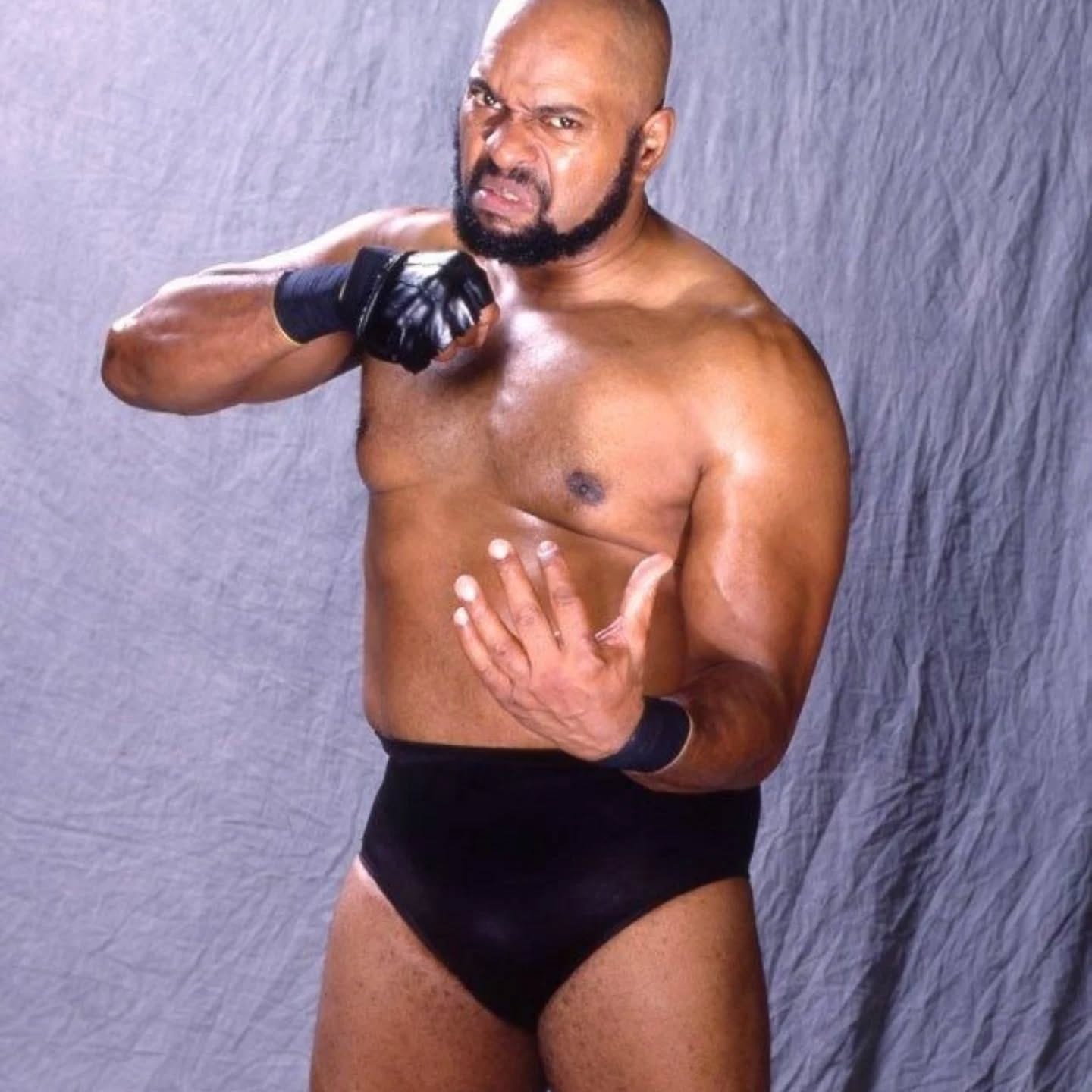
In early 1988, Vince McMahon brought him to the World Wrestling Federation (WWF, now WWE) as Bad News Brown. Billed from Harlem (or Tokyo in early WWWF appearances) and weighing around 271 pounds, Coage was presented as a reclusive, distrustful loner who “didn’t like anybody.” He never smiled, laughed derisively at opponents’ pain, and abandoned every tag-team partner he had at Survivor Series 1988 and 1989. His entrance—often in black trunks, boots, and sunglasses, with a no-frills stomp to the ring—felt worlds apart from the cartoonish 1980s WWF aesthetic. His finishing move, the Ghetto Blaster (a spinning heel kick/en zuigiri), looked and felt devastating because it was rooted in real martial arts.
Coage’s WWF highlights remain iconic. At WrestleMania IV, he won the 20-man battle royal by last eliminating heel Bret Hart with a sneak attack, a moment that briefly positioned him as a top contender. He feuded with “Macho Man” Randy Savage and Miss Elizabeth, attacked WWF President Jack Tunney on The Brother Love Show to demand title shots, and even challenged Hulk Hogan (famously missing the Ghetto Blaster on Saturday Night’s Main Event). His program with “Rowdy” Roddy Piper escalated from a 1990 Royal Rumble elimination to a double-countout at WrestleMania VI. A brief but memorable feud with Jake “The Snake” Roberts involved psychological warfare with a possum (used against Roberts’ snake), though Coage reportedly refused a cowardly “snake-fearing” angle that clashed with his real-life values.
Behind the scenes, Coage’s toughness was no gimmick. During an NJPW tour, when André the Giant allegedly made racist remarks on a bus, Coage demanded the bus stop, confronted the 7’4” giant face-to-face, and extracted an apology—earning respect even from peers who witnessed the standoff.
He left WWF after SummerSlam 1990, later claiming McMahon never intended to make him the promotion’s first Black world champion—a frustration that reportedly affected both him and his wife. Coage continued wrestling on the independents, in Japan’s UWFi shoot-style promotion (where his judo background shone), South Africa, and Calgary circuits until retiring on May 10, 1999, due to accumulated knee damage. In later years, he taught wrestling, ran a short-lived school with Rick Bognar, worked mall security in Airdrie, Alberta, and served as a heel color commentator for a revived Stampede TV show.
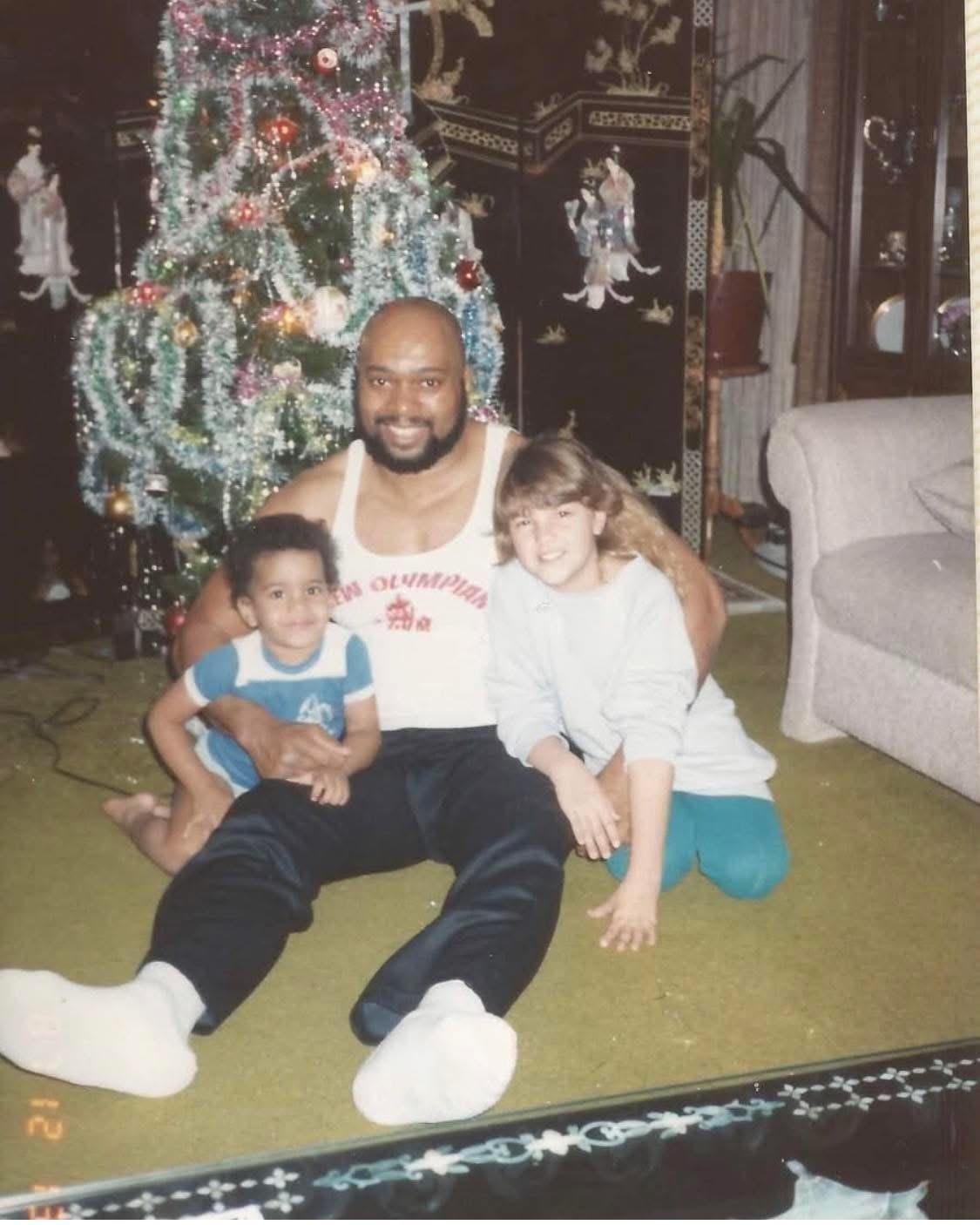
Coage’s personal life was complex but deeply devoted to family. He married three times and had nine children across relationships, including a long-term union with Helen (1983 until his death). Daughters April and Frances described him as a strict, OCD-neat, work-ethic-driven father who demanded excellence—especially from his sons—yet showered affection on all. One memorable story involves him brandishing a real samurai sword from Japan to scare off a daughter’s date. Socially conscious in the late 1960s, he walked Harlem streets with Malcolm X and Muhammad Ali as part of the Nation of Islam. He was working on a book about his life and wrestling stories when he died.
On March 6, 2007, just weeks after hip replacement surgery, Coage suffered a fatal heart attack at Rockyview General Hospital in Calgary at age 63. A Bad News Allen Memorial Show was held in his honor, attended by his wife Helen and family.
His legacy endures. Inducted into the Canadian Wrestling Hall of Fame in 2007 and ranked #187 on the PWI 500’s all-time list (with a career-high #96 in 1991), Coage represented something rare: a wrestler whose shoot toughness enhanced rather than undermined the product. His “Bad News” character—gruff, independent, and unapologetically real—felt ahead of its time in an era of larger-than-life heroes and villains. In March 2026, WWE announced him as a Legacy inductee into the 2026 Hall of Fame class, finally giving posthumous mainstream recognition to one of wrestling’s most credible hard men.
Allan Coage never needed scripted drama to be intimidating. From the Olympic podium to the squared circle, he lived his gimmick. In an industry full of larger-than-life personas, Bad News was simply bad news—and that made all the difference.
Thank You for Reading
I’m Tony Richards, Pro Wrestling Historian, Author and Storyteller. I share pro wrestling historical items in each issue of the Time Tunnel Pro Wrestling History Newsletter. Thanks for reading! If you enjoy my information on select events, matches and insights, please share it with folks you think might like to be a subscriber!
Remember, premium investors get access to exclusive and special content such as some special issues including a multi-part deep dives on wrestling territories, wrestler bios and championship title histories, special audio and video interviews on territory pro wrestling and more available in the Pro Wrestling Time Tunnel for Premium Investors.