


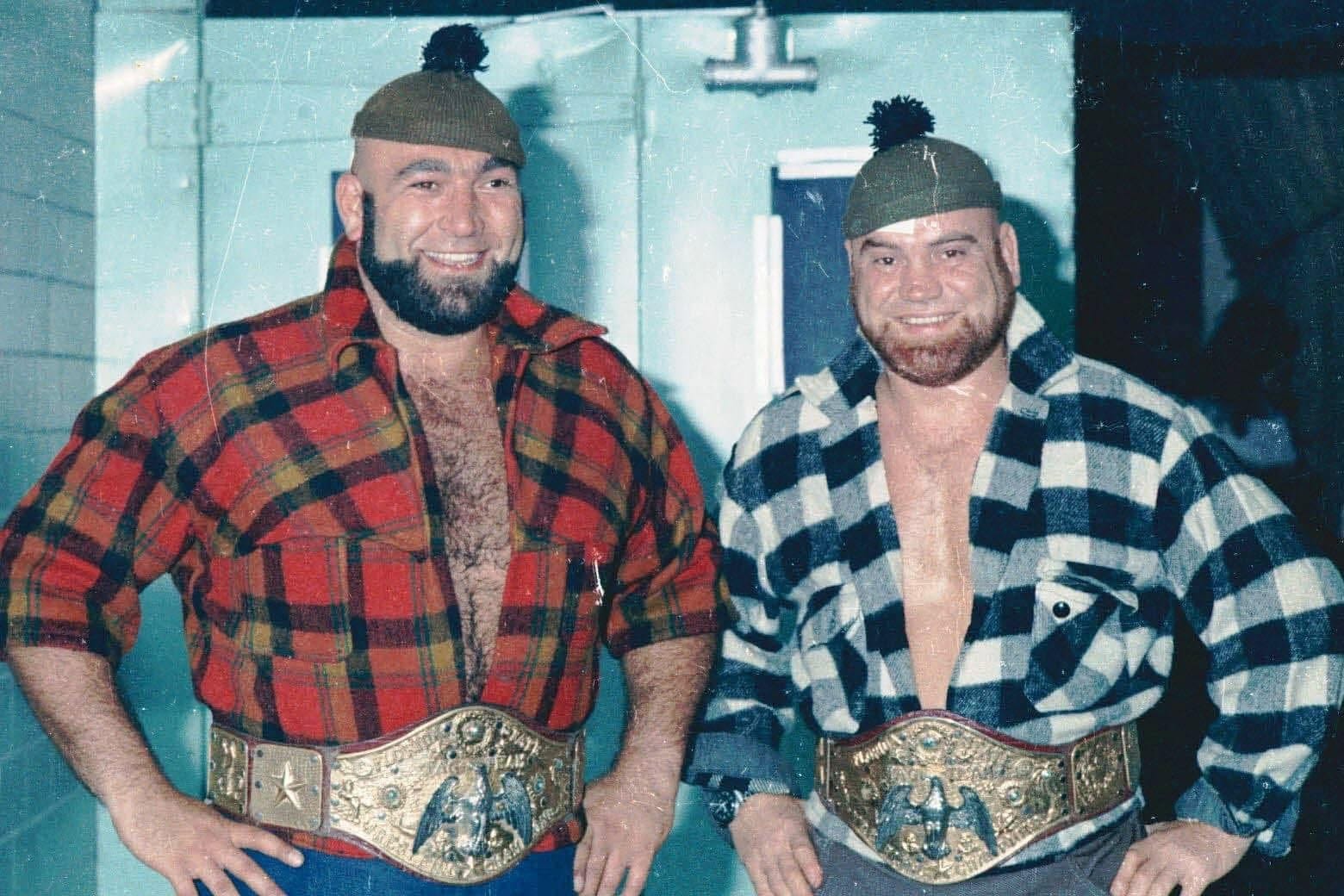
Few tag teams of the Territory Era created a more memorable combination of appearance, personality, physicality and storytelling than Jos and Paul LeDuc, better known as The Canadian Lumberjacks. They were presented as rough-and-tumble Canadian woodsmen, complete with flannel shirts, lumberjack attire and the unmistakable image of two enormous, rugged men who seemed to have walked straight out of the forests of Quebec and into a wrestling arena. The gimmick was simple, but the men who portrayed it understood professional wrestling well enough to turn that simplicity into a highly successful act.
The LeDucs were not actually brothers. Paul LeDuc and Jos LeDuc were friends who created the fictional family relationship that became central to their wrestling identities. Paul was the more experienced wrestler and played an important role in bringing Jos into the business. Jos, whose real name was Michel Pigeon, had a background that made him particularly well suited for the role. He had trained in judo and had worked as a member of the Quebec Provincial Police before committing himself to professional wrestling. Physically imposing and naturally believable as a tough Canadian outdoorsman, Pigeon had the raw ingredients to become an effective wrestling character.
The creation of the LeDuc brothers was closely associated with Montreal wrestling promoter and trainer Jack Britton. The concept drew inspiration from the legendary Canadian wrestler Yukon Eric, whose lumberjack image had become one of the enduring symbols of Canadian professional wrestling. The idea was not simply to give two wrestlers Canadian-sounding names; it was to create a recognizable team identity that audiences could immediately understand. The two men were presented as brothers from Godbout, Quebec, a community associated with the lumber industry. Their flannel shirts and lumberjack presentation completed the picture.
It was classic Territory Era character construction. Before a wrestler ever locked up with an opponent, the audience already knew what the LeDucs represented.
The Stampede Years
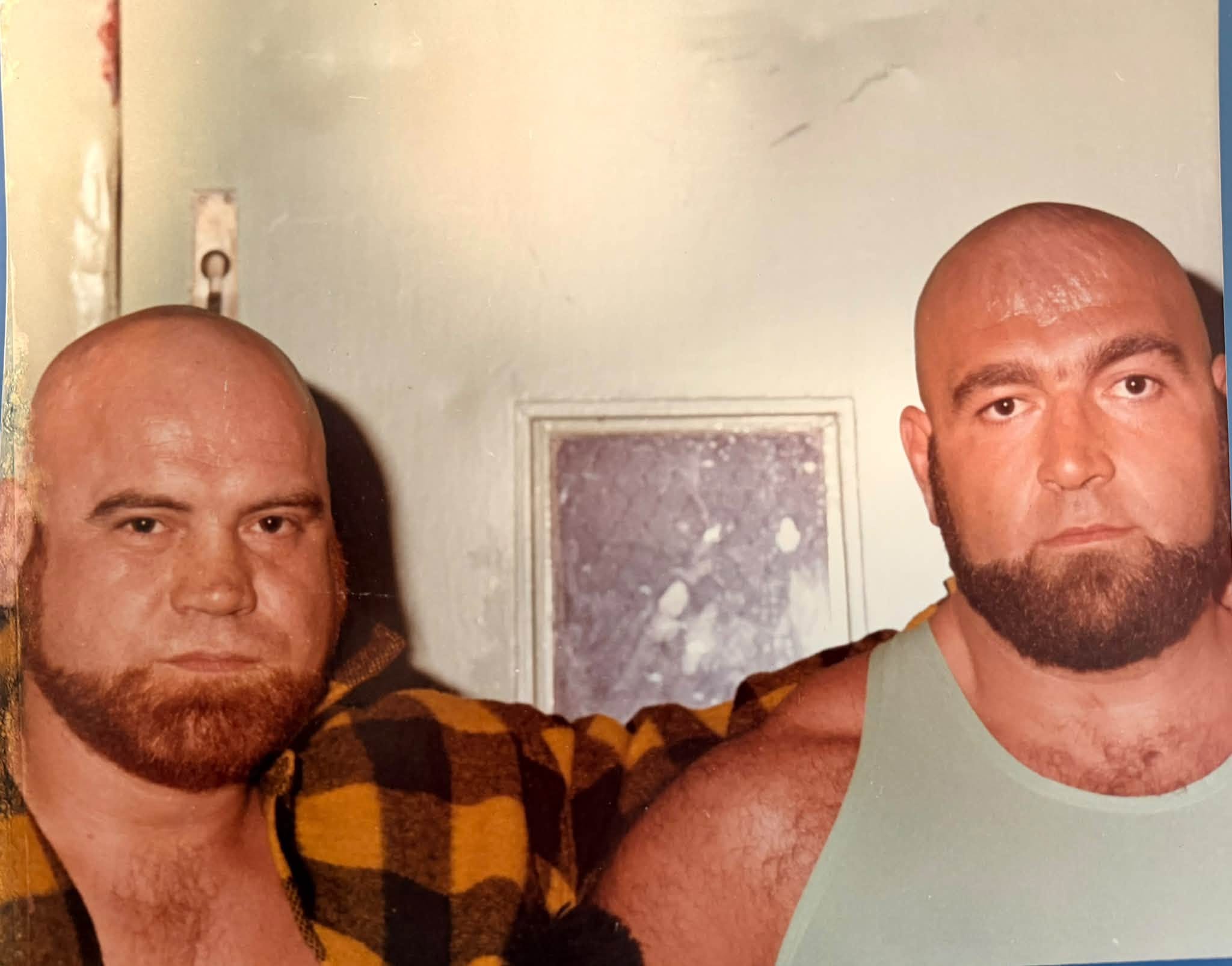
The team gained important early exposure in Stu Hart’s Stampede Wrestling territory in Calgary. Jos entered the business in the late 1960s, and Stampede provided an ideal environment in which to develop the team. Hart’s territory was renowned for physically demanding wrestling and for producing wrestlers who could work a variety of styles. The LeDucs fit naturally into that environment.
The team captured the Stampede International Tag Team Championship in 1969, giving the fictional brothers an important championship credential almost immediately. More importantly, Stampede helped establish the LeDucs as a legitimate team rather than merely a gimmick act.
The distinction is important. There were many colorful tag teams during the Territory Era, but not every colorful team could actually wrestle. The LeDucs could.
Paul brought experience, ring intelligence and leadership, while Jos brought tremendous physical presence. Their matches could be built around the contrast between Paul and Jos as individual performers while maintaining the larger image of the two rugged brothers fighting together.
That combination would become their formula throughout their careers.
The LeDuc Brothers Come to West Texas
By the time they arrived in West Texas, Jos and Paul LeDuc had already developed a distinctive identity as rugged Canadian wrestlers. Their lumberjack presentation made them immediately recognizable, while their size and physical wrestling style made them natural opponents for the hard-hitting wrestlers who populated the Western States circuit. They were not simply two new wrestlers being introduced to Amarillo. They came into the territory with an established reputation and a character that could be immediately understood by West Texas audiences.
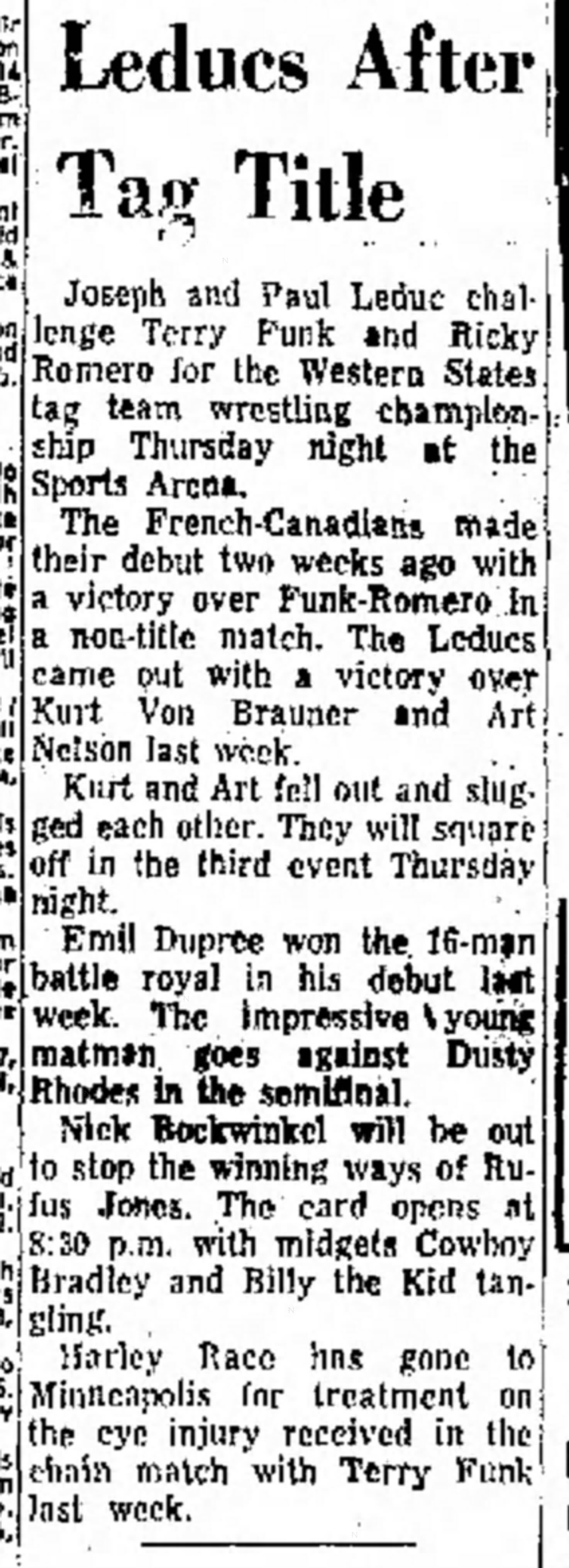
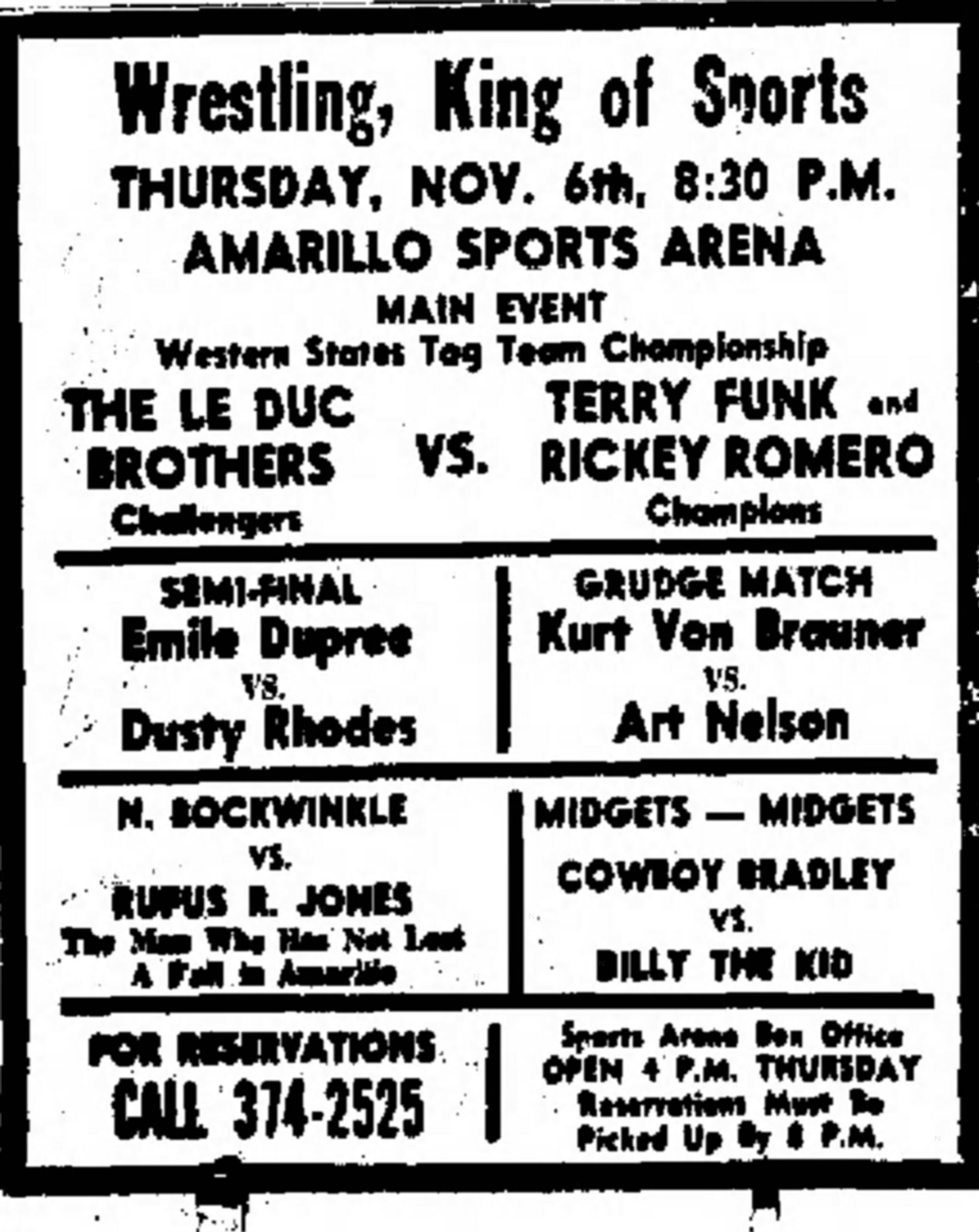
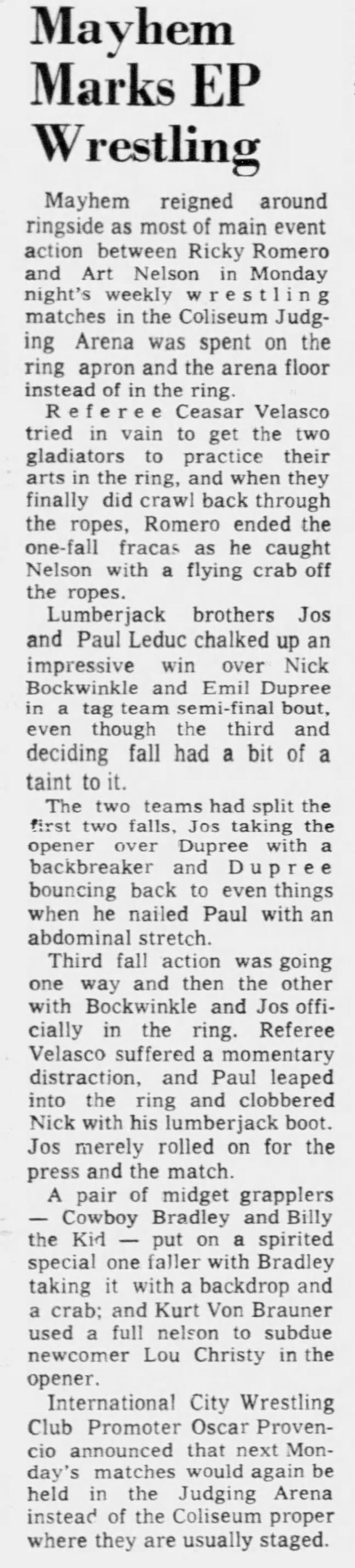
Pictured: November 5th, 1969 Amarillo Globe-Times, Amarillo, Texas
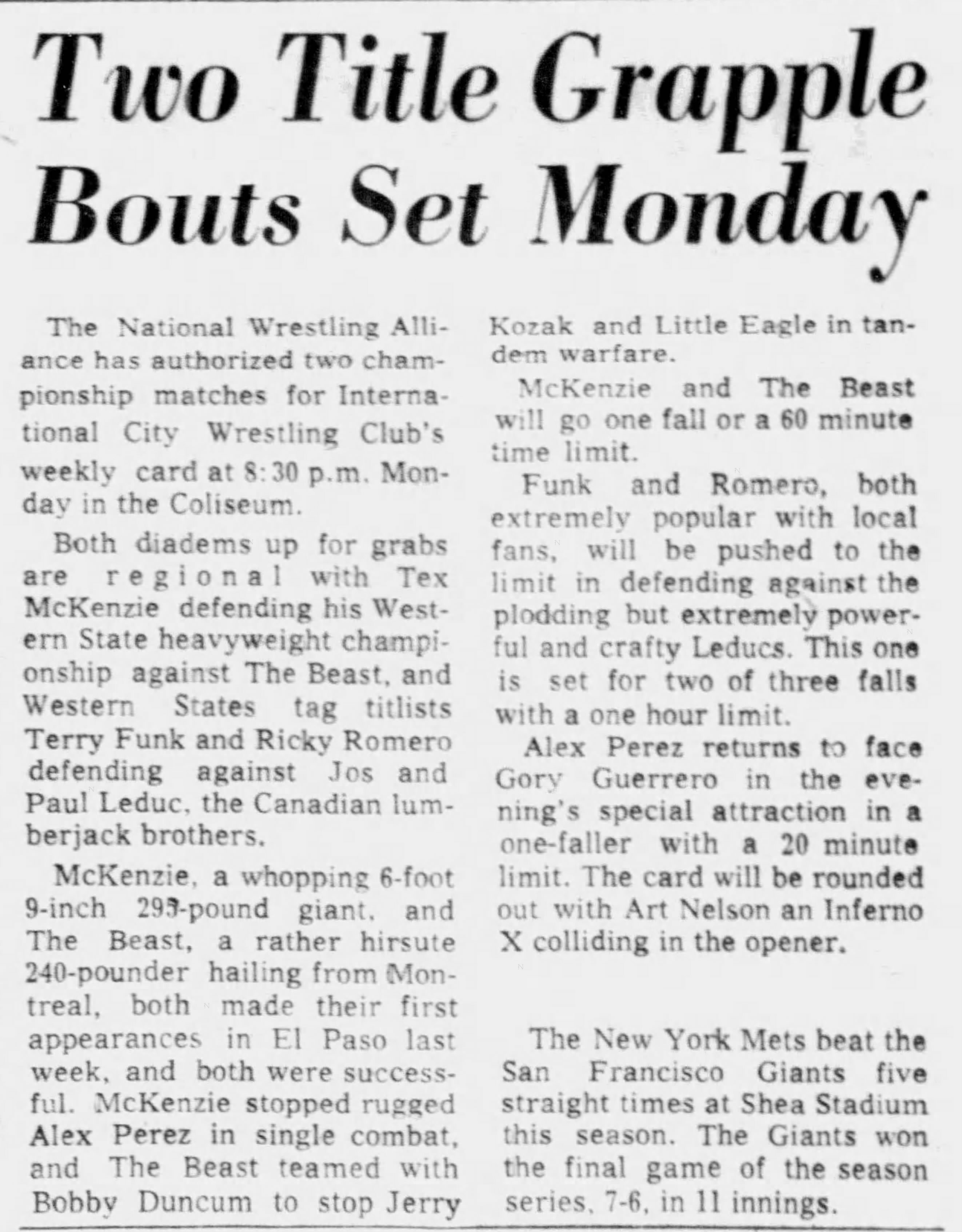
During their 1969 run, the LeDucs appeared throughout the Western States territory, including Amarillo, Lubbock, Odessa, El Paso and Abilene. They worked against and alongside many of the territory’s established performers, including Terry Funk, Ricky Romero, Art Nelson and Tex McKenzie, among others. Their presence gave the promotion another established outside attraction that could be plugged into programs with the local talent. This was one of the great advantages of the territorial system: a team could arrive from another part of the wrestling world already possessing a recognizable identity, allowing the local promotion to create fresh matchups without having to spend months establishing the newcomers.
The LeDucs also fit naturally into the wrestling culture of West Texas. Their Canadian lumberjack identity was based upon toughness, physical strength and a rugged working-class image, qualities that translated particularly well to the Amarillo territory. West Texas audiences were accustomed to larger-than-life wrestlers who looked believable as tough men, and Jos and Paul LeDuc certainly fit that description. Their appearance and wrestling style made them credible opponents for the established Western States stars.
Pictured: November 4th, 1969, El Paso Times, El Paso, Texas
Their 1969 appearances also placed them within the larger Funk-centered wrestling environment that defined Western States Sports during this period. Dory Funk Jr. was the territory’s biggest international star as NWA World Heavyweight Champion, while Terry Funk was continuing his development into one of professional wrestling’s major young talents. The LeDucs were therefore entering a territory with an established hierarchy, but one that constantly required new opponents and fresh attractions. Their role was not to replace the territory’s stars but to provide additional depth to the roster and fresh combinations for the cards.
Pictured: November 23rd, 1969, El Paso Times, El Paso, Texas
The LeDucs’ West Texas run is particularly valuable when viewed through the Seven Stages of the Territory Era. Their appearances belong squarely in Stage 5 — Consolidation (1965–1975), but they also demonstrate how the Western States territory continued functioning after the death of one of its principal architects. Sarpolis had helped construct the West Texas wrestling network, but the system was sufficiently established to continue operating under new leadership. Dory Funk Sr. and Harley Race could continue bringing in wrestlers from outside the territory, placing them into established markets and using them alongside the local stars. The LeDuc Brothers were products of that mature territorial network.
In that sense, the LeDucs’ 1969 West Texas appearances represent an important transitional moment. They came into a territory whose foundations had been laid during the Sarpolis years but whose day-to-day operation was now being shaped by a new generation of wrestling figures. The ability to bring a Canadian team into Amarillo, Lubbock, Odessa, El Paso and the surrounding markets demonstrated that Western States Sports remained an important part of the larger North American wrestling network.
The LeDuc Brothers were therefore more than visiting wrestlers passing through West Texas. Their 1969 run demonstrates how the territory continued to evolve after Sarpolis’ death while retaining the fundamental characteristics of the system he had helped build. Dory Funk Sr.‘s leadership and Harley Race’s booking kept the territory connected to the broader wrestling world, and the arrival of established teams such as the LeDucs helped keep the Western States product fresh. Their 1969 campaign is consequently a good snapshot of Stage 5 at work: a mature territory, an established booking structure, a strong local roster and a steady flow of outside talent moving through the interconnected wrestling world.
The LeDucs Take Quebec
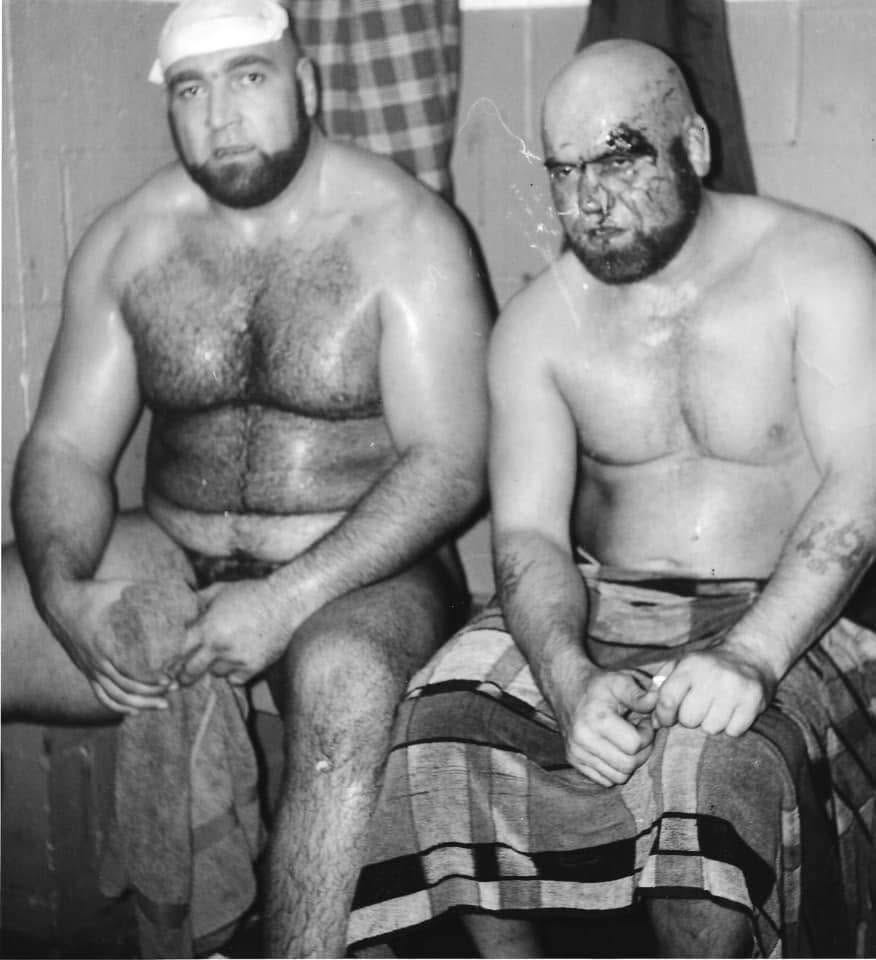
The team became particularly important when it returned to the Montreal area. Quebec wrestling had a distinctive personality of its own, and the LeDucs were perfectly suited to it.
They became involved in major programs against some of the most important wrestling families and personalities in the region. Among their opponents were the Rougeau family, including Johnny and Jacques Rougeau, and the Vachon family, particularly Maurice “Mad Dog” Vachon and Paul Vachon.
The LeDuc-Vachon rivalry was especially important because it brought together two of Quebec wrestling’s most recognizable families. The Vachons were already established stars, while the LeDucs represented a newer generation of rough, physical Canadian wrestling characters.
These were not merely contests between two tag teams. They were territorial wrestling programs built around family, pride, ethnicity, toughness and regional identity.
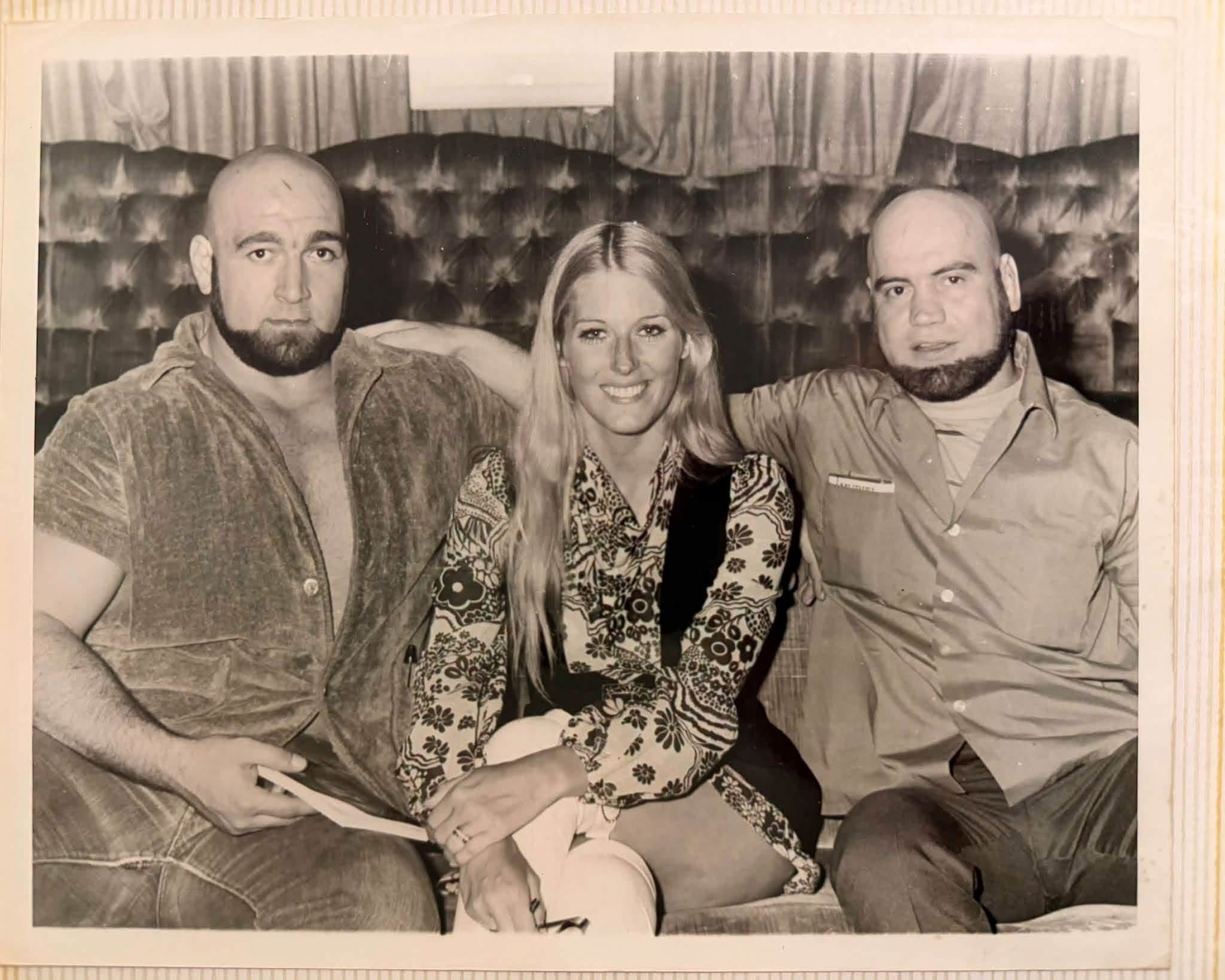
Pictured: Jos and Paul Leduc with Danielle Ouimet, all three were cult stars in Quebec in pro wrestling and in popular film.
The LeDucs eventually became two-time Grand Prix Wrestling Tag Team Champions in 1972 and 1973. Their success demonstrated that the lumberjack concept had developed into something much larger than a gimmick. They were legitimate stars in the Quebec wrestling scene.
One of the most remarkable aspects of the LeDuc presentation was how completely audiences accepted the fictional relationship. Paul and Jos did not simply say they were brothers; they behaved as brothers. Their presentation, interviews and interactions reinforced the illusion. Years later, the revelation that they were not biologically related became a subject of considerable interest in Quebec because the wrestling fiction had been so convincing.
That is one of the great compliments that can be paid to a Territory Era wrestling team.
They made the audience believe.
The Canadian Lumberjacks Come to Florida
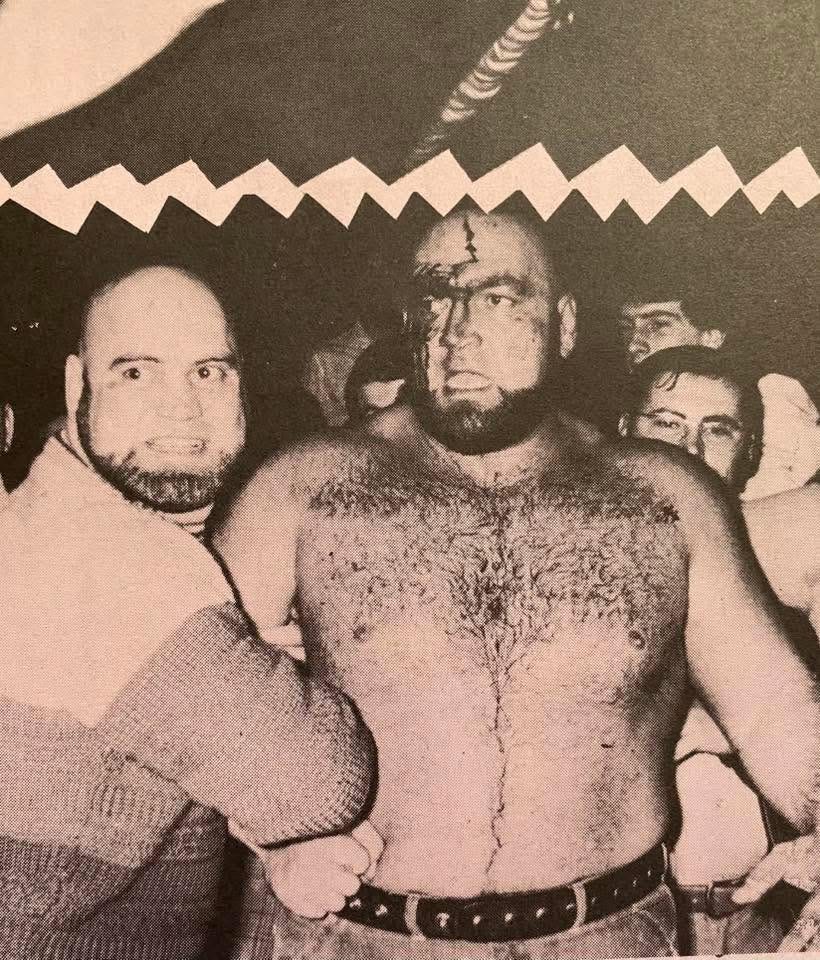
The LeDucs eventually made their way into the American territories, and their most important American run as a team came in Championship Wrestling from Florida.
It was there that the name The Canadian Lumberjacks became particularly associated with them.
Florida wrestling in the 1970s was one of the great melting pots of the Territory Era. Eddie Graham’s promotion featured wrestlers from throughout the wrestling world, and its television product gave performers an opportunity to establish distinctive characters with the audience. The LeDucs were almost tailor-made for that environment.
Their arrival gave Florida fans something immediately recognizable: two huge Canadian woodsmen who looked like they belonged in a lumber camp rather than a wrestling ring.
The team reached the top of the Florida tag-team scene in late 1973 when the Canadian Lumberjacks defeated Dusty Rhodes and Dick Slater for the NWA Florida Tag Team Championship.
That championship victory was significant for several reasons.
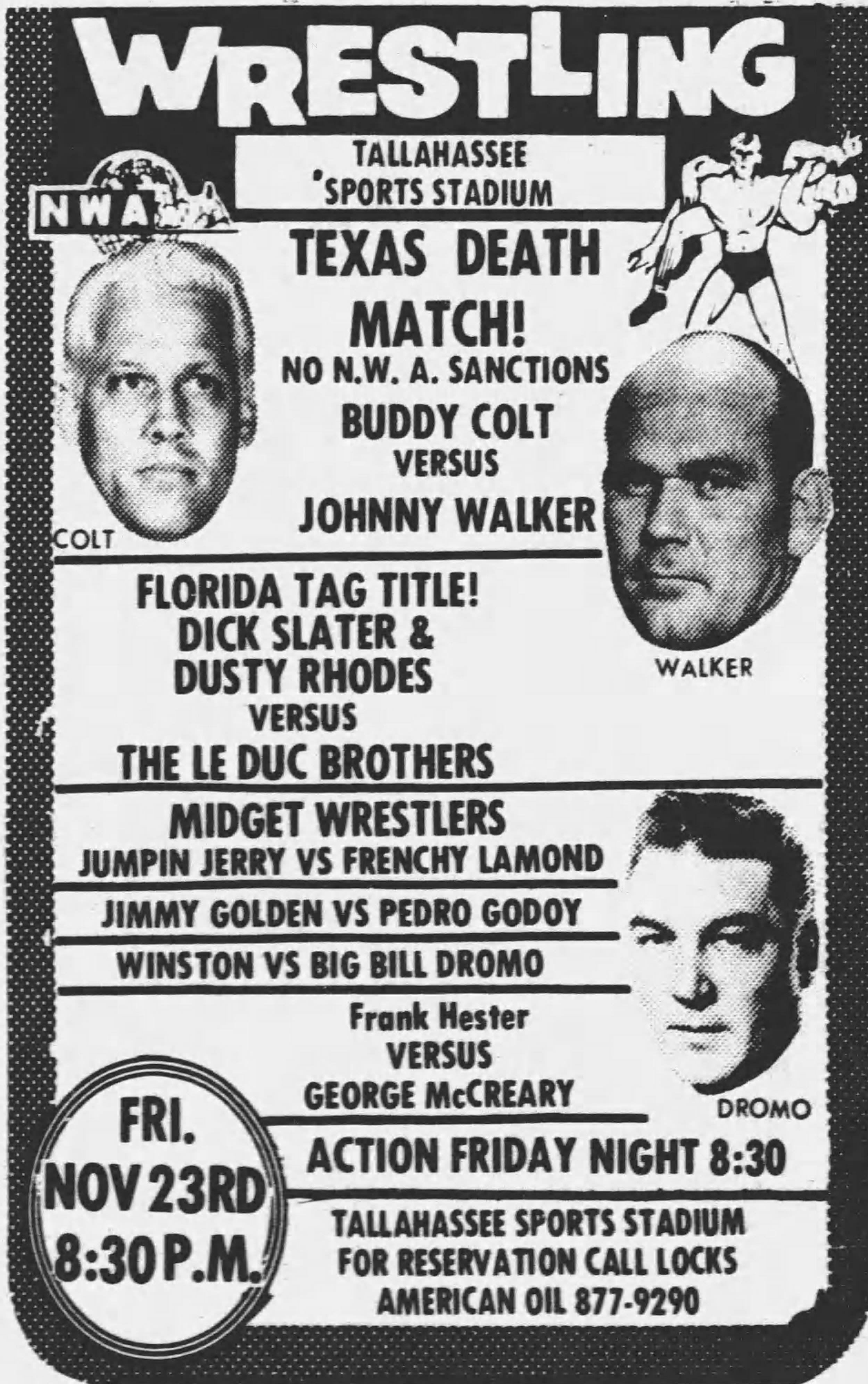
Pictured: November 23rd. 1973, Tallahassee Sports Stadium, The LeDuc Brothers would win the NWA Florida Tag Team Titles
First, it demonstrated that the LeDucs had successfully transferred their Canadian identity into an American territory. Second, defeating Rhodes and Slater placed them directly against two wrestlers who represented the new generation of Southern wrestling. And third, it gave the Canadian Lumberjacks a championship accomplishment that would permanently be associated with their team.
The LeDucs held the Florida championship for roughly two months before losing the titles to Dick Slater and Stan Vachon.
The Florida run also demonstrated how effectively the LeDucs could be used in the traditional Territory Era booking formula. They could be heels when the territory needed dangerous villains, but their physicality and colorful appearance also made them capable of becoming popular with audiences.
That flexibility was one of their greatest strengths.
Paul and Jos as a Wrestling Team
What made the Canadian Lumberjacks work was the difference between the two men.
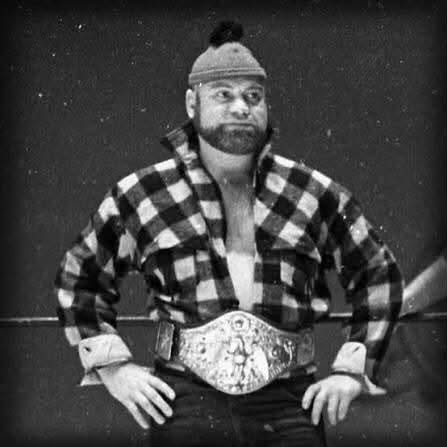
Paul LeDuc was the smaller of the two and had considerably more experience. He had begun wrestling professionally in the late 1950s and had already accumulated years of experience in Canada and elsewhere before Jos entered the business.
Jos, by contrast, was the physical monster of the team.
At more than six feet tall and weighing close to 300 pounds during his prime, Jos possessed the imposing physical appearance that promoters dreamed of finding. His size made the lumberjack character believable, while his athletic background allowed him to do far more than simply throw people around.
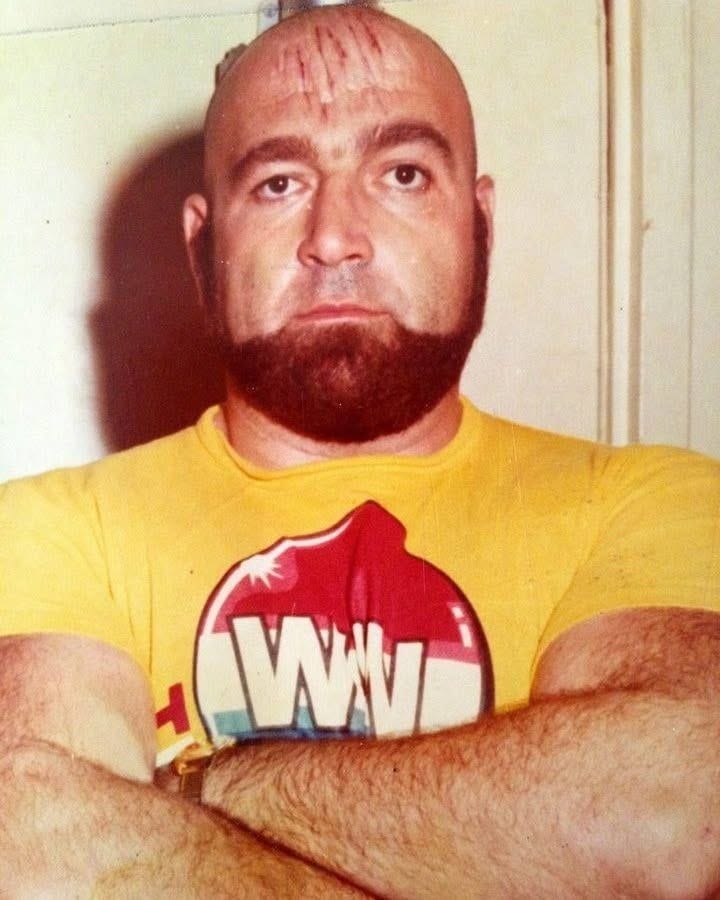
Together they created a classic tag-team dynamic.
Paul could function as the veteran technician and strategist while Jos supplied the raw power. The two could isolate an opponent, work over an arm or leg, cut off the ring and use the traditional tag-team psychology that defined the period.
But there was also an element of danger about them.
The LeDucs looked as though they could genuinely hurt somebody.
That quality became particularly valuable in an era when wrestling audiences expected the heels to appear physically threatening. The Canadian Lumberjacks were not cartoon characters. They were presented as tough men from the Canadian wilderness, and their physical presentation supported the story.
The End of the Team
The Canadian Lumberjacks’ run as a team was ultimately shortened by circumstances outside the wrestling storyline.
While wrestling in Florida, Paul suffered a legitimate injury during an incident involving Pak Song during a taping of Championship Wrestling from Florida at the Sportatorium on March 28th, 1974. LeDuc did wrestle atthe Coliseum in Jacksonville that night losing to Rip Hawk in his last Florida match. The injury was serious enough to effectively end his active wrestling career with the exception of a handful of matches back in Quebec and Nova Scotia through the first part of 1975, and a few of them included tag matches with Jos.
That brought the partnership to an end.
For Jos, however, it was not the end of his career. In fact, it opened another chapter.
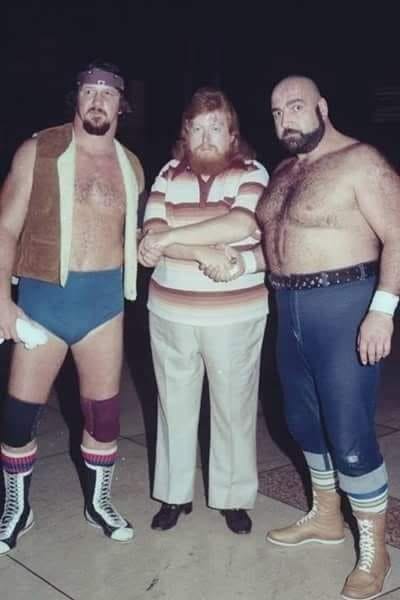
Pictured: Jos LeDuc, Sir Oliver Humperdink and Terry Funk in Florida
Jos became a successful singles wrestler, particularly in Florida, where he became involved in major programs with wrestlers such as Dusty Rhodes. He developed into one of the territory’s memorable powerhouse babyfaces and became famous for his strength.
The transformation was significant. The same man who had entered the ring as one-half of the Canadian Lumberjacks could now be presented as a popular individual star.
His strength demonstrations became part of his attraction, and his one-arm backbreaker became one of his signature weapons. Jos developed a reputation as a physically imposing wrestler who could function effectively as either a villain or a fan favorite.
But regardless of how successful Jos became as a singles wrestler, the Canadian Lumberjacks remained one of the defining chapters of his career.
More Than a Gimmick
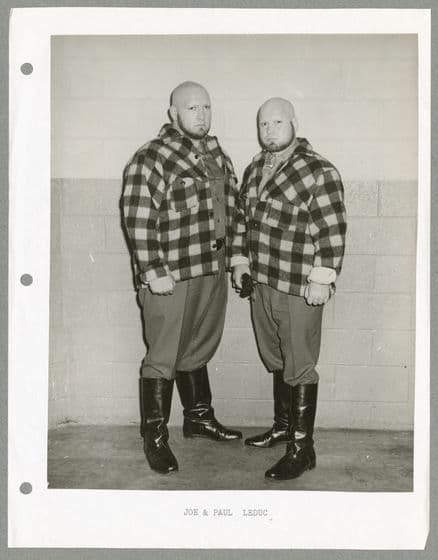
The Canadian Lumberjacks are sometimes remembered primarily because of their appearance. That is understandable. The flannel shirts, lumberjack clothing and Canadian identity made them visually distinctive.
But their importance goes much deeper.
They represented one of the great strengths of Territory Era wrestling: the ability to take a simple character concept and build an entire wrestling identity around it.
That is what made them successful.
The best Territory Era gimmicks were not costumes placed on wrestlers. They were complete characters. The audience knew who the Canadian Lumberjacks were before the opening bell. They were Canadian woodsmen. They were brothers. They were tough. They were physical. And they were not going to back down from anybody.
That kind of clarity was enormously valuable in the days before national wrestling promotion.
A wrestler might appear in Montreal one month, Calgary the next and Florida several months later. The audience in each market might not know the wrestler’s entire history, but they could immediately understand the character.
The Canadian Lumberjacks were perfect examples of that principle.
Their Place in The 7 Stages of the Territory Era and in Wrestling History
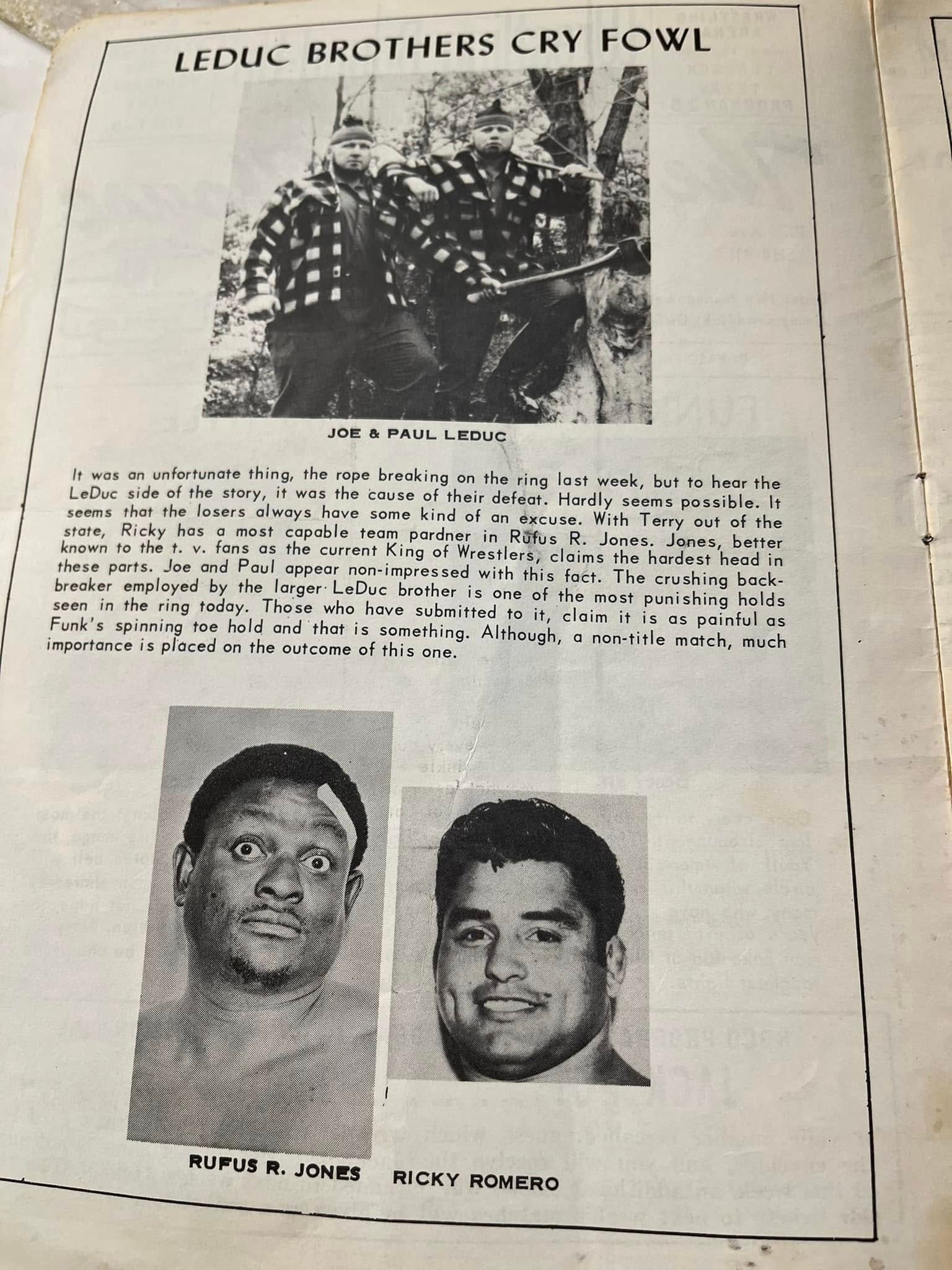
Pictured: The LeDuc Brothers in Lubbock, Texas Program, November 12th, 1969
The careers of Paul and Jos LeDuc also illustrate how interconnected the Territory Era really was.
Their story began in Quebec, developed in Calgary, expanded throughout Canada, and eventually moved into the American territories. Along the way they worked with and against some of the most important names of their generation.
They crossed paths with the Rougeaus, Vachons, Killer Kowalski, Dusty Rhodes, Dick Slater and numerous other major territorial stars. They also became part of the larger wrestling network that connected Canada with the American territories.
That mobility was essential to the success of professional wrestling during the period.
The LeDucs were not products of one promotion. They were products of the territory system itself.
Paul’s career began in the late 1950s and eventually extended into the late 1970s, while Jos continued wrestling for many years after their partnership ended. The two men therefore represent both sides of the Territory Era: the established Canadian wrestling tradition that preceded the national expansion of the 1980s and the generation of wrestlers who moved freely between territories.
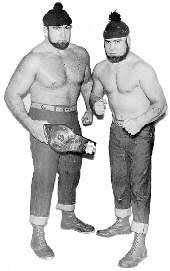
The Canadian Lumberjacks are also an excellent example of Stage 5 — Consolidation (1965–1975) in the evolution of the Territory Era. Their career demonstrates how fully developed the territorial system had become by the late 1960s. Jos and Paul LeDuc could establish themselves in Canada, win the Stampede International Tag Team Championship, feud with the Rougeaus and Vachons in Quebec, and then travel into the United States and immediately become part of established territorial programs. Their 1969 appearances in West Texas are particularly revealing.
The LeDucs worked repeatedly in Amarillo, Lubbock, El Paso, Odessa and Abilene, facing and teaming with many of the territory’s major stars, including Terry Funk, Ricky Romero, Art Nelson, Tex McKenzie, Dusty Rhodes and others. On January 1, 1970, they were part of the major Amarillo card that featured Dory Funk Jr. defending the NWA World Heavyweight Championship. The LeDucs were therefore not simply visiting Texas; they were functioning as part of the interconnected wrestling economy that allowed territories to exchange established talent while maintaining their own identities. Their ability to move from Canada into Texas and then later into Florida is almost a textbook example of the territorial system at the height of its consolidation.
Their story also provides a bridge into Stage 6 — Fragmentation (1975–1985). The Canadian Lumberjacks themselves eventually ceased to function as the central attraction, and Jos LeDuc moved increasingly into singles competition after Paul was forced out of active wrestling because of injury. Jos’s subsequent career, including major programs in the Southern territories and Texas, illustrates the changing importance of individual stars and personality-driven feuds as the traditional territorial structure began to fracture.
The LeDucs therefore represent more than a successful tag team: their career arc mirrors the Territory Era itself. They emerged from the mature territorial system, traveled freely among its regional promotions, participated in the major feuds that made those territories successful, and then saw their careers continue into a period when the old system was beginning to break apart. In that sense, the Canadian Lumberjacks belong firmly within Stage 5, while Jos LeDuc’s later singles career provides a useful window into the transition toward Stage 6.
The Legacy of the Canadian Lumberjacks
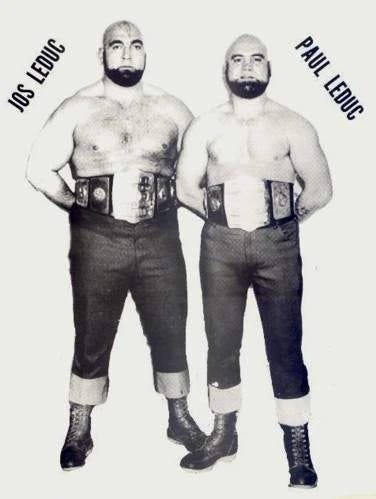
The death of Jos LeDuc at only 54 years old on May 1st in 1999 ended the life of one-half of the partnership, but the Canadian Lumberjacks remained one of the most recognizable Canadian tag teams of their era.
Paul LeDuc continued to have a relationship with wrestling after his active career, including work in the Quebec wrestling community. His later involvement in promoting and writing about wrestling demonstrated that the business remained an important part of his life long after he stopped wrestling regularly.
Paul’s passing at the age of 89 on August 30th in 2026 brings the story of the original Canadian Lumberjacks into sharper historical perspective.
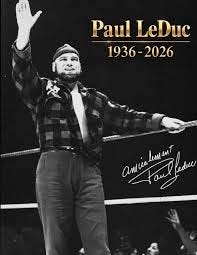
Their period together was relatively short compared with the careers of some of the great long-running tag teams, but longevity is not the only measure of importance.
The Canadian Lumberjacks left an unmistakable impression because they understood what professional wrestling needed from a tag team.
They were visually memorable. They had a strong identity. They could wrestle. They could tell a story. They could work as heels or babyfaces. And, most importantly, audiences believed that Paul and Jos LeDuc were brothers. That last point may ultimately be the greatest testament to their success.
The Canadian Lumberjacks were a fictional family, but the wrestling they created together was very real. They took an uncomplicated idea—two Canadian lumberjacks—and turned it into a memorable Territory Era attraction that succeeded in Canada and the United States.
In an era filled with colorful tag teams, the LeDucs stood out because they looked, acted and wrestled the part.
Paul and Jos LeDuc were the Canadian Lumberjacks—and for a generation of wrestling fans, that was all the introduction they needed.
Thank You for Watching and Listening
I’m Tony Richards, Pro Wrestling Historian, Author and Storyteller. I share pro wrestling historical items in each issue of the Time Tunnel Pro Wrestling History Newsletter and each episode of our podcast show. Thanks for your support! If you enjoy my information on select events, matches and insights, please share with folks you think might like to be a subscriber!
Remember, Premium subscribers get access to exclusive and special content such as some special issues including a multi-part deep dives on wrestling territories, wrestler bios and championship title histories, special audio and video interviews on territory pro wrestling and more available in the Pro Wrestling Time Tunnel for Premium Subscribers. Being a Premium Subscriber also means you support me in my efforts to document Pro Wrestling History through my research, writing, books, vidoes and podcasts. And…I have something very special planned for our Premium Subscribers on the Podcast side of things in 2026! Details soon here in the Pro Wrestling Time Tunnel.