


The Impact of the June 30, 1961, NWA World Title Change, Buddy Rogers def. Pat O’Connor.

On the evening of June 30, 1961, nearly 39,000 fans streamed through the gates of Chicago’s Comiskey Park to witness what promoters boldly advertised as “The Match of the Century.” By night’s end, the audience had seen much more than a championship wrestling card. They had witnessed the beginning of a new era in professional wrestling.
The event represented the culmination of decades of growth within the National Wrestling Alliance (NWA), the ambitions of powerful promoters seeking larger markets, and the emergence of television as wrestling’s greatest promotional tool. Every match on the card was carefully selected to appeal to a different segment of the audience, while the main event forever altered the direction of the industry.
Looking back more than sixty years later, it is difficult to identify another single wrestling event whose influence stretched so far into the future. The championship victory of Buddy Rogers over Pat O’Connor not only crowned a new world champion but also laid the foundation for the creation of the World Wide Wrestling Federation (WWWF), ultimately evolving into today’s WWE.
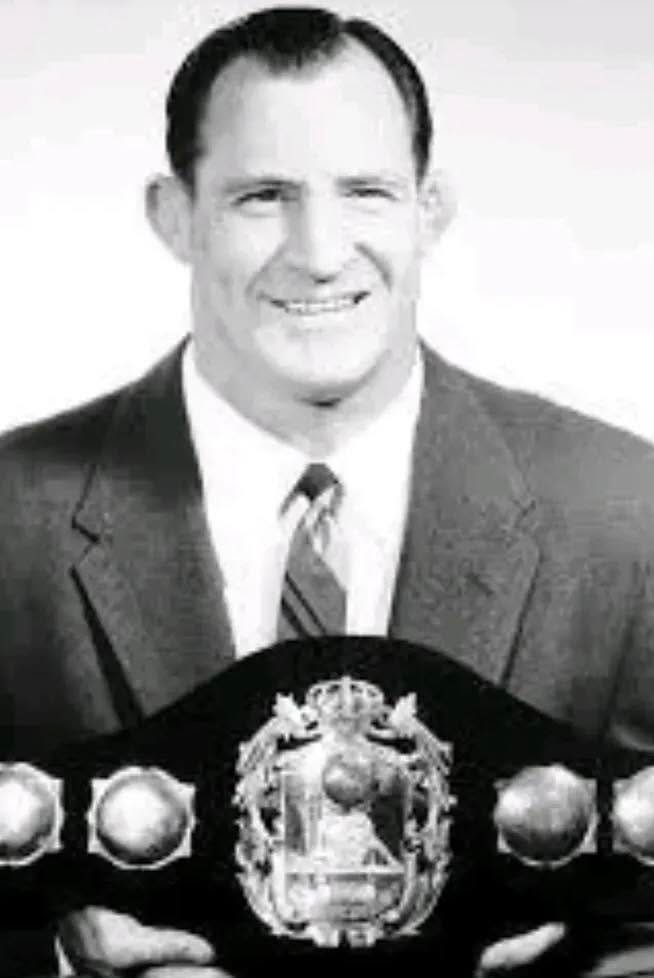
Pat O’Connor, NWA World Champion
During the late 1950s, Pat O’Connor had become one of the NWA’s most respected world champions. The New Zealand-born technician embodied the traditional values of the Alliance. He was an outstanding scientific wrestler, physically credible, and accepted throughout the numerous territories that comprised the NWA.
Yet wrestling was changing.
Buddy Rogers, representative of the new era
Television had transformed the business. Fans increasingly wanted colorful personalities rather than simply excellent wrestlers. Promoters in the Northeast, particularly Vincent J. McMahon and Toots Mondt, believed the future belonged to larger-than-life attractions capable of drawing not only arena crowds but television audiences.
Buddy Rogers represented that future.
With his bleached blond hair, expensive robes, confident swagger, and boastful interviews, Rogers was unlike previous world champions. Calling himself “Nature Boy,” he insulted opponents, flaunted his wealth, and developed one of wrestling’s earliest truly charismatic heel personas. Crowds paid to see him either win or finally receive his comeuppance.
Recognizing Rogers’ enormous drawing power, influential promoters supported transferring the championship from O’Connor to Rogers. Chicago promoter Fred Kohler partnered with McMahon to stage one of the largest wrestling promotions ever attempted.
The June 30, 1961, match at Comiskey Park in Chicago was far more than a standard title switch. It represented a pivotal inflection point in the territorial era — commercially successful, stylistically transformative, and politically destabilizing. Buddy Rogers’ victory over Pat O’Connor in a best two-out-of-three-falls match not only crowned the first heel NWA World Heavyweight Champion but also exposed both the strengths and the emerging fractures within the National Wrestling Alliance system.
Commercial and Live-Event Impact
The most immediate and unambiguous impact was financial and promotional validation. The event drew approximately 38,622 fans to Comiskey Park (a baseball stadium converted for wrestling) and generated a gate reported around $148,000 — figures that stood as records or near-records for years afterward. 
This demonstrated the drawing power of true star power in the pre-national-TV-dominant era. Promoters like Fred Kohler (Chicago) could still fill massive venues when the right matchup — a charismatic heel challenger against a respected scientific babyface champion — was positioned correctly. The success reinforced the viability of inter-territory supercards and stadium shows, influencing how promoters booked big attractions throughout the 1960s.
It also highlighted the NWA’s cooperative potential when aligned: Chicago’s promotion leveraged talent and buzz that resonated nationally. However, this commercial peak simultaneously masked growing tensions over champion control and date allocations.
