


The foreign heel—also known as the “Foreign Menace” or “Evil Foreigner”—stands as one of professional wrestling’s most durable and adaptable stock characters. Defined by overt national pride in a non-American homeland, contempt for U.S. values, and a willingness to cheat or brutalize to prove superiority, this gimmick has generated nuclear heat for over a century. From goose-stepping Nazis and salt-throwing “Orientals” in the black-and-white TV era to bombastic Cold War villains and today’s more nuanced cultural antagonists, the foreign heel has mirrored real-world geopolitics, audience tastes, and wrestling’s shift from regional morality plays to global entertainment. While early versions leaned on raw xenophobia for easy boos, later iterations adapted (or struggled) amid cultural sensitivities, internet exposure, and a borderless fanbase.
During the era of territorial wrestling on local television from the late 1950s through the 1960s, promoters drew a sharp distinction between ordinary heels and true “foreign heels,” with the latter defined almost exclusively by kayfabe citizenship in a nation that had been (or still was) an official enemy of the United States. The most potent heat came from billing wrestlers as invading representatives of Axis powers—Nazi Germany or Imperial Japan—or the Soviet Union during the height of Cold War paranoia. Characters like Hans Schmidt, the Von Brauners, Fritz & Waldo Von Erich, Tojo Yamamoto, and Boris Malenko weren’t just rule-breakers; they were scripted as unrepentant foreigners who goose-stepped, saluted the wrong flag, and openly mocked American values, giving audiences a weekly patriotic reason to cheer their local babyface heroes. By contrast, heels from friendly neighboring countries (such as the Canadian Tolos Brothers or Greek-arrogant gimmicks) could be despised for being cocky or sneaky, but they never carried the same visceral “us-versus-the-enemy” emotional charge that made the genuine foreign heel such a reliable ratings and gate draw on black-and-white TV screens across every territory.
Pioneer Era of Wrestling
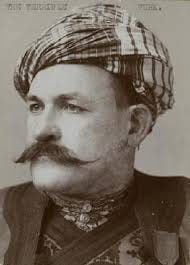
Pictured: The Terrible Turk, Yusif Ismail
The “foreign heel” predates modern squared-circle storytelling. In the carnival and vaudeville wrestling circuits of the late 19th century, promoters pitted American strongmen against “mysterious” imports billed as Turks, Arabs, or other “exotic” threats. The archetype of the “Terrible Turk” (often wrestlers like Yusuf Ismail) portrayed Middle Eastern fighters as wealthy, capricious, and bloodthirsty, complete with fezzes, turbans, and rule-breaking violence. These characters exploited Orientalist stereotypes and post-Ottoman anxieties, drawing crowds who cheered local heroes defending Western honor. Similar gimmicks appeared in early 20th-century Europe and the U.S., where masked or foreign-accented villains represented vague “Eastern” menaces. Even in Ancient Rome’s gladiatorial games, promoters framed bouts as Rome versus barbarian outsiders—a blueprint wrestling later adopted wholesale.
These early heels were more carnival curiosities than sustained characters, but they established the formula: nationality as shorthand for villainy, visual exoticism (robes, accents, props), and a narrative of the outsider threatening American (or local) supremacy.
Early Territorial Era
World War II supercharged the gimmick. With fresh memories of Axis powers, promoters flooded cards with “unreconstructed Nazis” and “wily Japanese” who mocked U.S. soldiers. Historian James Martin coined “Foreign Menace” to describe this post-war staple, noting how it unified crowds around jingoistic patriotism without risking domestic racial divides.
