


Sputnik Monroe, born Roscoe Monroe Brumbaugh on December 18, 1928, in Dodge City, Kansas, was a professional wrestler whose impact extended far beyond the squared circle. Known for his flamboyant persona, unorthodox wrestling style, and groundbreaking role in challenging racial segregation in the American South, Monroe became a cultural icon in the mid-20th century wrestling world. His career spanned over four decades, during which he evolved from a carnival grappler to a main-event draw in regional territories. In 2025, Monroe stands as a prominent candidate in the historical performers category for the Wrestling Observer Hall of Fame, recognized for his in-ring achievements and his off-ring activism that helped integrate wrestling audiences during the Jim Crow era.
Roscoe Brumbaugh’s early life was marked by hardship and mobility. Orphaned at a young age, he spent time in various foster homes before finding stability with relatives. His introduction to professional wrestling came through the rough-and-tumble world of traveling carnivals, where athletic young men often tested their mettle against local challengers for prize money. In 1945, at just 17 years old, Brumbaugh made his debut under the ring name “Rock Monroe,” a moniker that reflected his rugged, no-nonsense style. These carnival bouts were far from the scripted spectacles of modern wrestling; they were legitimate contests that honed his grappling skills and toughness.
By 1949, he refined his persona to “Rocky Monroe,” adopting a more polished approach while touring smaller promotions. Monroe’s early career was itinerant, wrestling in dusty arenas across the Midwest and South, where he learned the art of drawing crowds through charisma and physicality. His signature look—a bleached streak in his dark hair, reminiscent of a skunk—began to emerge, setting him apart from the clean-cut heroes of the era. This period laid the foundation for his later success, as he mastered the heel role, antagonizing audiences with cocky antics and rule-breaking tactics.
Sputnik Is Launched
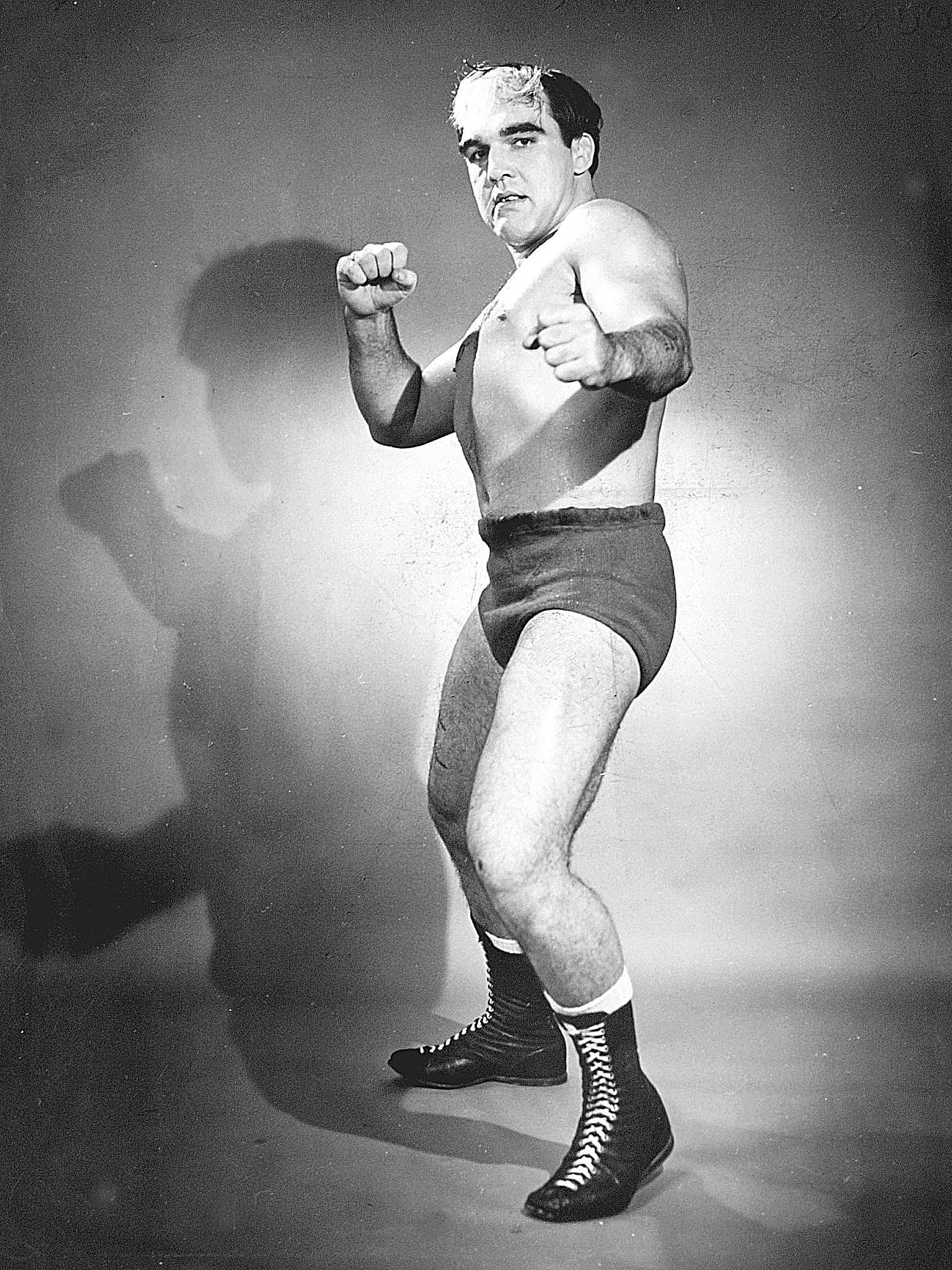
In 1957, Monroe’s career took a pivotal turn when he adopted the name “Sputnik Monroe,” capitalizing on the Soviet Union’s launch of the Sputnik satellite amid Cold War tensions. The name was a provocative choice, evoking anti-communist sentiments and positioning him as an ultimate heel in the patriotic American heartland. With his new gimmick, Monroe’s popularity soared, particularly in the Gulf Coast and Mid-South territories. He wrestled for promoters like Nick Gulas, Roy Welch and Welch’s son, Buddy Fuller, becoming a staple in Memphis, Tennessee—a city that would define his legacy.
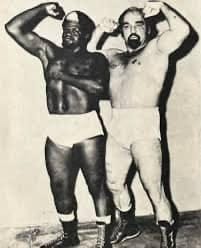
Pictured: Sputnik Monroe and Norvell Austin
Monroe’s in-ring style was gritty and innovative, blending brawling with technical holds. He was known for his “Sputnik Splash” (a diving body press) and his ability to work long, intense matches that kept fans on the edge of their seats. By the late 1950s, he was headlining cards, feuding with fan favorites like Billy Wicks in epic rivalries that drew record crowds to Memphis’s Ellis Auditorium. His tag team partnerships, including stints with Norvell Austin (one of the first interracial teams in the South), further showcased his versatility. Monroe held numerous regional titles, such as the NWA Texas Heavyweight Championship and the Gulf Coast Heavyweight Championship, solidifying his status as a territorial star.
The Barrier-Buster
Perhaps Monroe’s most profound contribution came outside the ring, where he used his fame to combat racial injustice. In the segregated South of the 1950s and 1960s, wrestling venues like Ellis Auditorium enforced strict Jim Crow laws, relegating Black fans to balcony sections or barring them altogether. Monroe, who frequented Black neighborhoods and bars on Beale Street, built a massive following among African American audiences, who saw him as a rebellious ally.
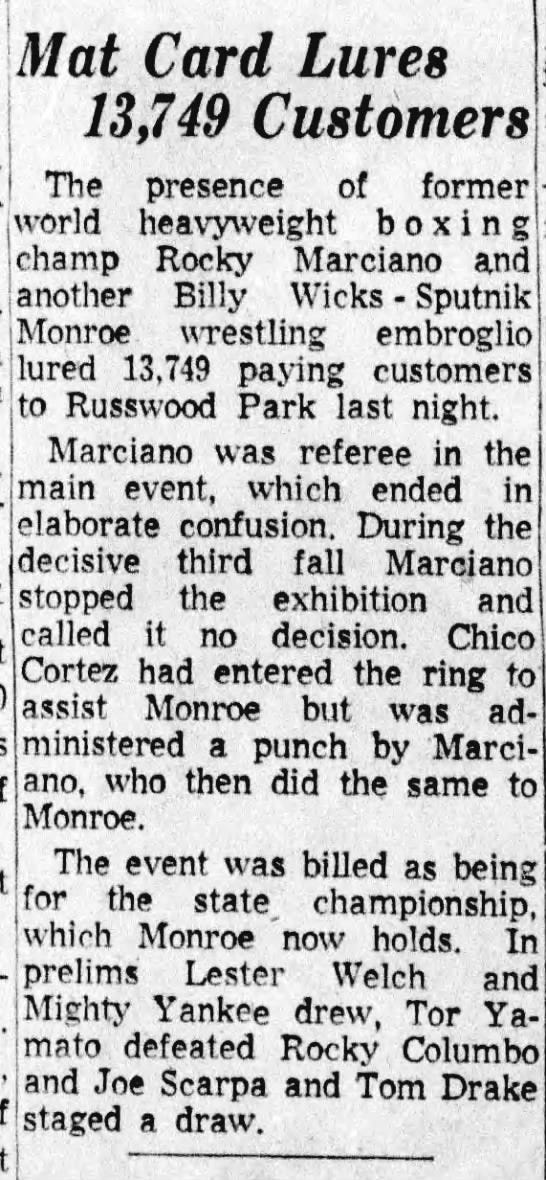
In a bold stand, Monroe refused to perform unless Black fans were allowed to sit in the main floor seats alongside white patrons. He reportedly told promoters, “If they can’t sit down there, I ain’t wrestling.” This ultimatum, backed by his drawing power—crowds often swelled to over 13,000, with a significant portion being Black fans—forced integration at Ellis Auditorium in 1960. Although at the time of the account of his actions were being released to the public, the story was that the promoters were “forced” into this, doing the angle and story this way, helped the promoters integrate audiences and have bigger crowds, something the promoters wanted anyway. Doing as a “Monroe demand” helped put Sputnik over in the city and moved toward integration without the promoters having to publicly face the criticism of city leaders at the time.
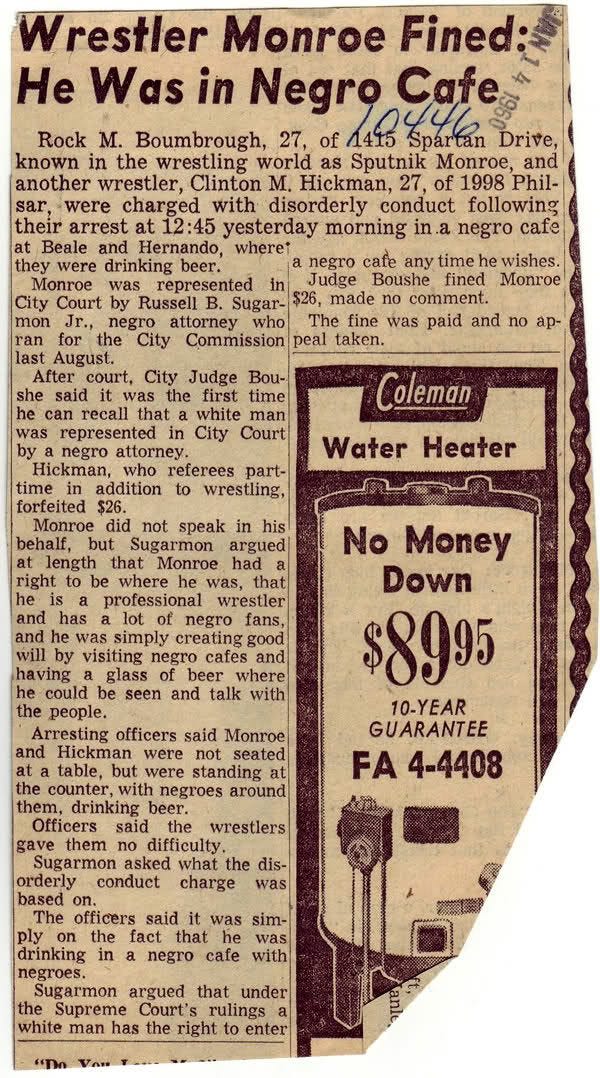
Monroe’s actions predated the broader Civil Rights Movement’s victories, such as the 1964 Civil Rights Act, and earned him the nickname “The Man Who Defeated Jim Crow in Memphis.” His interracial friendships and public appearances in Black communities further challenged norms, making him an unlikely hero in the fight for equality. This activism wasn’t without risk; Monroe faced threats from segregationists and even arrests for “vagrancy” after associating with Black individuals. Yet, his efforts helped desegregate wrestling events across the Gulas-Welch territory, influencing other Southern promotions.
The Afterglow
Monroe continued wrestling into the 1970s and 1980s, transitioning to a more veteran role in promotions like Mid-South Wrestling and the Continental Wrestling Association. He mentored younger talents and occasionally teamed with his son, who wrestled as “Sputnik Monroe Jr.” His final matches came in the early 1990s, after which he retired to a quieter life in Florida.
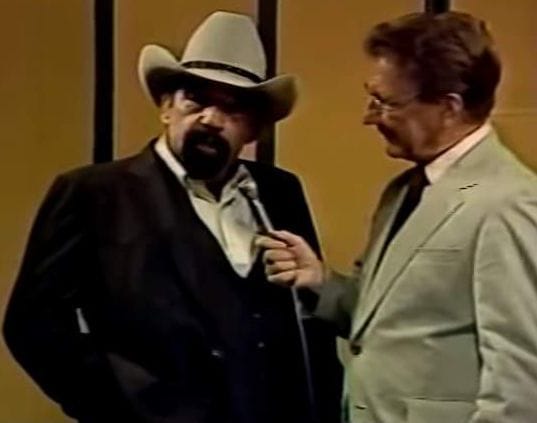
Pictured: Sputnik Monroe interviewed by Lance Russell on WMC-TV, Memphis, Tennessee
Personally, Monroe was a complex figure—charismatic yet controversial, with a reputation for hard living. He married and had children, but his nomadic career strained family life. In retirement, he reflected on his civil rights contributions in interviews, emphasizing that his actions were driven by personal conviction rather than politics. Monroe passed away on November 3, 2006, at age 77, from complications related to lung disease. His death was mourned by wrestling fans and civil rights advocates alike, with tributes highlighting his dual legacy as a performer and pioneer.
Sputnik Monroe’s influence on professional wrestling is multifaceted. As a performer, he was a master heel who drew massive gates in an era before national television exposure, proving that charisma could transcend regional boundaries. His innovative persona paved the way for future anti-heroes in wrestling. More importantly, his role in integrating audiences demonstrated wrestling’s potential as a platform for social change, predating similar efforts in sports like baseball.
Posthumously, Monroe has received numerous honors. He was inducted into the WWE Hall of Fame in 2017 as part of the Legacy Wing, the Professional Wrestling Hall of Fame in 2005, and, in 2025, the Memphis Sports Hall of Fame—only the second wrestler to earn that distinction. His story has been chronicled in books, documentaries, and podcasts, cementing his place in wrestling lore, including Jim Cornette’s latest book, which contains Jim’s thoughts on Monroe’s influence throughout the Tennessee Territory, called “Heroes and Friends.”
As a 2025 candidate for the Wrestling Observer Hall of Fame, Monroe’s case is bolstered by his historical significance. Voters and analysts have long advocated for his inclusion, noting his peak drawing power in the 1950s-1960s and his cultural impact. In an industry often criticized for overlooking its trailblazers, Monroe’s induction would honor not just a wrestler, but a man who used his platform to fight injustice.
Sputnik Monroe’s life was a testament to reinvention and resilience. From carnival tents to integrated arenas, he left an indelible mark on wrestling and society. As the 2025 Wrestling Observer Hall of Fame voting unfolds, Monroe’s candidacy serves as a reminder of wrestling’s power to reflect and reshape the world around it. His story endures as one of courage, controversy, and lasting change.
Thank You for Reading
I’m Tony Richards, Pro Wrestling Historian, Author and Storyteller. I share pro wrestling historical items in each issue of the Time Tunnel Pro Wrestling History Newsletter. Thanks for reading! If you enjoy my information on select events, matches and insights, please share it with folks you think might like to be a subscriber!
Remember, paid subscribers get access to exclusive and special content such as some special issues including a multi-part deep dives on wrestling territories, wrestler bios and championship title histories, special audio and video interviews on territory pro wrestling and more available in the Pro Wrestling Time Tunnel for Premium Subscribers.