


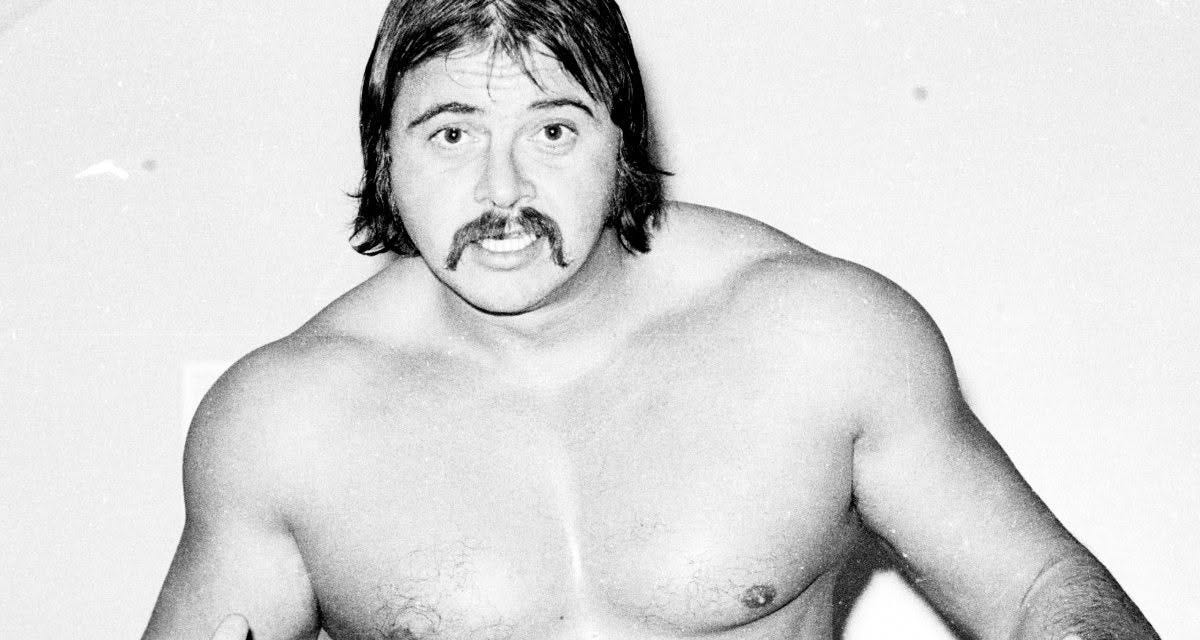
There are wrestlers whose careers are remembered because they held world championships, wrestlers remembered because they headlined Madison Square Garden, and wrestlers remembered because their names became synonymous with an entire territory. Then there are the men who formed the connective tissue of professional wrestling—the journeymen, veteran hands, managers, tag-team partners, road warriors, trainers, fixers, and colorful personalities who spent decades helping make the territorial system function.
Bruce Swayze belonged to that last and enormously important category.
Bruce Andrew Swayze, known to generations of territorial wrestling fans as “Beautiful Bruce,” was a Canadian journeyman wrestler and manager whose career stretched across the last great era of North American regional promotions. Born April 7, 1940, in Kirkland Lake, Ontario, and raised in the industrial orbit of Hamilton, he died on September 18, 2026, at the age of 86. He was never a household name on the scale of the men he managed or traveled with, but he was a vivid, well-dressed presence in rings from Buffalo to San Juan—a heel who could talk, a manager who could still work, and later a salesman who discovered that a wrestling story was as useful as a sample case.
Known as “Beautiful” Bruce Swayze, and at various times as the Black Baron, Bruce Heffernan, Jack Swayze, Jack Ross and James Ross, Swayze was a Canadian wrestler whose career stretched from the late 1950s into the 1980s. He worked in Ontario, Buffalo, Detroit, Cleveland, the Carolinas, Florida, Oklahoma, Calgary, Memphis and other territories, often occupying the precise role that territorial wrestling needed from a dependable veteran: he could wrestle, talk, draw heat, work with younger performers, manage a star, create a memorable angle and make himself useful to a promoter.
His career was never about being the biggest star in the room. It was about knowing how to make the room work.
That is why the story of Bruce Swayze is really the story of the territorial wrestling business itself.
The Canadian Beginning
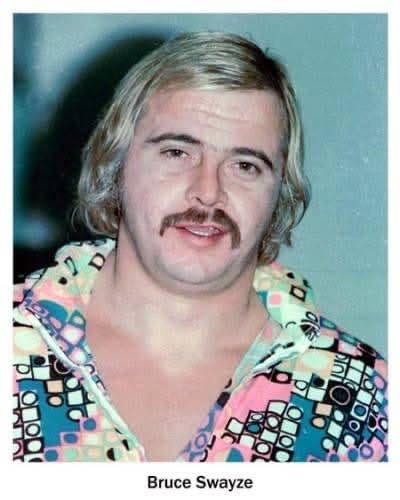
Bruce Swayze was born in Kirkland Lake, Ontario, and grew up in an athletic environment. Swayze grew up in Hamilton, one of the many young men from that steel-and-hockey corridor who found their way into Jack Wentworth’s gym. His father had played semi-pro hockey; Bruce himself was a capable amateur wrestler in school and, by his own later admission, a better hockey player than he was a wrestler when he started. He was still playing hockey when Wentworth, who kept a ring in the gym and ran Thursday-night student-and-pro shows, told him he was “the perfect type of guy to get into this business.” Swayze was seventeen or eighteen. He debuted in 1958.
For years he was a weekend warrior, working the Hamilton steel mill by day and the local circuit by night. Around 1968, after roughly six years in the business, promoters Bert Ruby in Detroit and Pedro Martinez in Buffalo urged him to go full time. He asked his father. The answer was simple: “Hey, go for it.” He quit the mill.
Those early years included masked work in Detroit for Ruby, traveling with other hungry prospects—Ivan Koloff, Terry Yorkston, Johnny Powers. Swayze later claimed he was the man at Wentworth’s desk the night Dennis Waters, soon to be Johnny Powers, first signed up. The real break, he always said, came with Pedro Martinez in Buffalo. “Pedro is actually the guy that got me going real well.”
Hockey was an important part of his early life, and his father had played semi-professional hockey. Swayze himself believed he was actually a better hockey player than wrestler when he first entered the business.
That is significant because Swayze did not enter professional wrestling as someone whose entire childhood ambition had been to become a famous wrestler. Like many of the men who populated the Canadian wrestling scene during the 1950s and 1960s, he found the business through athletics and through people he encountered locally. The key figure in Swayze’s development was Jack Wentworth, a respected Canadian wrestling trainer who operated a gym in Hamilton.
Swayze began working out at Wentworth’s gym while he was still a teenager. Wentworth saw something in him and suggested that he begin learning professional wrestling. Swayze had some amateur wrestling experience from school, but it was Wentworth who introduced him to the professional side of the business.
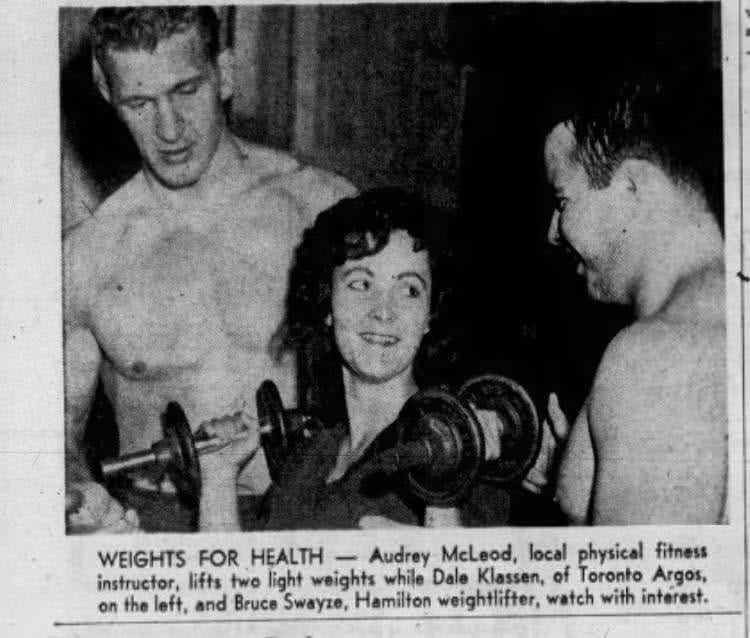
Pictured: The Hamilton Spectator, June 16th, 1961, Hamilton, Ontario, Canada
Wentworth also ran small Thursday-night wrestling shows at his gym. These events became a laboratory for young wrestlers. They could learn how to work in front of an audience, how to structure a match, how to react to a crowd and, just as importantly, how to work with experienced professionals. For Swayze, those small shows became his wrestling school.
They were the equivalent of a minor-league system before professional wrestling had anything resembling a formal developmental program. Swayze later remembered those Thursday nights with great affection. They were where he learned the fundamentals of the business from the ground up.
And he was learning at a remarkable time.
Hamilton was one of the important Canadian wrestling environments of the era, producing or influencing a long list of wrestlers who would eventually become important throughout North America. Swayze became part of that wrestling fraternity.
From the Steel Mill to the Wrestling Road
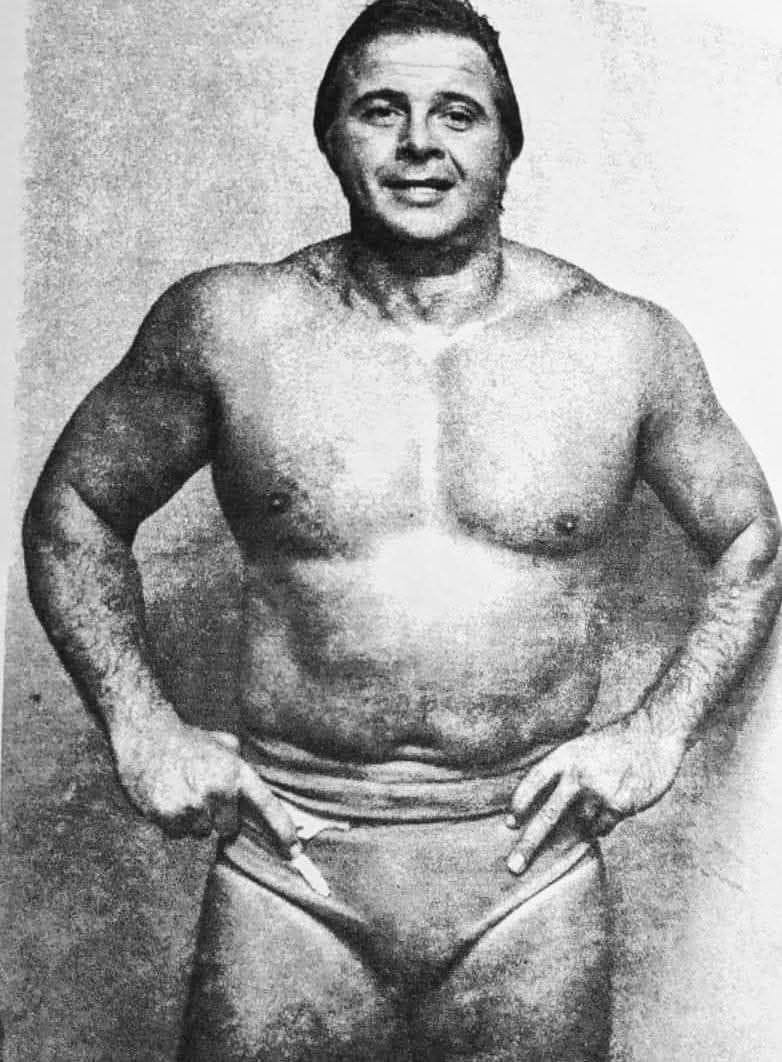
Typical for the territory era, Swayze initially balanced wrestling with a job in a Hamilton steel mill.
Professional wrestling was not necessarily a secure full-time occupation for a young wrestler. A man could wrestle on weekends, work a regular job during the week, and gradually determine whether he had enough ability, opportunity and connections to make wrestling a career. Swayze spent several years doing precisely that.
He began traveling into the United States, working in places such as Buffalo, Detroit and Pittsburgh. Detroit was particularly important because promoter Bert Ruby gave Swayze opportunities to work under a mask. Around this same period, he crossed paths with other young Canadian wrestlers who were trying to establish themselves, including Ivan Koloff, Terry Yorkston and Johnny Powers.
And Swayze was learning all of it.
One of the fascinating details of his early career was his connection to Johnny Powers. Swayze recalled that he was actually working the desk at Wentworth’s gym on the night Dennis Waters—who would become Johnny Powers—first came in and signed up. Decades later, Powers would become one of Canada’s most important wrestling figures. Swayze was there at the beginning.
Pedro Martinez and the Buffalo Years
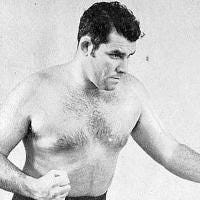
Pictured: Pedro Martinez wrestling action photo
The turning point in Swayze’s career came when he finally decided to leave the steel mill and attempt professional wrestling full-time. Buffalo became one of the most important stops in his development, and promoter Pedro Martinez became one of the men most responsible for helping Swayze establish himself.
Swayze himself credited Martinez as the promoter who really got his career moving.
Buffalo was an important wrestling market because it connected the Canadian wrestling world with the northeastern United States. Wrestlers could move back and forth across the border, and the territory was populated by performers from a remarkable range of wrestling backgrounds. It was also in Buffalo that Swayze’s reputation as a colorful character began to develop. He was not simply a competent wrestler. He had personality. He could talk. He could antagonize an audience. He could play the cocky villain.
And he could understand that professional wrestling was not merely about what happened between the opening bell and the closing bell. The audience had to care. Swayze learned how to make them care.
“Beautiful” Bruce is Born
The nickname “Beautiful” Bruce was itself part of the act.
Swayze was a compact, muscular wrestler who generally worked in the neighborhood of 218 to 235 pounds. He was not enormous by the standards of heavyweight wrestling, but he carried himself with confidence and understood presentation. The character could be vain, arrogant and deliberately irritating. That combination made him particularly effective as a heel.
But there was another quality that became increasingly important throughout his career: Swayze knew how to generate heat without necessarily needing to dominate a match. He understood the psychology of professional wrestling. The great territorial wrestlers knew that getting booed was not the same thing as being disliked in real life. The objective was to create an emotional response that made the audience want to see the wrestler receive his comeuppance.
Swayze was very good at that. He could provoke an audience with a gesture, a facial expression, an interview or a cheap shot. He understood how to “work” a building.
That ability would eventually become just as valuable as his wrestling.
The Love Brothers
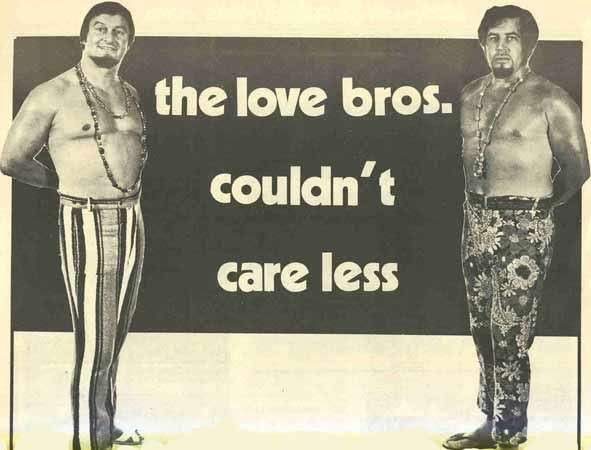
Perhaps the most memorable wrestling association of Swayze’s career came with the Love Brothers, Reginald Love and Hartford Love. Swayze was added as a manager who could still wrestle. The trio generated the kind of heat that defined territorial wrestling at its most theatrical. “We were hot,” he recalled decades later. “We got a lot of heat, the three of us. If I think about it now, wow, unbelievable. As much if not more than they’re getting with anybody out there now. We could hardly get to the ring, let alone getting out of it.” Swayze later remembered just how much heat the trio generated. They could barely get to the ring. And sometimes getting out of the building was even harder. That was one of the best measures of a territorial heel’s success.
Evans remained one of his closest friends for forty years and introduced him when Swayze was honored at the 2003 Cauliflower Alley Club reunion in Las Vegas. The introduction was classic locker-room roasting—Evans accused Swayze of never picking up a check and of working part-time at a funeral parlor so his fiancée could have flowers every week—but it ended with genuine affection. Swayze, Evans said, was in the top five people he could depend on.
The “Beautiful” nickname was not irony. At 5-foot-10 or 5-foot-10½ and 218 to 235 pounds, Swayze was not a giant. He was handsome, well-groomed, and dressed like a man who understood that presentation was part of the con. Fans and colleagues remembered flashy outfits, especially during his 1975 IWA run as Ernie Ladd’s manager. Interviews from that period show a man who looked as if he had stepped out of a nightclub and into a television studio, talking while Ladd loomed beside him.
The Love Brothers association also illustrates an important aspect of Swayze’s career: he was willing to share the spotlight. He did not need to be the central character. If the Love Brothers were the attraction, Swayze could make himself valuable by making them more effective. That ability to understand his role would serve him repeatedly throughout his career.
The National Wrestling Federation
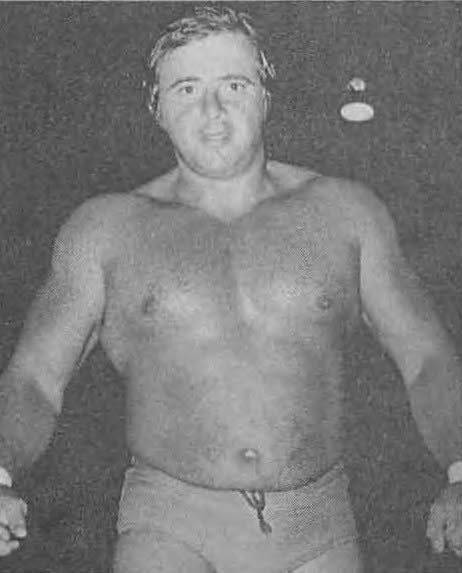
Swayze became part of the National Wrestling Federation environment in the early 1970s.
The NWF, centered around Cleveland and Buffalo and associated with Pedro Martinez and Johnny Powers, represented one of the attempts to create a broader wrestling organization outside the traditional territorial alliances. For Swayze, the NWF provided another opportunity to work with a fascinating collection of wrestlers.
He was involved with performers such as the Love Brothers and Eric the Red, and his ability to work both as a wrestler and a manager made him particularly useful. His wrestling in this period demonstrated another quality that would define his career. Swayze was a “utility player.” He could be inserted into a singles program.
He could work as part of a tag team. He could manage. He could work television. He could be the experienced veteran paired with a younger performer. And he could move into another territory and immediately understand what was expected of him. That was one of the reasons he remained employable for so many years.
The Territorial Map
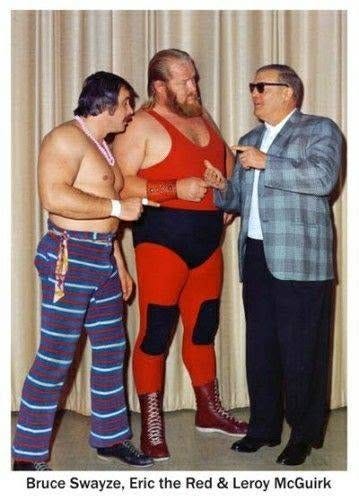
Swayze’s résumé reads like a tour of the old NWA and independent map. He worked Championship Wrestling from Florida for Eddie Graham—whom he liked, and whose plane he sometimes flew in—because he liked the weather and the water. He worked Mid-Atlantic for Jim Crockett when Ric Flair was “green as grass.” He worked Oklahoma for Leroy McGuirk and then Bill Watts, where the travel was brutal and Watts eventually split Swayze and Eric the Red onto opposite ends of the territory because they drove him crazy together. Watts later said Swayze was a stabilizing influence, even-tempered in a business that rewarded chaos.
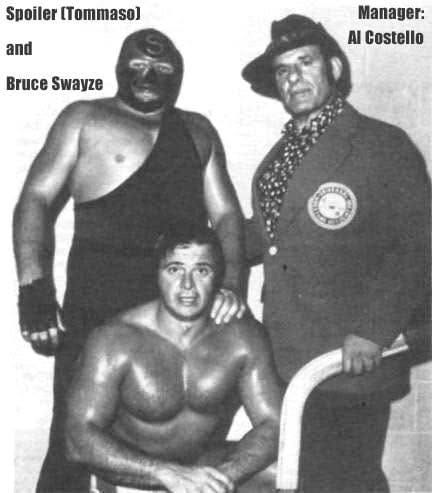
He worked San Francisco with Baron Mikel Scicluna, got locked up after a brawl, and still planned to team against Pat Patterson and Ray Stevens. He worked Memphis, the Carolinas, Cleveland’s National Wrestling Federation, and Calgary. In Puerto Rico, teaming with Jim Dalton, he main-evented the first wrestling match at the Roberto Clemente Coliseum. The angle put Dalton in the hospital; the building sold out and turned away thousands; militia had to escort them in and out of the ring. They held the WWC North American Tag Team Championship. Swayze went in and out of the island for years but never wanted to stay permanently. The running around, he said, was enough.
As Black Baron he managed Abdullah the Butcher, Crusher Verdu, the Samoans, and others. As Beautiful Bruce he managed the Love Brothers, Eric the Red (Erik Hanson), whom he helped get a break in Buffalo, and Ernie Ladd in the short-lived IWA of 1975, the promotion tied to Pedro Martinez and Eddie Einhorn. The IWA was an ambitious promotion and it brought together a remarkable collection of talent. Swayze worked alongside and against names such as Mil Máscaras, Ivan Koloff, Ernie Ladd, Dino Bravo, Gino Brito, the Mongols, the Love Brothers and numerous other established wrestlers.
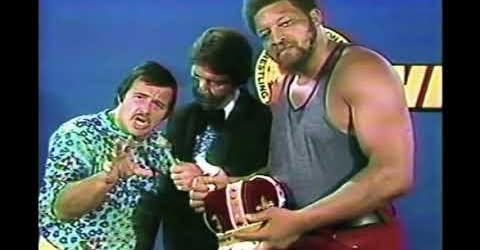
Pictured: Beautiful Bruce Swayze does an interview for IWA television with The Big Cat, Ernie Ladd
The IWA period represented something of a culmination of Swayze’s territorial experience. He had spent years learning the business in Canada and the United States, and by this point he was an experienced veteran who could be trusted in almost any situation. His association with the Love Brothers continued, and the team remained one of his most identifiable career connections.
He was better known as a manager than as a singles star, and he understood that.
The job was to get heat, to talk, to make the other man look like a monster or a victim, and then, when needed, to take a bump himself.
The distinction between wrestler and manager was much less rigid during the 1970s territorial era than it would later become. A manager might wrestle. A wrestler might manage. A tag-team partner might become a spokesman. A veteran could be moved into a managerial role when the promoter needed him to help establish a younger or more dangerous performer. Swayze was perfectly suited for this system.
He knew wrestling from inside the ring, but he also understood the storytelling side of the business. He could communicate with an audience. He could work television. He could create an angle. He could accompany a wrestler to ringside. And if circumstances required it, he could still get into the ring himself. That versatility explains why his career remained relevant for so long.
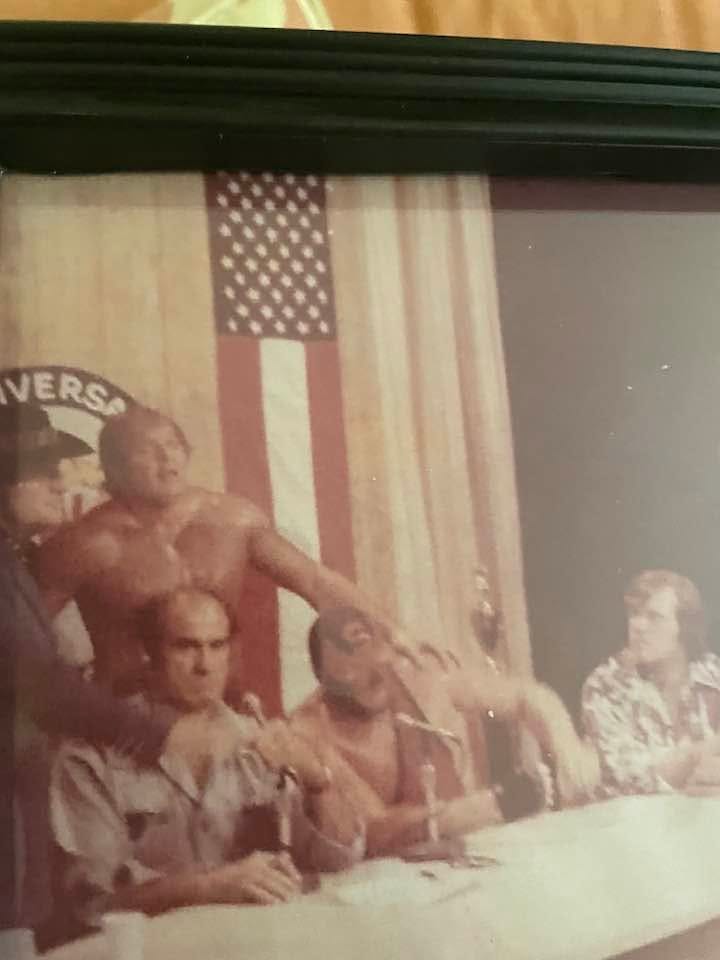
Pictured: Al Costello, Beautiful Bruce, Lou Thesz and others on the set of UWA Wrestling in Nashville, Tennessee
Colleagues remembered a man who liked a drink, who would tell bar crowds he was Burt Reynolds’ stunt double so the drinks came free, then slip out when a fight started because he “couldn’t get hit in the face.” Gil Hayes recalled him arriving in San Juan, getting thoroughly wrecked, falling asleep on the beach, and working the next night so sunburned he could barely be touched. Gene Petit remembered a Mustang convertible at eight in the morning in hundred-degree heat, Swayze in a suit, Eric the Red in a tank top, heading to television.
He was not a large man, Hayes said, “but he sure cut a wide swath. He was always willing to give his all, and he could draw pictures for the crowd.”
Stampede Wrestling and Tennessee
Calgary was another significant stop.
Stampede Wrestling, under Stu Hart, had its own unique philosophy and training system. The promotion was famous for hard wrestling, intense training and a roster that often included performers from across Canada and the United States. Swayze’s presence in the Calgary wrestling environment further demonstrated the breadth of his career. He was not tied to one promoter or one territory. He was part of the larger wrestling fraternity.
That distinction matters.
The territorial system was not really a collection of completely independent islands. It was a network of relationships. Wrestlers moved. Promoters exchanged talent. Managers followed wrestlers. Champions traveled. And veteran wrestlers carried knowledge from one territory to another. Bruce Swayze was one of those carriers of knowledge.
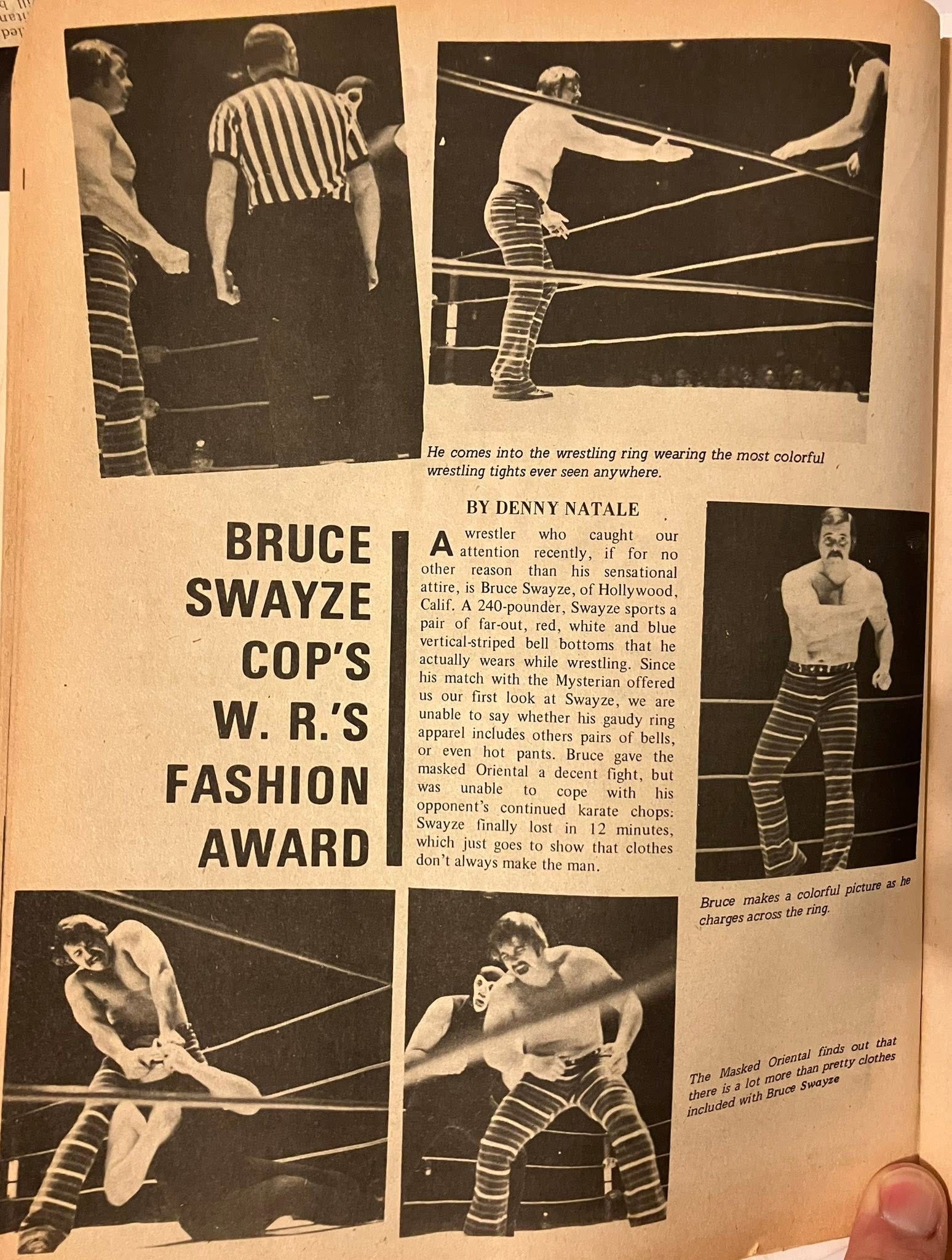
Swayze also spent time in the Tennessee wrestling environment, another territory where personality and television mattered enormously. He arrived first working for Nick Gulas’ NWA Mid-America Promotion in July of 1977 after the Tennessee Territory split into two different booking offices, both located in Nashville. Nick Gulas’ big office building on one side of town and and Jerry Jarrett, in 1977, working out of his house in nearby Hendersonville, Tennessee.
No matter which side you worked for, the Tennessee wrestling ecosystem demanded that wrestlers understand how to connect with a local audience. After working two dates in August, Swayze switched to the smaller rebellious team of Jerry Jarrett. Swayze always seemed to favor the smaller outlaw promotion, which at the time, is what Jerry Jarrett’s CWA was, after breaking away from the legacy NWA Gulas Promotion.
Jerry Jarrett’s new promotion relied heavily on television, interviews, angles and carefully constructed personal feuds. A wrestler such as Swayze could be extremely useful in that environment. He understood interviews. He understood he had to get heat. And he knew how to make an opponent look good.
Those skills were valuable with Jarrett’s booking, where a wrestler’s television performance could be as important as his performance in the ring. Swayze worked with a variety of tag team partners, Jimmy Garvin in Memphis and around the loop until they had a break-up as a team creating a singles face-ff at the Mid-South Coliseum on September 19th, 1977.
After that, he had short programs with Pat Barrett, Scott Casey, around the loop with Jimmy Garvin until he finished up in November on a program feud with the masked Mr. Wrestling (Dickie Steinborn).
His Relationship with Hillbilly Jim Morris
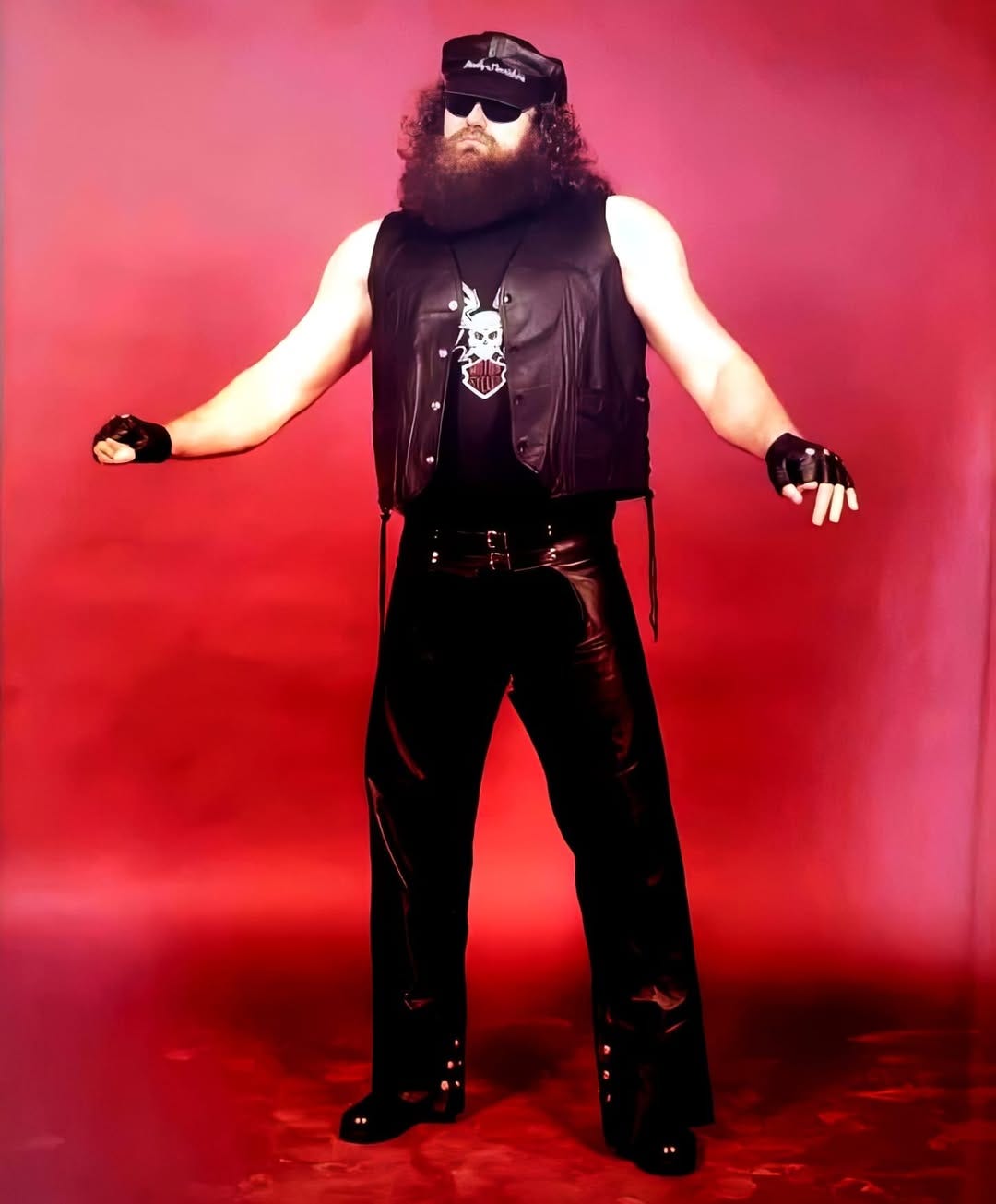
Pictured: Early Jim Morris as Harley Davidson
Perhaps the most surprising part of Bruce Swayze’s legacy is his role in the early career of Hillbilly Jim. Before Hillbilly Jim became a nationally recognized WWF personality, he was Jim Morris, a massive athlete from Kentucky. Morris had been an All-State basketball player and was already an imposing physical specimen.
But he did not simply walk into professional wrestling and become Hillbilly Jim. Bruce Swayze helped him get started. The two met at a gym in Bowling Green, Kentucky. Swayze immediately recognized the potential in the enormous young athlete. He told Morris that he should get into wrestling.
Morris was skeptical. Swayze was not.
A man of that size, Swayze believed, had a legitimate opportunity. He began teaching Morris some of the basics and, more importantly, began introducing him to the people and culture of professional wrestling. That distinction is crucial. Swayze did not merely teach Morris how to wrestle. He taught him how to enter the wrestling business. He introduced him to wrestlers. He took him to Florida.
He introduced him to Dusty Rhodes, Harley Race, Barry Windham and Blackjack Mulligan. He helped Morris understand the world he was attempting to enter. Morris eventually went to Calgary, where he encountered Stu Hart, and later to Memphis, where Jerry Lawler and Jerry Jarrett used him as Harley Davidson. From there, the path eventually led to the WWF and the creation of Hillbilly Jim. Morris himself was very clear about Swayze’s importance. He later said that he did not believe there would have been a Hillbilly Jim—or even a wrestling career for Jim Morris—without Bruce Swayze.
That may be the single most important part of Swayze’s legacy outside his own wrestling career. He helped create someone else’s career. And he did it without needing the credit.
Family & Life After Wrestling
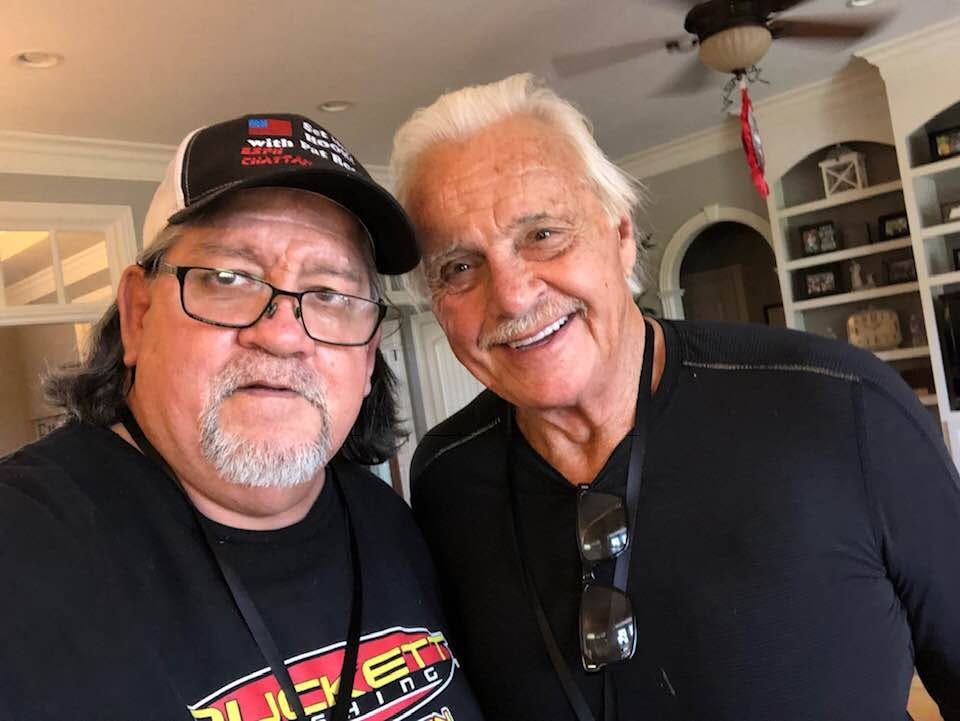
Pictured: Pat Rose and Bruce Swayze

Swayze eventually made a major transition away from full-time wrestling.
His wife, Bonnie, came from the family associated with the Alliance Rubber Company, a major manufacturer of rubber bands and elastic products. Swayze became involved in the family business. It was a natural progression. The wrestling road was demanding, and by this stage he had spent many years traveling. Sales and wrestling also shared something important.
Both depended upon communication. Both required reading people.
Swayze later said that his wrestling background was enormously helpful in sales because so many people he encountered were wrestling fans. His wrestling stories became an icebreaker. His personality became an asset. And his ability to communicate became another career. In other words, Swayze did not leave wrestling so much as he transferred the skills he had learned in wrestling into another profession.
Swayze was the uncle of actor Patrick Swayze. Patrick’s father, Jesse Wayne Swayze, was of an older Texas generation of the same family. Bruce’s own later family life was rooted in Kentucky and Arkansas. He married Bonnie Spencer, daughter of William H. Spencer, who in 1923 had founded Alliance Rubber Company by cutting bands from inner tubes. Alliance grew into the last remaining U.S. manufacturer of rubber bands, a woman-led family firm that Bonnie eventually served as president. Bruce joined the business as a salesman while still wrestling, then left the road.
“I met a girl and I got married,” he told Greg Oliver in 2007. “They asked me if I’d like to get involved in the family business. I started doing some things for them as I travelled. The opportunity was there so I decided to call it off.” Wrestling and sales, he said, were not so different. Closet fans recognized him. The stories got him over.
He stopped wrestling full time in the early 1980s, worked occasional spot shows into the late 1980s, and promoted charity cards around Kentucky. He and Bonnie had a son, Beau Andrew Swayze, who settled in Los Angeles with his wife Cosima and their son Sebastian. Bruce kept a cottage in Collingwood, visited his mother in Hamilton, traveled to reunions, and stayed well dressed and quick with a laugh. Bonnie Spencer Swayze died on April 6, 2026, after a long illness. Bruce followed five months later.
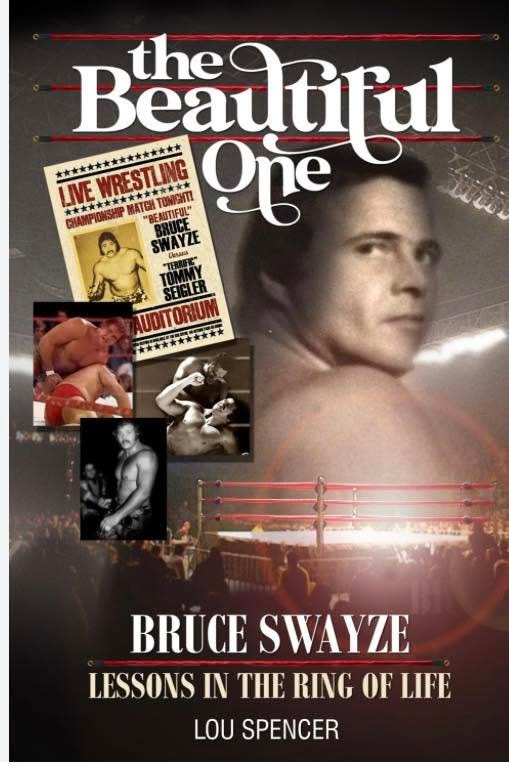
In 2024 a biography appeared: The Beautiful One: Bruce Swayze — Lessons in the Ring of Life, written with Lou Spencer. The book framed his life as more than a string of towns and finishes. It described a childhood in the shadow of trauma, two decades of fame mixed with addiction and living on the edge, and a redemption story that took him from the frozen roads of northern Ontario to Arecibo and back into a quieter, prosperous life holding the world together with rubber bands. The wild stories—Eric the Red, Ernie Ladd, Terry Funk, the Puerto Rican riot heat—were presented as true enough that they would have been unbelievable as fiction.
Place in the Business
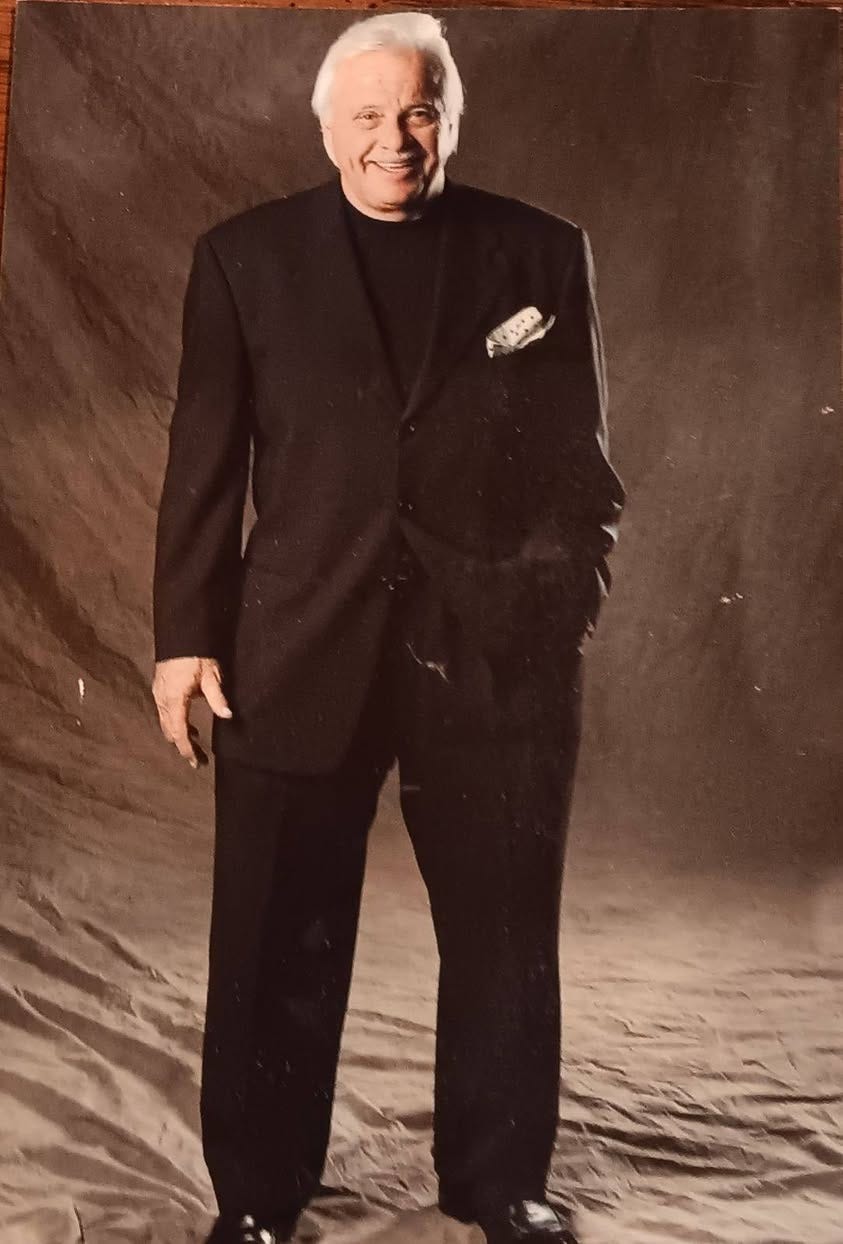
Swayze was a product of the territorial system: trained locally, broken in on weekend cards, sent down the road when he was ready, used as a wrestler, a manager, a talker, and a reliable hand who could get a crowd to hate him or to laugh with him. He never became a national television star. He did not need to. In Buffalo he and the Love Brothers could barely reach the ring. In San Juan the militia had to clear a path. In Florida he flew with Eddie Graham. In the Carolinas he worked with a young Ric Flair. In living rooms in 1975 he stood beside Ernie Ladd in a shirt that still gets comments fifty years later.
The Cauliflower Alley Club recognized that career in 2003. He was honored alongside a group that included Don Leo Jonathan, Buddy Roberts, Buddy Colt, Moose Morowski and others. His presenters were Gene Petit and Reginald Love. Old partners kept telling stories about him long after he left the road. When he died in September 2026, the notices were brief compared with those of larger names, but they came from the people who keep the memory of the territories: the clip collectors, the interviewers, the men who had shared a car and a bar and a finish with Beautiful Bruce.
The town he spent the rest of his life in, Franklin, Kentucky and their local Simpson County Historical Society have memorialized him with a small display of his wrestling artifacts.
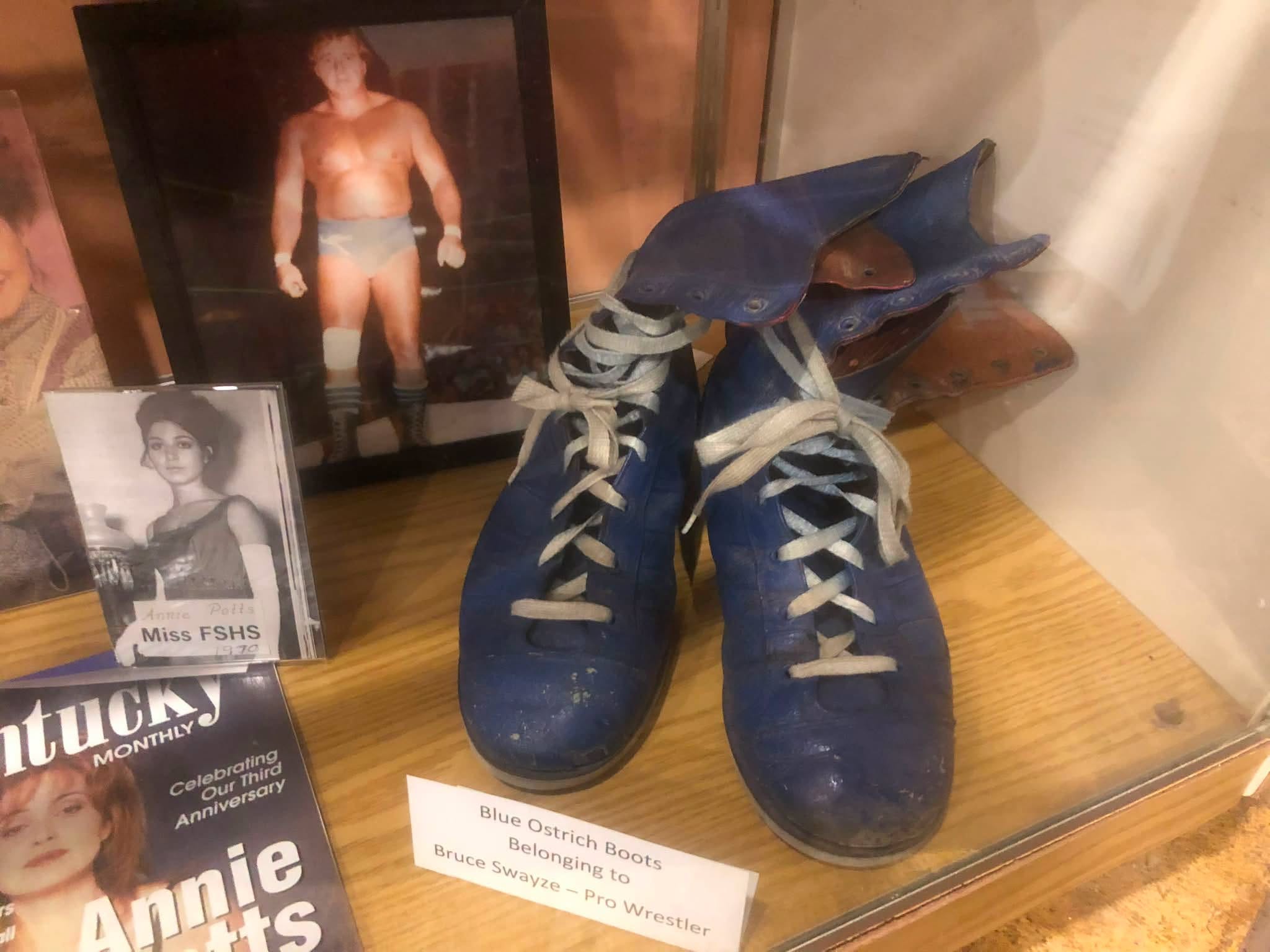
Pictured: Part of the Bruce Swayze display at the Simpson County Historical Society, link below for more information:
Simpson County Historical Society
He had been a hockey kid from Kirkland Lake, a mill worker from Hamilton, a masked wrestler in Detroit, a heat magnet in Buffalo, a manager in a dozen towns, a tag champion in Puerto Rico, a salesman in the rubber-band business, a husband, a father, an uncle to a movie star, and, at the end, a man who had written down what the ring had taught him about living. The nickname was vanity and booking in equal measure. The life behind it was longer, harder, and more complete than the gimmick suggested.
One of the most fitting descriptions of Swayze came from wrestler and historian Gordon Hayes, who observed that although Swayze was not a particularly large man, he “cut a wide swath.”
That is exactly right.
That kind of career was common during the territory era, but it has become increasingly difficult to appreciate in an age when wrestlers may work for one major company for years without experiencing anything remotely resembling the territorial circuit.
“Beautiful” Bruce was never the biggest star in professional wrestling. He did something more subtle and, in many ways, more representative of the territorial era. He became part of the foundation upon which other careers were built.
He was a wrestler who could manage, a manager who could wrestle, a storyteller who understood television, a salesman who knew how to read people, a veteran who helped younger wrestlers and a road warrior who accumulated friendships everywhere he went.
His career was spread across the map rather than concentrated in one territory.
His legacy was spread across other people’s careers rather than concentrated in championship reigns.
And that is precisely why Bruce Swayze deserves to be remembered.
He was one of the working men who made professional wrestling work.
He was the man they called “Beautiful”
He was “Beautiful” Bruce.
Thank You for Watching and Listening
I’m Tony Richards, Pro Wrestling Historian, Author and Storyteller. I share pro wrestling historical items in each issue of the Time Tunnel Pro Wrestling History Newsletter and each episode of our podcast show. Thanks for your support! If you enjoy my information on select events, matches and insights, please share with folks you think might like to be a subscriber!
Remember, Premium subscribers get access to exclusive and special content such as some special issues including a multi-part deep dives on wrestling territories, wrestler bios and championship title histories, special audio and video interviews on territory pro wrestling and more available in the Pro Wrestling Time Tunnel for Premium Subscribers. Being a Premium Subscriber also means you support me in my efforts to document Pro Wrestling History through my research, writing, books, vidoes and podcasts. And…I have something very special planned for our Premium Subscribers on the Podcast side of things in 2026! Details soon here in the Pro Wrestling Time Tunnel.