


On the evening of this past Friday, March 20, 2026, professional wrestling’s community lost one of its most influential yet understated architects.
Dennis Condrey, the founding member and veteran leader of the legendary Midnight Express, passed away at the age of 76 in his home state of Alabama. The news broke the following day when AEW star Dax Harwood (of FTR) shared it on social media, launching a GoFundMe campaign to cover funeral expenses and honoring Condrey as a foundational figure in tag team wrestling. No official cause of death has been publicly disclosed, though Condrey had previously overcome a private, four-year battle with throat cancer that left him with an artificial voice box by the late 2010s.
Condrey was never the flashiest or most outspoken star of his era. In the most documented stretch of his career, he didn’t cut the promos or seek the spotlight the way his longtime manager Jim Cornette or partner Bobby Eaton sometimes did. Yet for nearly four decades—from the Southern territories of the 1970s to the national spotlight of Jim Crockett Promotions and brief stints in the AWA and WWE developmental—he embodied the blue-collar excellence that defined great tag team wrestling. Billed at 6’2” and 250 pounds (later listed variably around 230–255 pounds), with a rugged, no-nonsense style and a finishing Double Underhook Piledriver, “Loverboy” Dennis Condrey helped revolutionize how tag teams told stories, built heat, and elevated entire promotions. His influence echoes in every modern tag division that values psychology, teamwork, and long-term storytelling.
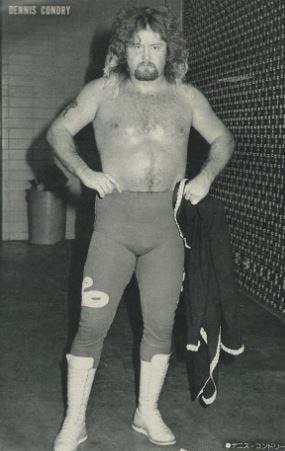
Dennis Condrey was born on February 1, 1950, in Florence, Alabama—a small Muscle Shoals-area town better known for its music studios, being the home to both FAME Recording Studios and Muscle Shoals Sound Studios (made famous by the lyric in Sweet Home Alabama by Lynyrd Skynyrd) than wrestling rings. At the time, in the 1950s and 1960s, the Gulas and Welch Nashville, Tennessee Booking Office retained a strong presence in northern and mid-Alabama cities, centering their efforts on Birmingham, Huntsville, and Florence. This strategic focus turned Florence into an essential date on the weekly loop that allowed wrestlers to perform four to six nights a week while building feuds that carried from town to town.
Florence in the 1950s and 1960s was a classic small-city market—population around 25,000 in 1960—rooted in manufacturing, agriculture, and the emerging Muscle Shoals music scene. Wrestling offered affordable family entertainment in an era before widespread cable television. The primary pro wrestling venue was the Florence National Guard Armory, an intimate, no-frills hall that seated a few thousand at most and created an electric atmosphere where fans sat close enough to feel the impact of every slam. On special occasions, bigger shows moved to the Florence Fairgrounds. The Armory doubled as a community hub for boxing, dances, and other events, but wrestling nights transformed it into a raucous arena where heroes and villains traded blows and insults under the lights.
Big-name talent frequently headlined to boost attendance. On May 30, 1958, the legendary Gorgeous George—wrestling’s first true superstar with his glittering robes and arrogant persona—defeated local favorite Herb Welch at the Fairgrounds in a match that made headlines in the Florence Times. Other touring heels like Killer Karl Kowalski and Japanese American villain Tojo Yamamoto drew strong crowds, while women’s matches and tag-team bouts rounded out the cards. The Welch family itself supplied familiar faces: brothers Herb, Jack, Lester, and sometimes Roy appeared regularly, giving Florence fans a sense of hometown connection even as national stars passed through.
Pro Wrestling in Florence mirrored the broader Southern style: athletic brawls mixed with theatrical promos, family feuds, and clear moral lines between babyfaces and heels. Television tapings in larger cities like Nashville, Memphis, Chattanooga and Huntsville helped sell tickets to the live shows; fans who watched Jackie Fargo, the Fabulous Fargos, or Bearcat Brown on the small screen flocked to the Armory to see them in person. No doubt for a young Dennis Condrey, who was raised in this working-class community, these nights offered escape, excitement, and a chance to cheer, or boo heroes or heels who felt larger than life in that cramped hall. These storylines and events each week in Florence led Condrey to want to join the athletic and show business of wrestling.
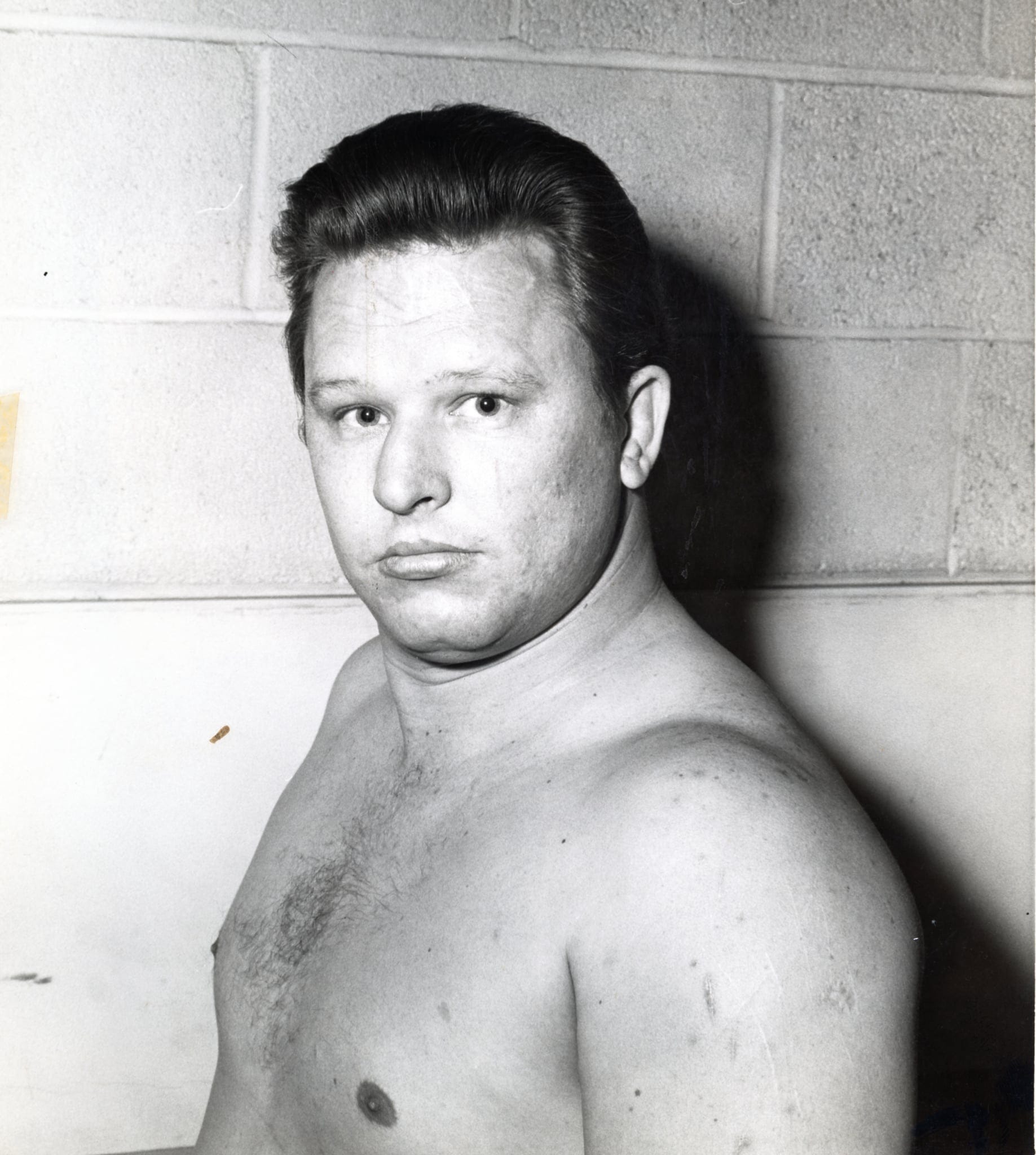
Pictured: Joe Turner
It’s safe to say that few relationships shaped a career as decisively as the one between legendary tag team veteran Joe Turner and his ambitious young brother-in-law, Dennis Condrey. Turner, a battle-hardened competitor who had cut his teeth since 1957, was already a Southern institution by the early 1970s. Wrestling under his own name, as the masked Black Hand, or as one half of the notorious Interns alongside lifelong partner Bill Bowman, Turner had captured Gulf Coast Tag Team titles multiple times, the Southern Tag Team championship in Nashville in 1969, and countless other regional honors. He was the embodiment of old-school territorial wrestling: tough, versatile, and a master of tag team psychology who knew exactly how to heat up a crowd with illegal double-teams, sly heel tactics, and perfectly timed hot tags.
When a raw, eager 21-year-old Dennis Condrey, hungry for glory but green as grass—stepped into Turner’s world in the early 1970s, the effect was immediate and career-defining. Turner personally trained Condrey, who debuted in 1973, and the two even teamed together early on (including masked runs as Dante & Mephisto and a 1974 NWA Tri-State Tag Team Championship reign in Alabama). What Turner instilled in that young, wide-eyed rookie—fundamentals, tag mastery, heel psychology, and the relentless territorial grind—forged Condrey into one of the greatest tag team specialists of his generation, a gritty foundation that powered several legendary tag team combinations to legendary status.
Turner’s training methods were pure 1960s Southern territory tag team psychology: hands-on, unforgiving, and rooted in survival. There were no flashy schools or modern production facilities. Instead, Condrey learned in dingy gymnasiums, empty arenas, and on the road, drilling chain wrestling, safe bumping, and the subtle art of selling until his body ached. As family, the mentorship carried extra weight—tough love delivered with personal investment. Turner, who had broken in the same way decades earlier alongside Bowman at the Mobile, Alabama YMCA, emphasized self-reliance and ring generalship.
A young, eager Condrey soaked it up.
The veteran’s emphasis on repetition built Condrey’s iron endurance and technical precision, turning a naturally athletic kid into a reliable worker who could wrestle long, story-driven matches without missing a beat. Early on-the-job experience alongside Turner—holding titles in Alabama just a year after debuting—gave Condrey instant credibility and confidence. He wasn’t just learning moves; he was learning how to win in front of bloodthirsty Southern crowds who booed heels with religious fervor.
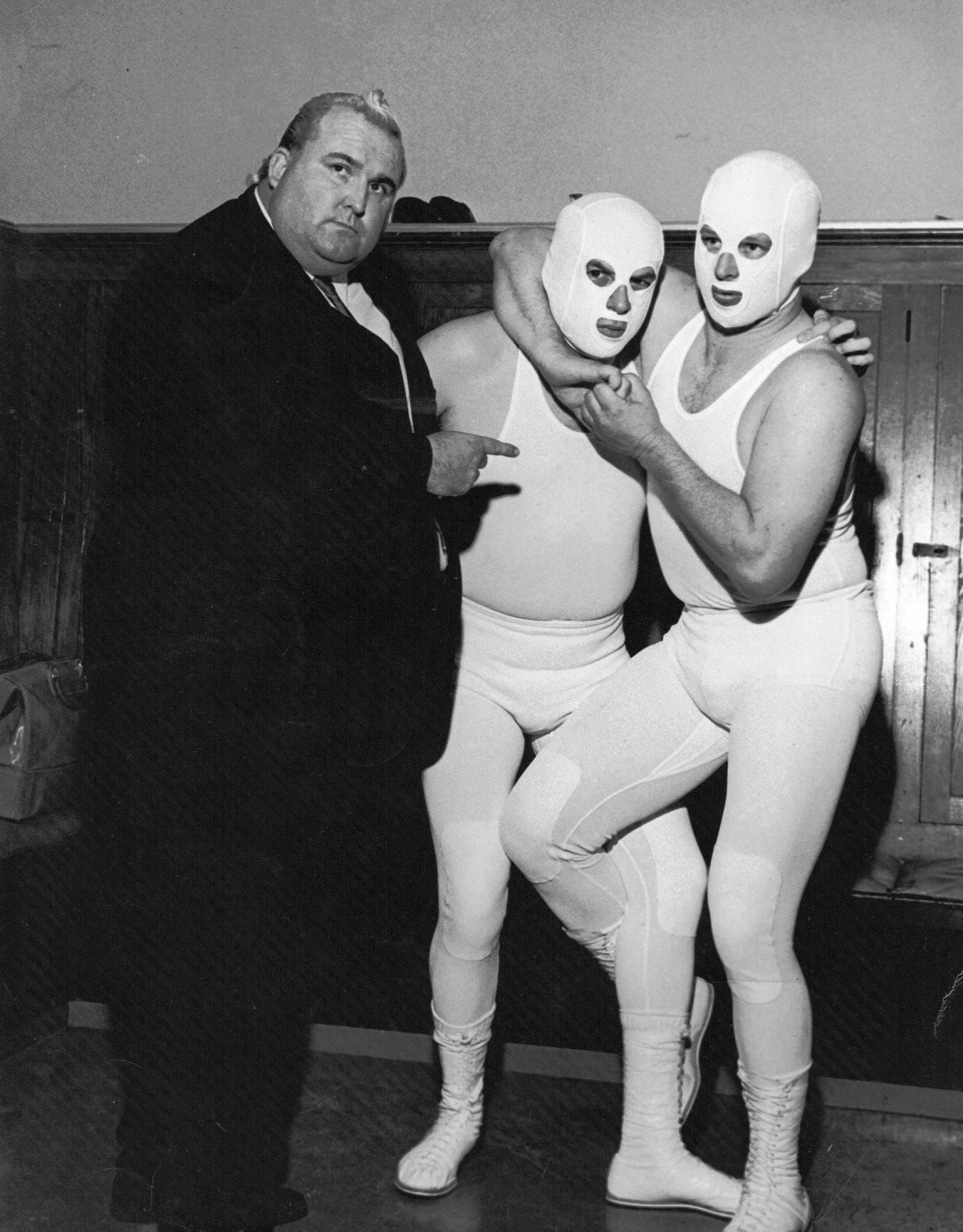
Pictured: The Masked Interns (Joe Turner and Bill Bowman) in 1968 managed by Dr. Jerry Graham
The deepest impact, however, came in tag team wrestling—the very arena where Turner had made his legend. The Interns gimmick had taught Turner everything about heat-building: how to use the referee’s back for illegal switches, how to isolate the babyface for ten minutes of punishment, and how to explode the arena with a hot tag. Condrey absorbed this masterclass. Turner drilled the psychology of the tag division—the rhythm of babyface comebacks, the necessity of cheating without getting caught too obviously, and the storytelling power of making every near-fall feel like the end of the world.
Joe Turner’s training did not merely teach Dennis Condrey how to wrestle—it taught him why wrestling mattered in the territories: to entertain, to provoke, and to connect with audiences who lived and died with every hold. Condrey debuted in 1973 in Roy Welch and Nick Gulas’s NWA Nashville, Tennessee promotion, quickly establishing himself as a reliable tag team specialist rather than a singles draw. By 1974, when the two held Tri-State gold together, Condrey was already putting those lessons into practice.
That early success with a seasoned partner accelerated his growth exponentially. Where a solo rookie might have floundered, Condrey learned to trust the tag dynamic: give your partner the glory, take the heat, and always protect the finish. This foundation became the bedrock of his style—gritty, brawling, and unapologetically heelish. Condrey never relied on high-flying or pure athleticism alone; he excelled at the slow, methodical beatdown that made fans scream for justice.
Those lessons directly shaped Condrey’s persona and long-term success, he slowly evolved into a tag team specialist who drew heat like few others. His “Loverboy” gimmick—cocky, flashy, yet grounded in street-tough realism—meshed perfectly with the cheating tactics Turner had taught him. The broader effects extended beyond the ring.
Turner’s mentorship prepared Condrey for the brutal realities of the territorial era—long drives, low pay, and the need to sell tickets night after night. It instilled professionalism, loyalty to the business, and an understanding of crowd psychology that served him well when he later trained young wrestlers himself in developmental roles. Even in retirement (until his passing in 2026), Condrey carried the lessons of discipline and storytelling that Turner had hammered home. In an era when wrestling was still regional and personal, that one-on-one guidance from a true Southern legend turned raw potential into polished excellence.
Condrey’s early career became a masterclass in Southern tag team wrestling. In mid-1975, during the U.S. Bicentennial celebrations, he teamed with Phil Hickerson as the “Bicentennial Kings,” managed by “Kangaroo” Al Costello. The “Bicentennial Kings”—embodied the arrogant, cheating heel archetype that defined regional wrestling. Formed in mid-1975 amid the patriotic fervor of the United States Bicentennial, they became multi-time champions, drawing consistent crowds with bloody brawls, sharp promos, and a dynamic in-ring style that blended power, speed, and technical wrestling. Condrey and Hickerson held numerous titles across several promotions, feuded with legends like Jackie Fargo, Tojo Yamamoto, Tommy Rich and the Gibson Brothers (Ricky & Robert), and exemplified the high-stakes, short-reign title-swapping formula that kept fans coming back week after week in Nashville, Chattanooga, Memphis, Birmingham, Louisville, Evansville and Knoxville.
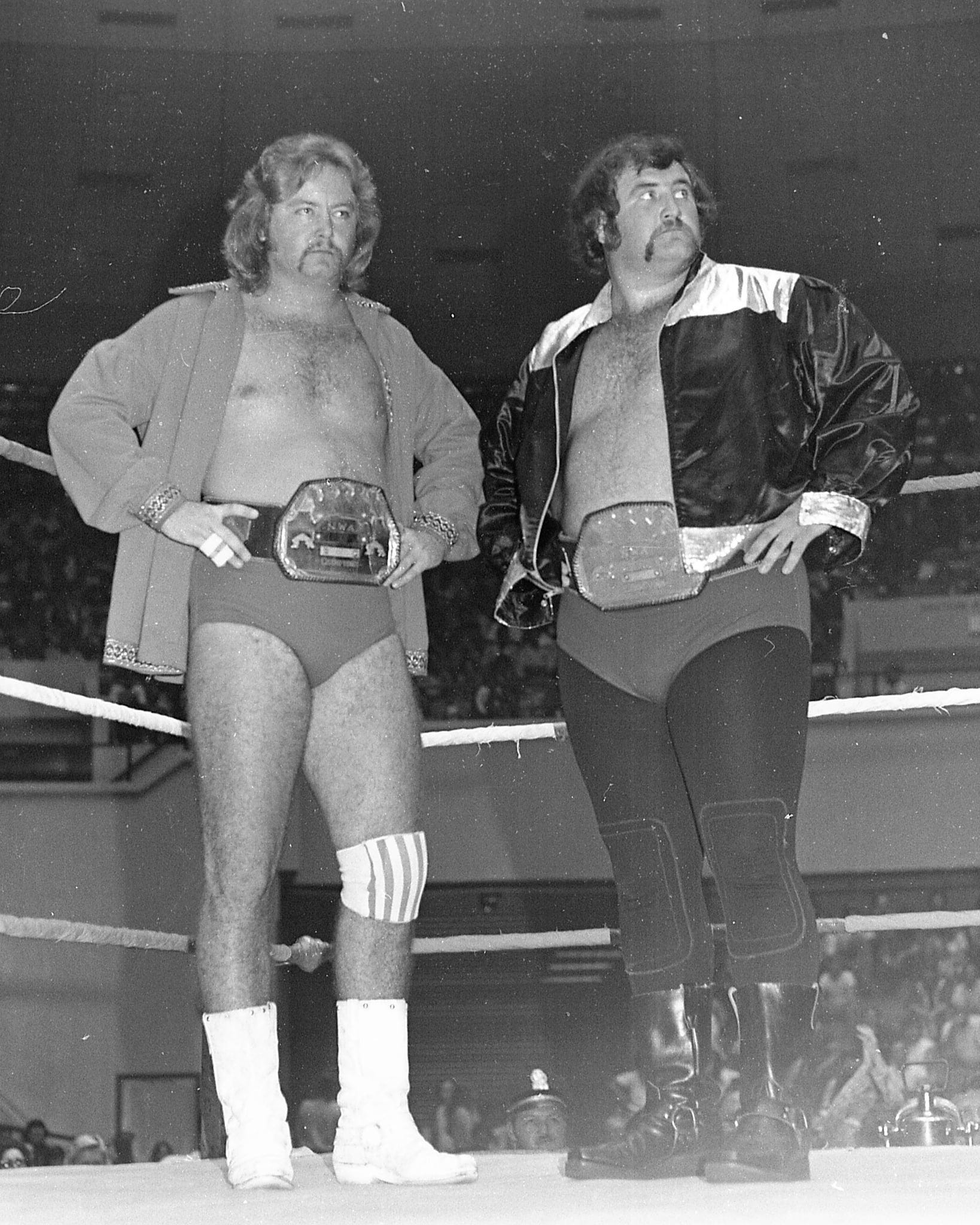
Pictured: Dennis Condrey and Phil Hickerson in 1975
The pair teamed up in mid-1975 specifically to capitalize on the upcoming 1976 U.S. Bicentennial celebrations. Billed as the “Bicentennial Kings,” they adopted an over-the-top arrogant royal persona—kings ruling over the wrestling world during America’s 200th birthday. Initially managed by “Kangaroo” Al Costello, they later worked with heel managers like Ron Wright (notably in 1977–1978 Southeastern and CWA runs), Bruce Swayze, and Rock Hunter. Wright, in particular, added heat; footage and photos from the era show the team with their belts, Wright at ringside, as they cut promos boasting about their superiority. The gimmick was pure heel gold: patriotic on the surface but twisted into entitlement and rule-breaking, drawing massive crowd reactions in the conservative Southern territories.
Condrey and Hickerson were heat and championship magnets. Between 1975 and early 1979, they captured The NWA United States Tag Team Championship (Mid-America version) five times—a record for the title before it was abandoned. Key wins included defeating Tommy Rich & Tojo Yamamoto (October 1975), Don Carson & Jackie Fargo (November 1975), and Jerry Lawler & Jackie Fargo (December 1975).
They captured the NWA Southern Tag Team Championship (Mid-America version, later renamed the AWA Southern Tag Team Championship in the CWA) nine times together (part of Hickerson’s total of 14 reigns in the title’s history and Condrey’s nine overall). Notable reigns included tournament victories over the Gibson Brothers (Ricky & Robert Gibson) on March 14 and May 23, 1977; wins over Tommy Rich & Tommy Gilbert (June 27, 1977); Afa & Sika (November 28, 1977); and a December 18, 1978, victory over Bill Dundee & Jerry Lawler in the CWA. The NWA Mid-America Tag Team Championship twice. The NWA World Six-Man Tag Team Championship once (with Al Greene in 1975) and the NWA Southeastern Tag Team Championship three to four times during their 1978 Knoxville run, defeating combinations involving Jimmy Golden, Ricky Gibson, Bob Roop, and Rip Smith.
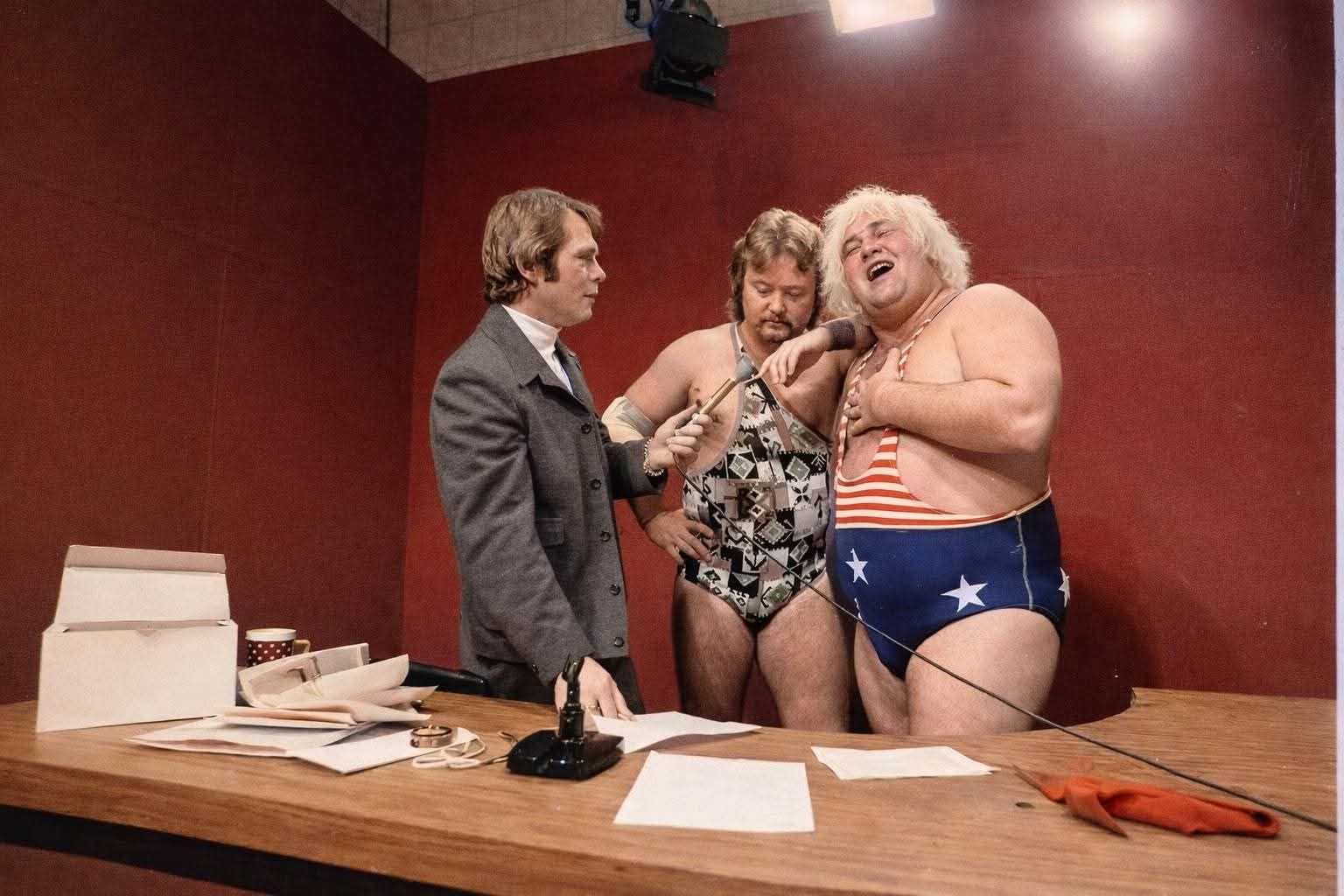
Pictured: Sterling Brewer interviews The Bicentennial Kings (Condrey\Hickerson) on the set of Gulas-Welch Championship Wrestling, WBMG Channel 42 in Birmingham, Alabama
At various points in 1976–1977, they reportedly held multiple tag titles simultaneously, a rarity that underscored their dominance. Reigns were typically short (from a few weeks to a couple of months), fitting the territorial model of frequent title changes to maintain interest, but their consistency made them the top heel team in the region.
Hickerson and Condrey had rivalries that were bloody and personal, which exemplified classic Southern wrestling. Early on, they clashed with Jackie Fargo and his allies; Fargo famously mocked Condrey’s hair and mustache as looking like “a Pekinese Dog,” sparking months of heated promos and brawls in 1976. Fargo even recruited “Big Bad John,” who billed himself as the “Bicentennial Baby” to counter the “Kings.” The team also feuded with Tommy Rich & Tojo Yamamoto, Bill Dundee & Tojo Yamamoto (losing Southern titles to them in September 1976 in one account), Chief Thundercloud & Danny Little Bear, the Gibson Brothers, Tommy Rich & Tommy Gilbert, and Ron & Robert Fuller.
In the CWA (post-1977 Jarrett-Gulas split, the new Jarrett promotion), they battled the emerging Gibson Brothers (Ricky and Robert) and Rich/Gilbert. A memorable TV angle saw them offer $5,000 to any team that could beat them—Dundee & Frankie Laine “won” but were attacked afterward. In Southeastern Championship Wrestling in 1978, managed by Ron Wright, they had a prolonged war with Jimmy Golden and partners, plus Kevin Sullivan & Ted Allen and Ken Lucas. Their final major program ended with a “loser leaves town” loss to Lucas & Sullivan in December 1978. Matches often featured double-team cheating, stiff brawling, and strong psychology, with Hickerson’s size and promos selling the arrogance while Condrey anchored the wrestling.
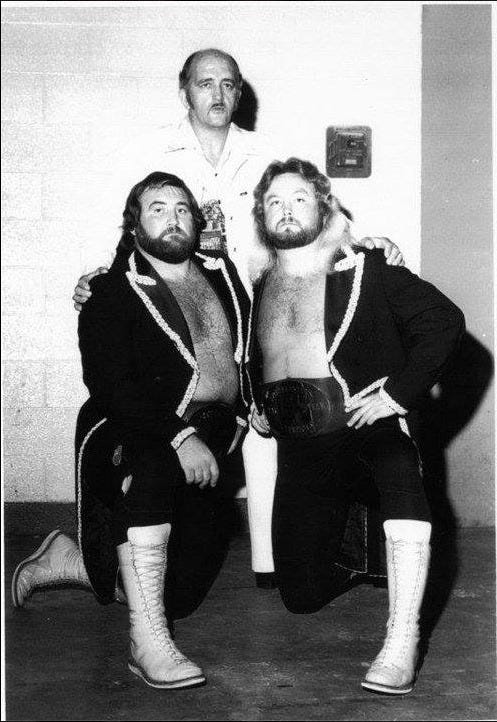
Pictured: The Bicentennial Kings (Hickerson\Condrey) with manager Ron Wright
When Nick Gulas and Jerry Jarrett split in March 1977, the Kings joined Jarrett’s CWA, continuing their success. A brief 1978 detour to Southeastern Championship Wrestling in Knoxville produced more Southeastern Tag reigns before returning to the CWA. Their partnership ended in early 1979 after one final AWA Southern reign (lost to Dundee & Koko Ware in January).
Condrey went on to team with Don Carson, David Schultz, and especially Randy Rose (as the “Midnight Express” precursor), before the iconic Eaton pairing. Hickerson remained in the CWA as a singles wrestler into the 1980s, later adopting the “PY Chu-hi” gimmick in the USWA and earning induction into the Memphis Wrestling Hall of Fame in 2017 (or 1995 per some records).
Though little footage survives outside old Gulas tapes and rare YouTube clips, the team earned high praise from insiders and experts. Jim Cornette has called them one of the greatest tag teams he ever saw—potentially world-beaters with the right push—and highlighted their chemistry, crowd-drawing ability, and in-ring psychology. In this 1970s era, they helped define Southern tag wrestling: short, intense reigns, bloody feuds, and larger-than-life personalities. Their run proved that contrasting styles (Hickerson’s power and promos + Condrey’s technique) and a timely gimmick could create a lasting territorial legacy.
Condrey’s career path then led him to the formation of his next tag team with the namesake he would forever be associated.
From roughly 1980 to late 1983, “Loverboy” Dennis Condrey, “Ravishing” Randy Rose, and Norvell Austin operated as the Original Midnight Express in Southeast Championship Wrestling and the Continental Wrestling Association. They were vicious, rule-bending heels who dominated tag team divisions through a combination of athleticism, coordinated offense, and the innovative “Freebird Rule” gimmick—allowing any two of the three to defend titles on any given night. This trio laid the foundation for everything that followed, establishing the Midnight Express as a brand built on black attire, late-night partying imagery, and relentless aggression.
The story begins in 1980 in Southeastern Championship Wrestling, the Alabama/Pensacola territory owned and promoted by Ron Fuller and his partners. Dennis Condrey, already a veteran from the Tennessee area, needed a new partner after his previous teammate Don Carson retired. He paired with Randy Rose, a talented wrestler who had previously worked under a mask as “The Super Pro.”
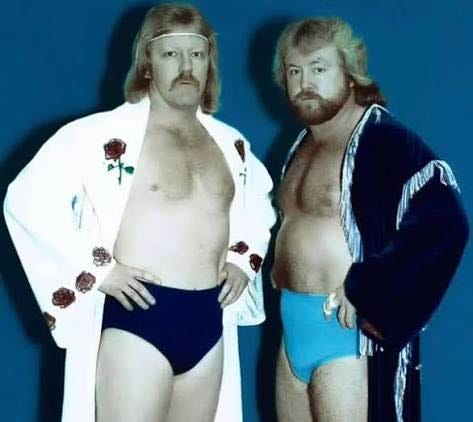
Pictured: Randy Rose and Dennis Condrey, the Original Midnight Express
The chemistry was immediate. Condrey and Rose quickly captured the NWA Southeastern Tag Team Championship from Bob and Brad Armstrong, establishing themselves as a top heel team. They were billed as tough, no-nonsense antagonists who dressed in black, drove black cars, and lived the “midnight” lifestyle—hence the team name, which had nothing to do with the 1978 film Midnight Express despite later versions adopting the movie’s Giorgio Moroder theme.
Speaking to Ron Fuller on Saturday about the impact of Condrey and the creation of the Midnight Express, Fuller told me, “it really came about during long car rides with me and Bob Armstrong. We wanted to really push Condrey and Rose more as a devastating team. The “Midnight” was more about how they lived a dark and mysterious lifestyle and the “Express” was that we wanted them to just run over other teams in a devastating way.” Fuller then remarked, “and then we decided to make them a three-man team, so we added Norvell, who we thought was just fantastic.”
The pivotal moment came in early 1981 when Norvell Austin entered the picture. Austin was already a respected babyface with a groundbreaking history; in the early 1970s he had teamed with Sputnik Monroe in one of the South’s first prominent integrated tag teams, even adopting a blond streak in his hair to match Monroe’s look and participating in racially charged angles (such as the infamous “Black is beautiful/White is wonderful” paint incident involving Robert Fuller).
Now working as a face alongside Brad Armstrong, Austin adopted the masked persona of “The Shadow” to gain an edge against Condrey and Rose. On May 4, 1981, The Shadow and Armstrong defeated Condrey and Rose for the NWA Southeastern Tag Team titles. Condrey and Rose regained the belts on July 27, 1981—and that same night had Austin dramatically unmasking and turning heel, betraying Armstrong and aligning with the villains to create the three-man Midnight Express stable.
The addition of Austin completed the unit. The group immediately began invoking what would later be popularized as the “Freebird Rule” (named after the Fabulous Freebirds, though the Midnight Express were using the concept concurrently or slightly earlier in some accounts). Any two of the three could defend the titles, leaving opponents guessing and allowing the Express to maintain an ever-present 3-on-2 numerical advantage in multi-man scenarios.
The Fabulous Freebirds (Michael “P.S.” Hayes & Terry “Bam Bam” Gordy as a duo) formed in 1977 but had their most famous run at any time under Bill Watts in his Mid-South Wrestling promotion in a program with The Junkyard Dog. Watts soon added Buddy “Jack” Roberts (a former Hollywood Blond) to make them a three-man “gang”—an unusual concept at the time. This happened in 1979 and they augmented the gimmick with the “Freebird Rule” (any two members could defend tag titles), which the Original Midnight Express later copied.
The Hayes-Gordy-Roberts trio were heels and became legendary for their swagger and flexibility across territories. The Freebirds pioneered the three-man tag team format in 1979, while the original Midnight Express trio formed about 1–2 years later in 1981. No earlier three-man stable matches this description in wrestling history, and sources consistently credit the Freebirds as the originators of the concept and rule followed by the three-man Original Midnight Express team.
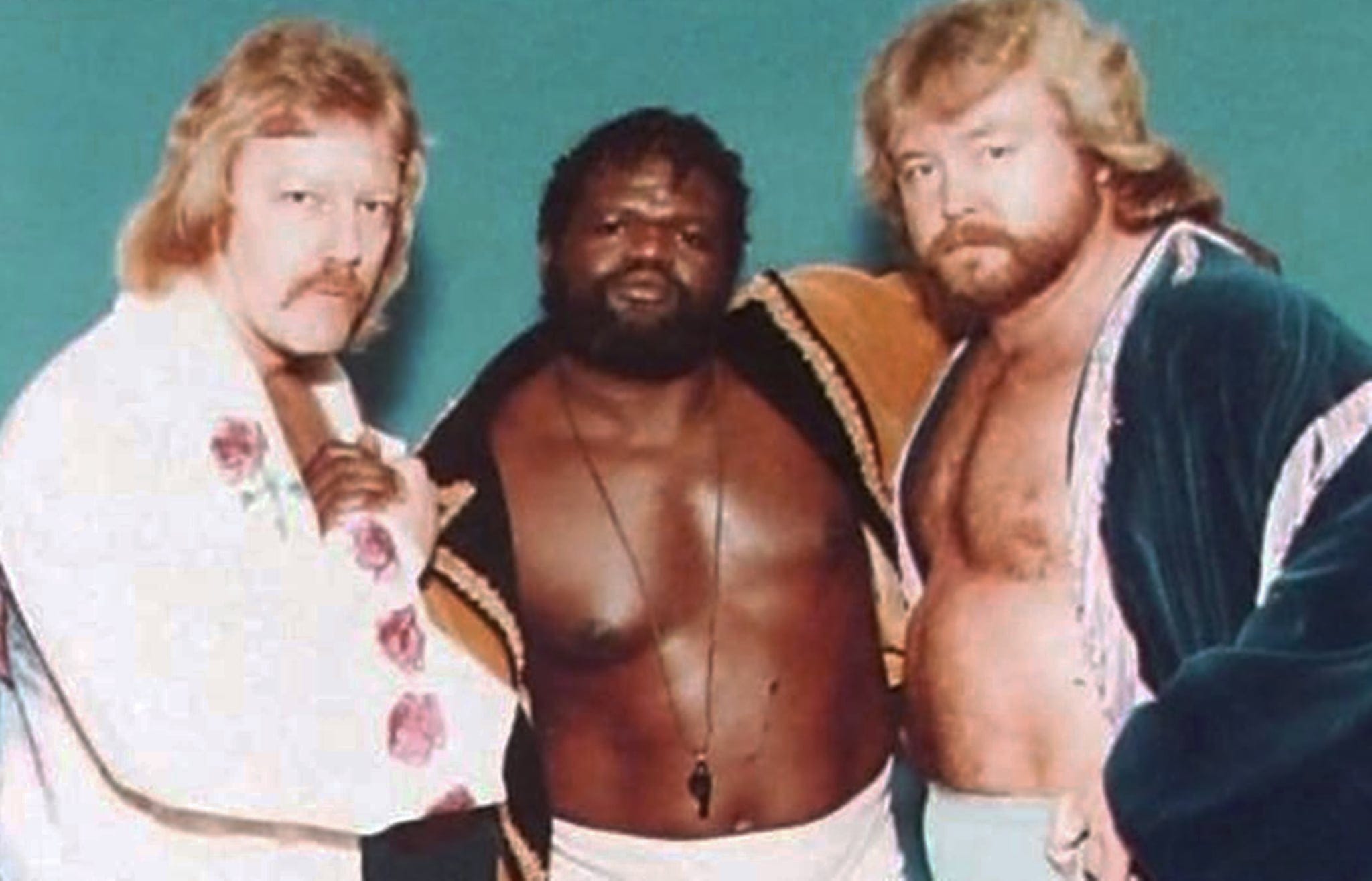
Pictured: The Original Midnight Express 3-man team, Randy Rose, Norvell Austin and Dennis Condrey
The three-man Midnight Express moved into the CWA territory in late 1981, where they quickly made their mark. They captured the AWA Southern Tag Team Championship on multiple occasions—listed as four collective reigns—using the Freebird Rule to rotate members. On February 27, 1982, in Memphis, the Midnight Express (Austin and Condrey) defeated Bill Dundee and Steve Keirn by disqualification to win the titles; all three members were recognized under the Freebird Rule.
The reign lasted just 9 days before being vacated on March 6 due to the controversial finish. They recaptured the belts on May 10, 1982, again beating Keirn and Dundee in a straight match for a 7-day run. On May 24, they won them back from the same duo for a longer 42-day reign. Their fourth and final collective reign began July 12, 1982, when they defeated Ron Bass and Stan Lane; this one lasted 7 days. They lost the titles to Bobby Eaton and Sweet Brown Sugar (Koko Ware) shortly after. They also held the CWA World Tag Team Championship once with Condrey and Austin in November 1983. In the March 14, 1982, Memphis Southern Tag Team Title Tournament, Condrey and Rose advanced by beating Keirn and Danny Davis before falling to Stan Lane and Robert Gibson.
These Memphis runs exposed the group to larger crowds and solidified their reputation for slick, coordinated heel work.
Returning to Southeastern wrestling in spring 1982, the Midnight Express re-entered the Southeastern Tag Team title picture with a vengeance. They defeated Robert Fuller and Jimmy Golden for the belts on September 27, 1982, and proceeded to trade the championship repeatedly in a series of high-profile feuds. Key rivals included The Mongolian Stomper and his storyline son “Mongolian Stomper Jr.” — multiple title changes. They had a prolonged war with “Dizzy Ed” Hogan (a young Eddie Leslie) and Ken Lucas. One TV angle saw Lucas and Hogan leave Randy Rose bloody and battered after a vicious post-match beating.
Fans assumed Rose was sidelined, but at a packed house show at the Houston County Farm Center in Dothan, Alabama, Condrey battled alone for roughly 15 minutes. A bandaged and furious Rose then stormed the ring wielding a two-by-four, turning the tide and helping secure a disqualification victory. The moment became legendary for showcasing the Express’s resilience and rule-breaking intensity. The Armstrong Family, Brad and Scott Armstrong (the final loss, dropping the titles and helping drive the group out of the territory). They also clashed with Paul Orndorff, Eddie Gilbert, and Ricky Morton, which were early seeds of what would become the legendary Rock ’n’ Roll Express feud in later incarnations of the Midnight Express.
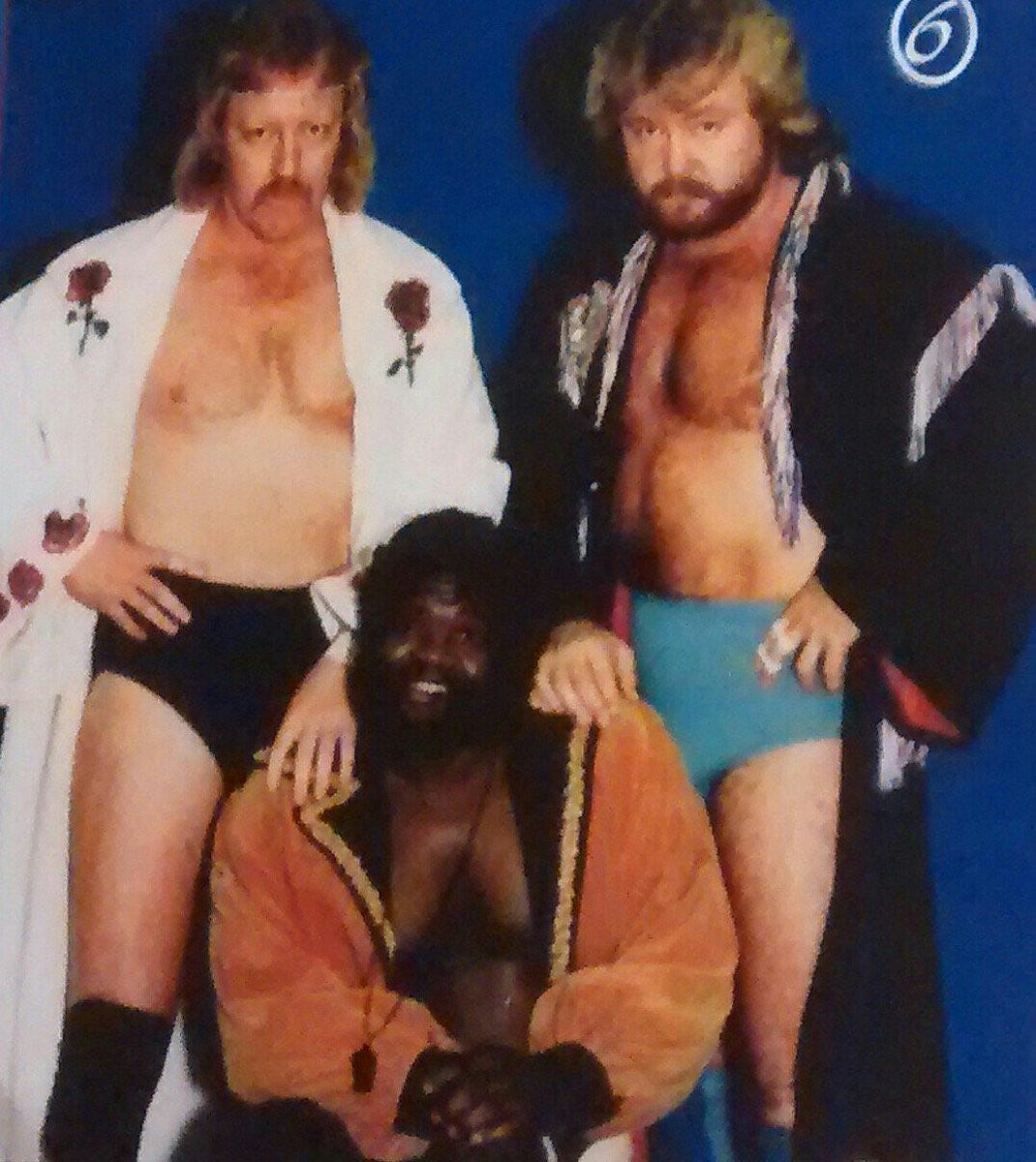
Pictured: Randy Rose, Norvell Austin and Dennis Condrey, The Original Midnight Express
The group reclaimed the belts multiple times through July 1983, including a key victory in April 1983 in Birmingham over the Kiwi Sheepherders and Fuller/Golden in a multi-team scenario, and another in July when they used their 3-on-2 numbers advantage to defeat Hogan and Lucas once more. They were also credited with a Southeastern Tag Team Championship Tournament win in 1983. When reflecting on Condrey, Ron Fuller remarked, “ I had the pleasure of employing him from the late 1970’s into the 1980’s” and “He was an amazing talent in the ring and a pleasure to work with, not only in the ring, but outside as well. God rest his soul!”
Collectively, the Condrey/Rose/Austin team is credited with 13 NWA Southeastern Tag Team Championship reigns across variations, plus a Southeastern Tag Team Championship Tournament win in 1983. They were billed at times as “Midnight Express Inc.” and dominated through precise tagging, vicious double- and triple-teams, and sheer numbers.
By late 1983 the run was winding down. After dropping the Southeastern titles to Brad and Scott Armstrong in a climactic feud with Fuller and Golden that reportedly “drove the group out of the territory,” the stable disbanded. Norvell Austin returned to the CWA in Memphis (later teaming with Koko Ware as the Pretty Young Things). Dennis Condrey headed to Mid-South Wrestling, where he formed the far more famous Midnight Express with Bobby Eaton and manager Jim Cornette. Randy Rose remained briefly, even teaming with his cousin Pat Rose to recapture Southeastern gold, but the original trio’s chapter was closed.
Having witnessed this run at the time, I think it’s important to mention that although this version of The Original Midnight Express was regionally successful rather than nationally televised superstars, the Original Midnight Express was groundbreaking in Southern Wrestling. They proved a three-man tag team could work as a cohesive unit with the Freebird Rule, influenced countless stables, and established the “Midnight” brand as synonymous with slick, dangerous heel tag wrestling. And it would establish them for a memorable nationally televised angle late in the decade of the 80s.
The next and one of the most successful transitions for Dennis’ career occurred in November 1983 when Bill Watts brought Condrey to Mid-South Wrestling.
It came through a landmark talent exchange with Jerry Jarrett’s Continental Wrestling Association (CWA) in Nashville, Tennessee. Watts traded emerging talents like Rick Rude and others for proven Nashville\Memphis acts—including Ricky Morton and Robert Gibson (the Rock ’n’ Roll Express), Jim Cornette (the secondary manager under Jimmy Hart), Bobby Eaton, Dennis Condrey, and, crucially, veteran wrestler and booker “Superstar” Bill Dundee. Dundee, Eaton’s father-in-law and a Tennessee mainstay who had feuded memorably with Jerry Lawler, arrived not primarily as a performer but as the new off-screen head booker.
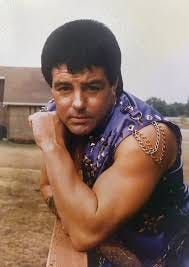
Pictured: New Mid-South Boooker, Bill Dundee
This move injected what was known as the style pioneered by Roy Welch and the Welch Family, called “Tennessee wrestling” into Mid-South’s product programming: serialized storytelling, personal manager feuds, multi-layered TV episodes, blood-soaked drama, and heel characters designed to generate visceral heat and babyfaces designed to create teenage-scream appeal. The result was a creative renaissance that peaked in 1984, with the Midnight Express (Eaton and Condrey, managed by the 22-year-old Cornette) serving as its flagship heel act. Dundee did not just book matches—he manipulated the entire narrative fabric, turning Mid-South television into what many historians call the best weekly wrestling show of the decade.
Dundee’s “Tennessee wrestling” influence was deliberate and transformative. The territory with the hib of Nashville amd Memphis under Lawler and Jarrett thrived on high-concept angles, weekly promos that advanced long-term stories, interference-laden tag matches, and even comedic spots that escalated into genuine violence. Watts’ booking philosophy had shunned much of this as unnecessary; he preferred bigger and heavier wrestlers who could believably shoot on opponents. Dundee, who was mentored under Jarrett and featured the smaller, faster paced performers, convinced Watts that smaller and quicker serialized drama would diversify the audience—drawing female fans to the wholesome Rock ’n’ Roll Express while making heels like Cornette public enemy number one.
Dundee handled the booking book, drawing up detailed records of finishes and town-specific angles, while Watts retained control over television interviews, on-air production and coordination with his local town promoters. Their collaboration produced growing crowds in house shows and television episodes that wove six or more interlocking storylines seamlessly, a technique that influenced territories like Jim Crockett Promotions, World Class Wrestling and the WWF.
The Midnight Express arrived as the perfect vehicle for Dundee’s vision. Eaton, already a polished Southern-style worker and Condrey, a veteran heel schooled in the Tennessee-style were paired under Cornette, who was a literal savant on Tennessee angles and matches from the previous two decades and had honed a spoiled-rich-kid manager gimmick in Memphis. Their debut on Mid-South TV around November 1983 immediately stood out. In a territory accustomed to burly brawlers, the Express brought slick tag-team psychology, double-team spots, and Cornette’s tennis-racket-wielding antics—elements that had been comedic relief in Memphis but felt fresh and vicious in Mid-South’s more serious environment. As Cornette later recalled, “It wasn’t the content, it’s the presentation… the same spots that were comedy in Memphis had never been done in Mid-South before.” The fans in Louisiana towns like Houma and Thibodaux reacted with genuine rage, creating the kind of white-hot heat that elevated the entire program.

Pictured: Magnum T.A. whips Condrey into the ropes as Mr. Wrestling II looks to take care of Eaton.
Dundee wasted no time elevating them. Their first major feud targeted the Mid-South Tag Team Champions, Magnum T.A. and Mr. Wrestling II. The angle escalated classically Tennessee-style: Eaton and Condrey tarred and feathered Magnum in the ring to portray him as cowardly for dodging a title defense. When Mr. Wrestling II betrayed Magnum mid-match having walked out during a title bout against the Express, the Midnight Express captured the belts without resistance. The turn shocked fans and set up layered storytelling—Magnum’s solo redemption arc, II’s heel run, and the Express as opportunistic villains. Dundee’s booking genius lay in using these beats not in isolation but as threads in larger tapings, keeping viewers hooked week after week.
The true masterpiece of Dundee’s manipulation was the epic, year-long war between the Midnight Express and the Rock ’n’ Roll Express. Morton and Gibson, the babyface imports from Memphis, embodied everything Dundee wanted: speed, charisma, and appeal to teenage girls—a demographic Watts’ tough-guy roster had largely ignored. The contrast was electric. The Midnights (polished, sneering heels) versus the Rock n Roll (scrappy, high-flying good guys) produced a series of matches that blended athletic brilliance with personal stakes. Title changes came fast and furious. The Express won the belts back multiple times through Cornette’s interference (ether sprays, rope pulls, illegal objects), only for the RnR to reclaim them in increasingly dramatic fashion.

Pictured: The Birthday Party Angle with Bobby Eaton, Dennis Condrey, Jim Ross and Jim Cornette
The most iconic angle occurred in March 1984. After winning the titles, the Express and Cornette held a lavish in-ring birthday cake celebration, an angle previously conceived in Tennessee, and one of the angles which made other bookers, like Georgia’s Ole Anderson to label the style as “Tennessee-Bullshit”. complete with confetti and self-congratulation. Dundee orchestrated the payoff perfectly: the RnR stormed the ring, smashed cake into Cornette’s face, a spot so brutal it turned the party into chaos. Cornette, covered in frosting and humiliated, demanded an apology from Watts on the next show. Watts refused, slapped Cornette unconscious, and the following week the Express viciously attacked the retired booking office owner in the ring. This manager-vs-promoter blood feud was pure Tennessee wrestling—personal, escalating, and money-drawing.
Out of all this came one of the most successful angles Condrey would ever be involved in.
The Last Stampede (sometimes called The Final Stampede) was one of the most memorable and successful angles in 1980s territory wrestling: a high-stakes, personal blood feud in Bill Watts’ Mid-South Wrestling that ran in early 1984, headlined a massive Superdome show, and produced one of the biggest house-show runs in the promotion’s history. It pitted Jim Cornette and The Midnight Express (Bobby Eaton & Dennis Condrey) against Cowboy Bill Watts (the owner/promoter coming out of retirement) and a mystery powerhouse partner, Stagger Lee (a masked Junkyard Dog, who had just lost a loser-leaves-town match and was working under a hood).

Pictured: Cowboy Bill Watts shoot-slaps Jim Cornette on Mid-South Wrestling
The angle kicked off with a perfect escalation of heat with Watts making fun of Cornette from the birthday cake angle. Cornette confronted Watts on the air, threatened to sue the company, and insulted Watts’ family (specifically calling his son “geeky looking”). Watts warned him, then slapped Cornette so hard it echoed. The next week, while Watts was interviewing top heel Butch Reed, the Midnight Express jumped him from behind in a vicious, realistic beatdown that even made Reed walk off in disgust. This wasn’t cartoonish; it felt like a real assault on the boss. Cornette’s promos were unhinged and personal, and the Midnight Express’s slick, rule-breaking style contrasted perfectly with Watts’ no-nonsense cowboy persona. Watts, who had been retired since 1982, announced he was coming back for “one more go-round”.
The matches were booked across the territory as a series of main events. The big blowoff (and several other nights) carried these stakes: If the Midnight Express won, Cornette would take control of Mid-South Wrestling for six months and If they lost, Cornette would be publicly humiliated — forced into a diaper (in New Orleans) or a pink dress (in other towns), fed a baby bottle by Stagger Lee, and sometimes kissed while milk was spit in his face. t was classic Southern territory booking: believable violence + a satisfying, humiliating payoff that still protected the heels’ heat.
The flagship show at the New Orleans Superdome drew 23,000–25,000 fans (one of the biggest crowds Mid-South ever had). In a no-DQ/lights-out main event, Watts & Stagger Lee destroyed the Express. Watts pinned Condrey, tossed both men out, and then the real fun began — the diaper/dress humiliation. Fans nearly rioted trying to get at Cornette as he fled. The entire run across 14 dates reportedly grossed around $1.2 million (huge money in 1984 territory terms). It was part of Mid-South’s hottest period in its entire history with the New Orleans show only being topped by The Freebirds and Junkyard Dog program in 1980.
Cornette has repeatedly credited Jarrett and Dundee as profound influences on his own later booking career. In shoots, he described how Dundee maintained a meticulous “book of finishes” for every town; Cornette “swiped” many of them for his own teams. Simple, psychology-driven spots—like a heel attempting a slam only to eat a dropkick—became staples because Dundee understood “less is more.” Eaton’s familial tie to Dundee ensured the Express received consistent creative protection, but it was never selfish booking; Dundee pushed everyone. The Midnight Express program became the territory’s anchor, helping Mid-South rebound dramatically in 1984. As Dundee himself noted in later interviews, fans “had never seen wrestlers like them” before the imports arrived—high-flying babyfaces and slick, manager-driven heels transformed the product.
Actually, that was not totally the case.
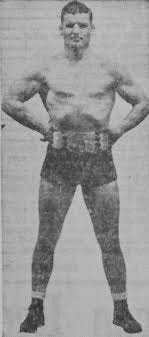
Pictured: LeRoy McGuirk, NWA World Junior Heavyweight Champion
LeRoy McGuirk’s own wrestling style as a noted junior heavyweight informed and influenced his own wrestling promotion in the area that would later become Watts’ Mid-South Wrestling. McGuirk captured the NWA World Light Heavyweight Championship three times in the 1930s and the National Wrestling Association’s World Junior Heavyweight Championship in 1939 from John Swenski. He held the latter for over 11 years—one of the longest single-title reigns in wrestling history—unifying it with the NWA version in 1949 by defeating Billy Goelz. McGuirk’s style was technical and scientific: speed, leverage, grappling, and a rolling double wrist-lock finisher defined him.
He was known as a “tough shooter” and “good worker”. That same philosophy carried into his promotion. In an era when wrestling grew increasingly gimmick-driven and theatrical elsewhere, McGuirk insisted on “scientific, credibility-driven wrestling” that blurred the line between script and shoot. Matches emphasized psychology, legitimate amateur technique, and fairness—qualities rooted in Oklahoma’s rich wrestling tradition.
McGuirk’s booking strategy revolved around making the junior heavyweight division the territory’s flagship attraction. He personally oversaw the NWA World Junior Heavyweight Champion’s schedule, ensuring the title defended regularly across his circuit (Tulsa Coliseum, Oklahoma City, Little Rock, and smaller towns). This created a stable of fast-paced, athletic main events that contrasted sharply with the slower, power-based heavyweight brawls common in New York, Chicago, or Los Angeles territories. Junior heavyweights delivered agility, chain wrestling, and believable submission holds—styles that played perfectly to regional crowds who respected amateur credentials.
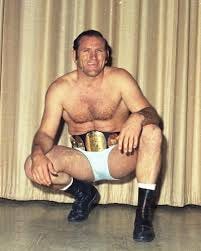
Pictured: NWA World Junior Heavyweight Champion, Danny Hodge
The cornerstone of his approach was homegrown talent with legitimate amateur pedigrees. No wrestler embodied McGuirk’s vision more than Danny Hodge, an Olympic silver medalist and NCAA champion whom McGuirk mentored and debuted in 1959. Hodge won the NWA World Junior Heavyweight Championship within months and became the territory’s perennial headliner, holding the belt through multiple reigns into the 1970s. McGuirk built his entire promotion around Hodge, whose explosive speed, scientific precision, and shoot-style credibility drew consistently strong houses.
Other junior standouts—Angelo Savoldi, Al Galento, and later talents like Tim Woods—filled cards with tournament-style matches and extended feuds that rewarded technical mastery over flashy spots. Even when heavier wrestlers appeared (McGuirk trained or influenced future stars like Dick Hutton, Jack Brisco, and Bill Watts), they often adapted to the junior-heavyweight ethos or worked in supporting roles. So, the territory had once been firmly rooted in the same similar style that had flourished in Tennessee, but with less than dramatic angles than Roy Welch had utilized.
Watts had gotten away from this approach when he bought out McGuirk, preferring to use his more “sports-based” heavyweight style he had learned under Eddie Graham in Florida, but unlike Graham, who had more balanced cards, Watts and his bookers like Buck Robley and Ernie Ladd, subscribed to bigger and heavier wrestlers more in the style of the WWWF, where Watts and Ladd had both succeeded earlier in their careers. This transition “re-educated” the audience in the territory loop who hadn’t seen the smaller, faster style since the late 1970s, a total time span of more than six years.
The Tennessee Style was working better than the Mid-South Management could have hoped. By late 1984 the second part of their run, which was now back with the Rock and Roll Express (Gibson & Morton) reached its crescendo with scaffold matches (another Tennessee invention) and no-DQ stipulations that spilled into parking-lot brawls and fan riots. The Midnight Express’ heat was so intense that Cornette carried real fear for his safety nightly—fans attacked with bricks, Drano-filled squirt guns, and tire slashings.
Yet the storytelling remained tight under Dundee’s hand. On October 1st, 1984 in New Orleans, The Midnight Express lost the Tag Team Titles to the Rock and Roll Express for the final time in Mid South Wrestling. Thoughout October and November, continued brawls with both the Rock & Roll and The Fantastics with scaffold match promos starting to air on the television progreams. On December 2nd at The Myriad in Oklahoma City, The Midnights lose a scaffold match to the Rock & Roll Express drawing one of the biggest house shows of the year, serving as the definitive blow-off to the Mid-South Wrestling version of the Express rivalry.
The team departed Mid-South via another talent exchange to World Class Championship Wrestling, then eventually to Jim Crockett Promotions, but their 1983–1984 body of work stands as a high-water mark. They left behind not just title reigns and classic matches but a blueprint: tag-team wrestling as serialized drama, where managers like Cornette became central characters and bookers like Dundee pulled every string behind the curtain.

In December 1984 the team jumped to World Class Championship Wrestling (WCCW), feuding with the Fantastics (Bobby Fulton & Tommy Rogers). The core of their WCCW run was an instant, chemistry-rich feud with The Fantastics. Fulton and Rogers were the perfect foils: high-flying, babyfaces who could match the Express move-for-move in the ring while selling the Midnight’s underhanded tactics perfectly. The rivalry ignited immediately.
On January 11, 1985, in Dallas, the Midnight Express defeated the Fantastics to capture the NWA American Tag Team Championship. The win was clean and decisive, but the reign proved short-lived—just 13 days by some accounts—because of classic Midnight Express/Cornette chicanery.
Cornette’s interference became the flashpoint. In a title defense or follow-up match, January 24, 1985, the manager’s meddling with the tennis racket strike, led to the championship being vacated. The title sat vacant for months, but the feud only intensified. Throughout January, February, and March 1985, the teams clashed repeatedly on WCCW television and house shows. Matches aired on syndicated TV (the March 8, 1985, taping aired March 16) showcased the Express’s precision tandem offense—Eaton’s dropkicks and Condrey’s technical savvy—against the Fantastics’ aerial assaults and fire. Cornette’s ringside presence turned every bout into theater: he would scream insults, distract referees, and swing the racket at the slightest provocation, drawing nuclear heat from Dallas and Fort Worth crowds.
By spring 1985, the program had built to a crescendo. The Midnight Express and Fantastics traded disqualifications and wild brawls, with Cornette’s promos growing more unhinged and entertaining. The payoff came at the 2nd Von Erich Memorial Parade of Champions on May 5, 1985, at Texas Stadium. In one of WCCW’s most memorable gimmick matches, the teams battled in a two-ring, no-disqualification contest for the vacant NWA American Tag Team Championship.
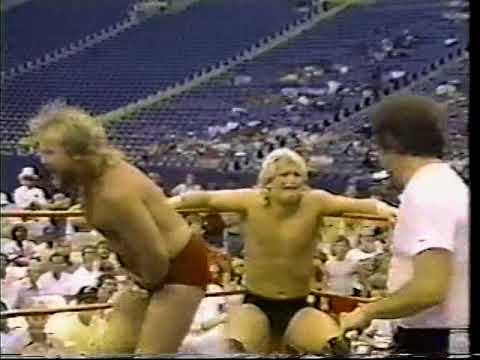
Pictured: Dennis Condrey retreats after being kicked in the stomach by The Fantastics’ Bobby Fulton at Texas Stadium on May 5th, 1985
The stipulation was chaotic by design: action spilled between rings, pins in one ring didn’t necessarily end the match if the other ring was still active. The finish was pure controversy (and really clumsy). Condrey pinned Fulton in one ring while Rogers rolled up Eaton in the other. After confusion and referee consultation, the Fantastics were declared winners and new champions. The crowd erupted; the Midnight Express sold outrage perfectly. A rematch shortly afterward saw the Fantastics retain, effectively closing the chapter on the Express’s title aspirations in WCCW.
Despite the excellence of the program, the Midnight Express’s WCCW stay was deliberately brief. The territory was built around the Von Erich brothers, the Freebirds, and rising heels like Gino Hernandez and Chris Adams. Tag teams were secondary; opportunities for sustained main-event pushes or long title reigns were limited. Cornette and the team recognized this quickly. By mid-1985—shortly after the Parade of Champions—they moved to Jim Crockett Promotions, whom they had accepted a position at the end of the Mid-South run, but took a detour to Dallas as a favor to Bill Watts.
Upon debuting in JCP around July 1985, the Midnight Express brought a polished, arrogant heel persona that stood out in the rough-and-tumble NWA landscape. Cornette amplified everything: the Kentucky native’s over-the-top promos—delivered with a tennis racket in hand—made him an instant lightning rod. Fans paid to see babyfaces finally shut him up. Early angles built momentum. At Starrcade ’85 in November, they lost a chaotic Atlanta Street Fight to Jimmy Valiant and “Miss Atlanta Lively” (Ron Garvin in drag), but the loss barely dented their rising status.

Pictured: Robert Gibson and Ricky Morton, The Rock & Roll Express
The real spark came from reigniting their Mid-South war with The Rock ‘n’ Roll Express. Morton’s masterful selling and Gibson’s explosive hot tags meshed perfectly with the Midnights’ crisp, cut-off-the-ring offense and Cornette’s interference. The rivalry became must-see television, helping JCP’s ratings and house shows during a period of territorial expansion.
The Rock ‘n’ Roll Express entered JCP as beloved babyfaces fresh off winning the NWA World Tag Team Titles from The Russians (Ivan & Nikita Koloff) in July 1985 on their first night in the territory and then re-gaining the titles at Starrcade ’85 on November 28, 1985. The contrast between the teams carried over from Mid-South Wrestling and was electric: Morton’s fiery babyface-in-peril selling versus Eaton’s smooth athleticism and Condrey’s no-frills precision, all amplified by Cornette’s tennis-racket-wielding interference.
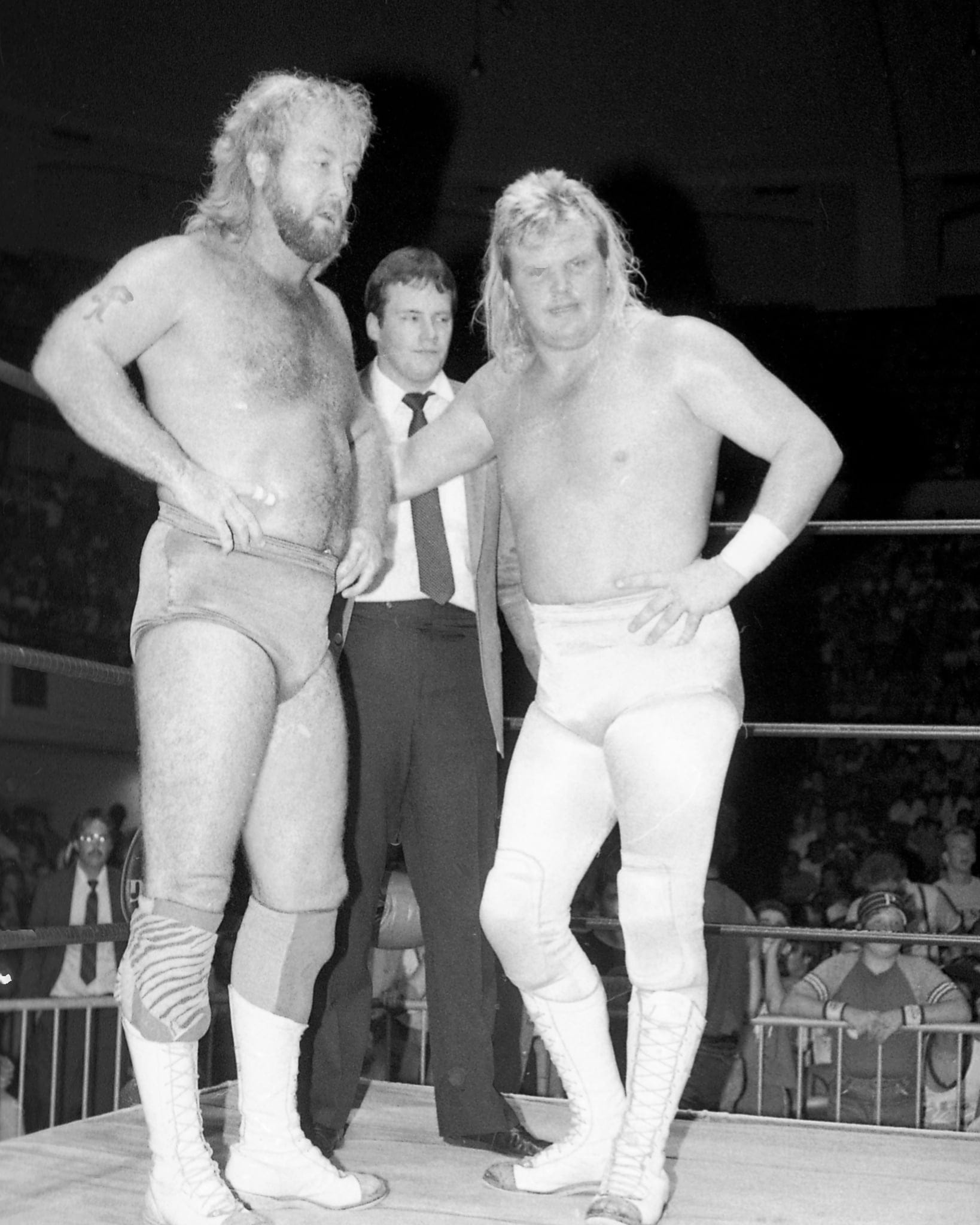
The feud peaked in early 1986. On February 2, 1986, at the Omni in Atlanta—aired days later on the Superstars on the Superstation prime-time special—the Midnight Express defeated The Rock ‘n’ Roll Express for the NWA World Tag Team Championship in controversial fashion. The finish involved a referee bump, chaos in the ring, and Cornette’s signature tennis racket shot to Morton. Eaton and Condrey capitalized, pinning the babyfaces to claim the titles in one of the most controversial—and heat-generating—switches of the era. The crowd’s outrage was palpable; Cornette had once again cheated the beloved Rock ‘n’ Roll out of gold, and fans paid to see payback.
This victory launched a six-month title reign that kept the teams locked in near-constant combat. The Midnights defended on house shows and television throughout the Carolinas, and beyond with the national coverage of the Superstation WTBS while simultaneously juggling programs with The New Breed and The Road Warriors. Every match followed the perfected Southern tag formula that defined 1980s NWA action: the heels isolated Morton (who sold his back, ribs, and exhaustion like no one else), used illegal double-team switches and chokeholds, and relied on Cornette’s racket for extra punishment. Gibson’s explosive hot tags—often punctuated by double dropkicks—sent the arenas into frenzy. The psychology was textbook: the Midnights never looked unbeatable, but they always looked dirty and smug.
In the late Spring of 1986, The Midnight Express were involved with another memorable angle that would carry them through the Summer of The Great American Bash series of house shows. The angle that lit the fuse happened at a Greenville, SC TV taping in late April. After a brawl where Dusty punched Cornette, Baby Doll jumped on Eaton’s back. Condrey held Dusty down so he had to watch, while Cornette blasted Baby Doll in the stomach with the loaded tennis racket.
Announcers Tony Schiavone and David Crockett sold it like a murder scene (”Oh NO!! What did they do?!?”). Baby Doll was “hospitalized” in the storyline, and the crowd (and viewers at home) went ballistic. Cornette’s post-angle promo doubled down: “Wrestling ain’t no place for no woman! If that’s what you want to call her!” Eaton and Condrey piled on with misogynistic insults.

Pictured: Tony Schiavone interviews The James Boys (Magnum T.A. and Dusty Rhodes) with Baby Doll on the set of World Championship Wrestling on Channel 17, WTBS in Atlanta, Georgia
This was pure old-school heat genius. In 1986, hitting a woman on TV was taboo and generated nuclear outrage—especially in the South. It made the Midnights the most hated act on the roster overnight and turned the feud personal. In early May, on Kentucky Derby Day, the Midnight Express were scheduled to wrestle Frank and Jesse James. Dusty & Magnum wrestled masked as “The James Boys”, attacking the Midnights and kidnapping and tying Cornette to a truck bumper and driving away in storylines.
Baby Doll also chased Cornette with a bullrope on TV. This led to Cornette bringing in Big Bubba Rogers as protection muscle; Bubba even shoved Baby Doll down on one show, leading to a chair shot spot. Matches throughout the Bash series were chaotic: frequent cage matches, No DQs, no-contests, bunkhouse/lights-out/lumberjack stipulations, and Baby Doll physically dominating Cornette by punching him out and pinning him easily. The Midnights retained the titles but looked like they were on the run.

Pictured: Jim Cornette, Dennis Condrey, Bobby Eaton and Big Bubba (Ray Traylor)
Cornette’s promos stayed vicious and personal, which only fueled the fire. The James Boys gimmick was effective for house shows, and the constant interference kept crowds hot. Dusty and Magnum always wrestled as themselves in the tag matches or substituted the Road Warriors or Rock & Roll Express as Baby Doll’s partners when Dusty wrestled Blanchard or Flair and Magnum was involved in the Best of Seven Series for the United States Title with Nikita Koloff.
I was present and witnessed the July 4th, 1986 cage match in the Memphis Liberty Bowl with Baby Doll, Magnum and Dusty vs Condrey, Eaton and Cornette. Even though the crowd was smaller, none of the performers “took the night off” and worked just as hard as they had just a few nights earlier on July 1st in Philadelphia. Next was the July 5th at Charlotte Memorial Stadium, which I also personally attended.
The match was a pier-six brawl with false tags, cage-top spots (Magnum catching Eaton coming off the top), and a hot finish where Dusty elbowed Cornette, Baby Doll socked him and pinned the manager for the win. Post-match, Big Bubba jumped Dusty, leading to a wild brawl. Baby Doll pinning Cornette was perfect revenge booking—rare for the era and hugely satisfying. The Midnights looked strong in peril segments, especially working with Magnum, who was an elite seller, but the faces got the ultimate comeuppance.
Condrey & Eaton were phenomenal technicians and bump-takers who made everyone look like stars. Eaton’s striking and Condrey’s grimy heel work meshed perfectly with Magnum’s intensity and Dusty’s brawling. Matches delivered consistent heat and storytelling. House shows relied heavily on DQs to protect the titles, which was standard 1980s territory booking but kept the angle alive for months.
The first NWA World Tag Team Titles reign ended on August 16, 1986, at the Philadelphia Civic Center in a best-of-three-falls match. In a hard-fought, back-and-forth battle that has since been celebrated as one of their finest, the Rock ‘n’ Roll Express regained the NWA World Tag Team Titles two falls to one. The victory was clean, cathartic, and aired in edited form on later Worldwide Wrestling and World Championship Wrestling episodes. Post-match celebrations and continued brawls kept the rivalry alive; the teams traded wins on house shows and television into the fall, with non-title matches maintaining the personal stakes even after the belts changed hands.

Pictured: Condrey holds Ricky Morton as Bobby eaton prepares to slug him
Throughout 1986, TBS viewers tuned in weekly for new chapters: sneak attacks, Cornette’s promos promising to “whip them like dogs,” Morton’s fiery interviews demanding revenge, and spot-on in-ring storytelling. The Midnights’ run also included memorable TV defenses (such as the September 7, 1986, Sunday Edition bout), while the overall program helped elevate tag-team wrestling to main-event status in JCP during a time when singles stars like Ric Flair, Dusty Rhodes, Tully Blanchard, Magnum T.A., Ron Garvin and Wahoo McDaniel dominated the spotlight.
What made the rivalry legendary wasn’t just athleticism—it was masterful character work and psychology. Ricky Morton’s selling turned him into the ultimate sympathetic babyface; fans genuinely believed he was hurt and rooted for the hot tag. Gibson’s comebacks were explosive and perfectly timed. On the heel side, Condrey and Eaton executed double-team maneuvers with military precision, while Cornette was the ultimate heat magnet.
At just 24–25 years old, his promos mixed Southern drawl with pure arrogance, and his physical involvement (racket shots, hiding under the ring, taking bumps) made him as hated as the wrestlers. Cornette later reflected in watch-alongs and interviews that the feud drew so well because the characters already had built-in investment—fans loved the Rock ‘n’ Roll and despised the Midnights—allowing legitimate, long-term storytelling rather than forced gimmicks.
The business impact was undeniable. The program packed arenas during JCP’s national expansion, boosted TBS ratings, and proved that great tag-team feuds could main-event and draw money without relying on blood or weapons. It influenced generations of teams who studied the “isolate the babyface / hot tag” formula. WWE’s later Vault uploads of over two hours of their matches underscore its timeless appeal.
After the Philadelphia title change in August of ‘86, the intensity cooled slightly as the Midnights pivoted toward their epic scaffold war with the Road Warriors, culminating at Starrcade ’86, The Night of the Skywalkers, but the Rock ‘n’ Roll program never fully ended. Non-title matches and angles continued into early 1987, keeping the personal animosity alive.
By March 1987, however, the original Midnight Express era concluded when Dennis Condrey walked out of Jim Crockett Promotions without warning (around March 24, 1987). Eaton, Cornette and booker Dusty Rhodes scrambled; the promotion explained it on-air by having Cornette “fire” Condrey, and Stan Lane soon replaced him. While the new Midnight Express (Eaton & Lane) had their own successful run—including brief clashes with the Rock ‘n’ Roll—the peak chemistry of the Condrey-Eaton version against Morton and Gibson had passed.

Pictured: The New Midnight Express, Stan Lane, Jim Cornette and Bobby Eaton
The Condrey walk-out was the subject of mystery and speculation for decades. One night after a spot show, Eaton and Cornette dropped him off at his apartment. He said “See you tomorrow” — and they didn’t see or hear from him again for roughly 1.5–2 years. The real reason was personal/domestic problems at home. He was facing a paternity suit (child support/legal issues) and was in the middle of (or heading into) a messy divorce. This matches what Condrey himself later admitted in a shoot interview: he took off to Colorado to dodge the legal mess and get away from the situation.
Arn Anderson, who was a JCP coworker at the time, and best friends with Eaton later said on a podcast that Condrey “had some problems going on at home” that led to him going through a divorce. Burnout from the insane road schedule going back to 1984 during the Mid-South days and continuing into JCP was also a big factor, according to Condrey.
According to Arn Anderson, there was a secondary/frustrating element: Vince McMahon had secretly offered the Midnight Express (Condrey, Eaton & Cornette) big money to jump to the WWF. Eaton and Cornette turned it down (family/house reasons in the Carolinas), and Condrey was furious they passed on what he saw as a huge opportunity. Some accounts say this contributed to his anger, but it was not the main trigger for the sudden no-notice disappearance — the personal legal/family issues were.
Cornette has said on his podcasts that they had literally no idea where Condrey went or why at the time — he just vanished. They scrambled and brought in Stan Lane as the new partner within days. Cornette and Eaton later said Condrey eventually explained the personal stuff privately and they understood, but he never gave the office or the fans any notice.
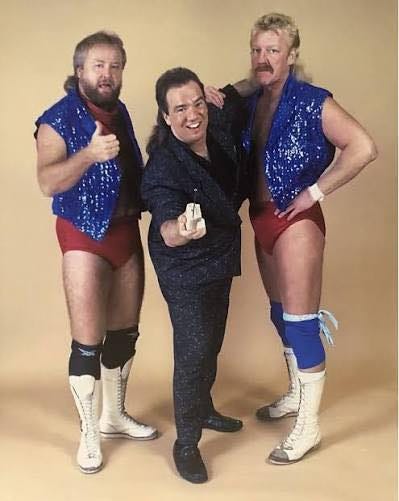
Pictured: The Original Midnight Express (Condrey\Rose) with Paul E. Dangerously (Paul Heyman)
Later in 1987, Condrey resurfaced in the American Wrestling Association. He reconnected with his original partner Randy Rose. Billed explicitly as The Original Midnight Express and managed by a rising star named Paul E. Dangerously (Paul Heyman), the duo laid claim to the Midnight Express name, arguing that the JCP version had stolen their identity. Living near Denver at the time and with the AWA taping in Las Vegas, Condrey found a fresh platform. On October 30, 1987, they defeated Jerry Lawler and Bill Dundee to win the AWA World Tag Team Championship.
Their reign lasted roughly two months before a controversial loss to The Midnight Rockers (Shawn Michaels and Marty Jannetty) on December 27. Pay disputes with AWA owner Verne Gagne accelerated their exit in early 1988, the promotion even retroactively adjusted title history around the acrimony. Though short, the AWA run allowed Condrey and Rose to rebrand themselves as the “true” originals while honing their heel act under Dangerously’s street-smart management.
Real fireworks ignited when Condrey brought the act back to the NWA fold as Jim Cornette booked (under Dusty Rhodes’ supervision) one of the hottest angles in Crockett Promotions that year. By November 1988, JCP was transitioning amid corporate changes (soon becoming World Championship Wrestling under Ted Turner). On a Saturday night World Championship Wrestling television episode, Cornette and his Midnight Express (Eaton and Lane) were in the middle of a standard television match when Cornette received an anonymous phone call from someone claiming to be an “old friend.”
The voice triggered instant recognition—and chaos. Paul E. Dangerously appeared ringside, followed by Condrey and Rose storming the set. The Original Midnight Express brutally assaulted their successors, with Dangerously smashing Cornette over the head with his signature cellular phone. In the melee, Cornette attempted to blade for dramatic effect but cut too deeply, leading to excessive bleeding that reportedly upset TBS executives yet electrified fans. Making the gore more dramatic was the fact that Cornette had worn a snow white ring jacket that day. The red blood splashing on the white coat was dramtic and intense The whole ambush was visceral, personal, and instantly memorable.

What followed was pure wrestling theater. The feud was not merely athletic but philosophical: two sets of Midnight Express wrestlers, two legendary managers (Cornette’s Southern intensity versus Dangerously’s New York swagger), and a debate over authenticity. Promos crackled with accusations of betrayal, theft of gimmicks, and legitimacy. Cornette’s team, long-time heels, gained sympathetic babyface traction as fans sided with the “home” version against the invading originals.
The angle built rapidly through house shows and television, culminating at Starrcade ‘88: True Gritt on December 26 in Norfolk, Virginia. In a hard-hitting tag team match, Eaton and Lane (with Cornette) defeated Condrey and Rose (with Dangerously), allowing Cornette a measure of revenge on his rival manager. The bout delivered strong action and emotional payoff, capitalizing on the months of heated buildup.
Tragically, the “Battle of the Midnights” never reached its full potential. Backstage turmoil derailed the momentum. Booker Dusty Rhodes, initially wary due to Condrey’s history but supportive of the concept, was fired. Jim Crockett Jr.’s interim booking and subsequent handover to George Scott introduced inconsistencies and budget cuts—managers were no longer guaranteed on every road show, dulling the verbal fireworks. Crockett reportedly pushed for a “loser leaves town” stipulation at the February 1989 Chi-Town Rumble pay-per-view, partly out of personal disdain for Rose’s in-ring style.
As plans evolved, Condrey grew dissatisfied when it appeared Rose would be replaced; true to form, he departed once more rather than accept the changes. The angle fizzled into obscurity, with Condrey exiting the promotion again in early 1989 before the Chicago event could take place.
Back in Alabama’s Continental Wrestling Federation, he won the CWF Heavyweight Title in 1989 and teamed with Doug Gilbert as the Lethal Weapons for the Tag Team Titles. Sporadic independent appearances followed until a full Midnight Express reunion in 2004 with Eaton (and often Lane and Cornette). They won multiple NWA territorial titles through 2007, and wrestled dream matches against the Rock ’n’ Roll Express and Fantastics.
In March 2010, Condrey signed with WWE as a trainer for Florida Championship Wrestling (FCW), working with the early NXT roster. The arrangement ended by June 2010.
His final match came on October 15, 2011, against Bill Mulkey at an AWE Night of Legends event.
He retired quietly, returning to Alabama.
Condrey remained intensely private throughout his life. After retiring he lived in Huntsville, Alabama (following earlier moves to Colorado and back to Florence).

He continued to receive fan mail and texts decades later, expressing genuine surprise and gratitude. In a 2020 interview, Condrey reflected: “I just can’t believe these fans still remember us from 35 years ago… after what Bobby, Jimmy and I did to them, it’s surprising. Those people, they still love us.” He also detailed the team’s formation in Memphis with Jerry Jarrett and Bill Watts, and a near-jump to WWF in the mid-1980s that fell through when Eaton and Cornette changed their minds.
In 1993, Condrey found lasting companionship when he married Theresa Marie Rosas. Their marriage endured for over three decades until his passing. Tributes from friends in the wrestling community, most notably AEW star Dax Harwood, paint a picture of a deeply devoted husband. Harwood, who became close with the couple in Condrey’s later years, described him as “a sweet, God-fearing man who LOVED his wife, Theresa.” Harwood noted that spending time with Dennis and Theresa made him feel like part of their family, and the two would text after Harwood’s matches, with Condrey offering proud mentorship and advice. This devotion highlights a man who, despite the demands of a wrestling career that often-kept performers on the road for weeks, valued and nurtured his home life.

One of the most significant challenges in Condrey’s later life was his battle with throat cancer. Around the mid-2010s, he fought the disease privately for approximately four years. By 2018, he had overcome it and was cancer-free, though fitted with an artificial voice box. Longtime associate Jim Cornette revealed that Condrey insisted on privacy throughout the ordeal, wanting no sympathy or public attention. “Dennis has always been a private guy with his personal life,” Cornette said. “He didn’t want sympathy or concern. It was his business.” This resilience mirrored the toughness he displayed in the ring throughout his career.
Immediately following his death, Harwood—with Theresa’s permission—launched a GoFundMe campaign to assist with funeral expenses and household bills, emphasizing that she expected “absolutely nothing but love in return.” The outpouring of support from the wrestling community underscored the quiet respect Condrey had earned offstage.
Stacey Cornette, wife of Jim Cornette, shared on her X account on Saturday afternnon, “Our hearts are broken. We’ve talked to “Mama T”, Theresa Condrey, wife of our beloved Dennis & she’s astonished by the love she’s reading & hearing from everyone today. Thank you all from the bottom of our hearts for honoring our “Denny”. ❤️”
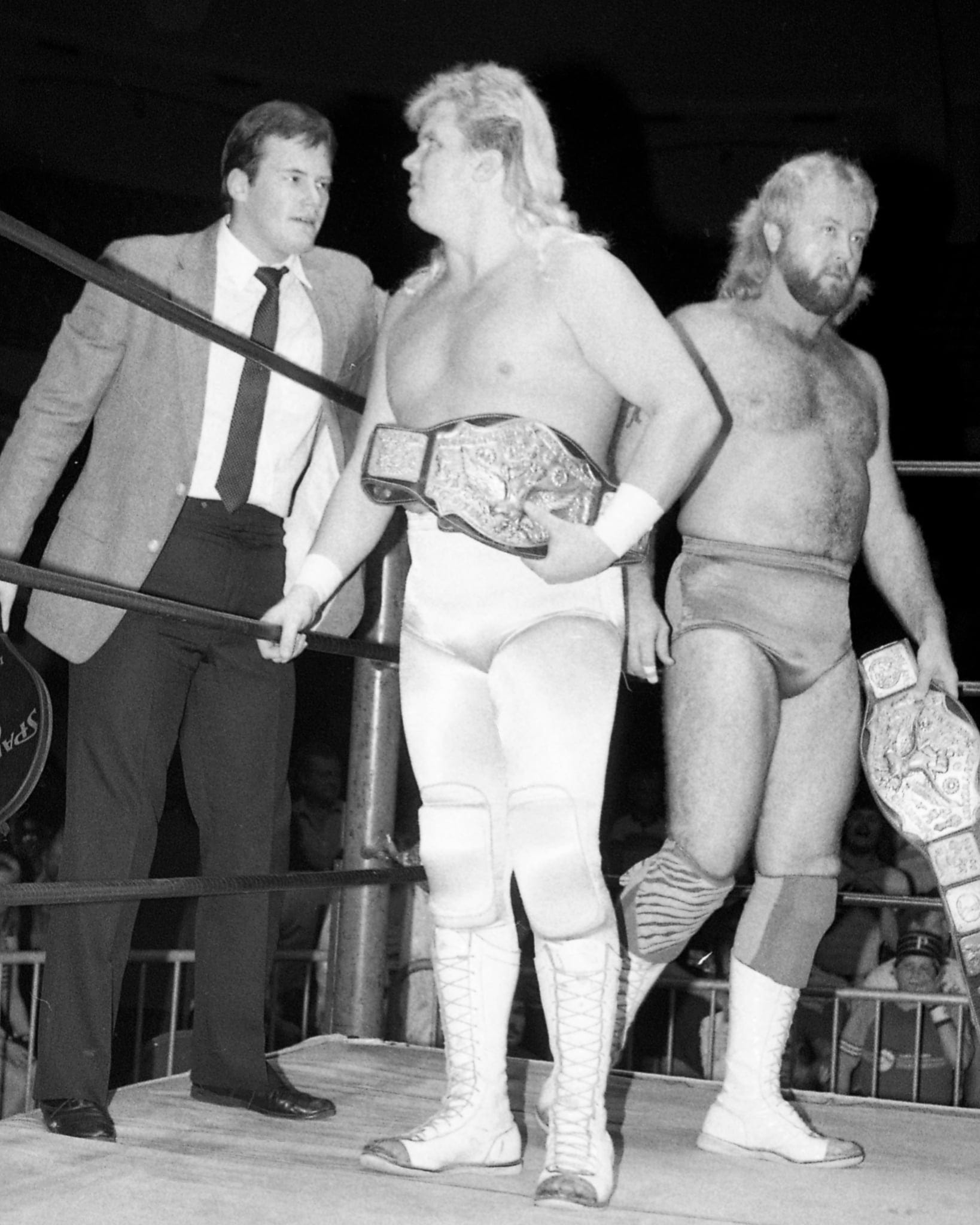
Pictured: The Classic Cornette Version of The Midnight Express, NWA World Tag Team Champions, Dennis Condrey and Bobby Eaton
In an industry known for flamboyant personalities and public personas, Dennis Condrey stood out for his commitment to a normal, grounded life away from the crazy wrestling business. His friends and colleagues remember not just the legendary wrestler but the man who found joy in simple things: his faith, his marriage, and time with loved ones.
Dennis Condrey’s passing serves as a reminder that behind every larger-than-life wrestler is a human being with a story that often remains untold by choice. Dennis Condrey lived his life on his terms, leaving a legacy of excellence in wrestling and dignity in privacy.
In an era of constant social media exposure, his deliberate choice to keep personal matters sacred adds depth to the man fans knew only as “Loverboy Dennis.”
Thank You for Reading
I’m Tony Richards, Pro Wrestling Historian, Author and Storyteller. I share pro wrestling historical items in each issue of the Time Tunnel Pro Wrestling History Newsletter. Thanks for reading! If you enjoy my information on select events, matches and insights, please share it with folks you think might like to be a subscriber!
Remember, premium investors get access to exclusive and special content such as some special issues including a multi-part deep dives on wrestling territories, wrestler bios and championship title histories, special audio and video interviews on territory pro wrestling and more available in the Pro Wrestling Time Tunnel for Premium Investors.
Many photos used by permission of Chris Swisher and
That was fantastic
Absolutely tremendous. Thank you, Tony.