


A former football star who becomes a rough, tough Texas brawler
This week we lost another one of our great territory era heels, Bobby Duncum, Sr, another of the gallery of professional wrestlers to come from the fertile ground of West Texas State University in Canyon, Texas. Bobby Duncum, Sr passed away on Wednesday, January 21st, 2026, he was 81 years old. The sad news was confirmed this past week by the Cauliflower Alley Club.
Born on August 14, 1944, in Austin, Texas, Bobby Edward Duncum grew up in a state synonymous with rugged individualism and physical sports. His early years were shaped by athletics, particularly American football, which would serve as a springboard to his future in professional wrestling.
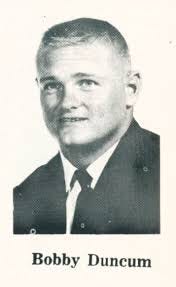
Bobby Duncum played football at Austin’s Travis High School in Austin, Texas where he was captain of the team and a two-year letterman. He was named to the All-District Team in 1962 as a linebacker. Duncum was attracted to West Texas A&M University (then known as West Texas State University), a program led by Coach Joe Kerbel, who had a reputation for producing professional football players. Playing as a tackle, he lettered in 1964 before moving to defensive guard the next season. He was a three-year letterman for Kerbel from 1964 through 1966 and majored in physical education. The story has long been that Duncum drove a highway patrol car that had been retired from service and he a lot of fun scaring drivers around Canyon, Texas with the threat of giving them a ticket.
In one of the West Texas State football programs during his college career, Duncum was described as “Number 72, 6’1”, 220 from Austin. Bobby is very strong and can move with the best of them. Much is expected of Duncum this year. Major is physical education, and he wants to coach. He is not too sure about professional football.”
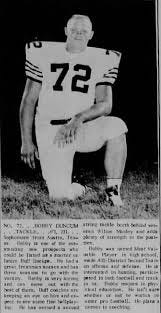
Bobby had his share of run-ins with Coach Kerbel. Stan Hansen once said, “Over the years, many of us, would talk about Coach Kerbel and we would discuss how we were treated pretty harshly by him. We would all laugh about our shared experiences and considered them a rite of passage that we had to endure. Bobby is the only one who never laughed.”
Duncum’s football prowess caught the eye of NFL scouts, leading to his selection by the St. Louis Cardinals in the 1967 NFL Draft (331st overall). Duncum made his professional debut in 1968, appearing in just four games before injuries and the grueling nature of the sport prompted a pivot. This brief stint, however, honed his resilience and introduced him to the world of high-stakes competition. Interestingly, even before his draft, Duncum had dipped his toes into wrestling, training under future NWA World Champion Dory Funk Jr. in 1966. During his breaking in process, both Dory Jr and Terry would put holds on Duncum that would actually stretch and hurt him. When they asked him if it hurt, all Duncum would reply is “yes”. In his autobiography, Terry Funk said about Duncum, “Calmness was the only emotion we could get out of that tough-assed bastard.”
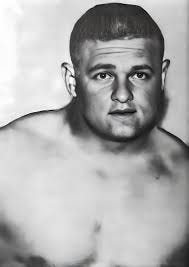
His first official match came in late 1966, but football remained his primary focus until 1969, when he committed to wrestling full-time after his NFL dreams faded. This transition was emblematic of a broader trend: Texas football alumni often found success in wrestling due to their size, strength, and showmanship. Duncum’s background provided the perfect foundation for a heel (villain) character—a tough, drawling cowboy who looked like he could brawl in a bar as easily as in the squared circle.
Duncum’s wrestling career truly ignited in the late 1960s, starting in his home territory of West Texas under the NWA banner. He quickly expanded to regions like Central States, Florida, and Georgia, where his raw power and street-fight style made him a standout. Billed as “Bobby Duncum” (and occasionally under masks like “The Mummy” or “Spoiler #2”), he embraced a heel cowboy gimmick, complete with boots, hat, and a menacing drawl that set him apart from more polished promos of the era. Fans and critics alike noted his unique voice—gravelly and authentic—which added to his aura of menace.
Bruno Sammartino’s involvement in AJPW’s 1973 Giant Series II was a coup for Giant Baba. By then, Sammartino had already etched his name in history with his first WWWF Championship reign from 1963 to 1971, lasting a staggering 2,803 days—the longest in WWE history. After losing the title to Ivan Koloff in 1971, Sammartino took a semi-hiatus, wrestling sporadically while recovering from the physical toll of constant defenses. He toured Japan multiple times, including stints in 1971 and 1972, where he faced legends like Baba himself. In November 1973, Sammartino returned for AJPW’s Giant Series II, participating in 14 matches across the tour.
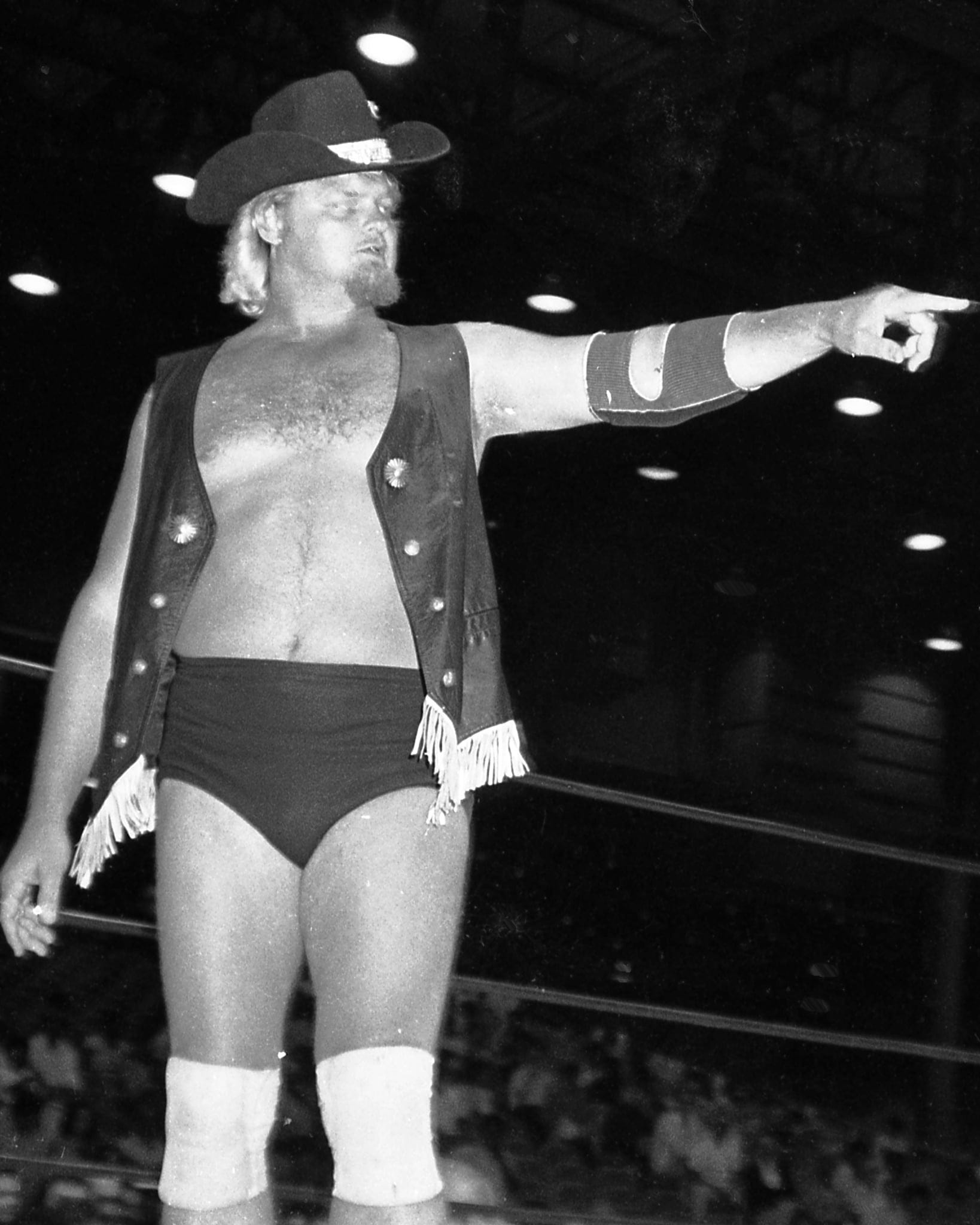
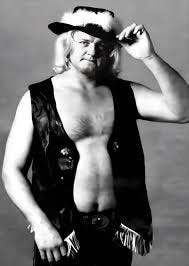
Pictured: Bobby Duncum
Photo Credit: Chris Swisher Classic Photos
By 1973, Duncum was establishing himself as a reliable mid-card talent, winning regional titles like the NWA Florida Television Championship. His international breakthrough came that year with his first tour of Japan for AJPW’s Giant Series II, marking his debut in the Land of the Rising Sun. At 6’5” and over 250 pounds, Duncum fit the gaijin mold perfectly: a tough, imposing foreigner who could clash with Japanese heroes. During the tour, he wrestled in singles and tag matches against locals like Thunder Sugiyama and The Destroyer (Dick Beyer), as well as emerging stars like Tsuruta. During this tour, Sammartino took notice of Duncum and believed he would be perfect for the role of his next challenger in the WWWF.
Just months later, in October 1974, Duncum debuted at Madison Square Garden (MSG), defeating Haystacks Calhoun—a win that catapulted him into the main event scene. By November, he was challenging Sammartino for the WWWF Championship, which Sammartino had reclaimed from Stan Stasiak in December 1973. The rivalry that ensued between Sammartino and Duncum became legendary, epitomizing the territorial era’s blood-soaked brawls. Their first MSG encounter in November 1974 ended in a double blood stoppage, drawing a massive crowd and setting up a Texas Death Match rematch in December, with Gorilla Monsoon as special referee. The feud spilled into 1975, with brutal clashes in Boston, Philadelphia, and beyond, including a Texas Death Match in Boston on April 12, 1975, where Sammartino emerged victorious after 18 minutes of chaos.
Duncum’s cowboy persona clashed perfectly with Sammartino’s heroic strongman image, generating heat and sellouts. Sammartino later praised Duncum in interviews, calling him one of his favorite opponents for his blend of wrestling moves and mobility despite his size. These encounters highlighted his reputation for “wild street fights” and no-holds-barred brawls, Texas Bull rope Matches, Texas Death Matches and Cage Matches, where his football-honed tackling and raw aggression shone. Duncum’s villainous tactics, including interference and hardcore elements, made him one of the most feared heels of the territories.

Pictured: Blackjack Lanza, Bobby Heenan and Bobby Duncum, Sr
His time in the AWA further cemented his legacy. Joining Bobby “The Brain” Heenan’s infamous stable, “The Heenan Family,” alongside stars like Nick Bockwinkel, Ray Stevens, and Blackjack Lanza, Duncum thrived as a tag team specialist. In 1976, he and Lanza captured the AWA World Tag Team Championships, holding them amid heated rivalries. Later, from 1981 to 1982, he formed the “Black & Blue Express” with Ken Patera, a powerhouse duo known for their dominance and Heenan’s managerial flair. Throughout his career, Duncum held numerous regional titles across NWA territories, showcasing his versatility in singles and tag matches.
Duncum’s style was unapologetically old-school: more about punishing holds, powerful strikes, and psychological intimidation. As one tribute noted, “he looked like he could really go,” making his matches feel visceral and real. He also occasionally crossed paths with emerging talents like Hulk Hogan, adding to his resume of legendary feuds.
Duncum retired in 1986 after a final match on November 16 in Clarksburg, West Virginia, where he teamed with Lord Zoltan to defeat Troy Orndorff and Kurt Kaufman. By then, he had wrestled for over two decades, amassing a body of work that influenced the industry. Post-retirement, Duncum largely stepped away from the spotlight, though his legacy lived on through his son, Bobby Duncum Jr.
Born in 1965, Bobby Jr. followed in his father’s footsteps, debuting in the late 1980s and gaining fame in World Championship Wrestling (WCW) as part of the West Texas Rednecks stable. Tragically, Jr. passed away in January 2000 at age 34 from an accidental drug overdose, a loss that deeply affected the family. Duncum Sr. also had another son, Duane, who confirmed his father’s passing in 2026.
In later years, Duncum was remembered fondly by organizations like the Cauliflower Alley Club, which noted his “toughness, dedication, and contributions to the sport.” Unfortunately, Bobby Duncum, Sr is not in any of the major wrestling Halls of Fame. His story is one of perseverance: from NFL fields to wrestling rings, overcoming setbacks to build a family legacy. While the industry has evolved, Duncum’s influence persists in the tough-guy archetypes seen in modern heels. As one fan post reflected, “Rest in peace, Bobby Duncum Sr. Sending love and condolences to the Duncum family.”

Thank You for Reading
I’m Tony Richards, Pro Wrestling Historian, Author and Storyteller. I share pro wrestling historical items in each issue of the Time Tunnel Pro Wrestling History Newsletter. Thanks for reading! If you enjoy my information on select events, matches and insights, please share it with folks you think might like to be a subscriber!
Remember, premium investors get access to exclusive and special content such as some special issues including a multi-part deep dives on wrestling territories, wrestler bios and championship title histories, special audio and video interviews on territory pro wrestling and more available in the Pro Wrestling Time Tunnel for Premium Investors.