


Our surveys and polls provide direct feedback from our community members on wrestlers, matches, territories and promotions for us to help us make informed, data-driven decisions on what we want to focus on and provide for our community members. Besides the quantative information indicated below, I also enjoy the qualitative information that our pro wrestling enthusiasts provide while engaging on the polls.
I conducted this latest survey across all my social media channels for all our pro wrestling enthusiasts in our community to place selections on the four primary decades of pro wrestling that we research, document and publish.
I conducted this survey over a 6-day period from August 25th through August 30th on my X feed, our Facebook group and Substack.
We had 224 respondents across the social media platforms.
The question I posed was:
What is your favorite decade for classic pro wrestling?
The 1980s received 74.3%
The 1970s received 23.5%
The 1960s received 1.5%
The 1950s received 0.7%
These results are certainly understandable because many of today's fans grew up in the "videotape era". The videotape era is a phrase I coined to refer to the time period of 1980 forward. While we do have video recordings of matches earlier than 1980, essentially that is the time period when video cassettes became available along with home VCRs.
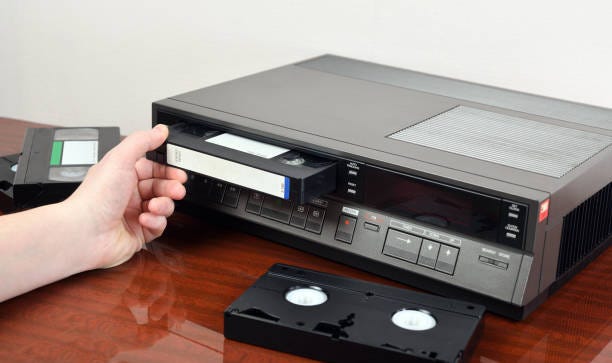
This led to a loose network of video tape traders, of which I was a part of starting around 1983. In 1983, I bought my first VCR and case of Polaroid VHS video cassettes. It was around that time I also discovered The Wrestling Observer newsletter and became a subscriber. By reading the Observer, especially the "readers pages", I discovered people I could contact, build relationships and trade tapes. This occurred across the US and then the world, as we were connected with wrestling fans and tape traders everywhere giving us the ability to watch a lot of wrestling that was not previously available.
As always happens, the acceleration and proliferation of technology changed the availability of pro wrestling and also how we consumed it. The emergence of big events like Starrcade and WrestleMania pushed professional wrestling into pop culture and mass appeal of public preference made the 1980s an amazing decade for pro wrestling.
I am not surprised about the data results as I strongly anticipated the popularity of the 1980s, but I am excited about the 23.5% selection of the 1970s.
When I launched the Pro Wrestling Time Tunnel, I made the 1970s the core of the content for two reasons. For one, it is the decade that I became a fan, bought magazines, watched the television shows and started going to live, local wrestling events. I think the first wrestling you discover and hooks you always has a special place in your heart. The second reason is because as I read various publications, watched social media and listened to the available podcasts, I thought the 1980s, along with the 1990s had been talked about to death. I started the Facebook Group and started posting content about the 1970s and it really caught on and the group grew at a rapid pace, indicating there was a hunger for something different and the difference was the 1970s.
Let's take a brief moment to look at these decades and trends in pro wrestling history.
The 1950s
In the 1950s, professional wrestling experienced a "Golden Age" in the United States, mainly drive by the emergence and popularity of television. Pro wrestling was transformed from being a regional carnival-type attraction into a mainstream spectacle. Styles emphasized a blend of technical catch wrestling and emerging performative elements, with matches often focusing on holds, submissions, and athletic prowess rather than high-flying or overly dramatic antics. Promotions were dominated by the National Wrestling Alliance (NWA), which unified various regional territories and championships. Key figures included Lou Thesz, who held the NWA World Heavyweight Championship for much of the decade, and flamboyant personalities like Gorgeous George, who introduced more theatrical gimmicks with bleached hair and robes to draw crowds. Popularity surged due to TV broadcasts on networks like DuMont, reaching millions and making wrestling one of the most-watched programs, though it remained largely regional with live events in arenas and halls. Internationally, this decade saw foundations laid in Mexico with lucha libre's colorful masks and agile maneuvers via Empresa Mexicana de Lucha Libre (EMLL), and in Japan with Rikidōzan's televised matches popularizing the sport post-WWII. I have researched and written some content about the 1950s and the more I study and uncover facts and data about this decade, the more it intrigues me.
The 1960s
The 1960s built on the 1950s' TV foundation but saw wrestling stabilize as a regional enterprise with less national hype. Styles continued to prioritize storytelling through character development and technical wrestling, though with increasing emphasis on feuds and personas to engage audiences. The formation of the American Wrestling Association (AWA) in 1960 by Verne Gagne marked a key split from the NWA, creating competition among territories. The World Wide Wrestling Federation (WWWF, later WWF) also emerged in 1963 after breaking from the NWA. Key figures included Bruno Sammartino, who became a long-reigning WWWF champion and a hero to ethnic audiences, and Verne Gagne, whose AWA drew strong Midwestern crowds. Popularity remained steady but not explosive, with syndicated TV shows serving local markets rather than national networks, leading to consistent arena attendance without the 1950s' boom. Globally, Mexico's lucha libre thrived with stars like El Santo and Mil Máscaras, while Japan saw the rise of Antonio Inoki and Shohei Baba, and the UK enjoyed TV-boosted events on ITV's World of Sport. I became a wrestling fan in 1972 and the more and more I fell in love with the sport, the questions I asked adults about wrestling from their era, uncovering stories and angles they heard and saw from the 1950s and 1960s. I still remember some of those conversations.
The 1970s
By the 1970s, professional wrestling faced a noticeable decline in the U.S., shifting from the earlier decades' growth to a period of stagnation and regional fragmentation. Styles varied by territory but generally maintained technical, athletic focuses with some character flair, though without major innovations. The NWA remained central, with territories like Georgia Championship Wrestling (GCW) gaining traction as the first nationally broadcast on cable via TBS in 1979. The AWA and WWF (rejoining NWA briefly) competed regionally. Key figures included André the Giant, who became a WWF superstar in 1973, Ric Flair emerging in the NWA, and Dusty Rhodes as a charismatic everyman. Popularity waned due to overexposure from the 1950s-60s TV era, with viewership dropping and live events struggling; television was mostly localized syndication used to promote shows or undercut rivals. Internationally, Japan sustained interest through Joshi (women's) wrestling stars like The Beauty Pair, while the UK and Australia saw declines after losing key TV deals, marking a contrast to the more vibrant 1950s and 1960s.
The 1980s
The 1980s represented a dramatic revival and transformation, often called the Second Golden Age, differing sharply from the 1970s' downturn by embracing national expansion and entertainment over pure sport. Styles evolved into "sports entertainment," a term coined by Vince McMahon Jr., with WWF emphasizing muscular, colorful characters, scripted storylines, and spectacle, while rivals like the NWA (via Jim Crockett Promotions, later WCW) focused on athleticism. McMahon took over the WWF in 1982, breaking territorial boundaries by signing stars nationwide and using cable TV for syndication. Key figures included Hulk Hogan, whose "Hulkamania" era defined the decade, "Rowdy" Roddy Piper, "Macho Man" Randy Savage, and Ric Flair in the NWA. Popularity exploded with events like WrestleMania (starting 1985), drawing massive crowds (e.g., 93,173 at WrestleMania III) and TV ratings (33 million viewers for The Main Event I). Influences like the "Rock 'n' Wrestling Connection" with MTV and celebrities like Cyndi Lauper brought mainstream appeal, targeting families and children, unlike the more adult-oriented, regional focus of prior decades. Globally, Japan boomed with Joshi stars like the Crush Gals, and WWF toured internationally, consolidating wrestling into a global industry.
Just to review, I have chosen these decades as the foundation for The Pro Wrestling Time Tunnel because these were the years of "territory wrestling."
Overall, during these years, pro wrestling evolved from the 1950s' TV-driven golden age of technical regionalism, through the 1960s' stable territories, the 1970s' decline and fragmentation, to the 1980s' national, entertainment-focused boom, driven by cable TV, celebrity crossovers, and visionary promotion.
The way I interpret the research is that there is interest in the 1950s and 1960s. Because it isn’t the favorite decade or possibly the wrestling folks grew up with, there is interest in learning more about the time periods and how the sport evolved. Thank you to all who took the time to participate, I appreciate your interest in my work.
Thank You for Reading
I'm Tony Richards, Pro Wrestling Historian, Author and Storyteller. I share pro wrestling historical items in each issue of the Time Tunnel Pro Wrestling History Newsletter. Thanks for reading! If you enjoy my information on select events, matches and insights, please share it with folks you think might like to be a subscriber!
Remember, paid subscribers get access to exclusive and special content such as some special issues including a multi-part deep dives on wrestling territories, wrestler bios and championship title histories, special audio and video interviews on territory pro wrestling and more available in the Pro Wrestling Time Tunnel for Premium Subscribers.