



Today’s Favorite Quote: You will never learn the business unless you have the opportunity to work with the best. - Dory Funk Sr.
Happy Birthday to those who have passed on and to those great wrestlers still with us:
In Memoriam:
Paul Perchmann/Buddy Rose 1952
Davey Boy Smith 1962
Happy Birthday:
Greg Gagne (78)
Hiroaki Gran Hamada (76)
Satoru Sayama\Tiger Mask I (69)
Evan Karagias (53)
RIP Memorial: We stop & remember those who have passed on this day and gave themselves to the business for us, the fans. We salute you and thank you.
Hiro Matsuda 11-27-1999 at the age of 62
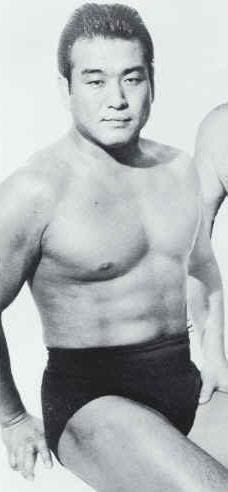
The Life and Career of Sotoru Sayama
Satoru Sayama: The Original Tiger Mask
Satoru Sayama, born November 27, 1957, in Shimonoseki, Yamaguchi Prefecture, stands as one of the most consequential figures in the history of professional wrestling and mixed martial arts. Best known as the original Tiger Mask, he transformed the junior heavyweight division in New Japan Pro-Wrestling (NJPW), fused high-flying lucha libre with martial arts and technical grappling into a style contemporaries called “fourth-dimension pro wrestling,” and then walked away at the peak of his fame to pursue more “real” combat. He co-founded the original Universal Wrestling Federation (UWF), helped pioneer shoot-style wrestling, and established Shooto, one of the earliest dedicated mixed martial arts organizations, years before the UFC. His influence radiates through Jushin Thunder Liger, Rey Mysterio, the entire modern junior/cruiserweight style, and the Japanese MMA pipeline.

Sayama grew up idolizing Antonio Inoki. In middle school he competed in judo and freestyle wrestling; after winning a wrestling tournament he dropped out of high school to enter the New Japan dojo. Training under Inoki, Karl Gotch, Kotetsu Yamamoto, and Yoshiaki Fujiwara was brutal and shoot-oriented. At roughly 160 pounds he was undersized even for the junior ranks of the era, which limited his early opportunities on main Japanese cards. He also cross-trained in kickboxing (including time at Kenji Kurosaki’s Mejiro Gym) and sambo. In November 1977 he represented NJPW in a kickboxing match against Marc Costello at the Kakutōgi Daisensō event, losing by decision after experimenting with grappling under striking rules—an early expression of the hybrid philosophy that would define his later work.
Debuting on May 28, 1976, against jobber Shoji Kai, Sayama was soon sent abroad. In Mexico (EMLL) he absorbed lucha libre’s aerial vocabulary and won the NWA World Middleweight Championship. In Britain for World of Sport he was billed as Sammy Lee (a fictional cousin of Bruce Lee) and teamed with Quick-Kick Lee (Akira Maeda). He faced the likes of Mark Rocco and Mick McManus while refining a mat-based technical game. Tax complications delayed his return; the Japanese embassy and even Prime Minister Takeo Fukuda became involved. These excursions gave him the dual foundation—British catch wrestling and Mexican high-flying—that he would later synthesize under the Tiger Mask mask.
NJPW sought a vehicle to revitalize its junior heavyweight division and attract younger fans. It licensed the character from Ikki Kajiwara’s 1968 manga Tiger Mask (and the subsequent anime). On April 23, 1981, at the Kuramae Kokugikan, Sayama debuted as Tiger Mask against Dynamite Kid and pinned him with a German suplex. Traditionalists initially dismissed the cartoon gimmick; the match and the subsequent style silenced them. Sayama blended explosive high-flying (diving headbutts, space-flying Tiger drops, rolling moonsaults), precise technical holds, and martial-arts strikes into matches of startling speed and creativity. The character became an instant phenomenon, drawing children who knew the anime while satisfying hardcore fans.
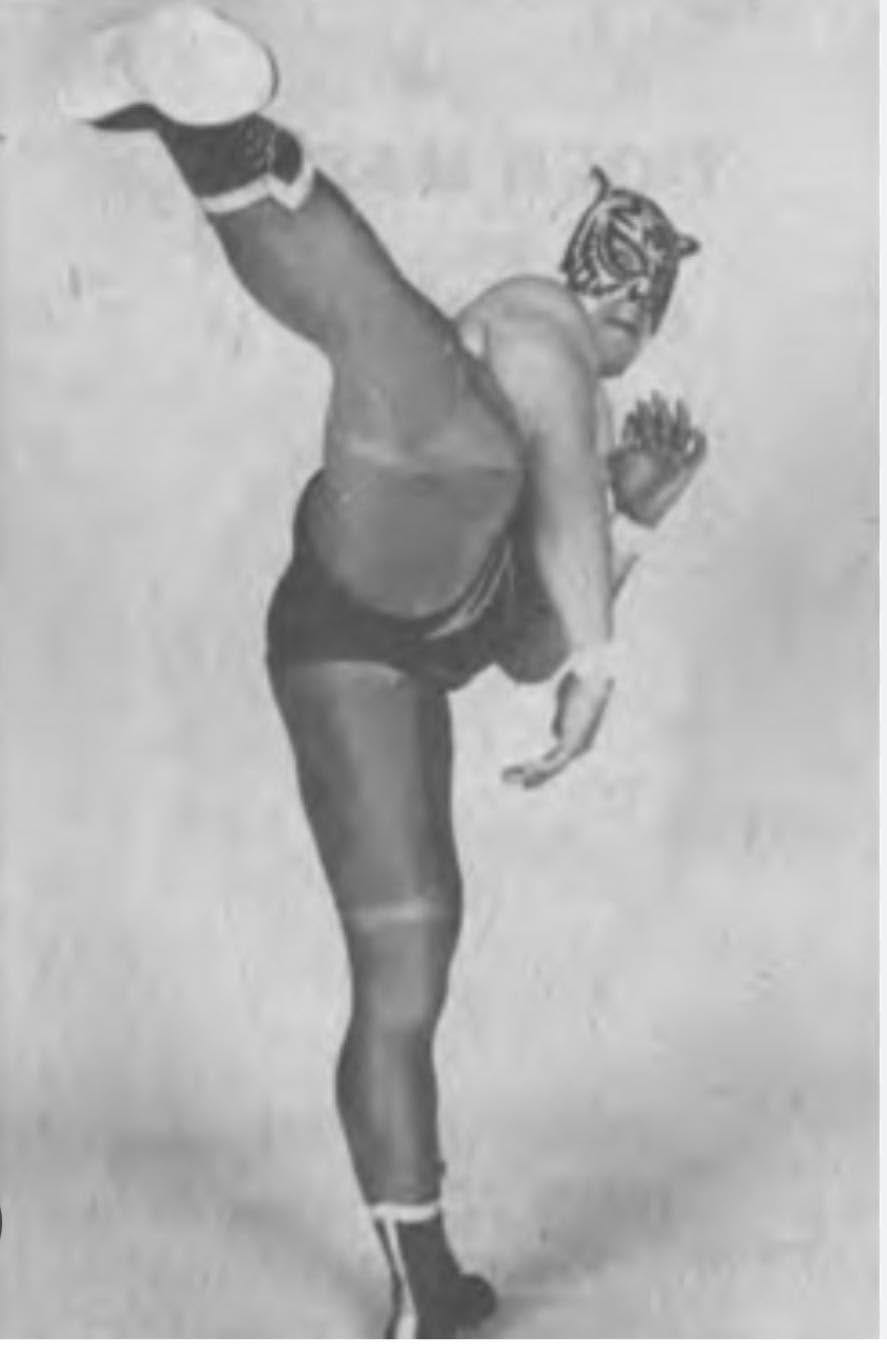
His rivalry with Dynamite Kid is widely regarded as one of the greatest in history. Their series featured breakneck pacing, innovative sequences, and mutual respect that elevated the entire junior division. Other major opponents included Black Tiger (Mark Rocco) and Kuniaki Kobayashi. On May 25, 1982, Sayama defeated Les Thornton for the NWA World Junior Heavyweight Championship; the following night he beat Black Tiger for the WWF Junior Heavyweight Championship, becoming the only wrestler to hold both simultaneously. He defended the WWF title on American soil, including a high-profile match against Dynamite Kid at Madison Square Garden in August 1982 that introduced the new style to U.S. audiences. A frequently cited NJPW-era record is 125 wins, 1 loss, and 8 draws (the sole loss reportedly by disqualification).
WATCH VIDEO: Tiger Mask vs Dynamite Kid HIGHLIGHTS< Madison Square Garden, New York City, 1982
Wrestling Observer awards followed: Best Flying Wrestler and Best Technical Wrestler in both 1982 and 1983, Match of the Year for the August 5, 1982 Dynamite Kid bout, and a five-star rating for the April 21, 1983 Dynamite Kid match (often noted as Meltzer’s first five-star rating). Bret Hart later called him “the Bruce Lee of wrestling” for the combination of speed, athleticism, and martial credibility.
By 1983 Sayama had grown disillusioned with backstage politics and the artificial nature of worked matches. After his final Tiger Mask bout on August 4, 1983 (a win over Isamu Teranishi), he announced his retirement on August 12 while still holding both junior titles. The departure occurred amid broader NJPW unrest over pay and management practices. In the mid-1980s he published Kayfabe, a book that openly discussed the scripted nature of the business and criticized the treatment of wrestlers—an act that further marked him as an independent, sometimes abrasive voice.
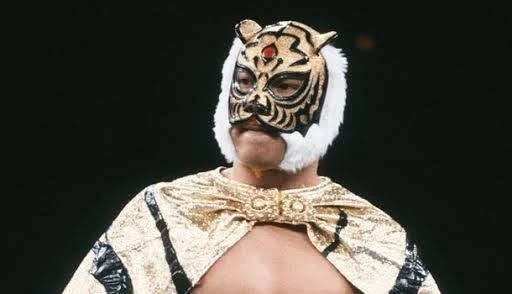
After nearly a year focused on martial-arts training and the Tiger Gym, Sayama joined the original UWF in 1984. With the Tiger Mask name and gimmick later used by Mitsuharu Misawa in All Japan, he appeared as The Tiger, Super Tiger, and under his real name. The UWF pursued a more realistic “shoot-style” presentation heavy on stiff strikes, submissions, and limited theatrics. Sayama won the 1984 UWF Tournament and the 1985 Kakuto Nettai Road “A” League Tournament. His matches with Akira Maeda and Yoshiaki Fujiwara were highlights, but philosophical and personal differences emerged—Sayama favored more striking while others emphasized pure grappling. A September 1985 match saw Maeda deliver a legitimate low blow; the resulting friction, combined with backstage recriminations, contributed to Sayama’s departure and the original UWF’s collapse shortly thereafter.
Satoru Sayama’s UWF philosophy was a deliberate attempt to dismantle professional wrestling as entertainment and rebuild it as a sport grounded in complete, realistic combat. After walking away from the peak of his Tiger Mask fame in August 1983, he treated the original Universal Wrestling Federation (1984–1985) as a laboratory for a “third path.”
As early as his New Japan dojo days, Sayama articulated a simple sequence he believed defined real fighting: striking first, then grappling and throwing, then finishing with submissions. In UWF interviews he sharpened this into an explicit principle of sogo kakutogi (complete martial arts). A fighter who lived only on the mat or only at range was incomplete. Without a credible standing game of punches and kicks, the clinch and ground phases never truly began under realistic conditions.
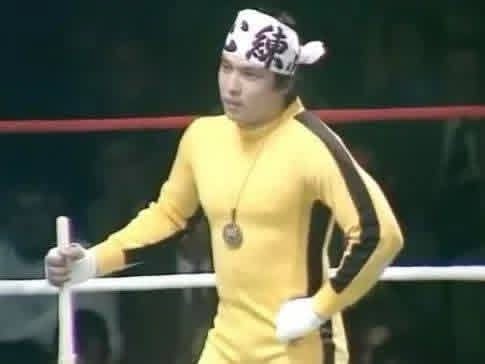
This was not abstract. In UWF he wore shin guards so he could deliver hard kicks, and his matches—especially against pure grapplers—were built around using those strikes as primary weapons rather than mere setups. He argued that once fighters tied up, the striking phase naturally paused, which made the style more sustainable than pure kickboxing while remaining more honest than traditional pro wrestling.
Sayama repeatedly framed UWF as supōtsu (sport) rather than kōgyō (show business). He told interviewers, in essence, to “please forget pro-wrestling” and accept that what they were watching was something different. The old professional obligation—“you have to entertain the fans”—was exactly what he rejected. Outcomes should be decided by the physical reality of the contest, not by the need to produce a satisfying narrative or protect someone’s spot on the card.
He still acknowledged that a three-count pinfall after a big, clean throw had sporting value, but he wanted to eliminate the theatrical versions (rolling cradles, reverse roll-ups, and the like). When a fighter went to his back to apply a submission, a referee counting a pin was, in his view, absurd.
On December 5, 1984, at Korakuen Hall, he put the philosophy into practice against Yoshiaki Fujiwara under “No-Fall Deathmatch” rules. There was no three-count pinfall. Victory could come only by knockout or submission (“give up”). Neck chokes that had previously been restricted were legal. Fujiwara, the pure grappler and Karl Gotch lineage specialist, took the early advantage with joint locks and a choking sequence that left Sayama in distress. Sayama escaped and then systematically kicked Fujiwara—head, body, legs—until Fujiwara could no longer continue. Contemporary accounts describe roughly fifty-five kicks and a crowd reaction that shifted from excitement to unease; the match felt raw rather than “fresh” or beautiful in the classic puroresu sense.
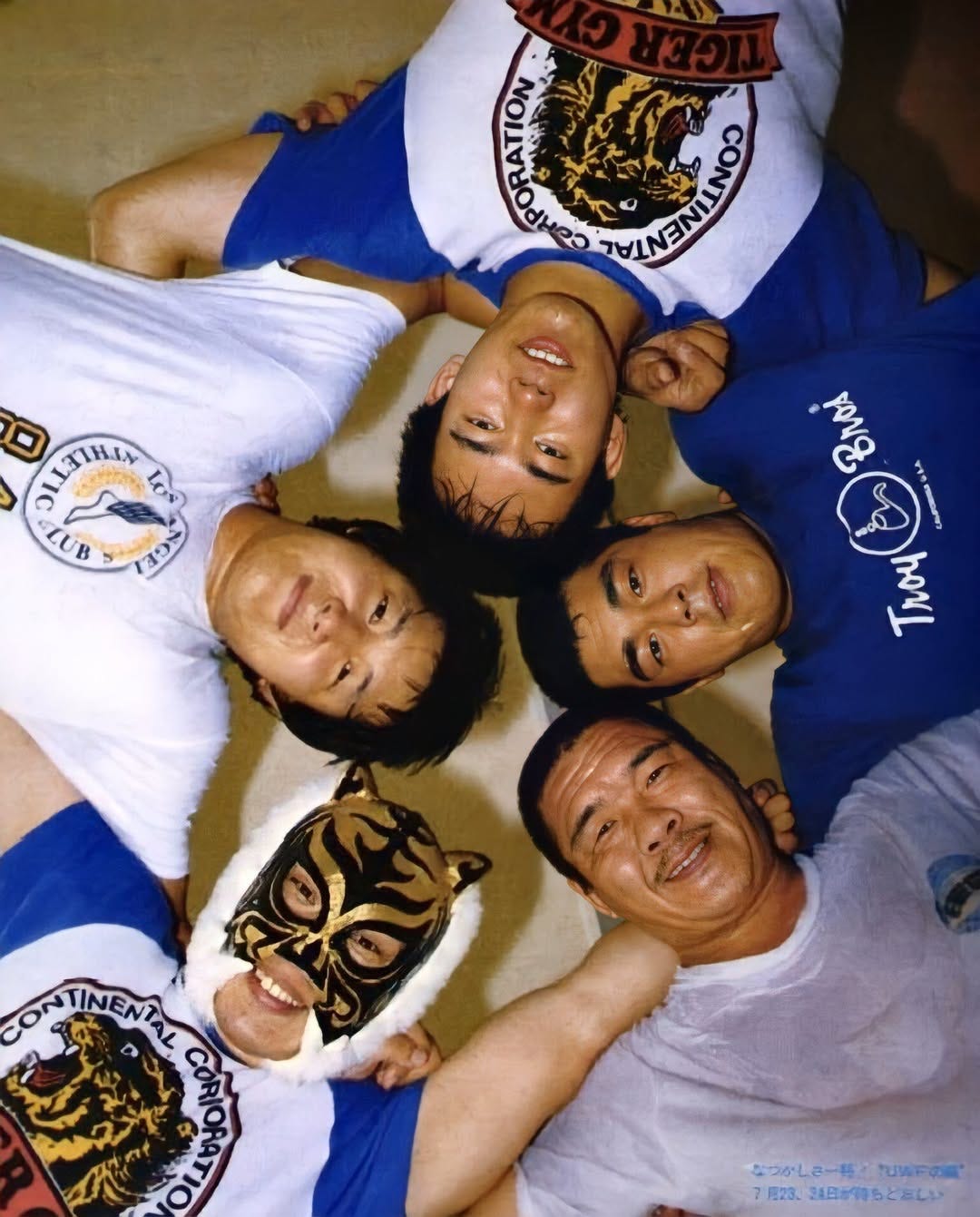
Pictured: Satoru Sayama, Akira Maeda, Yoshiaki Fujiwara, Kazuo Yamazaki y Takada
Sayama later downplayed the brutality, insisting it was still essentially pro wrestling with the three-count removed, yet the match served as a public demonstration that real combat was not always graceful. He was willing to “murder” the beautiful Tiger Mask persona if that was what the new standard required.
The philosophy collided with the preferences of the rest of the roster. Akira Maeda and others wanted the emphasis to remain on continuous submission chains—the mat chess that grew naturally out of the New Japan dojo and Gotch training. Sayama insisted that without a developed standing striking game the product stayed incomplete and, for many viewers, less compelling. He also pushed for stricter written rules, a ranking system modeled on boxing, and a reduced schedule (he preferred roughly one major show per month so the physical cost of real striking could be managed).
These differences were never purely technical. Sayama’s base remained his own Super Tiger Gym rather than the UWF dojo; he saw the promotion as a temporary vehicle for the larger project of building a true combat sport. When the September 2, 1985 match with Maeda degenerated into a genuine shoot (culminating in a low blow and disqualification), the philosophical and personal fractures became terminal. Sayama left; the original UWF folded days later after its final show on September 11.
The UWF period was the public test. The private system was already taking shape at the Tiger Gym under the name “Shooting.” Sayama organized training around the same three-phase principle (strike, throw/grapple, finish) and later formalized it as Shooto—an amateur-to-professional pipeline with graduated levels, clear rules, and the explicit goal of producing well-rounded fighters. Early Shooto rules allowed open-hand strikes to the head, body punches, kicks and knees to any target, and all submissions, while restricting ground strikes and closed-fist punches to the head. The structure was designed to force the integration he had preached in UWF rather than allow specialists to hide inside one phase.
In short, Sayama’s UWF philosophy treated the worked pro-wrestling match as an inadequate container for real fighting ability. He wanted the container rewritten—rules that rewarded complete fighters, outcomes that could not be predetermined by entertainment logic, and a training culture that began with striking rather than assuming the clinch. The original UWF proved too small and too divided to fully contain that vision; Shooto became the longer-term vehicle. The tension between beauty and ugliness, between the Tiger Mask acrobat and the man who would kick an opponent fifty-five times, remains the clearest expression of what he was trying to force into existence.
In 1985–86 Sayama founded Shooto (initially framed around “Shooting”), one of the first organizations dedicated to realistic mixed rules competition. He developed a syllabus integrating striking (kickboxing, muay thai, karate influences) with grappling from wrestling, judo, and sambo—creating a structured path for well-rounded fighters years before the UFC. Shooto hosted early Vale Tudo Japan events that introduced Brazilian jiu-jitsu concepts to Japanese audiences and produced or trained numerous future stars. Sayama remained involved until internal disagreements led him to leave around 1996. He later created Seikendo, a hybrid martial art emphasizing etiquette, spiritual elements, and practical street self-defense, and in 2005 launched Real Japan Pro-Wrestling (later Strong Style Pro-Wrestling), which featured veterans, martial artists, and his students.
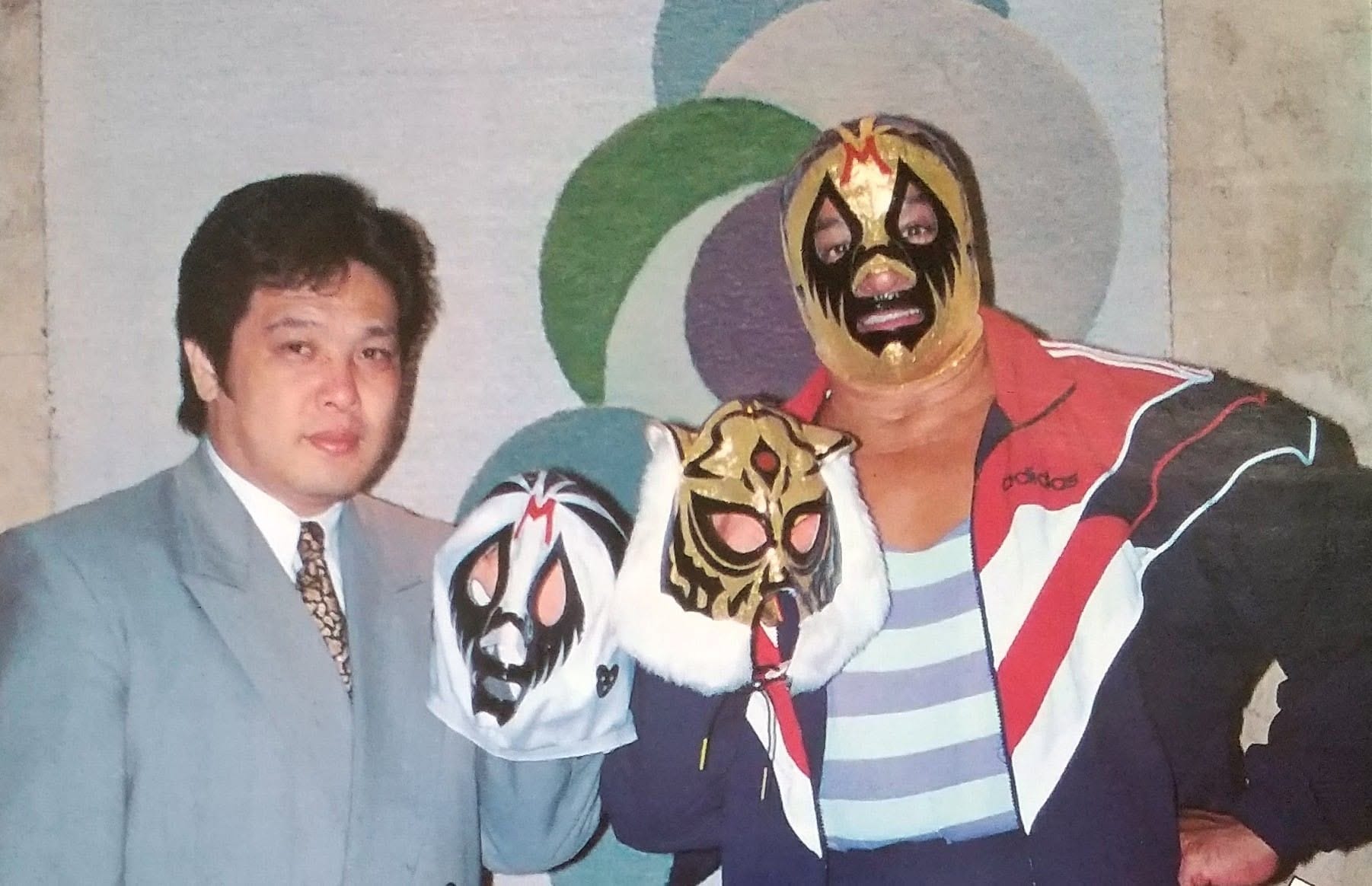
Pictured: Mil Mascaras and Satoru Sayama, 1995. From Weekly GONG Magazine.
Sayama returned to the ring sporadically from the mid-1990s onward, including a 1994 no-contest with Jushin Thunder Liger, work against Antonio Inoki, and appearances that put over younger talent. He trained and endorsed Yoshihiro Yamazaki as Tiger Mask IV, who carried the character for more than three decades and retired in July 2026 at Korakuen Hall. At that ceremony Sayama, despite battling Parkinson’s disease and other health issues, entered the ring, locked up with his successor, and performed a crisp Tiger Step that drew a stunned reaction from the crowd. He has described recent improvements with treatment and continues to study and refine martial-arts theory.
Sayama’s prime as Tiger Mask lasted roughly twenty-eight months, yet it permanently raised the ceiling for what smaller wrestlers could achieve. The Dynamite Kid series popularized a faster, more athletic junior style that traveled from Japan to Britain, Mexico, and North America and influenced generations of high-flyers and technicians. His later insistence on greater realism helped birth shoot-style wrestling and provided institutional scaffolding for Japanese MMA. Hall of Fame recognitions (Wrestling Observer Newsletter 1996, International Pro Wrestling Hall of Fame 2021) and the enduring multi-generational Tiger Mask lineage attest to his stature. Even at reduced capacity in later life, the original Tiger’s presence at his successor’s farewell underscored a through-line of mentorship and the character’s mythic power.
Satoru Sayama remains a singular figure: a once-in-a-generation athlete who mastered both the theatrical and the legitimate sides of combat sports, then repeatedly chose the harder path of innovation over sustained stardom. His body of work—matches that still look futuristic, an early MMA system, and an uncompromising public critique of the industry—continues to shape how fans and practitioners understand the possibilities of both professional wrestling and mixed martial arts.
ONE Thing I Learned Today About Ernie Ladd
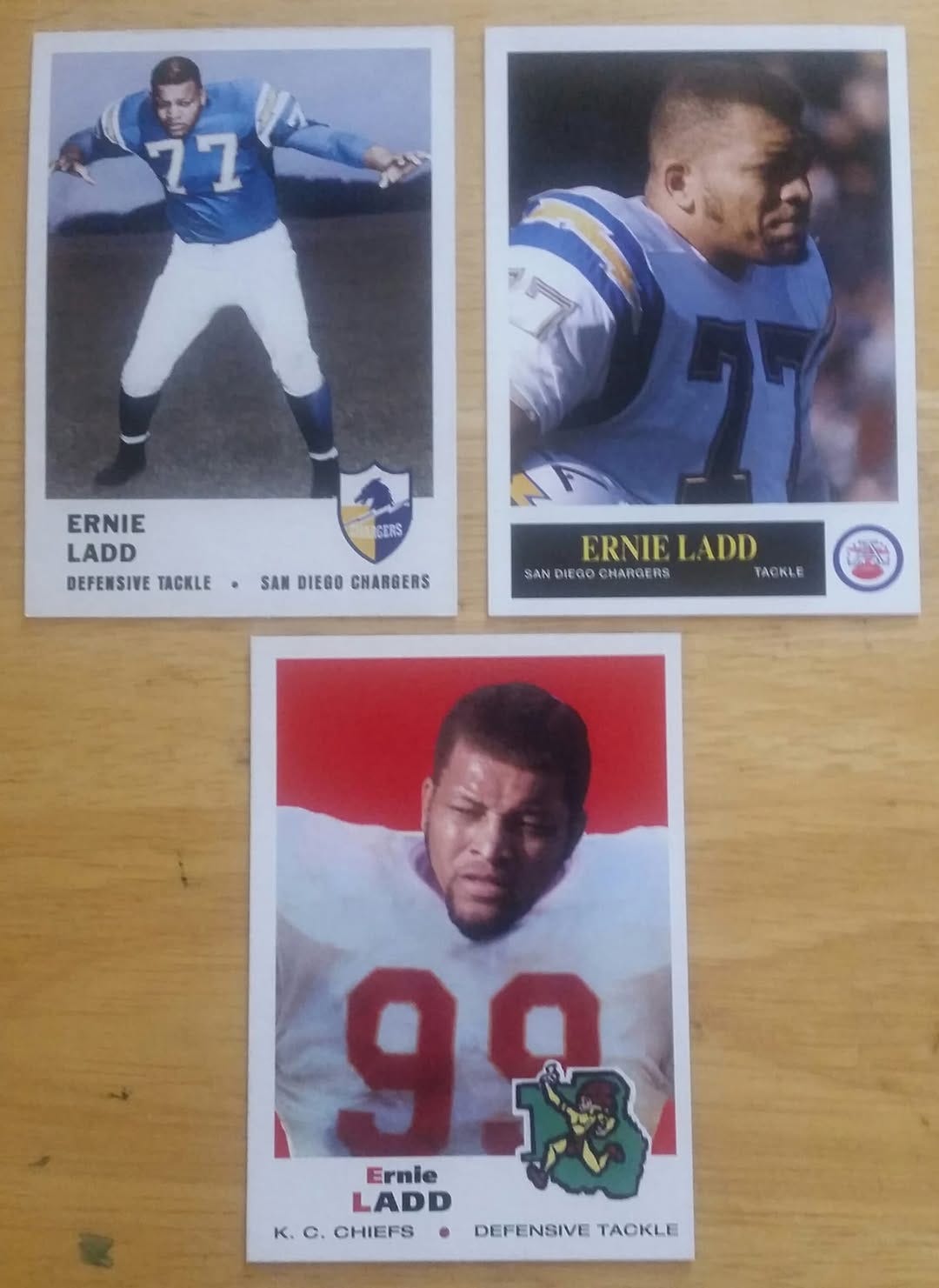
Ernie Ladd once ate 124 pancakes (topped with six containers of syrup) at a 1965 charity contest.
He was competing alone against two-person teams, so he didn’t win, but he insisted he started late and finished only four pancakes behind the leaders. The story fits his reputation for legendary appetite and size (listed around 6’9” and over 300 pounds) during his AFL days with the Chargers.
Thank You for Watching and Listening
I’m Tony Richards, Pro Wrestling Historian, Author and Storyteller. I share pro wrestling historical items in each issue of the Time Tunnel Pro Wrestling History Newsletter and each episode of our podcast show. Thanks for your support! If you enjoy my information on select events, matches and insights, please share with folks you think might like to be a subscriber!
Remember, Premium subscribers get access to exclusive and special content such as some special issues including a multi-part deep dives on wrestling territories, wrestler bios and championship title histories, special audio and video interviews on territory pro wrestling and more available in the Pro Wrestling Time Tunnel for Premium Subscribers. Being a Premium Subscriber also means you support me in my efforts to document Pro Wrestling History through my research, writing, books, vidoes and podcasts. And…I have something very special planned for our Premium Subscribers on the Podcast side of things in 2026! Details soon here in the Pro Wrestling Time Tunnel.
Just a note on this being referred to as Meltzer’s first 5 star match because I have been corrected on this myself in the past.
The first Meltzer rated 5 star match was actually a Ric Flair vs Butch Reed NWA World title match in Florida in 1982 which Meltzer saw in person. There is no footage of this match which is why it is excluded from some databases.
The Dynamite Kid vs Tiger Mask match is the earliest Meltzer 5er that we can watch today.