


Today’s Favorite Quote: What makes that turnstile turn? That’s what made wrestling what it has become. The fans dictate the direction of the wrestling industry - Terry Funk
Happy Birthday to those who have passed on and to those great wrestlers still with us:
In Memoriam:
Reed Detton 1906
Thor Hagen 1924
Jack Donovan 1928
Steve Novak 1932
Roger Smith 1948
Happy Birthday:
Velvet McIntyre (64)
Elizabeth Copeland\Beth Phoenix (46)
Anthony Ogogo (38)
RIP Memorial: We stop & remember those who have passed on this day and gave themselves to the business for us, the fans. We salute you and thank you.
Jim Grabmire 11-24-1999 at the age of 67

Dick Hutton 11-24-2003 at the age of 80

Eddie Sullivan 11-24-2000 at the age of 59
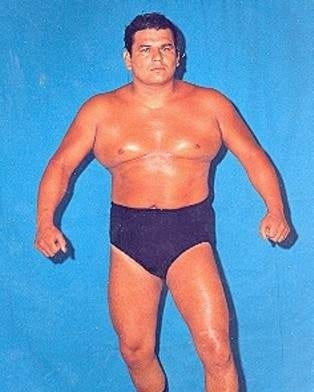
Mike LeBell 11-24-2009 at the age of 79
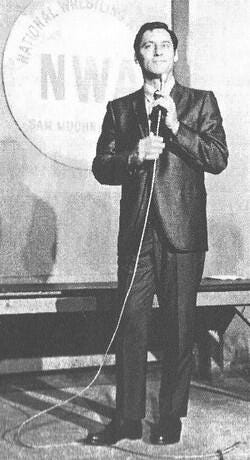
7 Stages of The Territory Era
Stage 6: Fragmentation
November 1976
Year Two Month Eleven
Transitions Foreshadow Major Change Coming In The NWA
In Stage 6 the National Wrestling Alliance still existed as a membership structure and still recognized a world heavyweight champion. What had changed was the degree of independence the stronger offices exercised over their own rosters, their own titles, and their own booking. November 1976 supplies a clear example. Two of the Alliance’s stronger southeastern offices adjusted their talent and their leadership at the same time the world heavyweight title continued its long-term transition in the traditional showcase city of St. Louis. None of these moves required a central decision from the Alliance. They were local choices that still operated inside the larger structure.
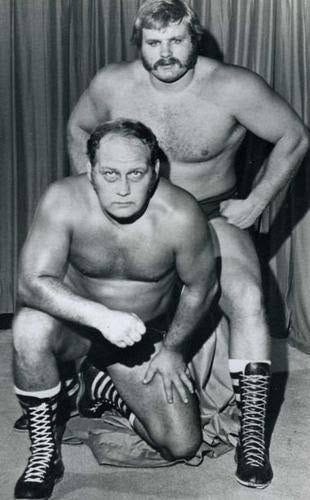
The Andersons Leave Mid-Atlantic
The Minnesota Wrecking Crew had been the dominant tag team in Jim Crockett Promotions for years. By the fall of 1976 that situation changed. Ole Anderson lost a series of loser-leaves-town matches to Wahoo McDaniel. Behind the scenes he had accepted an offer from Jim Barnett to become the booker for Georgia Championship Wrestling. Gene and Ole shifted their primary base to Atlanta. They were the recognized holders of the Mid-Atlantic version of the NWA World Tag Team Championship at the time, and they took those titles with them.
The public break with Ric Flair had already begun in October. On television Flair slapped Gene Anderson during a six-man match, the moment that opened the program between Flair (now teaming with Greg Valentine) and the Andersons. By November the Andersons were working primarily in Georgia while still making occasional returns to the Carolinas, usually on Sundays. Crockett’s office did not stop. It settled the dormant Mid-Atlantic Tag Team titles in a television tournament won by Dino Bravo and Tim Woods, gave Greg Valentine his first singles title in the territory (the Mid-Atlantic Television Championship), and continued building Flair against Wahoo McDaniel and the Andersons. The local product kept moving without the Andersons as full-time residents.
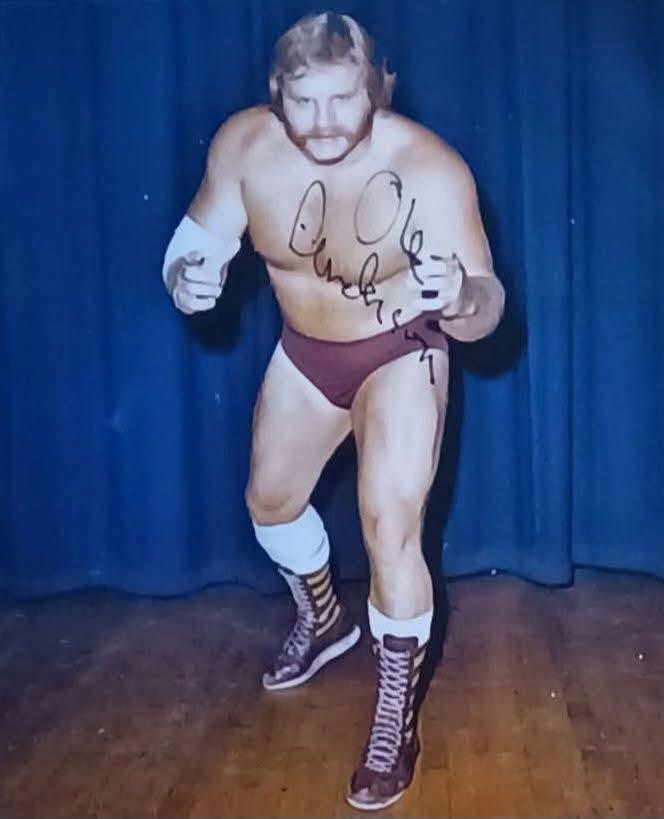
Ole Becomes the Georgia Booker
The story behind this story is that Gene Anderson was actually the person that was hired to do the booking in Georgia. It didn’t last long. Gene’s demeanor and skillset was not conduscive to the highly. organized booking position, so it wasn’t long before he basically abdicated the role to Ole.
Ole Anderson’s move into the Georgia booking role was the practical mechanism that made the talent shift possible. Barnett hired him to replace Tom Renesto as booker. The Andersons became the top heel team in Georgia Championship Wrestling while continuing to hold the version of the World Tag Team titles they had carried out of the Carolinas. Georgia already had its own strong local product built around Mr. Wrestling II, the Georgia Heavyweight Championship, and its Atlanta television. The arrival of the Andersons as both in-ring heels and, in Ole’s case, the new booker gave the office additional depth without requiring the NWA World Heavyweight Champion every week.
The working relationship between the two offices did not end. George Scott in Mid-Atlantic and Ole Anderson in Georgia maintained enough contact for occasional talent exchanges and for the Andersons to continue defending or challenging for the titles on Carolina dates. That arrangement is characteristic of Stage 6. The Alliance still provided a framework for recognition and for cross-territory work. The individual offices decided who booked, who worked full-time, and which titles moved with the talent.
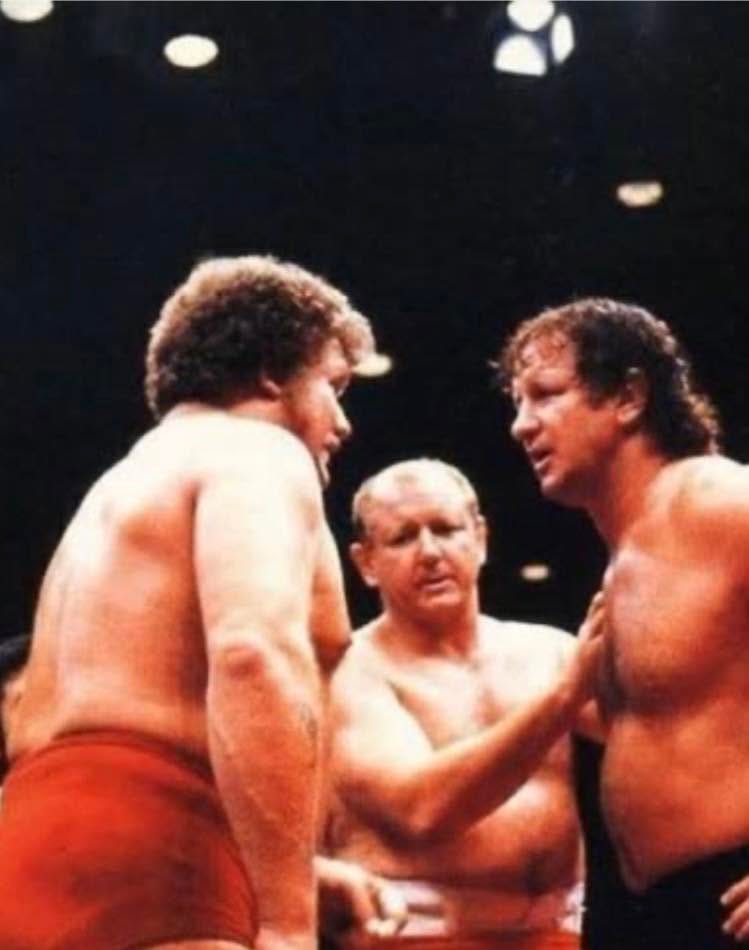
St. Louis and the Funk–Race Transition
While the southeastern offices adjusted their rosters and their booking, the world heavyweight title continued its own program in St. Louis. On November 26 at Kiel Auditorium, Terry Funk retained the NWA World Heavyweight Championship against Harley Race in a best-of-three-falls match, winning two falls to one in front of roughly 9,200 fans. The match followed their sixty-minute draw in Kansas City the previous month.
Race entered that night as the most consistent and credible challenger of Funk’s reign, and the result fit the longer pattern that had already been established in St. Louis. For years the Missouri Heavyweight Championship had functioned as the primary local prize in Muchnick’s office and in the connected Central States territory. It was the title the strongest regional star was expected to hold before being positioned for a serious run at the world championship. Race had been the dominant Missouri champion of the mid-1970s. He had won the title multiple times, including a 427-day reign that ended in April 1976 when he dropped it to Bob Backlund. By the time he faced Funk on November 26 he was no longer the reigning Missouri champion—Jack Brisco would win the title from Backlund on the same Kiel card—but the recent history still mattered. Race had already completed the usual local step. He had proven himself as the top man in the St. Louis and Kansas City circuit, and that status made him the natural next world-title challenger.
St. Louis under Sam Muchnick remained one of the traditional Alliance cities where the world title was still treated as a primary draw when the champion was available. The November 26 result did not end the program. It advanced it. Funk stayed champion. Race stayed the clear next man. At this poin t in November 1976, Funk still planned on keeping the championship another full year in 1977. Those circumstances would change bwteen November 1976 and February 1977 in Toronto, when Race defeated Funk. On the same November Kiel card the Missouri title changed hands, showing that the office could still sell its own local championship alongside the world title. The Missouri belt continued to serve as the measuring stick for the territory’s top star even as the world-title transition moved forward.
The November 26 match therefore sat at the intersection of two Stage 6 realities. Locally, the Missouri Heavyweight Championship still marked the man who had earned the right to challenge for the world title. Nationally, the world championship itself continued to be defended in the traditional showcase city against the challenger who had already climbed that local ladder. Funk’s win kept the long-term program on schedule. Race’s position as the established Missouri-level star kept the transition toward 1977 intact.
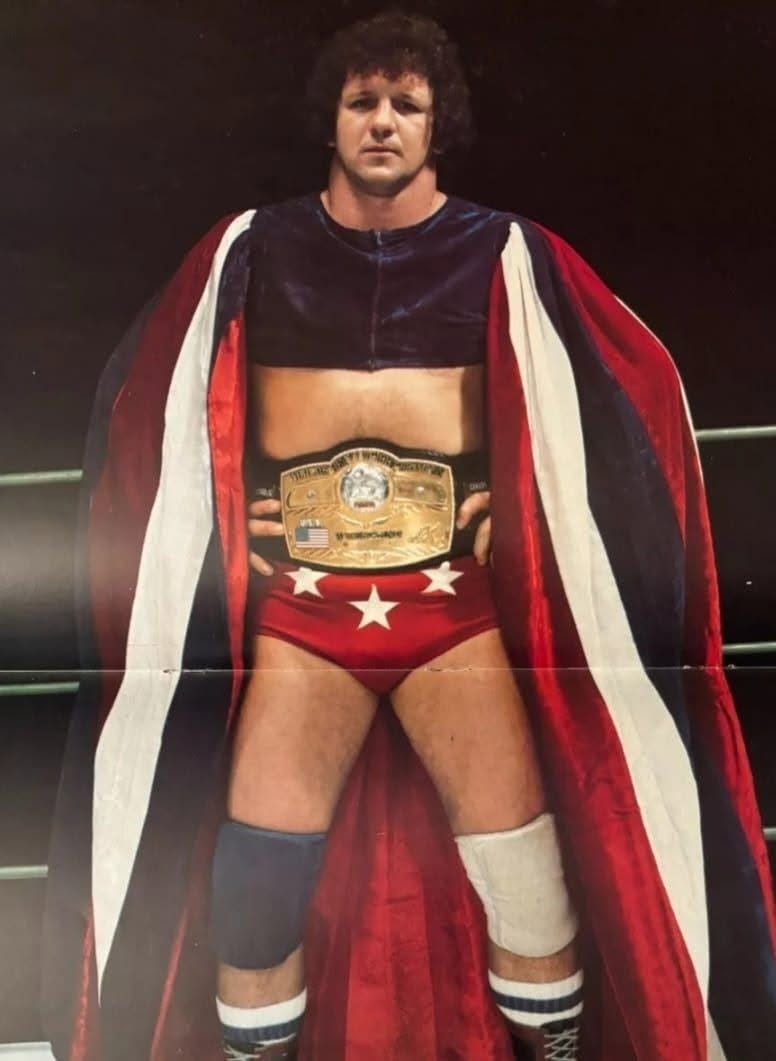
Business Analysis
The three movements sit inside the same month and illustrate the same Stage 6 condition. Mid-Atlantic and Georgia were strong enough to move top talent and a recognized tag title between them without collapsing either office. Ole Anderson could become the Georgia booker because Barnett controlled that decision locally. Crockett’s office could rebuild its own singles and tag picture around Flair, Valentine, and its local titles. At the same time the world heavyweight championship remained a shared national asset that was still showcased in St. Louis against the strongest available challenger. Funk’s November 26 win over Race kept the long-term transition on schedule while the local offices handled their own calendars.
The Alliance structure still existed. It still recognized the titles and still allowed the talent exchanges. What it no longer did was dictate the weekly business of the stronger offices. Those offices decided who stayed, who left, who booked, and which local programs sold the buildings. The world champion remained useful when he appeared. He was not required for the Andersons to move, for Ole to take the Georgia book, or for Mid-Atlantic and Georgia to continue running profitable calendars on their own product. That combination of local autonomy and selective use of the national title is the practical definition of Fragmentation in late 1976.
Thank You for Watching and Listening
I’m Tony Richards, Pro Wrestling Historian, Author and Storyteller. I share pro wrestling historical items in each issue of the Time Tunnel Pro Wrestling History Newsletter and each episode of our podcast show. Thanks for your support! If you enjoy my information on select events, matches and insights, please share with folks you think might like to be a subscriber!
Remember, Premium subscribers get access to exclusive and special content such as some special issues including a multi-part deep dives on wrestling territories, wrestler bios and championship title histories, special audio and video interviews on territory pro wrestling and more available in the Pro Wrestling Time Tunnel for Premium Subscribers. Being a Premium Subscriber also means you support me in my efforts to document Pro Wrestling History through my research, writing, books, vidoes and podcasts. And…I have something very special planned for our Premium Subscribers on the Podcast side of things in 2026! Details soon here in the Pro Wrestling Time Tunnel.