


Today’s Favorite Quote: The reality, or substance, of professional wrestling is the ability to perpetuate a fantasy. I never distinguished between fantasy and reality. I made my fantasy reality for over 60 years - Lou Thesz, NWA World Heavyweight Champion
Happy Birthday to those who have passed on and to those great wrestlers still with us:
In Memoriam:
Farmer Jones 1911
Angelo Martinelli 1916
Gene Kiniski 1928
Theresa Theis 1930
Happy Birthday:
Roger Smith (78)
Don Frye (61)
Nhooph Al-Areebi\Aliyeh (32)
RIP Memorial: We stop & remember those who have passed on this day and gave themselves to the business for us, the fans. We salute you and thank you.
Don McIntyre 11-23-1990 at the age of 73

Art Barr 11-23-1994 at the age of 28
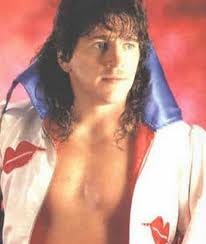
Significant Pro Debut
11-23-1932: Rube Wright defeated George Maloney at the Olympic Auditorium in Los Angeles in 10:17
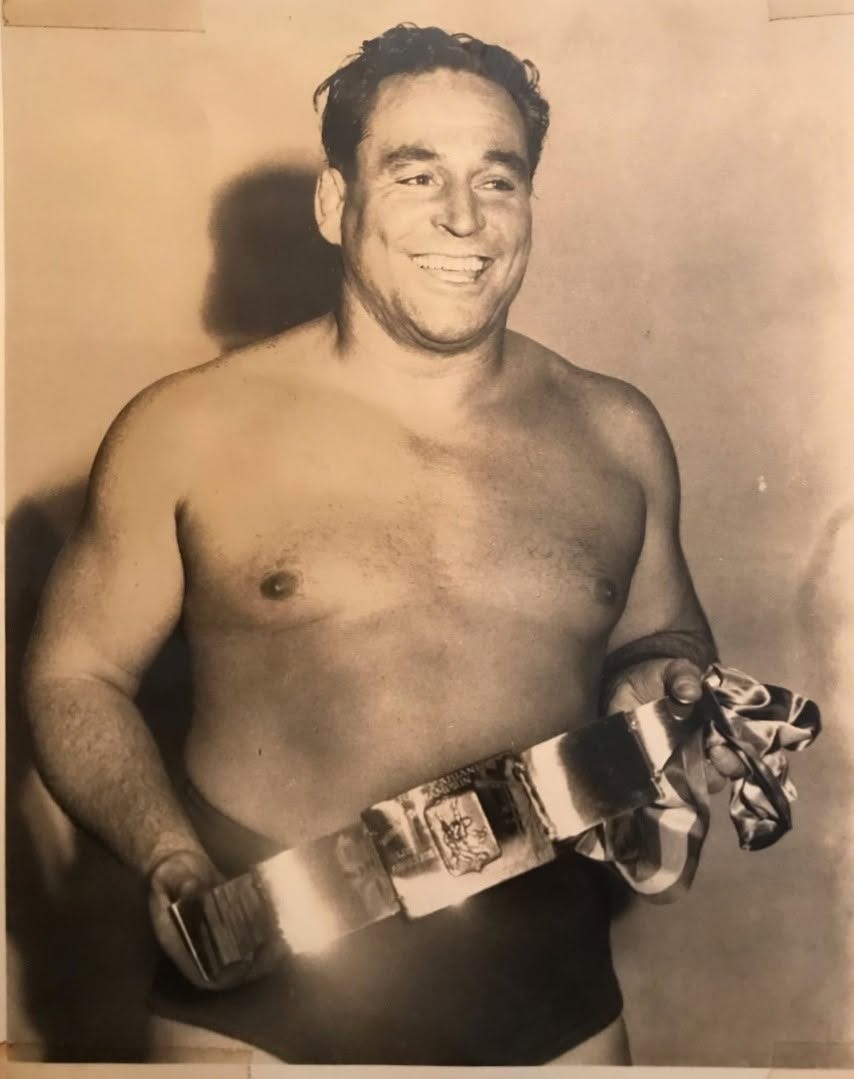
Pictured: Rube Wright later in his career with his championship belt
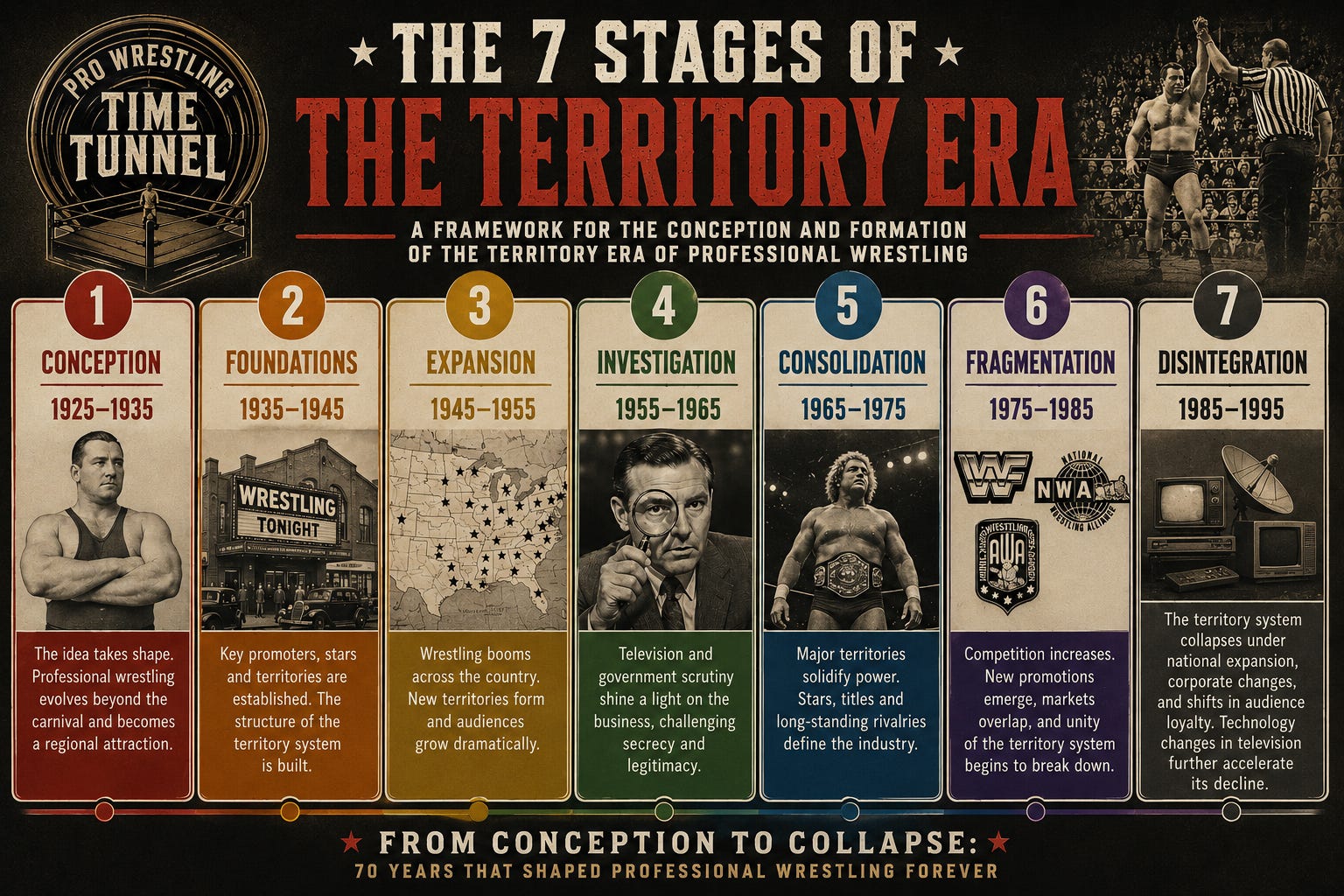
7 Stages of the Territory Era
Stage 6: Fragmentation
November 1976
Year Two Month Eleven
November 1976: Local Programs, Selective Use of the Champion
Stage 6 is the period when the National Wrestling Alliance still provided a world heavyweight champion and a membership structure, but most offices no longer needed either one every week to run profitable business. November 1976 shows that arrangement in practice. Terry Funk remained NWA World Heavyweight Champion and worked a full itinerary. The stronger territories continued to sell primarily on their own titles, their own feuds, and their own television. The weaker ones continued to thin. The map still listed Alliance members. The weekly economics were increasingly local.
Mid-Atlantic (Jim Crockett Promotions)
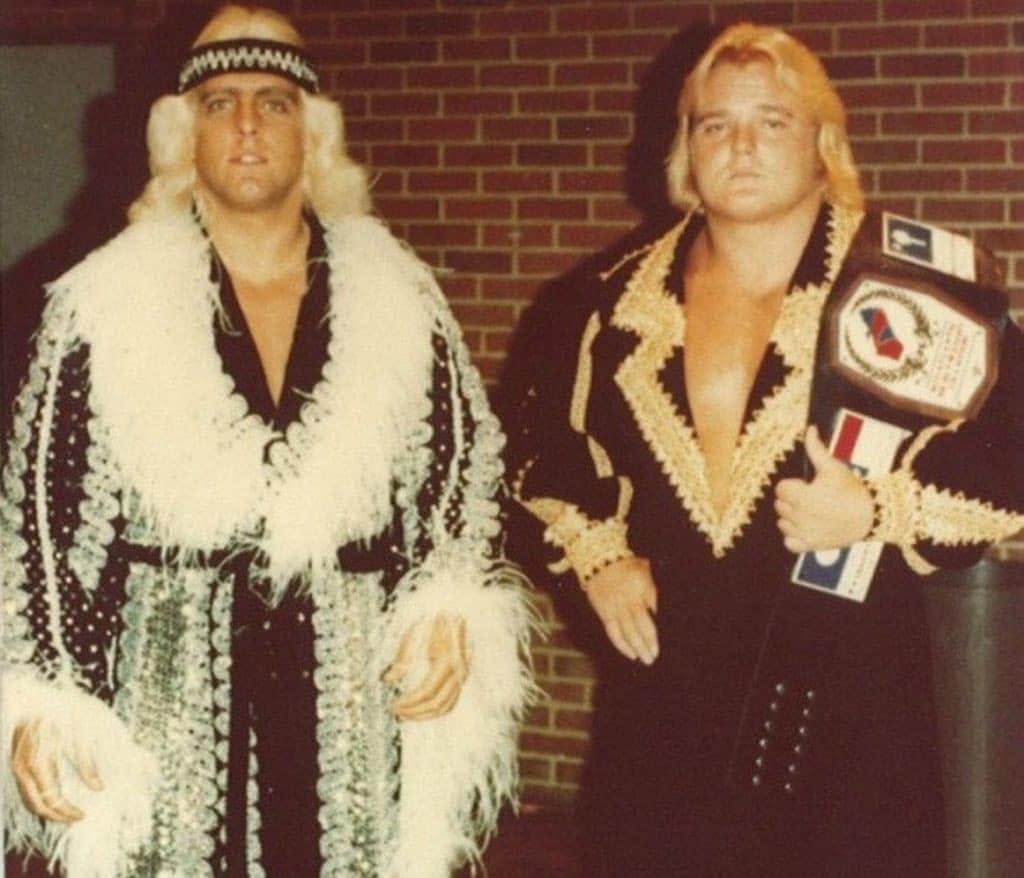
Pictured: Ric Flair and NWA Mid-Atlantic Champion, Greg Valentine
November opened with the conclusion of a television tournament for the Mid-Atlantic Tag Team Championship, which had been dormant. Dino Bravo and Tim Woods defeated Mike DuBois and Jacques Goulet in the finals to become champions. Greg Valentine won the Mid-Atlantic Television Championship from Woods early in the month in Fayetteville, then lost it to Rufus R. Jones by the end of the month. The Andersons, still recognized as Mid-Atlantic World Tag Team Champions, had left the area; the first public friction between Ric Flair and the Andersons appeared on television when Flair slapped Gene Anderson during a six-man match. That moment set up the Flair-Valentine program against the Andersons that would define the next year. Flair continued his program with Wahoo McDaniel. Paul Jones held the United States Heavyweight Championship. The territory sold on the Flair-Wahoo blood feud, on the new tag champions, on Valentine’s rise, and on weekly television that could promote the next town on local stakes alone. The world champion appeared at the end of the month (a draw with Rufus R. Jones in Columbia and a disqualification loss to Paul Jones in Greenville). The office did not require those dates to run a profitable November.
Gulas-Welch NWA Tennessee Territory
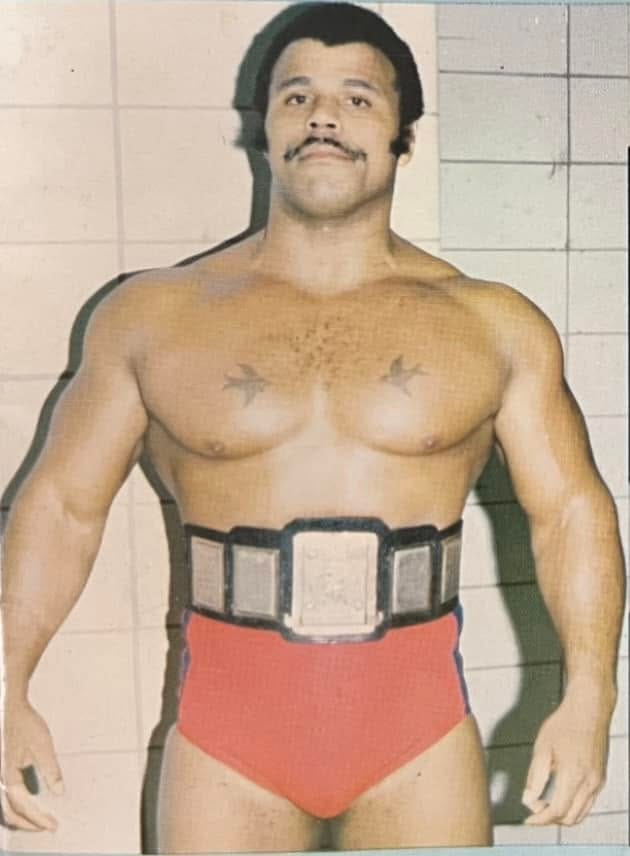
Pixtured: Rocky Johnson, NWA Southern Heavyweight Champion
Photo credit: Jim Cornette
Jerry Lawler had lost the Southern Heavyweight Championship to Rocky Johnson on November 1 at the Mid-South Coliseum. The rest of the month featured Lawler in programs with Johnson, Jackie Fargo, and others, alongside the Southern Tag Team picture involving the Bicentennial Kings (Dennis Condrey and Phil Hickerson). Tommy Rich, Bill Dundee, and Gorgeous George Jr. remained regulars. The office continued to use the Mid-South Coliseum and its television to sell local heat. The world champion had appeared in October; November ran primarily on the local Southern title and the Lawler programs. This was still the Gulas-Welch Tennessee Territory. The later Mid-America name and the Jarrett split were still months away.
Georgia Championship Wrestling
Barnett’s office continued its mix of local titles and special attractions. Mr. Wrestling II remained a top draw and defended or challenged for the Georgia Heavyweight Championship. The Andersons worked Georgia dates. Dusty Rhodes and other Florida talent appeared. On November 12, Wrestling II beat Funk by disqualification in Atlanta. The office used the world champion when the date made sense and filled the rest of the calendar with local programs, battle royals featuring Andre the Giant, and the Mongolian Stomper. Atlanta television and the circuit remained strong because the local product did not depend on constant world-title visits.
Gulf Coast Championship Wrestling
Lee Fields’ Gulf Coast Championship Wrestling continued its circuit across southern Alabama, the Mississippi coast, and the western Florida Panhandle. The flagship buildings remained the Expo Hall in Mobile and the arenas in Dothan, with secondary stops in Pensacola, Panama City, Hattiesburg, and the smaller towns that had long supported the territory. The office still carried NWA recognition and used the Alliance structure for talent exchange, but the weekly product was built on local titles and local programs.
The NWA Gulf Coast Heavyweight Championship changed hands twice during the month. Don Carson held the title entering November and lost it to Ken Lucas on November 23 in Mobile. Lucas’s reign was short; The Wrestling Pro would take the belt from him in early December. The title remained the primary local prize and continued to turn over at a pace typical of a territory that needed constant heat to keep its smaller buildings filled. The Gulf Coast Tag Team Championship and the Alabama State title also remained active, with the usual mix of veterans and mid-card talent working the undercards.
Terry Funk appeared for a world-title defense on November 23 in Mobile, beating Ken Lucas. That was the principal use of the NWA World Heavyweight Champion during the month. The rest of the calendar ran on the local Gulf Coast title, on the tag-team programs, and on the regular roster that included Ken Lucas, Don Carson, Rip Tyler, Eddie Sullivan, Sweet Daddy Banks, and the other names who had worked the territory through 1976. The office also continued its television presence, with separate tapings serving the Mobile/Pensacola and Dothan ends of the circuit.
Gulf Coast in November 1976 fits the Stage 6 pattern already visible across the Alliance. The territory remained an NWA member and could book the world champion when the date and the money justified it. It did not require the world champion to run its weekly schedule. The product sold on the Gulf Coast Heavyweight Championship, on the local tag titles, and on the established circuit of buildings that Lee Fields and his bookers had operated for years. Business was not at the level of the stronger southern offices, and the territory was already showing the strain that would lead to further decline, but it continued to function as a self-contained local operation. The world title was a useful special attraction. It was not the foundation of the month’s business.
That is the practical condition of Fragmentation: an Alliance member that still recognized the world champion, still used Alliance booking channels, and still ran a complete local calendar on its own titles and its own towns. The sale of the Gulf Coast territory was the first sign of Fragmentation, as it would be absorbed into another territory, rather than being its own geographic isolated entity.
Championship Wrestling from Florida
Eddie Graham’s office continued the Dusty Rhodes programs that had driven the territory all year. Funk worked Florida dates early in the month, beating Jack Brisco, Jerry Brisco, and Bob Backlund in separate defenses. The local Florida and Southern titles remained the weekly prizes. Gordon Solie’s television continued to sell the next week’s cards on local heat involving Rhodes, the Briscos, the Ortons, and the ongoing title picture. Florida did not need the world champion every week. It needed the consistent storytelling and the television that turned local angles into full buildings.
St. Louis (Sam Muchnick)
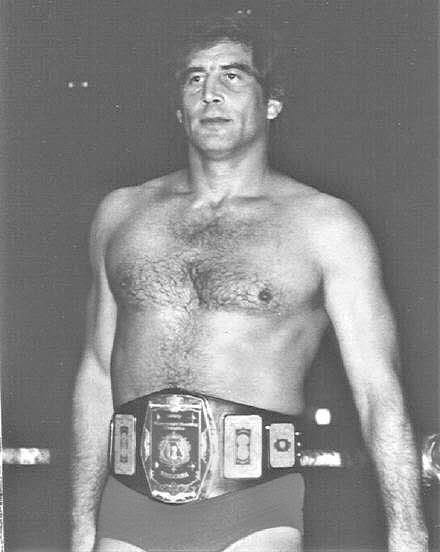
Pictured: Jack Brisco, NWA Missouri Heavyweight Champion
Muchnick’s office remained one of the more traditional Alliance strongholds. On November 26 at Kiel Auditorium, Funk beat Harley Race in a best-of-three-falls match (two falls to one) in front of roughly 9,200. Jack Brisco won the Missouri Heavyweight Championship from Bob Backlund on the same card. Superstar Billy Graham, Andre the Giant, and the usual mix of local and visiting talent filled the undercard and the “Wrestling at the Chase” television. St. Louis still used the world champion as a primary draw when he was available, but the office also sold on Race, on Brisco, and on its own television product. Attendance held in the 7,000–9,000 range for the bigger Kiel cards.
Central States (Bob Geigel’s Kansas City Office)
Bob Geigel’s Heart of America Sports Attractions office continued its regular circuit of Memorial Hall in Kansas City and the surrounding towns in Missouri, Kansas, and Iowa. Rick Gibson held the Central States Heavyweight Championship for much of the month. On November 4 at Memorial Hall, Gibson defeated Bob Brown in a three-fall match on a card that also featured Andre the Giant teaming with Harley Race. The following night in St. Joseph, Gibson and Bob Slaughter went to a double disqualification in a three-fall title match. The title picture remained active through the rest of the month, with Gibson defending against Brown and others on the circuit.
Harley Race continued as the territory’s biggest local star and occasional world-title contender. Andre the Giant appeared on multiple cards. The local tag-team division and mid-card programs involving Akio Sato, Mike George, Big Red, and the usual mix of heels filled the rest of the shows. The office sold on the Central States title, on Race’s long-standing status in the territory, and on weekly television out of Memorial Hall. The world champion was not required every week. The territory continued to operate as a self-contained Alliance member that used special attractions when available and relied on its own product the rest of the time.
Texas Offices (Dallas and Amarillo / Western States)
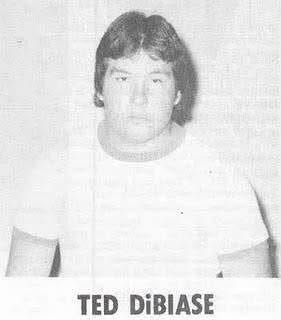
Fritz Von Erich’s Dallas office and the Funks’ Amarillo office both ran their regular circuits. In Amarillo, Dory Funk Jr., Ted DiBiase, Ricky Romero, Johnny Weaver, and the local heels (Swede Hanson, Tank Patton, the Gordmans) filled the cards. Local titles and multi-man matches with Andre the Giant sold the towns. In Dallas, Jose Lothario, Rocky Johnson, and the Texas Tag Team picture continued. The world champion worked Western States early in the month (defenses against Tank Patton and Swede Hanson) and appeared in Fort Worth. Both Texas offices had long been able to sell on local family programs and local titles. November continued that pattern.
WWWF
Bruno Sammartino remained WWWF Heavyweight Champion. The month featured multiple defenses against Stan Hansen in steel-cage and lumberjack matches in Boston, Pittsburgh, Philadelphia, and Baltimore, with mixed finishes including count-outs and Bruno victories. Stan Stasiak beat Bruno by count-out on a Madison Square Garden television taping on November 22; Bruno retained in other matches. The office continued to sell on Bruno, on Hansen, on the managers (Albano, Blassie, Grand Wizard), and on its own Northeast circuit. It recognized its own world champion and used the NWA champion only when the date and the money made sense. That separation was already more than a decade old.
AWA
Nick Bockwinkel held the AWA World Heavyweight Championship. He defended it in November against Peter Maivia (including a disqualification win and a clean win), against Verne Gagne (double count-out in Winnipeg), and against The Crusher. Ray Stevens had returned to the territory and was being integrated into the Heenan Family alongside Bockwinkel, Blackjack Lanza, and Bobby Duncum. The AWA product continued on its own titles, its own television, and its Midwest circuit. It did not depend on NWA recognition for weekly business.
Pacific Northwest (Don Owen’s Portland Office)
Owen’s circuit of Portland, Salem, Eugene, and Seattle continued with the core roster of Jimmy Snuka, Dutch Savage, Bull Ramos, Jesse Ventura, and the Royal Kangaroos. The NWA Pacific Northwest Heavyweight and Tag Team titles remained the local prizes. Jesse Ventura held or challenged for the heavyweight title in late November. The office used Alliance talent when available but sold primarily on its own programs and its own television. It had long operated as a self-contained circuit.
NWA Hollywood (Los Angeles)
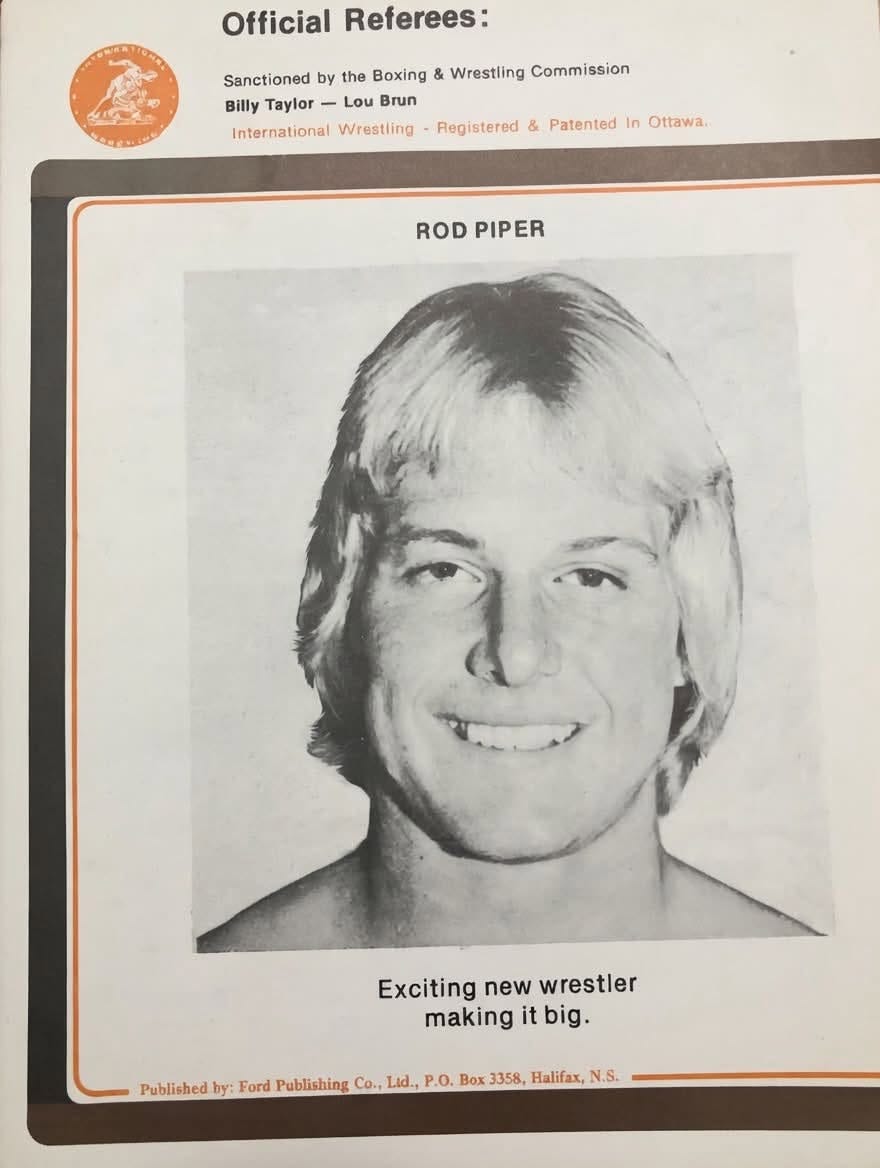
The NWA Hollywood office, based at the Olympic Auditorium in Los Angeles and running a circuit that included Bakersfield, San Diego, and other Southern California towns, continued under the local Alliance banner. Roddy Piper was already a regular presence. On November 24 at the Olympic Auditorium, Piper teamed with Scorpion I against Larry Zbyszko and Mike Adams on a card that also featured Butcher Vachon, Dr. Hiro Ota, Ken Mantell, Raul Mata, and The Hangman. The office mixed local California talent with visiting names and sold primarily on its own programs and the ethnic and regional heat that had long defined the Los Angeles territory.
The Hollywood office had operated for years with a degree of independence inside the Alliance. It recognized the NWA World Heavyweight Champion when he appeared but did not require constant world-title defenses to fill the Olympic or the secondary towns. November 1976 continued that pattern. The product remained local in its weekly construction, relying on the Olympic Auditorium as the flagship building and on television to drive the surrounding circuit. Like many Stage 6 offices, it used Alliance membership for booking access and title recognition while running a self-contained calendar.
San Francisco (Roy Shire’s Big Time Wrestling)
Roy Shire’s office, centered on the Cow Palace in Daly City, remained one of the stronger West Coast territories. The promotion had long sold on its own version of the United States Heavyweight Championship, on its tag-team division, and on the regular Friday night Cow Palace shows. Pat Patterson had been the longtime top babyface; by late 1976 the singles picture had shifted, with heel champions and rotating contenders carrying the upper card. The tag division continued to feature a mix of established teams and new arrivals.
Shire’s office had a reputation for consistent houses at the Cow Palace and for strong television coverage across Northern California. It used Alliance membership and recognized the world heavyweight champion when he appeared, but the weekly product did not depend on him. The Cow Palace remained a major draw on local heat, on the United States title, and on the promotion’s established television and battle-royal traditions. November 1976 continued that model. The territory was still profitable and self-sufficient inside the Alliance. The later decline of the San Francisco office was still several years away.
Mexico — EMLL
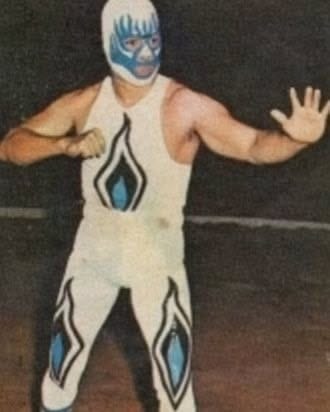
Pictured: Flama Azul
Empresa Mexicana de Lucha Libre continued its regular Friday night shows at Arena México and its secondary circuit. On November 19 at Arena México, Mano Negra defeated Fishman for the NWA World Welterweight Championship. On the same card, Ringo Mendoza beat Tony Salazar in a hair match. Other November Arena México cards featured the usual mix of national title matches, trios, and apuestas. On November 24 in Acapulco, Mil Máscaras (as IWA World Heavyweight Champion) defeated Gran Markus, and Flama Azul defended the Mexican National Lightweight title. Attendance at the major Arena México shows remained solid.
EMLL belonged to the National Wrestling Alliance and used NWA recognition for certain titles, including the World Welterweight Championship. It also operated as its own national promotion with its own star system, its own mask and hair matches, and its own television. The NWA World Heavyweight Champion was available when the office wanted him. The weekly product at Arena México did not require him. EMLL remained a self-contained Alliance member that sold primarily on its local and national titles and on the apuestas tradition.
Mexico — UWA
The Universal Wrestling Association, the rival promotion founded in 1975 by Francisco Flores and Ray Mendoza, continued to establish itself as a separate Mexican circuit. UWA ran shows in Mexico City (including Plaza de Toros el Cortijo) and on its own provincial circuit. November cards featured the Los Villanos, El Santo, Gran Hamada, Rene Guajardo, and the developing UWA roster. On November 2 in Ciudad Juárez, the office ran a multi-man battle royal and a Trofeo Halcón tournament. Other November shows included six-man tags and traditional best-of-three-falls matches.
UWA was not an NWA member. It operated outside the Alliance and built its own titles and its own star system in direct competition with EMLL. By November 1976 the promotion was still in its early growth phase, but it already demonstrated that a major Mexican office could exist and draw without Alliance recognition. The existence of two large, separate Mexican promotions—one inside the Alliance and one outside it—further illustrated the fragmentation of the territorial system. Talent and fans were no longer confined to a single Alliance structure even in markets that had long been dominated by one office.
Canada
Canada — Maple Leaf Wrestling (Toronto)

Pictured": Terry Funk, NWA World Heavyweight Champion
Frank Tunney’s Maple Leaf Wrestling continued to run Maple Leaf Gardens and the southern Ontario circuit. On November 19 at Maple Leaf Gardens, Terry Funk defended the NWA World Heavyweight Championship against Dominic DeNucci. The card also featured the Fabulous Moolah defending the NWA World Women’s Championship against Joyce Grable, Tiger Jeet Singh, The Sheik, Dewey Robertson, Billy Red Lyons, and the usual mix of local and touring talent. The office mixed local programs with special attractions. It used the world champion when the date made sense and filled the rest of the calendar with its own talent and the working relationship with Detroit’s Sheik. Toronto remained an Alliance member that could draw on local heat and selective use of the champion.
Canada — Stampede Wrestling (Calgary)
Stu Hart’s Stampede Wrestling ran its Alberta circuit out of Calgary. Specific November results are thinner in available records than some other territories, but the office continued its regular pattern of local titles (North American Heavyweight and others) and programs featuring the Hart family, Gil Hayes, and the usual mix of Canadian and imported talent. Andre the Giant had worked the territory earlier in the year. The office used Alliance talent when available but sold primarily on its own product and its own buildings. Stampede had long operated with a degree of independence inside the Alliance; November 1976 continued that pattern.
Canada — Vancouver / Pacific Northwest Canadian Office
The Vancouver office (NWP) ran its own circuit separate from Don Owen’s Portland territory. Cards in November featured local programs and the NWA Vancouver Canadian Tag Team Championship. On November 8, John Quinn and Kurt von Hess defended the Canadian Tag Team titles against the Wild Samoans. The roster mixed local talent with visiting names such as Gene Kiniski, John Tolos, Buddy Rogers, and others. The office used Alliance membership for talent exchange and title recognition while running its own weekly product. Vancouver, like Portland and Stampede, demonstrated that Canadian offices could remain Alliance members while operating largely on local heat and selective use of outside attractions.
Japan — All Japan Pro Wrestling: Super Power Series
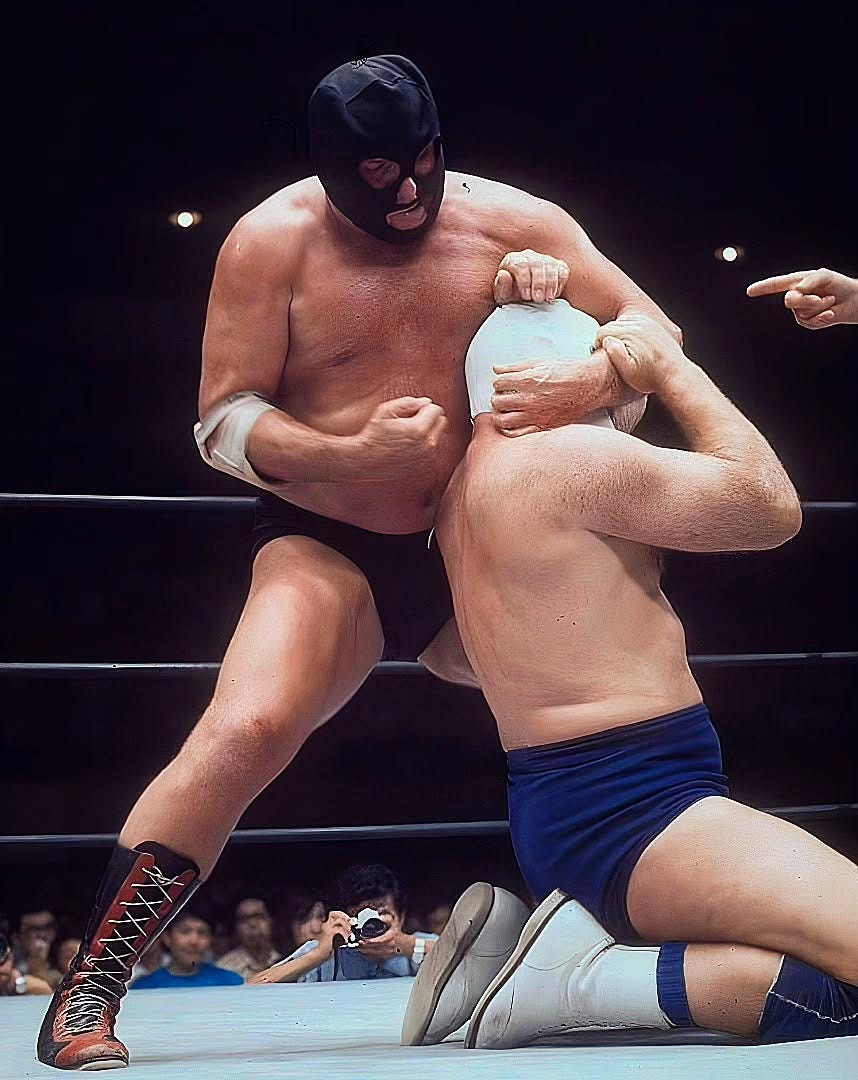
Pictured: The Spirit (Killer Karl Kox) handling The Destroyer (Dick Beyer)
All Japan opened its Super Power Series on November 19 at Korakuen Hall in Tokyo and ran it through the end of the month and into early December. The series followed the standard All Japan pattern of smaller and mid-sized halls through the first stretch, with larger buildings later. Foreign talent included Abdullah the Butcher, the Destroyer, Dick Murdoch, Leo Burke, Steve Strong, The Spirit, Bill Robinson, and Chris Taylor. The Japanese side featured Giant Baba, Jumbo Tsuruta, Kintaro Oki, Kim Duk, Great Kojika, Motoshi Okuma, and the younger roster (Fuchi, Onita, Momota, etc.).
Baba and Tsuruta, who had lost the NWA International Tag Team titles to Oki and Kim Duk on October 28, worked through the series building toward a rematch. On November 30 in Sendai, Tsuruta (as NWA United National Champion) went to a draw with Bill Robinson in a best-of-three-falls match. Baba defended the PWF Heavyweight Championship against The Spirit during the tour. The Destroyer worked programs with Abdullah and others. The series did not feature the NWA World Heavyweight Champion. It sold on the ongoing International Tag Team fallout, on Baba and Tsuruta as the local stars, on the PWF and United National titles, and on the foreign imports. Television continued on Nippon TV. The Super Power Series showed All Japan operating as a self-contained office that used Alliance recognition for certain titles and for talent exchange but did not require the world heavyweight champion to fill its buildings.
Japan — New Japan Pro Wrestling: Toukon Series II
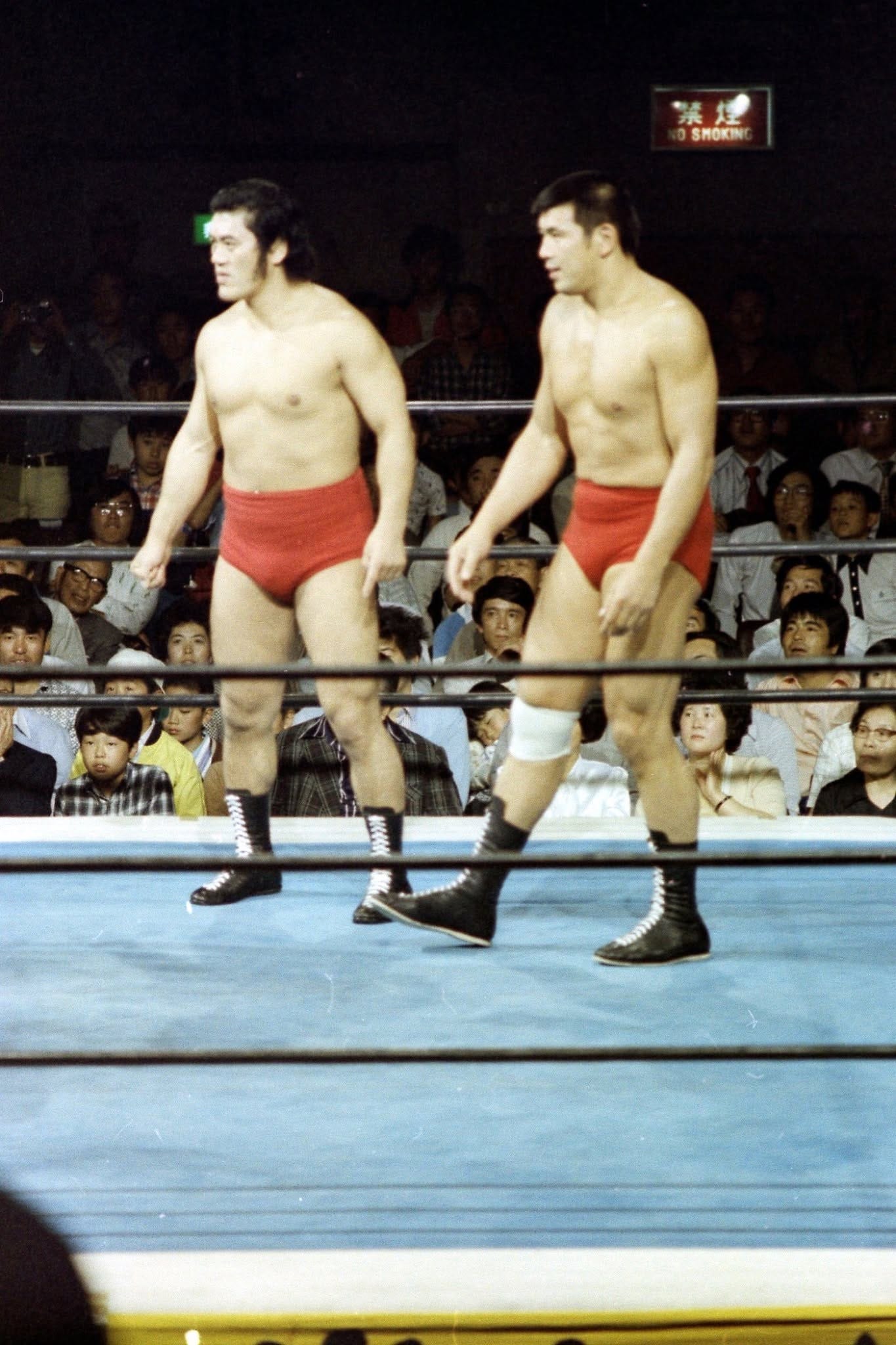
Pictured: Seiji Sakaguchi and Strong Kobayashi
New Japan ran Toukon Series II throughout November. The tour began at the end of October and continued across Japan into early December, covering towns from the Tokyo area through the Kansai region and down to Kyushu. Antonio Inoki remained the central figure, working programs against Pat Patterson, Larry Hennig, and Ricky Hunter. Seiji Sakaguchi and Strong Kobayashi held the Asia Tag Team Championship (won in early October) and the NWA North American Tag Team titles. Tiger Jeet Singh held the Asia Heavyweight Championship.
Typical cards mixed Inoki in singles and tags against the American imports, Sakaguchi and Kobayashi in tag matches, and mid-card work with the Japanese roster (Kantaro Hoshino, Osamu Kido, and others). On November 30 in Kitakyushu, Inoki and Sakaguchi defeated Hennig and Patterson in a best-of-three-falls tag match. The office continued under the 1975 convention restrictions that limited its access to the NWA World Heavyweight Champion. It sold on Inoki’s NWF title, on the Asia titles, on the North American Tag titles, and on the American imports. Andre the Giant had been the major special attraction earlier in the fall; November relied more on the mid-card American talent and Inoki’s established programs. Television was carried on NET. New Japan operated as a self-contained business that used Alliance membership for booking access while running its own product.
Business Analysis
November 1976 shows Stage 6 as a set of working local businesses that still belonged to one Alliance. The stronger offices—Mid-Atlantic, Tennessee, Georgia, Florida, St. Louis, Texas, WWWF, AWA, Portland, Toronto, EMLL, and the Japanese promotions—sold primarily on local titles, local feuds, and local television. The world heavyweight champion remained a useful special attraction that could be booked when the dates and the money aligned. He was no longer the only reason a building filled. The weaker offices continued to show the strain of an arrangement in which the center still existed but was no longer required for weekly profitability.
The practical result was that local bookers had increasing freedom to protect their top stars, change their own titles, and build their own programs without waiting for the Alliance booker. The world title still drew when it appeared. Many of the same buildings would have drawn without it. That is the business reality Stage 6 had already reached by the end of 1976.
Thank You for Watching and Listening
I’m Tony Richards, Pro Wrestling Historian, Author and Storyteller. I share pro wrestling historical items in each issue of the Time Tunnel Pro Wrestling History Newsletter and each episode of our podcast show. Thanks for your support! If you enjoy my information on select events, matches and insights, please share with folks you think might like to be a subscriber!
Remember, Premium subscribers get access to exclusive and special content such as some special issues including a multi-part deep dives on wrestling territories, wrestler bios and championship title histories, special audio and video interviews on territory pro wrestling and more available in the Pro Wrestling Time Tunnel for Premium Subscribers. Being a Premium Subscriber also means you support me in my efforts to document Pro Wrestling History through my research, writing, books, vidoes and podcasts. And…I have something very special planned for our Premium Subscribers on the Podcast side of things in 2026! Details soon here in the Pro Wrestling Time Tunnel.