


Today’s Favorite Quote: Borrowing too much money is like wetting your bed at night. At first all you feel is release & relief, but very quickly comes the cold, awful discomfort of reality - Elizabeth Gilbert
Happy Birthday to those who have passed on and to those great wrestlers still with us:
In Memoriam:
Wladek Zabysko 1891
Wild Red Berry 1906
Rex Mobley 1906
Happy Birthday:
(none)
RIP Memorial: We stop & remember those who have passed on this day and gave themselves to the business for us, the fans. We salute you and thank you.
George Bothner 11-20-1954 at the age of 87

Frank Sexton 11-20-1991 at the age of 81

JC Dykes 11-20-1993 at the age of 67
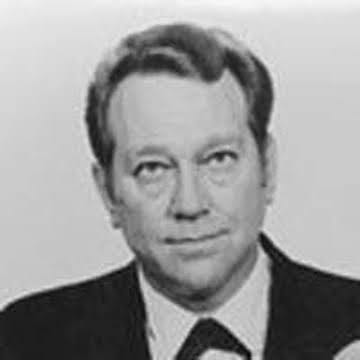
Stanley Blackburn 11-20-1997 at the age of 80
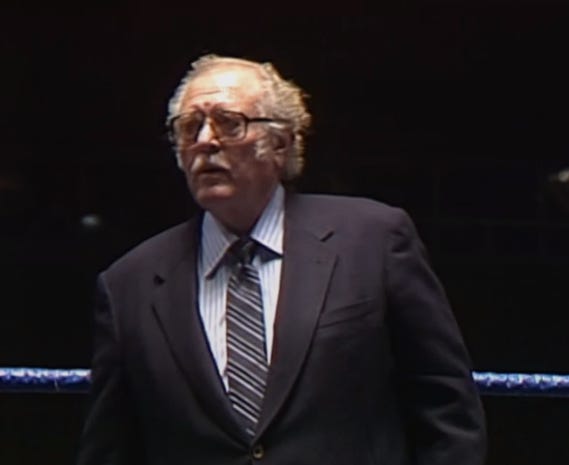
Billy Goelz 11-20-2002 at the age of 84

The Life and Career of Johnny Barend
The Flamboyant Heel Who Became a Hawaiian Cultural Icon
John R. Barend, known throughout professional wrestling as “Handsome” Johnny Barend, was one of the most colorful and memorable performers of the territorial era. Born on March 27, 1929, in Rochester, New York, he wrestled for nearly a quarter-century, from his 1949 debut until a leg injury forced his retirement in 1972. Billed at 6 feet 1 inch and 230 pounds, Barend succeeded as both a singles competitor and a prolific tag-team specialist. His greatest fame came in Hawaii’s 50th State Big Time Wrestling, where his eccentric heel persona, theatrical interviews, and outlandish entrance style made him a household name and a television phenomenon.
Barend began wrestling as an amateur at the age of eight and continued through high school. After graduating from Thomas Jefferson High School in Rochester in 1944, he joined the United States Navy during World War II. While serving, he dominated the 19th Fleet in wrestling competition, was placed in charge of his commander’s gym, and received an invitation to pursue the Olympics. He declined and instead took his discharge to turn professional.
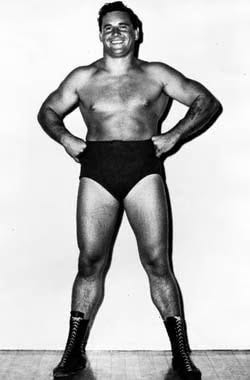
Trained by Buffalo promoter and wrestler Ed Don George, Barend made his professional debut on November 1, 1949, defeating Faro Rinaldi. Early newspaper accounts described the “apple-cheeked” young wrestler from Rochester as an immediate crowd favorite. In the early 1950s he established himself in the Northeast before heading to California, where he teamed with Mexican-American star Enrique Torres. The pair captured the San Francisco version of the NWA World Tag Team Championship in 1955.
By the mid-to-late 1950s, Barend transitioned into a heel role and adopted the “Handsome” moniker, complete with vanity props such as a mirror at ringside. He formed a successful and hated tag team with Gene Dubuque, who wrestled as the Magnificent Maurice. Managed by Ernie Roth (then known as Mr. Kleen, later the Grand Wizard), the duo wore top hats and capes and won tag-team titles in Ohio, Indiana, and Detroit. Their act mixed arrogance with theatrical flair and drew strong heat across the Midwest.
In 1962–1963, Barend partnered regularly with Buddy Rogers in the Capital Wrestling Corporation, the precursor to the World Wide Wrestling Federation. On July 5, 1962, they won the United States Tag Team Championship in Washington, D.C., holding it for 245 days. Barend also captured the WWWF United States Heavyweight Championship twice in 1963, trading the title with Bobo Brazil in matches in Philadelphia and Baltimore. After Rogers lost the world title to Bruno Sammartino, Rogers and Barend defeated Sammartino and Brazil in a high-profile Madison Square Garden match. Barend later spoke critically of Vince McMahon Sr.’s business practices and was effectively blacklisted from the Northeast promotion for a time.
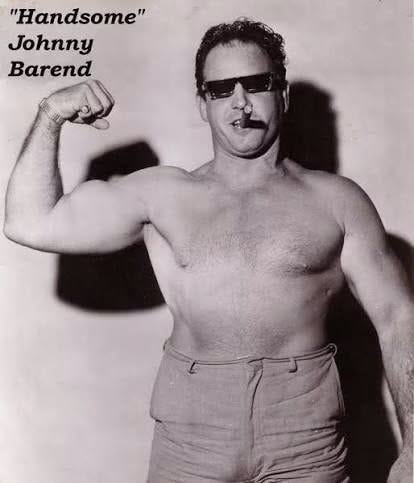
Barend’s career reached its artistic and commercial peak in Hawaii. He first appeared there in September 1955 under promoter Al Karasick, teaming with Sandor Kovacs to win the NWA Hawaii Tag Team Championship. He returned in 1964 under Ed Francis and quickly became the territory’s most distinctive character. Entering the ring in a top hat, sunglasses, knee-high boots, and an unlit cigar, his interviews with host Francis (and sometimes Lord James Blears) were legendary. Barend coined the phrase “Win if you can, lose if you must, but always cheat,” which later influenced Jesse Ventura’s own persona. Despite (or because of) the lunacy, he became a major draw and a genuine local celebrity.
The segments typically began in a darkened studio. Promoter and host Francis (occasionally Lord James “Tally Ho” Blears) would walk toward an upright coffin, with cigar smoke visibly rising from a cross-cut in the lid. Francis would announce something along the lines of “We’re going to go talk to Handsome John, and see what he has to say,” knock, and wait as the door slowly opened. Barend would then emerge (or begin speaking from within) amid maniacal laughter, often accompanied by the Batman theme or the soundtrack from Those Magnificent Men in Their Flying Machines (a touch suggested by Blears to underscore the character’s off-kilter personality).
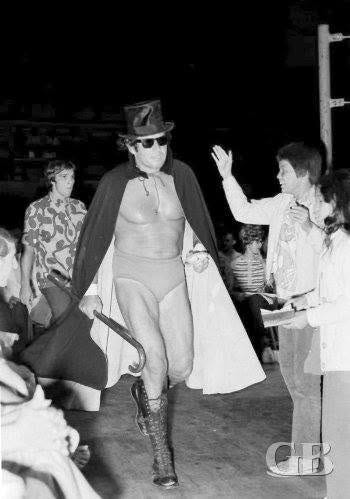
Barend appeared in his full “Handsome Johnny” regalia: top hat, dark sunglasses, knee-high boots, and an unlit cigar. His voice was gravelly and deliberate. The standard opening was a drawn-out “Good evening, Mr. Francis” or a more insistent “Mister Francis! Mister Francis!” before he launched into the promo.
The interviews were deliberately digressive and unhinged. Barend would often open what looked like a Mother Goose book of fairy tales and begin ranting about “yellow rats”—a recurring, coded way of referring to opponents such as Ripper Collins, The Sheik, Maddog Mayne, and others. He told fractured stories about chasing bugs through the woods or other nonsensical adventures that only loosely (if at all) connected to the upcoming match. The point was less to sell a specific bout and more to create an atmosphere of controlled chaos and unpredictability.
Nick Bockwinkel, who wrestled extensively in the territory, described it as a “coo-coo bit.” He recalled Francis frequently glancing at the camera as if to say, “Are you getting this? This is as much to me as it is to you.” Curtis Iaukea later observed that Barend’s “bubble shifted to one side somewhere along the way and never came back straight.” Bill Watts called the Hawaii interviews among the best he ever saw and singled out Francis as the greatest straight man in the business.
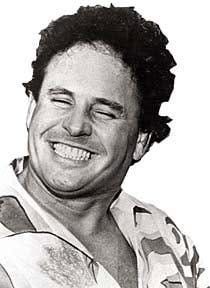
The signature line that emerged from this period—“Win if you can, lose if you must, but always cheat”—encapsulated the cheating-heel philosophy while fitting the character’s gleeful amorality. Barend was also known locally as “Prince Pupule” (Hawaiian for “Crazy Prince”).
These segments were appointment viewing. Airing in the late-afternoon window (roughly 4:30–6 p.m.), they routinely pulled about 50 percent of the Honolulu television audience. Fans packed the Civic Auditorium and later the Honolulu International Center in part because they wanted to see what the man from the coffin would do in person. The interviews amused some viewers and unsettled others, but they were consistently effective at generating interest.
Even as a committed heel, Barend became a genuine local celebrity—comparable in recognition, according to contemporary accounts, to figures like Don Ho or Hawaii Five-O star Jack Lord. Hawaiian fans who grew up with the show still recall the coffin, the laughter, the “yellow rats,” and the “Mister Francis” growls decades later. The format also helped establish the locker-room/backstage interview style that later spread across the territories; Blears is often credited with refining and popularizing that interview structure in Hawaii.
No complete, widely circulated transcripts or high-quality surviving footage of the classic coffin segments have surfaced in public archives, but the consistency of eyewitness accounts from wrestlers (Bockwinkel, Watts, Iaukea, Beauregarde) and local fans leaves little doubt about their content and effect. They remain one of the clearest examples of a territorial performer fully committing to an eccentric persona and making it the centerpiece of a promotion’s television product. In a era of more straightforward promos, Barend’s Hawaii interviews stood out for their theatricality, deliberate absurdity, and ability to turn a villain into a must-see local institution.
In his long Hawaii portion of his career, he won the NWA Hawaii Heavyweight Championship twice, the North American Heavyweight Championship (Hawaii version) multiple times, the Hawaii version of the United States Heavyweight Championship, and the NWA Hawaii Tag Team Championship seven or eight times with partners including Sandor Kovacs, Ripper Collins, Hans Mortier, Jim Hady, Magnificent Maurice, and Billy Robinson. He challenged NWA World Heavyweight Champion Dory Funk Jr. on more than one occasion. Fans across the islands packed the Civic Auditorium and later the Honolulu International Center to see the unpredictable heel.
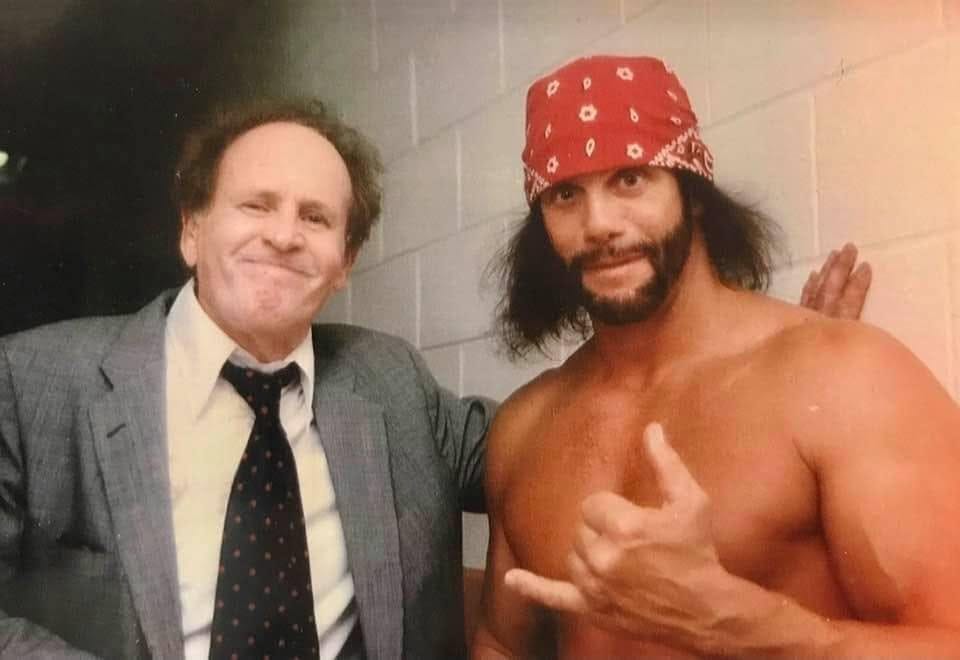
Pictured: Johnny Barend and Randy Savage. In the late 60’s, the Poffo family lived in Hawaii when Johnny Barend turned on ‘Gentleman’ Jim Hardy which made a strong impression on a young Randy Poffo
His personal life became intertwined with the territory. In 1967 he met Annie (Anita) Lum, a local high-school senior, while she walked the beach in Waikiki. They married in the ring at the Honolulu International Center that year in front of a large crowd, with wrestler Jim Hady serving as best man. After the ceremony, Barend and Hady teamed later in the evening while Annie sat at ringside. The couple remained together until Barend’s death, nearly 44 years later. They had no children but shared a quiet life with pets, including a black Labrador named Joy.
A severe leg injury ended Barend’s active career in 1972. He returned to the Rochester area, settling in Avon, New York, where he and Annie operated rental cottages and lived a low-profile existence far removed from the flamboyant “Handsome Johnny” character. In later interviews he spoke matter-of-factly about the physical toll of the business—hard rings with little padding, long hours, and the contrast with modern wrestling—while remaining protective of old friends such as Buddy Rogers. He died peacefully in his sleep on September 20, 2011, at age 82, of natural causes, having refused hospitalization as suggested by his doctor.
Johnny Barend’s legacy rests on more than title reigns. He was a master of character work at a time when territorial wrestling thrived on distinctive personalities. In Hawaii he proved that a committed, slightly unhinged heel could become both a top draw and a beloved local figure. His coffin interviews, catchphrase, and theatrical presentation influenced later generations of eccentric performers. For those who watched 50th State Wrestling in the 1960s and early 1970s, “Handsome” Johnny Barend remains one of the most vivid characters the territory ever produced—an apple-cheeked Rochester kid who transformed himself into one of professional wrestling’s most memorable villains.
ONE Thing I Learned Today About Jess McMahon
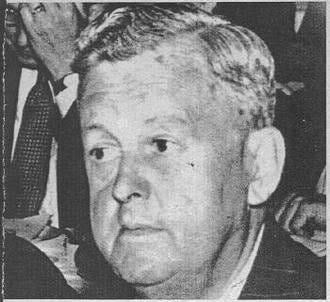
Before he became known as a boxing and wrestling promoter, Jess McMahon (with his brother Edward) founded and operated the New York Lincoln Giants, a top Black baseball team in the early Negro Leagues.
In 1911 they launched the Lincoln Giants, which played at Olympic Field in Harlem and featured several of the best Black players of the era (many recruited from Chicago and Philadelphia clubs). The team dominated both Black and white opponents for three seasons. After selling the club in 1914 due to financial issues, the brothers kept many of the player contracts and ran a successor team, the Lincoln Stars, for a few more years.
While touring with the squad in 1915, Jess and Edward also traveled to Havana, Cuba, where they co-promoted the heavyweight title fight between then-champion Jack Johnson and Jess Willard (a scheduled 45-round bout that Willard won by knockout in the 26th).
Thank You for Watching and Listening
I’m Tony Richards, Pro Wrestling Historian, Author and Storyteller. I share pro wrestling historical items in each issue of the Time Tunnel Pro Wrestling History Newsletter and each episode of our podcast show. Thanks for your support! If you enjoy my information on select events, matches and insights, please share with folks you think might like to be a subscriber!
Remember, Premium subscribers get access to exclusive and special content such as some special issues including a multi-part deep dives on wrestling territories, wrestler bios and championship title histories, special audio and video interviews on territory pro wrestling and more available in the Pro Wrestling Time Tunnel for Premium Subscribers. Being a Premium Subscriber also means you support me in my efforts to document Pro Wrestling History through my research, writing, books, vidoes and podcasts. And…I have something very special planned for our Premium Subscribers on the Podcast side of things in 2026! Details soon here in the Pro Wrestling Time Tunnel.