


Today’s Favorite Quote: Patience is a necessary ingredient to genius - Benjamin Disraeli
Happy Birthday to those who have passed on and to those great wrestlers still with us:
In Memoriam:
Dara Singh 1928
Ted Turner 1938
Ricky Gibson 1952
Miss Elizabeth Huelette 1960
Happy Birthday:
Wayne Hart (73)
RIP Memorial: We stop & remember those who have passed on this day and gave themselves to the business for us, the fans. We salute you and thank you.
(none)
60 Year Flashback
November 19th, 1966
Mad Dog Vachon defeated Dick The Bruiser to re-capture the AWA World Heavyweight Title and Belt in Omaha, Nebraska
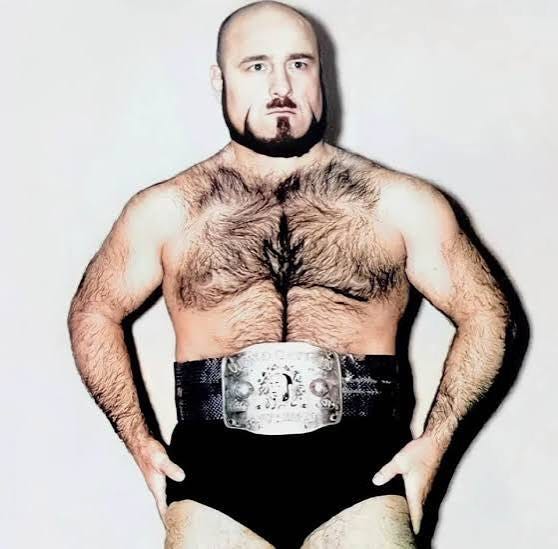
One week after Dick the Bruiser stunned Omaha by taking the AWA World Heavyweight Championship from Mad Dog Vachon, the same two men met again at the Civic Auditorium on November 19, 1966. Vachon left with the title once more, winning a best-of-three-falls match two falls to one in 20 minutes and 5 seconds. Bruiser’s reign lasted exactly seven days.
The card drew a reported 2,165 fans. The undercard featured Luke Brown over Luke Graham, Jake Smith over Stan Pulaski by disqualification, and a tag match in which Ron Reed and Tim Woods defeated Dale Lewis and Haru Sasaki. The main event was the only match that mattered to the territory’s title picture.
Bruiser, the gravel-voiced brawler and co-owner of the Indianapolis-based World Wrestling Association, took the first fall in just 4 minutes and 28 seconds. Vachon answered by capturing the second fall at the 13-minute, 22-second mark of the overall match. In the decisive third fall the Canadian heel closed it out, securing the 2–1 victory and the title change. We don’t have the specific finishing hold or sequence in any of the three falls; the match is documented only by its outcome, total time, and the timed split of the first two falls. The pattern itself is clear: an early Bruiser advantage, a Vachon response, and a final fall that restored the championship.
The brevity of Bruiser’s reign was typical of the era’s booking realities. Vachon was a proven, heat-drawing heel whose longer runs moved tickets across the AWA’s Midwest circuit. A multi-week reign by the co-promoter of a partner territory carried political risk under Verne Gagne’s control of the AWA. The one-week turnaround guaranteed a hot rematch gate in a reliable Omaha town while restoring the title to the figure the promotion preferred as its primary villain. Some contemporary notes treated Bruiser’s November 12 victory as recognized primarily in Omaha, yet official AWA title lineages record both changes as legitimate.
Vachon’s fifth AWA World Heavyweight Championship reign began that night and ran 99 days. He defended the title into early 1967 before dropping it to Verne Gagne on February 26, 1967, in St. Paul. Bruiser returned to his dual role as WWA champion and frequent AWA tag-team partner with The Crusher; the two sides would collide again in the late 1960s when the Vachon brothers took the AWA World Tag Team titles from Bruiser and Crusher.
The November 19 rematch closed a short, sharp chapter. For one week the AWA’s top prize sat on the waist of “The World’s Most Dangerous Wrestler.” Seven days later the territory’s most vicious heel had it back after a documented 2–1, 20-minute-and-5-second struggle, and the booking machine of 1960s Midwest wrestling rolled on exactly as it was designed to do.
An Analysis of Verne Gagne and Wally Karbo’s Booking Philosophy in the 1960s
The November 1966 AWA World Heavyweight Championship sequence—Dick the Bruiser’s seven-day reign followed by Mad Dog Vachon’s immediate reclaim in the same Omaha building—is a textbook case of territorial-era booking politics under Verne Gagne.
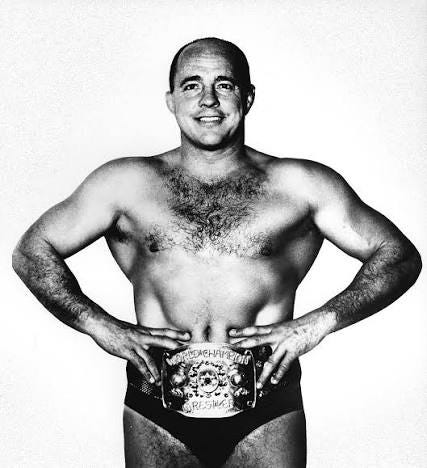
Pictured: Verne Gagne, AWA World Heavyweight Champion
Gagne, one of the AWA’s owners and primary babyface, treated the World Heavyweight Championship as an instrument of promotional control rather than a pure competitive prize. From the promotion’s 1960 founding, he held the title for the majority of its history, often in long reigns that positioned him as the credible athletic hero. When he did drop it, the recipients were usually heels he trusted to carry heat without threatening the overall structure, or figures who could be returned to the role of challenger quickly. Mad Dog Vachon fit the preferred model. Across five reigns between 1964 and 1967 he accumulated roughly 776 days as champion, serving as the territory’s dominant monster heel. His combination of vicious in-ring work, strong interview heat, and reliability as a draw made him safe for extended runs. The title could sit on him for months while Gagne remained the top babyface contender and the business stayed orderly.
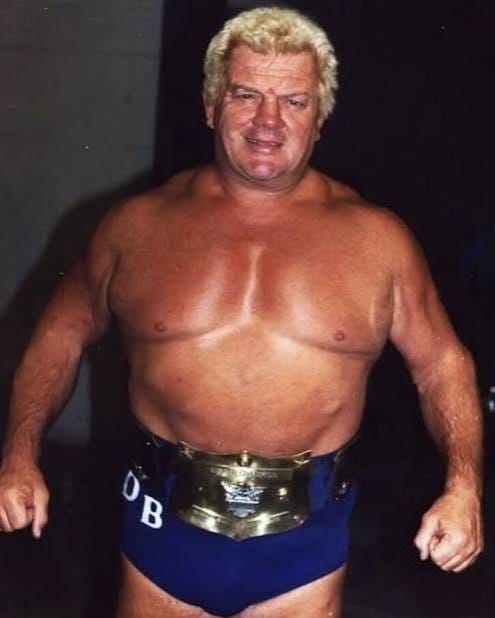
Pictured: Dick The Bruiser, WWA World Heavyweight Xhampion
Dick the Bruiser occupied a different category. By 1966 he was co-owner of the Indianapolis-based World Wrestling Association, which operated under a working agreement with the AWA. The arrangement allowed talent exchange, mutual title recognition in overlapping markets, and shared use of stars such as Bruiser and The Crusher in AWA cities. It expanded the AWA’s reach into Indiana and strengthened both promotions’ drawing power, especially in tag-team main events. It did not, however, place Bruiser inside Gagne’s inner circle of fully controlled talent. A prolonged AWA singles reign by a partner promoter carried structural risk: the belt could be used to elevate the WWA, complicate booking across territories, or reduce Gagne’s leverage. Short, local switches avoided that problem.
The Omaha sequence followed the established pattern. Bruiser defeated Vachon on November 12 in a best-of-three-falls match at the Civic Auditorium, giving the local crowd a clear “upset” and giving Bruiser a documented world-title win that bolstered his status as a top singles attraction. One week later, on November 19 in the same building, Vachon regained the title 2–1 in 20 minutes and 5 seconds (Bruiser took the first fall in 4:28; Vachon took the second at 13:22 and the third). The rapid return accomplished several political objectives at once: it protected Vachon’s long-term heat, delivered a strong rematch gate in a reliable AWA town, and limited Bruiser’s exposure as champion to a single week.
Some contemporary notes treated the November 12 change as recognized primarily in Omaha; official lineages record both switches, but the speed of the reversal left little room for the title to travel or be defended widely under Bruiser. Vachon’s fifth reign then ran 99 days until Gagne took it back on February 26, 1967, in St. Paul—another controlled transfer.
Verne Gagne’s control of the AWA World Heavyweight Championship was systematic rather than opportunistic. From the promotion’s 1960 launch until its decline, he treated the title as both the central booking tool and the primary guarantee that the business stayed under his direction. The pattern is visible across three decades.
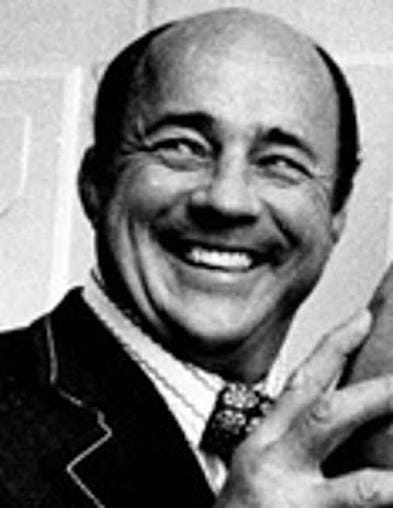
Gagne held the title ten times for a cumulative total that far exceeded any other champion. Early on he used the belt to establish the AWA’s legitimacy after the split from the NWA: he was awarded the championship when a challenge to NWA World Champion Pat O’Connor failed to materialize within the allotted window, then defended it as the inaugural AWA World Champion andcredible athletic hero. Subsequent long reigns—most notably the one that began in August 1968 and ran for years—kept the top prize on the promoter-owner while still allowing periodic drops that generated heat and rematch gates. The structure was simple: Gagne remained the default babyface champion; challengers were rotated through; and the title returned to him or to a heel he fully trusted whenever the short-term booking objective was complete.
Short transitional reigns were the most common mechanism for outsiders or non-core talent. Mad Dog Vachon’s first win over Gagne in May 1964 lasted roughly two weeks before the title returned. Dick the Bruiser’s November 1966 reign lasted exactly seven days before Vachon reclaimed it in the same Omaha building. Other brief switches followed the same logic. These runs gave the challenger a documented victory and a local drawing boost without allowing the title to travel extensively, be defended on another promoter’s terms, or become a permanent fixture outside Gagne’s circle.
In the territorial system a partner such as Bruiser (who ran the Indianapolis WWA under a working agreement) could receive a high-profile win; he could not keep the AWA’s top title for a multi-month run that might complicate talent exchange or dilute Gagne’s leverage.
Longer reigns were reserved for figures whose interests aligned with the promotion’s. Vachon accumulated approximately 776 days across five reigns in the mid-1960s because he functioned as a reliable, high-heat heel who sold tickets without threatening the overall structure. Later, Nick Bockwinkel held the title for extended periods in the 1970s and early 1980s under similar conditions: skilled, cooperative, and content to work within the AWA’s hierarchy. The contrast is instructive. Talent that could be counted on to drop the belt on schedule and continue working the territory received meaningful runs; talent that carried independent leverage or outside commitments did not.
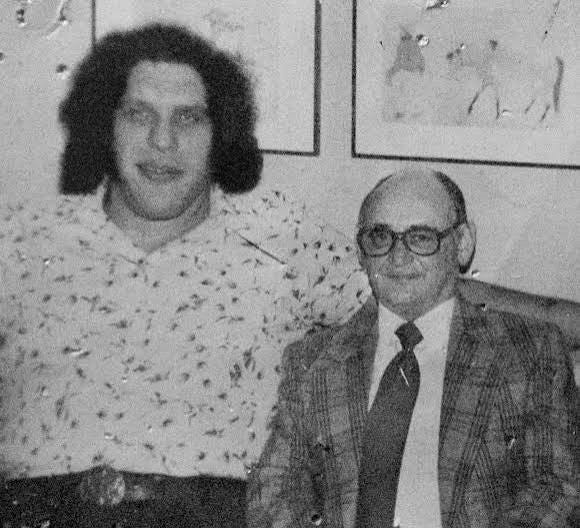
Pictured: Wally Karbo with Andre The Giant
When that control was challenged in later years, Gagne’s tactics became more overt. In the early 1980s Hulk Hogan repeatedly “won” the title on Super Sunday cards only for the decisions to be reversed on technicalities—the classic “dusty finish” that preserved the belt for Bockwinkel while still delivering a hot crowd reaction. In 1986 Stan Hansen, after winning the title, refused to drop it to Bockwinkel on Gagne’s terms, took the belt to Japan, and eventually returned a damaged version. Gagne stripped him and awarded a replacement belt to Bockwinkel. Both episodes illustrate the same priority: the championship remained an asset of the promotion, not a prize that could leave the circle of people Gagne trusted to return it.
Working agreements with other territories were managed the same way. The AWA–WWA relationship allowed Bruiser and Crusher to appear regularly and hold AWA tag titles, but the singles World Heavyweight Championship stayed under tighter control. The title could be defended in partner markets; it was not left in the hands of a partner promoter for long. This preserved the AWA’s ability to book the champion as needed across its Midwest circuit while still benefiting from the shared talent pool.
The cumulative effect was a championship that functioned as an extension of the promoter’s office. Gagne could create the appearance of competition, generate rematch interest, and reward cooperative talent without ever ceding lasting control of the belt that defined the territory’s top spot. The seven-day Bruiser reign in 1966 is one clear data point; the pattern of short drops, trusted long-term holders, dust finishes, and outright strips when necessary is the broader system that made those individual decisions predictable.
This approach was consistent with broader AWA practice. Early Vachon reigns had also been short before Gagne reclaimed the belt. Later decades showed the same reluctance to leave the title outside the preferred circle for long: dust finishes that denied Hulk Hogan a clean win in the early 1980s, and the 1986 episode in which Stan Hansen refused to drop the belt to Nick Bockwinkel and damaged it rather than return it on Gagne’s terms.
In the territorial system the promoter who owned the territory ultimately decided who held its highest title and for how long. The 1966 Bruiser-Vachon sequence illustrates the rule in action: a partner promoter could receive a high-profile win and a documented championship reign, but the AWA World Heavyweight Championship itself remained under Gagne’s operational control and was returned to the trusted heel within a week.
A Quick Comparison of AWA, WWA, WWF and NWA Booking Philosophies
AWA, WWA, NWA, and WWWF operated under four distinct booking philosophies in the territorial era, shaped by ownership structure, geography, and what each promotion treated as its primary asset.
AWA (Verne Gagne/Wally Karbo, Minneapolis, a territory booking office)
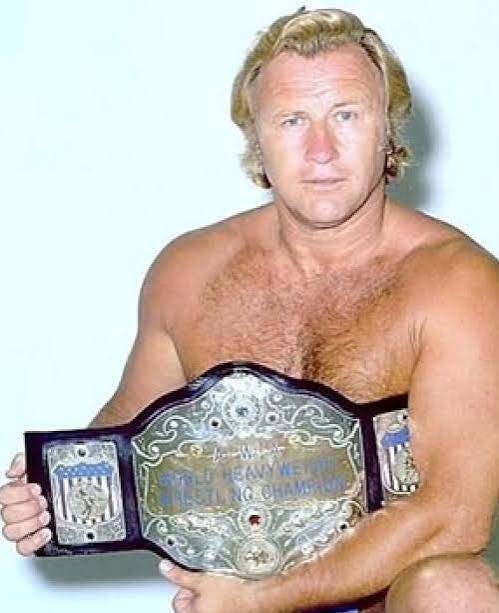
Pictured: Nick Bockwinkel, AWA World Heavyweight Champion
Gagne treated the AWA World Heavyweight Championship as an extension of the promoter’s office. He held it ten times and preferred long runs for himself or for fully trusted heels (Mad Dog Vachon across five reigns totaling roughly 776 days in the mid-1960s; later Nick Bockwinkel). Short transitional reigns were the standard tool for anyone outside that circle: Vachon’s first win lasted about two weeks before Gagne reclaimed it; Dick the Bruiser’s November 1966 win lasted exactly seven days before Vachon took it back in the same Omaha building. False finishes, reversals and outright strips reinforced the same rule—the title stayed under promotional control. Working agreements allowed talent exchange and mutual recognition of secondary titles, but the AWA World Heavyweight Championship itself remained tightly gated. The style emphasized athletic credibility and technical wrestling, with Gagne as the default babyface hero.
WWA (Dick the Bruiser / Wilbur Snyder, Indianapolis, a territory booking office)
The WWA was a promoter-owned territory that functioned partly as a partner and partly as a farm circuit for the AWA. Bruiser crowned himself WWA World Heavyweight Champion repeatedly (13 reigns) and used the title as a local drawing tool while remaining available for AWA dates. Booking was more straightforward and less layered than the AWA’s: the owner was the top star, tag-team main events with Crusher were reliable, and the working agreement supplied talent without requiring the WWA to surrender control of its own belt. When the AWA and WWA coordinated (as in the 1966 Vachon–Bruiser series), the WWA accepted short AWA singles runs for its principal rather than long ones. The philosophy was practical regional promotion—protect the home territory’s top attraction and use the partnership for volume and heat—rather than the AWA’s more systematic national-style title management.
NWA (cooperative of territories, a central booking office in St. Louis under Sam Muchnick to control the World Title for a collection of booking offices with a Championship Committee selected champion)
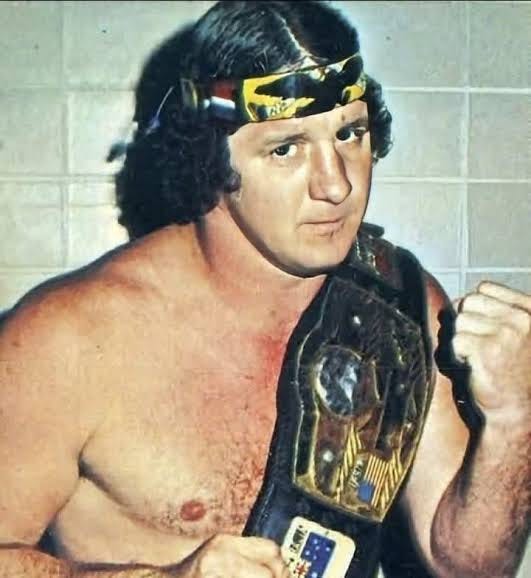
Pictured: Terry Funk, NWA World Heavyweight Champion
A much more complex structure with multi-level input. The NWA’s core principle was one recognized World Heavyweight Champion who traveled and defended across member territories while each promoter retained full control of his own region and local titles. The champion was typically a heel who went to the local top babyface, made him look strong, and left with the title still intact so the next territory could do the same. Booking of the champion was coordinated (often through the St. Louis office in later years), with appearances limited and scheduled by the Alliance rather than by individual promoters.
This created a shared asset that boosted every member’s gates without any single promoter owning the belt. Gagne’s exit from the NWA in 1960 was driven in part by frustration that this system had not made him the champion; the NWA model deliberately distributed the top prize rather than concentrating it. The NWA’s World Junior Heavyweight Title was controlled and booked from LeRoy McGuirk’s Tulsa booking office. The NWA World Light Heavyweight Title was controlled by Salvador Lutteroth’s Mexico City booking office. All other “NWA” designated regional titles, including various versions of the NWA World Tag Team Titles were booked by the regional booking offices, who were members of the central booking office in St. Louis.
WWWF (Vincent J. McMahon Sr./Toots Mondt, a territory booking office)
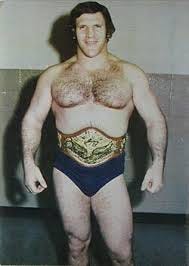
Pictured: Bruno Sammartino, WWWF Champion
The WWWF built around a single long-term babyface champion in a concentrated Northeast market. Bruno Sammartino’s first reign ran 2,803 days (May 1963–January 1971); his second added another 1,237 days. McMahon Sr. treated the champion as the primary box-office attraction at Madison Square Garden and other key buildings rather than as a traveling asset or a promoter’s personal prize. Challengers rotated through while the top babyface stayed on top for years, creating consistent sellouts. The approach was closer to AWA in its willingness to keep the title on a preferred figure for long stretches, but it differed in geography (one dense market rather than a multi-state circuit) and in the champion’s identity (Sammartino was not the owner). The WWWF could afford an extended babyface reign because its drawing power was concentrated in a handful of high-capacity buildings.
Contrasts
• Ownership vs. cooperative: AWA and WWA concentrated the top title on the owner or a tightly controlled figure. The NWA distributed one champion across many independent promoters. The WWWF concentrated it on a non-owner babyface in a single major market.
• Length of reigns: WWWF used multi-year babyface reigns. AWA mixed long owner/heel runs with short transitional ones. NWA used a traveling champion whose individual stays in any one territory were short. WWA used the owner’s frequent local reigns.
• Heel vs. babyface priority: NWA traditionally favored a heel world champion who could lose narrowly or draw in every territory. AWA and WWWF preferred a protected babyface (Gagne or Sammartino) at the top for long periods, with heels as challengers.
• Risk management: AWA and WWA limited how long the title left the inner circle. The NWA accepted the risk of a shared champion in exchange for mutual protection of territories. The WWWF accepted the risk of one dominant babyface because its market could support it.
The November 1966 Bruiser–Vachon sequence sits at the intersection of AWA and WWA practice: a partner promoter received a documented win and a seven-day reign, then the title returned to the AWA’s preferred long-term heel. That outcome was consistent with AWA control tactics, compatible with the WWA’s partnership model, and distinct from both the NWA’s traveling-champion system and the WWWF’s multi-year babyface monopoly.
Thank You for Watching and Listening
I’m Tony Richards, Pro Wrestling Historian, Author and Storyteller. I share pro wrestling historical items in each issue of the Time Tunnel Pro Wrestling History Newsletter and each episode of our podcast show. Thanks for your support! If you enjoy my information on select events, matches and insights, please share with folks you think might like to be a subscriber!
Remember, Premium subscribers get access to exclusive and special content such as some special issues including a multi-part deep dives on wrestling territories, wrestler bios and championship title histories, special audio and video interviews on territory pro wrestling and more available in the Pro Wrestling Time Tunnel for Premium Subscribers. Being a Premium Subscriber also means you support me in my efforts to document Pro Wrestling History through my research, writing, books, vidoes and podcasts. And…I have something very special planned for our Premium Subscribers on the Podcast side of things in 2026! Details soon here in the Pro Wrestling Time Tunnel.