


Today’s Favorite Quote: Keep away from small people who try to belittle your ambitions. Small people always do that, but the really great make you feel that you, too, can be great - Mark Twain
Happy Birthday to those who have passed on and to those great wrestlers still with us:
In Memoriam:
Al Haft 1886
Walter Johnson III 1942
Jerry Novak 1949
Harold Hauge\Ice Train 1967
Happy Birthday:
Hiroshi Tanahashi (50)
Sara Del Rey (46)
Sunil Singh (42)
Bear Bronson (31)
RIP Memorial: We stop & remember those who have passed on this day and gave themselves to the business for us, the fans. We salute you and thank you.
Ventura Tenario\Chief Little Wolf 11-13-1984 at the age of 72

Rufus R Jones 11-13-1993 at the age of 60
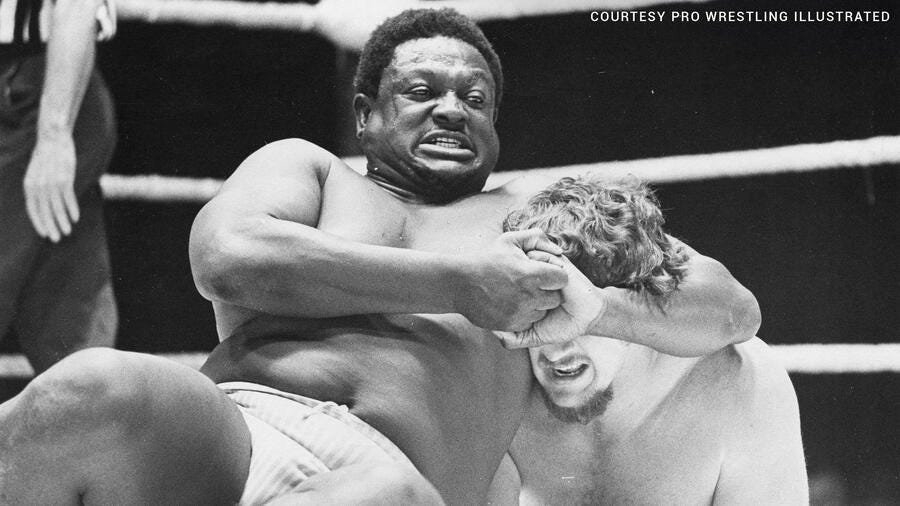
“Boston Bad Boy” Tony Rumble 11-13-1999 at the age of 48

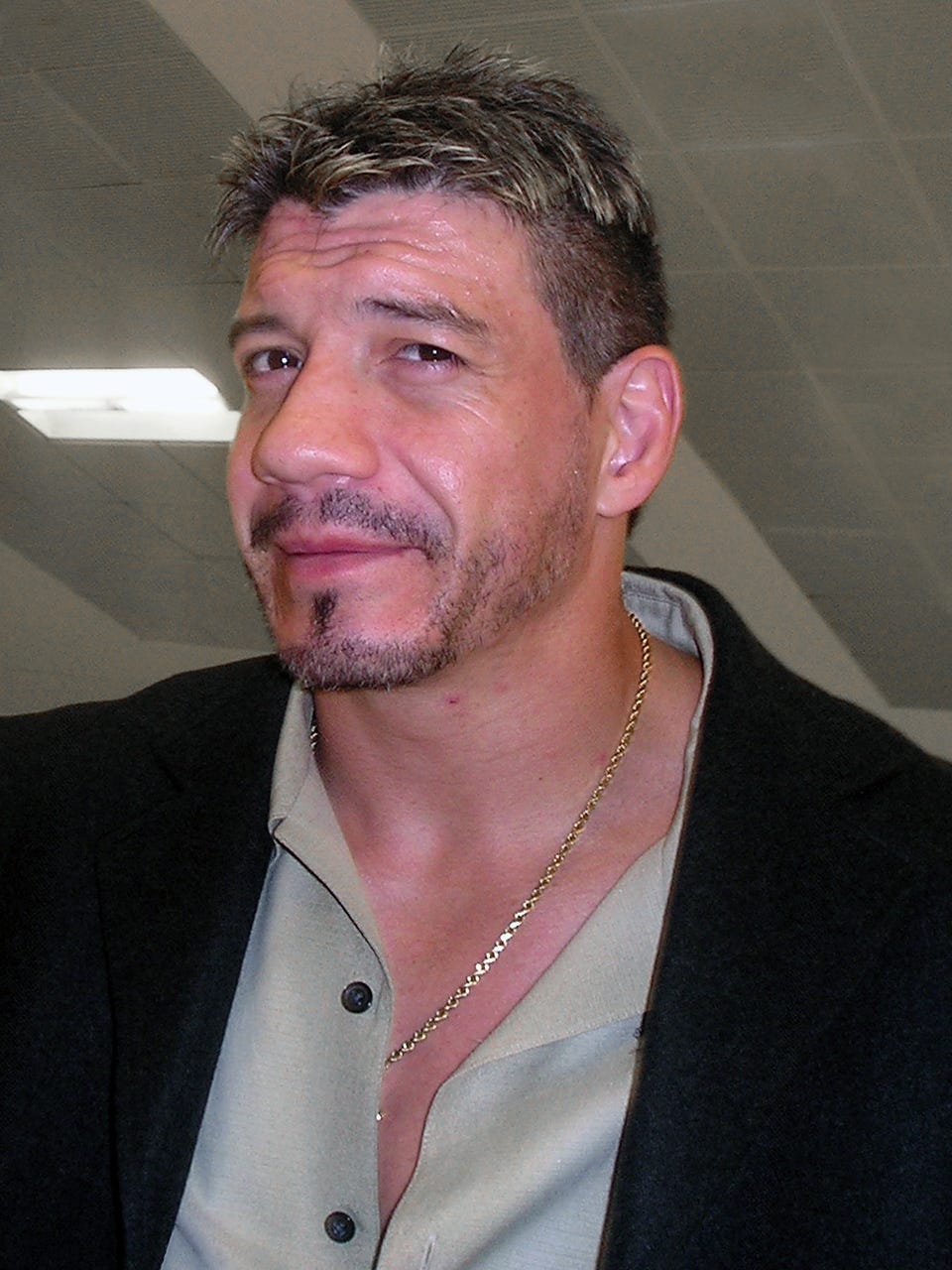
Eddie Guerrero 11-13-2005 at the age of 38
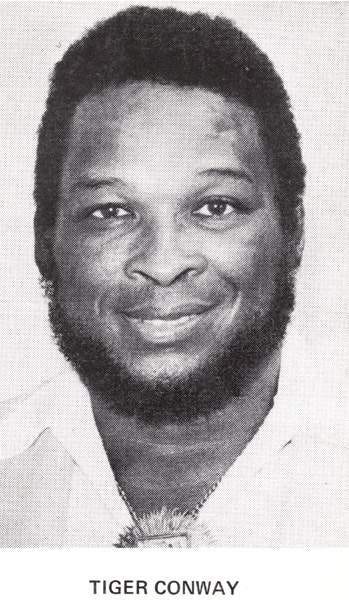
Tiger Conway, Sr 11-13-2006 at the age of 74
The Life and Career of Ripper Collins
Roy Lee Albern, better known throughout the professional wrestling world as Ripper Collins (or occasionally as Pretty Boy Collins, Leroy Collins, the Masked Monster, Roy Nelson, or simply The King), was a distinctive figure of the National Wrestling Alliance territory system. Born in Muskogee, Oklahoma, on October 8 or 10, 1933, he built a career that stretched from the late 1950s into the 1980s, centered primarily on Hawaii’s 50th State Big Time Wrestling promotion.
There he became one of the islands’ most hated and reliably drawing heels. Standing a billed 5 feet 11 inches and weighing around 264 pounds, with a stocky, somewhat doughy build, he relied less on pure athleticism than on personality, sharp promos, timing, and a relentless ability to generate heat. After largely retiring from active competition around 1980, he transitioned into announcing and remained involved with Hawaiian wrestling until his death from melanoma on Oahu on November 11 or 12, 1991, at age 58. His ashes were scattered in the ocean near Hawaii.
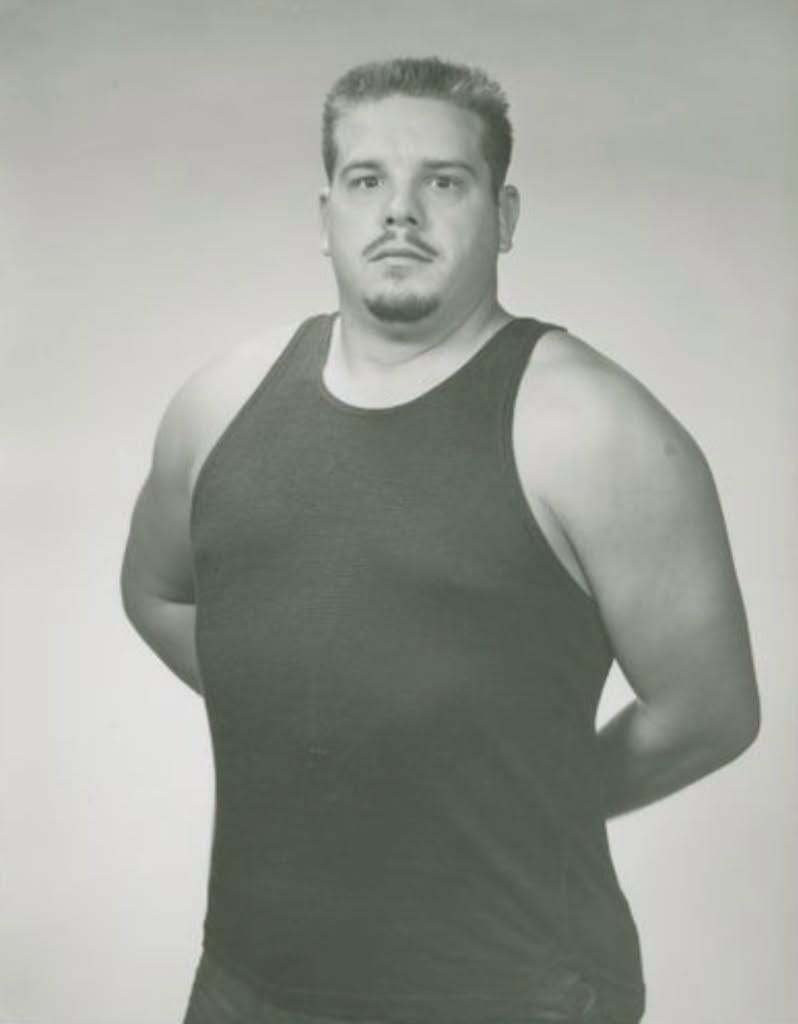
Collins began wrestling in 1957, first working Texas territories before moving on to the St. Louis Wrestling Club. By 1961 he had reached the American Wrestling Association, where he stayed until 1963. These early years established him as a traveling heel comfortable in the territorial grind. His true home and peak success, however, came after he arrived in Hawaii in 1965 for Ed Francis’s 50th State Big Time Wrestling (NWA Hawaii). For roughly the next decade and a half he thrived as a mainstay villain. He billed himself as “The King,” adopted the “Southern Rebel” persona (complete with handing out fake Confederate money at ringside), and worked under nicknames such as Ravishing, The Scufflin’ Hillbilly, and Pretty Boy.
His signature move was the shoulder block, but his real weapon was his mouth. Extended interview segments on Hawaiian television gave him room to talk fans into arenas. Colleagues later recalled a cocky, racially provocative style in which he threatened to dismantle “slow-witted” Samoan or Hawaiian opponents—an approach that generated intense heat in a market that loved its local heroes. Despite his unimposing physique by later standards, he projected enough arrogance and timing to draw.
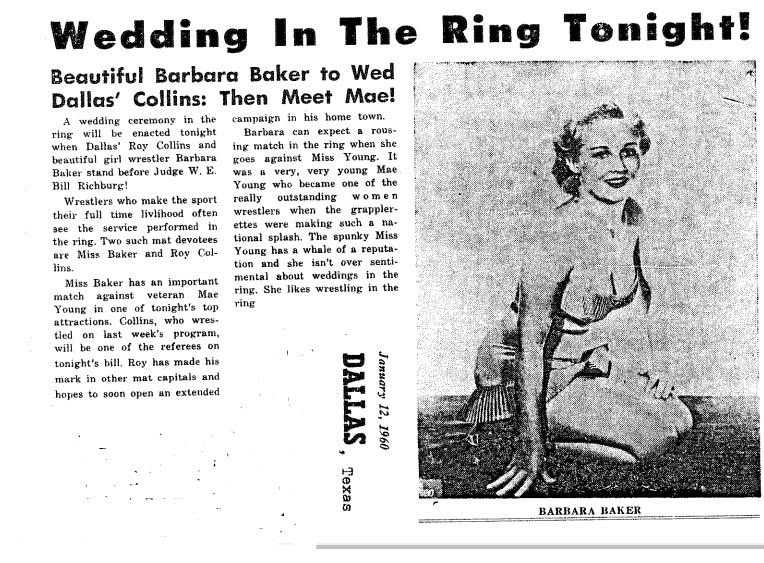
His title résumé in Hawaii was remarkable. He held the NWA Hawaii Heavyweight Championship eight times between 1966 and 1971, with notable victories over Ron Reed, Neff Maivia, Pampero Firpo, Sam Steamboat, and Johnny Barend. He captured the NWA Hawaii Tag Team Championship fourteen times, partnering with Johnny Barend (three reigns), King Curtis Iaukea (four), Moondog Mayne (two), Luke Graham, Buddy Austin, Ed Francis, Greg Valentine (or Johnny Valentine in some listings), and Whipper Watson Jr. Mixed tag matches with his wife, the wrestler Barbara Baker, were a regular feature.
Outside Hawaii he continued to win belts: multiple NWA Pacific Northwest Heavyweight titles (including runs against Tony Borne and Jimmy Snuka in the mid-1970s), the NWA Pacific Northwest Tag Team titles with Bull Ramos, Stampede Wrestling International Tag Team titles three times (with Don Gagne, Bobby Bass, and Larry Sharpe), the IWA World Heavyweight title in Australia, NWA Americas Tag Team titles with Gordon Nelson, NWA Alabama and Tennessee tag titles with Luke Graham, the NWA British Empire/Commonwealth title in New Zealand, and the NWA Polynesian Pacific Heavyweight title near the end of his in-ring run. He also worked All Japan Pro Wrestling, Australian promotions, New Zealand, Alabama, Tennessee, the Pacific Coast, and other NWA outposts. Feuds with names such as Peter Maivia, Sam Steamboat, Tor Kamata, Hans Mortier, Billy Robinson, and later Jimmy Snuka in Portland further cemented his reputation as a reliable heel who could elevate or sustain programs.
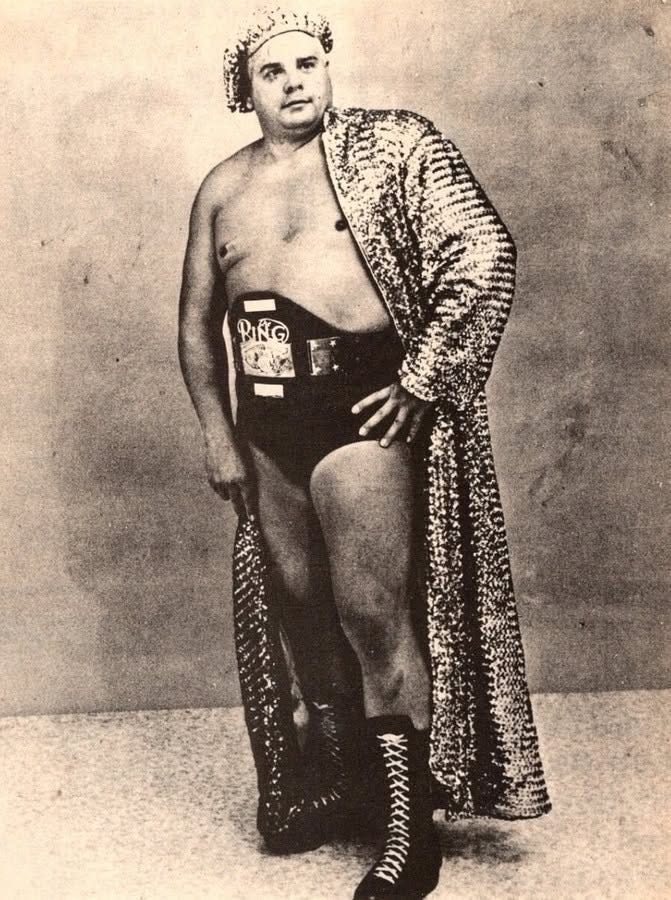
Personal life was complicated. He met Barbara Baker in a diner in West Virginia; the two married and had two daughters. People who knew him well describe him as openly homosexual, and he spent time in jail in Calgary and Louisiana on allegations of soliciting underage boys. Anecdotes from figures such as Bret Hart have circulated about specific incidents. In the locker room, however, he was remembered differently—by peers such as Beauregarde (Larry Pitchford) as a mild-mannered joke-teller who kept his private life private, got along with colleagues, and could hold an audience with stories. He was sun-loving and spent much of his free time in Hawaii on the beach. The long exposure there is often linked to the melanoma that ultimately killed him.
By the early 1970s he was already branching into other roles. In Los Angeles in 1971 he worked as a television announcer on the KCOP studio show, deliberately contradicting the legendary Dick Lane while also managing Gordon Nelson. The comedic, heat-generating side of his personality translated well to the booth. After his formal retirement from full-time wrestling around 1980—following a final championship run in NWA Polynesian Wrestling—he stayed in the business with Hawaii’s independent South-Pac Wrestling Federation.
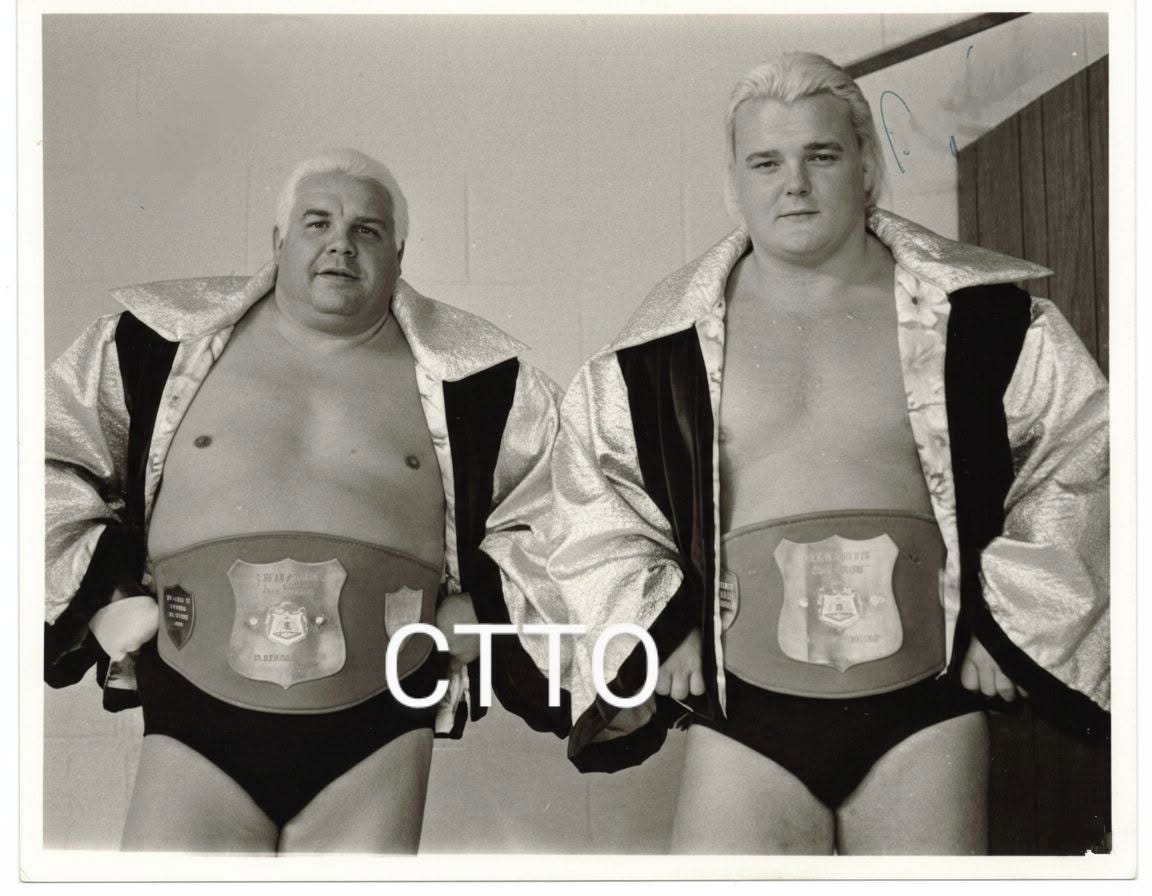
Pictured: Ripper Collins and Greg Valentine, NWA Hawaiian Tag Team Champions
In the mid-1980s, when Lia Maivia’s Polynesian Pacific Pro Wrestling aired on the Financial News Network, Collins served as lead commentator. He also appeared in the 1985 wrestling film I Like to Hurt People. Even in his later years he returned for special appearances and promos in Hawaii, still capable of the unhinged heel delivery that had defined him.
Ripper Collins was never a national superstar in the mold of later cable-era figures, nor was he a pure technician. He was something more characteristic of the territory era: a durable, multi-skilled heel who understood his market, could cut a promo that filled seats, collected a long list of regional titles, and then moved naturally into announcing when the in-ring chapter closed. In Hawaii especially he left a lasting impression as the arrogant “King” who fans loved to hate. His death in 1991 closed a career that had spanned more than two decades of territorial wrestling and a second act behind the microphone.
One Thing I Learned Today About Luke Brown
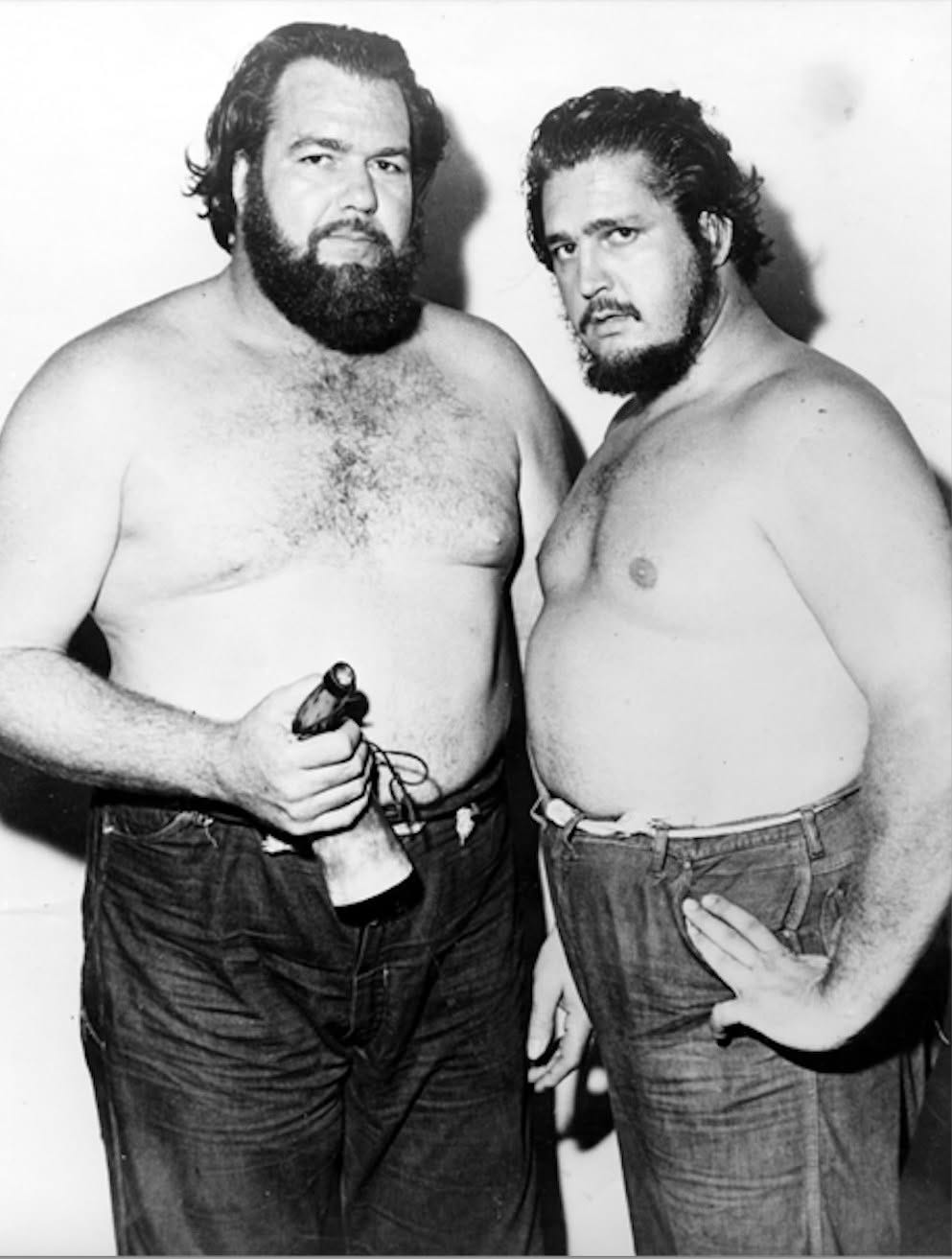
Pictured: The Kentuckians
Carl Dennis Campbell, better known as Luke “Big Boy” Brown or Man Mountain Campbell, was the giant (billed 6’8”, 300+ lbs) Kentuckian who formed the popular hillbilly tag team The Kentuckians with Grizzly Smith. They were famous for their long beards, dungarees/overalls, and carrying a cow horn.
Beyond the ring, sources note that he appeared (uncredited) in Rod Serling’s classic 1962 boxing drama Requiem for a Heavyweight, starring Anthony Quinn as a washed-up fighter who is pushed into professional wrestling. It’s a fitting cameo for a real territory-era giant who himself started out on carnival circuits in 1958 (initially as Man Mountain Campbell, a name given to him by Frankie Townsend) before becoming a mainstay heel/babyface powerhouse across the NWA territories.
Bonus related fact: Brown was the adopted (or younger) brother of Pacific Northwest star Dutch Savage (Frank Stewart). He trained Savage and helped break him into the business in the early 1960s—Dutch’s Wikipedia lists Luke Brown as his trainer, and interviews confirm Savage learned the basics from his brother who was working as Man Mountain Campbell/Luke Brown.
Thank You for Watching and Listening
I’m Tony Richards, Pro Wrestling Historian, Author and Storyteller. I share pro wrestling historical items in each issue of the Time Tunnel Pro Wrestling History Newsletter and each episode of our podcast show. Thanks for your support! If you enjoy my information on select events, matches and insights, please share with folks you think might like to be a subscriber!
Remember, Premium subscribers get access to exclusive and special content such as some special issues including a multi-part deep dives on wrestling territories, wrestler bios and championship title histories, special audio and video interviews on territory pro wrestling and more available in the Pro Wrestling Time Tunnel for Premium Subscribers. Being a Premium Subscriber also means you support me in my efforts to document Pro Wrestling History through my research, writing, books, vidoes and podcasts. And…I have something very special planned for our Premium Subscribers on the Podcast side of things in 2026! Details soon here in the Pro Wrestling Time Tunnel.
I watched Ripper Collins in 1974/1975 in dean silverstone's superstar Championship wrestling in washington state. Great heel.