


Today’s Favorite Quote: People really become quite remarkable when they start thinking that they can do things. When they believe in themselves they have the first secret of success - Norman Vincent Peale
Happy Birthday to those who have passed on and to those great wrestlers still with us:
In Memoriam:
Joe Gunther 1912
King Kong Bundy 1957
Happy Birthday:
Tony Schiavone (69)
Takano Inoue (57)
RIP Memorial: We stop & remember those who have passed on this day and gave themselves to the business for us, the fans. We salute you and thank you.
Aileen Eaton 11-7-1987 at the age 0f 78
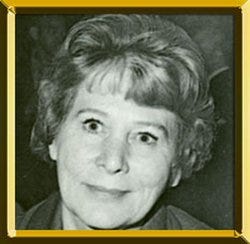
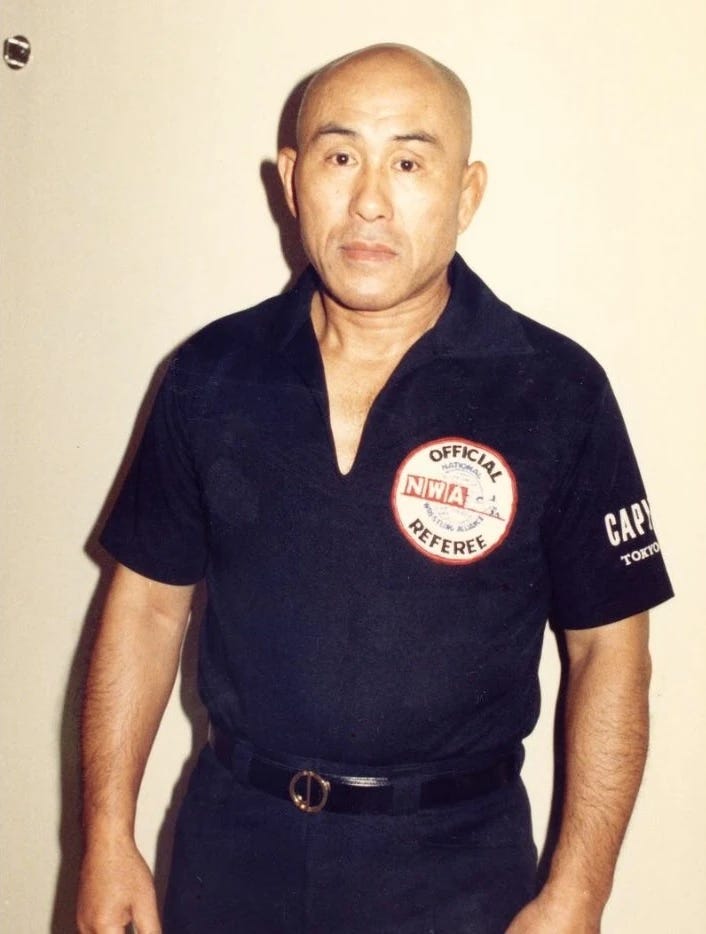
Joe Higuchi 11-7-2010 at the age of 81
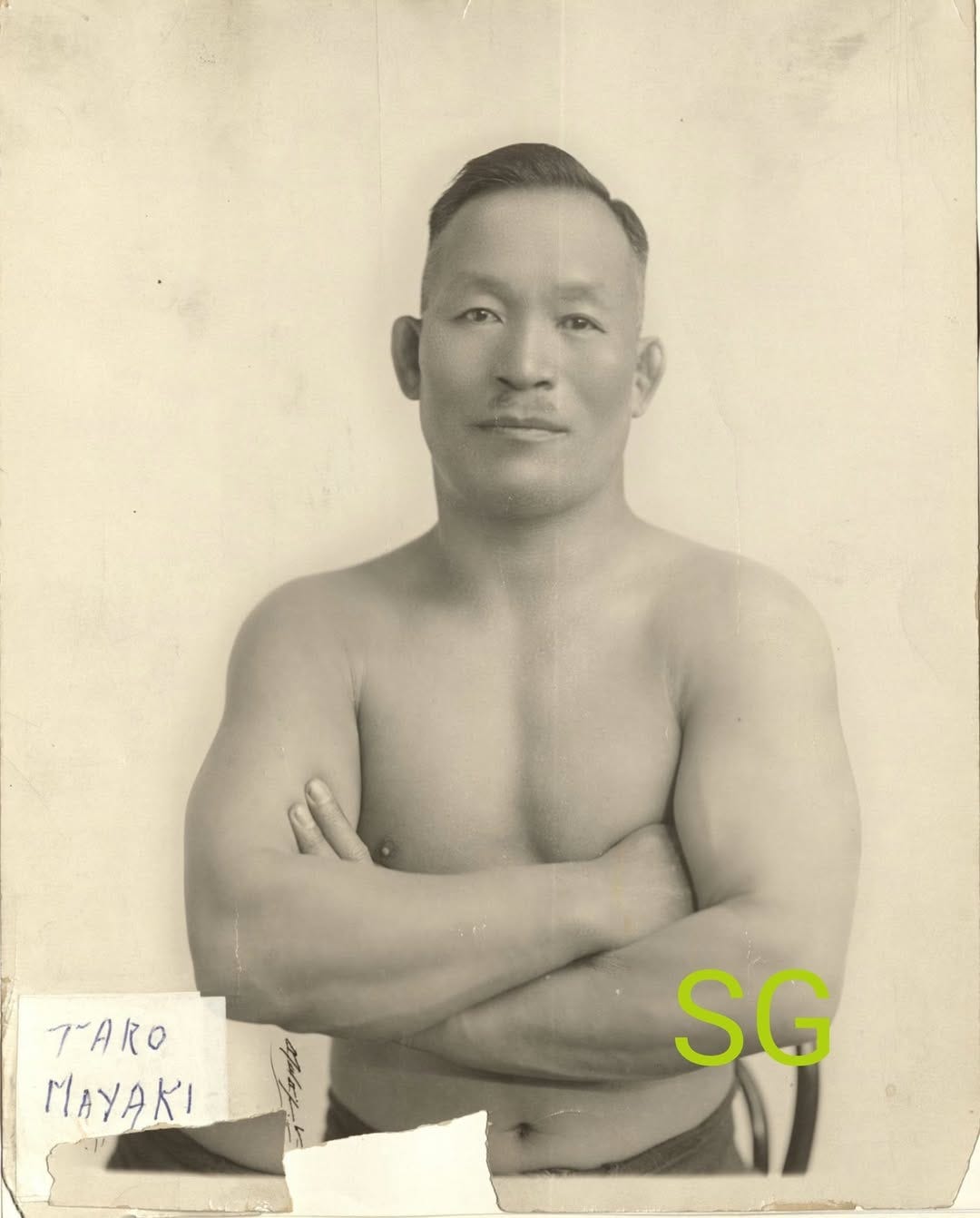
Taro Miyaki 11-7-2010 at the aage of 89
Significant Pro Debut
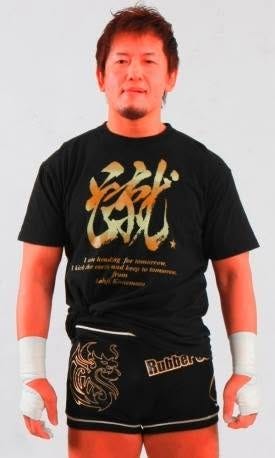
11-7-1990: Koji Kanemoto made his pro debut when he was defeated by Michiyoshi Ohara at the Municipal Townsman Gymnasium in Iwade, Wakayama, Japan
The Life and Career of Babs Wingo
The Powerhouse Who Helped Integrate Women’s Wrestling
In the early 1950s, when professional wrestling remained rigidly segregated by both race and gender, a young Black woman from Columbus, Ohio, stepped into rings that had rarely, if ever, hosted athletes who looked like her. Betty “Babs” Wingo, the eldest of three sisters who would become known as the Wingo Sisters (or the Flying Wingo Sisters), helped force open a door that many promoters and fans preferred to keep closed. She was not the most celebrated figure of the era—Mildred Burke and June Byers dominated the headlines—but her presence, along with that of her sisters Ethel Johnson and Marva Scott, marked a quiet but decisive break with the status quo. Babs was the first of the family to turn professional, the one most often cast as the rugged powerhouse, and the one who absorbed some of the earliest and harshest tests of whether Black women could draw, compete, and endure on integrated cards.
Born in the early 1930s in or near Decatur, Georgia (sources vary slightly on the exact year and town, with some listing 1937 or later and places such as Eatonton), to Gladys Chase and Clifford Wingo, Betty and her sisters left the Jim Crow South while still very young. The family settled in Columbus, Ohio, a city that would become an unexpected hub for women’s wrestling under the influence of promoter and trainer Billy Wolfe. At the local YMCA the girls learned tumbling, judo, and gymnastics. Wolfe, inspired by Jackie Robinson’s integration of Major League Baseball, actively sought young Black women to integrate the women’s division he controlled. He discovered Babs when she was about sixteen. She became the first of the sisters to train seriously for the professional ring and the first to debut, around 1950–1952, under the National Wrestling Alliance umbrella.
Babs was built differently from many of the “glamour” wrestlers of the period. Standing roughly five-foot-three and weighing around 150 pounds, she was described as a tough, rugged technician who could absorb punishment and dish it out. Contemporary accounts noted that she could work herself into a hair-pulling intensity and seemed almost to relish the physicality of the match. She was frequently booked as a heel—sometimes explicitly so that white babyfaces could be protected from the risk of losing cleanly to a Black woman in front of hostile crowds. In Mexico, for example, Penny Banner later recalled being forced to turn heel against her will because the promoter feared a riot if the known rule-breaker Babs beat a clean-cut blonde. The logic was blunt: the audience would not accept a Black woman winning under those circumstances, so the roles had to be reversed.
Her career quickly expanded beyond Ohio. In 1952 she, Ethel, and their friend Kathleen Wimbley worked a tag-team main event in Baltimore that drew a then-record 3,611 fans. The following year, on February 10, 1953, at the Municipal Auditorium in Kansas City, Babs challenged Mildred Burke for the World Women’s Title before a reported crowd of roughly 9,000. Contemporary match records show Burke retaining the championship in a best-of-three-falls bout that lasted more than twenty-two minutes. Popular later accounts sometimes describe the night as Babs’s victory and the birth of the “first interracial women’s championship”; the documented result is that Burke kept the belt. Regardless of the finish, the booking itself was historic. A Black woman had been placed in a title match against the most famous women’s champion of the era in front of a massive audience. That alone challenged the unwritten rules of the territory system.
Babs and her sisters also worked under various “Colored” or “Negro” women’s titles and tag-team championships that existed in the promotional landscape of the time. These belts were, by modern standards, deeply problematic—they institutionalized separation—but they also created paying work and visibility for Black athletes who might otherwise have been excluded entirely. Babs teamed frequently with Marva and with other Black wrestlers such as Ramona Isbell, Louise Greene, and Lula Mae Provo. She traveled the Midwest, the South, and points farther afield, including Mexico, where she was once stabbed in the leg with a shard of glass by a spectator. Stories of threats, segregated hotels, denied service at restaurants, and the constant need to enter venues through back doors were part of the job. One account describes a police officer drawing a gun on her; a male wrestler intervened. These were not isolated incidents. They were the daily texture of trying to make a living in a segregated America while performing a sport that already treated women as novelties.
Billy Wolfe’s death in 1963 left the sisters without their primary manager. Babs continued working into the mid-1960s, with documented matches as late as 1964 and a general retirement around 1965. Ethel and Marva wrestled longer—Ethel into the mid-1970s and Marva into 1979—but Babs’s active years were concentrated in the 1950s and early 1960s. Off the mat she raised a family. One later sketch described her as an oil painter and a music enthusiast with a collection of classical recordings. Like her sisters, she balanced the physical and financial demands of the road with ordinary life.
For decades the Wingo Sisters existed mostly in the margins of wrestling history. Ethel received some later recognition—WWE inducted her into its Hall of Fame Legacy wing in 2021—but the full family story remained largely unknown outside specialist circles. That began to change with the 2018 documentary Lady Wrestler: The Amazing, Untold Story of African-American Women in the Ring, directed by Chris Bournea, which centered on the sisters and other Black women of the era. The 2024 feature film Queen of the Ring, focused on Mildred Burke, also portrayed the Wingo Sisters (Damaris Lewis played Babs). In 2023–2024 the Women’s Wrestling Hall of Fame inducted Babs, Ethel, and Marva in its early classes. Their daughters and nieces, including Kim Goodwin Martin (Marva’s daughter), accepted the honors. Martin has spoken publicly about the importance of telling the story so that young girls understand what is possible.
Babs Wingo’s career was not defined by a long world-title reign or by mainstream celebrity. It was defined by presence and persistence. She was among the first Black women to be booked on integrated cards, to challenge the reigning world champion in a major arena, and to prove that audiences would pay to see Black women wrestle with skill and intensity. She absorbed the physical risks, the racial hostility, and the promotional constraints of the territorial system and still stayed in the ring for more than a decade. In doing so she and her sisters helped create a lineage that later wrestlers—Sweet Georgia Brown, Jacqueline, Jazz, Naomi, Bianca Belair, and many others—could build upon, even if the connection was rarely acknowledged in real time.
Match results from the 1950s are fragmentary, birth dates conflict across sources, and promotional storytelling often blurred the line between what happened in the ring and what was advertised. What is clear is that a young woman from a working-class Black family in Columbus walked into a profession that had no place reserved for her, brought her sisters with her, and refused to leave quietly. Babs Wingo’s story is not only about individual toughness; it is about the deliberate, risky act of integrating a space that powerful interests preferred to keep closed. That act still matters.
ONE Thing I Learned About Leilani Kai
She originally wanted to pursue roller derby, not pro wrestling.
As a teenager in Florida, she was into skating and planned on becoming a roller derby queen. That changed when she was about 15 and walking home from school one day. Jack and Jerry Brisco pulled over in a gold Camaro (or El Camino—she wasn’t sure which) and asked her for directions to the National Guard Armory because they were wrestling there that night. The chance encounter stuck with her. She later snuck out of the house, got her uncle (who worked at the venue) to take her to a show, saw women’s matches, and decided on the spot that wrestling was what she wanted to do instead. She started training with the Fabulous Moolah right after high school.
Thank You for Watching and Listening
I’m Tony Richards, Pro Wrestling Historian, Author and Storyteller. I share pro wrestling historical items in each issue of the Time Tunnel Pro Wrestling History Newsletter and each episode of our podcast show. Thanks for your support! If you enjoy my information on select events, matches and insights, please share with folks you think might like to be a subscriber!
Remember, Premium subscribers get access to exclusive and special content such as some special issues including a multi-part deep dives on wrestling territories, wrestler bios and championship title histories, special audio and video interviews on territory pro wrestling and more available in the Pro Wrestling Time Tunnel for Premium Subscribers. Being a Premium Subscriber also means you support me in my efforts to document Pro Wrestling History through my research, writing, books, vidoes and podcasts. And…I have something very special planned for our Premium Subscribers on the Podcast side of things in 2026! Details soon here in the Pro Wrestling Time Tunnel.