


Today’s Favorite Quote: When you experience someone else’s genius work, a little part of you feels, ‘ hat’s what I could have, would have, and should have done-Derek Sivers
Happy Birthday to those who have passed on and to those great wrestlers still with us:
In Memoriam:
Bronko Nagurski 1938
Yvon Cormier\The Beast 1938
Happy Birthday:
Nick Kozak (94)
Kim Anthony\Dirty White Girl (58)
Dawn Marie (56)
Jackie Gayda (45)
Cameron\Ariane Andrew (39)
Andrade (37)
RIP Memorial: We stop & remember those who have passed on this day and gave themselves to the business for us, the fans. We salute you and thank you.
Evan “Strangler” Lewis 11-3-1919 at the age of 59

Sputnik Monroe 11-3-2006 at the age of 77
Significant Pro Debut
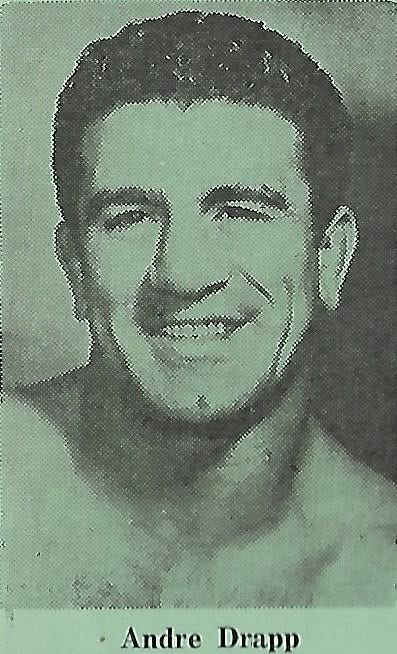
11-3-1938 Andre Drapp
7 Stages of the Territory Era
Stage 3: Expansion
Year Two Month Eleven
November 1946
Bill Longson was the top money draw in professional wrestling for 1946.

Longson, as the long-reigning National Wrestling Association World Heavyweight Champion, dominated the biggest U.S. market of the era—St. Louis under Tom Packs. Contemporary records and later historical rankings (including year-by-year assessments of top draws) place him clearly ahead of the field for the year. He routinely filled the Kiel Auditorium with 10,000+ crowds on title defenses and major matches throughout 1946.
Documented examples include:
• 12,077 on January 18 (vs. George Koverly)
• Multiple other 10,000+ houses across the year
• 10,921 on November 15 (vs. Felix Miquet by DQ)
• 8,792–11,000+ range on other Packs cards
One source lists a reported 17,621 for a Longson vs. Buddy Rogers match at the Kiel on April 12, 1946 (though Kiel capacity was typically cited in the 10,000–12,000 range with standing room, so the exact figure has some uncertainty). Across multiple cities (Houston, Toronto, and others), Longson remained a reliable major draw. Historical summaries of the period routinely list him as the dominant drawing card of the mid-1940s, including 1946.
Longson entered 1946 as the established National Wrestling Association World Heavyweight Champion (his second reign, won from Bobby Managoff in St. Louis in February 1943). He remained the dominant box-office attraction in the United States, especially under Tom Packs in St. Louis. His arrogant heel persona, rule-breaking tactics, and pioneering use of the piledriver made him a consistent heat magnet.
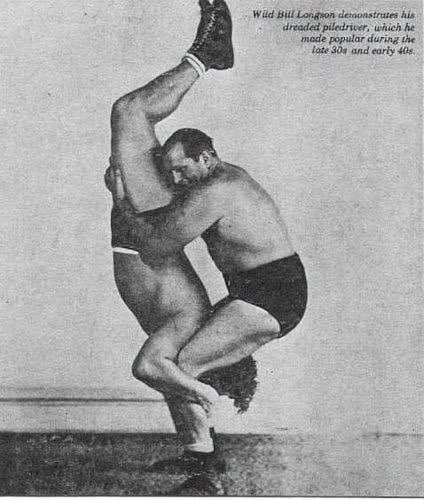
Pictured: Wild Bill Longson demonstrates the devastating Pile Driver move
Key 1946 activity included multiple high-drawing Kiel Auditorium defenses: 10,109 on January 4 (vs. Ray Villmer), 12,077 on January 18 (vs. George Koverly), a reported major house against Buddy Rogers on April 12 (figures as high as 17,000 claimed in some records), 10,050 on October 18 (vs. Managoff), 10,921 on November 15 (vs. Felix Miquet by DQ), and 8,792 on November 27 (vs. Everett Marshall). He also worked Houston, Louisville, Atlanta, San Antonio, Toronto, and other stops, often defending the title. Longson’s St. Louis run produced near-capacity houses with remarkable consistency; historical assessments rank him as the clear top overall draw of the year. He held the title through the end of 1946 and into early 1947 before losing it to Whipper Billy Watson.
Yvon Robert
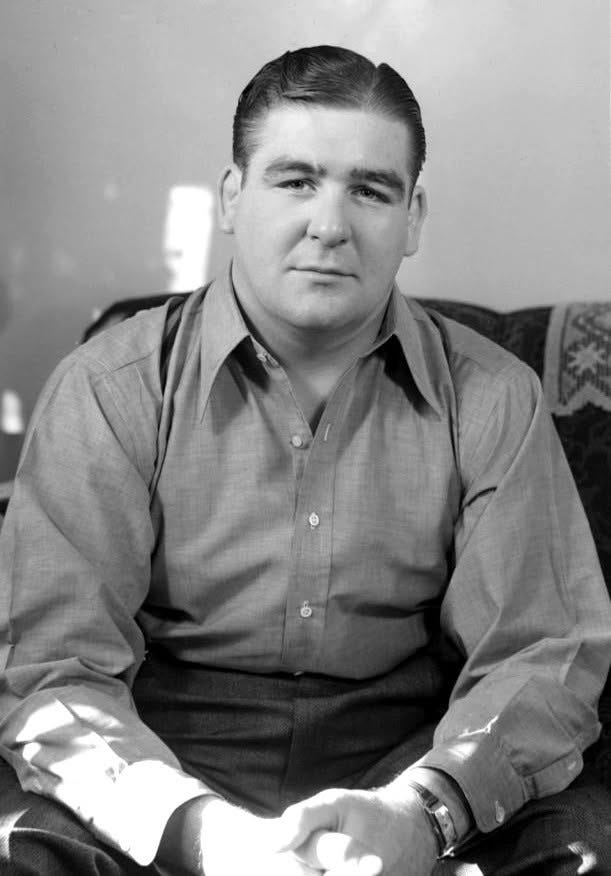
Robert was the undisputed king of Montreal and one of the strongest regional draws in North America. He and partner Larry Moquin drew the month’s (and one of the year’s) biggest single houses—14,351 at the Montreal Forum on November 13 against Fred Von Schacht and George Koverly. Robert regularly filled the Forum in the 10,000+ range and was the top attraction in Quebec.Working primarily for Eddie Quinn at the Montreal Forum, he functioned as the local hero and perennial champion claimant in Quebec. While not holding a major U.S. title for most of 1946, his presence alone filled the Forum on a near-weekly basis.
Notable 1946 houses included the November 13 card that drew 14,351 for the tag main event of Robert and Larry Moquin against Fred Von Schacht and George Koverly—the largest single attendance of the month and one of the year’s biggest. Other Forum shows regularly reached 10,000. Robert mixed scientific ability with strong local identification; he had previously beaten Longson for the NWA title in Montreal in 1942 (losing it shortly afterward to Managoff in Houston). In 1946 he remained the anchor of Quebec’s thriving scene, often teaming with Moquin or facing imported challengers while protecting the Montreal championship picture. His drawing power in French Canada was unmatched that year.
Primo Carnera
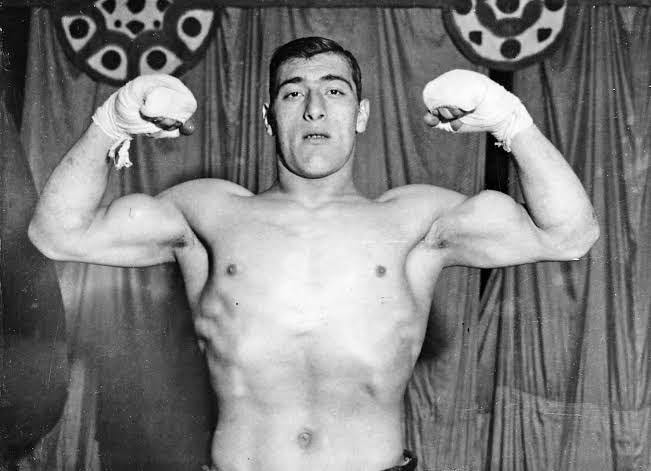
A strong novelty/name draw after his transition from boxing. He helped pack the Los Angeles Olympic Auditorium on multiple 1946 cards (including several 9,000–10,000 houses) and drew well on the road (e.g., 9,279 in Cleveland in November).
Carnera, the former heavyweight boxing champion (1933–34), made a full transition to professional wrestling in mid-1946 after finishing his boxing career earlier in the year in Italy. He arrived in the U.S. in late July, secured a California license in mid-August, and quickly became a major novelty attraction based on his size, name recognition, and boxing pedigree.
His August 21 debut main event at the Los Angeles Olympic Auditorium against Tommy O’Toole drew a reported 10,000. He followed with solid houses in Los Angeles (including a September 4 win over Reginald Siki before ~9,000) and on the road: multiple Northeast stops in October, a 9,279 crowd in Cleveland on November 21 against Jules Strongbow (special referee Jack Sharkey), a Chicago Stadium appearance, and further dates into December. Carnera was generally booked as a special attraction rather than a long-term territorial champion. His size and the curiosity of seeing a former boxing world champion in the ring produced strong initial gates on the West Coast and in major cities, though he was not yet a consistent weekly draw in the manner of Longson or Robert.
Lou Thesz
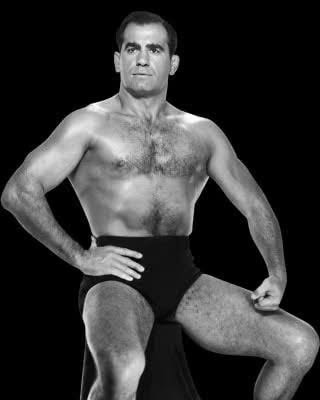
A consistent high-level draw after his discharge, especially in St. Louis (multiple 10,000+ Packs cards) and as Montreal champion (10,000 houses in November).
Discharged from the Army in 1946 (after teaching hand-to-hand combat), Thesz resumed a heavy schedule as one of the most credible scientific wrestlers of the era. He worked extensively for Tom Packs in St. Louis and the Midwest, for Eddie Quinn in Montreal (where he was recognized as Montreal World Heavyweight Champion for stretches), and in Texas.
In St. Louis he defeated Bobby Managoff (November 1, 10,564), Buddy Rogers (September 20), and Everett Marshall (December 27, 10,261), among others. In Montreal he headlined 10,000-fan Forum cards in November, including a count-out win over Yvon Robert (November 6) and a two-falls-to-one victory over Bobby Managoff (November 20). In Texas he held or challenged for the Texas Heavyweight Title (including a November win over Ted Cox in Dallas for the title). Thesz’s combination of legitimate skill, name value as a former world champion, and willingness to travel made him a reliable high-end draw in multiple territories. He was not yet the singular national champion he would become after the NWA’s formation, but 1946 established him as a top-tier attraction across the Midwest, Canada, and Texas.
Buddy Rogers
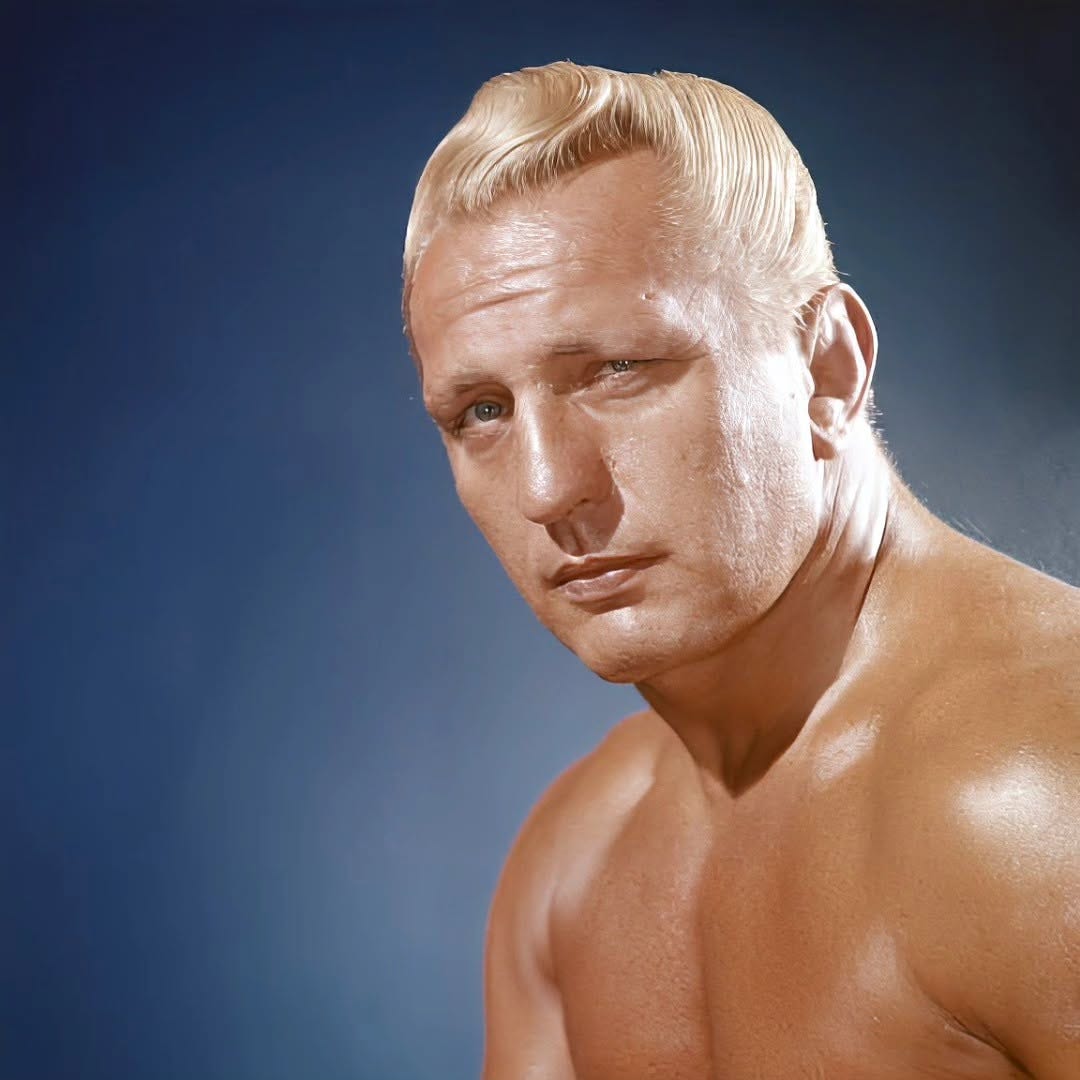
Ranked highly in some contemporary assessments as a rising attraction; he worked major programs opposite Longson and others.
Rogers (Herman Rohde) was a rising young star in 1946, already displaying the charisma and flashy style that would later define him as the original Nature Boy. He split time between Texas (Houston, Dallas, San Antonio) and the Midwest (St. Louis under Packs, Evansville, Louisville).
He held the Texas Heavyweight Title for stretches (including a May 10 win over Lou Thesz in Houston). In St. Louis he appeared on multiple major Packs cards: a high-profile match against Longson (April 12), a 60-minute draw with Everett Marshall (November 1), a draw with Jack Moore (November 15), and other programs. He also worked opposite Thesz and faced Longson in Louisville. Rogers was billed as a top young contender and “Atomic Blond” attraction. While not yet the national phenomenon he would become with television, he was already generating strong interest and was ranked among the year’s better draws in contemporary assessments, particularly as a foil for established champions like Longson.
Orville Brown
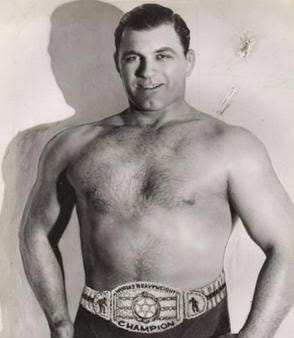
Dominant regional draw in the Midwest (Kansas City / Wichita circuit) with solid but smaller houses.
Brown was the dominant regional champion and top draw of the Midwest Wrestling Association circuit centered in Kansas City, Wichita, and surrounding towns. He held the MWA World Heavyweight Title for most of 1946 (losing it briefly to Bobby Bruns by DQ in June, then regaining it in August).
Key 1946 activity included regular defenses in Kansas City and Wichita. On November 16 in Wichita he defeated Ed Virag before 4,500 fans in a match billed as unifying title claims (special referee Ed “Strangler” Lewis; the match was stopped after Virag suffered a head cut). He later defended against Everett Marshall in Kansas City on November 28.
Brown’s style was straightforward and credible; he was a reliable gate in the Kansas-Missouri region and was already being positioned by Midwest promoters as a unifying figure. His strong 1946 run set the stage for his recognition as the first NWA World Heavyweight Champion in 1948. Houses were solid for the territory (typically 3,000–5,000) but smaller than the major-city numbers posted by Longson or Robert.
Overall Context
In the pre-NWA territorial landscape of 1946, drawing power was regional and title-dependent. Longson’s consistent 10,000+ St. Louis gates and broad road work made him the top overall money attraction. Robert dominated the large Montreal market. Carnera provided a strong novelty boost on the West Coast and in big cities. Thesz, Rogers, and Brown were high-level draws in their primary territories, with Thesz and Rogers crossing more borders. The year reflected a recovering industry in which established heels (Longson), local heroes (Robert), and credible scientific wrestlers (Thesz, Brown) still drove the largest live gates
Theoretical biggest money matches for each of the 1946 top draws that did not happen (What If Scenarios?)
These are grounded in 1946 realities: existing title pictures, promotional alignments, geographic drawing power, and historical rivalries. They represent high-potential cards that promoters could realistically have built but that did not materialize that year.
Bill Longson
Biggest unrealized match: Longson (NWA Association World Champion) vs. Lou Thesz in St. Louis (Kiel Auditorium or the Arena).
They did wrestle later (notably in 1947 and 1948), but a full title program in St. Louis in 1946 would have been the single largest potential gate of the year. Longson was the city’s dominant heel draw; Thesz was a credible former champion recently back from the Army with strong scientific credibility and local roots. A properly built series could have pushed past the 12,000–15,000 range Longson was already hitting and potentially filled the larger Arena. Promotional politics and Thesz’s busy schedule elsewhere (Montreal, Texas) kept it from happening in 1946.
Yvon Robert
Biggest unrealized match: Yvon Robert (Montreal champion / local hero) vs. Bill Longson for a “champion vs. champion” or unification-style match at the Montreal Forum.
They had history—Robert had beaten Longson for the NWA title in Montreal in October 1942—but no major 1946 rematch occurred. A return of Longson as the invading American champion against the French-Canadian hero could have produced another 14,000–18,000 Forum house (or higher with outdoor overflow). Eddie Quinn occasionally brought in big names, but a full Longson program was not run that year.
Primo Carnera
Biggest unrealized match: Primo Carnera vs. Bill Longson (or Lou Thesz) in a major U.S. city (Los Angeles Olympic, St. Louis, or New York/Chicago).
Carnera was an undefeated novelty draw after his August 1946 debut and was already filling 9,000–10,000 houses on the West Coast. Pairing the former boxing world champion against the reigning NWA Association champion (Longson) or the most credible scientific wrestler (Thesz) would have maximized the curiosity factor. Promoters largely kept Carnera on a regional novelty circuit rather than building him into a world-title challenge in 1946.
Lou Thesz
Biggest unrealized match: Lou Thesz vs. Yvon Robert in a major Montreal or St. Louis title program.
They had history (Robert had beaten Thesz for titles in earlier years), and both were active in 1946—Thesz as Montreal champion for stretches and as a St. Louis main-eventer, Robert as the permanent local hero. A properly promoted “champion vs. champion” or long-term rivalry match at the Forum or Kiel could have been one of the year’s biggest gates. Instead, their 1946 meetings were more limited (e.g., Thesz’s November count-out win over Robert).
Buddy Rogers
Biggest unrealized match: Buddy Rogers vs. Bill Longson in a decisive title match in St. Louis (or a major Texas outdoor/stadium setting).
They wrestled several times in 1946 (including a high-profile St. Louis meeting and draws), but never a fully built, high-stakes title program that was allowed to climax. Rogers was already a rising young star with flash and charisma; Longson was the established heel champion. A longer series culminating in a St. Louis title match could have been one of Packs’s biggest houses of the year. Rogers’s dual commitments in Texas and the Midwest limited the depth of the program.
Orville Brown
Biggest unrealized match: Orville Brown (MWA World Champion) vs. Bill Longson (or Lou Thesz) in a “unification” or inter-promotional match in Kansas City or St. Louis.
Brown was the clear Midwest regional champion and a solid regional draw. A match against the NWA Association champion (Longson) or the rising Thesz would have been the biggest possible card for the Kansas City/Wichita circuit and a significant crossover attraction for St. Louis. Promotional separation between the Midwest group and Packs’s St. Louis operation, plus Brown’s focus on his own territory, kept such a match from happening in 1946. (A later Brown–Thesz unification was planned for 1949 but never occurred due to Brown’s car accident.)
Summary
In each case the theoretical matchup combined the wrestler’s strongest asset (Longson’s St. Louis heat, Robert’s Montreal hero status, Carnera’s name recognition, Thesz’s credibility, Rogers’s rising star power, Brown’s regional championship) with a high-profile opponent who carried a recognized title or strong drawing name. The pre-NWA territorial system, travel logistics, and competing promoter interests largely prevented these from being fully realized in 1946.
Thank You for Watching and Listening
I’m Tony Richards, Pro Wrestling Historian, Author and Storyteller. I share pro wrestling historical items in each issue of the Time Tunnel Pro Wrestling History Newsletter and each episode of our podcast show. Thanks for your support! If you enjoy my information on select events, matches and insights, please share with folks you think might like to be a subscriber!
Remember, Premium subscribers get access to exclusive and special content such as some special issues including a multi-part deep dives on wrestling territories, wrestler bios and championship title histories, special audio and video interviews on territory pro wrestling and more available in the Pro Wrestling Time Tunnel for Premium Subscribers. Being a Premium Subscriber also means you support me in my efforts to document Pro Wrestling History through my research, writing, books, vidoes and podcasts. And…I have something very special planned for our Premium Subscribers on the Podcast side of things in 2026! Details soon here in the Pro Wrestling Time Tunnel.