


Today’s Favorite Quote: I used to resent obstacles along the path, thinking, ‘If only that hadn’t happened life would be so good.’ Then I suddenly realized, life is the obstacles. There is no underlying path - Janna Levin
Happy Birthday to those who have passed on and to those great wrestlers still with us:
In Memoriam:
Mike Davis 1956
Archie Gouldie\Mongolian Stomper 1944
Happy Birthday:
Michael Buffer (82)
Queen Sharmell (56)
Yoshiniro Ogawa (60)
Cliff Compton\Domino (47)
Frank Rosser\Darren Young (43)
Smair Singh (39)
Samil Singh (39)
Amber Nova (35)
Wes Lee (32)
RIP Memorial: We stop & remember those who have passed on this day and gave themselves to the business for us, the fans. We salute you and thank you.
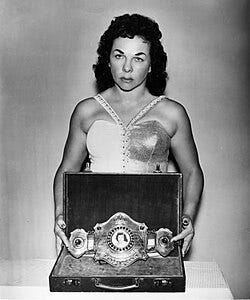
Lillian Ellison\The Fabulous Moolah 11-2-2007 at the age of 84
Significant Pro Debut
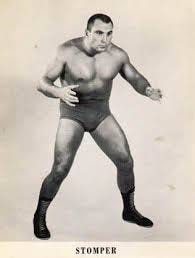
11-2-1962: Archie Gouldie (Mongolian Stomper) made his debut defeating John Dane at the Victoria Pavillion in Calgary, Alberta, Canada
7 Stages of the Territory Era
Stage 3: Expansion
Year Two Month Eleven
October 1946
November 1946: Contested Crowns and Crowded Arenas in the Post-War Territory Boom
November 1946 captured professional wrestling at a moment of robust commercial recovery and unresolved structural fragmentation. More than a year after the end of World War II, travel restrictions had lifted, arenas were reopening at full capacity, and returning servicemen—both as performers and as paying customers—were fueling demand. Yet the industry still operated without a single recognized national championship or coordinated talent exchange. Multiple “world” titles coexisted: Bill Longson’s long-running National Wrestling Association claim centered in St. Louis, Orville Brown’s Midwest Wrestling Association version, Lou Thesz’s Montreal recognition, and assorted Pacific Coast and local variants. Promoters competed aggressively for the same wrestlers and the same arenas. The month’s strongest houses and most consequential matches illustrated both the vitality of the recovering business and the limits of its pre-Alliance organization.
St. Louis: Rival Promoters and a Dominant Heel Champion
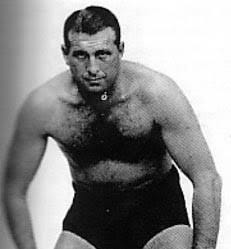
Pictured: Wild Bill Longson, National Wrestling Association World Champion
St. Louis remained the most important single market. Tom Packs and Sam Muchnick continued to run competing programs at the Kiel Auditorium, producing a near-weekly schedule that kept the city active and forced talent to choose sides or rotate carefully.
Packs’s November 1 card drew 10,564. Lou Thesz defeated Bobby Managoff in 17:05. Everett Marshall and Buddy Rogers wrestled to a 60-minute draw. Two weeks later, on November 15, Packs posted another strong house of 10,921. National Wrestling Association World Heavyweight Champion Bill Longson defeated Felix Miquet by disqualification after Miquet threw him over the top rope. Rogers again wrestled to a draw, this time with Jack Moore. On November 27 Packs drew 8,792 for Longson’s defense against Everett Marshall.

Pictured: Sandor Szabo
Muchnick’s cards were smaller but strategically important. On November 8 he drew 4,200 for Sandor Szabo’s victory over Gorgeous George. On November 21 he drew 3,860 for Szabo versus Bronko Nagurski. The contrast in attendance reflected Packs’s control of the most valuable title and the top traveling names, while Muchnick was still building his position through consistent booking and emerging attractions such as George. The dual-promoter situation kept the market competitive and prevented any single office from fully dominating the region—an arrangement that would eventually resolve in Muchnick’s favor after the National Wrestling Alliance formed.
Longson’s continued reign as the National Wrestling Association champion gave Packs a reliable heat magnet. His arrogant, rule-bending style and signature piledriver made him a consistent draw in St. Louis and on the road. Thesz, fully re-established after his Army discharge earlier in the year, functioned as the scientific counterweight, working both for Packs in St. Louis and extensively in Canada.
Montreal and the Canadian Circuit
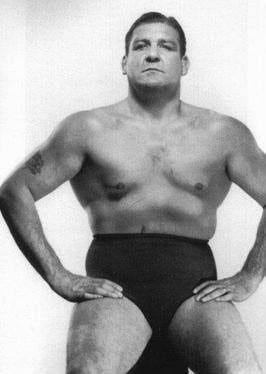
Pictured: Yvon Robert
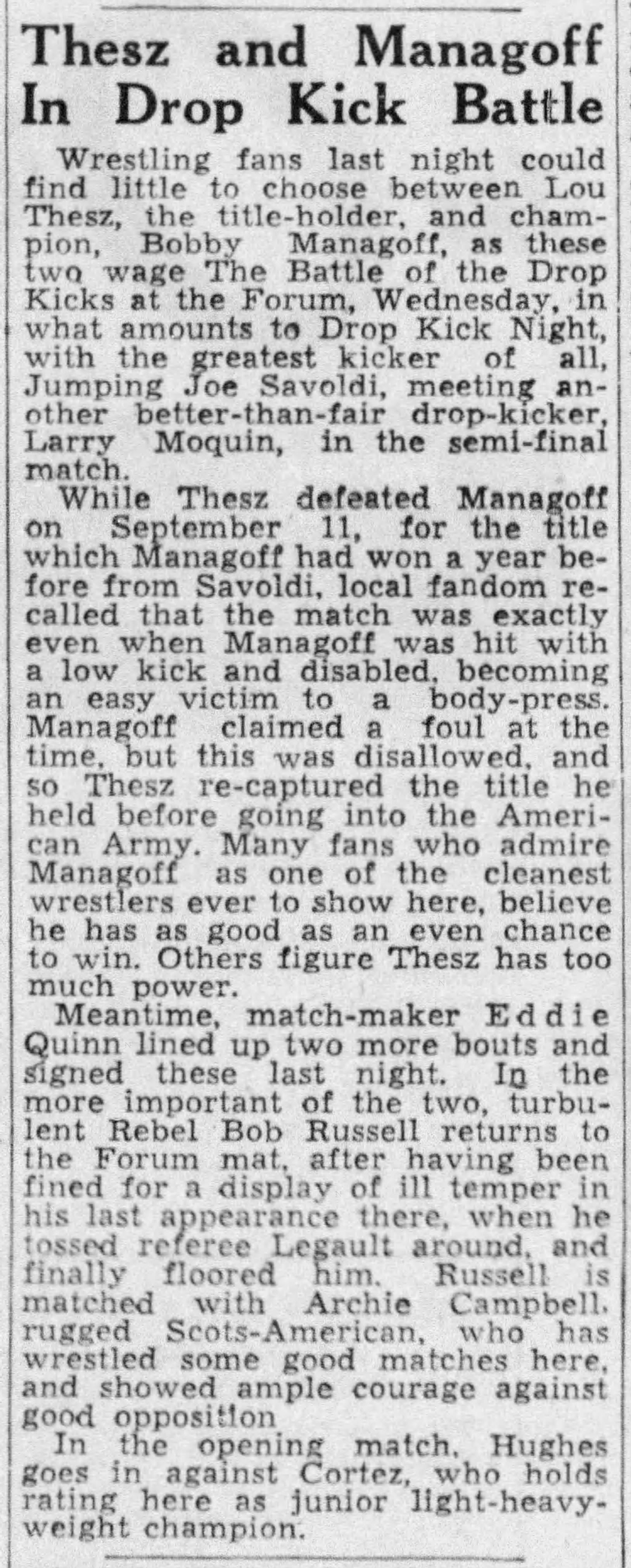
Eddie Quinn’s Montreal promotion delivered some of the month’s largest single crowds. On November 6 the Forum drew 10,000 for Montreal World Heavyweight Champion Lou Thesz’s count-out victory over local hero Yvon Robert. On November 13 the house reached 14,351. On November 20 Thesz defeated Bobby Managoff in two falls to one before another 10,000.
These results showed Thesz operating as a credible traveling champion whose presence elevated Canadian cards while protecting the local hierarchy. Robert remained a major attraction in Quebec; Managoff continued to work both sides of the border. The Canadian offices retained relative independence from the American title picture, using their own championship while importing U.S. talent for special events. The strong gates demonstrated that demand was not limited to the United States.
Los Angeles and the Pacific Coast
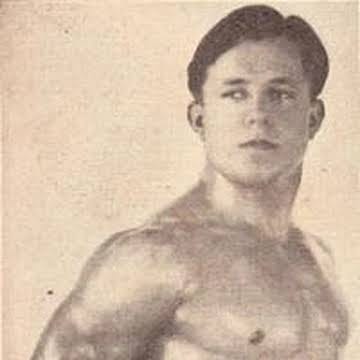
Pictured: George Becker, Calofrnia’s World Champion
Cal Eaton’s weekly Wednesday night cards at the Olympic Auditorium continued the recovery that had accelerated after Primo Carnera’s successful summer debut. George Becker was billed as a world champion on several November shows. On November 6 he defeated Bobby Bruns. On November 20 he defeated Babe Zaharias. On November 27 he wrestled Bruns to a draw. Enrique Torres, still rising as a local favorite, defeated Bob Wagner on November 13 in a California State Heavyweight match and remained a consistent main-event presence.
Attendance figures for the Olympic were solid though not always published; the building’s reputation as a reliable weekly house held. Supporting talent included the Zaharias brothers, Mile Hi Ross, Reginald Siki, and others. Farther north in Oakland, Bronko Nagurski and then Billy Hanson were recognized as Pacific Coast champions, with regular cards featuring Kay Bell, Dutch Hefner, Wee Willie Davis, and local hands. The West Coast circuit operated with its own title hierarchy while drawing occasional national names.
Midwest Title Consolidation
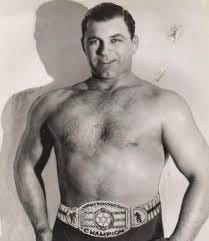
Pictured: Orville Brown, Midwest Wrestling Association World Champion
On November 16 in Wichita, Orville Brown defeated Ed Virag before 4,500 fans in a match billed as unifying Virag’s claim with Brown’s Midwest Wrestling Association and “National Wrestling Alliance” world titles. Special referee Ed “Strangler” Lewis was in the ring. A physician stopped the match after Virag suffered a head cut from a ring-post buckle; Brown was awarded the decision. Side bets of $1,000 each and a winner-take-all gate had been publicized. Brown later defended against Everett Marshall in Kansas City on November 28.
The match reflected the ongoing regional effort to clarify championship legitimacy in the Midwest. Brown’s dominance of the Kansas-Missouri circuit made him the logical figure to carry a unified claim, a position that would become formal when the National Wrestling Alliance recognized him as its first world champion in 1948. Local Montana promotions continued to bill various claimants, including Ronnie Etchison, illustrating how loosely coordinated the “NWA” name still was in late 1946.
Novelty Attractions and Emerging Characters
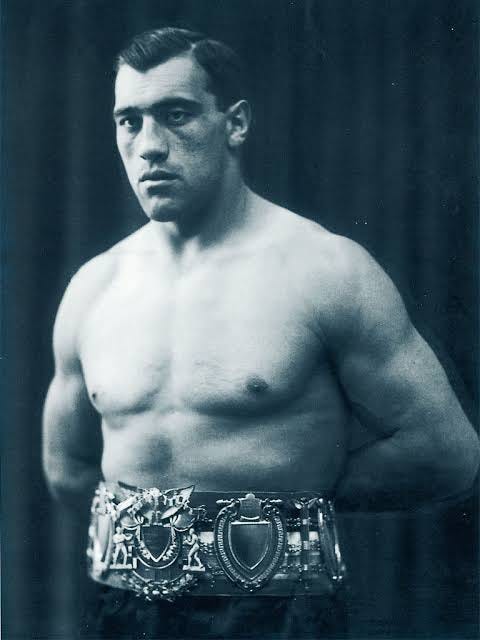
Pictured: Primo Carnera
Primo Carnera continued his successful transition from boxing. On November 21 in Cleveland he defeated Jules Strongbow before 9,279 fans with former heavyweight boxing champion Jack Sharkey as special referee. On November 22 in Chicago he defeated Fred Von Schacht as part of a 7,760-fan card that also featured Lou Thesz drawing with Bobby Managoff. Carnera’s size and name recognition still moved tickets in major cities.
Gorgeous George (George Wagner) appeared on Sam Muchnick’s November 8 St. Louis card, losing to Sandor Szabo. George’s flamboyant “glamour boy” character had been developing since the early 1940s; by late 1946 he was already generating curiosity and heat through appearance and mannerisms rather than pure wrestling credentials. His full national explosion would come with television, but the November St. Louis appearance showed he was already being booked as a special attraction outside his primary West Coast base.
Business Analysis
November 1946 demonstrated that the post-war recovery was durable. Kiel Auditorium houses of 8,000–11,000 under Packs, Montreal Forum crowds of 10,000–14,000, and solid mid-size gates in Wichita, Cleveland, and Oakland reflected renewed consumer spending and a public appetite for live entertainment. Talent costs remained manageable because the pool of established wrestlers was still rebuilding; many worked frequent short programs rather than long exclusive tours.
The fragmentation of world titles remained both a commercial strength and a structural weakness. Every major territory could claim a champion and sell that claim locally. At the same time, the absence of a single recognized title limited national storytelling and forced promoters to negotiate carefully when top names crossed territorial lines. The competitive situation in St. Louis between Packs and Muchnick illustrated the tensions that the 1948 Alliance would later address through formal territorial recognition and a shared championship.
The largest single reported house in November 1946 was the Montreal Forum on November 13, which drew 14,351 fans.
The main event was a tag-team match: local hero Yvon Robert and Larry Moquin defeated Fred Von Schacht and George Koverly in two straight falls. Robert had long been the biggest drawing card in Quebec; pairing him with Moquin against imported heels produced the month’s peak attendance.
Other strong numbers that month included:
• Bill Longson (National Wrestling Association World Heavyweight Champion) headlined two major St. Louis Kiel Auditorium cards for Tom Packs: 10,921 on November 15 (defeating Felix Miquet by DQ) and 8,792 on November 27 (defeating Everett Marshall). Packs’s November 1 show (Thesz vs. Managoff, with Rogers and Marshall also on the card) drew 10,564.
• Lou Thesz, as Montreal World Heavyweight Champion, drew 10,000 on November 6 (count-out win over Yvon Robert) and another 10,000 on November 20 (defeating Bobby Managoff).
• Primo Carnera drew 9,279 in Cleveland on November 21 against Jules Strongbow (special referee Jack Sharkey).
Yvon Robert was associated with the single biggest gate. Bill Longson was the most consistent high-end draw in the United States, especially in St. Louis, where his title defenses routinely filled the Kiel. Lou Thesz was a strong secondary/traveling draw, particularly in Canada. No single wrestler dominated every major market, which was typical of the fragmented pre-NWA territorial landscape of late 1946.
Television remained marginal. Fred Kohler’s Chicago experiments from the previous summer had shown the medium’s potential, but most of the business still depended on live gates, newspaper publicity, and word of mouth. Wrestlers such as Thesz, Longson, Brown, and the emerging George represented the range of styles—scientific legitimacy, aggressive heel work, regional dominance, and character-driven presentation—that would define the next decade.
November 1946 was not a month of dramatic national title changes. It was a month of strong, consistent business across multiple regions, of competing championship claims that still required local resolution, and of the continued rebuilding of a talent base that would support the territory system for the next thirty years. The arenas were full, the roads were open, and the commercial foundations for the National Wrestling Alliance were already visible in the gates and the rivalries of that late-autumn stretch.
Thank You for Watching and Listening
I’m Tony Richards, Pro Wrestling Historian, Author and Storyteller. I share pro wrestling historical items in each issue of the Time Tunnel Pro Wrestling History Newsletter and each episode of our podcast show. Thanks for your support! If you enjoy my information on select events, matches and insights, please share with folks you think might like to be a subscriber!
Remember, Premium subscribers get access to exclusive and special content such as some special issues including a multi-part deep dives on wrestling territories, wrestler bios and championship title histories, special audio and video interviews on territory pro wrestling and more available in the Pro Wrestling Time Tunnel for Premium Subscribers. Being a Premium Subscriber also means you support me in my efforts to document Pro Wrestling History through my research, writing, books, vidoes and podcasts. And…I have something very special planned for our Premium Subscribers on the Podcast side of things in 2026! Details soon here in the Pro Wrestling Time Tunnel.