


Today’s Favorite Quote: There are some things you can’t learn from others. You have to pass through the fire - Norman Douglas
Happy Birthday to those who have passed on and to those great wrestlers still with us:
In Memoriam:
Morris Sigel 1898
Nanjo Singh 1908
Dick Lever 1910
Dave Levin 1913
Bill Fralic 1962
Happy Birthday:
(none)
RIP Memorial: We stop & remember those who have passed on this day and gave themselves to the business for us, the fans. We salute you and thank you.
Gene Anderson 10-31-1991 at the age of 52
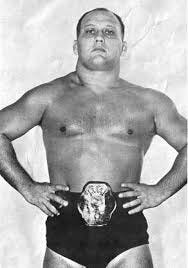
Joe Dusek 10-31-1992 at the age of 81
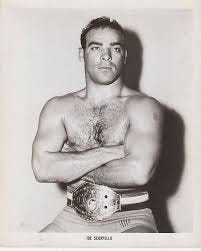
Moose Cholak 10-31-2002 at the age of 72
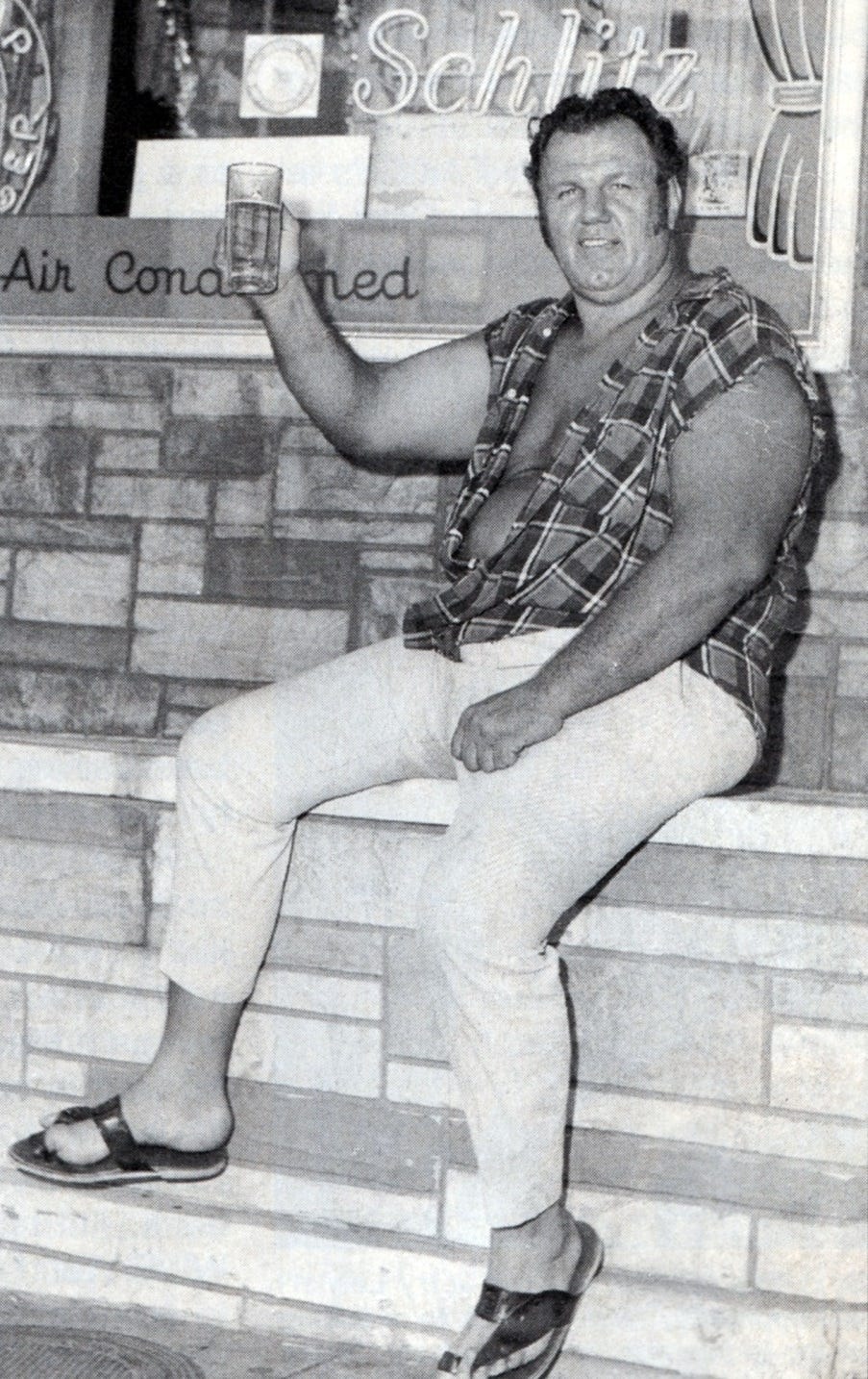
Jim Osburn\Dr. X\Double X 10-31-2016 at the age of 80
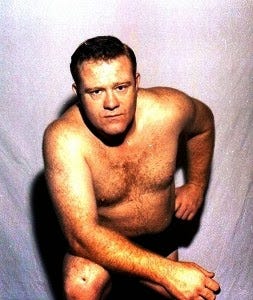
Significant Wrestler Debut
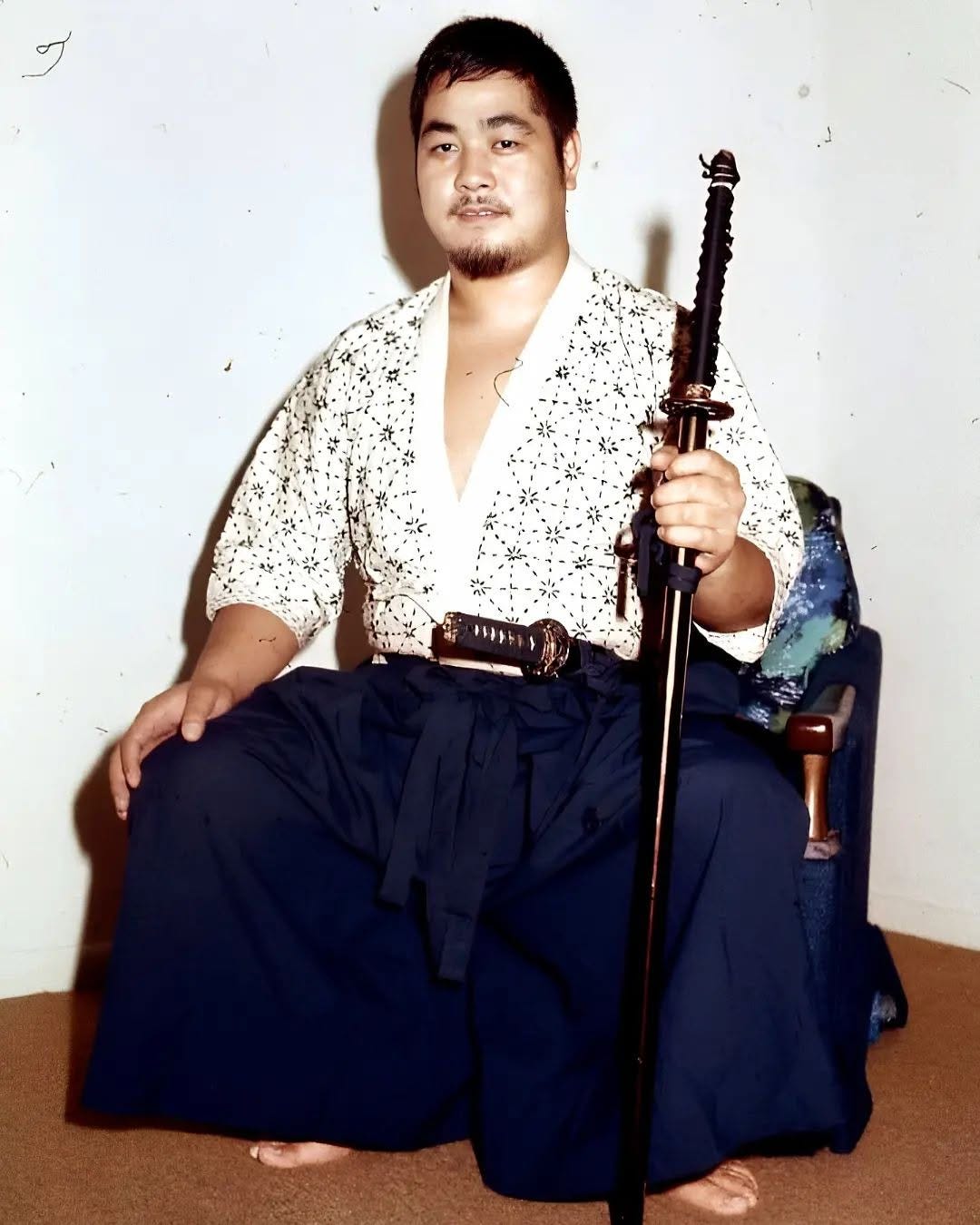
10-31-1964 Akhisa Mera (The Great Kabuki) was defeated by Kotetsu Yamamoto at the JWA “Siege of the Autumn” Series in Ishinomaki, Miyagi, Japan
The Life and Career of Cowboy Bradley
Robert Claton Bradley, known to wrestling fans as Cowboy Bradley or Cowboy Bob Bradley, was a short-stature professional wrestler who spent more than a decade and a half as a mainstay of the National Wrestling Alliance’s midget division. Born February 11, 1935, in Dickens County, Texas, to Jessie Denson Bradley and Gertrude Laura (Swaringen) Bradley, he grew up on a farm as one of twelve children—five brothers and six sisters. The rural West Texas upbringing shaped a man who would later travel the length of North America in a profession that demanded both physical toughness and the ability to entertain crowds night after night.
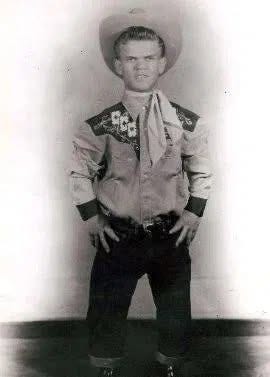
Bradley graduated from Roaring Springs High School in 1953 and enrolled for a single semester at West Texas State College in Canyon (now West Texas A&M University). He left school to pursue professional wrestling, joining the NWA World Midget Championship circuit. His debut came on April 14, 1954. In Chicago he acquired the ring name “Cowboy Bob” and recorded his first victory in a tag-team match alongside partner Haile Selassie against Fuzzy Cupid and Little Darling. The cowboy persona—boots, hat, and Western attire—became his signature, fitting both his Texas roots and the colorful presentation expected in the division.
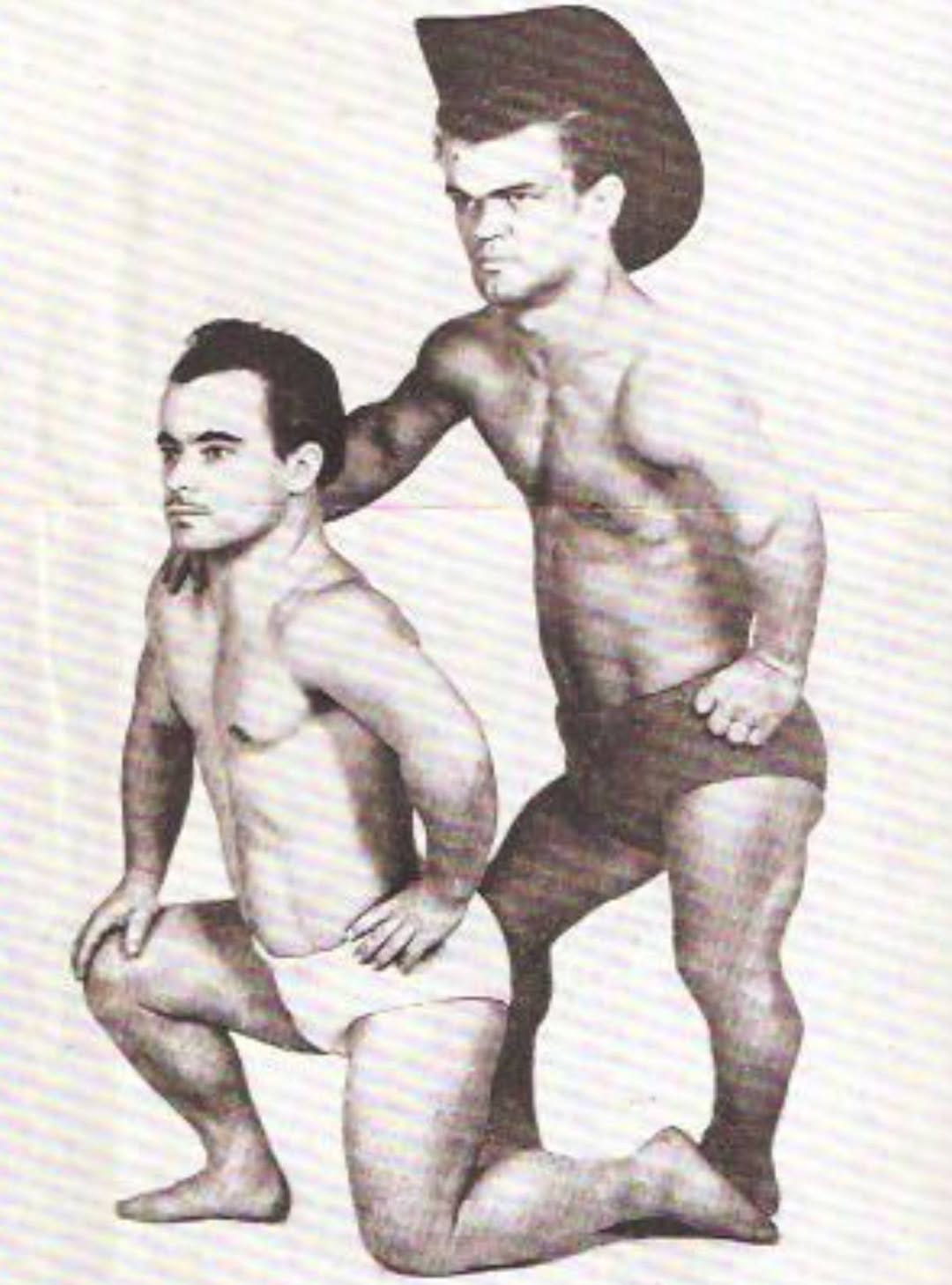
Pictured: Cowboy Bradley and Lord Littlebrook
Over the next sixteen years Bradley compiled an extraordinary record of activity. Contemporary accounts credit him with 951 documented matches and at least 547 wins; missing records from many small-town cards suggest the true totals were higher. He teamed with nearly one hundred different partners, among them some of the division’s best-known names: Cowboy Lang, Little Beaver, Lord Littlebrook, Sky Low Low, and Tiny Roe. He worked extensively across NWA territories—Texas (including the Amarillo-based promotion), Georgia Championship Wrestling, Central States, Mid-Atlantic, Florida, St. Louis Wrestling Club, and Maple Leaf Wrestling in Canada—as well as AWA and WWWF cards. In Madison Square Garden he appeared in multi-man tags alongside Little Beaver, the Jamaica Kid, Sonny Boy Cassidy, and others during the mid-to-late 1960s.
NWA World Champion
His signature achievement came in 1960 when he defeated Tiny Roe at the Atlanta Municipal Auditorium to win the NWA World Midgets Title. Bradley was billed as champion in Georgia that year. Historical compilations sometimes list him as the youngest wrestler to hold the title. He continued to work major cities and smaller towns alike, logging the high volume of matches (documented at 951 with 547 wins, likely undercounts) that defined the life of a full-time territorial wrestler. some historical compilations list him as the youngest wrestler to hold the title.
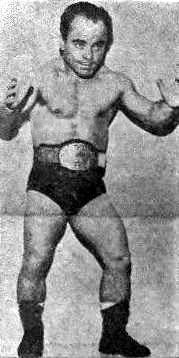
Pictured: Lord Littlebrook wearing the NWA World Midgets Championship Ttile belt
He defended the championship and continued to notch victories over established stars of the circuit. The midget division itself occupied a complicated place in territorial wrestling. Promoters used the matches as a reliable crowd-pleasing attraction, often framing them with comedy elements, yet the athletes were skilled workers who traveled the same roads and faced the same physical demands as their larger counterparts. The term “midget” was the industry standard of the era; organizations such as Little People of America criticized it, while opinions among the wrestlers themselves varied. Bradley operated within that landscape for his entire career.
By the mid-1960s he was appearing regularly on WWWF cards at Madison Square Garden and in Canadian promotions. Surviving results include:
• August 1, 1964, Madison Square Garden: Bradley and Sonny Boy Cassidy defeated Billy the Kid and Fuzzy Cupid.
• July 8, 1965, Toronto (Maple Leaf): Bradley and Sonny Boy Cassidy defeated Billy the Kid and Red Taylor.
• July 28, 1965, Ottawa: Bradley and the Jamaica Kid defeated Billy the Kid and Sky Low Low (two-out-of-three falls).
• October 20, 1965, Madison Square Garden: Bradley and Pancho Lopez lost to the Jamaica Kid and Tiny Tim.
• May 20, 1968, Madison Square Garden: Bradley and Irish Jackie defeated Frenchy Lamont and Sonny Boy Cassidy.
• January 27, 1969, Madison Square Garden: Billy the Kid and Bradley lost to Joey Russell and the Jamaica Kid.
• May 14, 1969, Madison Square Garden: Bradley and Pee Wee Russell lost to Little Brutus and Sky Low Low.
• June 30, 1969, Madison Square Garden: Bradley, Little Beaver, and the Jamaica Kid defeated Billy the Kid, Little Bruiser, and Sky Low Low in a six-man tag (three-out-of-five falls).
• January 19, 1970, Madison Square Garden: Bradley and Little Beaver defeated Little Brutus and Sky Low Low (two-out-of-three falls).
A March 2, 1962, St. Louis card shows Bradley teaming with Little Boy Blue against Bull Brummel and Tiny Roe. These results illustrate the fluid nature of the division: the same wrestlers (Little Beaver, Sky Low Low, Sonny Boy Cassidy, Billy the Kid, the Jamaica Kid, Fuzzy Cupid, Tiny Roe, Lord Littlebrook) constantly rotated between partners and opponents. Other frequent associates and opponents listed in career summaries include Tito Infante, Little Red Feather, Joey Russell, Irish Jackie, Beau Brummell, Ivan the Terrible, Frenchy Lamont, Little Brutus, and Otto Bowman.
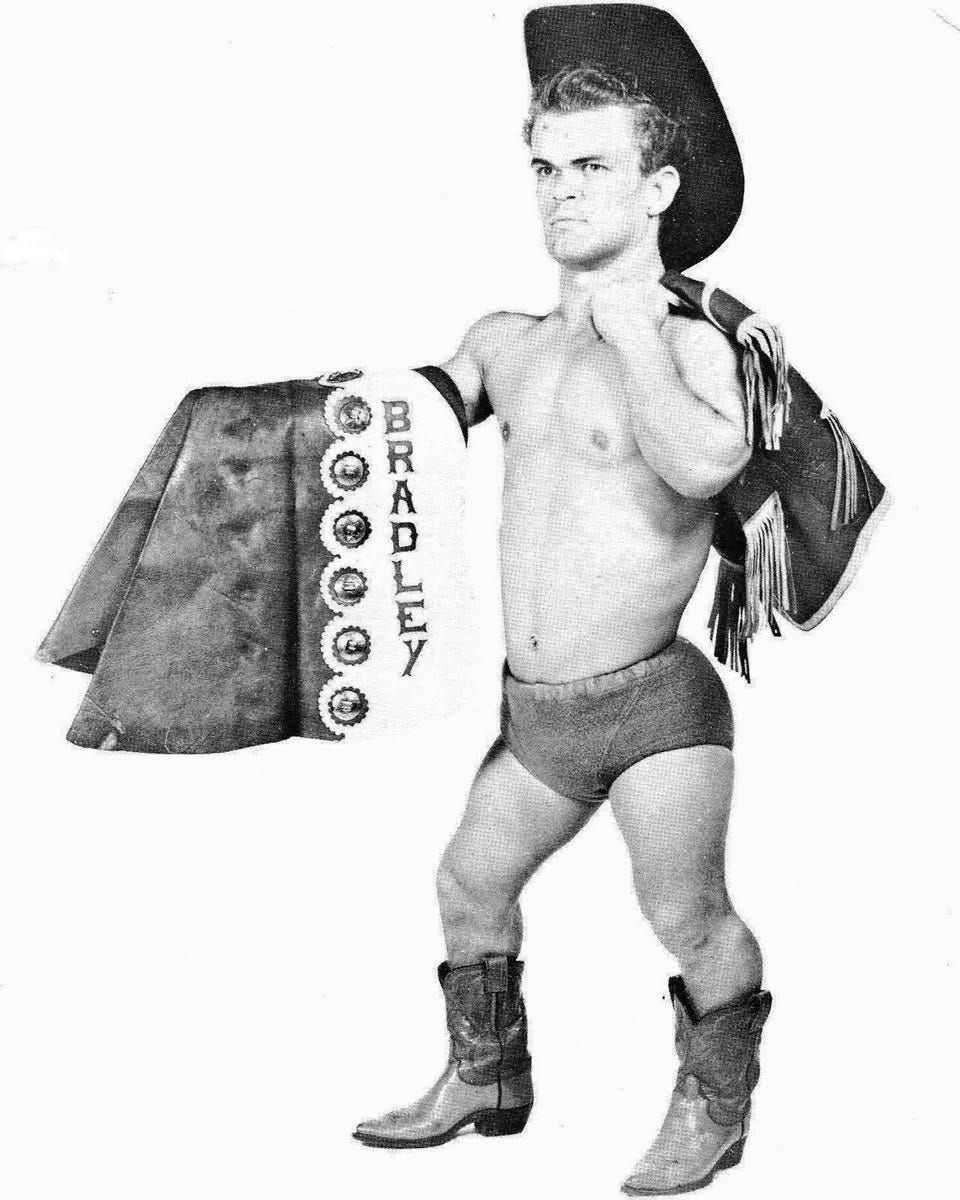
The physical and lifestyle demands were considerable. Matches were usually short by modern standards but frequent; a wrestler might work several nights a week in different towns, then move to another territory for a multi-week booking. The comedy framing common in the division—exaggerated mannerisms, high-flying spots adapted to smaller frames, and character-driven presentation—coexisted with real athletic skill and the ordinary risks of the ring. Promoters valued the division because it provided variety on cards otherwise dominated by larger heavyweights and because the troupes could be booked efficiently.
Bradley’s primary run ended around 1970–71. He returned for selected matches in 1975, most notably teaming with Sonny Boy Hayes to defeat the highly decorated Lord Littlebrook and Little Tokyo, and again in 1977 with Sonny Boy Cassidy against Little Bruiser and Mighty Atom. After leaving the ring he worked for several years as a blackjack dealer in Las Vegas before settling in the Amarillo area.
In the broader context of 1950s–1960s territorial wrestling, Cowboy Bradley was a dependable, widely traveled worker who held a version of the NWA World Midgets Title, appeared in major arenas, and shared the ring with the division’s leading names for more than a decade and a half. The incomplete records of the era make precise win-loss statistics and title defenses hard to reconstruct, but the surviving evidence shows a career defined by volume, geographic range, and steady participation in one of the most specialized and colorful segments of professional wrestling.
Personal Life
Bradley and Doris Yvonne Lankford had a daughter, Tammie Cassandra Bradley, born September 12, 1957. The family lived for a time in St. Joseph, Missouri, but Bradley’s schedule kept him on the road for extended periods. The marriage ended in divorce in 1966; he did not remarry. After retiring around 1970–71 he worked for several years as a blackjack dealer in Las Vegas. He returned to the ring for select matches in 1975, teaming with Sonny Boy Hayes to defeat the highly decorated Lord Littlebrook and Little Tokyo, and again in 1977 alongside Sonny Boy Cassidy against Little Bruiser and Mighty Atom.
Bradley spent his later years in the Amarillo area. He died on June 24, 2010, at age seventy-five and was buried in Memorial Park Cemetery beside his parents. Survivors included his daughter Tammie Bylina of Las Vegas, several siblings, grandchildren, and great-grandchildren. In the territorial era’s midget division—where records were incomplete, championships were sometimes regionally recognized, and the work was both athletic and theatrical—Cowboy Bradley stood out as a durable, widely traveled champion who carried a Texas cowboy identity from farm country to arenas across the United States and Canada. His 1960 title win, long match log, and partnerships with the division’s leading names mark him as one of the more significant figures in that specialized chapter of professional wrestling history.
ONE Thing I Learned About Manami Toyoda
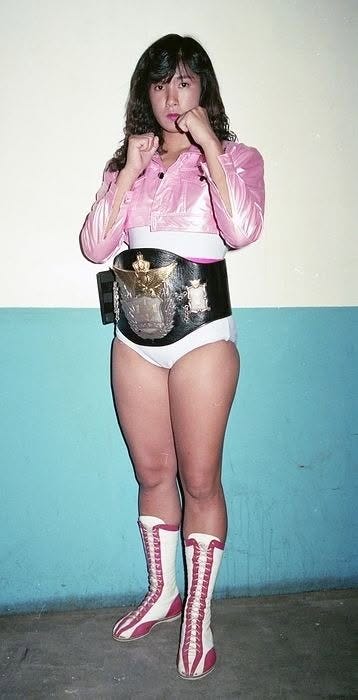
After she defeated longtime rival and tag partner Toshiyo Yamada in their famous August 15, 1992 hair-vs.-hair match (for the IWA World Women’s Championship), Toyota refused to let the stipulation be carried out. Even though she had won, she cut a chunk of her own hair in respect and then had to be physically restrained by several other wrestlers while officials shaved Yamada’s head. The emotional aftermath is often cited as one of the most memorable post-match scenes in joshi history.
Thank You for Watching and Listening
I’m Tony Richards, Pro Wrestling Historian, Author and Storyteller. I share pro wrestling historical items in each issue of the Time Tunnel Pro Wrestling History Newsletter and each episode of our podcast show. Thanks for your support! If you enjoy my information on select events, matches and insights, please share with folks you think might like to be a subscriber!
Remember, Premium subscribers get access to exclusive and special content such as some special issues including a multi-part deep dives on wrestling territories, wrestler bios and championship title histories, special audio and video interviews on territory pro wrestling and more available in the Pro Wrestling Time Tunnel for Premium Subscribers. Being a Premium Subscriber also means you support me in my efforts to document Pro Wrestling History through my research, writing, books, vidoes and podcasts. And…I have something very special planned for our Premium Subscribers on the Podcast side of things in 2026! Details soon here in the Pro Wrestling Time Tunnel.