


Today’s Favorite Quote: Your personal experiences make up maybe .00001% of what’s happened in the world but maybe 80% of how you think the world works. We are all biased to our own personal history - Morgan Housel
Happy Birthday to those who have passed on and to those great wrestlers still with us:
In Memoriam:
Charles Atlas 1892
Ali Pasha 1907
Danny McShain 1912
Ron Slinker 1945
Jackie Sato 1957
Happy Birthday:
George Wells (79)
Joseph D’Aquisto\Roadblock (66)
Dr. Luther (58)
Alex Porteau (57)
Adam Copeland\Edge (53)
RIP Memorial: We stop & remember those who have passed on this day and gave themselves to the business for us, the fans. We salute you and thank you.
Earl Denmore\Gypsy Joe 10-30-2002 at the age of 86

Edouard Carpentier 10-30-2010 at the age of 84
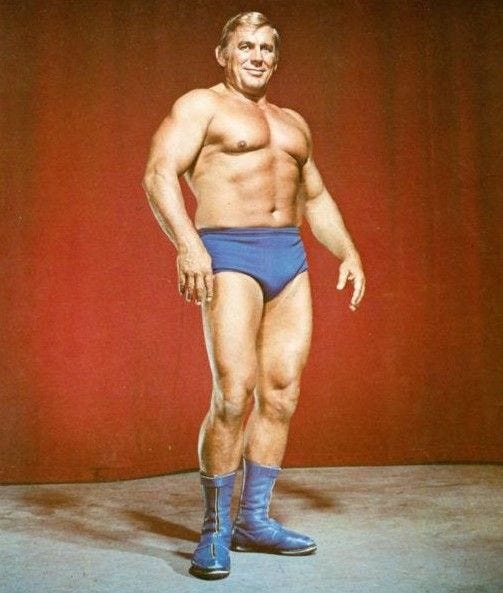
Bob Geigel 10-30-2014 at the age of 90

Victor Tomayo\Joe Soto\Blue Demon #2\Blue Devil 10-30-2016 at the age of 86

Significant Pro Debut
10-30-1930 Danny McShain lost his first professional match against an unknown opponent in Little Rock, Arkansas
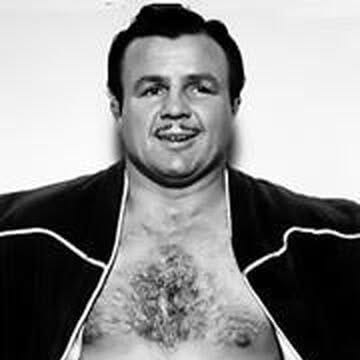
The Life and Career of Gene Anderson
Eugene Avon “Gene” Anderson was the foundational figure of one of professional wrestling’s most enduring kayfabe dynasties and one half of the Minnesota Wrecking Crew, the rugged, technically precise tag team that defined territorial-era tag wrestling in the Southeast during the 1960s and 1970s. The only actual Anderson among the billed “brothers,” he partnered first with Lars Anderson (Larry Heiniemi) and then, most famously, with Ole Anderson (Alan Rogowski). Together they set the standard for heel tag-team work—methodical, punishing, and psychologically airtight—while winning multiple versions of NWA World and regional tag titles. Gene later managed, trained talent, and worked as a deputy sheriff in North Carolina before dying of a heart attack at 52.
Early Life and Amateur Background
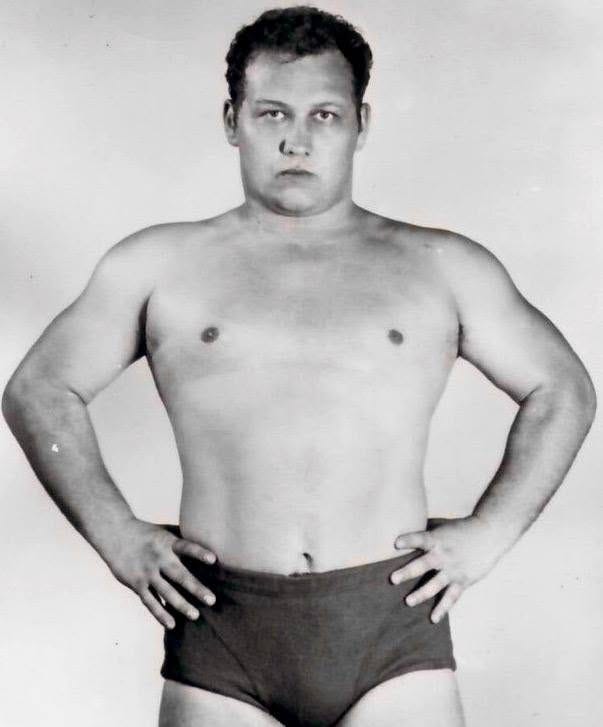
Anderson was born in Saint Paul, Minnesota, to Royal Anderson and Pauline Sergeant. He starred in amateur wrestling at South Saint Paul Secondary, capturing a state championship, and attended North Dakota State College of Science. He competed against the future Ole Anderson (Alan Rogowski) in high school football, wrestling, and track; Gene was a grade ahead and three years older. Trained by Verne Gagne, he turned professional in 1958. After early work in Calgary for Stampede Wrestling, he joined Gagne’s American Wrestling Association in 1961.
Forming the Minnesota Wrecking Crew
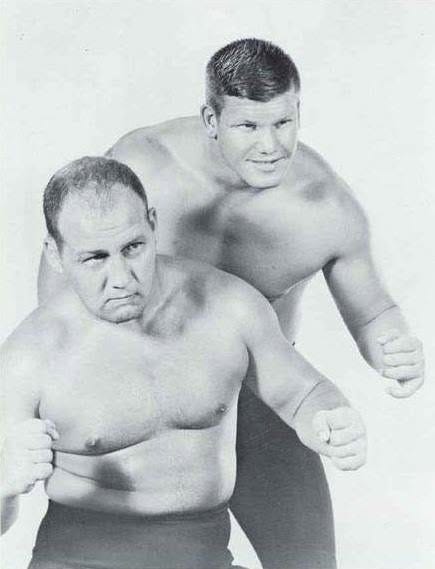
Pictured: Lars and Gene Anderson
In 1965–66, Gagne paired the experienced Anderson with fellow Minnesotan Larry Heiniemi (an AAU champion and St. Cloud State standout), billing them as brothers. They became the original Minnesota Wrecking Crew. After a brief stop in Nick Gulas’s Tennessee territory—where they first used the Anderson Brothers moniker—they debuted for Jim Crockett Promotions in May 1966 and quickly became headliners in the Carolinas and Virginia. With Lars, Gene also worked Georgia Championship Wrestling, winning the NWA Southern Tag Team Championship (Georgia version) twice and the NWA World Tag Team Championship (Georgia version) once in 1967.
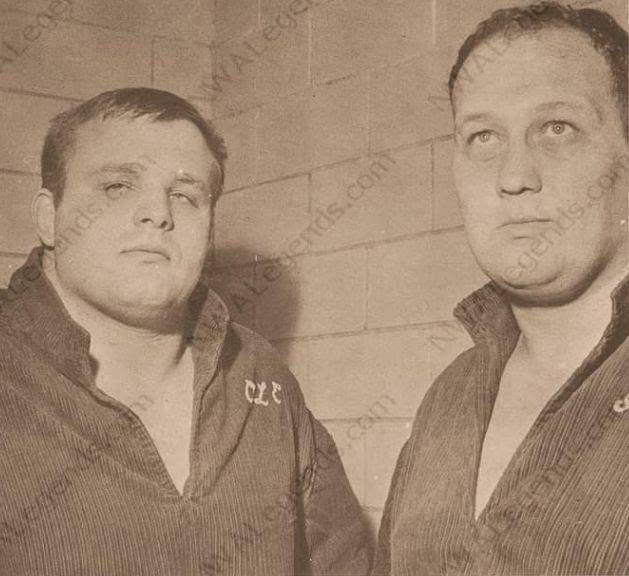
Pictured: Ole and Gene Anderson
Lars eventually left for Hawaii and other territories. In 1968–69, Gene brought in Rogowski, who adopted the name Ole Anderson and was presented as the younger brother from the Minnesota Northwoods. The Gene-and-Ole pairing became the definitive Minnesota Wrecking Crew. They were not blood relatives, yet their working relationship was extraordinarily close and durable. Ole later said Gene taught him roughly 90 percent of what he knew and consistently put him over, volunteering to take second place. Gene was the quieter, more stoic partner—low-key, deferential on business decisions, and a man of few words—while Ole handled most of the talking and promotional energy. They alternated driving the long road trips between towns, spent enormous amounts of time together on the road, and rarely socialized outside of work.
Dominance in Mid-Atlantic and Georgia
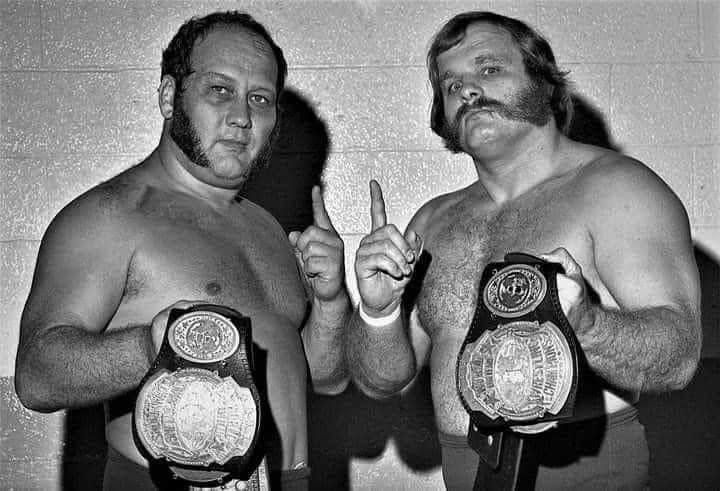
From the late 1960s through the early 1980s, the Andersons were mainstays of Jim Crockett’s Mid-Atlantic Championship Wrestling and Georgia Championship Wrestling (where Ole later became booker and part-owner). They specialized in old-school, shoot-style wrestling: working over a single limb or body part with precise holds, frequent tags, and blocking techniques that made their matches feel like legitimate contests. There were no catchphrases; the work itself generated heat. They could draw as hated heels or, more rarely, as respected babyfaces, and promoters valued them enough that Crockett told them they could stay as long as they wanted—an uncommon privilege in an era when most wrestlers rotated through territories.
Key title accomplishments included:
• Multiple NWA Atlantic Coast / Mid-Atlantic Tag Team Championship reigns with Ole (accounts list six or more between 1970 and 1975).
• Inaugural NWA World Tag Team Championship (Mid-Atlantic version) on January 29, 1975; they held this title seven times total through 1981.
• NWA Georgia Tag Team Championship seven times with Ole (1974–1977), plus other Georgia regional tags.
Pro Wrestling Illustrated named the Minnesota Wrecking Crew Tag Team of the Year in both 1975 and 1977. They feuded with top teams including Paul Jones & Wahoo McDaniel, Dusty Rhodes & Dick Slater, Tim Woods & Dino Bravo, and especially their kayfabe cousin Ric Flair (another Gagne product from Minnesota) paired with Greg Valentine. A memorable 1975 “Supreme Sacrifice” finish saw Ole slam Wahoo’s head into Gene’s to score a pin. In 1977 they traded the Mid-Atlantic World tags with Flair & Valentine in high-profile matches, including a cage bout with Wahoo as special referee. Real-life neck issues for Gene were sometimes written into angles; he underwent surgery after a 1977 Greensboro match and recovered while Ole cut promos from the hospital.
Later Career, Management, Injuries, and Retirement
Gene’s neck was chronically damaged, producing a constant twitch he largely ignored. He was known for toughness—Ole recalled instances in which Gene had teeth driven backward by Wahoo McDaniel and continued working, or simply had them pulled the next day without complaint. In October 1981, Wahoo McDaniel hit him with a baseball bat to the back of the head; the blow caused a stroke. Combined with years of accumulated damage, diabetes, and other issues, this effectively ended Gene’s full-time in-ring career. He and Ole forfeited the World Tag titles in December 1981.
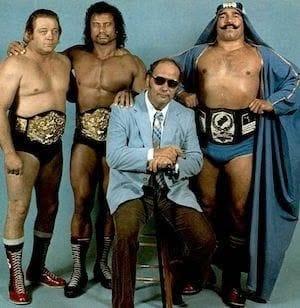
From 1979 he managed “Anderson’s Army,” a group that included Jimmy Snuka, Ray Stevens, The Iron Sheik, The Masked Superstar, and Ivan Koloff. He later worked under Sir Oliver Humperdink in the House of Humperdink stable. He continued occasional wrestling into the mid-1980s (with reports of matches as late as 1984–85) before fully retiring from active competition. He co-operated a wrestling school with Nelson Royal that trained wrestlers including Ken Shamrock. His son Brad Anderson (born 1969) also entered the business, trained by Gene and Royal, and worked under various names in the NWA and independents.
After leaving full-time wrestling, Gene became a deputy sheriff in North Carolina (Mecklenburg County), a position facilitated by longtime colleague Johnny Weaver. He spent roughly the last ten months of his life in that role.
Personal Life and Death
Anderson was married to Edith “Edie” Anderson (née Simpson). They had three children: son Brad and daughters Alicia and Pauline. He died of a sudden heart attack on October 31, 1991 (Halloween), at age 52, while attending a law-enforcement training event in Huntersville, North Carolina. He was found after stepping out of class; the cause was a massive myocardial infarction. He is buried in North Carolina. Ole Anderson, though not a blood relative, was listed as a surviving brother in the obituary and later spoke of Gene as one of the most loyal partners he ever had.
Legacy
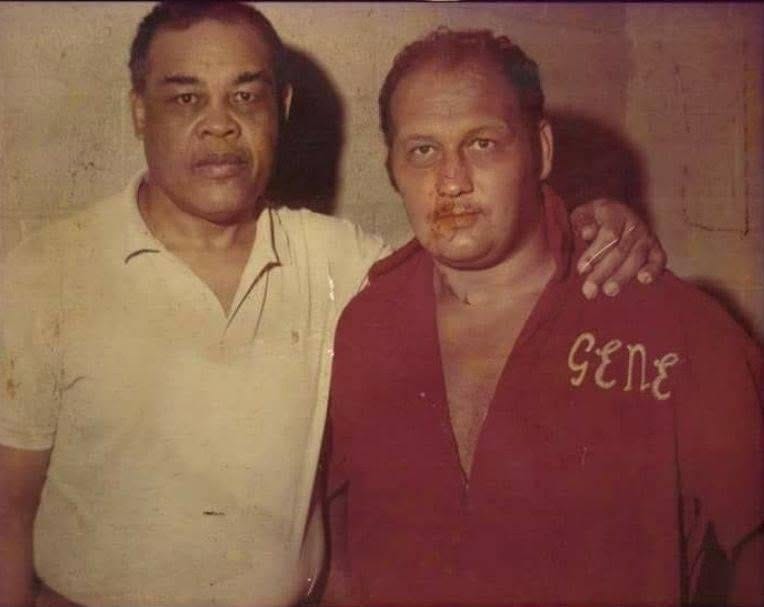
Pictured: Boxing legend Joe Louis and pro wrestling legend Gene Anderson
Gene Anderson is the genuine root of the Anderson wrestling “family.” The kayfabe lineage he helped create extended through Ole, Arn Anderson (Marty Lunde), and the original Four Horsemen, influencing generations of wrestlers. The Minnesota Wrecking Crew’s combination of amateur credentials, territorial longevity, drawing power, and pure in-ring craft set a benchmark for tag-team wrestling that later teams consciously or unconsciously referenced. In 2010 the NWA inducted the Minnesota Wrecking Crew into its Hall of Fame (Groups wing).
Gene himself remained relatively low-key compared with the more vocal Ole and the later Horsemen. He was the solid, uncomplaining foundation—the man who put his partner over, worked the territory night after night, absorbed the physical cost, and later transitioned into law enforcement. In an era of flamboyant characters and rapid turnover, the quiet Minnesotan helped build one of wrestling’s most durable and respected institutions.
ONE Thing I Learned About The Dusek Brothers
The Dusek brothers’ real surname was Hason (they were the sons of Bohemian immigrants Anton and Maria Hason of Omaha, Nebraska). They adopted “Dusek” for wrestling because it was the last name of Rudy’s godmother—and, as family members later explained, Hason simply “didn’t sound like a Bohemian name.”
The four blood brothers (Rudy, Emil, Ernie, and Joe, there were actually eight brothers but only four wrestled) then became the Dusek Riot Squad (also called the Dirty Duseks or Nebraska Riot Squad), widely regarded as one of the earliest true heel stables in pro wrestling. They built a reputation for rough, brawling, crowd-stirring tag matches across the Midwest and New York territories from the 1930s onward, popularizing the slogan “Never a dull match with a Dusek.”
Later non-blood members (such as Wally Dusek, real name Charlie Santen, who was brought in as a “cousin” after a shooting tryout with the brothers) continued the name, but the original family identity began with that practical, almost accidental name change from Hason.
Thank You for Watching and Listening
I’m Tony Richards, Pro Wrestling Historian, Author and Storyteller. I share pro wrestling historical items in each issue of the Time Tunnel Pro Wrestling History Newsletter and each episode of our podcast show. Thanks for your support! If you enjoy my information on select events, matches and insights, please share with folks you think might like to be a subscriber!
Remember, Premium subscribers get access to exclusive and special content such as some special issues including a multi-part deep dives on wrestling territories, wrestler bios and championship title histories, special audio and video interviews on territory pro wrestling and more available in the Pro Wrestling Time Tunnel for Premium Subscribers. Being a Premium Subscriber also means you support me in my efforts to document Pro Wrestling History through my research, writing, books, vidoes and podcasts. And…I have something very special planned for our Premium Subscribers on the Podcast side of things in 2026! Details soon here in the Pro Wrestling Time Tunnel.