



Today’s Favorite Quote: When I think about measuring my work, I compare myself by shooting for the top. I compare myself with the very best who have done my kind of work - Ursula K. LeGuin
Happy Birthday to those who have passed on and to those great wrestlers still with us:
In Memoriam:
Lola LaRay 1938
Paul Orndorff 1949
Happy Birthday:
(none)
RIP Memorial: We stop & remember those who have passed on this day and gave themselves to the business for us, the fans. We salute you and thank you.
Harry Light 10-29-1971 at the age of 73
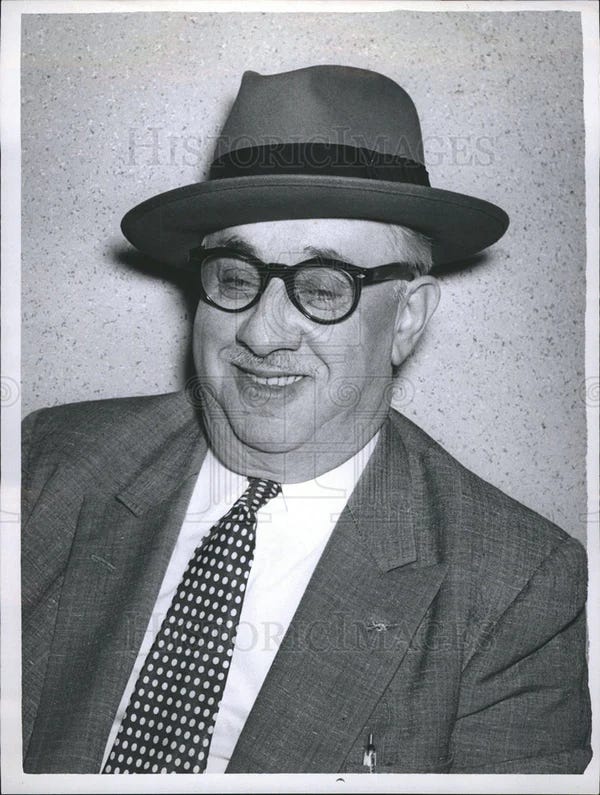
Wally Dusek 19029-1991 at the age of 82

7 Stages of the Territory Era
Stage 7: Disintegration (1985-1995)
Year Two Month Ten
October 1986:
Jim Crockett Promotions
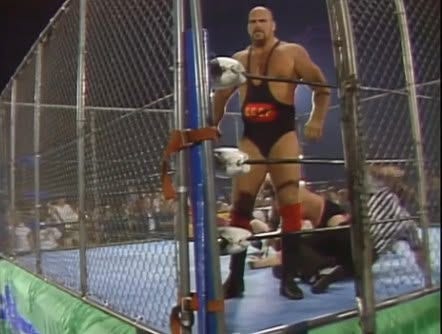
Jim Crockett Promotions is the usual reference point for a 1986 peak because the Great American Bash, the Horsemen, Magnum T.A., and Starrcade made it look, for a few months, like a viable national alternative. Other promotions also reached high points that year, or came close enough that the year can be treated as their apex. None of them had Crockett’s combination of television reach and remaining territorial scale. Several of them produced better in-ring work. Almost all of them discovered, by the end of the year, that a peak inside Stage 7 was not the same thing as a sustainable position.
Universal Wrestling Federation
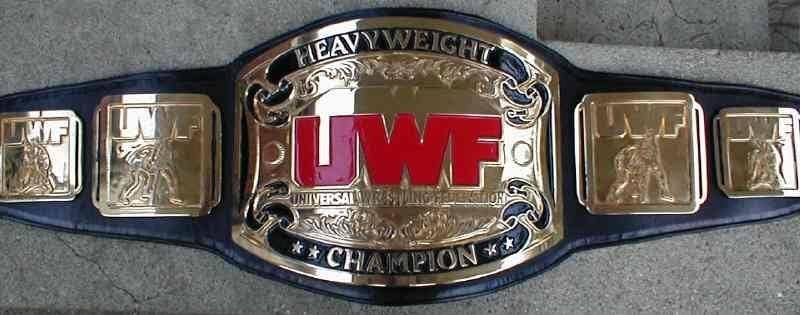
The clearest non-Crockett apex belonged to Bill Watts. In March 1986 he rebranded Mid-South Wrestling as the Universal Wrestling Federation and treated the change as a national launch rather than a name adjustment. The office already had one of the strongest in-ring rosters on the continent. Ted DiBiase, Steve Williams, Terry Gordy, the Freebirds, Jim Duggan, Terry Taylor, the Fantastics, and a still-green Sting (working with Eddie Gilbert) gave the promotion depth that most remaining territories no longer possessed. Jim Ross was already the lead announcer. The television product was sharp. The matches were hard. The storylines—Freebirds versus the rest of the roster, DiBiase’s title pursuits, Gilbert’s various turns—moved at a pace that felt urgent without the cartoon excess that was becoming standard elsewhere.
For several months the UWF looked like a third national option. It ran regular Houston dates at the Sam Houston Coliseum. It booked Flair for Superdome shows. It carried its own heavyweight, television, and tag titles with enough credibility that fans still treated the results as mattering. Watts’ personal involvement on television (including the famous flag-burning and baseball-bat segments) reinforced the sense that the promotion still had an owner who would stand in the ring and enforce the product.
The apex was real and brief. The same oil glut that had already begun damaging Texas and Oklahoma gates continued through the fall. Attendances that had been reliable started to thin. Talent began looking at Crockett and the WWF as safer long-term homes. By the end of 1986 the UWF was still producing excellent television and strong house-show matches, but the national ambition had already run into the economic reality of the states that paid for it. Watts would sell to Crockett the following spring. The 1986 version of the UWF stands as the last time a non-Crockett, non-WWF office in the old territorial system attempted a genuine national product and briefly looked capable of sustaining one.
World Class Championship Wrestling
World Class reached its commercial and creative height earlier. The Freebirds-Von Erich program, the stadium Star Wars shows, and the peak Cotton Bowl attendances all belonged to 1983–1985. By 1986 the promotion was already on the downward side of that peak, but the year still contained the last clear evidence of what the office had been.
It seceded from the NWA in February after Crockett stopped sending Flair into Texas. It crowned its own world champion. Kevin and Kerry Von Erich, Chris Adams, Rick Rude, the Freebirds (still working the territory at times), Bruiser Brody, and Abdullah the Butcher kept the cards recognizable. The July 4 Star Wars at Reunion Arena still drew a strong house. The product retained the production values and camera work that had once made World Class look advanced relative to other territories.
The second half of the year removed the remaining margin. Gino Hernandez died in February. Kerry’s motorcycle accident in June removed the biggest remaining active Von Erich for an extended period. The October Cotton Bowl Extravaganza drew roughly 5,800 after previous versions had drawn four times that number. Lance Von Erich was already on the roster as a family extension that many fans did not fully accept. The oil recession hit Texas at the same moment the local television monopoly had been broken by national syndication. World Class in 1986 was not an apex in the same sense as the UWF’s national push. It was the last year in which the promotion could still stage the kind of stadium show that had defined its peak, and the year in which those shows stopped working. The decline that followed was steep, but the first half of 1986 still looked enough like the earlier peak that some observers treated the office as still viable.
Memphis and the Continental Wrestling Association
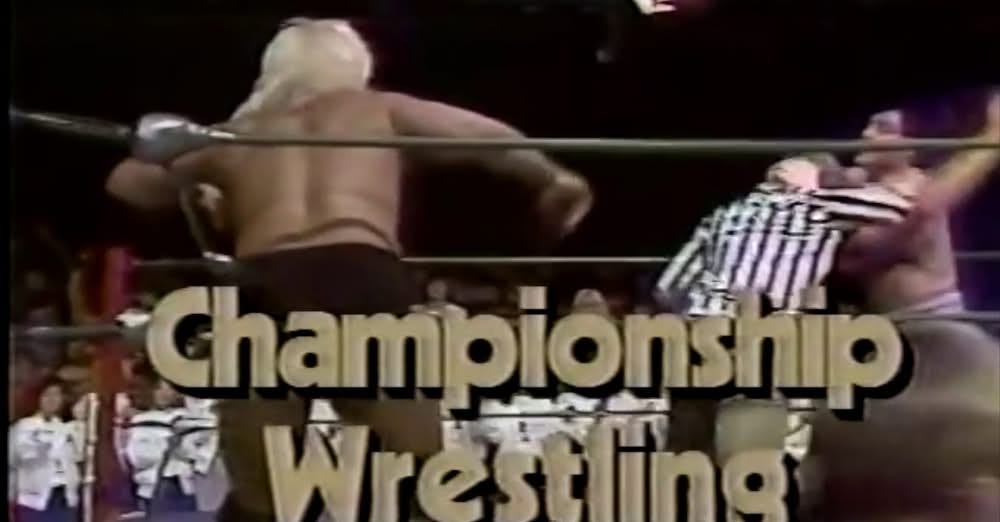
Jerry Lawler and Jerry Jarrett’s Memphis office did not attempt a national expansion in 1986. It continued to do what it had done for years: run a strong local product that could still fill the Mid-South Coliseum when the angle was hot. Lawler remained the central draw. Feuds with Bam Bam Bigelow, Austin Idol, the various Fire-Flame-Torch acts, and the usual parade of invaders kept the television show urgent. Jeff Jarrett was already a regular. The production was still the familiar Saturday-morning style that had worked for the territory for a decade.
Memphis did not reach a new commercial height in 1986. It reached a different kind of apex: the ability to remain functional and profitable as a regional office after most of its peers had already begun to lose that ability. The Coliseum still drew money for the biggest Lawler programs. March 3rd, 1986 is still fondly referred to as “The Last Sellout” for Bill Dundee and Buddy Landel vs Jerry Lawler and Dutch Mantell in a Texas Death Tornado match. So, if March 3rd was the “last sellout”, then we can draw conslusions the apex happened sometime in last 1984 or early 1985.
The television ratings remained solid in the local market. In Stage 7 terms this was a peak of resilience rather than expansion. The office proved that a tightly booked local product with a dominant babyface could still draw after the old territorial protections had collapsed. That proof did not scale. It did not prevent the WWF from using the same building when it chose. It did demonstrate that not every remaining office was collapsing at the same rate.
The AWA
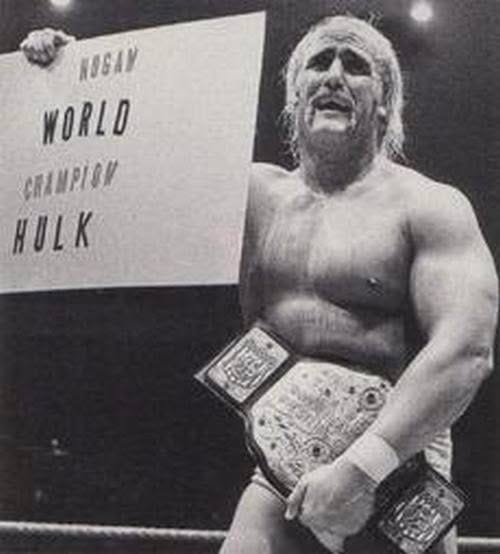
The AWA reached its apex well before Stage 7 began January 1st, 1985.. Its peak sat in the late 1970s through roughly 1982–83, with the absolute high point concentrated in the early 1980s while Hulk Hogan was still in the company. By the time the disintegration stage opened in 1985, the office was already past its commercial ceiling and entering a long, visible decline.
Verne Gagne founded the AWA in 1960 after leaving the NWA. For the next two decades it functioned as one of the most stable and expansive single offices in North America. It controlled a wide Midwestern circuit (Minnesota, Wisconsin, Illinois, Iowa, Nebraska) and later extended into Colorado, Utah, and parts of the West Coast. Gagne himself was the central champion for long stretches, with strong supporting draws such as The Crusher, Dick the Bruiser, Mad Dog Vachon, Baron von Raschke, and later Nick Bockwinkel with Bobby Heenan.
Stadium shows were real. A 1970 Gagne–von Raschke match at Chicago’s Comiskey Park drew a reported 21,000. Similar numbers appeared at other large outdoor and arena dates through the 1970s. The product mixed legitimate athletic credibility with clear regional stars and reliable television in its core markets. That combination sustained the office through Stage 5 (Re-Consolidation) and most of Stage 6 (Fragmentation).
The early 1980s produced the final upward movement. Geographic expansion continued. The roster still included credible technical and brawling talent. Most importantly, Hulk Hogan returned in 1981 and quickly became the company’s biggest gate attraction. His title challenges against Bockwinkel drew strong houses. Merchandise moved. The “Super Sunday” style finishes in 1983, in which Hogan appeared to win the title only for the decision to be reversed, showed that the audience was already treating him as the de facto top star. At that moment the AWA still looked like a major office capable of competing with the emerging national product.
The refusal to put the world title on Hogan in 1983 marked the practical end of the apex. Gagne’s preference for a technical champion and his reluctance to elevate a powerhouse babyface on Hogan’s terms created an irreconcilable gap. Hogan left in late 1983. Heenan and Jesse Ventura left with him or shortly after. The office lost its clearest path to a new generation of national-level drawing power. 1984 still produced respectable business in places—the Road Warriors arrived and some angles continued to work—but the trajectory had reversed. The company was no longer adding market strength; it was defending existing territory against a competitor that now controlled the star who had been its biggest recent asset.
By 1985 and 1986 the AWA was operating inside Stage 7 conditions while already on the downward slope. Stan Hansen’s brief and contested world title run in 1985–86 produced public friction when he refused a planned drop. Attendances thinned in many markets. WrestleRock ’86 at the Metrodome still drew a large reported crowd (around 23,000), but that was an outlier built on residual name value and a stacked card rather than evidence of renewed momentum. Most regular house shows no longer approached the numbers of the late 1970s or early 1980s. Talent continued to leave for Crockett or the WWF. The ESPN deal gave the promotion a cable window, yet the product on that window was increasingly thin.
The structural problem was straightforward. The AWA’s apex depended on a combination that no longer existed by the mid-1980s: protected regional television, a stable core of stars who stayed for years, and the ability to control which wrestler carried the world title without outside pressure. Once national syndication and talent raiding became standard, those conditions disappeared. Gagne’s office had reached its highest commercial and creative level during the stronger years of the territorial system. Stage 7 did not interrupt an ongoing rise; it accelerated a decline that had already started when the company declined to convert its biggest current draw into its champion. The later attempts at alliances (Pro Wrestling USA, the SuperClash series with Memphis and World Class) were defensive measures taken after the apex had passed. They did not restore the conditions that had produced the peak in the first place.
Japan
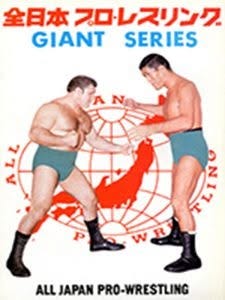
All Japan and New Japan both ran strong 1986 calendars that can be treated as peaks inside their own insulated systems. All Japan’s Giant Series featured Jumbo Tsuruta’s October victory over Stan Hansen for the NWA International title at Ryogoku in front of more than 10,000. The Road Warriors worked the tour. Tenryu and Jumbo remained the top domestic combination. Hansen continued as a reliable foreign draw. The promotion did not need American territorial politics. It needed Korakuen Hall, the sports papers, and foreigners who could take the lariats.
New Japan’s Toukon Series and Inoki’s 25th-anniversary programming kept the company in front of consistent crowds. Fujinami remained the technical centerpiece. Young talent (Muto, Hashimoto) were already visible on the undercards. The civil-war elements involving Maeda and the UWF-style faction were still present in the tag and six-man matches. Japan’s two major men’s promotions were not peaking in the same way as Crockett or the UWF. They were operating at a high, stable level that the American disintegration did not directly threaten. Their 1986 cards are useful as a contrast: offices that still controlled their own television, their own towns, and their own champion rotations.
Puerto Rico and Stampede
World Wrestling Council in Puerto Rico continued to function as a true territory in the older sense. The September Aniversario drew strong houses across three nights, including a reported 23,000 in San Juan. Flair worked the shows. Hansen took the Universal title from Carlos Colón in October. The island office could still import NWA and Japanese talent, protect its own champion, and sell the result locally. That model was becoming rare on the mainland. WWC’s 1986 was not a sudden commercial explosion. It was a peak of continued viability.
Stampede Wrestling under the Harts ran its second incarnation through 1986. The promotion was smaller in scale than the offices above. It was also one of the last places where a regional office could still develop talent (Owen Hart, Brian Pillman, Chris Benoit in the years immediately after) that the national companies would later buy. The Dungeon system and the Calgary market gave Stampede a degree of insulation that most American offices no longer had. Its 1986 was a developmental and creative peak rather than a gate peak.
What the 1986 Apexes Reveal About Stage 7
The promotions that reached or approached a high point in 1986 shared a common limitation. They could still produce strong television and, in some cases, strong gates. They could not restore the conditions that had made regional monopoly possible. The UWF’s national push collided with the oil economy and with Crockett’s and the WWF’s existing television clearances. World Class’s stadium shows collided with national syndication and with the loss of its biggest remaining active draws. Memphis proved that local intensity could still sell tickets. It did not prove that local intensity could prevent a national product from using the same building the following month.
Japan and Puerto Rico remained outside the sharpest part of the collapse because their markets were not built on the American territorial compact. Their peaks were real. They were also peaks inside systems that had not been broken in the same way. On the North American mainland, 1986 was the year several remaining offices reached the highest point they would reach under the old rules, and the year those peaks proved insufficient to change the direction of the industry. Crockett’s peak was the most visible. It was not the only one. The others simply ran out of room faster.
Thank You for Watching and Listening
I’m Tony Richards, Pro Wrestling Historian, Author and Storyteller. I share pro wrestling historical items in each issue of the Time Tunnel Pro Wrestling History Newsletter and each episode of our podcast show. Thanks for your support! If you enjoy my information on select events, matches and insights, please share with folks you think might like to be a subscriber!
Remember, Premium subscribers get access to exclusive and special content such as some special issues including a multi-part deep dives on wrestling territories, wrestler bios and championship title histories, special audio and video interviews on territory pro wrestling and more available in the Pro Wrestling Time Tunnel for Premium Subscribers. Being a Premium Subscriber also means you support me in my efforts to document Pro Wrestling History through my research, writing, books, vidoes and podcasts. And…I have something very special planned for our Premium Subscribers on the Podcast side of things in 2026! Details soon here in the Pro Wrestling Time Tunnel.