


June 10th in the Tunnel:
Happy Birthday to those who have passed on and to those great wrestlers still with us:
In Memoriam:
The Original Oki Shikina 1904
Kid Chapman 1912
Dick Dunn 1930
Happy Birthday:
Deonna Purrazzo (31)
RIP Memorial: We stop & remember those who have passed on this day and gave themselves to the business for us, the fans. We salute you and thank you.
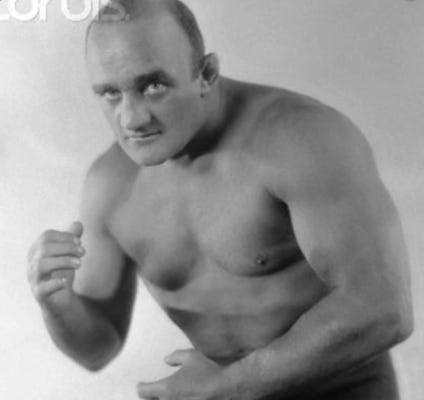
Wladek Zbyszko 6-10-1968 at the age of 76
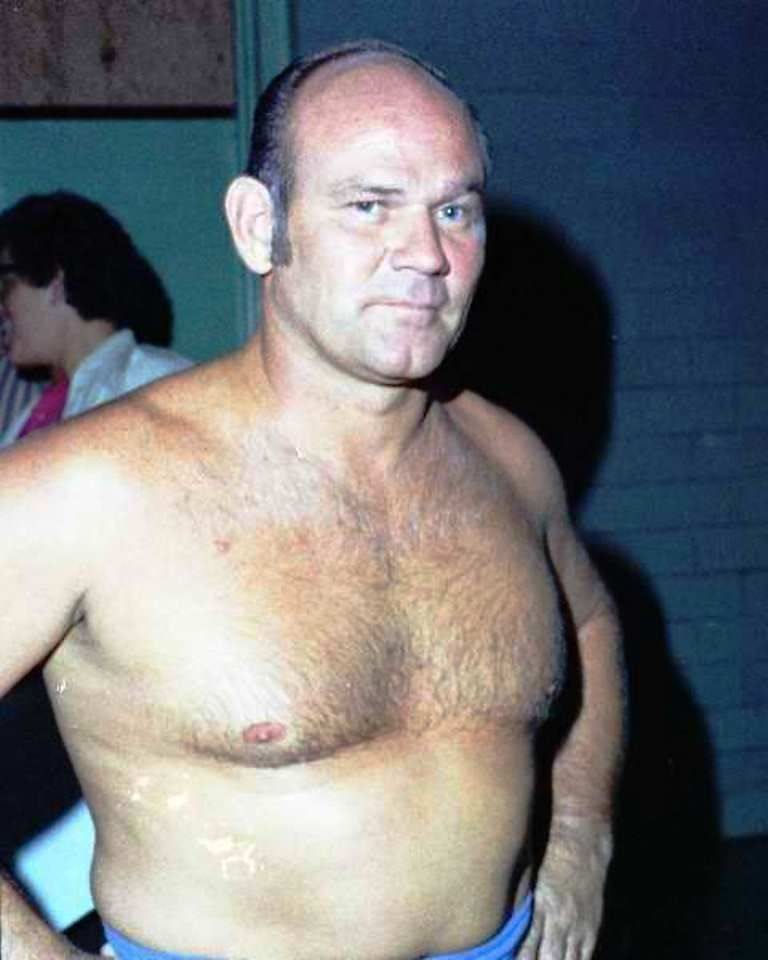
Johnny Walker\Mr. Wrestling #2 6-10-2020 at the age of 85
Select Pro Wrestling Time Tunnel Match Flashbacks:
80 Year Flashback: 1945
6-8-1945: Dean Detton defeated Earl McCready (CH) to win the Pacific Coast Heavyweight Championship at the Civic Auditorium in Oakland, California
Ad Santel is a legendary figure, especially in the years going back to the famous 1911 match between Frank Gotch and George Hackenschmidt. How much of the legend is factual versus ballyhoo, we do not know for sure. Santel supposedly told Lou Thesz that he was paid $5,000 to injure Hackenschmidt before the match with Gotch. Evidently, the payment was made with the thought in mind that Santel would injure George and make it look like it was accidental. Hackenschmidt was, in fact, injured before the match, but according to him, the injury was due to his sparring partner, Dr. Benjamin Roller accidently striking Hack's right knee while trying to hold him down.
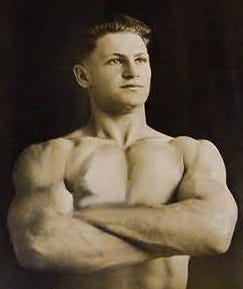
Pictured: Ad Santel
Santel is not mentioned in any of the recorded accounts by any of Hackenschmidt's sparring partners, so it's suspect. At any rate, he is now a promoter of wrestling in Oakland, California during these mid-1940s and he is the Promoter of record for this title match. Santel was one of Lou Thesz trainers, this much we do know. The future six-time World Champion was schooled by Ed "Strangler" Lewis, George Tragos, Ray Steele and Ad Santel in the art of catch wrestling. Thesz always continued to work with Santel as his mentor, especially when he traveled in and through the California area where Santel lived. Thesz called Santel's mentorship "an incredible gift".
Ad Santel is the local Oakland, California Promoter for the “California Combine” office we will be talking about shortly.
Dean Detton has shown up a lot in my professional wrestling research, particularly during my Dory Funk Sr and West Texas research because he's a member of a notable wrestling family. Dean was the most successful of the five Detton boys in the business. His brothers were Dory, Gene, Glen and Reed, all hailing from the Western States of Utah and Idaho, depending on where the Detton family was living at the time of each boy's birth.
Dean’s brother Dory Detton is one of the "Fathers of West Texas Wrestling" because he is the first Promoter to organize the 18 towns around the Amarillo Booking Office into a "territory". A Wrestling Territory is defined as the traveling circuit of towns the wrestlers would travel and work cards of matches on shows that were booked from the central booking office. Dory Detton is starting this process around this time in later this year in 1945.
Dean Detton held four versions of the World Heavyweight Title. One was the original version of the World Heavyweight Title, which had been established in 1905 to identify the best "catch wrestler" in the world. This is the championship Hackenschmidt won as the first champion. One was the National Wrestling Association World Heavyweight Title that Detton won in St Louis by defeating Dave Levin on October 8, 1936.
Dean Detton held this prestigious title for three hundred and thirty-six days. He also held the New York Athletic Commission World Heavyweight Title. This championship was recognized by The Ring magazine as the "true world champion" and Detton achieved this designation when he held both the New York and LA versions by winning this title by defeating Dave Levin on September 28, 1936, in Philadelphia, Pennsylvania.
His fourth world title was the one recognized by the California Athletic Commission. This title was controlled by a group of promoters based in Los Angeles known as "the California Combine", which included Cal and Aileen Eaton, Hugh Nichols and Johnny Doyle. When the California Combine of the Eatons and Doyle joined the National Wrestling Alliance in 1949, this title was unified with the NWA World Title held by Thesz in the big match in 1952 between Thesz and Baron Michele Leone that drew the biggest crowd for wrestling in the decade of the 1950s generating professional wrestling's first $100,000 dollar gate.
The only Championship that Dean Detton might have been more proud of would be the championship he was wrestling for on this night.
The Pacific Coast Heavyweight Championship.

Pictured: Dean Detton, World Heavyweight and Pacific Coast Champion
He won it 10 different times. As we look down the misty corridor of the time tunnel to this night in June of 1945, this would be his 8th Pacific Coast Championship victory and perhaps in terms of this particular title, his most significant win and opponent. This match is booked to be a one-hour time limit and two falls match. McCready had beaten Detton for the title back on April 11th and now the foes would lock up for the championship again on this Friday night in June.
Earl McCready, the champion coming into the match, was a Canadian, and he achieved his amateur notoriety at Oklahoma A&M University, where he was a three-time NCAA Champion in 1928, 1929 and 1930, the first ever wrestler to reach this accomplishment. He represented his native country of Canada in the Summer Olympics of 1928 and in 1930, he won a gold medal in the heavyweight wrestling class of the British Empire Games. The Games were held that Summer in Hamilton, Ontario and one interesting fact about the 1930 British Empire Games is they were the first to use pedestals for the dignitaries to present the medals to the winners of the various events.
This inspired the Olympic Committee to begin using the same practice that has become so associated with the Olympic Games medal winners' ceremonies. They started using the elevated pedestals starting with the 1932 Olympic Games. Earl McCready and Danny Hodge are the only two collegiate wrestlers to win all three of their matches in the NCAA Finals by pinfall. McCready still holds the record of scoring the fastest pinfall in an NCAA Final, pinning Ralph Freese of the University of Kansas in just nineteen seconds at the very first NCAA National Championships in 1928.

Pictured: Earl McCready, NCAA Champion 1928-1930 and Pacific Coast Heavyweight Champion
McCready was known as "The Moose" during his career. He was a rough and tough customer who could not only wrestle with a high degree of acumen, but he was hard to handle as well. On the previous week's card on June 1, he faced Jim Casey in defending his Pacific Coast Title in the same building in Oakland. Casey sustained an injured left shoulder as McReady jammed him into the ropes with full force. McCready then slugged Casey with a hard right cross which sent him tumbling from the ring about 15 minutes into the match and Casey couldn’t get back in the ring. In the second fall, it went about two minutes longer in duration to around 17 minutes,
Jim Casey finding a way to secure the win after a wicked Irish Whip of McCready into the corner, then Casey catching him for the fall. In the third and final fall, McCready pinned Casey around 9 minutes later due to his previous weakened condition from McCready's punishment.
We notice how much business that the Eatons, Doyle and Santel are doing in the State of California during a period when pro wrestling is in a bit of an economic down cycle across the country due to the World War Two years of 1941-1945 and the lack of disposal entertainment funds of customers and availability of wrestlers for matches due to the number of boys serving the country in military service. But the powerful California Combine is doing great business here in the closing days of the War holding weekly shows across the Bay from San Francisco in Oakland with quality wrestlers on the cards drawing great money. Tonight's card featured the 2nd return title match between champion Earl McCready and former Pacific Coast Champ and World Champ, Dean Detton since their first battle two months prior on April 11th, 1945.
This huge match is taking place at an interesting crossroads in Pro Wrestling History. In June of ‘45, at the very end of the second World War. America is about to experience one of the biggest economic boom periods of the 20th century and right at edge of the technological boom about to be launched with the rise of mass media television. While television has been in existence for a small handful of years at this point, coming in 1946, the Federal Communications Commission will allow it to be broadcast nationwide, which will ignite not only a television boom, but a pro wrestling one as well.
McCready speaking through the June 6th edition of the Oakland Tribune, scoffed at Detton's threats about the match. "I flattened Detton for the Championship, and I can do it again," the big good-looking McCready said "Detton has been throwing his weight around, claiming that I won the title on a fluke. Well, Friday night I’ll prove to his satisfaction, and the satisfaction of the fans, I'm the better grappler of the two."
In the last match the two wrestled each other, May 4th in the Oakland Civic Auditorium, Detton was coming on strong at the end of the match, but McCready lasted the full one hour to the sound of the bell, ending the match at a 60-minute time limit draw. This was the return match after McCready had beaten Detton on April 11th for the Title. Dean Detton achieved his 8th Pacific Coast Championship reign by defeating McCready in the match on this night in pro wrestling history.
McCready, after a great career, particularly in Stampede Wrestling in Calgary, finished his life retired in the Seattle, Washington area living to 75 years of age.
Detton’s story ending was more tragic. He retired from wrestling after winning the Pacific Coast Title twice more, then he hung up his boots just six years later from this match in 1951. He entered the bar business, owning a successful establishment in California known as "The Turf Club". Detton, after suffering from a period of depression, died by hanging himself in the backroom of his bar.
He was just 49 years old.
One Thing I Learned Today About Pro Wrestling History:
Wladek Zbyszko was the brother of Stanislaus, and he followed him into the wrestling business. Wladek defeated Ed Strangler Lewis for the American Wrestling Association World Championship in 1917 at a time when the World Title lineage was somewhat fractured. He and Lewis traded victories several times the entire year of 1917. Wladek retired from the sport in 1945.
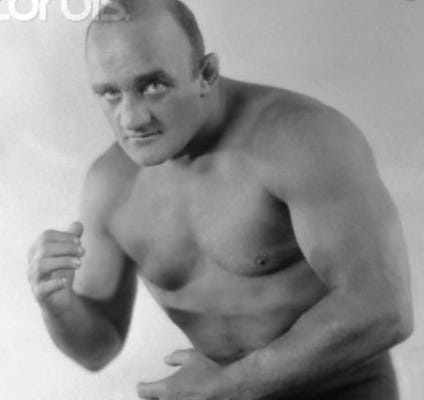
Pictured: Wladek Zbyszko
Thank You for Reading
I'm Tony Richards, Pro Wrestling Historian, Author and Storyteller. I share pro wrestling historical items in each issue of the Time Tunnel Pro Wrestling History Newsletter. Thanks for reading! If you enjoy my information on select events, matches and insights, please share it with folks you think might like to be a subscriber!
Remember, paid subscribers get access to exclusive and special content such as some special issues including a multi-part deep dives on wrestling territories, wrestler bios and championship title histories, special audio and video interviews on territory pro wrestling and more available in The Vault of the Pro Wrestling Time Tunnel for Paid Subscribers.