


Today’s Favorite Quote: The best most useful advice I ever got was from Jim Watson, the scientist who discovered DNA. He gave me 3 words: Avoid boring people - Josh Wolfe
Happy Birthday to those who have passed on and to those great wrestlers still with us:
In Memoriam:
Maurice Tillet\The French Angel 1903
Joe Pazandak 1914
Bobby Davis 1937
Happy Birthday:
Ron Harris (66)
Don Harris (66)
Roxy Astor (64)
Jasmine St Claire (56)
Leah Van Dale\Carmella (39)
RIP Memorial: We stop & remember those who have passed on this day and gave themselves to the business for us, the fans. We salute you and thank you.
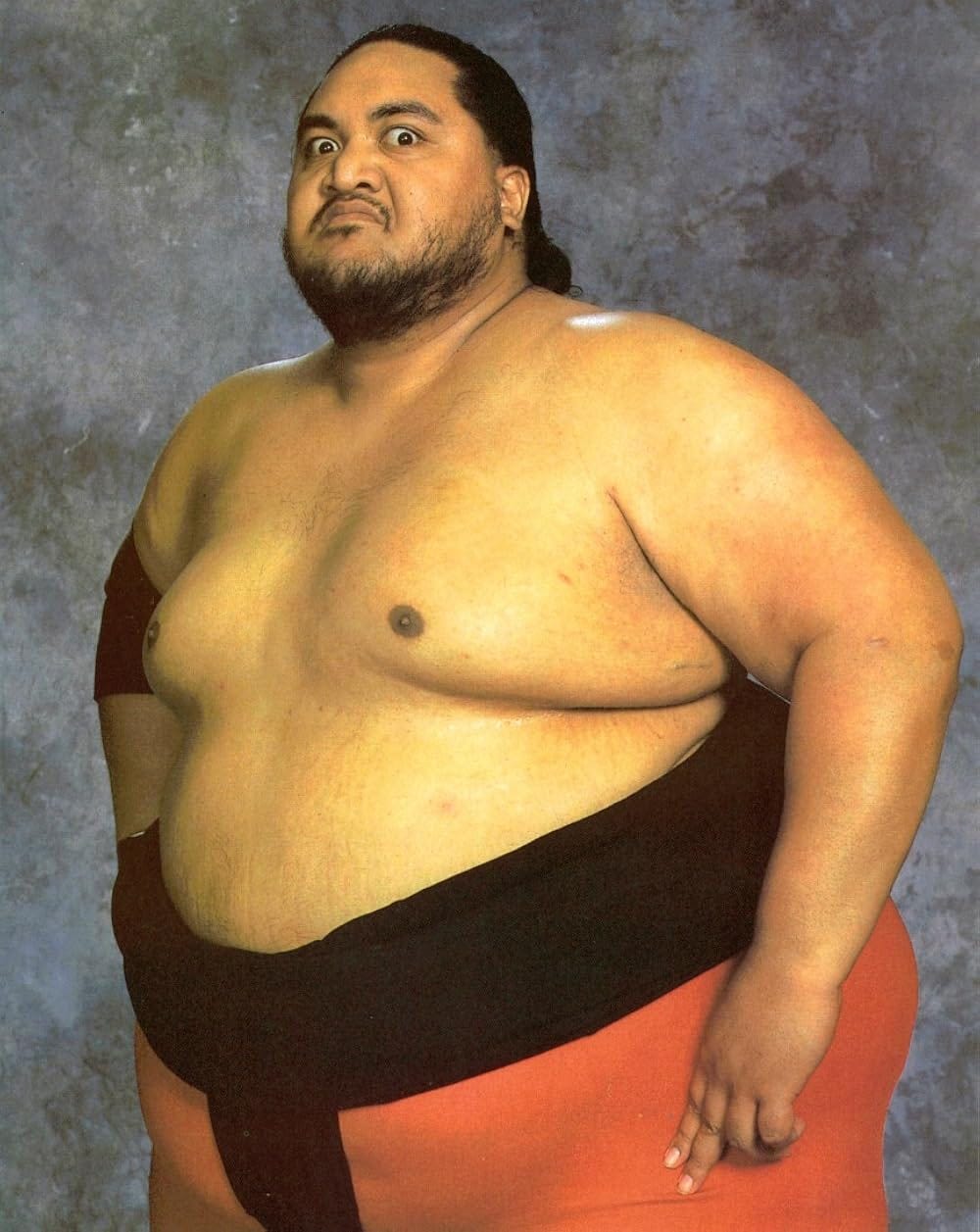
Rodney Anoa’i\Yokozuna 10-23-2000 at the age of 34
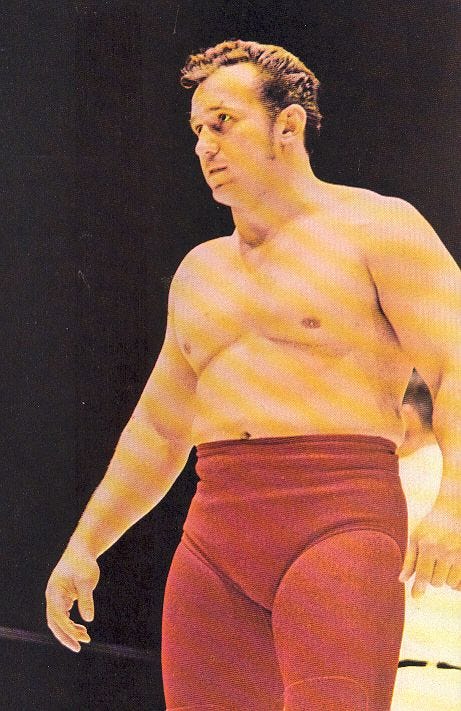
Ben Justice 10-23-2018 at the age of 81
The Life and Career of Porkchop Cash

Porkchop Cash was born Bobby Cash on October 22, 1947, in Washington, D.C., he spent more than three decades as a dependable midcard and tag-team specialist across National Wrestling Alliance-affiliated promotions from Florida to California, the Deep South, the Midwest, and points in between. Billed at 6 feet and around 238–265 pounds depending on the territory, Cash was known for a rugged, power-based style built around his signature headbutt, solid ring presence, and a charismatic, smooth delivery on the microphone that often outshone pure technical flash. He was never a national main-event superstar, yet he won championships in multiple regions, formed memorable partnerships, and became a familiar, well-regarded presence in the pre-cable, pre-national-expansion wrestling world.
Cash made his professional debut in 1967 (some records list 1968) in Championship Wrestling from Florida, an NWA territory. He worked both singles matches and tags, most notably partnering with Frank Hester. The Florida run served as a practical apprenticeship in the territorial system: learning to work a crowd, adapt to different opponents, and deliver consistent performances night after night. By 1968 he had moved west to NWA Hollywood Wrestling in Los Angeles, where he would spend the better part of the next eight years and establish himself as a legitimate title contender.
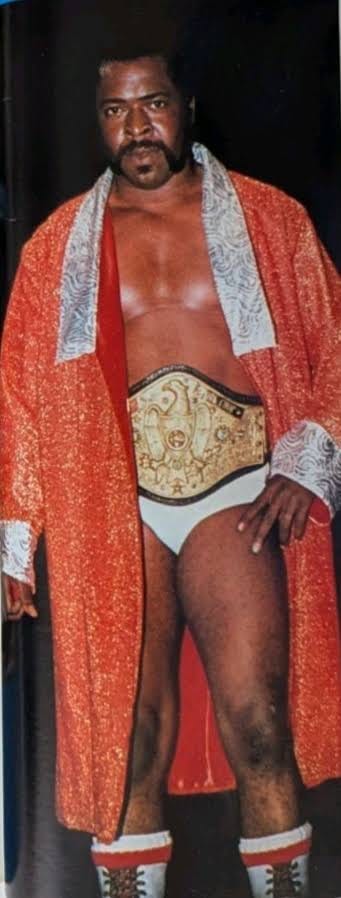
Pictured: Porkchop Cash NWA Americas Heavyweight Champoion
In the Los Angeles territory, Cash reached the peak of his singles success. On March 22, 1974, he defeated the established star John Tolos to capture the NWA Americas Heavyweight Championship. He held the belt for more than two months before dropping it to Black Gordman. In a rematch roughly two weeks later he regained the title, only to lose it less than a month afterward to the massive former NFL player Ernie Ladd. A contemporary magazine photo from 1975 captured Ladd towering over a stunned Cash after a forearm smash, underscoring the physicality of those matches.
Beyond the singles title, Cash proved especially effective in tag team wrestling. He held the NWA Americas Tag Team Championship four times between 1974 and 1976, partnering at different points with Manny Soto, Victor Rivera, S.D. Jones, and Frank Monte. Notable victories included wins over Black Gordman and Goliath, and, in 1976, a brief reign alongside Frank Monte after defeating Roddy Piper and Crusher Verdu. These runs solidified Cash as a reliable, crowd-pleasing or crowd-antagonizing performer who could be slotted into various storylines without missing a beat.
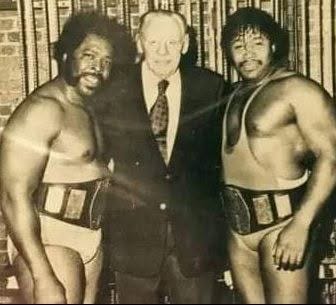
Pictured: Porkchop Cash, Atlanta Promoter Paul Jones and Tom Jones, NWA Georgia Tag Team Champions
In 1976 Cash headed southeast. In Georgia Championship Wrestling he teamed with Tom Jones to win the NWA Georgia Tag Team Championship by defeating Jimmy and Johnny Valiant, though the reign lasted only about a month before the Anderson brothers took the belts. Moving into Tennessee-based NWA Mid-America, he partnered with Gorgeous George Jr. in February 1977 to capture the Mid-America version of the NWA Southern Tag Team Championship.
He also worked in Louisiana’s NWA Tri-State territory, becoming a two-time NWA United States Tag Team Champion (Tri-State version). His first reign came with Mike George in August 1977 after defeating The Medics; a second reign followed with Dr. X. Later, in 1981 under the territory’s revised structure, he held the NWA Tri-State Tag Team Championship with Doug Somers.
The early 1980s took Cash into Jim Crockett Jr.’s Mid-Atlantic Championship Wrestling. There he captured the NWA Mid-Atlantic Tag Team Championship twice in 1982—first with Jay Youngblood in March, then with Iceman King Parsons in August—before losing the titles both times to Don Kernodle and Private Jim Nelson. These stints kept him in the thick of one of the stronger NWA territories of the period.
Cash’s most culturally memorable run, however, came in Jerry Jarrett’s Continental Wrestling Association based in Memphis, Tennessee. In the early 1980s he formed the heel tag team The Bruise Brothers with Troy Graham, who worked as Dream Machine. Managed by the flamboyant Jimmy Hart as part of the First Family stable, the duo held the AWA Southern Tag Team Championship twice. Their first reign began on October 3, 1983, when they defeated Dutch Mantel and Koko B. Ware. They engaged in heated feuds with The Sheepherders and especially The Rock ’n’ Roll Express (Ricky Morton and Robert Gibson), trading the titles and generating significant heat.
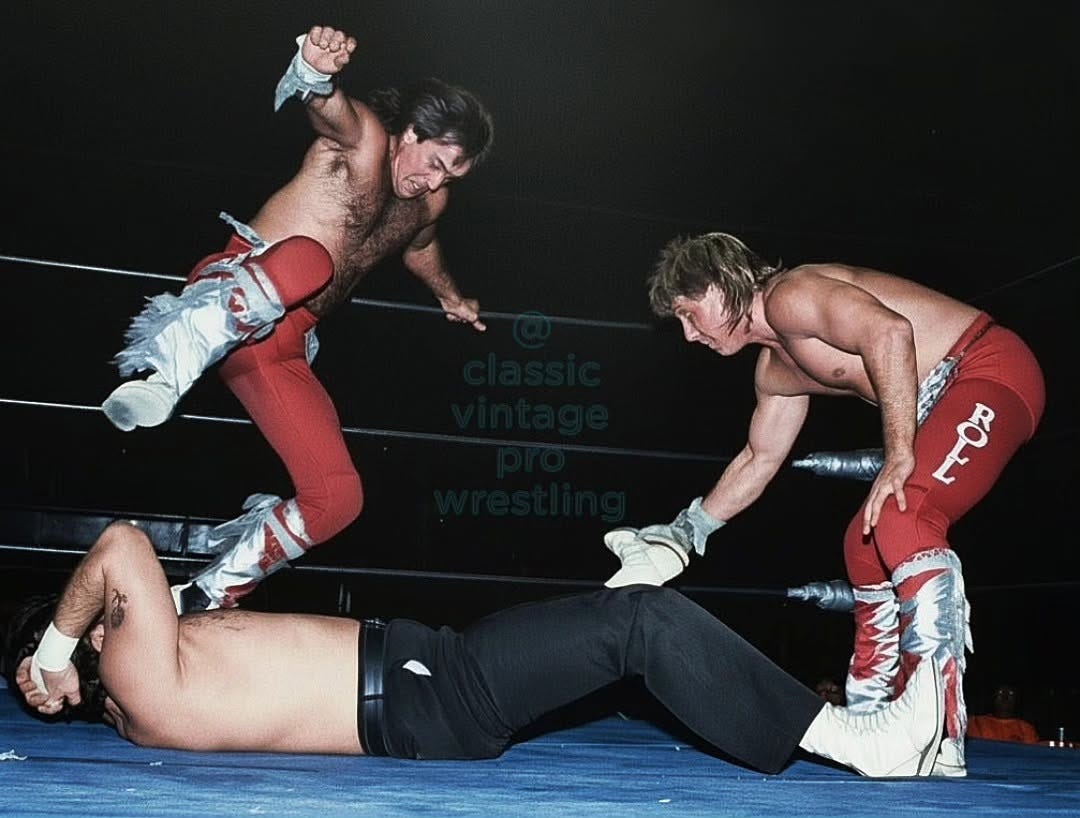
Pictured: Ricky Gibseon stretches the leg of Troy Graham as Robert Gibson stomps it in the Rock & Roll Express vs The Bruise Brothers AWA Southern Tag Team Titles Match in 1983
After one loss on November 7, 1983, Cash and Graham attacked referee Paul Morton (Ricky’s father), adding to their villainous reputation. They regained the belts a week later before dropping them to The Fabulous Ones later that month. Internal tension within the First Family culminated in a “losers no longer managed by Jimmy Hart” match against stablemates The Grapplers on December 26, 1983; the Bruise Brothers lost, ending their managerial arrangement. Graham soon suffered a career-ending ankle injury. Cash continued the Bruise Brothers concept with Mad Dog Boyd, initiating a feud with Eddie Gilbert that involved stealing a portrait Gilbert had been displaying on television.
In the mid-1980s Cash returned to singles competition in Ron Fuller’s Southeastern Championship Wrestling, covering Alabama and eastern Tennessee. In September 1984 he defeated Boris Zhukov for the NWA Alabama Heavyweight Championship, his first major singles title in a decade; he held it for roughly two months before losing to Lord Humongous. In January 1985 he won the NWA Southeastern Heavyweight Championship by beating Jimmy Golden, holding it for about two months before dropping it to Boomer Lynch. These reigns reaffirmed that Cash could still be trusted with a top regional belt when needed.
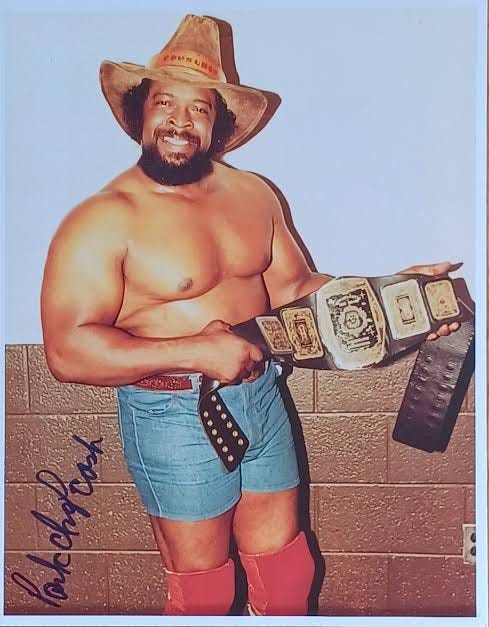
Pictured: Porkchop Cash, NWA Alabama Heavyweight Champion
By 1987 he was working Central States Wrestling, where he briefly held the NWA Central States Heavyweight Championship after defeating Rufus R. Jones and captured the NWA Central States Tag Team Championship twice—once with Ken Timbs and once with Rick McCord. He also worked briefly as enhancement talent for the World Wrestling Federation between July and October 1988, appearing on television in the role of a solid, losing opponent to established stars. Later independent work included a run in Bert Prentice’s Universal Championship Wrestling out of Wichita, Kansas, where he feuded with figures such as Ric McCord and captured a North American Championship for a short time in late 1990.
Cash formally retired around 2001 after roughly 33 years in the ring, though he made occasional appearances thereafter, including a special three-way tag match involving The Rock ’n’ Roll Express and The Midnight Express in which he partnered with former rival Koko B. Ware as part of the PYT Express. He is the father of a second-generation wrestler, Porkchop Cash Jr. Over the years he was billed from various places (Washington, D.C., Memphis, Pensacola, Los Angeles), used other ring names or aliases such as Al Nelson or Al Hays, and even worked once under a mask as Stagger Lee. Nicknames included “The Boss” and “The Great Black Hope.”
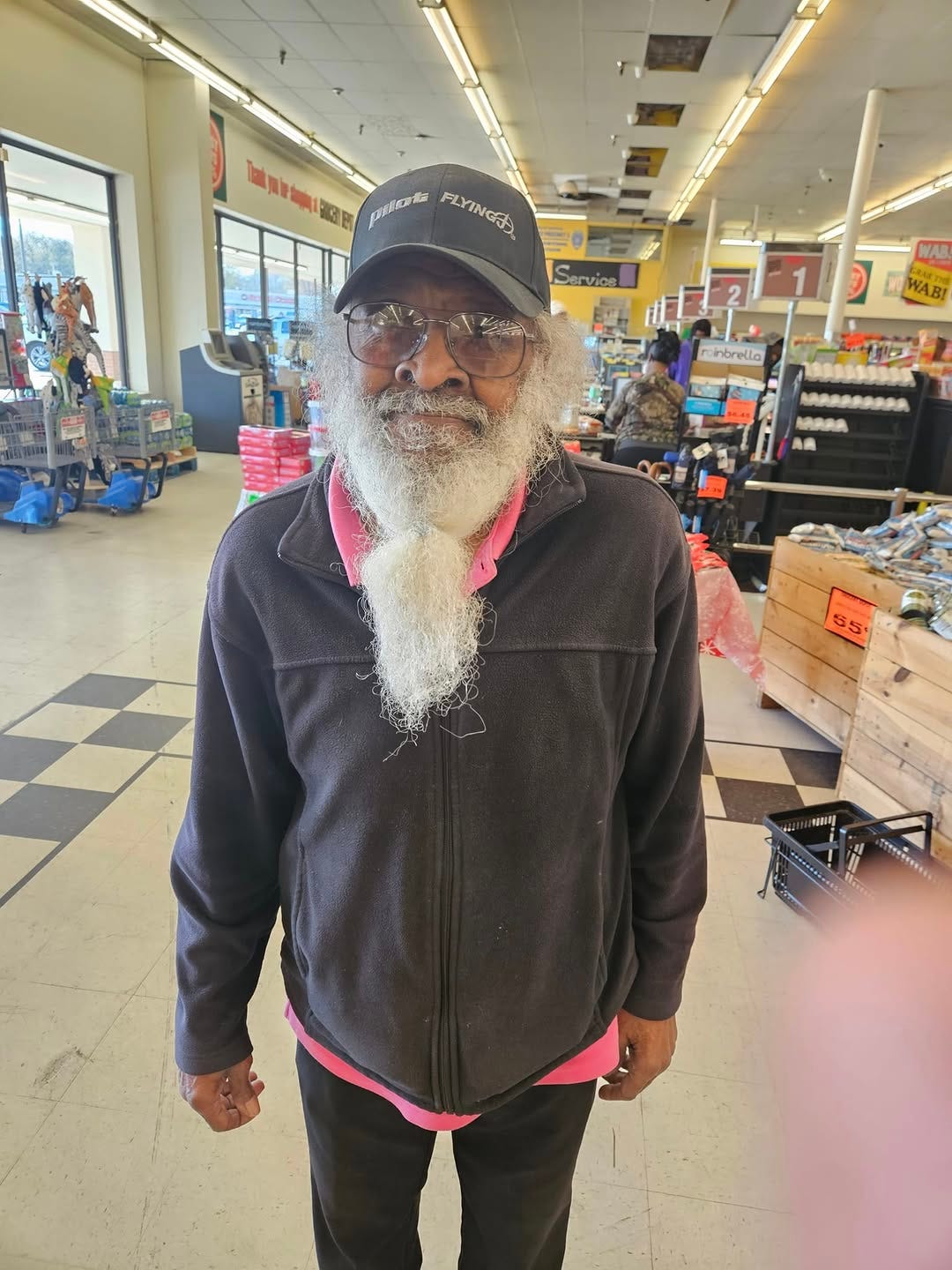
Porkchop Cash’s career illustrates the reality of the territorial system at its height. He was a traveling professional who could walk into a new promotion, quickly establish himself, win a regional title or two, and contribute to storylines ranging from pure power clashes to colorful heel antics under managers like Jimmy Hart. His in-ring work was serviceable and hard-hitting rather than spectacular; his real assets were consistency, toughness, charisma, and the ability to get over as both babyface and heel depending on the territory’s needs.
In an era before national television contracts and the WWF’s national expansion remade the industry, wrestlers like Cash formed the backbone of weekly shows across the country. He shared rings with many of the era’s notable names, held numerous NWA-affiliated titles, and left a lasting impression on fans who watched him in Los Angeles, Memphis, Alabama, the Carolinas, and the Midwest. As of the mid-2020s he remains a living link to that earlier era of professional wrestling—one of the durable, hardworking performers whose careers made the territorial system function.
One Thing I Learned About Bill Apter
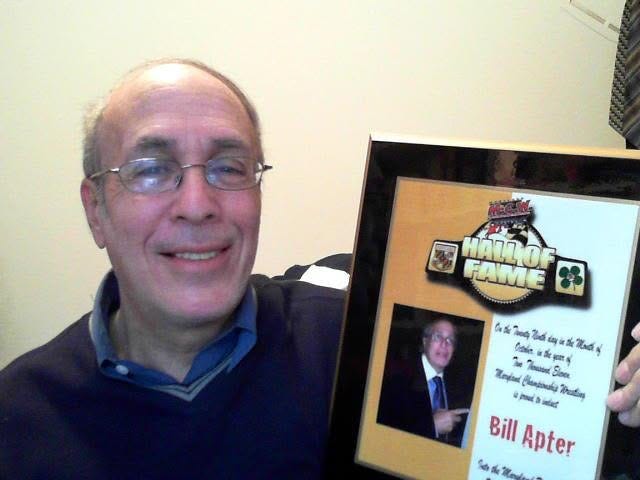
He has a parallel career as a performer: he sings and does comedy in an old-school nightclub act (often with former wrestler “Concrete Cowboy” Paul Swanger) and has long done one-man shows full of wrestling stories, impressions, and songs He’s also recounted an early radio interview he did with Liberace in which he asked the flamboyant pianist whether he wore sequined underwear. Liberace’s deadpan reply: “No, it would be too hard to sit on.”
Thank You for Watching and Listening
I’m Tony Richards, Pro Wrestling Historian, Author and Storyteller. I share pro wrestling historical items in each issue of the Time Tunnel Pro Wrestling History Newsletter and each episode of our podcast show. Thanks for your support! If you enjoy my information on select events, matches and insights, please share with folks you think might like to be a subscriber!
Remember, Premium subscribers get access to exclusive and special content such as some special issues including a multi-part deep dives on wrestling territories, wrestler bios and championship title histories, special audio and video interviews on territory pro wrestling and more available in the Pro Wrestling Time Tunnel for Premium Subscribers. Being a Premium Subscriber also means you support me in my efforts to document Pro Wrestling History through my research, writing, books, vidoes and podcasts. And…I have something very special planned for our Premium Subscribers on the Podcast side of things in 2026! Details soon here in the Pro Wrestling Time Tunnel.