


Today’s Favorite Quote: It’s ok to walk slowly but just never backward - James Clear
Happy Birthday to those who have passed on and to those great wrestlers still with us:
In Memoriam:
Tor Johnson 1903
Pat O’Hara 1919
Pedro Godoy 1920
Boyd Pierce 1928
Black Angus Campbell 1934
Peter Thornley\Kendo Nagasaki 1941
Richard Wilson\The Renegade 1965
Happy Birthday:
Julia Bevis\Seet Saraya (55)
Rick Boogs (39)
Toni Storm (31)
RIP Memorial: We stop & remember those who have passed on this day and gave themselves to the business for us, the fans. We salute you and thank you.
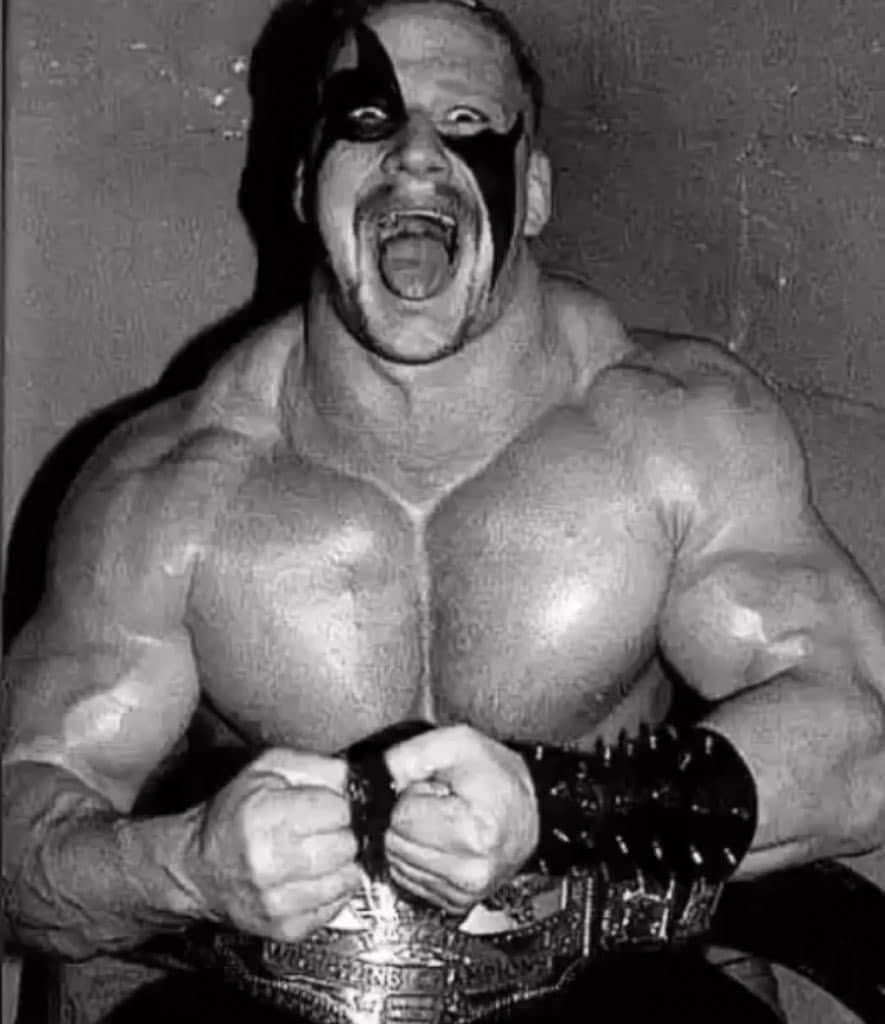
Mike Hegstrand\Road Warrior Hawk 10-19-2003 at the age of 46
Lia Miavia 10-19-2008 at the age of 81

Mike Graham 10-19-2012 at the age of 61
7 Stages of the Territory Era
Stage 6: Consoldiation (1975-1985)
Year Two Month Ten
October 1976: Local Offices, Local Business
Stage 6 is the period when membership in the National Wrestling Alliance still carried weight and the world heavyweight champion could still be moved, but most towns no longer needed either one to fill a building. October 1976 shows that arrangement in practice. The champion traveled. The offices that did not book him every week still ran their own programs, changed their own titles, and sold their own television. The map looked unified. The weekly business did not
Mid-Atlantic (Jim Crockett Promotions)
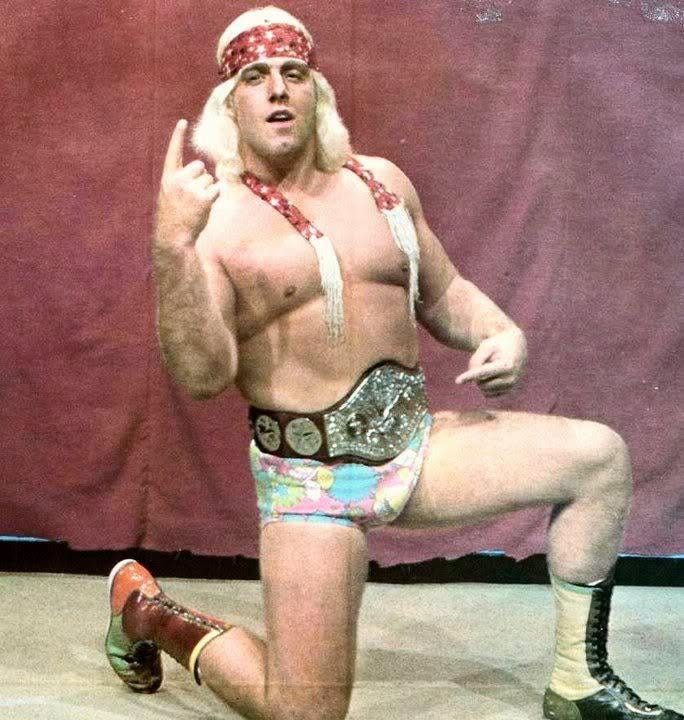
Pictured: Ric Flair
On October 16 in Greensboro three singles titles changed hands on one card. Tim Woods beat Angelo Mosca for the Mid-Atlantic Television Championship. Ric Flair beat Wahoo McDaniel for the Mid-Atlantic Heavyweight Championship in a title-versus-hair match; the finish involved Flair driving Wahoo’s back into the ring post. Paul Jones upset Blackjack Mulligan for the United States Heavyweight Championship. The Andersons remained the recognized Mid-Atlantic World Tag Team Champions, and the first seeds of a Flair-Valentine program against them were already visible on the cards. The territory sold on the Flair-Wahoo blood feud that had already produced a table-leg finish and a fence match earlier in the year, on Mulligan’s long run as the top heel until Jones took the U.S. title, and on weekly television that could promote the next town on local stakes alone. The world heavyweight champion was available when wanted. The office did not require him to create a profitable month.
Gulas-Welch NWA Tennessee Territory
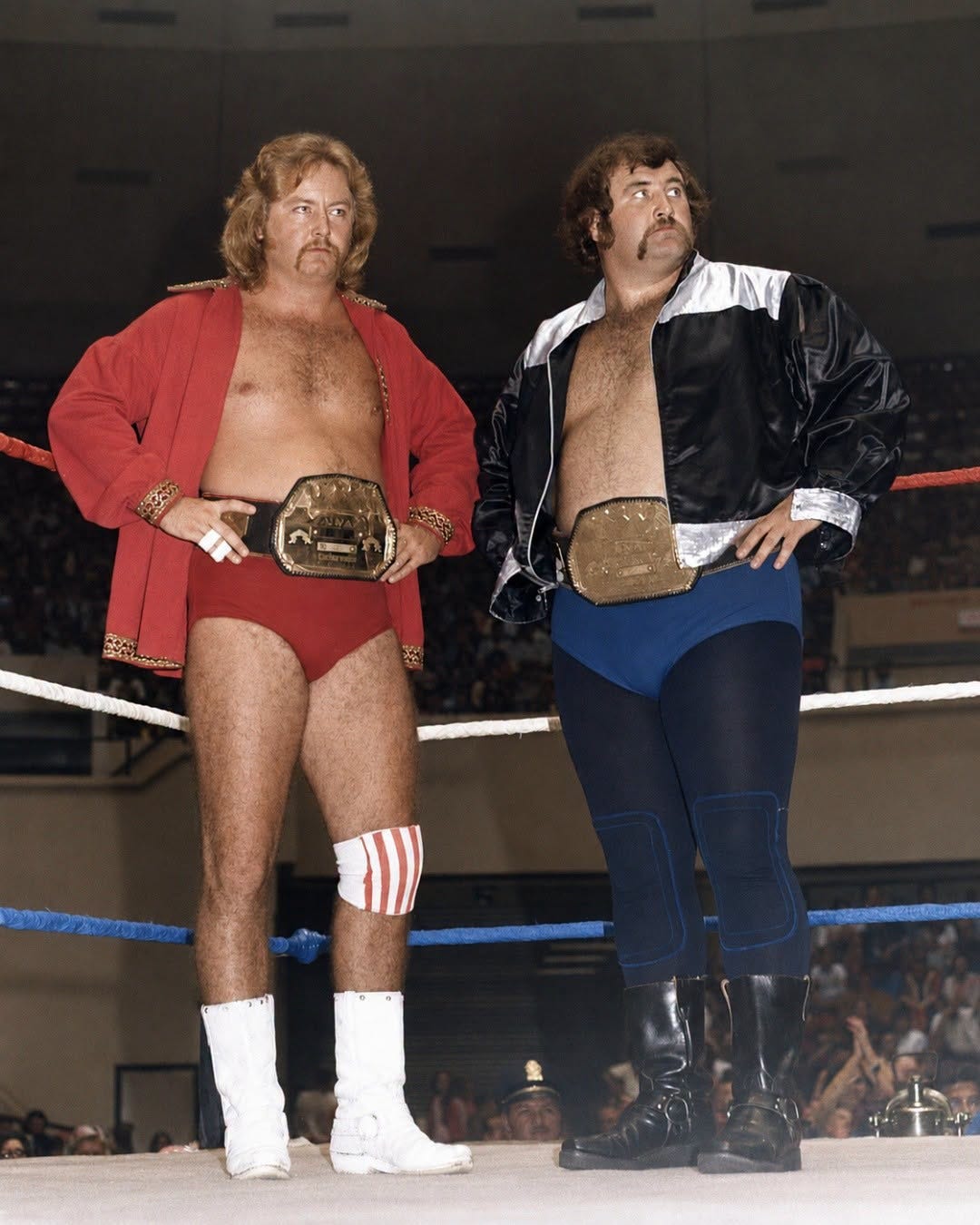
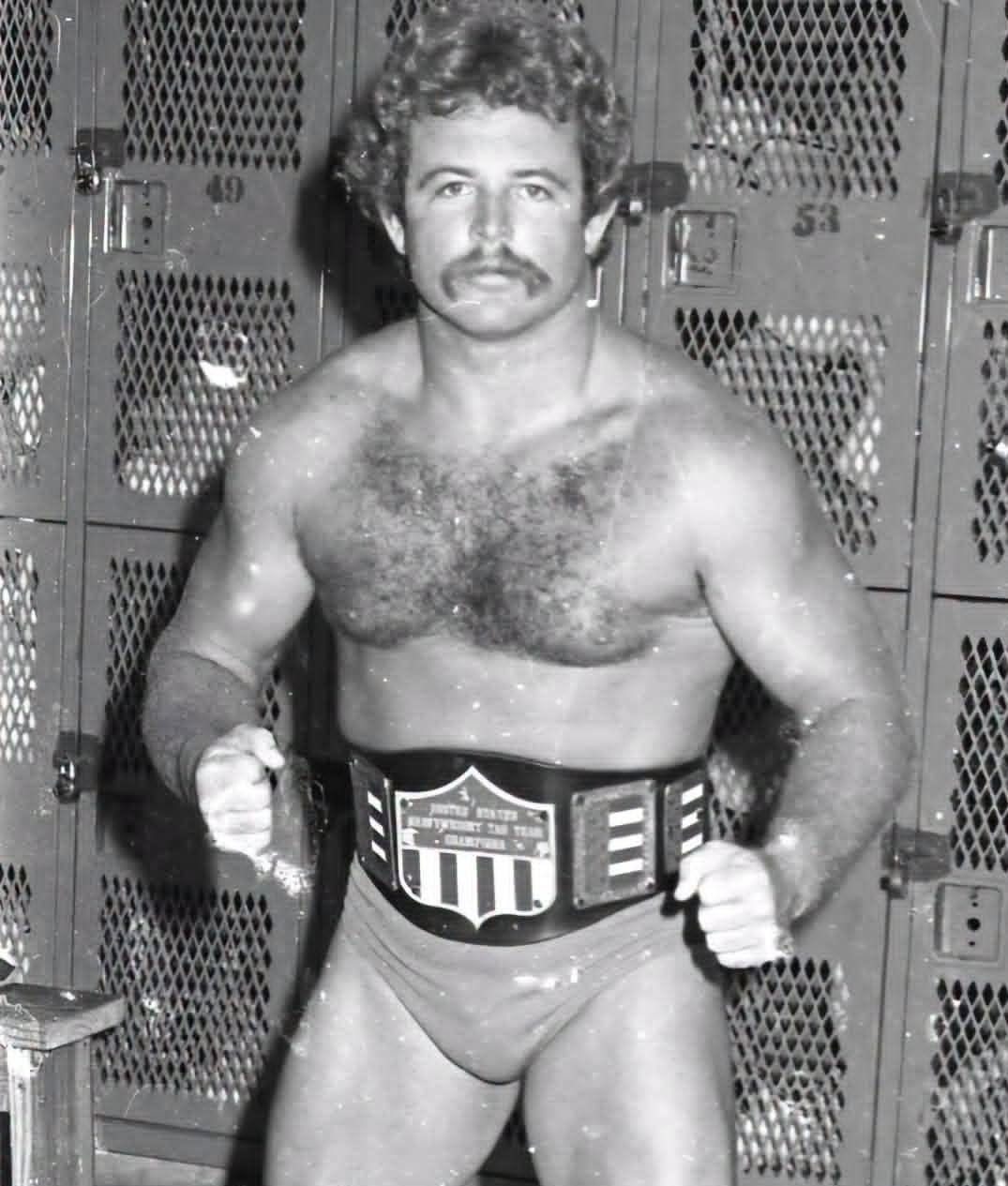
Pictured: Dennis Condrey and Phil Hickerson
Jerry Lawler held the Southern Heavyweight Championship for most of the month. On October 4 at the Mid-South Coliseum he retained against Jackie Fargo by disqualification after an original decision that briefly awarded the title to Fargo was reversed; attendance was just over 8,000. On the 11th Lawler beat Dory Funk Jr. in a Texas Death match after nine falls. On the 18th the NWA world champion appeared and beat Lawler by disqualification. On the 25th Lawler retained against Ron Fuller. The Southern Tag Team titles also changed early in the month when the Bicentennial Kings (Dennis Condrey and Phil Hickerson) won them. The Tennessee office sold on Lawler’s program with Fargo, on the local Southern title, and on the occasional world-title visit that could be finished in a way that protected the local star. It was still the Gulas-Welch Tennessee Territory in 1976. The Mid-America name and the later split with Jarrett were still a year away.
Georgia Championship Wrestling
Barnett’s office used the world champion when the dates were available and ran local programs the rest of the time. Mr. Wrestling II beat Dick Slater for the Georgia Heavyweight Championship in Columbus on October 27. The Andersons worked Georgia dates while still recognized as Mid-Atlantic NWA World Tag Team champions. Dusty Rhodes appeared on loan from Florida in stipulation matches. Andre the Giant was in town to win battle royals. Visiting AWA talent such as Nick Bockwinkel worked the circuit and lost by disqualification to Jos LeDuc. The office mixed local titles, special attractions, and the world title without treating any one of them as the only draw. Atlanta local television, the City Auditorium and The Omni still filled because the local product was strong.
Championship Wrestling from Florida
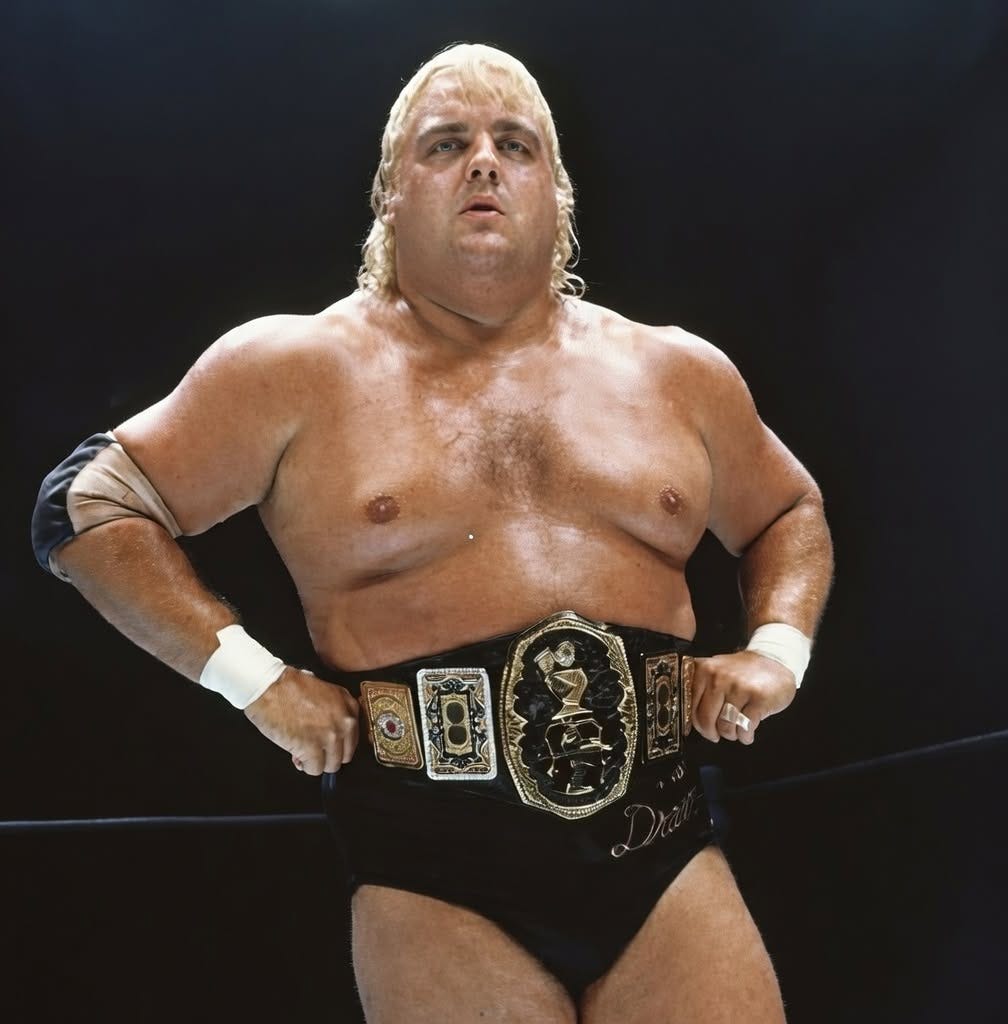
Pictured: Dusty Rhodes
Eddie Graham’s office continued the Dusty Rhodes programs that had defined the territory all year. The Southern Heavyweight and Florida titles remained the local prizes. Gordon Solie’s television sold the next week’s cards on local heat—Rhodes versus the heels who had attacked him earlier in the year, the Briscos, the Ortons, and the local title picture. Florida did not need the world champion every week or even every month to stay profitable. It needed the consistent storytelling and the television that local angles translated into full buildings.
Pacific Northwest (Don Owen’s Portland Office)
Don Owen’s Portland office ran its regular circuit of Portland, Salem, Eugene, and Seattle. Jimmy Snuka, Dutch Savage, Bull Ramos, Jesse Ventura, the Royal Kangaroos, and Tony Borne were the core roster. The NWA Pacific Northwest Heavyweight and Tag Team titles were the local prizes. On October 16 the NWA world champion, Terry Funk defended against Snuka in Portland; the rest of the month the office ran on its own titles and its own programs. Owen’s television and the local buildings did not require constant world-title visits. The territory had long operated as a self-contained circuit that used Alliance talent when it was useful and sold the local product the rest of the time.
Central States (Bob Geigel’s Kansas City Office)
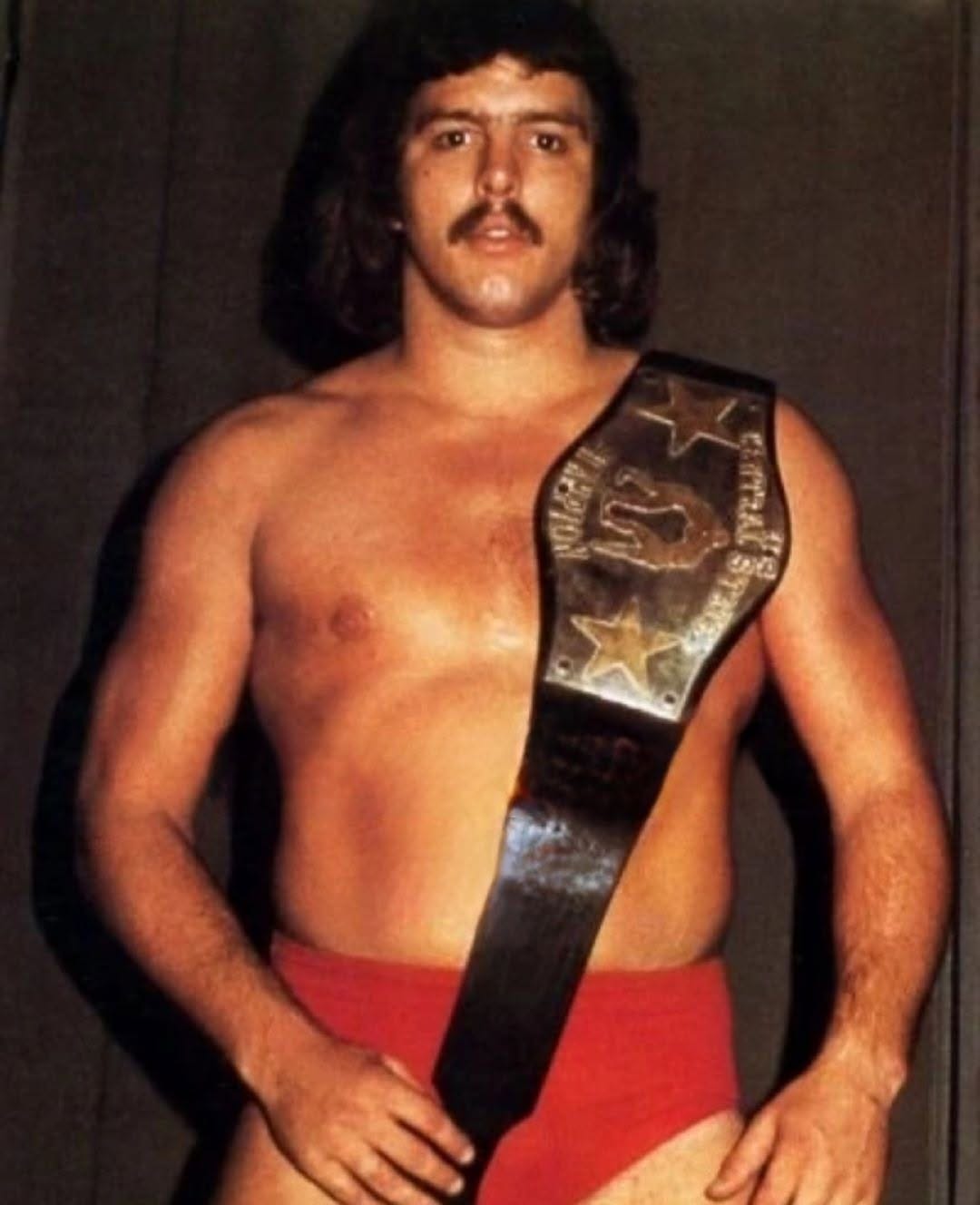
Pictured: Ricky Gibson
Bob Geigel’s Heart of America Sports Attractions office ran Memorial Hall in Kansas City and the surrounding circuit. Rick Gibson held the Central States Heavyweight Championship for much of the month. Harley Race worked the territory as both a local star and a world-title contender. On October 7 Funk and Race went to a sixty-minute draw in Kansas City. The rest of the cards featured local programs involving Bob Brown, Mike George, the tag team titles, and the usual mid-card mix. The office sold on Race’s long-standing status in the territory, on the Central States title, and on weekly television out of Memorial Hall. The world champion’s appearance helped. It was not required every week.
Gulf Coast
The Gulf Coast office, still tied to the Welch family of territories, was already in a slow decline by 1976. Local titles and local programs featuring Cowboy Bob Kelly, Eddie Sullivan, Rip Tyler, and others continued to run. The territory did not generate the same consistent gates as Mid-Atlantic or Tennessee. It remained an Alliance member and continued to book talent, but the weekly business was thinning. Stage 6 is the period when weaker offices began to show the strain while stronger ones continued to thrive on local product.
California (NWA Hollywood and San Francisco)
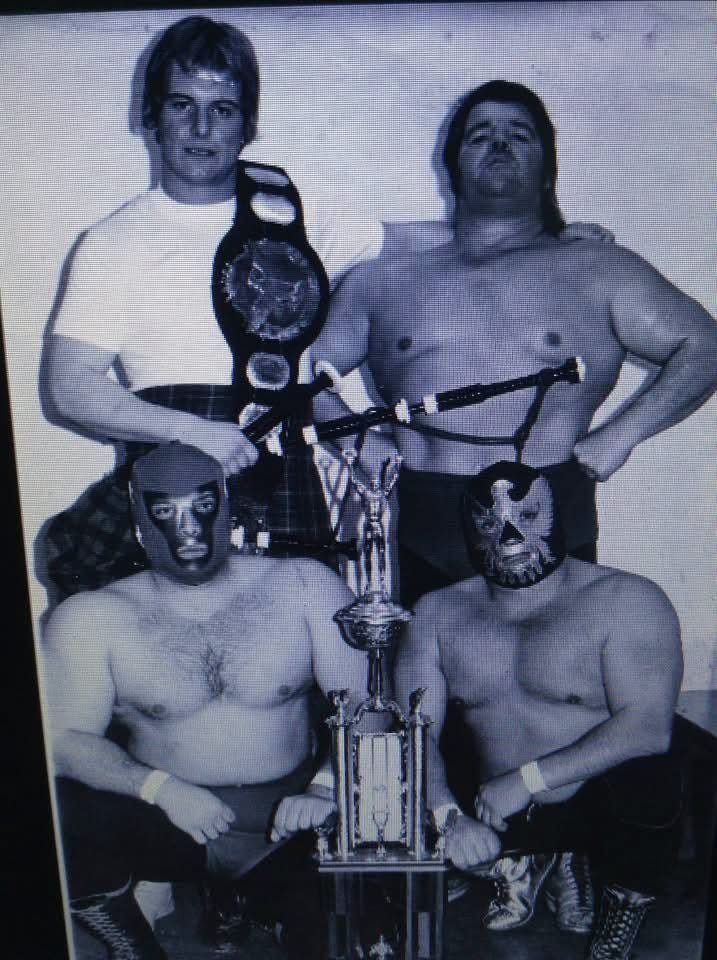
Pictured: The Heel Faction in NWA Hollywood Roddy Piper, Crusher Verdu, The Scorpions
Mike LeBell’s NWA Hollywood office centered on the Olympic Auditorium in Los Angeles and a compact Southern California circuit. The main-event heat in late 1976 was the Roddy Piper–Chavo Guerrero program, built on cultural heat and Piper’s promos. Local titles (Americas Heavyweight and Tag Team) turned over regularly. Ernie Ladd, the Vachons, and other established names filled the mid-card. Roy Shire’s San Francisco office continued its own circuit with its own local titles and programs. Neither California office required the NWA world heavyweight champion every week. Both sold on local feuds, local titles, and the ethnic and regional heat that had long defined West Coast wrestling.
Canada
Frank Tunney’s Maple Leaf Wrestling in Toronto continued to run Maple Leaf Gardens and the southern Ontario circuit. The office mixed local talent (Dewey Robertson, Billy Red Lyons, the Kelly twins) with touring stars. Bruno Sammartino had appeared earlier in the year; the NWA world champion, Terry Funk and other Alliance talent worked Toronto when the dates made sense.
In Calgary and the western Canadian towns the local offices ran on their own programs and used Alliance talent selectively. Canadian membership in the Alliance still mattered for booking access. The weekly business in Toronto and Calgary did not depend on constant world-title visits.
Mexico and Japan
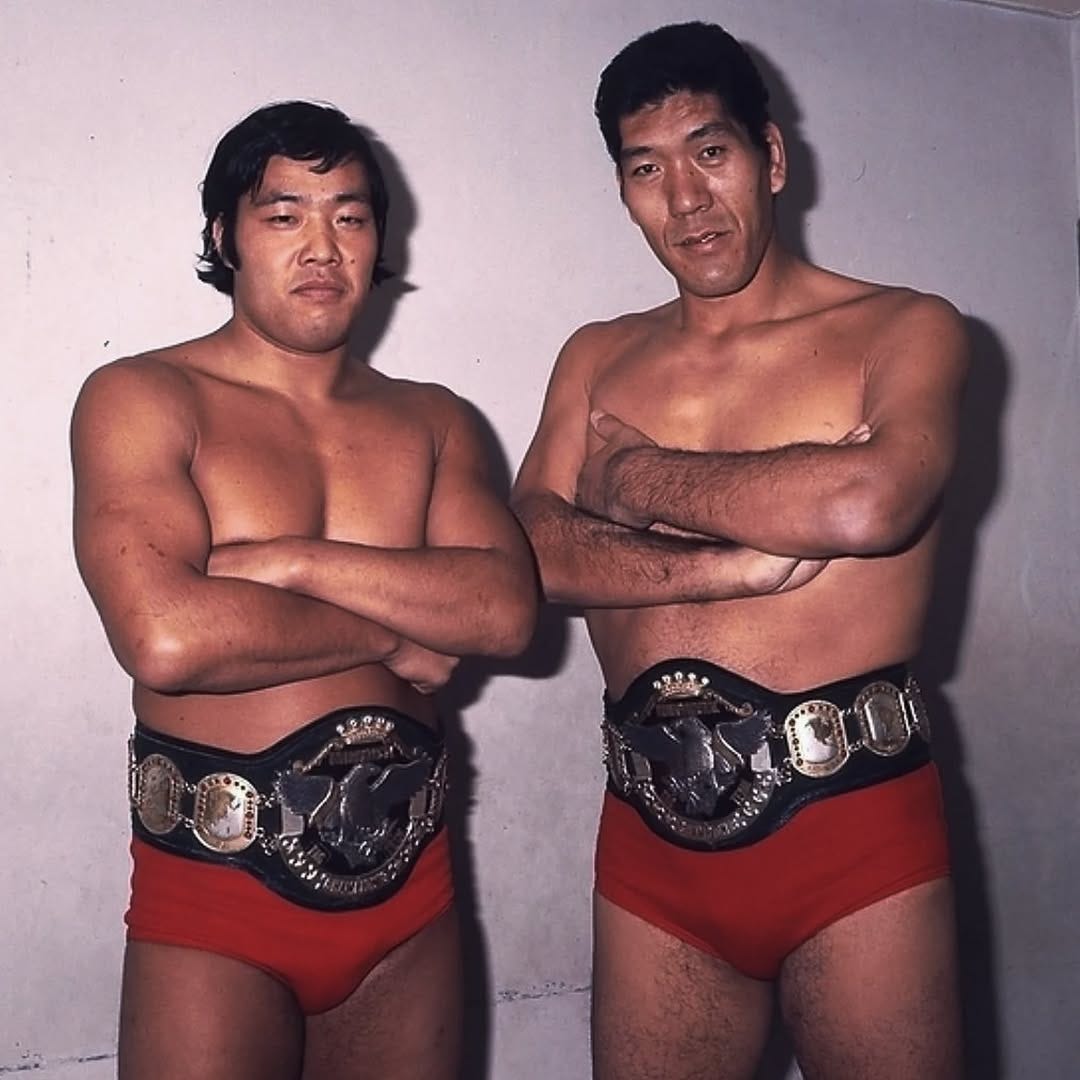
Pictured: Giant Baba and Jumbo Tsuruta
EMLL continued its regular Arena México cards with national titles and apuestas. On October 22 El Faraón beat Perro Aguayo for the NWA World Middleweight Championship. The office remained an Alliance member and operated as its own country.
All Japan’s Giant Series began in late September and ran through the end of October. Giant Baba and Jumbo Tsuruta entered the month as NWA International Tag Team Champions. The foreign contingent included Abdullah the Butcher, the Destroyer, Waldo Von Erich, the Oates brothers (Jerry and Ted), and John Gray. The Japanese roster mixed the established names (Great Kojika, Motoshi Okuma, Kintaro Oki, Kim Duk, Samson Kutsuwada, Akihisa Takachiho) with younger talent (Masanobu Fuchi, Atsushi Onita, Mitsuo Momota).
The series followed the standard All Japan pattern of the period: smaller towns through the first three weeks, then the bigger buildings, with the Kuramae Kokugikan date in Tokyo as the climax. Television was carried on Nippon TV. Attendance varied by market—roughly 2,000 to 4,000 in many of the secondary halls, higher in Osaka and Tokyo.
The major title change came on October 28 at Kuramae Kokugikan in Tokyo before approximately 8,900. Baba and Tsuruta lost the NWA International Tag Team titles to Kintaro Oki and Kim Duk in a best-of-three-falls match. The finish was a disqualification. Duk hit Tsuruta with a microphone while referee Joe Higuchi was distracted, Oki scored the second fall, and the third fall dissolved into a brawl. Baba and Tsuruta were disqualified. Tsuruta, bloodied, threw the referee. The crowd threw cushions. The Koreans left with the belts. Contemporary accounts describe the match as short but intense, with Oki and Duk working over Tsuruta and the finish designed to create immediate heat for a rematch.
The same Tokyo card also settled the PWF United States Heavyweight Championship. The Destroyer defeated Abdullah the Butcher by disqualification to win the held-up title. Abdullah and the Destroyer had been working each other throughout the series; the decision match closed that program for the moment.
Other title activity occurred earlier. On October 21 in Fukushima, Kintaro Oki regained the All Asia Heavyweight title (held up after a prior match with Waldo Von Erich). The same night Takachiho and Kutsuwada won the All Asia Tag Team titles from the Oates brothers. The Oates brothers had been the All Asia Tag champions entering the series; their loss was part of the normal rotation of foreign teams through the mid-card and tag division.
The Giant Series did not feature the NWA World Heavyweight Champion. Baba’s office used its own International Tag titles, its Pacific Wrestling Federation titles, and a steady supply of foreign talent to sell the tour. The Korean team of Oki and Duk provided a reliable heel presence with history against the Japanese side. Abdullah supplied the violence. The Destroyer supplied the technical contrast. The series worked because the local product was strong enough to stand without the world heavyweight belt.
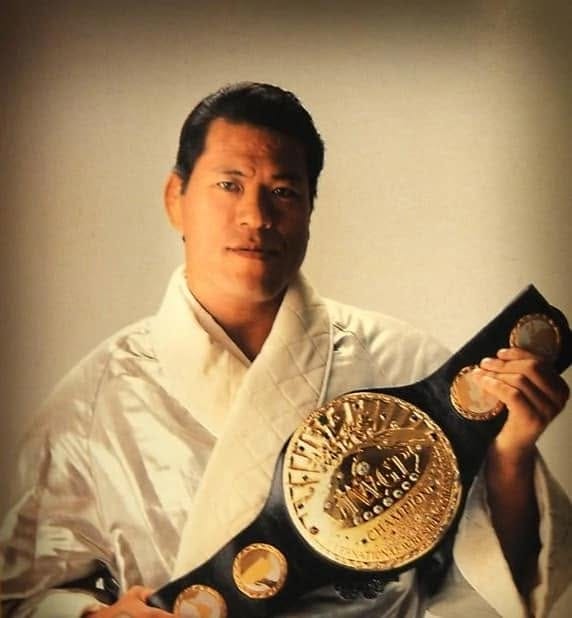
Pictured: Antonio Inoki
New Japan was running the Toukon Series through early October and began Toukon Series II at the end of the month. Antonio Inoki remained the central figure. He held the NWF Heavyweight Championship (the NWA had ordered the office to stop referring to it as a world title at the August convention). Seiji Sakaguchi and Strong Kobayashi held the NWA North American Tag Team titles and, on October 4 in Sendai, won the inaugural Asia Tag Team Championship by defeating Tiger Jeet Singh and Gama Singh in a tournament final. Tiger Jeet Singh held the Asia Heavyweight Championship, which he had won in July.
The foreign talent in October included Andre the Giant, Blackjack Morse (or Mohs), Bill Dromo, Pat Patterson, Larry Hennig, and others. Inoki’s program with Andre was the biggest single attraction. On October 7 at Kuramae Kokugikan in Tokyo (attendance listed around 10,500), Inoki defeated Andre by referee’s decision after roughly twenty-four minutes. The match was billed in connection with Inoki’s Real World Martial Arts Championship. The finish was a referee stoppage after Andre was cut and the situation deteriorated on the floor. Contemporary notes describe a physical match with several high-profile spots and a finish that protected both men while giving Inoki the decision.
Other October cards mixed Inoki and Sakaguchi in tag matches against the foreign teams, singles matches featuring Sakaguchi, and mid-card work with the Japanese roster (Kantaro Hoshino, Osamu Kido, and others). Television was carried on NET. The office continued under the 1975 convention restrictions that prevented it from booking the NWA World Heavyweight Champion. Inoki’s NWF title, the Asia titles, and the North American Tag titles were the local prizes. Andre was the special attraction who could draw without requiring Alliance world-title status.
Business Analysis for October 1976
October 1976 shows Stage 6 as a collection of working local businesses that still belonged to one Alliance. The stronger offices—Mid-Atlantic, Tennessee, Georgia, Florida, Portland, Kansas City, Los Angeles, Toronto—sold primarily on local titles, local feuds, and local television. The world heavyweight champion remained a useful special attraction. He was no longer the only reason a building filled. The weaker offices, such as Gulf Coast and Kansas City, already were showing the strain of that arrangement. The map still looked unified. The weekly economics did not. That is the practical definition of Fragmentation.
October 1976 shows the Japanese side of Stage 6 clearly. The Alliance relationship still mattered for booking and for the prestige of the International Tag titles. The weekly and monthly business in both offices ran on local stars, local titles, and the foreign talent each office chose to import. The world heavyweight champion was not required. Both promotions had already reached the point where they could operate as self-contained businesses inside the Alliance. That was the practical definition of Fragmentation in Japan.
Thank You for Watching and Listening
I’m Tony Richards, Pro Wrestling Historian, Author and Storyteller. I share pro wrestling historical items in each issue of the Time Tunnel Pro Wrestling History Newsletter and each episode of our podcast show. Thanks for your support! If you enjoy my information on select events, matches and insights, please share with folks you think might like to be a subscriber!
Remember, Premium subscribers get access to exclusive and special content such as some special issues including a multi-part deep dives on wrestling territories, wrestler bios and championship title histories, special audio and video interviews on territory pro wrestling and more available in the Pro Wrestling Time Tunnel for Premium Subscribers. Being a Premium Subscriber also means you support me in my efforts to document Pro Wrestling History through my research, writing, books, vidoes and podcasts. And…I have something very special planned for our Premium Subscribers on the Podcast side of things in 2026! Details soon here in the Pro Wrestling Time Tunnel.