


Today’s Favorite Quote: Action is thought tempered by illusion - Elbert Hubbard
Happy Birthday to those who have passed on and to those great wrestlers still with us:
In Memoriam:
The Great Togo 1911
Mike Gallagher 1933
Dusty Rhodes 1945
Happy Birthday:
Tony Chimel (65)
Sam Houston (63)
Rikishi (61)
Sam Fatu\The Tonga Kid (61)
Taz (59)
Andy Douglas (48)
Arturo Ruas (45)
Trevor Mann\Ricochet (38)
Riddick Moss (37)
Demi Bennett\Rhea Ripley (30)
RIP Memorial: We stop & remember those who have passed on this day and gave themselves to the business for us, the fans. We salute you and thank you.
Lee Henning 10-11-1977 at the age of 64
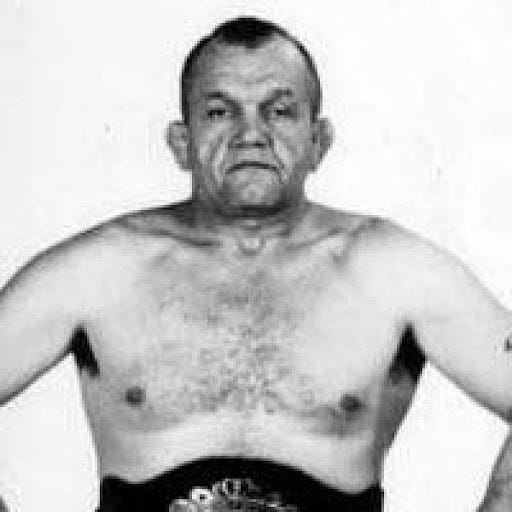
Lou Klien\Lou Bastien 10-11-1979 at the age of 62
Flashback 1976
Q4 Analysis
October-December
Central States Territory
Kansas City, Kansas Office
In the final quarter of 1976, the Central States territory—operated as Heart of America Sports Attractions under Bob Geigel out of Kansas City—functioned as a classic NWA regional office. It ran weekly television from Memorial Hall in Kansas City, Kansas, and a steady circuit of house shows across Missouri, Kansas, and Iowa.
Primary towns included Kansas City (Memorial Hall as the hub), St. Joseph, Missouri (Auditorium, a frequent Friday stop with solid turnouts in the 1,500–2,000 range), Wichita and Topeka, Kansas, Cedar Rapids (Memorial Coliseum) and other Iowa points such as Waterloo or Des Moines-area dates, plus secondary spots like Sedalia and Fort Scott, Missouri/Kansas, Salina, Great Bend, and occasional Illinois border towns.
The office balanced local regulars with imported talent from nearby St. Louis Wrestling Club influences (Harley Race, Pat O’Connor) and traveling stars, maintaining the pre-cable territorial model of TV-built heat followed by live rematches and stipulations.
October: Gibson’s Title Run and Tag Turnover
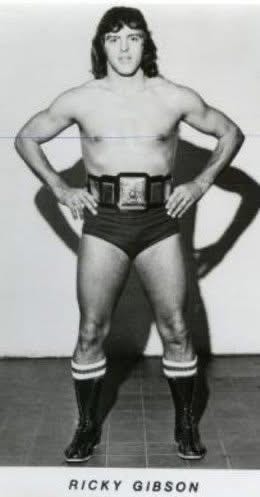
Pictured: Ricky Gibson
October opened with a clear singles title change that reset the main-event picture after the earlier Mike George–“Bulldog” Bob Brown exchanges. On October 1 in St. Joseph, Rick Gibson (Ricky Gibson) defeated Bob Brown in a lumberjack best-two-out-of-three-falls match to win the NWA Central States Heavyweight Championship. Gibson, a solid athletic babyface with prior experience in southern territories, immediately defended successfully—over Brown again in St. Joseph on the 15th and via disqualification in Cedar Rapids on the 17th—while also scoring midcard wins over opponents such as Mitsuo Hata and Great Goliath. Brown remained the dominant heel heat magnet, often teaming or appearing in multi-man bouts. Attendance on the St. Joseph opener was reported around 1,523.
Tag team business moved quickly. Black Gordman and Great Goliath had held the NWA World Tag Team Championship (Central States version) into late September after a July tournament. On September 30 in Kansas City, “Mad Dog” Maurice Vachon and Baron von Raschke defeated them for the titles. The reign was short. On October 21 at Memorial Hall in Kansas City, Mike George and Super Intern (Tom Andrews) defeated Vachon and Raschke to claim the belts.
Harley Race was a regular featured attraction, defeating Gordman and appearing in battle royals (Haystacks Calhoun won one on October 21 that included Race, Gibson, Brown, O’Connor, Sato, and others). Other consistent performers included Akio Sato, Dutch Mantell, Bob Slaughter (the future Sgt. Slaughter), Big Red Reese, Skip Young, Chief Thundercloud, and Joe Turko/Joe Palardy. Cards mixed title defenses, tag matches, and multi-man bouts; a typical St. Joseph or Kansas City lineup featured undercard singles, a tag or six-man, and a main-event title or high-profile singles/tag clash. The George–Brown rivalry cooled somewhat as Gibson’s reign took focus, though Brown continued drawing as the reliable rule-breaking veteran.
November: Challenges, the Iron Sheik, and Continued Circuit
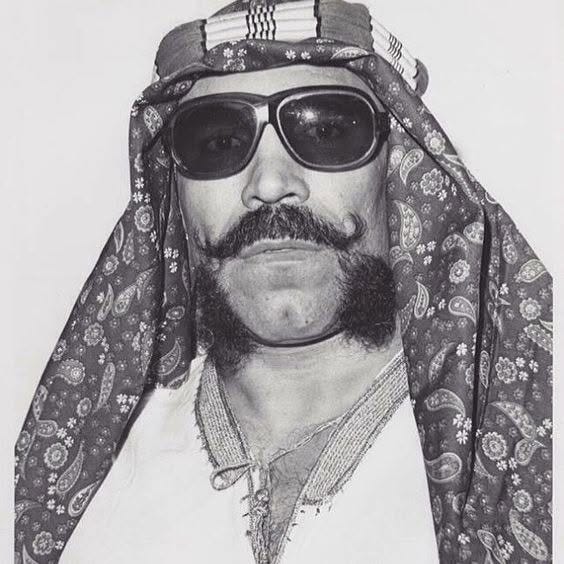
Pictured: The Iron Sheik
Gibson’s championship reign continued into November, with defenses and challenges from Bob Slaughter (double disqualification in a three-falls title match on November 5 in St. Joseph) and others. Brown and Mitsuo Hata worked as a heel tag combination, opposing combinations involving Super Intern, Geigel, Race, or George. Bob Geigel himself still worked regularly in tags, reinforcing his dual role as promoter and in-ring authority figure while maintaining his longstanding on-screen tension with Brown.
A notable addition was the Iron Sheik (Khosrow Vaziri), arriving from the AWA and billed as a dangerous foreign heel. In early-to-mid November he scored wins over Super Intern and Big Red Reese in St. Joseph and Cedar Rapids, captured a nine-man battle royal in Cedar Rapids on November 7, and traded results with Big Red in subsequent meetings (including a DQ loss). His presence added exotic heat and mid-to-upper-card singles matches against local favorites.
Other angles included ongoing Gordman/Goliath activity, Sato matches, and the occasional appearance of veterans such as O’Connor or Calhoun for drawing power. Iowa and Kansas secondary towns continued the circuit with scaled cards featuring the same core talent; Sedalia and similar stops had run earlier in the year and remained part of the broader loop. The office kept heat alive through stipulation matches, DQ finishes, and rapid rematch setups typical of the era.
December: Vacancy, Tournament, and Year-End Positioning
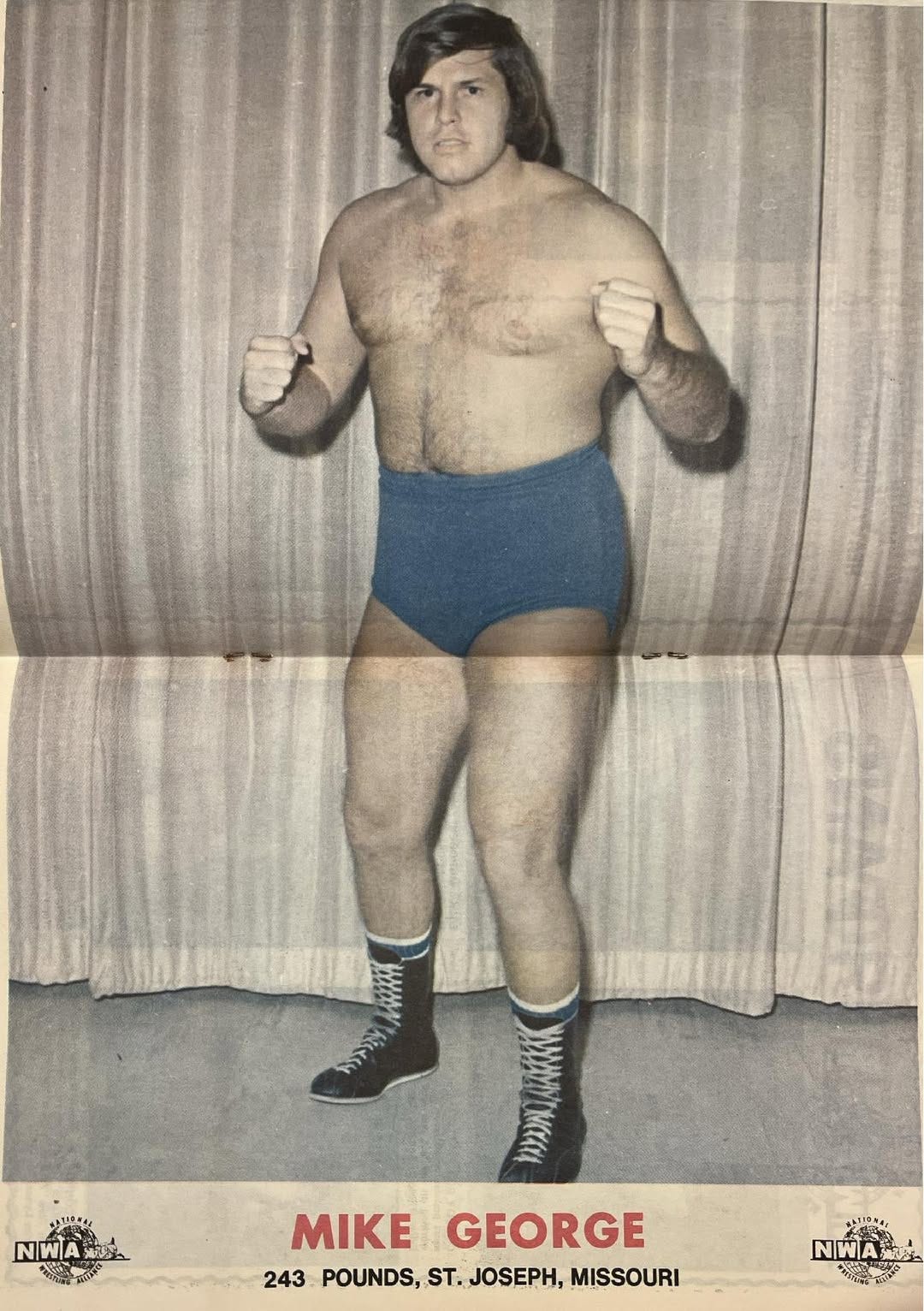
Gibson’s reign ended when he left the area to recuperate from an injury (noted in St. Joseph newspapers around December 12); the title was vacated. On December 9 in Kansas City, Mike George won a 14-man tournament final by defeating Dory Funk Jr. to become the new Central States Heavyweight Champion. Funk Jr.’s participation lent prestige and a big-name draw for the event. George defended successfully late in the month (for example, over John Davidson in Fort Scott on December 28).
Tag titles shifted again. After George and Super Intern’s October reign, Bob Brown and Mitsuo Hata were recognized as champions by mid-to-late December (following transitional activity involving Race and O’Connor). Year-end cards, such as the December 28 Fort Scott show at Memorial Hall, featured George defending, Harley Race defeating the Iron Sheik, Geigel and Sato over Brown and Hata, a Slaughter–O’Connor draw, and Race winning a 12-man battle royal that included George, Brown, Sheik, Sato, O’Connor, and others. Elimination-style tags and multi-man matches rounded out the month. The Iron Sheik remained active through December, facing Race and others.
Wrestlers, Matches, Angles, and Storylines
Core faces centered on Mike George (St. Joseph-area favorite, multiple Central States reigns, reliable main-eventer with brawling and technical ability), Rick Gibson (temporary top titleholder whose clean lumberjack win over Brown provided a fresh face), Harley Race (the territory’s biggest traveling star and frequent main-eventer, elevating cards via St. Louis crossover), Bob Geigel (promoter credibility plus tag work), and supporting faces such as Big Red Reese, Skip Young, and Akio Sato. Heels were anchored by Bob Brown (the territory’s most consistent drawing heel, multi-reign champion, and long-time foil for George and Geigel), Mitsuo Hata, the Black Gordman and Great Goliath, and the arriving Iron Sheik. Bob Slaughter was being built as a credible challenger. Veterans like Pat O’Connor and Haystacks Calhoun provided recognition and midcard/battle-royal value.
Key angles were title-driven: Gibson’s lumberjack victory and short defenses established him before injury forced a reset; the December tournament with Funk Jr. restored George as champion while leveraging a national name; Brown’s ongoing heel dominance and tag partnership with Hata sustained heat; and the Sheik’s series against Big Red and others injected new antagonism. Matches emphasized two-out-of-three falls, lumberjacks, battle royals, and occasional Texas Death or chain stipulations. TV interviews and weekly rematches closed the loop between towns.
Business Analysis
The Kansas City office remained functional and efficient in late 1976. Rapid but logical title changes, Brown to Gibson in October, vacancy and George’s tournament win in December, prevented stagnation while giving TV and word-of-mouth fresh angles. The circuit—Kansas City and St. Joseph as anchors, Wichita/Topeka for Kansas, Cedar Rapids and Iowa points, plus smaller venues—maximized a relatively compact roster without overexposure. Imported talent (Race, brief Vachon/Raschke, Funk Jr. for the tournament, Sheik) boosted gates without requiring permanent commitments.
Local favorites such as George provided consistent home-town appeal. Attendance held in the low-to-mid thousands on primary dates and lower on secondary stops, sufficient for the era’s cost structure. Geigel’s dual promoter/wrestler role, combined with NWA alignment and St. Louis cooperation, helped stability. By year’s end the territory entered 1977 with George as singles champion, Brown and Hata as tag champions, Race as the top drawing attraction, and a mix of established heels and developing talent (including Slaughter and the Sheik) ready for the next booking cycle. It was textbook territorial wrestling: practical, heat-focused, and built for repeat business across a multi-state loop.
Attendance Analysis for Central States Territory Towns, Q4 1976
Documented attendance figures for Central States Wrestling house shows in October–December 1976 are extremely limited. Promoters rarely published gates, and newspaper reporting was inconsistent outside of a few markets. The most reliable surviving numbers come from St. Joseph results compilations and Cagematch listings.
St. Joseph, Missouri (Auditorium)
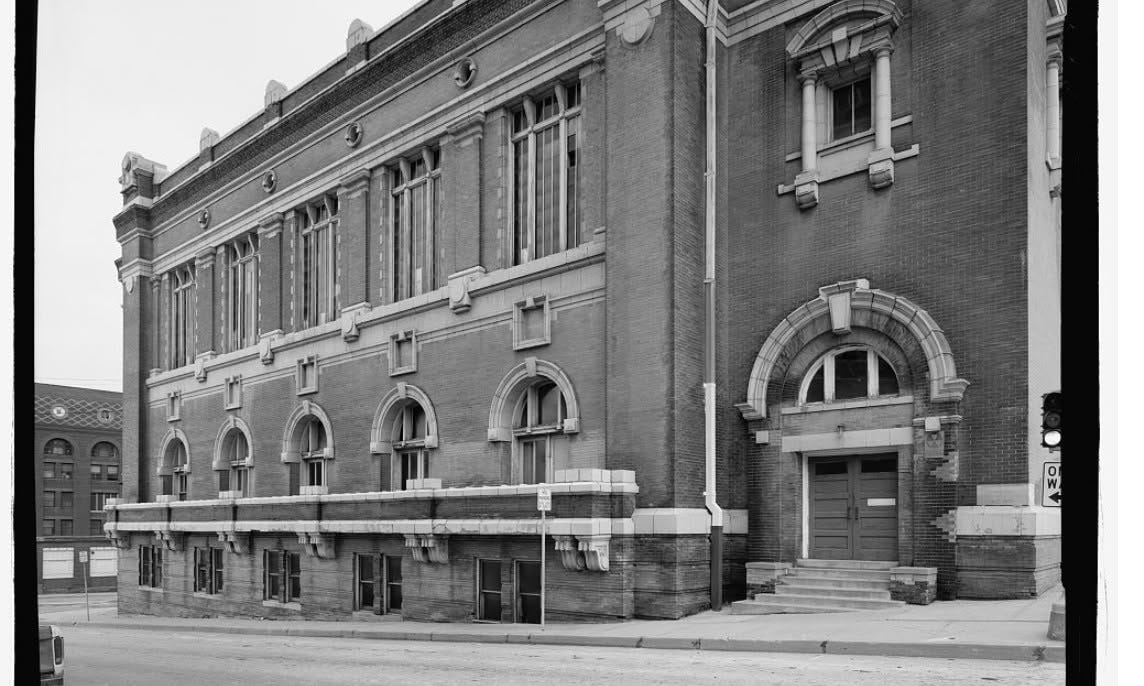
Pictured: The Auditorium in St. Joseph
This was one of the territory’s most consistent weekly stops (typically Fridays).
• October 1, 1976: 1,523 (Rick Gibson defeated Bob Brown in a lumberjack best-two-out-of-three-falls match to win the NWA Central States Heavyweight Championship).
• October 8, 1976: 2,000.
These figures align with the town’s 1976 pattern. Earlier in the year, St. Joseph cards commonly drew in the 1,400–1,800 range (for example, roughly 1,400 on January 9 and 1,800 on May 21). In the 1960s the Auditorium had occasionally reported 2,800–3,000 or higher on big nights, but by the mid-1970s weekly business had settled into the low-to-mid 1,000s to low 2,000s. The October 1 title-change card at 1,523 was solid for a regular Friday; the 2,000 figure a week later was on the stronger side for the period. No November or December St. Joseph attendances have surfaced in available public records, but the circuit continued regularly through those months.
Kansas City, Kansas (Memorial Hall)
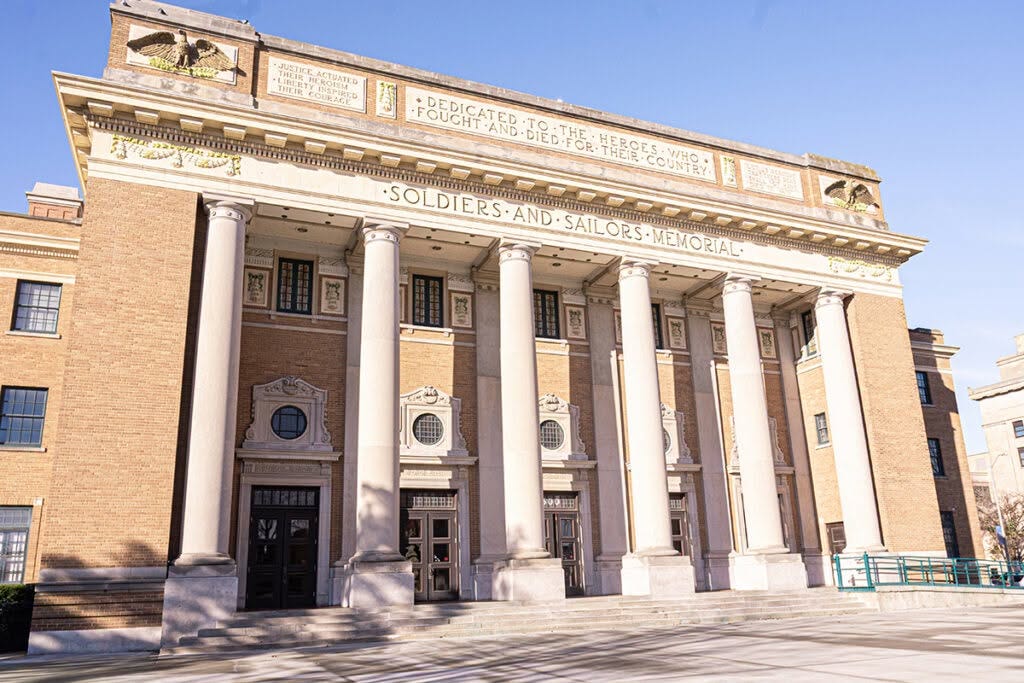
Memorial Hall (capacity roughly 3,500) was the territory’s flagship venue and the site of weekly television tapings. Exact Q4 1976 figures are not documented in the sources reviewed. Contextual benchmarks from the era show:
• Typical Thursday-night wrestling crowds in the 1970s were in the 1,000–2,500 range.
• One documented April 29, 1976 card drew 1,998.
• Historical Kansas Athletic Commission averages from the early 1970s put Kansas City near 2,000.
Title-change or special cards (such as the October 21 tag-title switch involving Mike George & Super Intern, or the December 9 tournament final in which George defeated Dory Funk Jr.) would have been expected to land toward the higher end of that range, while ordinary weekly shows sat lower. The hall’s size and its role as the TV hub supported more consistent mid-sized crowds than smaller circuit towns.
Wichita and Topeka, Kansas
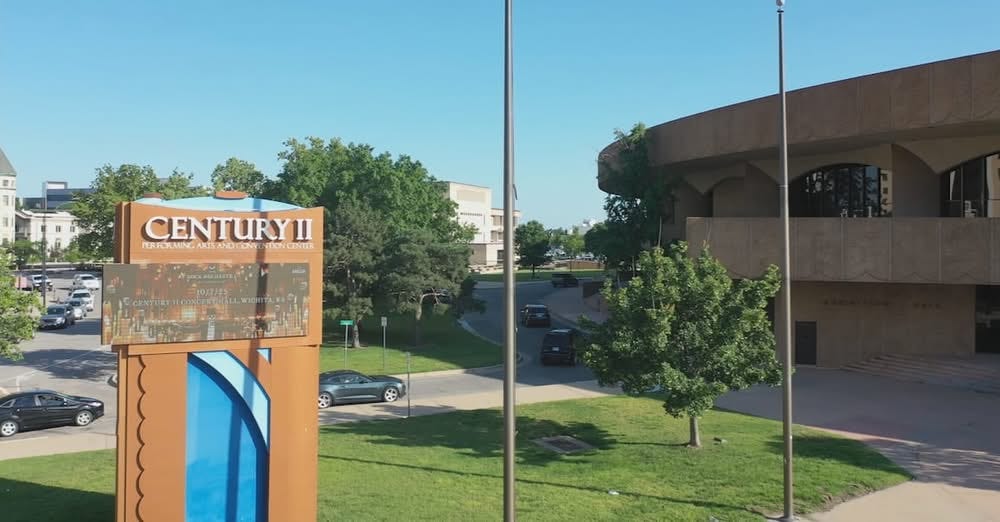
Pictured: Century II, Wichita, Kansas
Historical Kansas commission data from the early 1970s showed Wichita averaging under 900 and Topeka under 400 on typical cards. These remained secondary stops in 1976; crowds were almost certainly in the mid-to-high hundreds rather than the low thousands, consistent with the territory’s mid-tier status outside the Kansas City–St. Joseph core.
Cedar Rapids / Des Moines-area and other Iowa towns (Memorial Coliseum, etc.)

Pictured: Veterans Auditorium, Des Moines, Iowa
A June 1976 Waterloo card was reported at roughly 500, a modest number even for a smaller Iowa market. Cedar Rapids and similar stops in the fourth quarter likely followed the same pattern—several hundred fans on ordinary nights, with better turnouts when Harley Race, a title defense, or a special match (battle royal, Sheik debut, etc.) headlined. These towns sustained the circuit but were not primary revenue drivers.
Sedalia, Missouri; Fort Scott, Kansas; Salina; and other secondary stops
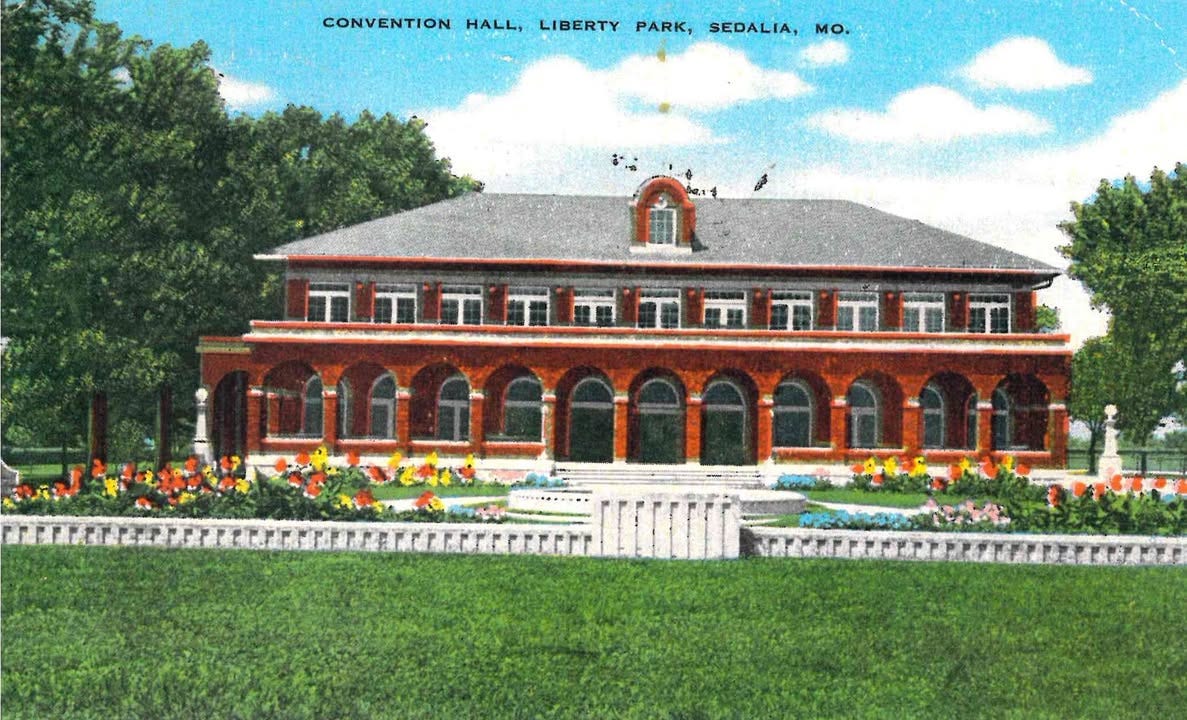
Pictured: Convention Hall, Sedalia, Missouri
These were smaller-market or occasional dates. Sedalia was the usual weekly Tuesday night town. Crowds were typically in the low-to-mid hundreds, sufficient to justify a scaled card using the regular roster but far below Kansas City or St. Joseph levels. Fort Scott’s December 28, 1976 Memorial Hall card (featuring George’s title defense, Race over the Iron Sheik, and a battle royal) would have been one of the better secondary-town draws of the quarter, yet still modest by major-city standards.
Overall Business Context
Central States in late 1976 operated as a classic mid-tier NWA territory. The Kansas City–St. Joseph axis provided the bulk of reliable weekly revenue (St. Joseph in the 1,500–2,000 range on documented October dates; Kansas City in the broader 1,000–2,500 band). Secondary towns added incremental volume through volume of dates rather than large individual gates.
The absence of blockbuster touring stars every week, Race was the biggest regular draw; Funk Jr. appeared for the December tournament, kept most houses in the modest-but-sustainable range. Frequent title changes and TV-built angles helped maintain interest without requiring massive crowds to break even. Precise gate data for most Q4 shows remains unavailable outside the two St. Joseph figures noted above.
Thank You for Watching and Listening
I’m Tony Richards, Pro Wrestling Historian, Author and Storyteller. I share pro wrestling historical items in each issue of the Time Tunnel Pro Wrestling History Newsletter and each episode of our podcast show. Thanks for your support! If you enjoy my information on select events, matches and insights, please share with folks you think might like to be a subscriber!
Remember, Premium subscribers get access to exclusive and special content such as some special issues including a multi-part deep dives on wrestling territories, wrestler bios and championship title histories, special audio and video interviews on territory pro wrestling and more available in the Pro Wrestling Time Tunnel for Premium Subscribers. Being a Premium Subscriber also means you support me in my efforts to document Pro Wrestling History through my research, writing, books, vidoes and podcasts. And…I have something very special planned for our Premium Subscribers on the Podcast side of things in 2026! Details soon here in the Pro Wrestling Time Tunnel.