


Today’s Favorite Quote: A person should share the action and passion of his times at peril of being judged not to have lived - Oliver Wendell Holmes
Happy Birthday to those who have passed on and to those great wrestlers still with us:
In Memoriam:
Gene LeBell 1932
Eddie Guerrero 1967
Happy Birthday:
Betty Niccoli (83)
Rockin Robin Smith (62)
Jun Akiyama (57)
Stevie Richards (55)
Daniel Puder (45)
Jay White (34)
RIP Memorial: We stop & remember those who have passed on this day and gave themselves to the business for us, the fans. We salute you and thank you.
Johnny Doyle 10-9-1969 at the age of 60

El Mongol 10-9-2016 at the age of 86
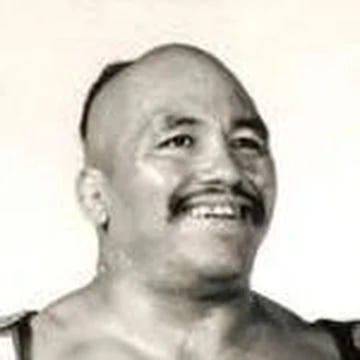
Len Rossi 10-9-2020 at the age of 91

The Life and Career of Gentleman Chris Adams
Gentleman Chris Adams arrived in Dallas in the spring of 1983 as Kevin Von Erich’s English pen pal and left the territory era as one of its most complete performers: a black-belt athlete who could work, talk, and draw, and the man who put the superkick on the map. He was also a cautionary figure. At his peak Dave Meltzer ranked him among the twenty best wrestlers in the United States. The same habits that made his nights larger than the towns eventually took the career, and then the man.
Christopher Adams was born on February 10, 1955, in Rugby, Warwickshire, the eldest child of Cyril and Jean Adams. He started judo at nine and stayed with it for fourteen years, earning a black belt and three British national titles in his age and weight classes by the time he was twenty-one. His younger brother Neil became the better-known judoka of the family, winning Olympic silver in 1980 and 1984. Chris was named to the British squad for the 1976 Montreal Games and did not compete. Away from the mat he played football, rugby, and cricket, dabbled in amateur wrestling, and spent four years studying architecture. The Olympic near-miss pushed him toward the professional ring.
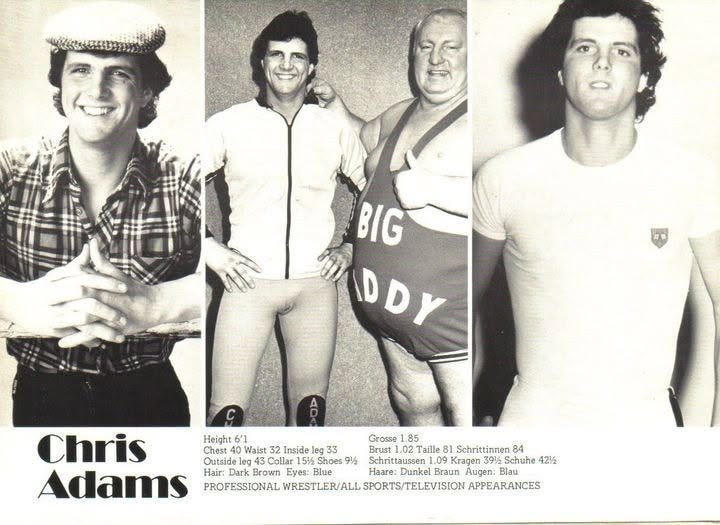
He debuted in June 1978 for Joint Promotions with almost no formal wrestling education, leaning on judo, karate, and amateur grappling. Tony St. Clair and Shirley “Big Daddy” Crabtree are the names usually attached to his early instruction; in practice he learned on the job, on ITV’s World of Sport, against Mark “Rollerball” Rocco, Mick McManus, Adrian Street, Big Daddy, Dave “Fit” Finlay, Dynamite Kid, and Davey Boy Smith. Billed at first as “Judo” Chris Adams, he won the British Light Heavyweight Championship from Rocco and the British Commonwealth Tag Team Championship with Marty Jones. The look was already there: lean, quick, good-looking, and comfortable on the microphone in a way few British light heavyweights were.
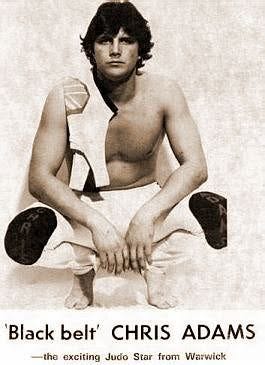
In 1981 he moved to Los Angeles and the Olympic Auditorium promotion run by Mike and Gene LeBell. He worked barefoot at first, then settled into boots, arm pads, and kneepads. The California years produced the NWA Americas Heavyweight Championship and two Americas Tag Team reigns, one with Tom Prichard and one with Ringo Rigby, plus the Los Angeles Beat the Champ Television title. He also worked Don Owen’s Pacific Northwest territory and took tours of Japan, Mexico, Europe, and Canada. The move that would define him was already in the matches: a thrusting side kick, first called a judo kick, later an enzuigiri variant, and finally the superkick. He hit it like an uppercut, sole of the foot to the chin, often with a thigh slap that taught the crowd when to pop. Great Kabuki was using a similar thrust kick in the same years. Adams did not invent the idea of kicking a man in the face. He made it a finish, named it, and sold it until the rest of the business copied it. Shawn Michaels later said the first superkick he ever saw was Adams’s, and that he always gave the Englishman the credit.
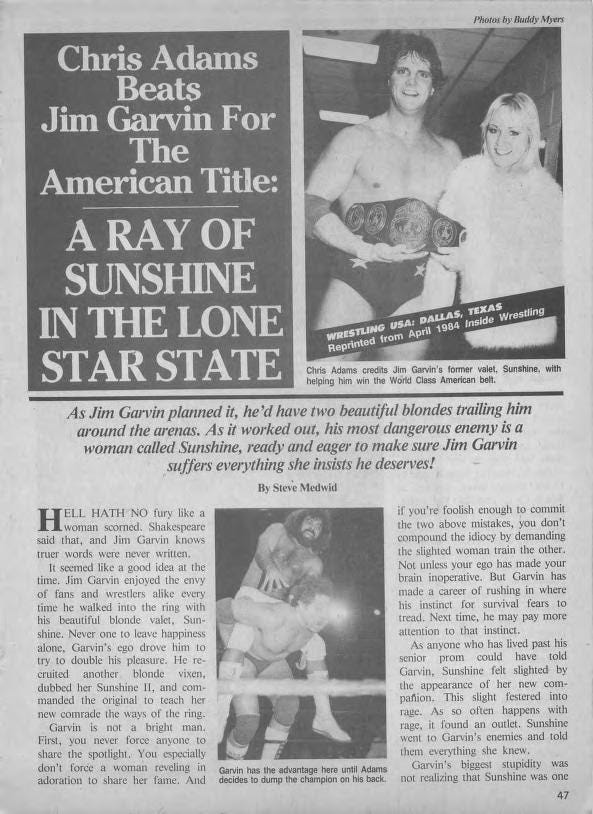
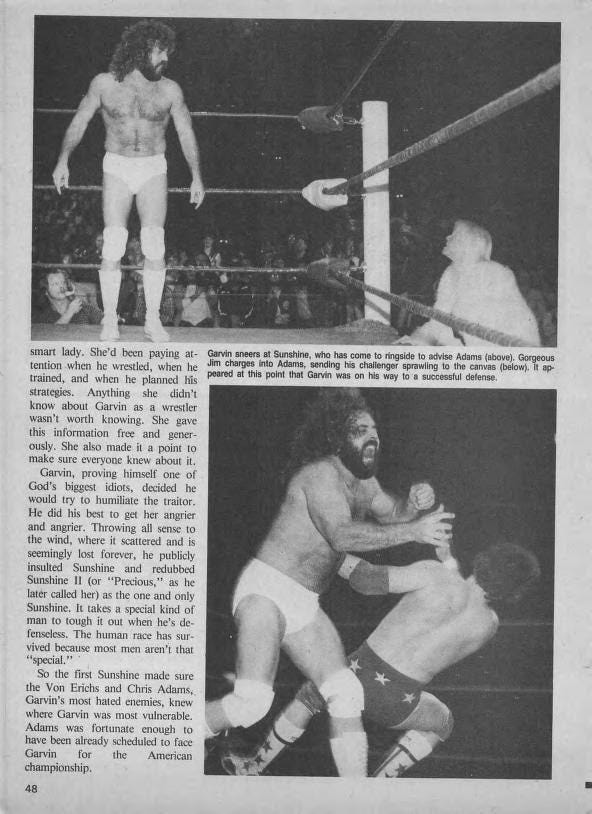
Fritz Von Erich brought him to World Class Championship Wrestling in 1983. On April 15 he wrestled twice in Dallas, beating Roberto Renesto and the Mongol by disqualification. The office sold him as Kevin’s pen pal and an honorary Von Erich. Bill Mercer did the famous “Tea for Two” interview. Adams won his first eleven matches before Kamala beat him on June 20 in Fort Worth. By August he was teaming with Kerry against the Fabulous Freebirds. The first big program was with Jimmy Garvin, Sunshine, and Precious. Sunshine sided with Adams. On October 21 at the Sportatorium he wrestled as the Masked Avenger to earn a title shot, then beat Garvin for the NWA American Heavyweight Championship on Thanksgiving night, November 24, 1983, at Reunion Arena. That was the first of five American and World Class world title reigns. Garvin pinned him in the rematch at Christmas Star Wars and the title was held up; Adams won it back on January 30, 1984, at Wrestling Star Wars, lost it again, regained it in April, and closed the Garvin chapter with a loser-leaves-town win on the Fourth of July.
The turn came in the fall of 1984. Adams, still a babyface, hired Gary Hart. The Von Erichs told him to drop the manager. He refused. In a tag match with Kevin against Jake Roberts and Gino Hernandez, Adams superkicked Kevin and broke a wooden chair over his head. Hart knocked out Stella Mae French. The Sportatorium turned on him overnight. Fans chanted “Chris is a traitor” and carried “Benedict Adams” signs. Kevin won the blow-off at the Cotton Bowl Star Wars on October 27. A month later Kevin paid the chair shot back; a splinter lodged in Adams’s nose near the eye, and the office killed the angle before someone got hurt for real. Adams, Roberts, and Hernandez then beat Kerry, Mike, and Bobby Fulton (substituting for an injured Kevin) for the World Class six-man titles.
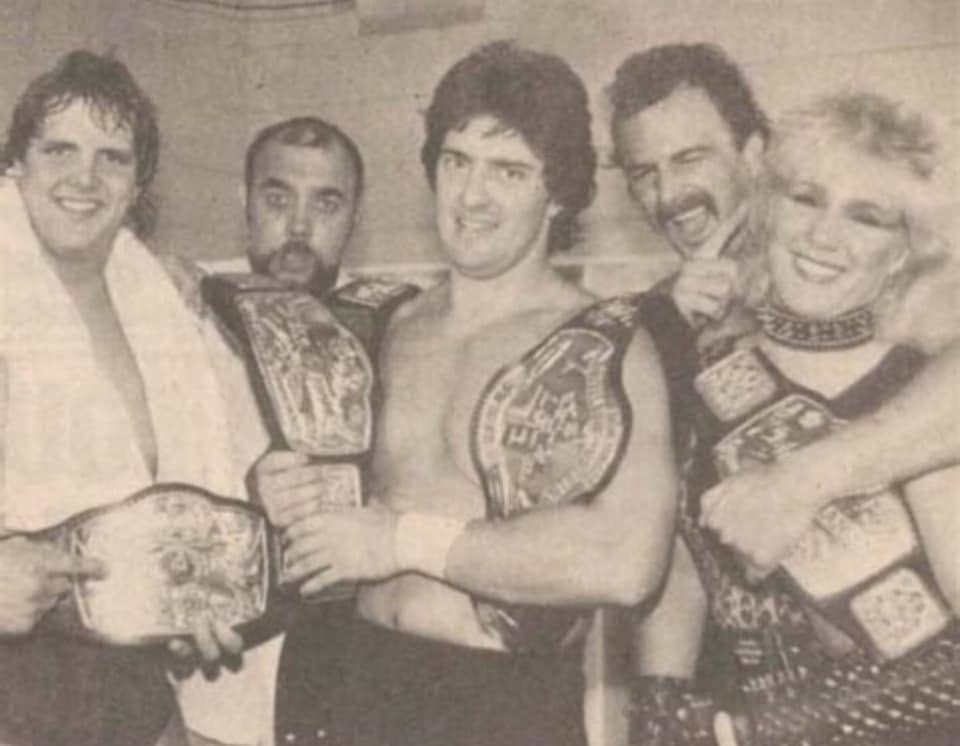
Pictured: Chris Adams and Gino Hernandez, The Dynamic Duo, with Gary Hart, Jake Roberts and Nickla Roberts
Early in 1985 Hart kayfabe fired him, and Adams paired with Gino Hernandez as the second Dynamic Duo. For the better part of a year they were the top heel act in the hottest territory in America. They cut hair after matches, feuded with the Von Erichs and the Fantastics, and won the American Tag Team Championship twice, including a June 24, 1985, win over the Fantastics. Adams also chased Ric Flair for the NWA World title and came close twice, once when Flair snuck a pin in the ten seconds the referee spent with One Man Gang. A side feud with Kabuki turned on whose kick was better. The peak of the Duo was the second Cotton Bowl extravaganza in October 1985, a lumberjack hair match against Kevin and Kerry. The Von Erichs won. Adams and Hernandez were shaved in the ring and worked under masks while the hair grew back.
The breakup was better than the team. On Christmas night 1985 Hernandez refused to tag in, selling a bad knee, and left Adams to take the beating. Adams threw Kevin over the top to end it and slapped his partner. On January 27, 1986, at the Fort Worth Convention Center they met again, loser to get Freebird Hair Cream. Adams dominated and kept refusing the pin. While he argued with referee Rick Hazzard, Hernandez threw the cream — a dark liquid — into his eyes. Adams was written off television as blinded. He went home to England, worked Japan for New Japan, and sold the eye patch. The payoff never happened. Gino Hernandez was found dead on February 4, 1986, of a cocaine overdose. The hottest heel program in the territory died with him.
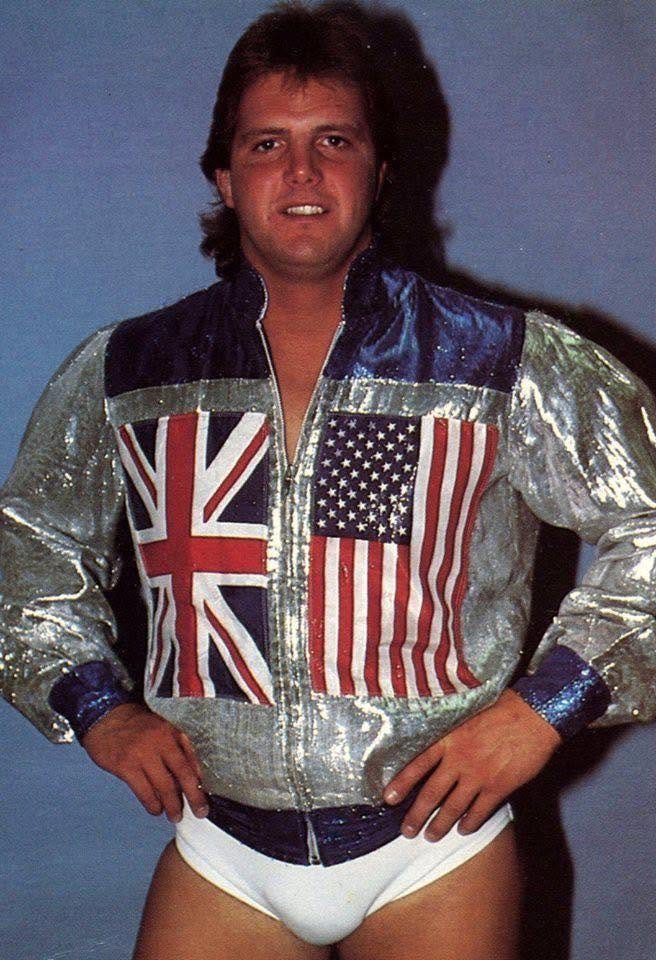
Adams came back in the spring without the patch in Gary Hart’s Texas All-Star Wrestling and with it in World Class, turned face again by the blinding. On July 4, 1986, he beat Rick Rude for the World Class heavyweight title. He did not keep it long. On June 30, flying home from Puerto Rico, an intoxicated Adams had been cut off from more liquor by an FAA inspector on the plane. He shoved a flight attendant, grabbed American Airlines co-pilot John Bentley by the collar, and head-butted him three times. Other wrestlers on the flight, Kevin Von Erich among them, held him down.
A federal jury in Fort Worth convicted him of misdemeanor assault in September and rejected the felony count that could have meant deportation. On October 25 Judge Eldon B. Mahon gave him ninety days and a five-hundred-dollar fine, telling him a man idolized by children was not above the law. World Class wrote the title off him in September, announcing that Black Bart had won it in a Los Angeles match that never took place. Bart then dropped it to Kevin at the Cotton Bowl.
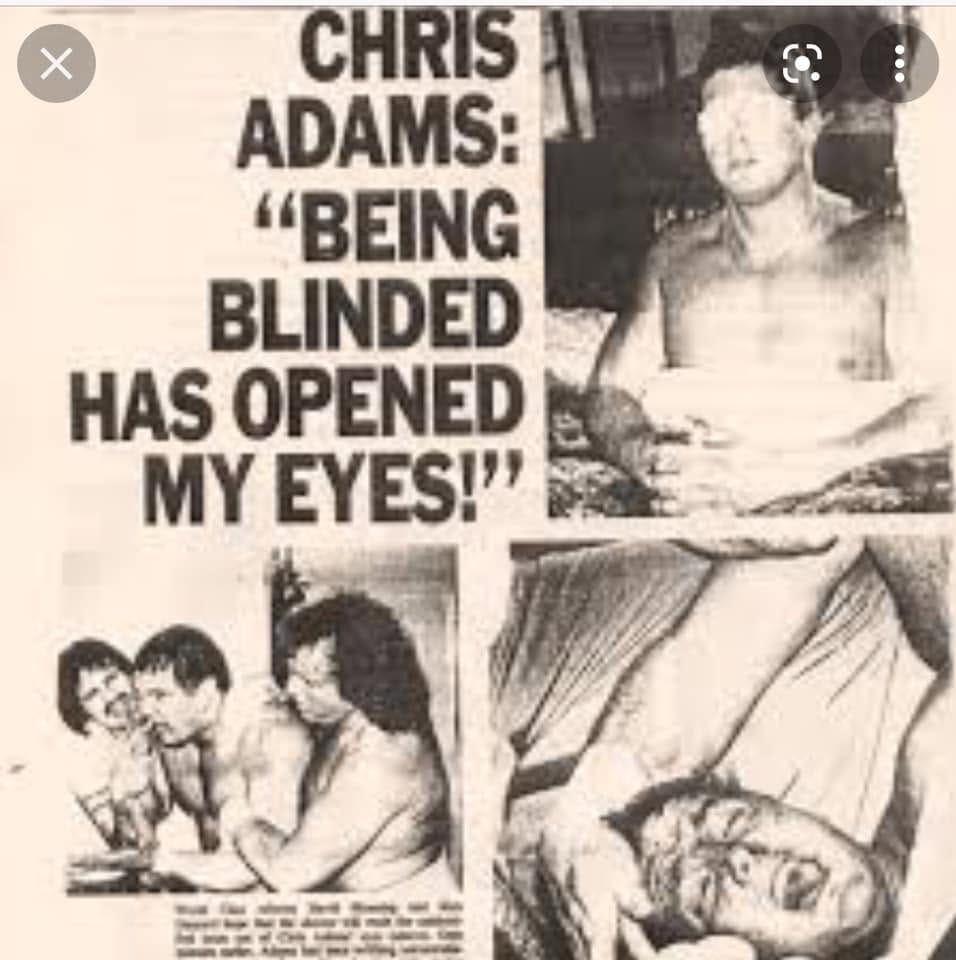
After the jail term he surfaced in Bill Watts’s Universal Wrestling Federation. In February 1987 he and Terry Taylor won the UWF World Tag Team Championship. Two months later they were in a violent split that followed Adams back to World Class in 1988 and left him with nerve damage in his back. He also started a long feud with Iceman King Parsons that wandered in and out of the Texas promotions for years. He returned to the Dallas office in October 1987 as World Class slid toward the WCWA and the USWA merger.
Late in 1988 he opened a wrestling school at the Sportatorium and sold rings on the side. Steve Austin was one of the students in 1989 and had his first match there within five months. They feuded later. Austin’s verdict, given years afterward, was blunt: Adams was a “con man deluxe” who took trainees’ money, worked them stiff, and sent them out underprepared. Scott Hall is also sometimes listed among the men who passed through the school. The teaching legacy is real. The business practices were not admired.
The 1990s were a long decline with occasional spikes. He won the GWF North American title twice in 1994, promoted under the L&A banner with Tom Lance, and co-promoted a 1993 tour of Nigeria backed by Pepsi. A GWF match with Rod Price ended with Adams ripping off Price’s hair weave and Price needing more than two hundred stitches. He teamed again with Kerry Von Erich until Kerry’s suicide on February 18, 1993. In Memphis he feuded with Brian Christopher while Toni Adams worked as “Nanny Simpson,” and he challenged Eddie Gilbert for the USWA heavyweight title. There was a brief, forgettable WWF television appearance and a 1990 Starrcade tag with Norman Smiley. In 1997 WCW brought him in with the idea of pairing him with Lord Steven Regal and Dave Taylor as a Blue Blood. Personal heat killed it. He feuded briefly with Glacier over kicks, worked the 1997 World War 3 battle royal, and on the first episode of Thunder in January 1998 pinned Randy Savage before J.J. Dillon reversed the decision over Lex Luger interference. By 1999 he was enhancement talent. He asked for his release and went home to Texas to promote Big D and work the independents.
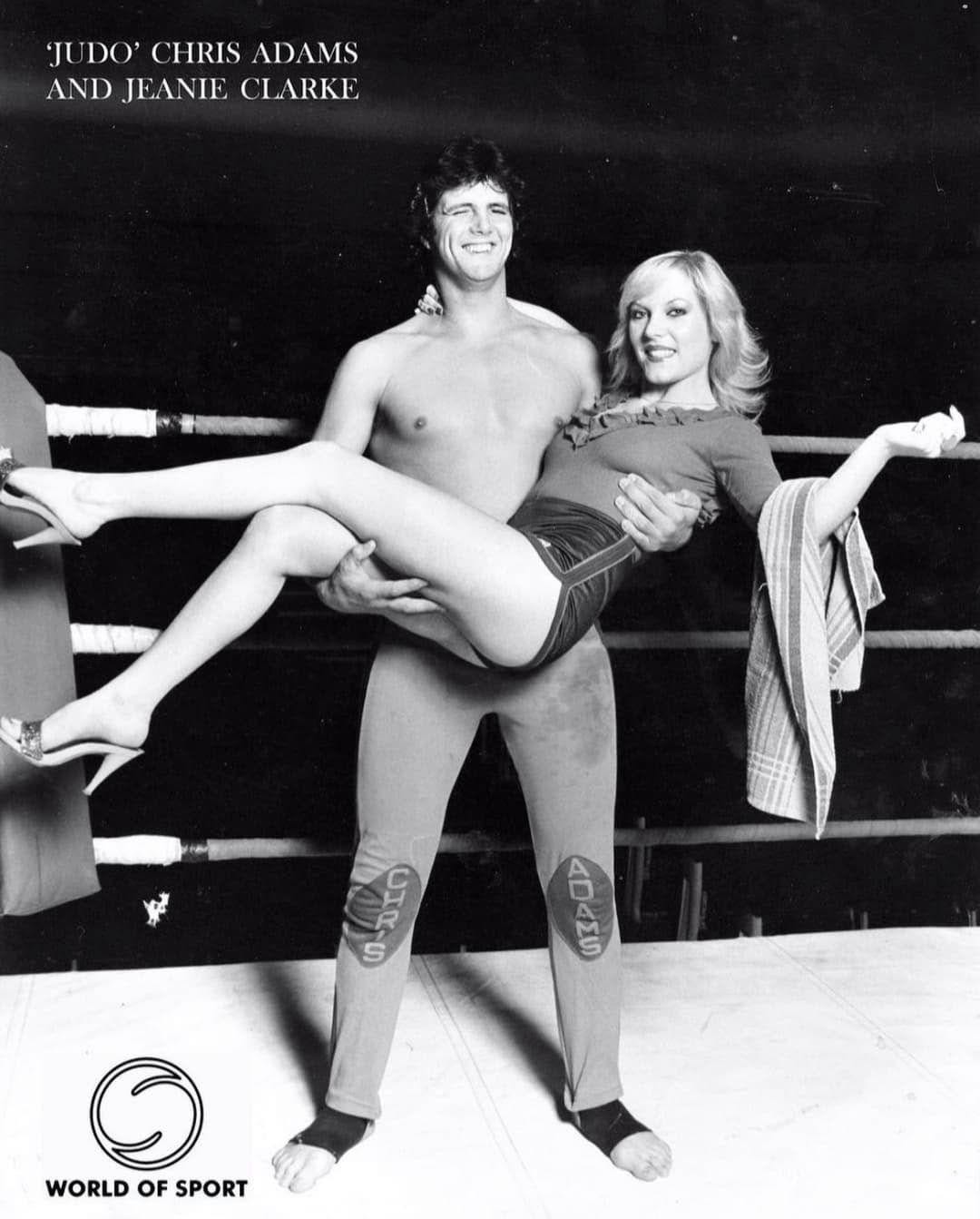
The private record ran alongside the ring record and eventually overtook it. From the late 1970s into the early 1980s he was involved with English model Jeanie Clarke, who worked his corner; they had a daughter, Jade. On December 20, 1984, he married Toni Lea Collins in Hawaii. She became a valet in World Class and later promotions. They had a son, Christopher Jr., and divorced on August 15, 1994.
In February 1988 Toni was found badly beaten in Lufkin after what police called a drunken rage; Adams drew a year’s probation. A daughter, Julia, was born in 1994 to Brandi Freeman, whom he had booked on a few cards as Miss Brandi. That relationship ended in late 1999. Freeman died of an overdose in 2003. There were DUI probations in 1991. Alcohol was the constant.
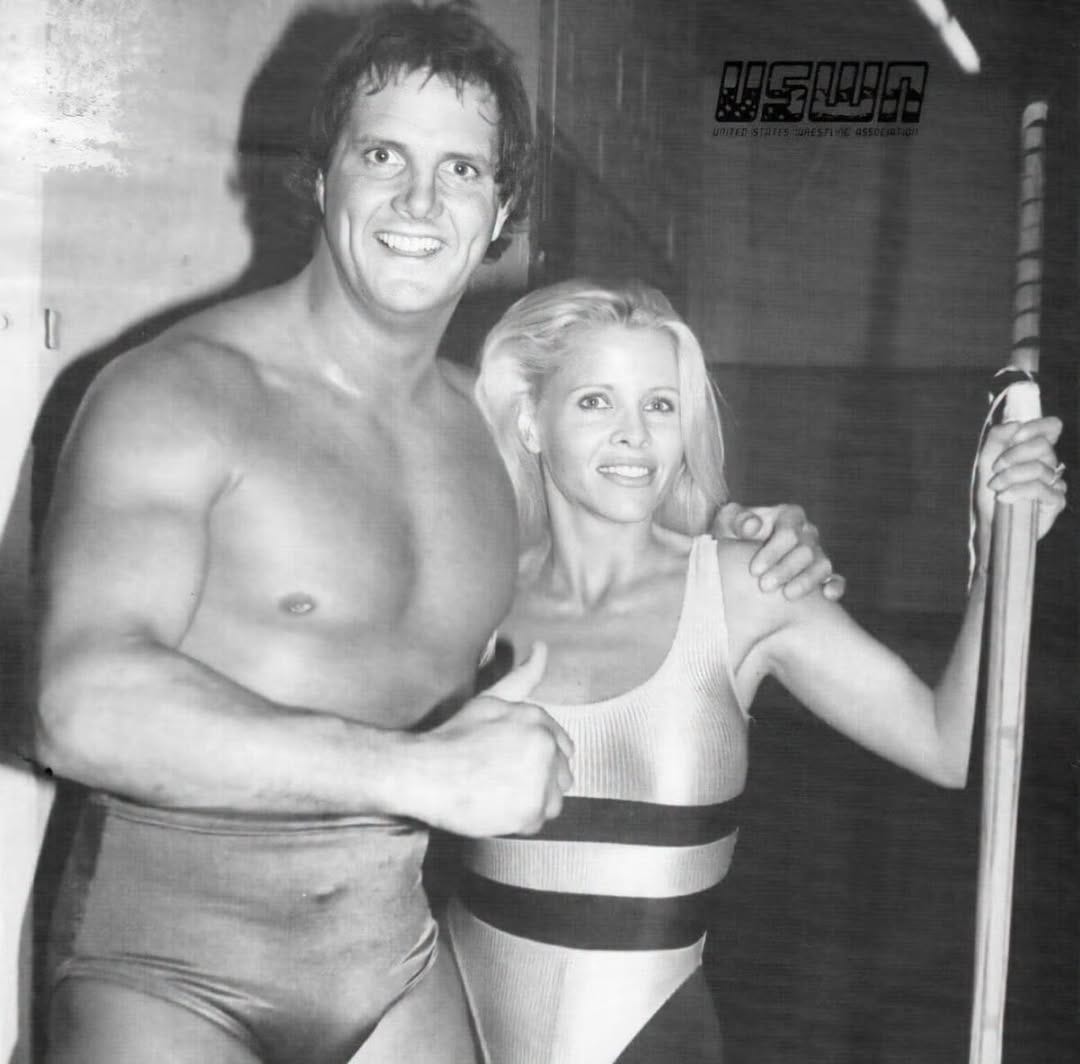
Pictured: Chris and Toni Adams
In April 2000 Adams and his girlfriend of four months, Linda Kaphengst, were found unconscious in an apartment after taking GHB with alcohol. He woke up. She died in the hospital about ten hours later. In June 2001 a Dallas County grand jury indicted him for manslaughter. He turned himself in and was awaiting trial. On August 25, 2001, he married Karen J. Burge in Dallas. The best man was William Brent “Booray” Parnell, a friend, former roommate, and small-time promoter.
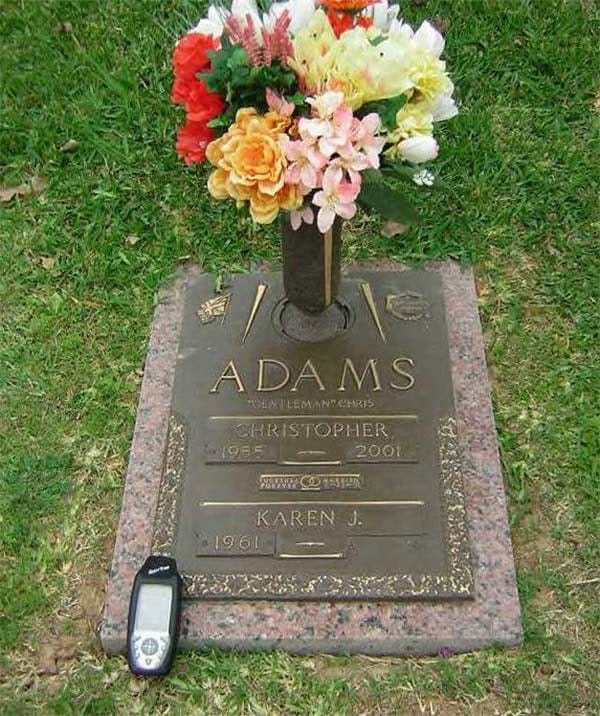
Six weeks later, on the night of October 6–7, Adams and Parnell were drinking at the home of Parnell’s mother on Sendero Drive in Waxahachie. What started as roughhousing turned into a fight. Parnell took a .38 from a nightstand and shot Adams once in the chest. He was forty-six. Parnell claimed self-defense and was acquitted. Adams was buried at Oak Grove Memorial Gardens in Irving.
The wrestling left behind is cleaner than the life. In World Class from 1983 to 1986 he was a complete territory star: the English babyface the Von Erich fans trusted, then the traitor they hated, then the blinded man they pitied back into the main event. The Dynamic Duo with Hernandez was one of the great heel teams of the decade, cut short by a death that also cut short the best angle Adams ever had.
The superkick outlived all of it.
Michaels turned it into Sweet Chin Music; the rest of the business turned it into a party move. Adams hit it when it still looked like it could take a man’s head off. PWI named him Most Inspirational Wrestler of 1986, the year of the blinding comeback and the Rude win, which was also the year of the airplane conviction. That contradiction was the career.
He held roughly two dozen titles across Britain, California, Texas, the UWF, and the GWF, main-evented stadium shows in the territory’s hottest years, and trained at least one future world champion. He also lost the World Class title to a jail sentence, alienated students, and died awaiting trial in a drunken fight with his best man. The gentleman was a character. The man was more complicated, and the ring never quite outran him.
One Thing I Learned About Reggie Parks
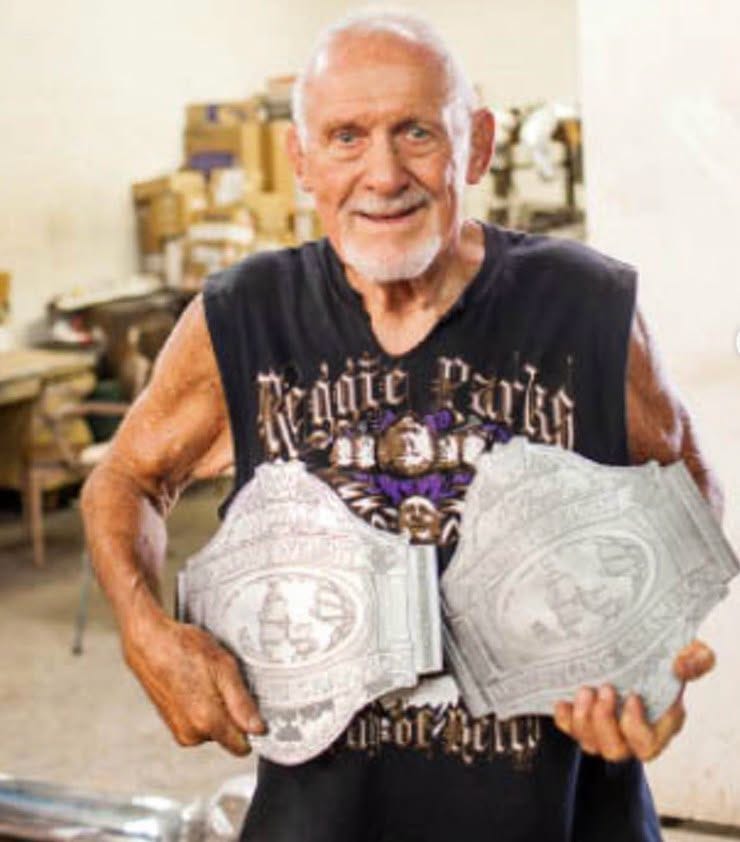
Reggie Parks, the legendary “King of Belts,” designed the championship-style belt that appears on the cover of Madonna’s 2008 album Hard Candy.
The Canadian wrestler-turned-beltmaker (who crafted the classic WWF Winged Eagle title and countless other iconic belts) got the call for the pop-star project, adding a surprising mainstream credit to a résumé better known for work with the WWF, NWA, WCW, and the UFC.
Thank You for Watching and Listening
I’m Tony Richards, Pro Wrestling Historian, Author and Storyteller. I share pro wrestling historical items in each issue of the Time Tunnel Pro Wrestling History Newsletter and each episode of our podcast show. Thanks for your support! If you enjoy my information on select events, matches and insights, please share with folks you think might like to be a subscriber!
Remember, Premium subscribers get access to exclusive and special content such as some special issues including a multi-part deep dives on wrestling territories, wrestler bios and championship title histories, special audio and video interviews on territory pro wrestling and more available in the Pro Wrestling Time Tunnel for Premium Subscribers. Being a Premium Subscriber also means you support me in my efforts to document Pro Wrestling History through my research, writing, books, vidoes and podcasts. And…I have something very special planned for our Premium Subscribers on the Podcast side of things in 2026! Details soon here in the Pro Wrestling Time Tunnel.