


Today’s Favorite Quote: All we are is a result of what we have thought-Buddha
Happy Birthday to those who have passed on and to those great wrestlers still with us:
In Memoriam:
Danny Dusek 1905
Frank Jares 1912
Bruno Sammartino 1935
Rita Cortez 1938
Ripper Savage 1946
Rip Oliver 1952
Happy Birthday:
Barry Darsow\Khrusher Khruschev\Smash (67)
Dixie Carter (62)
Afa Anoa’i, Jr\Manu (42)
RIP Memorial: We stop & remember those who have passed on this day and gave themselves to the business for us, the fans. We salute you and thank you.
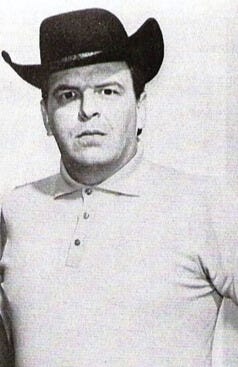
Bob Marella\Gorilla Monsoon 10-6-1999 at the age of 62
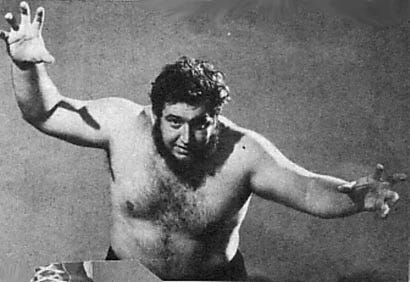
Jim Siksay 10-6-2011 at the age of 91
Bill Bowman 10-6-2015 at the age of 82
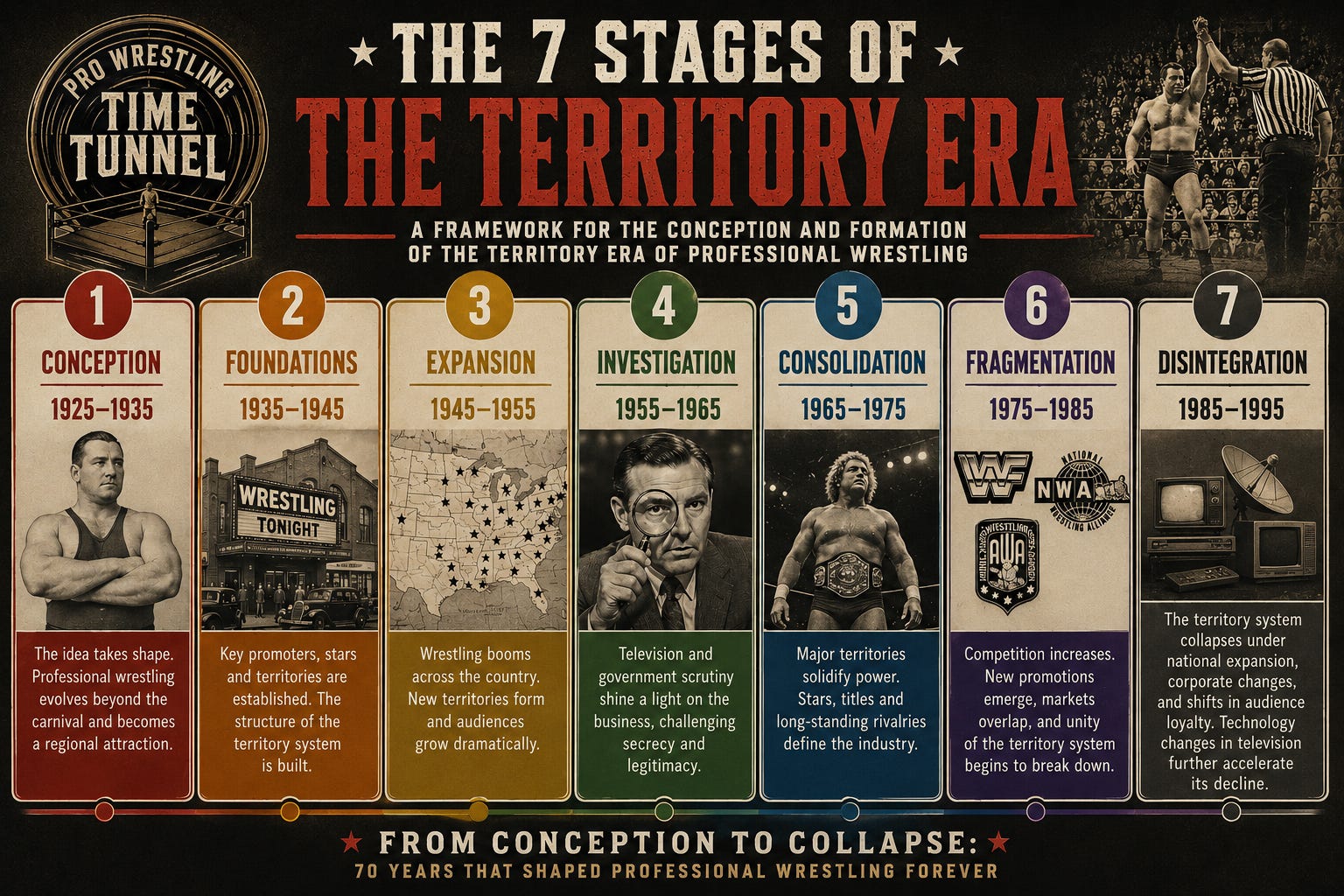
7 Stages of the Territory Era
Stage 4: Investigation (1955-1965)
Year Two Month Ten
October 1956
A Deeper Dive Into the DOJ Anti-Trust Strategy Against the NWA
The Justice Department did not stumble into United States v. National Wrestling Alliance. It built a trade-association monopoly case the way the Eisenhower Antitrust Division built most of its mid-1950s civil cases: start with a complaining insider, map a horizontal cartel, decide early that dissolution and criminal indictment were more trouble than they were worth, and lock the industry into a conduct decree that looked severe on paper and was cheap to administer.
The legal object was not to decide whether wrestling was real. It was to treat booking as interstate commerce in talent and dates, then break the rules that allocated markets.
The legal theory
The complaint, filed October 15, 1956 in the Southern District of Iowa as Civil Action No. 3-729, charged violations of Sections 1 and 2 of the Sherman Act.
Section 1 was the workhorse. The government framed the Alliance as a continuing horizontal agreement among competing bookers and promoters. The alleged agreement had a simple structure:
• each member “possessed” a territory
• members would not book against one another in those territories
• members would keep non-members out of those territories
• local promoters inside a territory had to take talent from the member booker
• wrestlers who took dates from outsiders would be blacklisted
• championship recognition was a membership privilege, not an open athletic claim
• “studio exhibitions” (television tapings) would be discouraged or punished when they threatened live gates or crossed territorial lines
That is classic Section 1 territorial allocation, group boycott, and exclusive-dealing theory. It sits in the same family as the movie clearances in Paramount, the market divisions in Addyston Pipe, and the trade-association blacklists the Division used against booking combines in other entertainment industries.
Section 2 was the overlay. The Division alleged monopolization and conspiracy to monopolize “the booking of wrestlers for professional wrestling exhibitions.” The relevant market was not “sports entertainment” in the modern sense. It was the intermediate market for booking services: the right to place named wrestlers into licensed arenas and onto television. If you controlled that market, you controlled who could promote a town.
The government named the Alliance as the single defendant and listed members and former members as co-conspirators, not as named defendants in the filed case. That was a strategic choice, not an accident.
How the case was built
The investigation began in the Los Angeles office, not in St. Louis. That mattered.
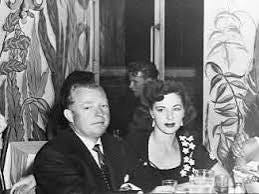
Pictured: Johnny Doyle with female companion
Johnny Doyle, who had broken with the Los Angeles office, gave the Division an insider’s map on February 25, 1955: how towns were sold, how red-ink postcards and suspension lists moved across state lines, how a wrestler became “property” of a booker and was traded through the membership. Complaints from frozen-out promoters and from wrestlers who had been shut off the circuit supplied the rest.
Stanley E. Disney, the Los Angeles antitrust attorney who ran the file, spent June 1955 in St. Louis questioning Sam Muchnick and reviewing Alliance records.
Stanley Eugene Disney was a longtime attorney in the U.S. Department of Justice Antitrust Division, He worked out of the division’s Los Angeles office in the mid-1950s and led the field investigation that produced the government’s civil antitrust case against the National Wrestling Alliance.
He was born in Muskogee, Oklahoma, the son of Loren G. Disney (1876–1938), a Spanish-American War veteran, lawyer, judge, and Republican political figure in Oklahoma Territory and early statehood, and Nettie Van Sant. He attended the University of Oklahoma and George Washington University Law School. He married Frances Higbee Martin (also of Muskogee, 1910–1993) on June 15, 1936, at Christ Church on Lafayette Square in Washington, D.C.
His Justice Department service ran, with interruptions, from roughly 1929 to 1942 and again from 1948 until retirement in 1975. He served in the military during World War II (family papers at Yale include a photograph album and military-history materials from that period). After the war he returned briefly to the department, then from about 1950 to 1954/55 served in occupied Germany as deputy chief and later chief of the Decartelization and Deconcentration Division of the U.S. Office of Military Government (and related Allied High Commission / Department of State legal work). That office enforced Allied laws aimed at breaking up excessive concentrations of economic power—cartels, combines, and large industrial groups—in the U.S. zone. His official papers on the subject (memoranda, reports, correspondence, statutes, and proceedings, 1937–1967) are at the Hoover Institution.
While in Germany the Disneys adopted nine German orphans, ages roughly four to ten, including a set of twin girls. Contemporary wire-service accounts (late December 1954) describe the family arriving in New York aboard the liner America; one caption identifies him as having been with the U.S. Department of State in Germany. A 1955 press photograph shows him, in hat and overcoat, speaking with a reporter on arrival. The children listed in family records include Charlton Hildreth (1944–1985), Loren Stanley (1945), Anna Nettie (1946), Milton Wesley (1947), Grover Ben and David Wesley (both 1948), William Ralph (1949), and twins Dianne Karen and Dorothy Cameron (1950).
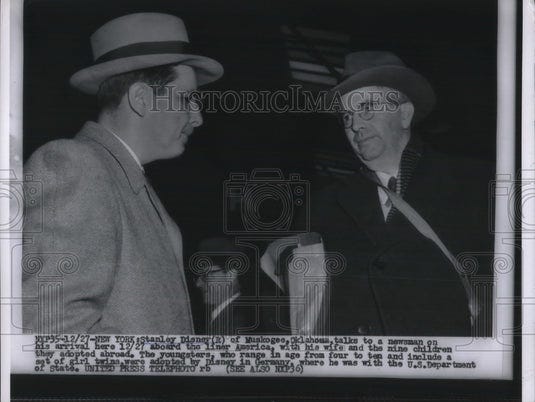
Pictured: Stanley E. Disney returning to the United States
Back in the United States he rejoined the Antitrust Division in Los Angeles. In 1955 he conducted the principal investigation of the National Wrestling Alliance, a membership organization of promoters and bookers that allocated exclusive territories, restricted wrestler movement, and used blacklisting. On June 22–23, 1955, he interviewed NWA president Sam Muchnick at length in St. Louis and later summarized the alleged restraints (territorial monopolies, talent blacklists, and pressure on independent promoters) in memoranda to his Los Angeles superior, James M. McGrath.
He recommended both grand-jury and civil action. The civil case, United States v. National Wrestling Alliance, was filed October 15, 1956, in the Southern District of Iowa and resolved the same day by consent decree. The decree barred exclusive territorial recognition, restrictions on booking outside the alliance, and related practices, and required open membership on nondiscriminatory terms. Disney is listed among the Department of Justice attorneys on the decree (with Victor R. Hansen, Roy L. Stephenson, McGrath, W. D. Kilgore Jr., and Charles F. B. McAleer). He remained involved in follow-up compliance questions into the late 1950s.
He later lived in the Pasadena, California, area (ZIP 91105 at the time of his death) and died there on May 24, 1985, at age 74. Personal and family papers, including photographs, are held at Yale’s Beinecke Library (Loren and Stanley Disney Family Papers); the Germany decartelization files are at Hoover. Public photographs are scarce; the clearest widely circulated image is the December 1954/1955 United Press arrival shot of him with a reporter after the family’s return from Germany with the adopted children.
On July 15, 1955 Disney sent a seventeen-page memorandum up the chain recommending a grand jury and a civil case. The memo described a conspiracy of roughly thirty-eight bookers: exclusive territories, coerced local promoters, sale of towns, discrimination, price fixing, and systematic blacklisting.
James M. McGrath moved the file toward Washington. Assistant Attorney General Stanley N. Barnes, the Division’s “trustbuster,” approved the inquiry. An early draft complaint was written for the Southern District of California and named about thirty-five defendants, including people who were not even members. That draft was a charging document, not the case that was filed.
Two parallel problems shaped the file.
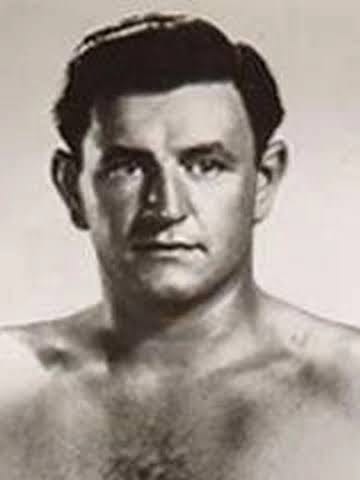
Pictured: Sonny Myers
First, Sonny Myers had already sued Pinkie George and the Alliance in the Southern District of Iowa (Civil Action No. 3-630, filed August 2, 1955), alleging the same Sherman Act theory: exclusive territories, blacklisting, and wrestlers as traded inventory with no freedom of contract. A private Iowa case and a federal Los Angeles investigation pointed at the same cartel. Iowa became the natural venue for a national consent judgment.
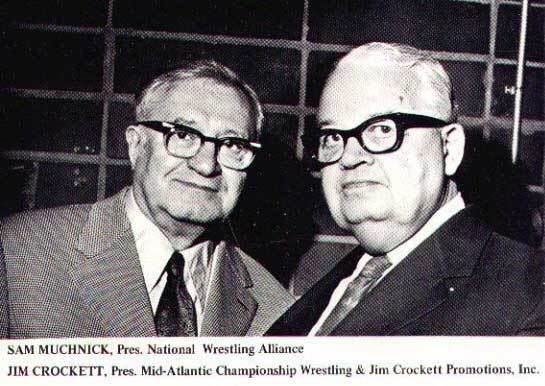
Second, Muchnick’s overriding fear was not an injunction. It was a public finding that wrestling was scripted. Disney’s office understood that. The Division never made kayfabe an element of the case. That was strategy, not ignorance. Proving a work would have been a circus, would have invited a “sports exemption” fight the government did not need, and would have risked collapsing the industry whose competition the Division claimed to be restoring. The case was framed as a booking monopoly among promoters, the same way a theatrical booking combine could be framed without asking whether the play was any good.
The charging decision: civil, one defendant, no breakup
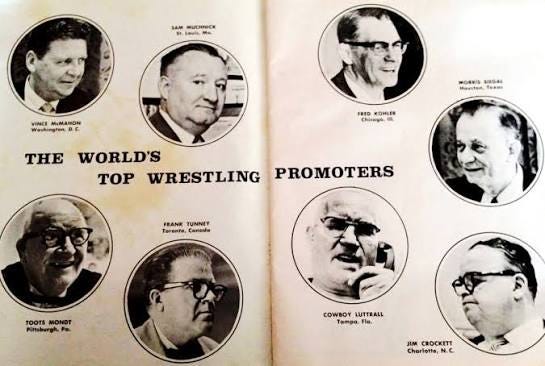
Pictured: Sam Muchnick and his close friend and confidant, Frank Tunney along with other big wrestling promoters of the age
After the 1955 NWA convention cycle and a January 3, 1956 meeting in Washington among Muchnick, counsel Harry N. Soffer, Frank Tunney, Barnes, and Division lawyer Derr, the government made three decisions that defined the whole case.
Civil only. Derr later told McGrath there had been “a close question as to whether this should be both a criminal and a civil case,” and that the Division had “finally been determined to proceed only civilly.” Criminal Sherman Act cases in 1956 meant grand juries, intent evidence, and the risk of a public trial about a popular entertainment. A civil consent decree got structural relief without putting promoters in the dock.
The Alliance as sole defendant. Kilgore, chief of the Judgments and Judgment Enforcement Section, told Muchnick on June 8, 1956 that because the Alliance alone would be named, Muchnick was responsible for getting every member to sign, binding them individually as “consenting members.” The threat sat next to the offer: if members refused, “it would be easy to charge every member.” That is leverage, not generosity. One corporate defendant plus a web of personal consents is easier to administer than a thirty-five-defendant trial calendar.
No dissolution. Barnes and Derr told the NWA they would not force the coalition to disband. They demanded a “complete reevaluation of all Alliance resolutions.” The Division treated the NWA as a salvageable trade association, not as an entity that had to be killed. That tracks 1950s consent-decree practice: rewrite the rules, keep the organization, reserve visitorial rights.
Soffer reviewed the November 1955 draft complaint and conceded that members were “guilty of many of the practices described.” Muchnick denied a standing blacklist policy and admitted that blackballing had “at one time, been discussed.” That partial confession was enough for a decree and not enough for a trial on monopolization.
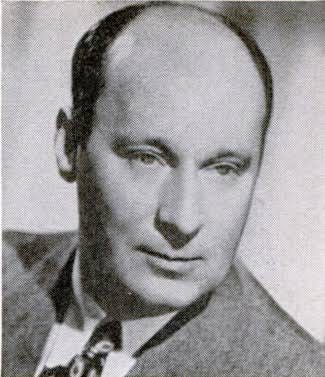
Pictured: US Representative Melvin Price
Political context sat around the legal file. Muchnick’s closest friend in Congress was Melvin Price of East St. Louis. Later writers have also pointed at Everett Dirksen in Kohler’s Illinois and Estes Kefauver in Tennessee as possible softening influences. The Division did not need a smoking-gun letter from a senator to choose a consent decree. Eisenhower-era Antitrust already preferred decrees in association cases. Political access made that preference easier to defend.
Venue and choreography
The filed case did not stay in Los Angeles. It was brought in the Southern District of Iowa, Central Division, before Judge William F. Riley in Des Moines.
Iowa was not a random forum. Pinkie George, an NWA founder, was an Iowa promoter. The Myers private suit was already there. A Midwestern filing also avoided the appearance that a California office was settling a California grudge born of the Doyle-Los Angeles war.
The choreography was the standard 1950s package:
Complaint and answer filed the same day.
Answer denies the material allegations.
Parties consent to a Final Judgment “without trial or adjudication of any issue of fact or law” and “without this Final Judgment constituting evidence or an admission.”
Judge signs. That package is the strategy. The government gets an injunction it can enforce. The defendant gets a paragraph it can read to the newspapers: we admitted nothing. Muchnick used exactly that line in Wrestling Life in February 1957. Attorney General Herbert Brownell announced the filing. The Associated Press moved a short story. The Division closed the file. An FBI routing slip dated January 2–4, 1957 recorded Disney’s statement that the Antitrust Division file was closed.
What the complaint said the cartel did
The filed theory, as reconstructed from the Division’s own summary and from Hornbaker’s transcription of the eleven-count conspiracy, was a closed loop:
(a)–(d) Market division. Recognize territories; do not invade; stop members from invading; help each member exclude outsiders.
(e)–(h) Control of the local promoter market. Own the bookers who supply the towns; force local promoters to buy talent only from the member; keep independent bookers from operating; freeze non-members out of the booking business altogether.
(i) Blacklist. Refuse to book wrestlers who took non-member dates, and make that refusal continental. Myers’s private complaint said the same thing in labor language: a wrestler who disobeyed became unemployable because he “loses his box office appeal if he stays in one territory too long” and therefore “has to wrestle over a large territory encompassing several members.”
(j)–(k) Championship and television as enforcement tools. Title recognition conditioned on membership discipline. Pressure against “studio exhibitions” that let a wrestler or a promoter build a following outside the live-gate system.
The television count is easy to miss and was central. By 1956 the first network boom was dying. Local and syndicated studio shows were becoming the advertising engine for Friday night arenas. A cartel that could punish a wrestler for taping in a rival’s city, or starve a station that sold time to an independent, was not only dividing live markets. It was dividing the new promotional medium. The decree’s studio-exhibition clause is the Division trying to keep television from becoming another territorial fence.
Championship control was treated as a tying device. The world title was not alleged as a fraud on the public. It was alleged as a membership benefit used to police the booking market. That is why the decree allowed the Alliance to book the world champion if the champion requested it, and forbade the Alliance from fixing the terms on which ordinary bookings occurred. The Division split the baby: a shared champion could exist as a product; it could not exist as a whip
The remedy strategy: rewrite the association, do not try the industry
The Final Judgment, 1956 Trade Cases ¶68,507, is a conduct-and-governance decree, not a structural one. No divestiture. No ban on a world champion. No order to sell towns. The strategy was to convert a closed syndicate into an open trade association on paper.
Governance commands
• Void existing rules, regulations, and bylaws immediately.
• Adopt new bylaws consistent with the judgment.
• Put an expulsion clause in those bylaws for any member who violates the decree.
• Admit any booker or promoter who meets stated, non-discriminatory qualifications.
• Hand every new member a copy of the judgment and tell every member that continued membership depends on compliance.
Conduct injunctions (joint and several against the Alliance and consenting members)
No agreement or course of conduct that:
recognizes an exclusive booker or promoter in a territory
prevents any booker or promoter from doing business in any territory
confines booking or promotion to members or “related promotions”
requires bookers to favor member-promoters
requires promoters to use only member-bookers
requires anyone to refuse to book a wrestler
impedes or punishes participation in studio exhibitions Members were separately enjoined from refusing to book a licensed wrestler for a licensed promoter. The Alliance was enjoined from fixing terms, including pay, for ordinary bookings. Visitorial rights Part VII is the enforcement engine. On written request of the Attorney General or the Assistant Attorney General for Antitrust, Division lawyers could inspect books and interview officers of the Alliance or any consenting member. That is how 1950s decrees were meant to live: not by a standing monitor, but by the threat of a file reopening. Kilgore’s June 1956 demand that every member sign was the real structural relief. A judgment against an unincorporated association of thirty-six men is only as good as the consents. By September 18, thirty-three of thirty-six had signed. Malcewicz and Fenton were threatened with expulsion. Their signatures came after the Iowa filing. The judgment was signed for the United States by Victor R. Hansen (who had succeeded Barnes), Roy L. Stephenson as U.S. Attorney, and Division attorneys McGrath, Disney, Kilgore, and Charles F. B. McAleer. Harry N. Soffer of St. Louis appeared for the Alliance.
What the Division deliberately left on the table
Four omissions define the strategy as much as the seven injunctions.
Kayfabe. No count alleged that matches were predetermined. No prayer asked a court to say so. The industry’s greatest legal vulnerability was treated as off-limits because proving it would have destroyed the product the decree was supposed to make competitive.
Individual criminal exposure. No promoter was indicted for conspiracy. The “close question” was resolved in favor of peace.
Dissolution. The Alliance survived as a legal person. That preserved a single point of contact for enforcement and preserved the world-title touring system the offices actually used.
Price and purse regulation. The decree forbade the Alliance from fixing booking terms, but it did not impose a rate schedule, a maximum booking fee, or a wrestler’s bill of rights. Labor was left to contract and to state athletic commissions.
Those omissions made settlement possible. They also made evasion easy. A booker did not have to “recognize an exclusive territory” if he simply never sent his champion to an outlaw town and never returned a rival’s phone call. A blacklist did not have to be a posted list if it was a series of independent decisions. The decree forbade a “course of conduct” with that purpose or effect, but proving a course of conduct without a paper trail is why the file closed in January 1957 and stayed closed.
The NWA’s counter-strategy
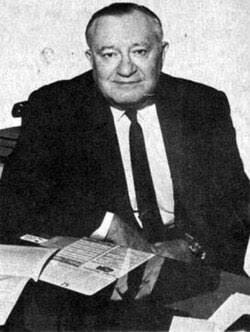
Pictured: Sam Muchnick, NWA President
Muchnick’s defense was not a Sherman Act brief. It was institutional survival.
He offered cooperation, opened files, traveled to Washington, and asked for time to “sort out their house privately.” The Division refused the delay and accepted the cooperation. He admitted “deviations” and named Doyle as a delinquent, which turned the government’s best witness into the Alliance’s scapegoat. He got every possible member to sign so that the Association, not thirty-six separate defendants, took the judgment. He then told the wrestling press that a consent decree is not an admission.
That is competent antitrust defense for a trade association in 1956. It is also why Stage 4 of the territorial era is called Investigation rather than Collapse. The legal form changed. The booking habit did not.
The later Myers trial showed the limits of both strategies. The private Iowa plaintiff tried to use the same monopoly story against George and the Alliance and was not allowed to tell the jury about the 1956 decree. The Eighth Circuit eventually treated the Alliance, qua corporation, as lacking monopoly power of its own. The government’s public case had treated the Alliance as the conspiracy’s vessel. The private case found the vessel empty. Both can be true in antitrust: a conspiracy can exist among members even when the association, standing alone, cannot exclude a competitor.
How the strategy fit the Eisenhower Antitrust Division
Barnes’s Division was active, consent-decree heavy, and more interested in rewriting association rules than in criminalizing popular amusements. The NWA file sits next to other mid-1950s entertainment and booking matters: film clearances still echoing Paramount, theatrical transfer combines, and trade associations that allocated customers.
The tools were standard:
• insider complainant (Doyle, then Myers’s public complaint as corroboration)
• document sweep at the association headquarters
• civil rather than criminal when intent would be messy
• single-entity defendant plus member consents
• bylaw rewrite plus expulsion clause as a private attorney-general mechanism
• visitorial rights instead of a receiver
The NWA case is unusual only in the product. Legally it is a booking-combine decree.
Did the strategy work?
As a litigation strategy, yes. The Division obtained nationwide injunctive language, member-by-member consents, a bylaw overhaul, an open-membership command, and a press victory without a trial that would have put kayfabe into the record. The file closed in ninety days from filing.
As a market strategy, only halfway, which is the usual fate of conduct decrees.
What changed:
• The Alliance could no longer print exclusive-territory rules and call them law.
• Outlaw titles and breakaway offices became easier to justify. The later world-title split around Édouard Carpentier in 1957, the gradual rise of independent claims in the Northeast, and the later AWA and WWWF secessions all happened in a world where “the NWA owns this town” was no longer a sentence a lawyer wanted on letterhead.
• Television studio shows could not be formally punished as a group. That mattered as local TV replaced network TV.
What did not change:
• Bookers still “had” towns.
• The world champion still toured by invitation.
• Wrestlers who crossed the wrong office still found the phone quiet.
• State athletic commissions, which the decree barely touched, remained a local bottleneck a member could work.
The Division designed a case that could be won in a day and enforced only if someone kept watching. After January 1957, almost no one at Justice kept watching. The decree lingered on the books until the Antitrust Division itself moved decades later to terminate old judgments that no longer matched the market. By then the territorial system had been destroyed by cable television and national promotion, not by Civil Action No. 3-729.
The strategic core, stated plainly
The 1956 DOJ plan was:
Investigate a closed booking syndicate as a Sherman Act association case.
Use a defector and association files, not a grand-jury morality play.
Charge the association, not the wrestlers and not the work.
Threaten individual suits to force personal consents.
Take a civil decree that bans exclusive territories, group boycotts, and TV discrimination.
Leave the world champion and the live-gate business standing.
Reserve the right to inspect, then close the file.
That is why September 1956 — the month the members signed — belongs next to October 15, 1956, the day the complaint and the judgment hit the Des Moines clerk’s office together. The legal strategy was never to put professional wrestling in receivership. It was to make the cartel describe itself as a voluntary club, then dare it to keep acting like a government.
Thank You for Watching and Listening
I’m Tony Richards, Pro Wrestling Historian, Author and Storyteller. I share pro wrestling historical items in each issue of the Time Tunnel Pro Wrestling History Newsletter and each episode of our podcast show. Thanks for your support! If you enjoy my information on select events, matches and insights, please share with folks you think might like to be a subscriber!
Remember, Premium subscribers get access to exclusive and special content such as some special issues including a multi-part deep dives on wrestling territories, wrestler bios and championship title histories, special audio and video interviews on territory pro wrestling and more available in the Pro Wrestling Time Tunnel for Premium Subscribers. Being a Premium Subscriber also means you support me in my efforts to document Pro Wrestling History through my research, writing, books, vidoes and podcasts. And…I have something very special planned for our Premium Subscribers on the Podcast side of things in 2026! Details soon here in the Pro Wrestling Time Tunnel.