


Today’s Favorite Quote: Recognize that tough love is both the hardest and the most important type of love to give because it is so rarely welcomed - Ray Dalio
Happy Birthday to those who have passed on and to those great wrestlers still with us:
In Memoriam:
Timothy Geohagen 1922
Dick Hutton 1923
Joe Scarpa\Chief Jay Strongbow 1928
Gene Anderson 1939
Michel Martel\Mad Dog Martel 1944
Phil Hickerson 1946
Joe Pedicino 1949
Happy Birthday:
Linda McMahon (78)
Jimmy Hines\Bobby Fulton (66)
Emi Sakura (50)
RIP Memorial: We stop & remember those who have passed on this day and gave themselves to the business for us, the fans. We salute you and thank you.
Gene Murphy 10-4-2205 at the age of 73
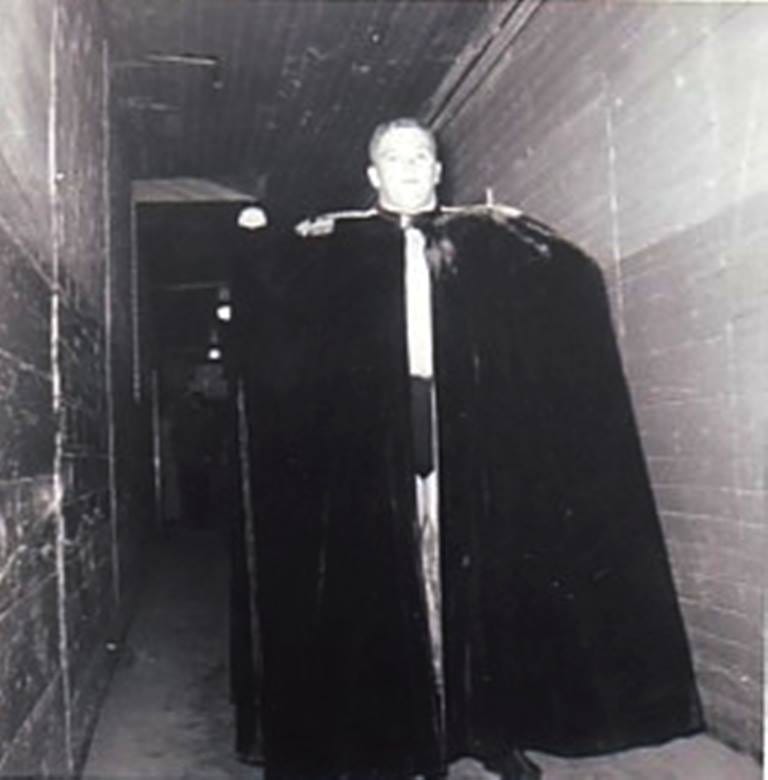
Flashback 1976
Q4 Analysis
October-December
NWA Tri-State Territory
Tulsa, Oklahoma Office
The fourth quarter of 1976 closed the McGuirk-Watts year the way a mature territory was supposed to close it. Leroy McGuirk still ran the Tulsa office. Bill Watts, back since the fall of 1975 as partner, booker, and franchise, still set the tone. The circuit was the familiar one: Tulsa’s Expo Square and Fairgrounds Pavilion, Oklahoma City, Shreveport’s Municipal Memorial Auditorium, New Orleans, Jackson, Monroe, Alexandria, Lafayette, Lawton, Fort Smith, and the smaller Arkansas and Mississippi towns that lived off the Shreveport television. The July 17 Superdome card, with Watts pushing Terry Funk to a TKO finish in front of about 17,000, had been the peak. October, November, and December were the work of turning that peak into winter money.
October
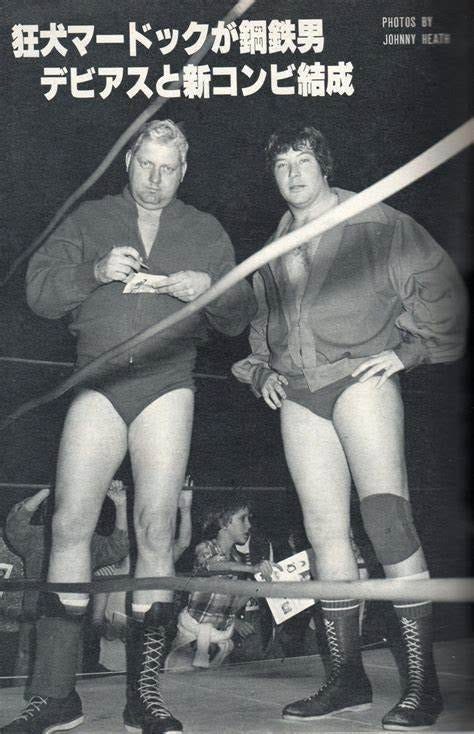
Pictured: Dick Murdoch & Ted DiBiase tag team in Japan
October was still Watts’s month on paper. He had held the North American Heavyweight Championship since November 26, 1975, when he beat Killer Karl Kox in Jackson and ended the dispute between the Tri-State version of the title and the belt he had carried through Georgia and Florida. Nearly a year on top is a long reign in a territory that ran three and four towns a week. By October the defenses had done their job. The towns knew him. What they needed was a reason to believe the belt could move.
The tag division supplied the first real change. Kox and Bob Sweetan had held the United States Tag Team titles since May 11 in Shreveport, taken from Dick Murdoch and Ted DiBiase. The team split in the fall. On October 19 in Shreveport, Kox and Ken Patera beat Sweetan and Randy Tyler for control of the belts. That was clean territorial logic. Sweetan stayed useful as a Brass Knuckles brawler. Patera, the Olympic lifter who had been climbing the cards all year, moved into the main-event heel slot beside Kox.
The Brass Knuckles title itself flipped inside the month. Sweetan held it early in October. Kox took it back on October 26 in Shreveport. The hardcore belt was never meant to sit still. It existed to give the undercard a stipulation and the newspapers a different kind of headline.
The house shows underneath stayed thick with the men who had carried the summer. Murdoch was the reliable upper-card babyface. Grizzly Smith and Buck Robley, the latter turned face earlier in the year after the bounty mess with Funk, filled the Louisiana towns. Bobby Jaggers was still on the wrong side of the crowd as late as September, losing to Watts in Tulsa on the 20th and in Shreveport on the 21st. DiBiase, who had spent the spring feuding with Kox and holding the tags with Murdoch, was being moved in and out. The office was not done with him. It was saving him.
November
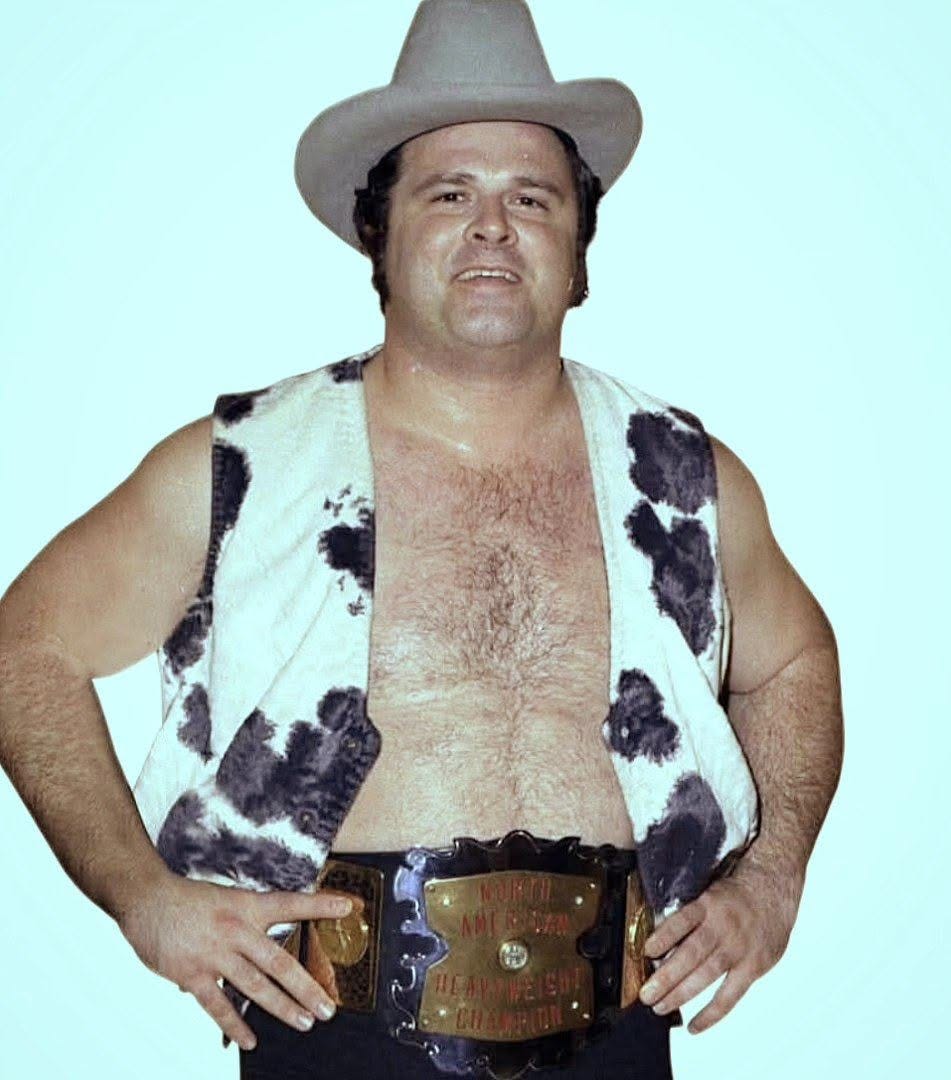
Pictured” Cowboy Bill Watts: NWA North American Champion
November is the month the title picture broke, and the records have never quite agreed on how.
Wrestling-titles, working from the Shreveport and Oklahoma papers, has The Stomper — John Quinn — beating the champion in Shreveport on November 9. Other compilations, including the Oklahoma fan histories, list The Spoiler on that date. Two weeks later, on November 23, The Brute began claiming the North American title after substituting for The Spoiler. Contemporary notes treat The Brute as Spoiler #2, and the claim was still being carried as of December 14, with a possible December match against The Spoiler to settle the dispute. The confusion is not a bookkeeping error. It is the angle. Masked men, substitutions, and disputed claims were how this office heated a title that had sat on Watts for eleven months. Fans in Tulsa and Shreveport were not given a clean pinfall and a handshake. They were given an argument.
The same two weeks brought the world champion through. Terry Funk, NWA World Heavyweight Champion since December 10, 1975, worked Billy Robinson in Tulsa on November 15 and lost by disqualification. The next night in Shreveport he went thirty-five minutes with Robinson and was disqualified again. On November 17 he was in Jackson against Harley Race. On November 20 he was in Lawton against Ken Patera. Robinson, the British shooter, was the special attraction the office used to dress the Funk tour. A world-title shot that ends in a DQ is the oldest house-show trick in the territory system, and it still worked. Robinson did not leave with the belt. He left with a reason to be in the main events.
On or about November 10, on a televised Shreveport show reported in the Times on November 14, Robinson and Watts won the United States Tag Team titles. The franchise babyface, freshly stripped of the singles belt or shoved to the side of the dispute, was immediately re-armed with a partner the towns had just seen push Funk.
Patera kept the Brass Knuckles title in the same window, beating Sweetan for it in Shreveport on November 9. For a few days in early November the Olympic lifter was both a tag champion’s partner and the stipulation champion. That is a heavy heel push, and it explains why Funk was booked against him in Lawton. DiBiase, meanwhile, was working Western States dates against Tank Patton and Swede Hanson. The office had loaned him out, or let him work both sides of the line, and was holding the singles push for December.
December
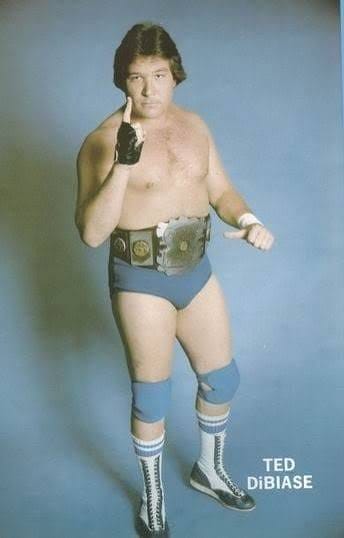
Pictured: Ted DiBiase, NWA North American Champion
December cashed the angle.
Around December 15, on television out of Shreveport, Ted DiBiase beat The Brute for the North American title. The date is soft in the newspaper record — some listings say the 15th, some simply say a televised match in Shreveport — but the result is not. The kid who had been teaming with Murdoch in the spring, losing to Kox in lumberjack matches, and working Amarillo towns in November, came home and won the belt the office had spent six weeks arguing about. It was the first real singles crown of his career in the territory, and it was booked to last two weeks.
On December 29 in Shreveport, a masked man billed as The Great Zimm flattened DiBiase on Championship Wrestling. The Shreveport Times of January 9, 1977, reported the finish and the reveal: Zimm was Waldo Von Erich. The unmasking was the holiday payoff. Von Erich was not a stranger. He had been in the North American programs against Watts the previous winter and spring. Putting the belt on him, and making the fans watch a mask come off to prove it, gave every January town a rematch. DiBiase’s reign was short on purpose. A two-week champion who loses to a revealed heel is a hotter babyface than a champion who holds the belt through the slow weeks.
The Brass Knuckles title moved one more time before the year ended. Bobby Jaggers beat Bob Sweetan on December 14 in Alexandria. Sweetan would take it back on January 3 in Monroe, so the Alexandria win was a spike, not a reign. It also fits the quarter’s other pattern. Working the same newspaper run, the quarter counts three babyface turns in the McGuirk office. Jaggers, a man Watts was beating in September, holding stipulation gold in December is one of them. The others sit inside the same shuffle — partners breaking, masked men substituting, a veteran like Robinson arriving as a face attraction and leaving with Watts’s tag belts. Those tags would hold into January, when Skandor Akbar and Choi Sun took them.
Business Analysis
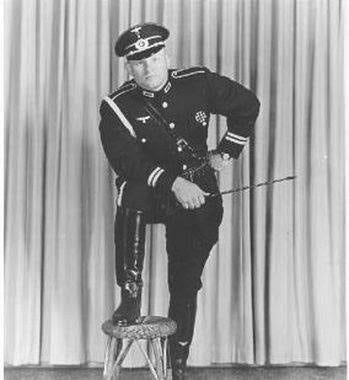
Pictured: The Great Zimm (Waldo Von Erich)
Watts had been the draw since his return. A year with the North American title, a Superdome main event against the world champion, and a booker’s pencil had made the office money. A reign that long has a cost. The towns stop believing the finish. November and December were the correction. The belt left him, passed through a masked dispute, landed on the young face for a television minute, and came off in an unmasking. That is hot-shotting, and in a territory it is not a weakness. It is how you build January.
The television show in Shreveport was the engine. The tag change to Watts and Robinson, DiBiase’s win, and the Zimm reveal all happened on TV or were reported off TV. Arena rematches in Tulsa, Jackson, and the Louisiana towns were the product. Funk’s mid-November swing — Tulsa, Shreveport, Jackson, Lawton — was the visiting-champion rent payment the NWA system was built on. Robinson’s DQ wins over Funk did not threaten the world title. They made the local cards feel national for a week.
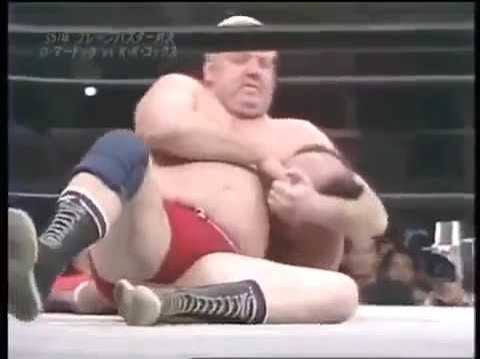
Pictured: Dick Murdoch holds Killer Karl Kox in a headlock on the mat
DiBiase was the investment. He was not yet the finished article. He was the wrestler the office could afford to put the belt on for a fortnight because the crowd already liked him from the Murdoch tags and the Kox matches, and because Watts was still there to carry the towns if the experiment failed. It did not fail. The short reign and the unmasking loss set up 1977, when Murdoch would take the North American title on March 1 in Shreveport, Stan Hansen would take it on May 2 in Tulsa, and Watts would take it back on June 20. The fourth quarter of 1976 was the hinge between Watts’s long reign and that faster 1977 cycle.
The McGuirk-Watts partnership was still intact. The split that would send McGuirk to Oklahoma and Watts to Louisiana and Mississippi was three years away. In the winter of 1976 the office was doing what a peak-era territory did when the football season ended and the buildings got cold: run the world champion through, argue about the local belt, turn a couple of men, and hand the holiday towns a heel whose face they had just seen for the first time.
Thank You for Watching and Listening
I’m Tony Richards, Pro Wrestling Historian, Author and Storyteller. I share pro wrestling historical items in each issue of the Time Tunnel Pro Wrestling History Newsletter and each episode of our podcast show. Thanks for your support! If you enjoy my information on select events, matches and insights, please share with folks you think might like to be a subscriber!
Remember, Premium subscribers get access to exclusive and special content such as some special issues including a multi-part deep dives on wrestling territories, wrestler bios and championship title histories, special audio and video interviews on territory pro wrestling and more available in the Pro Wrestling Time Tunnel for Premium Subscribers. Being a Premium Subscriber also means you support me in my efforts to document Pro Wrestling History through my research, writing, books, vidoes and podcasts. And…I have something very special planned for our Premium Subscribers on the Podcast side of things in 2026! Details soon here in the Pro Wrestling Time Tunnel.