



Today’s Favorite Quote: All forms of achievements are all a triumph of discipline - Sunday Adelaja
Happy Birthday to those who have passed on and to those great wrestlers still with us:
In Memoriam:
Daisy Mae 1929
Don Fargo 1930
Bob Armstrong 1939
Happy Birthday:
Darryl Peterson\Maxx Payne (64)
Danny Basham (48)
John Morrison (46)
Julius Creed (31)
RIP Memorial: We stop & remember those who have passed on this day and gave themselves to the business for us, the fans. We salute you and thank you.
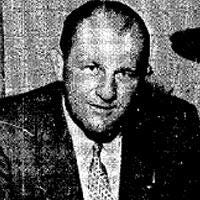
Rod Fenton 10-3-1976 at the age of 63
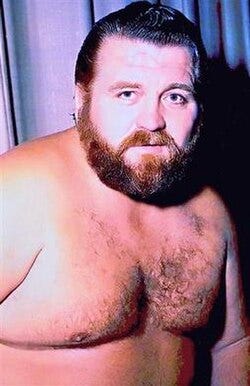
Klondike Bill 10-3-2000 at the age of 68
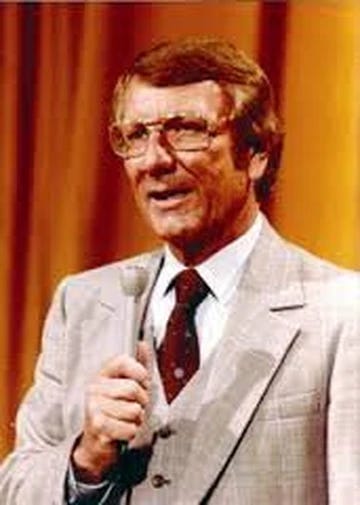
Lance Russell 10-3-2017 at the age of 91
The Life and Career of Daisy Mae
Nancy Taylor Lewis was born in Columbia, South Carolina, on October 3, 1929, the daughter of Dewitt Edward Taylor and Nellie Mims Taylor. Friends and family called her Pat. For a few years in the early and middle 1950s she worked as Daisy Mae the Hillbilly Girl, and under a second name as Patsy O’Neal the Hollywood Starlet. She died in West Columbia on June 23, 2015, at eighty-five. By then most of the people who had known her at Shiloh United Methodist Church had no idea she had ever been in a wrestling ring.
She came up with Jack Pfefer, at the same time Lillian Ellison was still Slave Girl Moolah. Mae Young said as much in 2011. “Jack Pfefer is where she started working, with Moolah. At the time she wrestled for Jack Pfefer, she was a real skinny kid. That’s why they called her Daisy Mae. Lil gave her that name.” The name came out of Al Capp’s Li’l Abner. Daisy Mae Scragg was the barefoot girl from Dogpatch who spent the strip chasing Abner, and wrestling already had a weakness for hillbillies. Ellison hung the name on her and it stuck.
How long she actually worked is a little messy, which is usual for women of that period. The databases run her from about 1950 to about 1960. Her son David R. King, who wrote Greg Oliver in 2007 after spending years getting the story out of her, put it at 1951 to 1954. The papers still have her billed in 1956. King was reporting what his mother finally told him. The clippings go longer.
The act was built for the cheap seats. Programs called her the Tomboy from the Ozarks, the Mistress of the Mulekick, and the Bubble Gum Champ. People who knew her later described the gear in ordinary language: barefoot, pigtails, blue jeans rolled up, skipping around the ring. The gum was the gimmick that got into the papers. In January 1954 the Frederick News-Post called her “a comely young woman, making alleged trouble for wrestling referees with her added title and exposition as bubble-chaw champ,” and pointed out that nobody had written a rule against bursting a balloon in an opponent’s eyes or hair. Frank Robinson, her husband then, told an interviewer in 1961 that two sticks were enough for a bubble the size of a basketball, and that she would break one in somebody’s face. He had a reason to tell it that way. He was on the shows with her.
Robinson worked as Hillbilly Spunky, also billed Hillbilly Stumpy, and later picked up a little more notice as Farmer Brown. King remembered the two of them traveling together. On Pfefer cards the mixed tag was usually Slave Girl Moolah and the Elephant Boy, Bill Olivas, against Daisy Mae and Hillbilly Stumpy, often after both pairs had already had a singles match. King also said Robinson helped train Ellison and that his mother sparred with her. That puts Lewis in the small group Ellison came up with, before Columbia turned into the place where Moolah ran the women’s business. Lewis was already from Columbia. She did not have to move there to be near it.
The towns that turn up in the papers are scattered, which fits a Pfefer wrestler. On July 29, 1953, at the Casino in Corpus Christi, she teamed with Red Tigress against Mars Bennett and Slave Girl Moolah. In November 1953 she was on an Ed McLemore show at the Civic Auditorium in Ardmore, Oklahoma, billed as a television wrestler known for the gum, and matched with Slave Girl Moolah in a best two-out-of-three for a championship belt. In March 1953 she and Golden Venus were carried as NWA World Ladies Tag Team Champions in West Virginia, from about March 1 for something like 184 days, recognized only in that state. Women’s tag titles in those years were local claims with gaps in the lineage. This was one of them.
In August 1953 she turned up on What’s My Line, the CBS guessing show, on a broadcast that also had Eva Gabor. Her obituary and a later Columbia write-up both mention it. Three years on, the eastern papers were still selling her. In March 1956 the Bluefield Daily Telegraph called her the biggest drawing card of any woman wrestler in the eastern city arenas and “quite a picturesque figure.” The same paper advertised a ringside mascot, Little Daisy, billed as her four-year-old daughter. When Mommy was winning, the girl ran through the crowd passing out gum. When Mommy was losing and the other woman got rough, she went looking for a policeman. Some of that was family and some of it was the office. At this distance there is no clean way to split them.
She also worked as Patsy O’Neal the Hollywood Starlet, billed out of Norfolk, Virginia. Same woman, different poster. Later listings call her a brawler. Nothing in the clips suggests she was being sold as a scientific wrestler. The mulekick, the skip, and the gum were the match.
She quit the road, or mostly quit it, and went back to Columbia. She married Walter R. Lewis Sr. They were married seventeen years. He died before she did. For more than forty years she belonged to Shiloh United Methodist Church on Gardners Terrace Road in the West Columbia area, and that is the life the obituary describes. She was a caregiver. She did things for people and did not want credit for them. Her husband used to say she could find good in the devil. She did not talk about wrestling. King wrote that she had been ashamed of it for years and had tried to keep it quiet. The shame is in the family account. So is the fact that she never entirely left the old crowd. There are later photos of her with Ellison and Mae Young, and Columbia was not a hard place to stay in touch from.
Susan Green, who wrestled as Tex and trained women for Ellison’s Girl Wrestling Enterprises, wrote after Lewis died that she counted her as wrestling family even though the career was long over. Green remembered meeting Lewis’s son Tumpy in Columbia while she was driving a wrecker on a break from the road.
Graveside services were at 10 a.m. on June 29, 2015, at the Shiloh cemetery. Dunbar Funeral Home handled it. Survivors were sons Walter R. “Tumpy” Lewis Jr. and his wife Tena, of Licking, Missouri, and William E. “Doozie” Lewis and his wife Janice, of Columbia; daughter Suzanne L. “Cricket” Pittman and her husband Billy, of West Columbia; grandchildren Nicci Schneider, R. Wade Lee and his wife Brandy, Walter R. “T.J.” Lewis III, Jamie E. Lewis, Clayton J. Lewis, Taylor N. Pittman, William I. “Randy” Pittman III, and Ashlyn E. Pittman; a number of great-grandchildren; and brothers Robert Taylor and his wife Lou, Alvin Taylor and his wife Doris, and Bennie Taylor. She was preceded in death by Walter R. Lewis Sr., by a daughter, JoAnn Lewis Sears, by a sister, and by two brothers. King, who had written about the wrestling in 2007, is part of the family record even though the published survivor list does not name him. The family asked for memorials to the church.
Another woman used the name Daisy Mae in the middle 1970s, billed from Kentucky and trained, according to the databases, by Juanita Coffman. She worked WWWF, Georgia, Mid-Atlantic, and a 1975 tour of Japan for International Wrestling Enterprise. She is not this Daisy Mae. The one born on October 3, 1929, is the Columbia woman Ellison named, the one who worked the Pfefer and McLemore towns with her hillbilly husband, got a West Virginia tag claim with Golden Venus, made the Bluefield papers in 1956 with a four-year-old at ringside, and then spent the next half century as Pat Lewis, who would just as soon nobody brought it up.
ONE Thing I Learned About Klondike Bill
In the 1960s, Klondike Bill — William Soloweyko, the Calgary heavyweight Stu Hart trained — was credited as the only person to eat two of the Big Texan Steak Ranch’s 72-ounce steaks inside the one-hour limit. The Amarillo challenge was already famous for one steak. Bill, billed around 365 pounds and working as a lumberjack strongman, put away a second.
He had a smaller habit that fit the same man. Clean-shaven, he worked as Bill “The Brute” Soloweyko. Once the beard grew in, the jeans and rope belt came out and he was Klondike Bill.

Thank You for Watching and Listening
I’m Tony Richards, Pro Wrestling Historian, Author and Storyteller. I share pro wrestling historical items in each issue of the Time Tunnel Pro Wrestling History Newsletter and each episode of our podcast show. Thanks for your support! If you enjoy my information on select events, matches and insights, please share with folks you think might like to be a subscriber!
Remember, Premium subscribers get access to exclusive and special content such as some special issues including a multi-part deep dives on wrestling territories, wrestler bios and championship title histories, special audio and video interviews on territory pro wrestling and more available in the Pro Wrestling Time Tunnel for Premium Subscribers. Being a Premium Subscriber also means you support me in my efforts to document Pro Wrestling History through my research, writing, books, vidoes and podcasts. And…I have something very special planned for our Premium Subscribers on the Podcast side of things in 2026! Details soon here in the Pro Wrestling Time Tunnel.