


Today’s Favorite Quote: Anyone who keeps the ability to see beauty in every age of life never really grows old - Franz Kafka
Happy Birthday to those who have passed on and to those great wrestlers still with us:
In Memoriam:
Bob Geigel 1924
Happy Birthday:
Hector Guerrero (71)
Rico Constantine (64)
Robert Stone (42)
RIP Memorial: We stop & remember those who have passed on this day and gave themselves to the business for us, the fans. We salute you and thank you.
Herb Parks 10-1-1956 at the age of 46
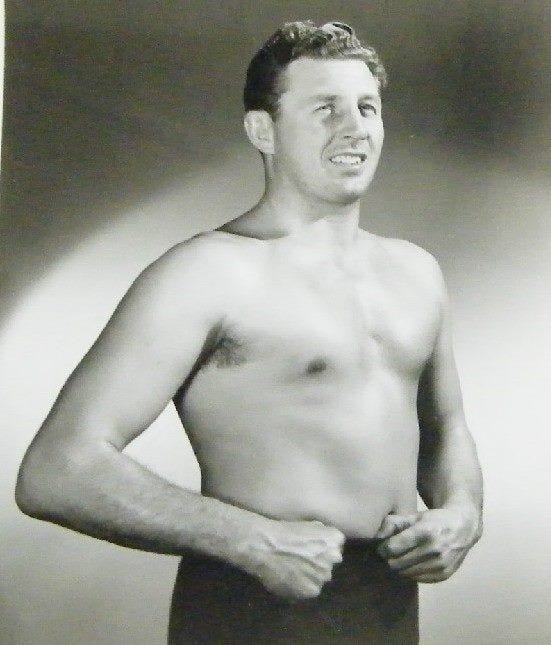
Red McIntyre 10-1-2010 at the age of 83
Antonio Inoki 10-1-2022 at the age of 79
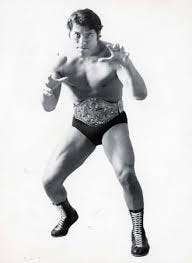
Russ Francis 10-1-2023 at the age of 70
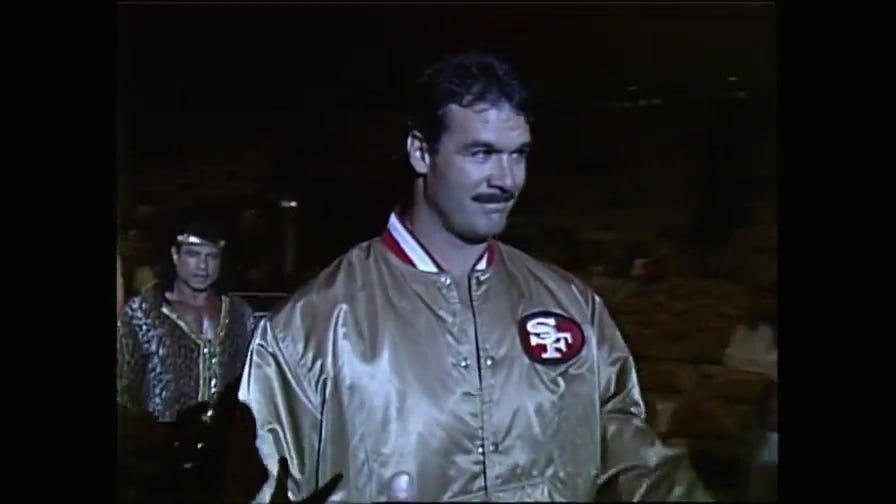
Significant Pro Debut:
Kinji Shibuya 10-1-1951
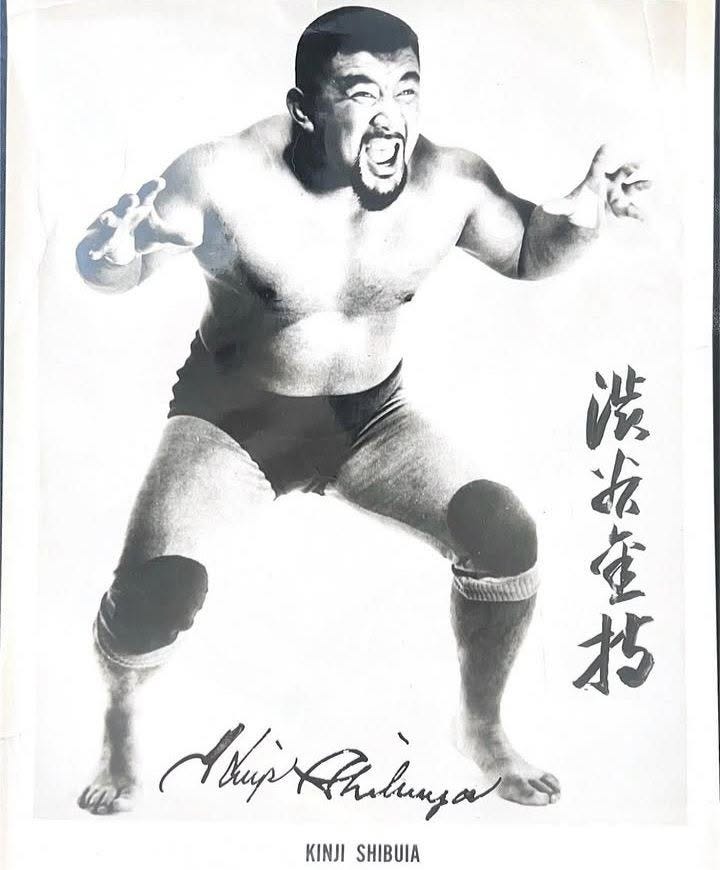
Shibuya decided to give wrestling a try after the NWA Hawaiian promoter Al Karasick suggested he give it a try. Working as “Bob Shibuya” (his real middle name is Robert), he wrestled his first match in Honolulu defeating Buck O’Neil, a big 17-year veteran at that point. O’Neil undoubetly carried Shibuya to a good enough match for him to come back and try it again on the October 22nd where he defeated Earl Rasmussen in his second match and on October 29th, he wrestled Vilai Su’a to a time limit draw as his. skills were improving.
He went on to have a 25 year career in professional wrestling as an effective asian heel character, even though he was actually born in Utah and went to school in LA. He retired from the ring in 1976.
50 Reasons Roy Welch Belongs In The Wrestling Observer Hall of Fame
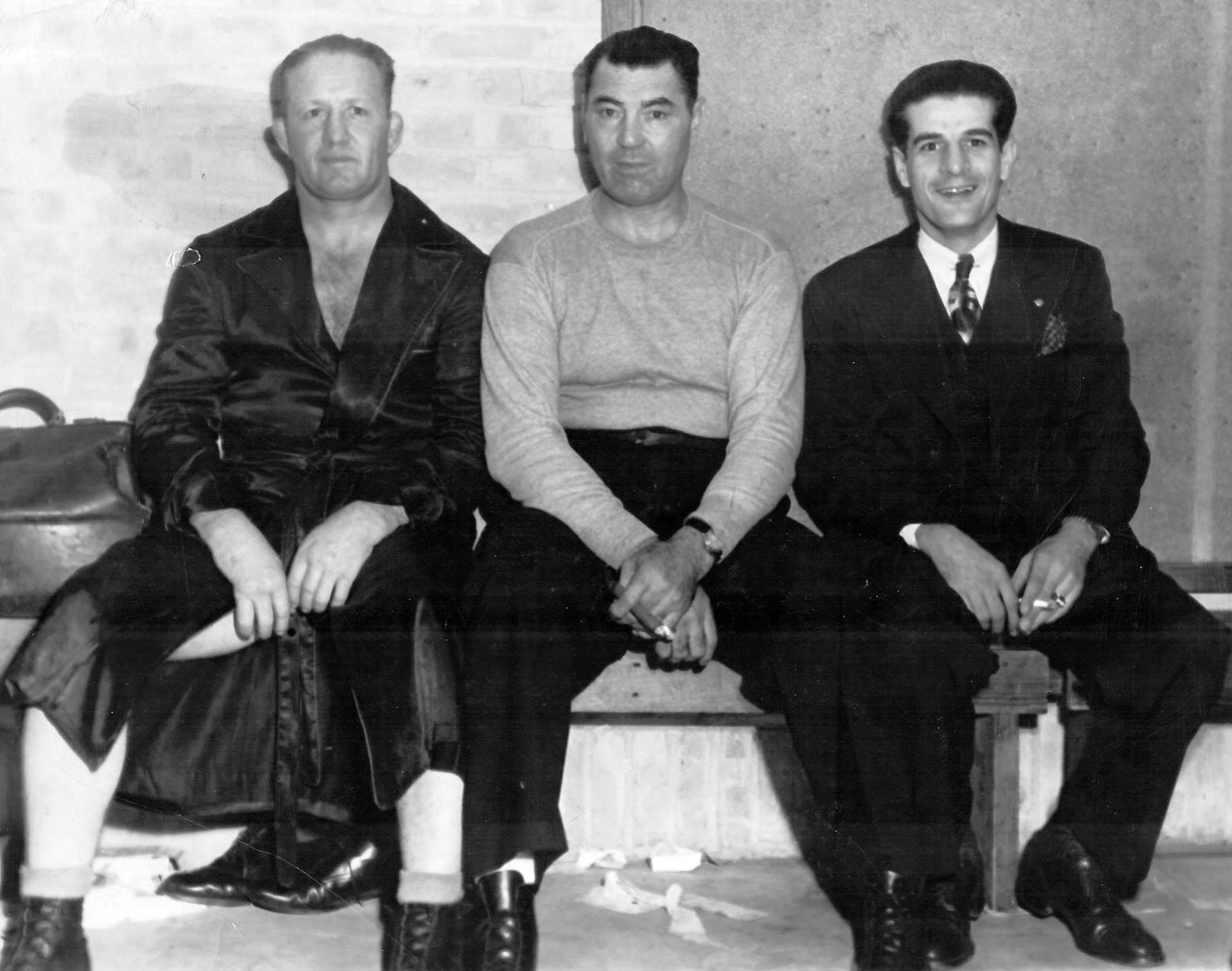
Pictured: Roy Welch, jack Demosey and Nick Gulas
Roy Welch belongs in the Wrestling Observer Newsletter Hall of Fame because he meets the criteria on longevity, historical significance, and excellence in his field as both a wrestler and a promoter. He spent roughly four decades in the ring and even longer as an architect of Southern territorial wrestling. He is not a footnote to Nick Gulas. He is the man who carved the circuit, joined the NWA in his own name, built a multi-state office, seeded a four-generation family dynasty, and mentored both bookers, Buddy Fuller and Jerry Jarrett who later made Memphis one of the hottest towns in America
Here is a link to my case study feature on Roy Welch’s career:
CLICK HERE:
The Evolution of Pro Wrestling: Roy Welch: A Great Pioneer and a Wise Architect
Here are 50 reasons:
He wrestled from the late 1920s into 1971, giving him exceptional longevity as both a worker and a promoter across the carnival-to-TV eras.
He was trained as a shooter by the original Dutch Mantell and Cal Farley in West Texas, not as a carnival “worker” who later learned the business. That background gave him legitimacy in an era when promoters still needed to be tough.
He survived Mantell’s brutal break-in methods (including broken bones) and later became good enough to beat his trainer, which is the definition of paying dues in the 1920s–30s.
He learned the office side of the business in Al Haft’s emerging Ohio circuit in the early 1930s, then applied those lessons south of the Ohio River where no formal circuit existed.
He established a booking office in Dyersburg, Tennessee, and ran a “gasoline circuit” across western Tennessee, western Kentucky, southeast Missouri, and northeast Arkansas when most towns had only sporadic shows.
That Dyersburg office became the Mid-South Booking Office and later the NWA member office—Welch’s name, not Gulas’s, was on the Alliance membership in 1949.
He was one of the first promoters after the original founding group to join the National Wrestling Alliance, helping lock the South into the territorial system that defined the next 35 years.
He co-founded what became NWA Mid-America, the Nashville office that booked Tennessee, Kentucky, Alabama, and parts of surrounding states for decades.
He and Nick Gulas built a partnership that lasted from the late 1930s/1940s until Welch’s death in 1977—one of the longest and most consequential promoter partnerships in U.S. wrestling.
He was the wrestler-promoter half of that partnership. Gulas was the office and TV face; Welch was the man who understood talent, booking, circuits, and how to keep a territory from collapsing.
He booked Nashville when it was still split between light-heavyweight and heavyweight offices and turned it into a weekly destination at the Hippodrome.
He booked the Green Shadow (Pat Malone) in 1940, one of the most important early masked-heel runs in the South, and used it to explode Nashville business.
The Green Shadow run produced riots, police overtime, and a stretch of sellouts (dozens of packed Hippodrome cards in the early 1940s) that funded later expansion.
He and Herb Welch wrestled the first tag-team match in Nashville history (July 18, 1940), helping make tag wrestling the region’s signature style.
He was a multiple-time champion as a wrestler, including inaugural or early reigns with the Mid-America/AWA Southern Tag Team titles, the Mid-America version of the NWA World Tag Team titles, the NWA Tennessee Tag Team titles, and the Mid-Atlantic Southern Tag Team titles.
He and Herb Welch were recognized as NWA World Tag Team Champions (Mid-America version) in 1944, putting the family at the top of the regional title picture during World War II.
He used multiple identities (Wildcat Welch, Cowboy Welch, Roy Wilson, masked runs) in different towns—an early, practical version of protecting heat and stretching a worker’s usefulness.
He trained and toured with Ginger, one of the earliest successful wrestling bears, and used the attraction to sell out towns during the Depression and wartime when money was scarce.
Ginger was trained as a cub with claws and teeth intact; the act was a genuine spectacle, not a later novelty copy, and it traveled the United States, Canada, and Mexico.
He built a hub-and-spoke booking model: run a long program in Nashville or Knoxville, then recycle the same angle through the satellite towns before blowing it off. That is how a multi-state office stayed fresh without national TV.
He bought or acquired promotional rights in Chattanooga (1950), statewide Alabama from Joe Gunther (early 1950s), and Memphis from the Muchnick/Avey/Rentrop interests (1956). Those were not small towns. They were the skeleton of Mid-America.
He took the Mobile–Pensacola end of Leroy McGuirk’s Tri-State office and turned it into a standing promotion rather than occasional spot shows. That became Gulf Coast Championship Wrestling.
He put his son Buddy Fuller in as Gulf Coast booker, then later sold the office to nephew Lee Fields, keeping the territory inside the family rather than letting it die or get absorbed.
Gulf Coast, seeded by Welch, produced decades of Alabama/Florida Panhandle wrestling and later fed Southeastern/Continental under Ron Fuller. The line from Roy to Lee Fields to Ron Fuller is direct.
He revived Memphis when the town was nearly dead in the mid-1950s. The later Lawler/Jarrett boom did not start from zero; it started from an office Welch purchased and restaffed.
He hired Jerry Jarrett as an office kid and later made him Memphis booker—explicitly mentoring him in booking and promotion. Jarrett himself credited Welch as a life-changing teacher with 40 years of knowledge.
That decision is one of the most important booking hires in Southern wrestling history. Jarrett’s Memphis, Louisville, Evansville, and Lexington expansion grew out of Welch’s trust and territory.
When the Gulas–Jarrett split came in 1977, Welch sided with Jarrett. That is not a trivia note. It shows who he believed should carry the business forward.
The Mid-South Coliseum era that made Memphis famous—including the July 7, 1971 debut drawing 9,253—happened on the foundation Welch and Jarrett built together.
His office developed or featured a long list of stars who defined Southern wrestling: Jackie Fargo, Tojo Yamamoto, the Greene brothers, Len Rossi, Sputnik Monroe’s orbit, Jerry Jarrett, and the pipeline that produced Jerry Lawler.
Mid-America became one of the great tag-team territories (Von Brauners, Interns, Infernos, Fargos, Kangaroos, Heavenly Bodies, and more) because the office booked tags as the main event style, not an afterthought.
He pioneered multi-market TV studio wrestling in Nashville, Chattanooga, Huntsville, Birmingham, Paducah, Louisville, and Memphis, with live Saturday tapings feeding house shows across the region. By 1975 the show was in roughly 18 markets.
He treated wrestling as a route business—regular weekly towns, predictable travel, community buildings, VFW halls—exactly the model that kept the territorial system alive through the Depression, WWII, and the early TV years.
Tennessee tax records from the Gulas-Welch years show a company generating hundreds of thousands of dollars in reported gates in one state alone (over $650,000 in one fiscal snapshot, implying millions in today’s dollars), while also running Kentucky, Alabama, and other states. That is drawing power at scale, even if individual buildings were not Madison Square Garden.
He created one of wrestling’s largest family dynasties. Brothers Herb, Jack, and Lester; sister Bonnie (married to referee Virgil “Speedy” Hatfield); son Buddy Fuller; grandsons Ron Fuller, Robert Fuller, and Jimmy Golden; nephews Lee, Don, and Bobby Fields; plus later Fields and Fuller descendants. At one point dozens of relatives were working the business.
His brother, Herb Welch was a Nashville institution and a major babyface draw for decades; Roy both wrestled with him and booked him. The brothers were the office’s first homegrown main-event team.
His son, Buddy Fuller (Edward Welch) became a wrestler, booker, and promoter in Gulf Coast, Memphis, Florida, and Atlanta. Roy put him in those jobs.
Grandsons Ron Fuller (“Tennessee Stud”) and Robert Fuller (later Col. Rob Parker) became national names and promoters of Southeastern/Continental. Their grandfather’s office and farm ring were the school.
The Fields brothers (Lee, Don, Bobby) were Welch nephews who ran Gulf Coast and Mississippi towns. Lee buying the territory from Roy kept the family in control of the Gulf.
He used family as trusted lieutenants in an era of stolen towns, outlaw promotions, and no national contracts. That is how you hold a multi-state map without modern corporate structure.
He was a Cherokee-descended Oklahoma oil-field worker who rose from cotton picking and roughneck work to owning a major NWA office and a large Tennessee dairy farm. The arc itself is historically significant.
He kept promoting while still wrestling, so fans often did not know the quiet partner in the office was also a former champion and the real booking mind. That dual role is rare at his level.
He defended the territory against opposition groups (letters to Sam Muchnick about outlaw crews in East Nashville and Alabama document a promoter who fought to protect the Alliance map).
He sold Tampa interests to Cowboy Luttrall rather than overextend—an early example of territorial discipline instead of ego expansion.
He booked and traveled with a core crew (Pat Malone, Charlie Carr, Sailor Moran, and others) from Texas/Ohio into Tennessee, creating continuity of style and trust that most fly-by-night promoters never had.
He helped invent the Southern junior-heavyweight/light-heavyweight emphasis that made smaller, faster workers (and later Fargo, Rossi, Lawler-style heels and faces) viable main-event attractions instead of afterthoughts to 250-pound heavyweights.
The territory he built outlasted him: Mid-America ran into 1980–81, CWA/Memphis exploded after the split, Gulf Coast/Southeastern/Continental continued under family members, and the Memphis style influenced national TV wrestling for a generation.
Historical writers and industry voices (including Jim Cornette in Observer HOF discussions) have repeatedly grouped him with overlooked pioneer promoters whose regional power exceeded that of many modern “names” on the ballot.
The George Tragos/Lou Thesz Hall of Fame recognized the Welch/Fuller family with the Lou Thesz Award in 2026, an official acknowledgment that the bloodline’s contribution is hall-of-fame caliber even if the Observer vote has lagged.
Without Roy Welch there is no coherent Mid-America map, no Gulas-Welch TV engine, no Jarrett booking apprenticeship, no Fuller/Fields promotional line, and a much weaker claim that Nashville–Memphis–Birmingham–Gulf Coast was a continuous wrestling civilization rather than a string of disconnected towns. That is historical significance in the exact sense the Observer ballot asks for.
I could have potentially come up with another 100 reasons.
Keep in mind that Roy is in the Non-wrestler category on the ballot, but even if we only consider his business, booking office and promotional career, he is still an easy vote.
The case is not that Roy Welch was Lou Thesz in the ring or Vince McMahon on national cable. The case is that he was one of the men who built the Southern territorial machine: a shooter who became a booker, a booker who became an NWA member, a partner who seeded Memphis and the Gulf, and a patriarch whose family and protégés kept the lights on for half a century. That is Hall of Fame work.
The Welch Family Legacy Series:
Here is a link to the 11-episode history docuseries by Gerry Brisco, John Bradshaw Layfield and myself on The Welch Family Legacy on the Stories with Brisco and Bradshaw Show:
CLICK HERE:
The Welch Family Legacy Series
Thank You for Watching and Listening
I’m Tony Richards, Pro Wrestling Historian, Author and Storyteller. I share pro wrestling historical items in each issue of the Time Tunnel Pro Wrestling History Newsletter and each episode of our podcast show. Thanks for your support! If you enjoy my information on select events, matches and insights, please share with folks you think might like to be a subscriber!
Remember, Premium subscribers get access to exclusive and special content such as some special issues including a multi-part deep dives on wrestling territories, wrestler bios and championship title histories, special audio and video interviews on territory pro wrestling and more available in the Pro Wrestling Time Tunnel for Premium Subscribers. Being a Premium Subscriber also means you support me in my efforts to document Pro Wrestling History through my research, writing, books, vidoes and podcasts. And…I have something very special planned for our Premium Subscribers on the Podcast side of things in 2026! Details soon here in the Pro Wrestling Time Tunnel.