


June 7th in the Tunnel:
Happy Birthday to those who have passed on and to those great wrestlers still with us:
In Memoriam:
Ed Farhat\The Original Sheik 1926
Superstar Billy Graham 1943
Howard Finkel 1950
Happy Birthday:
Jerry Jaffee\Jerry Graham Jr (77)
Mick Foley (60)
Taeler Hendrix (36)
Kayla Braxton (34)
Sara Lee (31)
RIP Memorial: We stop & remember those who have passed on this day and gave themselves to the business for us, the fans. We salute you and thank you.
Charlie Harben 6-7-1993 at the age of 79

"Bulldog" Don Kent 6-7-1993 at the age of 59

Earthquake John Tenta 6-7-2006 at the age of 42
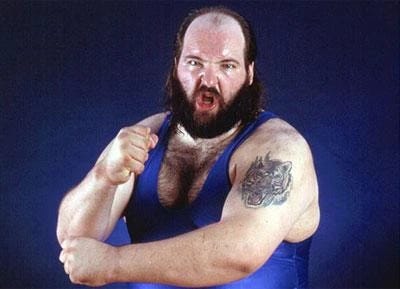
Rocket Monroe 6-7-2010 at the age of 69
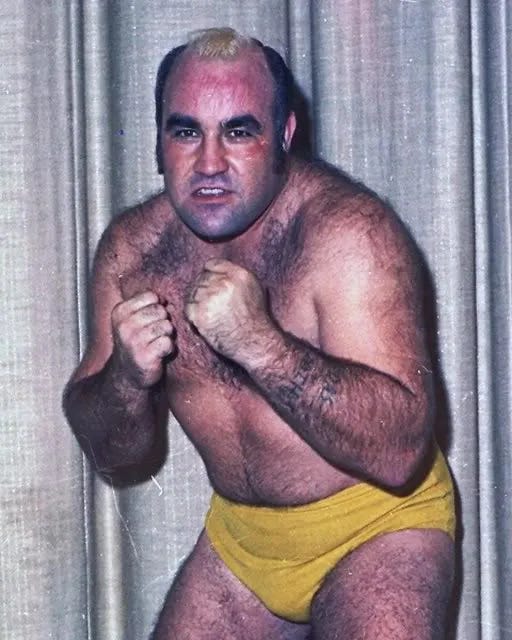
Mark Starr 6-7-2013 at the age of 50

40-Year Flashback: June 7th,1985
A Brief History of The Poffo Family In Kentucky Professional Wrestling
6-6-1985: Jerry Lawler defeated Randy Savage in a Loser Leaves Town Match at Rupp Arena in Lexington, Kentucky
Angelo Poffo made his professional wrestling debut in 1949. He had grown up around Chicago in Downers' Grove, Illinois in the early days of professional wrestling becoming an organized business proposition in which it started moving out of the carnivals and traveling AT shows and into the major population centers of the United States. In the 1920s, Toots Mondt and the Gold Dust Trio had laid the foundations of "booking" pro wrestling, setting up interesting match ups, situations called "angles" and other tricks of the trade making the matches more interesting to draw more ticket buying fans. The business had come off the farm and moved into the city. As a kid growing up near one of the most important cities in the evolution of professional wrestling, I can only imagine the changes in the business that he witnessed.
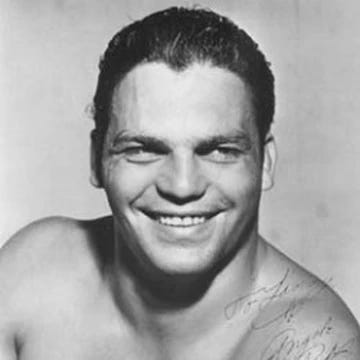
Pictured: Angelo Poffo
Angelo made his debut in 1949 with some instant celebrity, as he had set a world record doing 6.033 sit-ups without stopping when he was enlisted in the United States Navy. Poffo quickly gained another celebrity status among the wrestlers and promoters, one of being extremely stingy and thrifty. He always had the personal goal of saving $100 each week from his pay and buying stock (some say it was AT&T or Bell Telephone as it was known then) with it, making him fairly wealthy later in life. Poffo worked most of his life as a heel in the business in the 1950s and was a big star on the Dumont Network. His biggest match was when he won the United States Heavyweight Championship from Wilbur Snyder on December 27th, 1958. This is the same championship Verne Gagne held on Kohler's "Wrestling from the Marigold" show on Dumont that made it the number two most important title in the world second only to the NWA World Title held by Lou Thesz. By the point, Poffo won it however, the Dumont Network had been out of business for three years, but Poffo became the Champion when Jim Barnett broke away from Kohler in Cincinnati, Ohio and then began building the largest wrestling territory in the Country with his partner, Johnny Doyle.
By the late 1960s, Angelo had slowed down a great deal and was working as a physical education teacher focused on his family, his wife and two young sons, Randy and Lanny. In the early 1970s when Phil Golden decided to launch a wrestling company near my hometown in Paducah, Kentucky in 1971, Angelo Poffo was someone he tapped to come in and work near the top of the cards. Angelo's son Lanny wanted to break into the business, and this seemed like the perfect opportunity. Lanny, who had grown up being a gymnast, was made Angelo's tag team partner to help lead him through some matches and gain some experience. Meanwhile, the other son, Randy had spent several years playing minor league baseball, and at 175 to 180 pounds, he had enough size to work in the business as well and during some television tapings, he worked some matches as "The Spider". This is when I first saw The Poffo Family on wrestling television, on the little, square black and white television in my bedroom in Western Kentucky in 1972, when I was 9 years old.
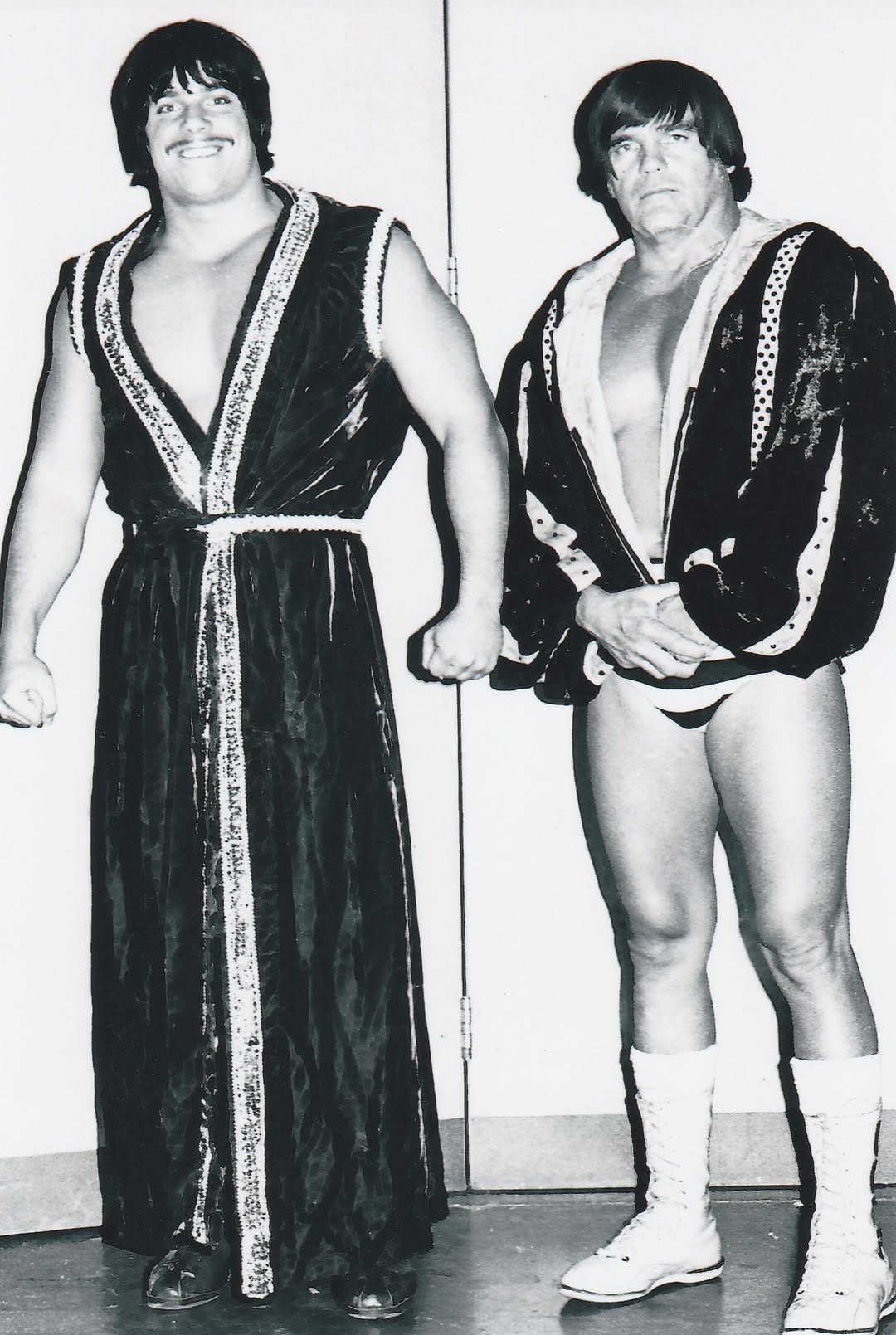
Pictured: Angelo & Lanny Poffo, NWA World Tag Team Champions 1975
The Golden All-Star Promotion only lasted through 1974 before it folded. The Poffos had enough work that Lanny wanted to keep going in the business, so Angelo got them booked in Indianapolis for Dick The Bruiser, in Detroit for the Sheik and in Toronto for Frank Tunney working as the father-son heel tag team holding that part of the country's NWA World Tag Team Championship in 1974 and through most of 1975. The first thing the Poffos did that alienated them from the wrestling establishment was come in and work for Ann Gunkel's All South Wrestling Association, which was running opposition to the NWA office in the Georgia Wrestling War of 1972-1974, putting the label "outlaws" on them at this point. Randy's baseball career ended in 1975 and he made the decision to enter the wrestling business as a full-time career, rather than something fun to do when he wasn't playing baseball. They worked for a stretch for Jim Crockett Promotions and other promotions through the South in 1976. In 1977, when Nick Gulas and Jerry Jarrett had their infamous split as business partners, Gulas brought Randy in as a headliner doing the now-famous "Macho Man" Randy Savage gimmick. After Savage and Dutch Mantell (Wayne Cowan) both realized the company couldn't draw money with both of them working on the heel side with no strong babyfaces to work with, Mantell offered to work face against Savage's heel in Randy's first main event money-drawing program. This is the second time I saw the Poffos on television in my area. Because "The Spider" was such an inconsequential character from parts unknown I never knew I had seen Randy before, but I did recognize Lanny on television, but the fact they were brothers was a closely held secret outside the wrestling business.
Gulas' television was very strong through the Tennessee Territory, and it was the Nashville studio show that we saw in Western Kentucky where Savage and Mantell were tearing each other apart every weekend and Nashville was the center of their feud. While, the center of Jerry Jarrett's promotion moved to Memphis, because that's where they taped their television, Gulas's center hub remained in Nashville where his television was taped. Nashville was much closer to Western Kentucky where I lived, only being a little over an hour away, so the Savage-Mantell feud became just as important as Jarrett's main feud of Jerry Lawler and Bill Dundee. Meanwhile, Angelo Poffo bought percentage points in Emile DuPree's wrestling operation, Grand Prix Wrestling which ran the Canadian Maritimes, centered in Nova Scotia, which enabled both Randy and Lanny to come in and work on top in 1978. Having these 3 to 5 years of being able to work in programs on top with talented workers helped hone their skills to a more developed level. Angelo never forgot those years of working in Kentucky in 1972 through 1974 for Phil Golden and he couldn't shake the idea of coming back there and having a successful wrestling promotion. After years of working in the business, being a part of booking and then ownership in Canada, Angelo decided to take the plunge and move the family to Lexington, Kentucky to start up a wrestling company called International Championship Wrestling (ICW) toward the second half of 1978.
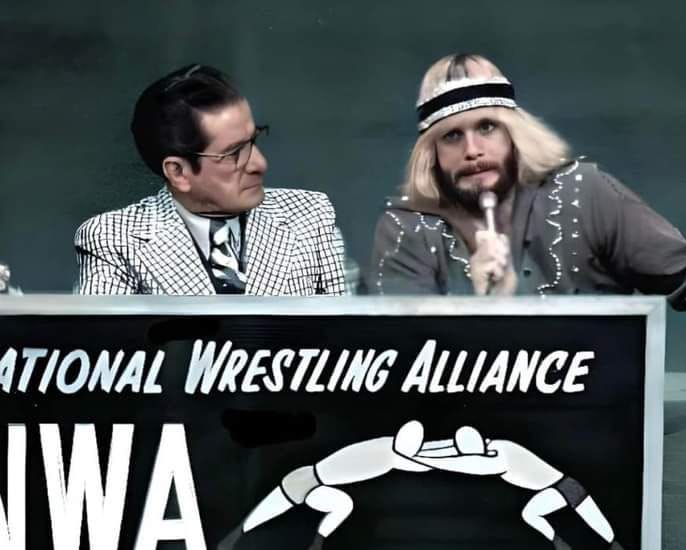
Pictured: Randy Savage interviewed by Nick Gulas on the NWA Mid-America show in Nashville, Tennessee in 1977.
Using the International World Championship Lanny had won in Nova Scotia, the Poffos set up shop in centrally located Lexington. Lexington is centrally located in the State of Kentucky almost geographically centered between Tennessee and Ohio and home to the University of Kentucky. Its a typical Midwestern college town in the United States. With a population of somewhere around 300,000 to 400,00, it was great for collegiate sports, but not always for wrestling. Lexington had been a Gulas-Welch wrestling town starting around 1970, when Jerry Jarrett, who was the booker for Gulas-Welch decided to grow the Western end of the Tennessee Territory by purchasing the town from Dick The Bruiser, as well as Louisville, Kentucky and Evansville, Indiana to create a new television and travel circuit for the wrestlers he was booking in Memphis. Before that, Lexington and corresponding towns had belonged to the Jim Barnett and Johnny Doyle wrestling company and had drawn decent crowds. When Jarrett split from Gulas in 1977, these are the towns Jarrett used to create his promotion. Poffo, thinking Lexington was a secondary town to Jarrett, Memphis, Louisville and Evansville being weekly towns and Lexington being a monthly town, Poffo believed he could make Lexington his home base and have his television come out of there, like Jarrett had Memphis and Gulas had Nashville. Everything could revolve around Lexington and Kentucky would be the majority of his territory. It was actually a really good concept, at the beginning.
Randy and Lanny both became stars on ICW TV. So did George Weingeroff (son of Saul Weingeroff), Pistol Pez Whatley, Hustler Rip Rogers, Ronnie Garvin, Bob Roop, Bob Orton, Jr and others. The talent was good, the angles were good, the match feuds were good, and the television production was so-so. The problems for the promotion started with too many cooks in the kitchen, Angelo Poffo had made everybody on top a partner, including himself, his sons, Garvin, Roop and others all had percentage points and differences of opinion as well as a lack of money being paid out to the guys caused stress and pressure. Poffo himself knew money had to be reinvested back into the company to keep it going, which the wrestlers, many of whom had never been owners before, didn't have that realization, so they sometimes felt short changed. Another thing was a lack of focus, or really, wrong focus. Rather than being focused on the business and growing it, they stayed focused on Jarrett's promotion. Much of their promotion time in the television show was focused on talking about Jarrett's wrestlers and challenging them. Making ridiculous challenges at the house shows and on posters, spending more time making a big deal of Lawler, Dundee and Tojo Yamamoto than getting their own guys and matches over. The also spent money to get their television in other markets like Georgia and Memphis and then considerable money renting buildings and running shows there where they never had a chance of drawing money against Jarrett and others. My High School years were spent on weekends watching the ICW TV and going to house shows featuring Savage vs Garvin, Savage vs Roop, Roop vs Orton, Jr, Whatley vs Rogers, Lanny & Weingeroff tag team matches and others. Somewhere, in one of my storage boxes is an old Polaroid photo of me and my best friend dressed up as Savage and Orton, Jr lifting weights together during our sophomore year of 1979. To give you some kind of an idea of the times, we had never seen a wrestler use music to come to the ring before, the lights in the National Guard Armory would go down, a single spotlight would shine on Savage as he came out to Irene Cara's "Fame". That blew us away as we were still around a year away from The Freebirds on Georgia television. Savage had everything other wrestlers did not, the look (he was jacked at this point), the different promo and was more of a high-spot performer than had been seen, at least in our area, at that point. The closest to that working style was Robert Gibson's older brother, Ricky Gibson, who had high spots like that, but Savage took it to another level.
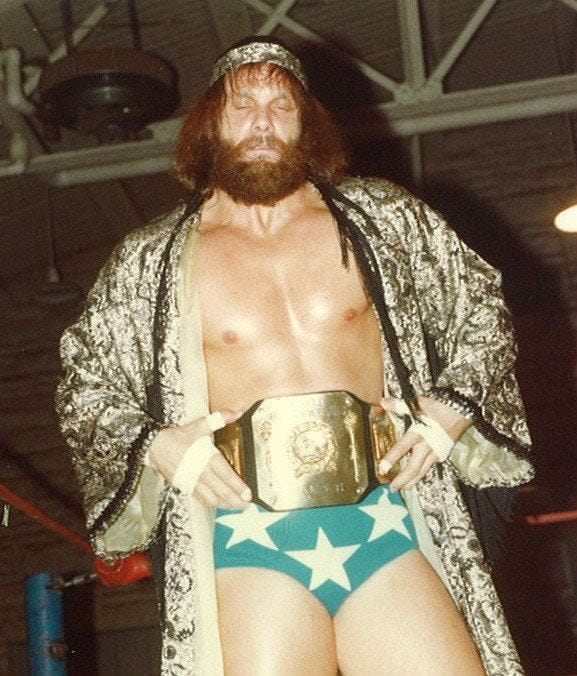
Pictured: Randy Savage ICW World Heavyweight Champion, 1981
The battle with Jarrett's company never escalated into an actual wrestling war because it was over before it ever started. Jarrett never took the bait and instructed his wrestlers that anyone who responded on TV or at the shows to any of the Poffo's challenges would be fired. Jarrett just let the Poffo's run out of talent and money. One by one, the non-family member talent began to go find work with pay offs rather than to keep putting money back into a dead business and Angelo slowly began to feel the pain of his money going down the drain until it got too much to bear in late 1983 and early 1984. It had been an interesting run from 1978 to 1984. One thing that was accomplished is the brand of ICW wrestling that was created with fans in Kentucky and the surrounding borders of the neighboring states was so strong, it's still strong today. The ICW groups on Facebook are some of the most passionate and strongest fan tribute groups in existence. Much like ECW would do in the 1990s, ICW created a fan base and legend that is still powerful today. And, if Angelo Poffo had taken charge and had an intense focus on simply running Kentucky the state, rather than the obsession over Jarrett and other areas, it could have lasted much longer and been more profitable. But, like many promoters in the mid to late 1980s, it was not to be, the leaders of those promotions were moreso victims of their own lack of business acumen than victims of Vince McMahon's invasion.
Once it became clear to the family the end was near, Jerry Jarrett received a call from Randy Savage asking if Jarrett could possibly put in a word for him to get booked somewhere out of the area. Lanny had already left for Bill Watts' Mid-South Territory with tag partner, George Weingeroff and there had been discussions about working an angle for Savage to join him to work for Watts, eventually possibly leading to a Savage and Magnum TA program over the North American Title. Watts had actually been the one who told Savage he was wasting his career in the current course he was on, and he would be much better off apologizing to Jarrett and Lawler and trying to figure out how to work for them, instead of Watts. So, Randy makes the call to Jarrett and listening to all this on the phone call as well as Savage talk about running out of money, going out of business and being in a position he was not familiar with, not having a job in the wrestling business, it occurs to Jarrett to make a proposal. "Randy, you and all the guys have been promoting a match between you and Lawler for 5 years now, what if we could figure out a way to actually have that match?" "Really?", Randy said, "Would you really want to hire me, and would Lawler really want to work with me?" Jarrett responded, "Lawler is a businessman and if there is money to be made, I think he's smart enough to realize it".
Once they had a gentlemen's agreement, Jarrett and Savage worked out a deal to actually test the match and the feud in Lexington in 1983 with no television promotion, no build up , no angle, just a cold match and while it can't be said that with no promotion that is what drew the money, but they did draw over 8,000 fans to Rupp Arena, ending after a long, very good match as a no decision, but described as tremendous, which was enough to tell Jarrett this could do some really good business. So, with everyone trusting each other, Randy and his father, Angelo show up at the Memphis television studio acting as if they were invading the rival promotion much like they had been threatening for the previous 5 years and would be imitated during the Monday night wars some 10-12 years later in WCW with the arrival of The Outsiders. Savage demanded Lawler and Eddie Marlin, who played the role of local promoter, tried to reason with The Poffos about leaving while the live wrestling show was taking place. Eventually, Lawler comes out and says he has been tired of all the taunting for the last five years and he wants the match. They booked the match for Monday night, December 5th, 1983, at the Mid-South Coliseum with Lawler retaining his Southern Heavyweight Title via a DQ finish and drawing a little more than 8,000, which at the time, was about double what the weekly crowd had been. It wasn't a sellout, but it was the fourth largest crowd for them in Memphis for 1983. The largest that year were two cards with Andy Kaufman and an AWA Title match against Nick Bockwinkel.
The next week, they booked a cage match, with Lawler again winning by DQ, but the crowd dropped to half again, about 4,500 fans or right about what the "normal crowd" had been at the time. On the third week, which was a traditionally bad week, the week before Christmas, they were down to 2,480 with it being a tag team match with Lawler and Austin Idol taking on Savage and Jos LeDuc on 12/19/1983. The next week, Savage went over Terry Taylor to win the second most important title in the territory, winning the Mid-America Heavyweight Championship, the title he had held in the Gulas promotion in 1977 in his feud with Dutch Mantell. So, what do you think happened next? Jarrett, a student of wrestling history and never missing an opportunity to capitalize on a program right in front of this face, re-started the Savage and Dutch Mantell program that had been hot on Gulas' side in 1977 and 1978. Putting Savage and Mantell on top and mixing in some main event matches with Austin Idol plus tag matches with Jos LeDuc on Savage's side, it got hot in January of 1984. At the end of January, veteran Angelo Poffo even got back in the ring during the AWA Southern Tag Team Title Tournament and in an quarter-finals match in Memphis, Randy and Angelo had a great match with the hottest new tag team in the Territory, comprised of two young guys who had been in Memphis all their lives, Ricky Morton and Robert Gibson. A year before, Savage was working in front of 250 people in his father's dying promotion with his career going nowhere, now twelve months later, he's in the Mid-South Coliseum wearing an important title and working with some of the biggest up and coming stars of the 1980s.
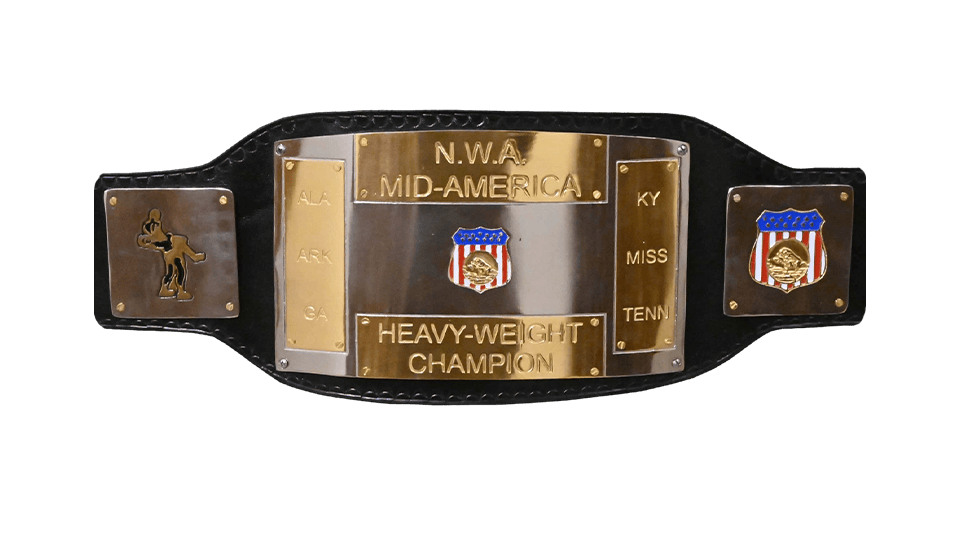
Pictured: NWA Mid-America Heavyweight Championship Belt
Savage holds the Mid-America Title through the first four months of 1984, drawing decent houses with Mantell and Idol until the beginning of April and Lawler re-enters the picture. When they believed the Savage/Mantell program had run its course on April 2, 1984, Savage pinned Mantell in Memphis and then they did a deal where JJ Dillon was a tag team partner with Lawler taking on Savage and Jimmy Hart in a mixed wrestler/manager tag team match where Hart got pinned. Then the next week, at the Mid-South Coliseum in Memphis, Lawler got his title shot having won the mixed match and he pinned Savage to win the Mid-America Title on 4/9. Not only did Lawler win the belt, but the stipulation was the loser had to take 10 lashes from the winner with the title belt which Lawler administered to Savage. They actually ran the match again that Thursday night in Lexington, Kentucky with Lawler winning the Mid-America Title again (just like in Memphis) but without the 10-lash whipping stipulation. This shows you how over Savage was in Lexington, Kentucky. Jarrett wanted the title change in both towns, but he didn't want the crowd to turn on Lawler in Lexington by whipping Savage. I should also mention that ICW is still running their promotion and their television at this time with help from Jarrett. It's a weird time where you would turn on ICW TV and see Jarrett matches along with ICW matches and wraparounds being hosted by a young, pretty female television commentator named Elizabeth Hulette. By the way, I first met "Liz" when she worked the concession stand at the Armory in Paducah in 1983. Which, speaking of The Armory, I saw Savage in a match with Mike Doggendorf on April 13th, 1984, in Paducah, Kentucky on Friday night, the night after he lost the Mid-American Title to Lawler the night before in Lexington on that Thursday night and Memphis that Monday night. It was an amazing time to be a fan as things were changing fast.
Through May and on into June, Savage keeps working both ICW and for Jarrett and in late June, Lanny rejoins the family in tag matches against Mantell & Radio DJ Scott Shannon and also against the Rock & Roll Express (Gibson & Morton). It's during one of these tag matches in Memphis where Morton takes the piledriver from Savage through the ringside table and prior to The Express leaving for Mid-South and the famous feud against Jim Cornette and the Midnight Express. Cornette and Watts were finishing up their "Last Stampede" feud and Dundee wanted to put the two Express teams in a program together. So, toward the end of July the Express leave and Randy & Savage work with The Fabulous Ones and the team of Jerry Lawler and Jimmy Valiant. Meanwhile in ICW, Savage is working with Paul Christy, a long time veteran and friend of Angelo's in the business. Christy would eventually become the World Champion of the dying ICW, while Savage would put all his focus into Jarrett's promotion eventually turning face in September 1984 to work a program with the acquisition in the trade for The Rock & Rock Express, Ravishing Rick Rude. Randy was not as successful as a babyface. Often teaming with Lawler in tag team matches against Rude and King Kong Bundy, the matches were not good, but they didn't draw very well, either the singles or the tags. After being on top from December through August, after the program with Rude didn't pop, Savage was slipping down into the upper mid-card to the middle of the card working with tommy & Eddie Gilbert and Phil Hickerson for the rest of 1984 and into 1985. ICW was shut down toward the end of July of 1984.
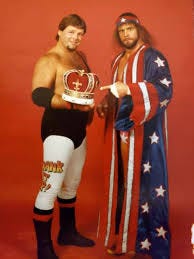
Pictured: Jerry Lawler and Randy Savage 1985
Savage was noticeably missing from television at the beginning of 1985. After an attempt to get a program with Adrian Street failed to get off the ground, Jarrett and Lawler put Savage on the backburner, working some matches with Street and involving Lanny and Eddie Gilbert somewhat. In March, they moved Randy Savage back toward the heel side and heated his old rivalry with Lawler up again, having Savage beat Lawler for the Southern Heavyweight Championship at the Mid-South Coliseum in Memphis on March 18th, 1985. This time it wasn't the Mid-America Title, it was the Southern Title, the title Lawler almost claimed as his birthright, holding it longer and more times than any wrestler, even the legendary Jackie Fargo and now Savage has won it. This time around, the feud with Lawler is much hotter than the first go around in December of 1983, even though you would have thought the opposite just due to the shock of fans finally seeing this feud take place. I believe the difference is, if they would have had Savage beat Lawler in the first go round for the Southern Title, it would have been on fire, but because he didn't fan weren't sure he could, this time around he does, and it ignites the feud white hot. Savage and Mantell even re-start their feud again with Savage defending the Southern Title against Mantell in Louisville, Evansville and Lexington and those matches also juice up crowds drawing bigger houses. Savage gives Lawler a return match for the title in Memphis a month later on April 22, 1985, ending in a no contest and Savage retaining and repeating that match around the circuit towns. Savage and Lawler do a 2 out of 3 falls return match in Louisville on April 30th with Savage retaining the title. There was a short program in May with Randy forming a team with "Dr. D" David Schultz facing the Batten Twins and a month-long program with Jerry Oske including a series of Coal Miner's Glove Matches.
Sometime in May, it is believed, Jimmy Hart, who had been the longtime manager in the territory had told Vince McMahon about Randy Savage, which produced a subsequent phone call and offer for the Poffo family to take their act to the WWF. Jarrett often talked about the notice that was given by Randy Savage to him as owner of the office. He bragged on Savage's integrity and respect he always gave Jarrett, being grateful for the opportunity he and his family were given, after the terrible and awful things his family had broadcasted on television from 1979 through 1983 about Jarrett, his promotion and his wrestlers. Jarrett often talked in glowing terms about how Randy was one of the few workers who never broke his word to him and always did what he said he would do right up to the end. They must have pivoted quickly after Savage's notice because in the midst of the Oske program, they shifted gears back to Lawler. Savage and Lawler have no angles or matches between the 2 out of 3 falls match in Louisville on April 30th and the match on June 3rd in Memphis where Lawler wins the title in Savage's last week in Tennessee, they do draw, however, 9,000 fans for the card. Then, they do exactly the same as they had done with the Mid-America title change. On Monday, June 3rd, Lawler wins the Southern Title from Savage. Tuesday night in Louisville, Randy actually wrestles Tojo Yamamoto, Wednesday night in Evansville, Lawler defends the title against Savage, then Thursday night, June 6th in Lexington, Kentucky, Savage enters the ring with the Southern Title in a Loser Leaves Town Match, as if the previous Monday night had never happened, has a terrific match with Lawler (knowing this is the last match in front of the hometown fans he has adopted and have adopted him) and drops the Southern Title to Jerry Lawler for the second time that week with the fans in Lexington never being the wiser. Almost none of the fans in the building that night, with the exception of friends of the Poffo family, had any idea this was Savage's last night in the promotion. Even though the Lose Leaves Town stipulation was in place, it was a shock to see Savage lose the match and the stip. Randy Savage really was going to be leaving town and the state. The Poffo run in Kentucky, which had started back in 1972 with Phil Golden, had progressed with their own promotion and ended with employment with Jerry Jarrett was now over some 13 years later.
Randy Savage's last match in the territory was two nights later on Saturday night, June 8th, 1985, again challenging Jerry Lawler for the Southern Heavyweight Title unsuccessfully at the Tennessee Fairgrounds Arena in Nashville, Tennessee. At the end of that match, as Savage left the ring for the dressing room, his career in territory professional wrestling had ended. His next stop was Stamford, Connecticut, Tuesday Night Titans and the WWF where his off-screen wife was about to become his on screen manager and co-performer and they would go on to become a strong part of the cultural fabric of pro wrestling for all time. But it all started, in a little wrestling promotion that I grew up with in Kentucky and it's appropriate that is where that part also ended.
Time Tunnel Pro Wrestling Flashback to The Life of Jim Barnett on the Stories with Brisco and Bradshaw Show:
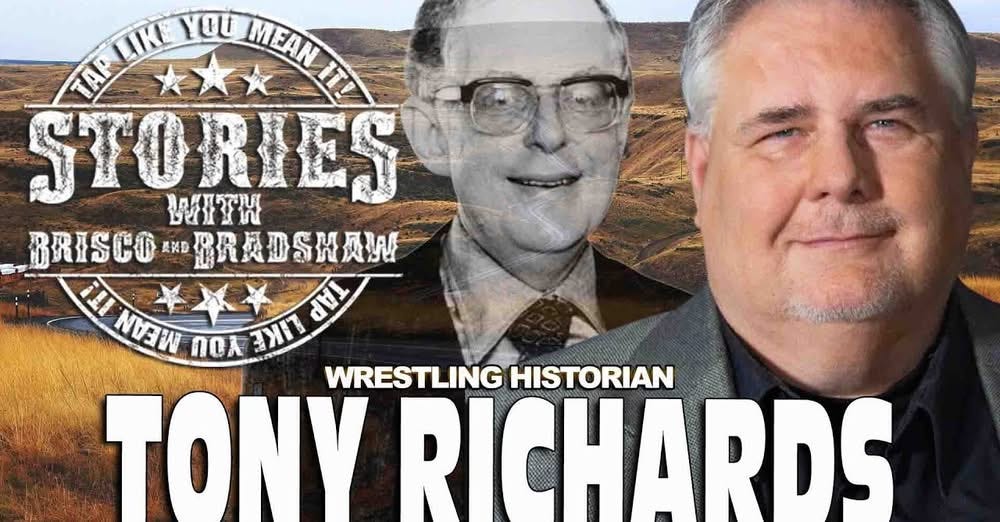
Don't miss my guest appearance with Jerry and John on Stories with Brisco and Bradshaw this week for Episode 2 of a multi-part series on the life of Jim Barnett, one of Professional Wrestling's biggest behind the scenes power brokers of the last 100 years.
On this second episode, we cover:
The fallout of the University of Kentucky Football Scandal of 1959-1963
Rock Hudson's involvement in Lexington, Kentucky
The life and career of Barnett from 1964-1974
Barnett pulls up stakes and leaves Lexington and the United States
Barnett and Doyle start a booking office and nationwide territory in Australia
The amazing success of the Australian Company
The death of Johnny Doyle, Barnett's partner
Coming back to membership in the National Wrestling Alliance
The Atlanta, Georgia Wrestling Split and War
Barnett's opportunity to return to the States and be the conquering Hero in Atlanta
The hiring of both Bill Watts and Jerry Jarrett as bookers in Georgia
And MORE!
Episode #2:
Previous Episode Links:
5/29/2025: Stories With Brisco & Bradshaw with Tony Richards Jim Barnett Episode #1
One Thing I Learned Today About Pro Wrestling History:
On October 22nd, 1933, Jim Londos defeated Kola Kwariani at the Panathenaic Stadium in Athens, Greece drawing over 80,000 people to this historic match.
Thank You for Reading
I'm Tony Richards, Pro Wrestling Historian, Author and Storyteller. I share pro wrestling historical items in each issue of the Time Tunnel Pro Wrestling History Newsletter. Thanks for reading! If you enjoy my information on select events, matches and insights, please share it with folks you think might like to be a subscriber!
Remember, paid subscribers get access to exclusive and special content such as some special issues including a multi-part deep dives on wrestling territories, wrestler bios and championship title histories, special audio and video interviews on territory pro wrestling and more available in The Vault of the Pro Wrestling Time Tunnel for Paid Subscribers.