


Today’s Favorite Quote: You don’t need a new plan for next year. You need a commitment - Seth Godin
Happy Birthday to those who have passed on and to those great wrestlers still with us:
In Memoriam:
Kazuo Sakaruda\Kendo Nagasaki 1948
Happy Birthday:
David Sammartino (66)
Gabe Sapolsky (54)
Asuka (45)
Damian Priest (44)
Sanga (41)
Buddy Matthews (38)
RIP Memorial: We stop & remember those who have passed on this day and gave themselves to the business for us, the fans. We salute you and thank you.
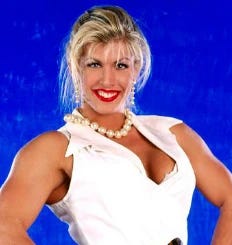
Mrs. Cleavage 9-26-2004 at the age of 35
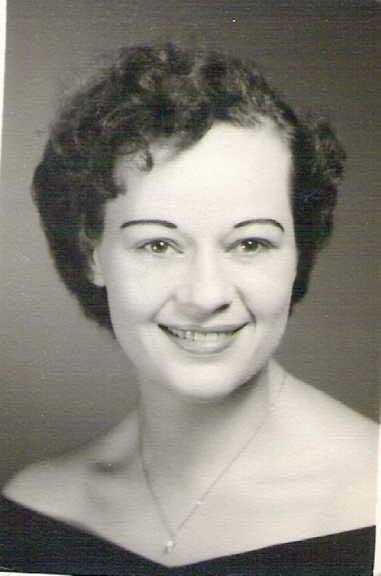
The Life and Career of Dottie Downs
Dottie Downs was born Dorothy Downs on September 29, 1936, in Louisville, Kentucky, a city then defined by river commerce, tobacco warehouses, bourbon distilleries, and a working-class culture that valued toughness and self-reliance. Little of her childhood or young adulthood survives in the public record. She came of age during the Second World War and the immediate postwar boom, years when most women of her generation were steered toward marriage, factory work, or clerical jobs. Whatever path she followed in those decades, it did not lead her into professional wrestling until she was already in her mid-thirties—an unusually late start in a physically punishing vocation that typically claimed its recruits in their late teens or early twenties.
In 1972, at the age of thirty-five or thirty-six, Downs entered the ring. The timing placed her in a tightly controlled corner of the sport. Women’s professional wrestling in the early 1970s was not an open marketplace. It was largely organized through the booking and training apparatus of Mary Lillian Ellison, better known as The Fabulous Moolah. Moolah held the recognized world women’s championship for most of three decades and, together with her associates, trained and dispatched the majority of the women who appeared on cards from the Northeast to the Deep South. Promoters who wanted women’s matches usually went through that network. Downs became one of the working wrestlers in that system.
Her recorded career lasted four years, from 1972 through 1976. In that span she wrestled roughly eighty documented matches, winning about a quarter of them. The numbers themselves tell only part of the story. Women’s matches of the era were frequently short, often placed in the middle of cards rather than as main events, and routinely structured as two-out-of-three-falls contests that emphasized teamwork and selling over long, athletic singles bouts. Downs filled the role of a reliable opponent and occasional partner: someone who could lose cleanly to established stars, work a credible tag-team fall, and travel without complaint.
She appeared regularly for the World Wide Wrestling Federation, the Northeast promotion that would later become the World Wrestling Federation and then WWE. In November 1972 she challenged Moolah for the NWA World Women’s Championship at Boston Garden in front of more than eleven thousand fans and lost in just over twelve minutes. That same month she faced Moolah again in Philadelphia. She also worked Madison Square Garden and other major Northeast buildings, sometimes teaming with Moolah against combinations of Joyce Grable, Jan Sheridan, Lilly Thomas, and Ava Seedorff. One of her longer recorded matches was a twenty-minute-plus tag bout at the Garden in June 1973. These appearances put her on television via the WWF’s Madison Square Garden Network broadcasts, giving her a modest national footprint that most territorial women’s wrestlers never received.
Downs also worked the Southern circuit—Georgia Championship Wrestling, NWA Mid-America, and Mid-Atlantic Championship Wrestling—appearing in cities that included Louisville itself, Memphis, Chattanooga, Macon, Atlanta, and Mobile. She wrestled in Canada for All-Star Wrestling and Northwest Wrestling Promotions, and in the summer of 1975 she traveled to Japan for the International Wrestling Enterprise’s Big Summer Series.
There she wrestled a string of matches against Joyce Grable, splitting results in a series of singles and multi-fall bouts across Tokyo, Osaka, and smaller venues in Hokkaido, Iwate, and Niigata. A Japanese tour was a significant booking for an American woman of that period; it indicated that promoters considered her seasoned enough to represent the product overseas.
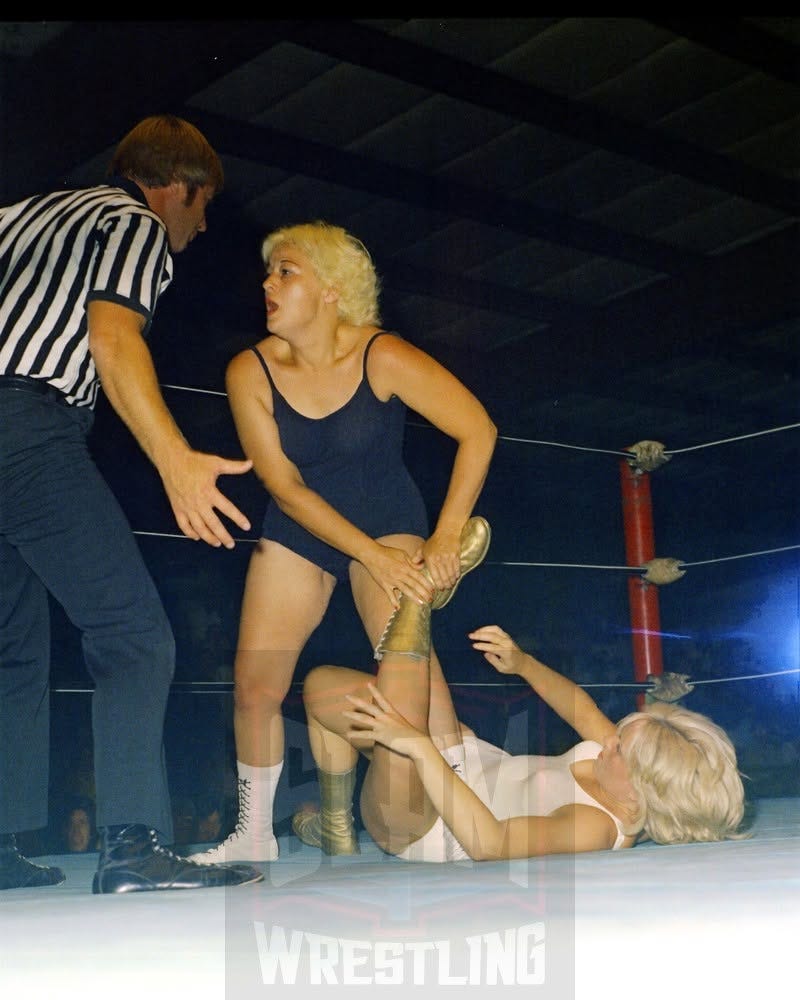
Pictured: Dottie Downs vs Joyce Grable
Her most frequent rival was Joyce Grable, a younger, more athletic wrestler who would later become a prominent figure in the 1980s. The two met repeatedly in the United States, Canada, and Japan. Downs also faced Ann Casey in a title match for the NWA United States Women’s Championship, lost to Donna Christianello and Susan Green, and worked mixed-tag and battle-royal formats. She was never positioned as a championship threat for long. Her job was to make others look strong while remaining credible enough that audiences accepted the contests as legitimate athletic exhibitions rather than obvious mismatches.
The physical and professional demands were considerable. Women wrestlers of the 1970s typically trained on hard mats, often in converted gyms or backyard rings, and then spent weeks on the road sharing cheap motel rooms and long car rides. Pay was modest after booking fees and travel expenses. The culture inside the Moolah-centered network was hierarchical and insular; new or mid-card talent had limited control over their schedules or their public presentation. Downs, entering the business relatively late, would have had to absorb the unwritten rules quickly: how to bump safely, how to sell a finishing hold, how to dress and carry herself in an era when promoters still marketed women’s wrestling with a mixture of athletic respect and carnival showmanship.
By 1976 the bookings had thinned. Her last documented matches that year were losses in Mid-Atlantic towns. She was forty years old. Professional wrestling is unforgiving to aging bodies, and the women’s division of the mid-1970s offered few second acts. Downs stepped away. She lived another thirty-nine years, dying on January 8, 2015, at the age of seventy-eight. Public records of her later life are as sparse as those of her youth. There are no widely circulated interviews, no published memoir, no documented second career that captured attention. She returned, so far as the available evidence shows, to private life in the same region that had produced her.
Her career, brief as it was, belongs to a specific historical moment. Women’s professional wrestling in the United States had existed since the 1930s, but it remained a sideshow relative to the men’s territories until the 1980s television explosion. The women who worked the 1970s cards—Moolah, Grable, Green, Casey, Christianello, and journeymen like Downs—kept the division alive in arenas and on local television when many promoters treated it as filler.
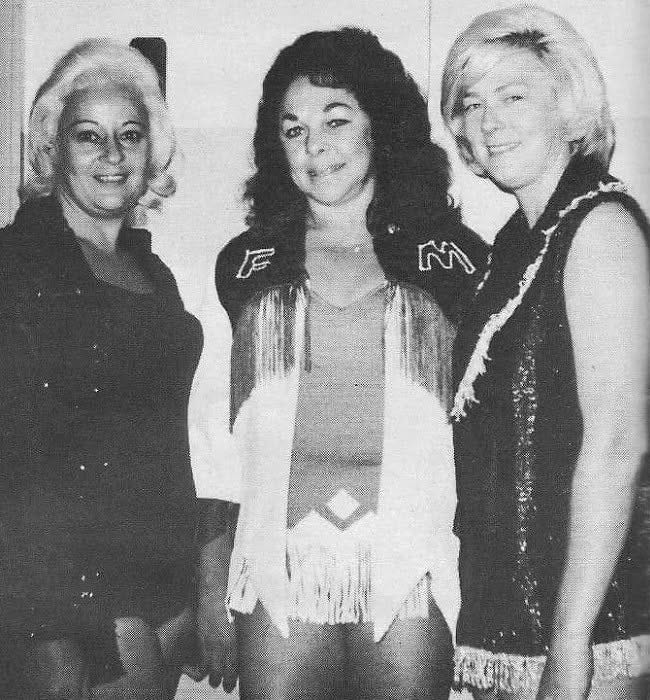
Pictured: Dottie Downs, Moolah and Paula Kaye
They traveled, took the bumps, and absorbed the business’s contradictions: genuine athletic skill packaged inside a tightly booked, often exploitative system. Downs never became a household name. She never held a major title. She did, however, appear in some of the most important buildings in the sport, work with its dominant champion, and represent American women’s wrestling on a Japanese tour. That is a more substantial professional record than most people who briefly enter the ring ever compile.
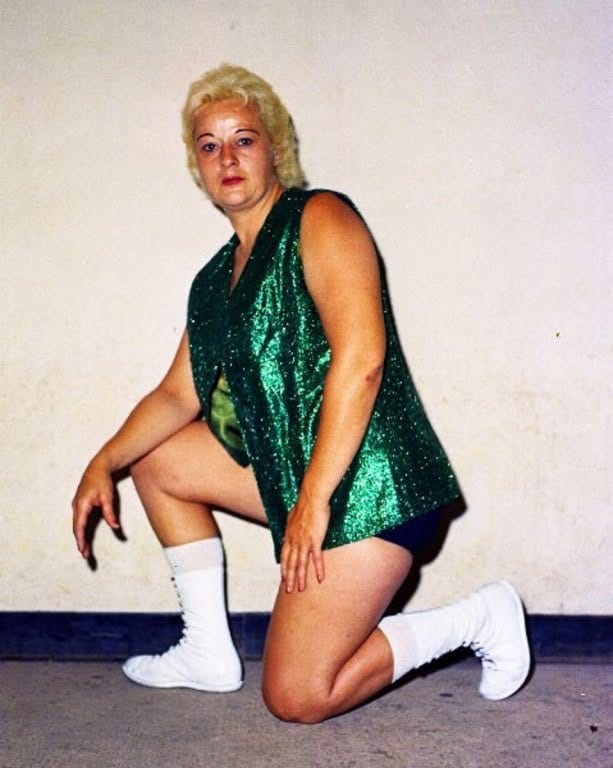
Dottie had a daughter, Debbie Johnston, who was born around the mid-1950s and grew up as a tomboy. She became interested in wrestling at age 11 after attending matches. She began training at Moolah’s facility in Columbia, South Carolina, at age 15 (around 1970) after just two weeks of instruction and was quickly sent on the road. Her mother Dottie had started training there a few months earlier and took nearly a year before her first match. Debbie is considered one of the earliest second-generation female wrestlers, though promoters did not publicly acknowledge the family connection.
Debbie wrestled from roughly 1970 to 1975 (some records list activity into 1977) as a technician-style performer, usually as a babyface. She competed across the United States, Canada, and Puerto Rico, facing many of the top women of the era including Moolah, Toni Rose, Vivian Vachon, Paula Kaye, Peggy Patterson, and others. One of her most notable appearances was on September 30, 1972, at Shea Stadium in New York, where she challenged Moolah for the NWA World Women’s Championship in front of a large crowd. This was among the first women’s matches in the New York area after a long ban on female wrestling there; conditions were harsh, with ice on the mat. She also appeared in the documentary-style film Wrestling Queen.
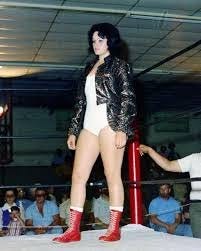
Pictured: Debbie Johnston
Debbie and Dottie worked together only rarely. They teamed once and wrestled each other once. Moolah generally avoided booking them in the same towns to hide their relationship, as Debbie resembled her mother at the time. In their singles match, Debbie accidentally split Dottie’s lip.
Their personal relationship was strained. Debbie has said her grandmother raised her, that Dottie was never a supportive mother, and that Dottie had four children and “gave us all away.” They had little contact later in life. Dottie Downs died on January 8, 2015, at age 78. She had health issues including high blood pressure and spent time in a nursing home.
Debbie has been critical of Moolah’s training camp, describing it as highly controlling: wrestlers lived on the property, Moolah took a large cut of earnings plus expenses, bookings could be withheld as punishment, and personal freedom was limited. She received her first meaningful pay only after nearly two years.
She also alleged a traumatic 1973 incident in which she said she was drugged and taken for an illegal abortion arranged by Moolah, her mother, and another wrestler because pregnancy would have interfered with her booking and travel. She continued wrestling afterward but left the business after marrying and becoming pregnant with her first son in 1975, seeking a more stable life. She has said she had two sons from that marriage; both later passed away.
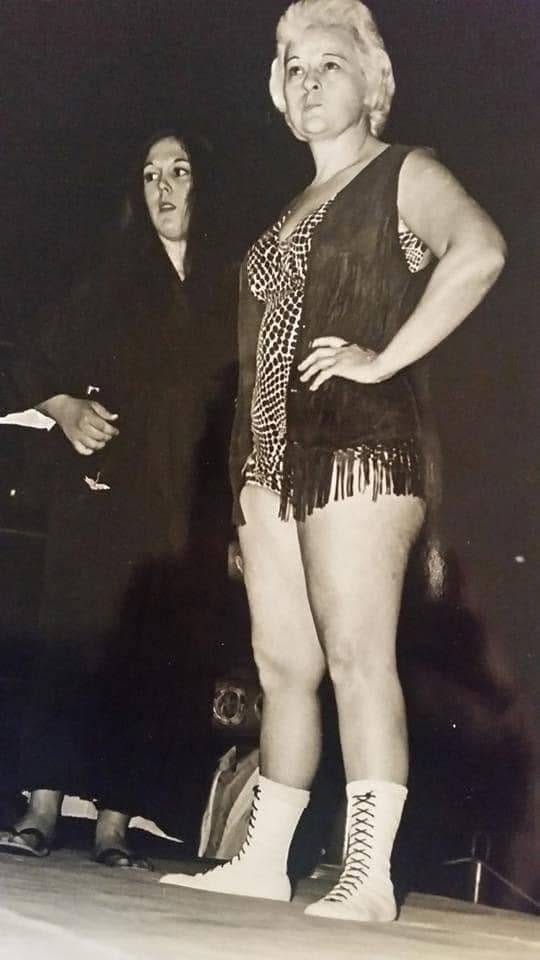
Pictured: Dottie Downs with Leilani Kai in the background
In Louisville, Kentucky, Dottie Downs is one of the city’s lesser-known athletic exports, a woman who left home in middle age, spent four years being thrown and slamming others in front of paying crowds from Boston to Tokyo, and then came home again. The scarcity of personal detail around her life does not diminish the fact of the work. It simply means that what remains of Dottie Downs is the work itself: the dates, the opponents, the buildings, and the quiet persistence of a late-starting wrestler who lasted long enough to leave a documented trail across two continents.
ONE Thing I Learned About Fuzzy Cupid
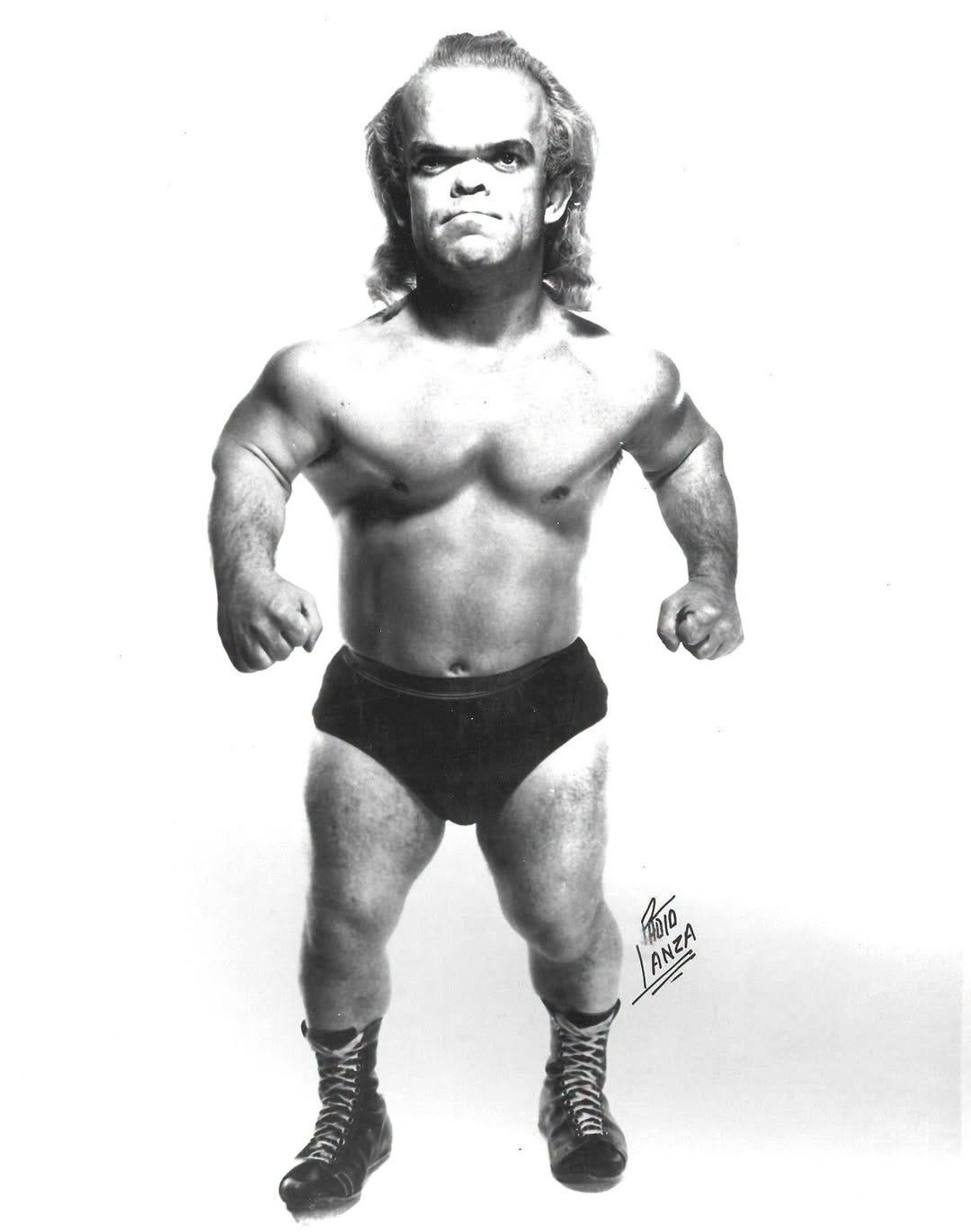
Before he ever stepped in a ring, Leon Stap—Fuzzy Cupid—played Grumpy in a traveling production of Snow White.
He was born in Newport, Rhode Island, in 1928 to average-height parents. At seven he contracted infantile paralysis, spent six years in the hospital, and did not enter public school until he was seventeen. After that stretch he left home and joined the road show, working the dwarf role in the fairy-tale company. Only later, after seeing a midget wrestling card in Galveston, did he get sent to Detroit to train under Bert Rubi and Jack Britton and debut around 1952.
The Grumpy gig is the piece most fans never hear. It sits right next to the other hard details of his life: heel heat so intense that fans once fractured a vertebra and left him with a four-inch blade scar, a long tag run with Sky Low Low, and a reported peak of about $20,000 a year in 1950s money. He retired in 1969 and died in 1979.
Thank You for Watching and Listening
I’m Tony Richards, Pro Wrestling Historian, Author and Storyteller. I share pro wrestling historical items in each issue of the Time Tunnel Pro Wrestling History Newsletter and each episode of our podcast show. Thanks for your support! If you enjoy my information on select events, matches and insights, please share with folks you think might like to be a subscriber!
Remember, Premium subscribers get access to exclusive and special content such as some special issues including a multi-part deep dives on wrestling territories, wrestler bios and championship title histories, special audio and video interviews on territory pro wrestling and more available in the Pro Wrestling Time Tunnel for Premium Subscribers. Being a Premium Subscriber also means you support me in my efforts to document Pro Wrestling History through my research, writing, books, vidoes and podcasts. And…I have something very special planned for our Premium Subscribers on the Podcast side of things in 2026! Details soon here in the Pro Wrestling Time Tunnel.