


Today’s Favorite Quote: Never doubt that a small group of thoughtful citizens can change the world. Indeed, it is the only thing that ever has ~Margaret Mead
Happy Birthday to those who have passed on and to those great wrestlers still with us:
In Memoriam:
Stanley Weston 1919
Villano II 1949
Jerry Oske 1962
Happy Birthday:
Jimmy Garvin (74)
Aja Kong (56)
RIP Memorial: We stop & remember those who have passed on this day and gave themselves to the business for us, the fans. We salute you and thank you.
Ivan Rasputin 9-25-1976 at the age of 64
Anthony Durante\Pitbull 2 9-25-2003 at the age of 36
Curtis Smith 9-25-2023 at the age of 80
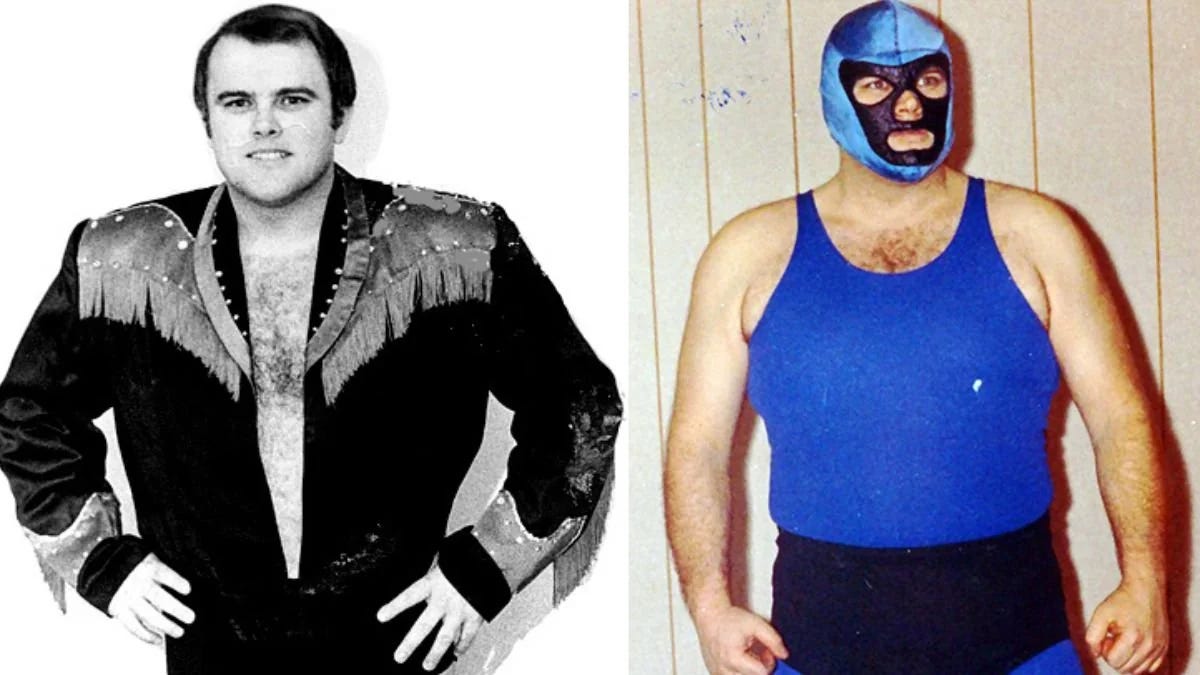
The Life and Career of Roy Heffernan
Laurence Roy Heffernan was born on 12 July 1925 in Lithgow, a working industrial town in the Central Tablelands of New South Wales. The place was defined by coal, steel, and hard physical labour, and that environment formed the first chapter of a life that would take him from a Sydney workshop floor to Madison Square Garden. His family later settled in the inner-Sydney suburb of Sydenham. There his father, Laurence, a bodybuilder himself, became his first trainer. The boy who grew up lifting iron in the backyard was not merely athletic; he was methodical. By his mid-teens he was already known in local strength circles, and by fifteen he was being described, in the hyperbolic language of the day, as one of the strongest youths in the country. He could handle enormous weights for his age, trained three hours a day, swam on weekends, and treated diet as part of the craft: meat, fruit, vegetables, raw produce, and as many as eight eggs a day. He neither drank nor smoked.
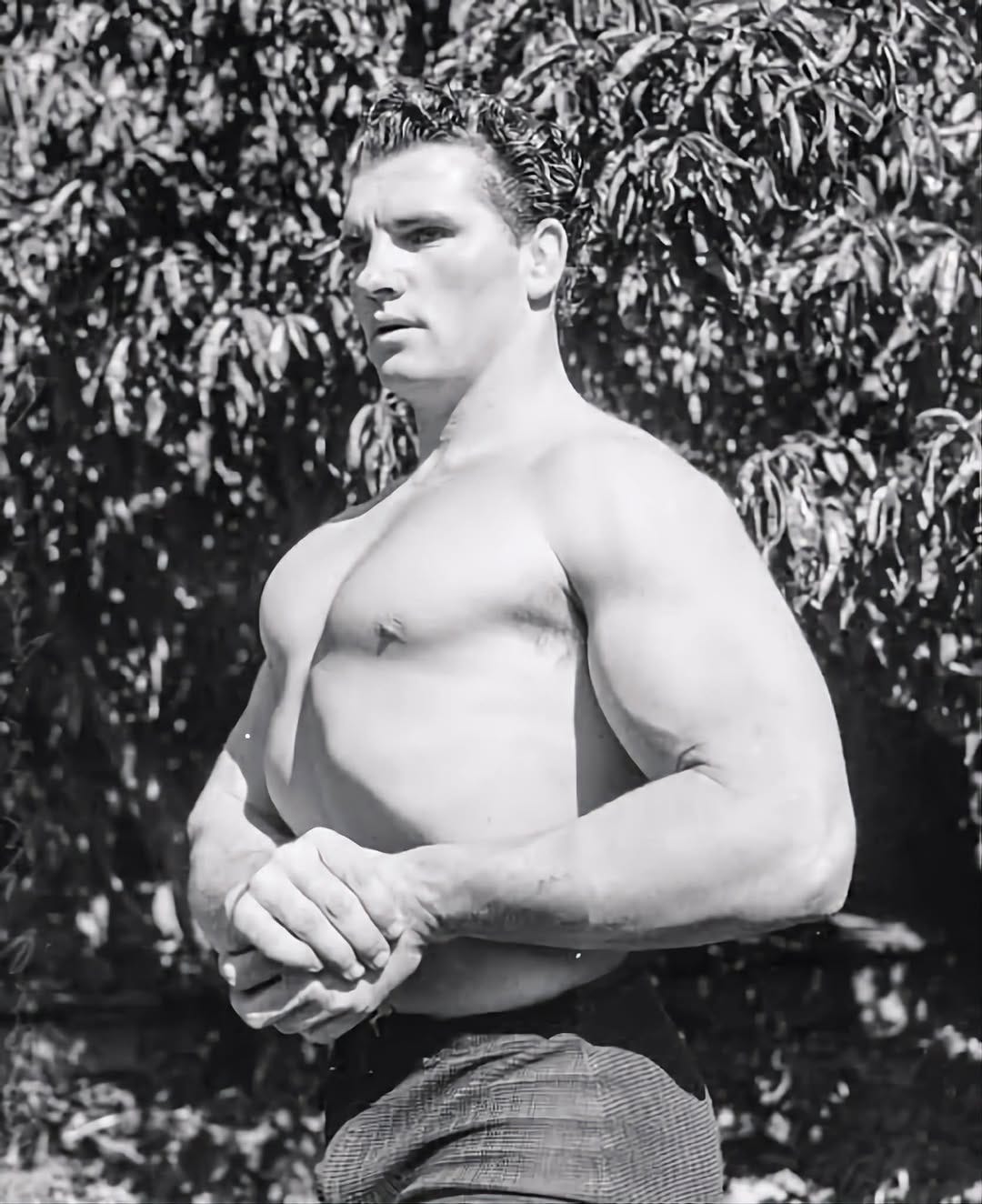
The physique that later walked into American arenas was already taking shape. At twenty-two he stood about five feet nine, carried a forty-eight-and-a-half-inch chest, a thirty-two-and-a-half-inch waist, twenty-seven-inch thighs and seventeen-and-a-half-inch biceps, and weighed around fifteen stone. He could add or drop ten pounds in a fortnight by changing food and work. He was not muscle-bound. He could still run a hundred yards in eleven seconds. Those measurements would remain remarkably consistent into the mid-1960s, when a fan-club yearbook listed almost identical figures.
Wrestling arrived first as amateur sport. Around the age of nineteen he won the New South Wales light-heavyweight amateur title. The transition from amateur mat and physique stage to professional ring was the common Australian path of the era. Sources differ slightly on the exact year of his professional debut—some place it as early as 1944, others at Leichhardt Stadium in 1948—but by the late 1940s he was already appearing professionally in Sydney, billed on radio as Australia’s best-built wrestler. He still held a day job as a patternmaker for a Mascot firm, cutting wooden patterns for metal castings. At night he wrestled, performed a muscle-control strongman act, and studied dramatic art at the Whitehall Academy, even winning a scholarship. He told interviewers he wanted three things: to wrestle, to run a gymnasium, and to act in films. The first ambition would swallow the other two.
Australian wrestling in those years operated on a hierarchy that punished the local. Bookers preferred men who had “gone away and learned the business.” Heffernan understood the rule. After undercard work at home he began touring. By the time he reached Britain in 1953 he had already appeared in New Zealand, Singapore, India and Pakistan. The first British tour concentrated on the North. He then worked Germany and South Africa before returning to Britain in 1955 for a wider circuit that included Jack Pye, Dave Armstrong, and a Royal Albert Hall match against the German Hermann Iffland. He was a capable singles wrestler: compact, strong in the core and legs, technically sound, with a piledriver as a favourite finisher. He was also light for a heavyweight by North American standards, often giving away height and weight to the giants of the era. That disadvantage never left him. Years later he would name Killer Kowalski as the opponent he feared most after a television match in which Kowalski’s claw to the abdomen finished him in under half a minute—the fastest defeat of his career, and one that lingered.
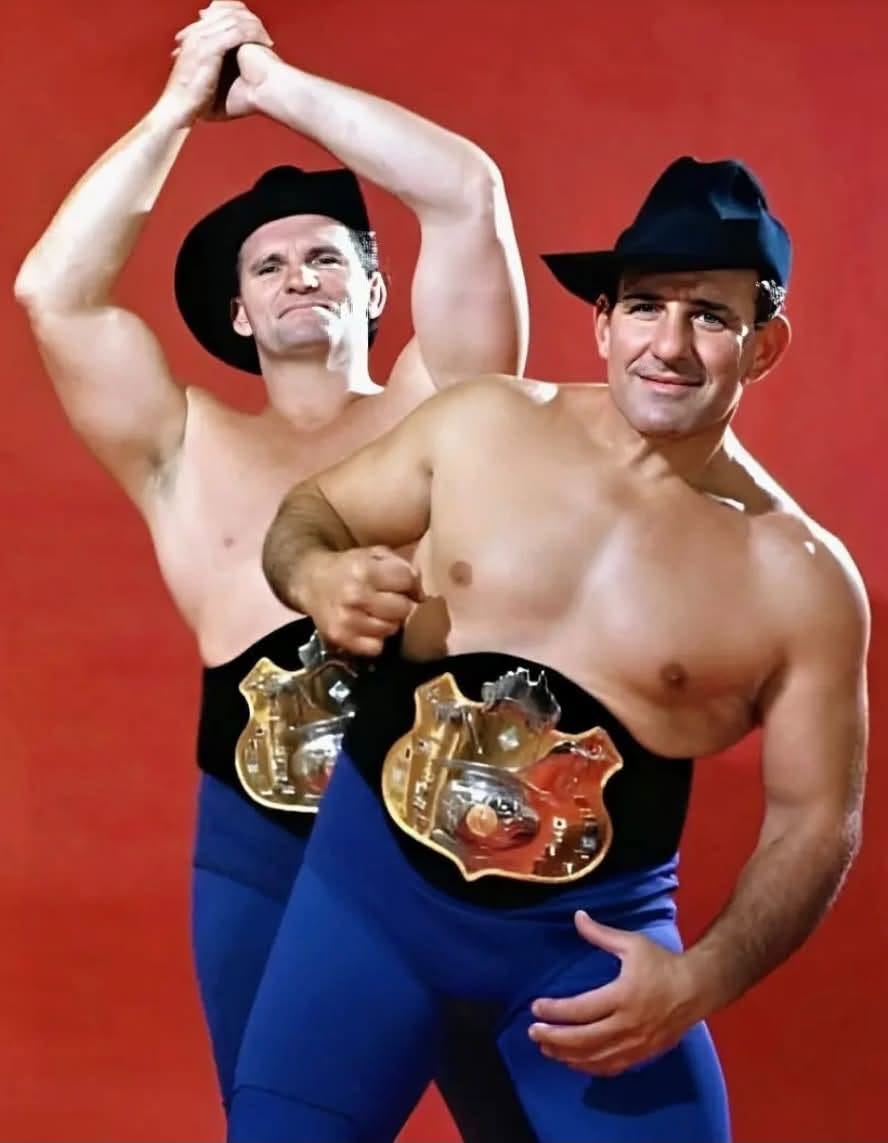
The turning point came in 1956 and 1957. Al Costello, an Italian-born Australian who had been developing an “ultra-Australian” tag-team idea for years, had lost touch with Heffernan after they had worked together earlier. In Hawaii, Costello mentioned the concept to Joe Blanchard. Blanchard knew Heffernan was then in Stampede Wrestling in Calgary and put the two men back in contact. Costello travelled north. On 3 May 1957, Costello and Heffernan debuted as the Fabulous Kangaroos for Stu Hart, facing Maurice LaPointe and Tony Baillargeon. Within weeks they were working the promotion’s top teams.
The gimmick was complete and new to American crowds. They wore slouch hats and military-style jackets, carried souvenir boomerangs, entered to “Waltzing Matilda,” and were led to the ring by manager Wild Red Berry with Australian flags and a banner. They threw cardboard boomerangs printed with their pictures into the crowd. They claimed a superiority born of Australian team wrestling and played arrogant heels who cheated, stalled, and provoked. American audiences had not seen anything quite like it. The act was designed to draw heat, and it did. In August 1958 at Madison Square Garden they met Antonino Rocca and Miguel Pérez. The match produced no decisive finish. Fans hurled fruit and other objects. Promoters brought up the house lights and played the national anthem so the heels could leave the building. The Kangaroos sold the Garden out more than once against that same pair. They were not merely a novelty; they were main-event attraction.
From 1957 to 1965 they worked a circuit that included Stampede, NWA territories in Texas, Florida, the Northeast, Ohio, Vancouver’s All-Star Wrestling, Japan, Los Angeles’s WWA, and others. They collected title after title: multiple versions of NWA United States, World and International tag championships, Canadian tag titles in Vancouver four times, WWA titles, Rocky Mountain titles, Amarillo and Texas belts. Lists compiled later run to more than a dozen recognized tag championships, some sources saying sixteen or more. Their finishing sequence in tags was the Boomerang, also called the slingshot catapult. They feuded with the Bastien Brothers, Johnny Valentine and Buddy Rogers, Eddie Graham and Dick Steinborn, the Torres brothers, and many of the era’s leading teams. They popularized, for a generation of promoters and fans, the idea that a tag team could be the feature attraction rather than a supporting act. Historians still rank the original Costello-Heffernan Kangaroos among the greatest tag teams ever assembled.
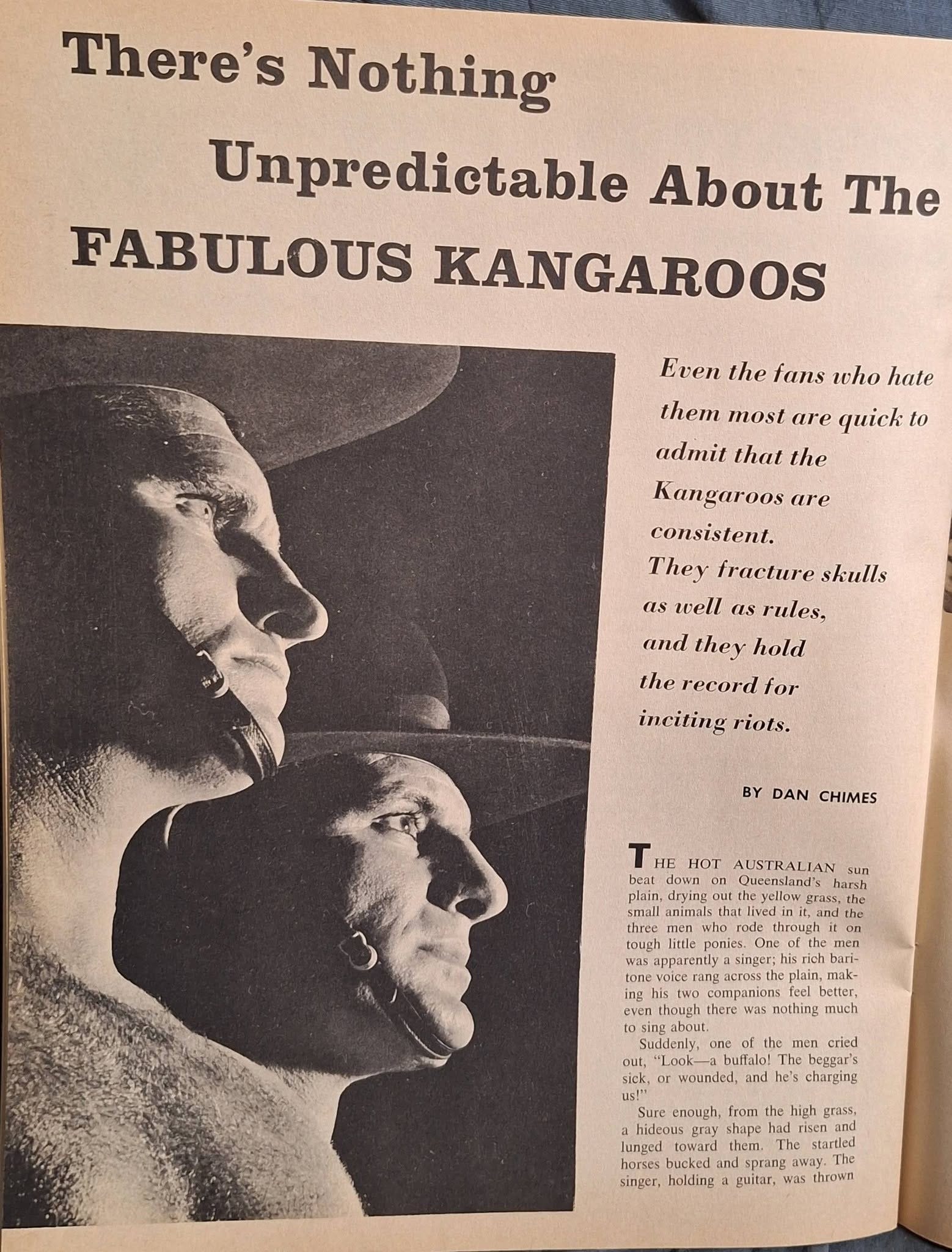
The partnership ended in June 1965 after a loss to Don Leo Jonathan and Jim Hardy in Vancouver. Heffernan wanted to go home. Costello wanted to remain in North America. They split, reunited briefly in 1967, and then went their separate ways. Costello continued the Kangaroo name with other partners. Heffernan returned to Australia.
Home was a different story. Under promoter Jim Barnett’s World Championship Wrestling, the same slouch hat and boomerang that had made him a villain in the United States made him a hero. Australian crowds received the “ultra-Australian” as one of their own. He had a short run as a main-event heel and then settled, for the rest of his in-ring years, into a more complicated role: respected local veteran, often used as the measuring stick for incoming Americans, usually booked to lose to the big names and to beat other Australians. Some observers thought the demotion to undercard work undervalued him. He still possessed the body, the timing, and the ring sense. He continued into the early 1970s, with sources placing his effective retirement around 1971 or the end of 1972, followed by a brief comeback in 1973.
After the matches stopped he stayed in the business. He refereed for WCW and on the club circuit. In 1975 he opened an independent clubs promotion. He had some involvement in the running of the Australian WCW office before the promotion faded. The gymnasium he had once wanted to run never became his public monument; the ring had taken that energy. He died of a heart attack on 24 September 1992 at St George Hospital in Sydney. He was sixty-seven.
Recognition arrived after he was gone. In 1996 the Wrestling Observer Newsletter Hall of Fame inducted him. In 2003 the Professional Wrestling Hall of Fame made the original Fabulous Kangaroos the first tag team ever enshrined, establishing a category that later honoured other great pairs. In 2013 Costello and Heffernan entered the NWA Hall of Fame. Those honours confirmed what the live crowds of the late 1950s and early 1960s already knew: two Australians with hats, flags, and a simple, vivid idea had changed how tag-team wrestling was sold and remembered.
Heffernan’s career is a study in two kinds of success. As a singles wrestler he was a well-built, technically competent heavyweight who never quite became a transcendent individual star in the American sense, partly because of size, partly because the business of his era reserved its highest singles ceilings for other bodies and other gimmicks. As half of the Kangaroos he was indispensable. The team needed his look, his strength, his timing, and his willingness to play the foreign heel to the hilt. The same man who had once studied dramatic art understood performance. The same man who had cut patterns in a Sydney factory understood repetition and craft. The boy from Lithgow who trained in a backyard and worked three hours a day became, for eight remarkable years, one half of an act that sold out the Garden and taught a continent that two men moving as one could be the whole show.
That is the shape of the life: industrial town, iron and amateur medals, a tradesman’s job and a night-time ring, the long tours through Asia, Britain, Africa and North America, the hats and the boomerangs, the titles and the riots, the homecoming that turned a heel into a face, the quiet years of refereeing and small promotions, and a death in Sydney far from the arenas that had made his name. Professional wrestling is a transient art. Crowds forget faces. The Kangaroos are one of the exceptions. Roy Heffernan is remembered because the team he formed with Al Costello was not only successful but formative, and because the man himself, compact, strong, and professional to the last, gave that team its other half.
One Thing I Learned About Tim Woods\Mr Wrestling I
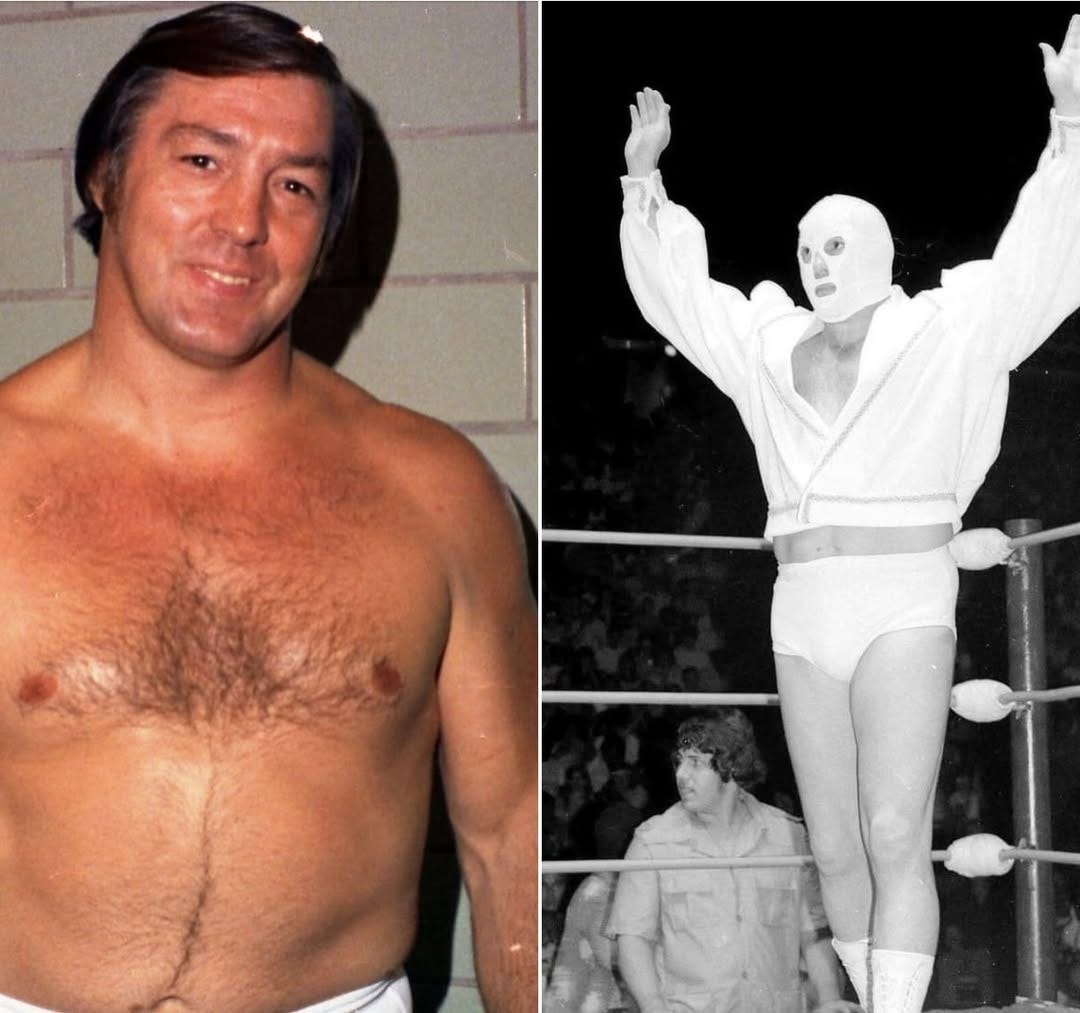
After he retired from the ring, Tim Woods (born George Burrell Woodin) did not fade into nostalgia appearances. He filed multiple patents in air conditioning, heating, and refrigeration and ran a consulting business in Charlotte.
That sits on top of two engineering degrees—agricultural engineering from Cornell and mechanical engineering from Michigan State—plus a side life as a saxophonist, photographer, and drag-car and motorcycle racer.
A sharper ring story that rarely gets told: in a Georgia “last ten minutes with Mr. Wrestling” challenge, a 280-pound street fighter trapped in a hold bit off part of Woods’s finger at the joint. About a week later, still dealing with that injury, Woods went to a time-limit draw with NWA World Heavyweight Champion Gene Kiniski.
Thank You for Watching and Listening
I’m Tony Richards, Pro Wrestling Historian, Author and Storyteller. I share pro wrestling historical items in each issue of the Time Tunnel Pro Wrestling History Newsletter and each episode of our podcast show. Thanks for your support! If you enjoy my information on select events, matches and insights, please share with folks you think might like to be a subscriber!
Remember, Premium subscribers get access to exclusive and special content such as some special issues including a multi-part deep dives on wrestling territories, wrestler bios and championship title histories, special audio and video interviews on territory pro wrestling and more available in the Pro Wrestling Time Tunnel for Premium Subscribers. Being a Premium Subscriber also means you support me in my efforts to document Pro Wrestling History through my research, writing, books, vidoes and podcasts. And…I have something very special planned for our Premium Subscribers on the Podcast side of things in 2026! Details soon here in the Pro Wrestling Time Tunnel.