


Today’s Favorite Quote: Good people are good because they’ve come to wisdom through failure-William Saroyan
Happy Birthday to those who have passed on and to those great wrestlers still with us:
In Memoriam:
Doc Gallagher 1916
Miguel Torres 1918
Fuzzy Cupid 1928
Len Rossi 1929
Hartford Love 1940
Happy Birthday:
Richard Allen\Sunny Beach (62)
Stephanie McMahon (49)
Chris Nowinski (47)
Shane Haste (40)
Sonya DeVille (32)
RIP Memorial: We stop & remember those who have passed on this day and gave themselves to the business for us, the fans. We salute you and thank you.
Abe “King Kong” Kashey 9-24-1965 at the age of 61
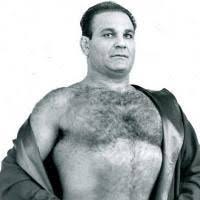
Roy Hefferman 9-24-1992 at the age of 67
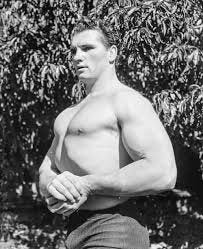
Professor Roy Shire 9-24-1992 at the age of 70
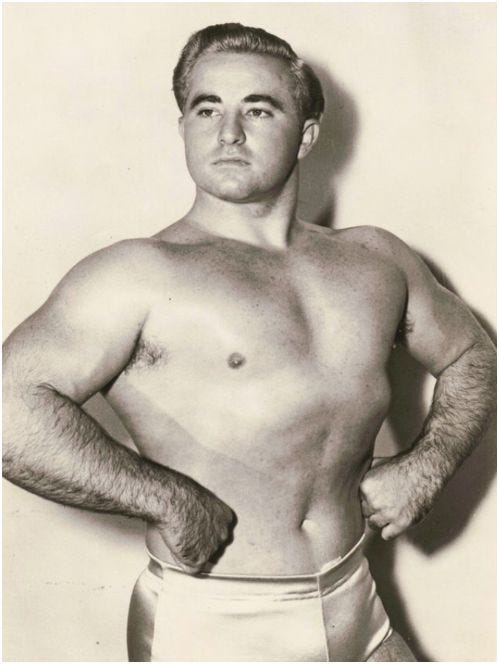
The Life and Career of Len Rossi
Len Rossi was born Rinaldo Leonard Rositani on September 24, 1929, in Utica, New York, the son of Italian immigrant parents. The name that later appeared on arena posters across the American South was a promotional compromise: a Boston booker decided “Rositano” would not fit on a card and shortened it to Rossi. The man behind that name lived two public lives that, taken together, tell a single story of discipline, credibility, and quiet stubbornness. First he became one of the most trusted babyfaces in the National Wrestling Alliance’s Mid-America territory. Then, after a wreck that ended his in-ring career, he spent nearly half a century preaching nutrition and natural healing from a storefront in Brentwood, Tennessee.
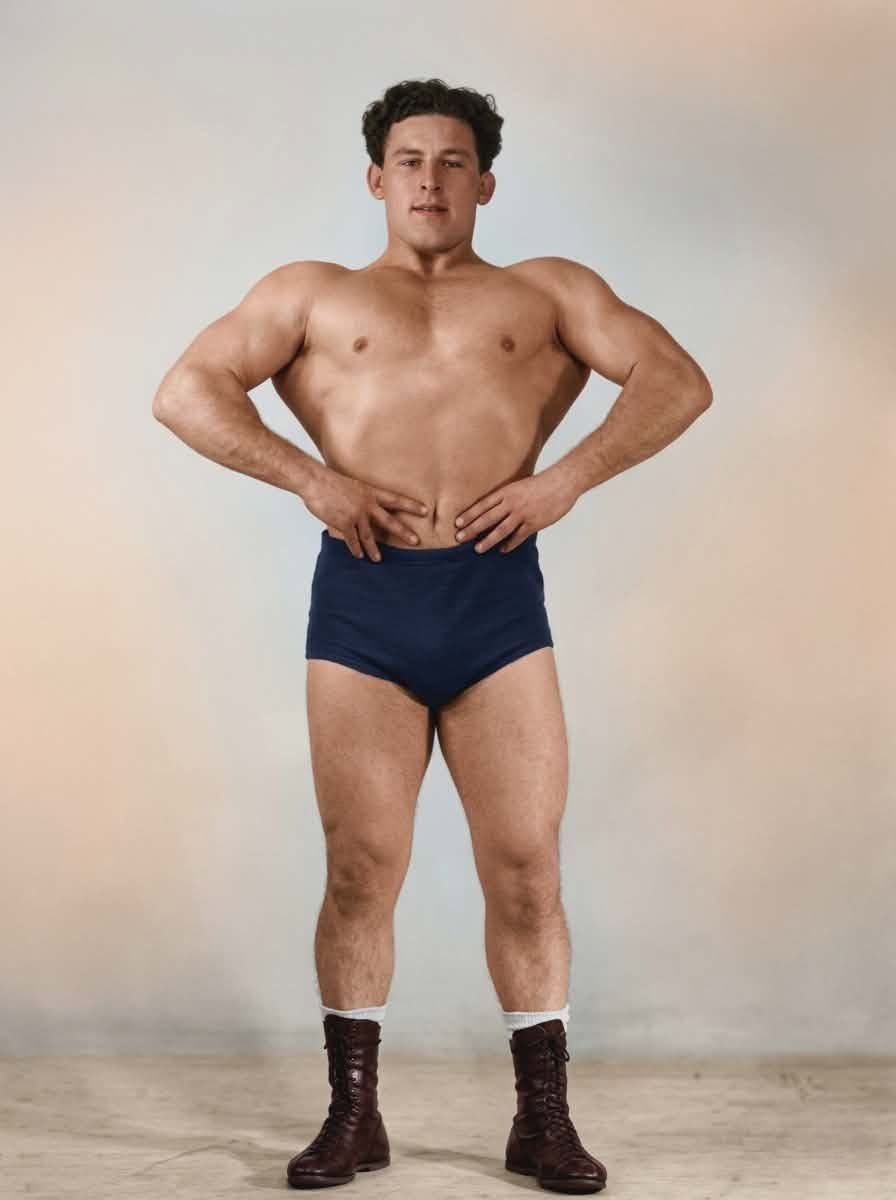
The path began with bullies. As a teenager in Utica, Rossi lifted weights at the local YMCA so he could stop being an easy target. A coach named Eddie Zysk kept inviting him onto the mats. Rossi finally accepted, convinced he could overpower the older man. Zysk took him down and rode him “like a mule.” The humiliation became a vocation. There was no high-school wrestling program, so the boy wrestled YMCA teams against men twice his age and moonlighted in the unsanctioned “smokers”—smoky, men-only halls where spectators threw coins into the ring and drunken patrons sometimes jumped in for a street fight. Those nights taught him boxing defense, takedowns, and how to finish a match when the rules evaporated. He boxed exhibition bouts for lodges as well. After two years in the United States Army, where he taught unarmed self-defense, he set out to turn professional.
Breaking in was not easy. The business of the late 1940s and early 1950s was closed and territorial. Rossi wrote letters, absorbed rejections, and finally got a break through wrestler Jackie Nichols in Boston. His first paid matches were for promoter Ed Don George in upstate New York. He learned the hard way: no formal trainer, separate dressing rooms for greenhorns, and a promoter who once asked him a riddle about a dying friend and then told him to treat every stranger as if that stranger had two weeks to live. Early years were lean. On a Northwest tour he lived on peanut butter and bread and mailed his wife a few dollars at a time. Promoters billed him from St. Louis even when he worked New York. A first major feud with Gypsy Joe in the Utah-Idaho territory in 1954–55 ended with a mixed boxing-and-wrestling bout in Provo that Rossi won by knockout in the sixth round. He worked Texas, Illinois, Wisconsin, and Florida, always the clean, mid-sized technician rather than the screaming heel or the carnival strongman.
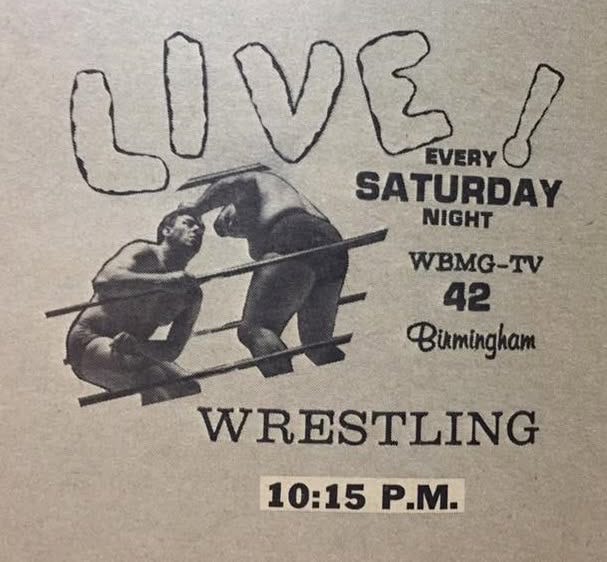
Pictured: The title card for WMBG-TV42 Gulas-Welch “Live Studio Wrestling” in Birmingham, Alabama
In May 1958 he accepted what was supposed to be a two-week booking in Nashville before a Canadian tour. His wife, Lee, and their young son Joey were tired of the gypsy life; school was approaching. The family stayed. Tennessee became home for the rest of Rossi’s life. Within weeks he and Tex Riley defeated Don and Jackie Fargo for the Mid-America version of the NWA World Tag Team Championship, the first of many reigns. Riley taught him ring psychology more than holds: how to make an audience believe a story. Rossi already possessed the amateur foundation; now he learned how to sell a Boston crab, a sleeper, and a dropkick so that fans in small Southern towns treated them as real contests. He never turned heel. In a territory famous for wild brawls and colorful characters, he was the taut, polite Yankee with an Italian name and a two-dollar warmup jacket who simply looked like he was trying to win.
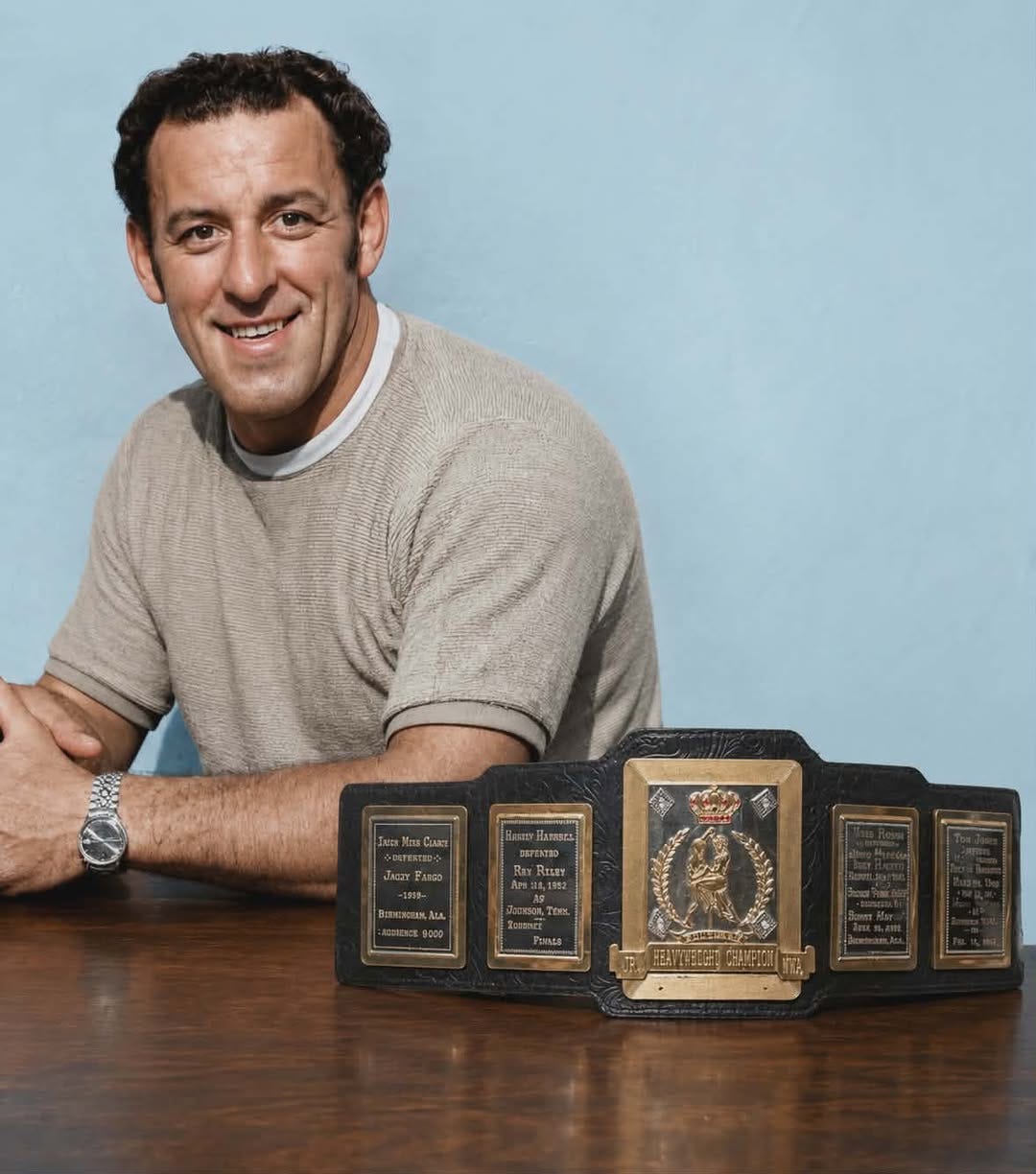
Pictured: Len Rossi and one of the most beautiful belts ever created, the NWA Southern Junior Heavyweight Title Belt
That sincerity made him a star. For roughly fifteen years he was, alongside Jackie Fargo, the most popular wrestler in Nick Gulas’s Mid-America circuit and a fixture on Birmingham’s Channel 42 “Live Studio Wrestling.” Newspapers began listing him as a Nashville native. Fans mobbed him in restaurants from Chattanooga to Birmingham to Nashville. He held the Southern Junior Heavyweight Championship (later the Southern Heavyweight title that would define Jerry Lawler’s career) multiple times and accumulated tag-team gold with a long list of partners: Tex Riley, Jackie Fargo, Mario Milano, Dick Beyer (later The Destroyer), Tamaya Soto, Johnny Walker, Don Carson, Tony Charles, and others. Counts vary by promotion and record-keeping, but the totals routinely cited run to more than a dozen Mid-America World Tag Team reigns, nearly twenty Southern Tag Team reigns, and well over forty championships overall. He worked Japan and other territories yet always returned to Tennessee. In 1969 he publicly challenged Cassius Clay—by then Muhammad Ali—to a mixed-rules match that never materialized.
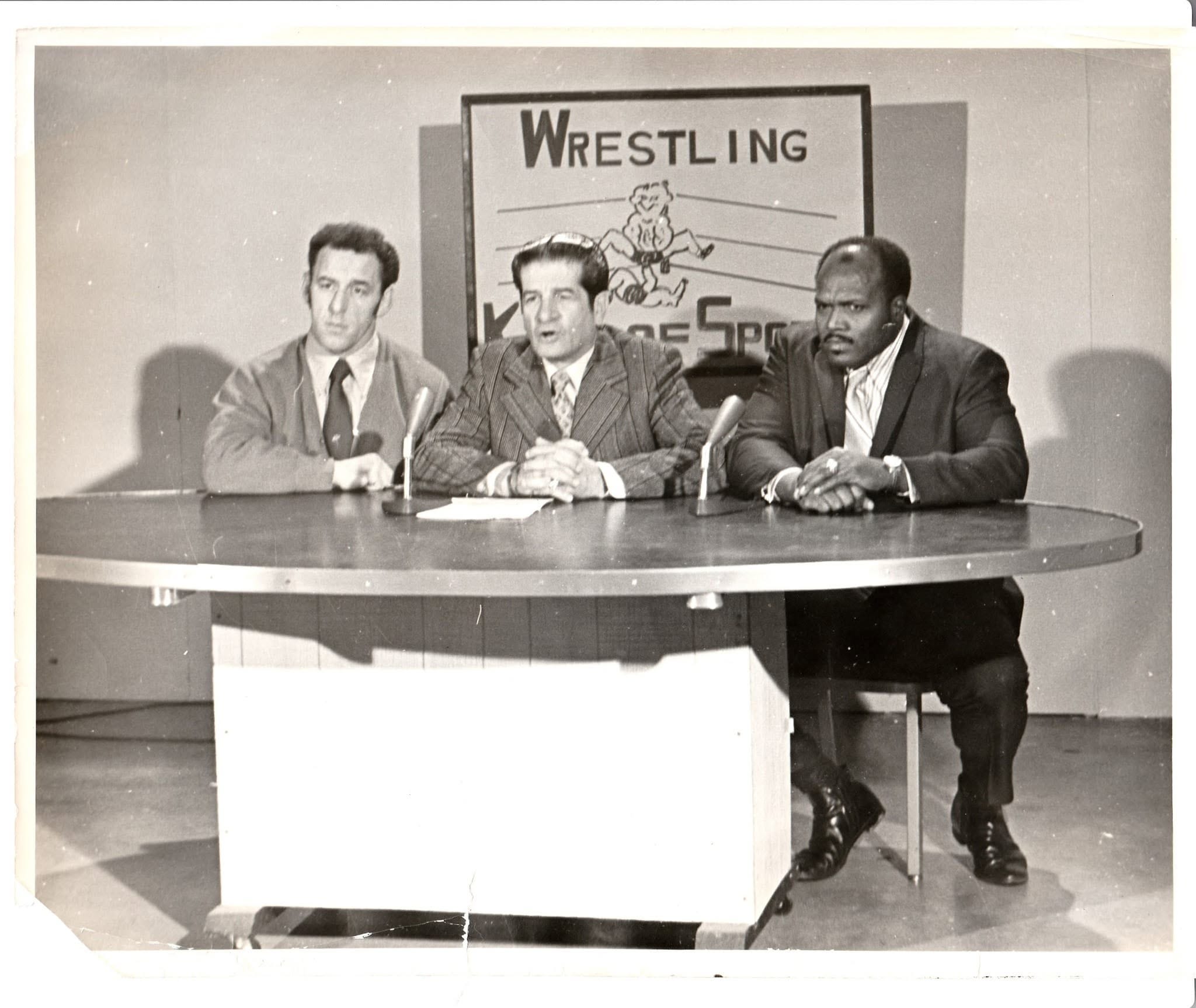
Pictured: Nick Gulas (center) hosting the Gulas-Welch wrestling program in Nashville, Tennessee flanked by Len Rossi and Bearcat Brown
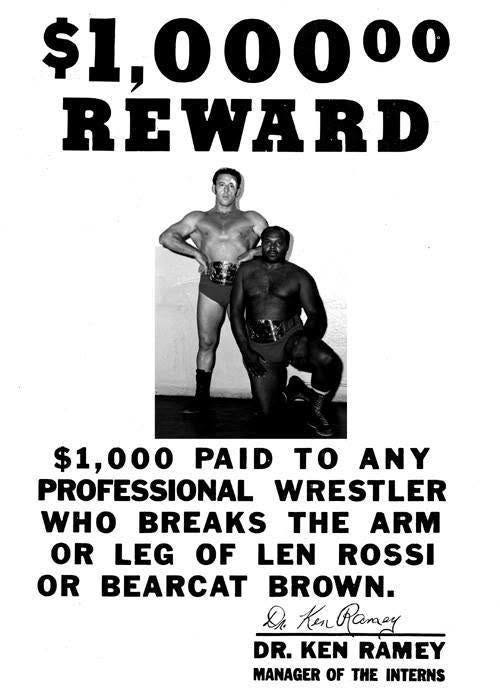
The most consequential partnership began that same year. Rossi pushed promoter Nick Gulas to let him team regularly with Bearcat Brown, a Black wrestler from Atlanta. In the still-segregated Deep South the idea was explosive. Their first official match in Birmingham drew thousands who could not get in; the Ku Klux Klan picketed and issued bomb threats. The pairing worked because each man brought his own audience. When Rossi tagged Brown, Black fans erupted; when Brown tagged Rossi, White fans did the same. They became close friends and one of the territory’s biggest draws through 1972, feuding with teams such as the Masked Interns and setting box-office records. Rossi later called Brown his best friend in the business. In an era when integrated babyface teams were rare anywhere and almost unheard of in Alabama and Tennessee, the combination was both commercially successful and quietly political.
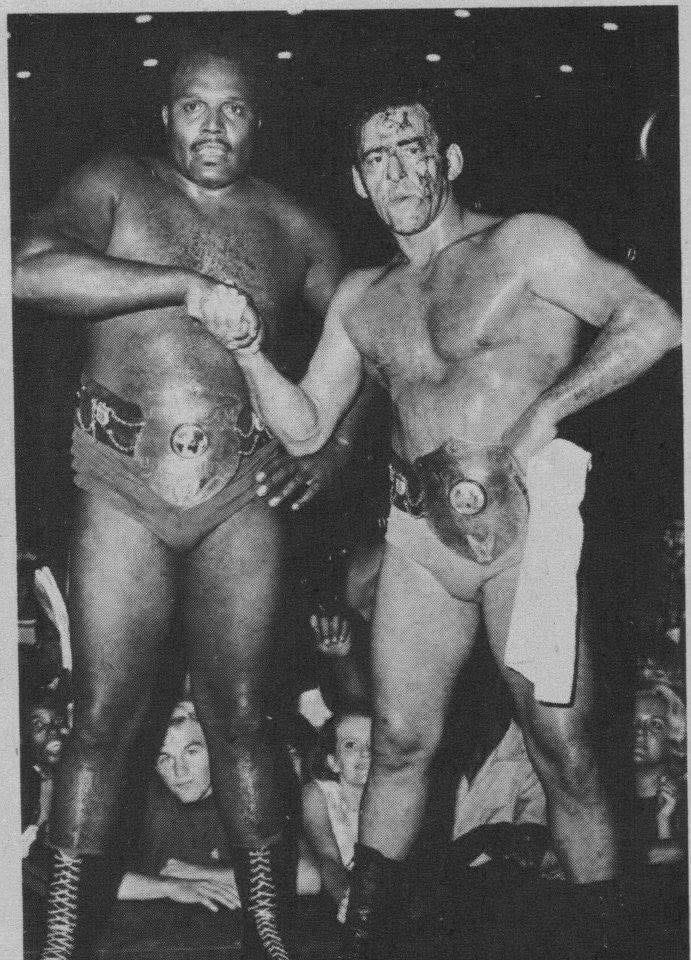
Pictured: NWA Southern Tag Team Champions, Bearcat Brown and Len Rossi
On December 8, 1972, the ring career effectively ended. Driving toward a date in Tupelo, Mississippi, after a match in Louisville, Rossi was a passenger in a multi-car wreck. Two people died. He suffered broken arms, ribs, ankle, and bones in both feet. Seeing a tractor-trailer bearing down, he used his one functioning arm to force a door and roll into a ditch. There were no internal injuries, but the damage was enough. He spent months in hospitals, attempted a limited comeback—sometimes teaming with his son Joey, a former high-school standout who had turned pro—and finally walked away for good around 1979. He estimated he had wrestled more than six thousand matches.
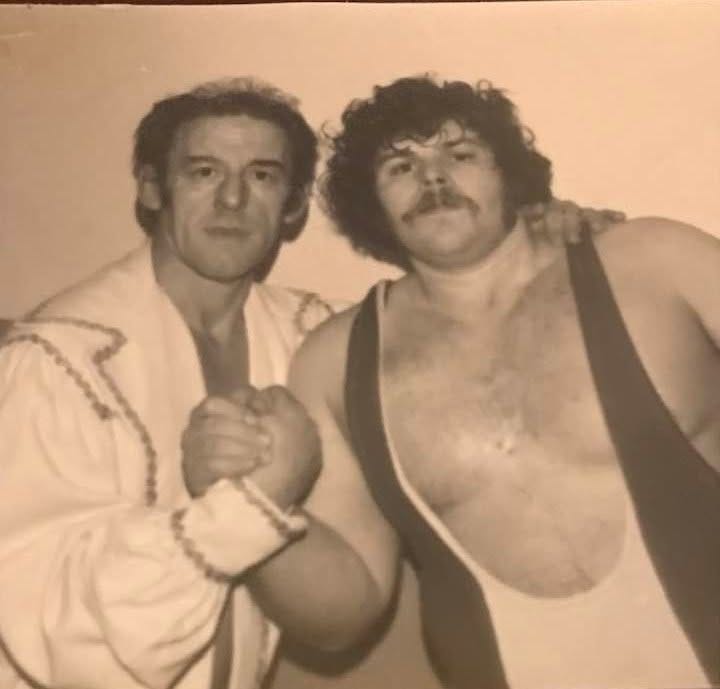
Pictured: Father and Son, Len and Joey Rossi
The wreck became a second origin story. Poor diet, smoking, and the physical toll of the road had left him with colon and stomach trouble. A radiologist told him the condition was treatable with diet rather than immediate surgery. Rossi became a vegetarian, studied nutrition at Belmont University (after first failing registration because he simply followed the students in line), and later earned a doctor of naturopathy degree from a school in England. In 1973 he and Lee opened Len Rossi’s Health Foods in Brentwood. For more than forty years it was the oldest continuously operating merchant in the town. He formulated his own “Prime of Life” supplements, lectured customers on fiber, sugar, hydrogenated oils, and daily self-care, and treated the store as a ministry as much as a business. When a road-widening project forced him out of the Franklin Road location, he moved the operation into his Nolensville home and continued by mail order and appointment. He liked to say that helping people heal felt more rewarding than the championships.
Family life was both anchor and source of grief. Lee, who had endured the lean early years and then the celebrity of the television era, died on the couple’s fortieth wedding anniversary. Rossi married Jeanie in 1993; she became his partner in the health-food business. Their children were Joey, Michael, and Adele. Joey wrestled briefly with his father and later served as a Nolensville alderman; he died of lung cancer in 2003. Michael and Adele also predeceased their father. Rossi was survived by Jeanie, a daughter-in-law, three grandchildren, and a sister.
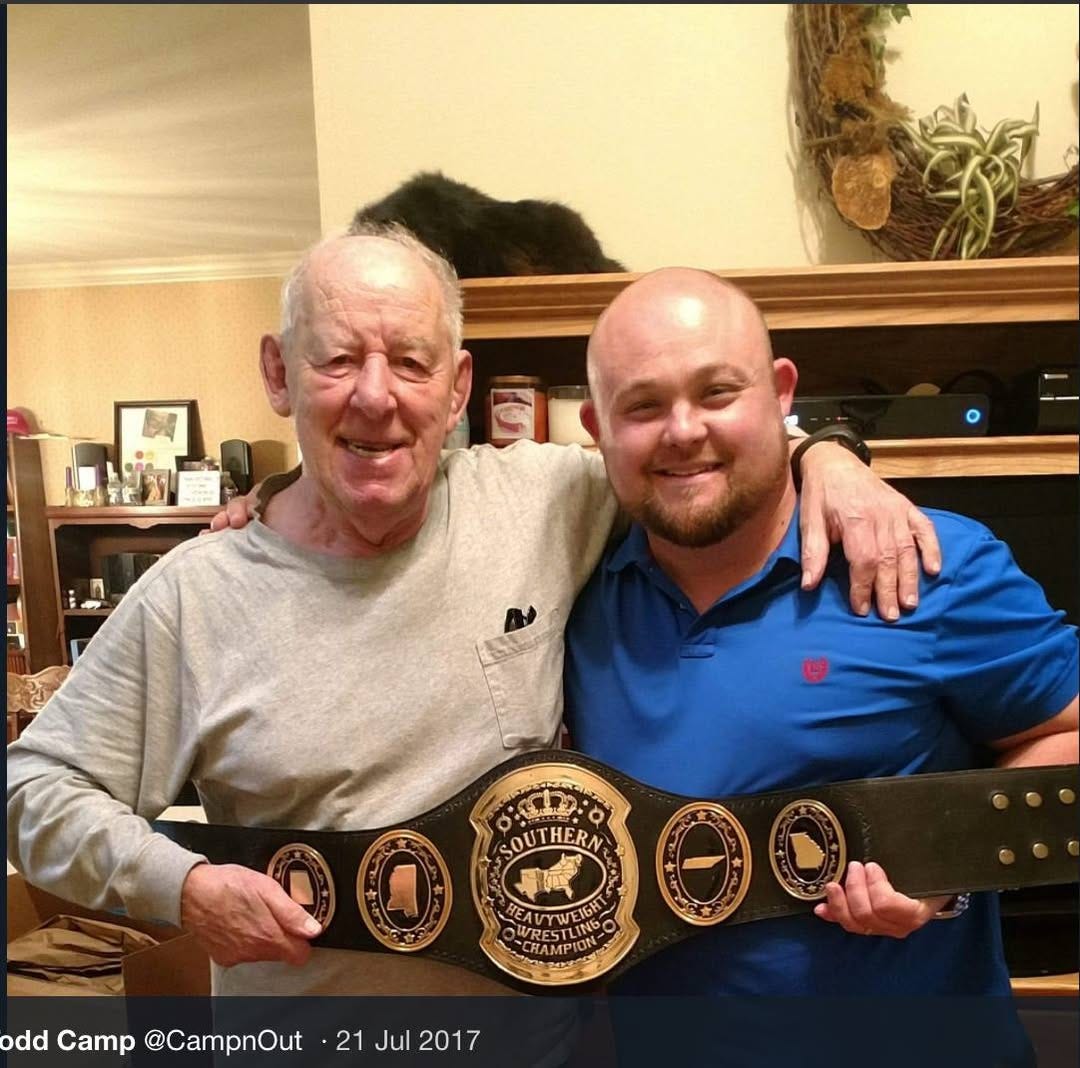
Pictured: Len Rossi and a fan pose with a replica of the NWA Southern Heavyweight Title belt in 2017.
Recognition arrived late, as it often does for territorial stars. In 2004 he received the New York State Award from the Professional Wrestling Hall of Fame. In 2016 he entered the NWA Hall of Fame. Nashville honored him for his athletic career and community work. Peers remembered a gentleman and an unusually smooth worker who could make a match with almost anyone and who never needed a gimmick louder than competence. Les Thatcher called him one of the smoothest workers he had ever seen and a man who made others proud to be wrestlers.
Rossi died of cancer on October 9, 2020, at his home in Nolensville at the age of ninety-one. Graveside services were held at Nolensville Cemetery. The two careers—one in a business that demanded belief, the other in a store that sold prevention—were consistent. He never claimed to be the strongest or the flashiest. He claimed only that he worked hard, that the holds were real enough for the people who paid to see them, and that the body, if treated with some respect, could recover from a great deal. In the rings of the Mid-South and later behind a counter stacked with bottles, that was the entire argument.
One Thing I Learned About Roy Shire
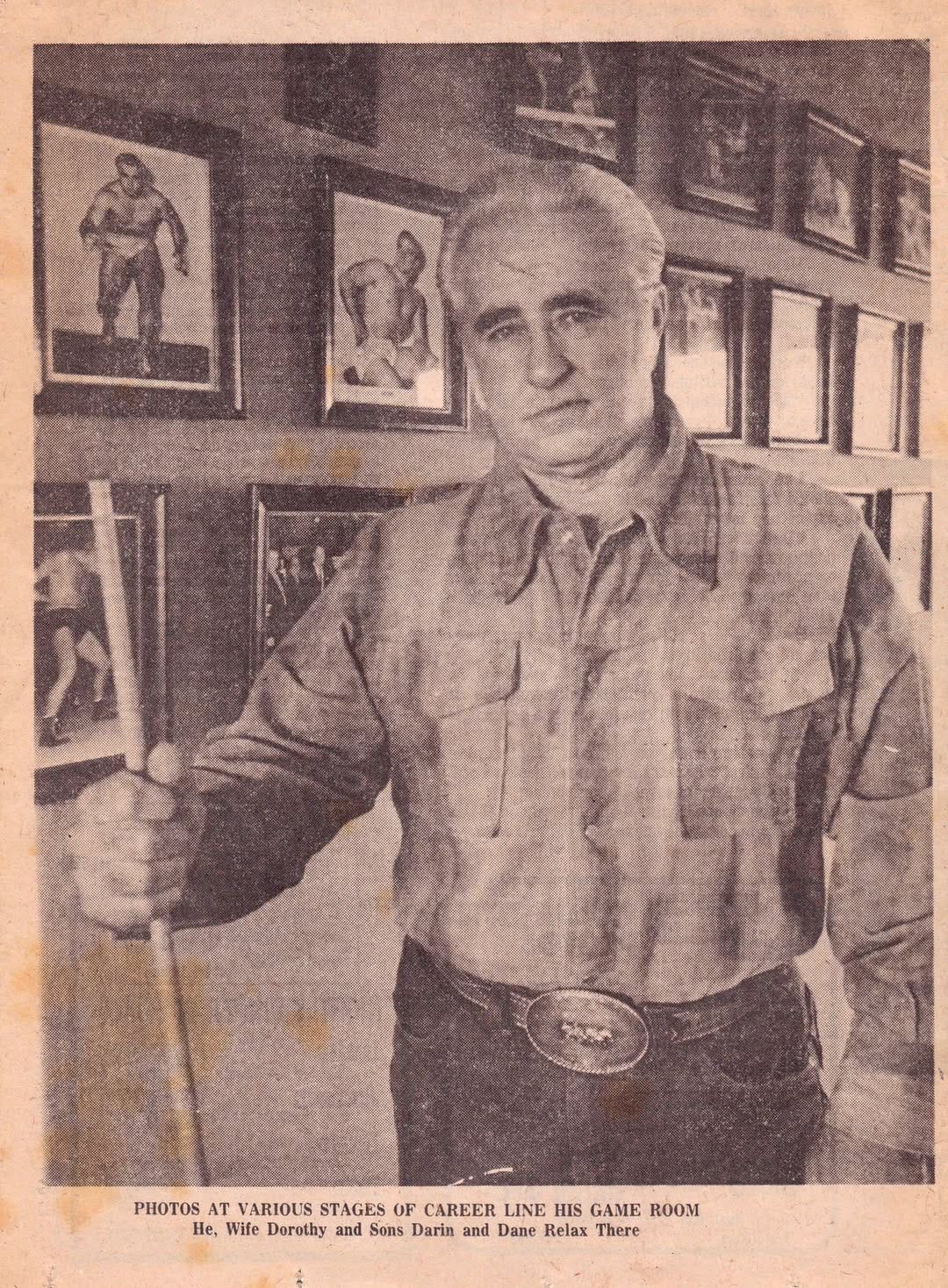
Pictured: Roy Shire at home in his game room in California
Roy Shire spent most of his public life claiming he was a Northwestern University man — a former Wildcat football player, collegiate wrestling champion, and holder of a business degree. Newspapers printed it for decades. The registrar’s office later confirmed that no one named Roy Shire or Roy Shropshire ever attended or graduated from Northwestern.
The “Professor” gimmick that made the lie stick was born in Al Haft’s Columbus office. Haft noticed Shire always carrying the same textbook on “psycho-semantics,” handed him a mortarboard and gown, turned him heel, and put the junior-heavyweight title on him. Shire kept the academic story going long after he left the ring and built Big Time Wrestling in San Francisco.
A smaller, equally odd footnote: KTVU later dropped his TV show after he refused to stop spitting chewing tobacco on the studio floor.
Thank You for Watching and Listening
I’m Tony Richards, Pro Wrestling Historian, Author and Storyteller. I share pro wrestling historical items in each issue of the Time Tunnel Pro Wrestling History Newsletter and each episode of our podcast show. Thanks for your support! If you enjoy my information on select events, matches and insights, please share with folks you think might like to be a subscriber!
Remember, Premium subscribers get access to exclusive and special content such as some special issues including a multi-part deep dives on wrestling territories, wrestler bios and championship title histories, special audio and video interviews on territory pro wrestling and more available in the Pro Wrestling Time Tunnel for Premium Subscribers. Being a Premium Subscriber also means you support me in my efforts to document Pro Wrestling History through my research, writing, books, vidoes and podcasts. And…I have something very special planned for our Premium Subscribers on the Podcast side of things in 2026! Details soon here in the Pro Wrestling Time Tunnel.