


Today’s Favorite Quote: Simplicity boils down to two steps: identify the essential. Eliminate the rest - Leo Babauta
Happy Birthday to those who have passed on and to those great wrestlers still with us:
In Memoriam:
George Bollas\]Golden Terror\The Zebra Kid 1923
Lanny Keen\Cousin Junior\Moondog Cujo 1960
Paco Alonso Lutteroth 1952
Happy Birthday:
Gerry Brisco (80)
Ringo Mendoza (77)
Yoshiaki Yatsu (71)
Natalie Neilson\Eva Marie (42)
Rene Paquette (41)
Sujiro Higuchi\Jiro Kuroshiro (34)
RIP Memorial: We stop & remember those who have passed on this day and gave themselves to the business for us, the fans. We salute you and thank you.
(none)
On Saturdays, we salue a female performer from the Territory Era
The Life and Career of Beverly Shade
Beverly Shade was never the most famous woman in professional wrestling, and that fact is part of what makes her life worth telling in full. For more than three decades she worked the territories, trained other women, promoted her own cards, and built a career outside the booking empire that controlled most of the women’s division in the United States. She was billed at five-foot-eight and 145 pounds. In the ring she became “The Hammer.” Off it she was Beverly Wenhold, a Nashville-born Southern woman who lasted fifty-three years in a marriage to another wrestler, raised two sons, and kept showing up at reunions long after her body had quit the road. She died on June 2, 2023, in Southaven, Mississippi, at eighty-seven.
Early Life and the Decision to Wrestle
She was born Beverly Wenhold on March 21, 1936, in Nashville, Tennessee, and grew up in Alton, Illinois, close enough to St. Louis that Friday night wrestling at the Kiel Auditorium became a ritual. The first time she saw women in the ring she later recalled thinking, simply, that she could do that too. Television confirmed the thought. After high school she did not wait for an invitation. She went after Sam Muchnick, the powerful St. Louis promoter and longtime president of the National Wrestling Alliance, and pestered him until he took her seriously.
Muchnick first steered her toward June Byers, one of the era’s established women’s stars. Byers tried to talk her out of it. Plans were even laid to send her to Billy Wolfe’s school in Columbus, Ohio, the same pipeline that had produced so many of the women who would later work under The Fabulous Moolah. Then Muchnick changed course and sent her instead to Cowboy Luttrell in Tampa, Florida. That single decision shaped the rest of her professional life. She would be trained not in Wolfe’s system but by Ella Waldek, a tough, respected veteran, and she would spend most of her career as an independent rather than as one of Moolah’s booked girls.
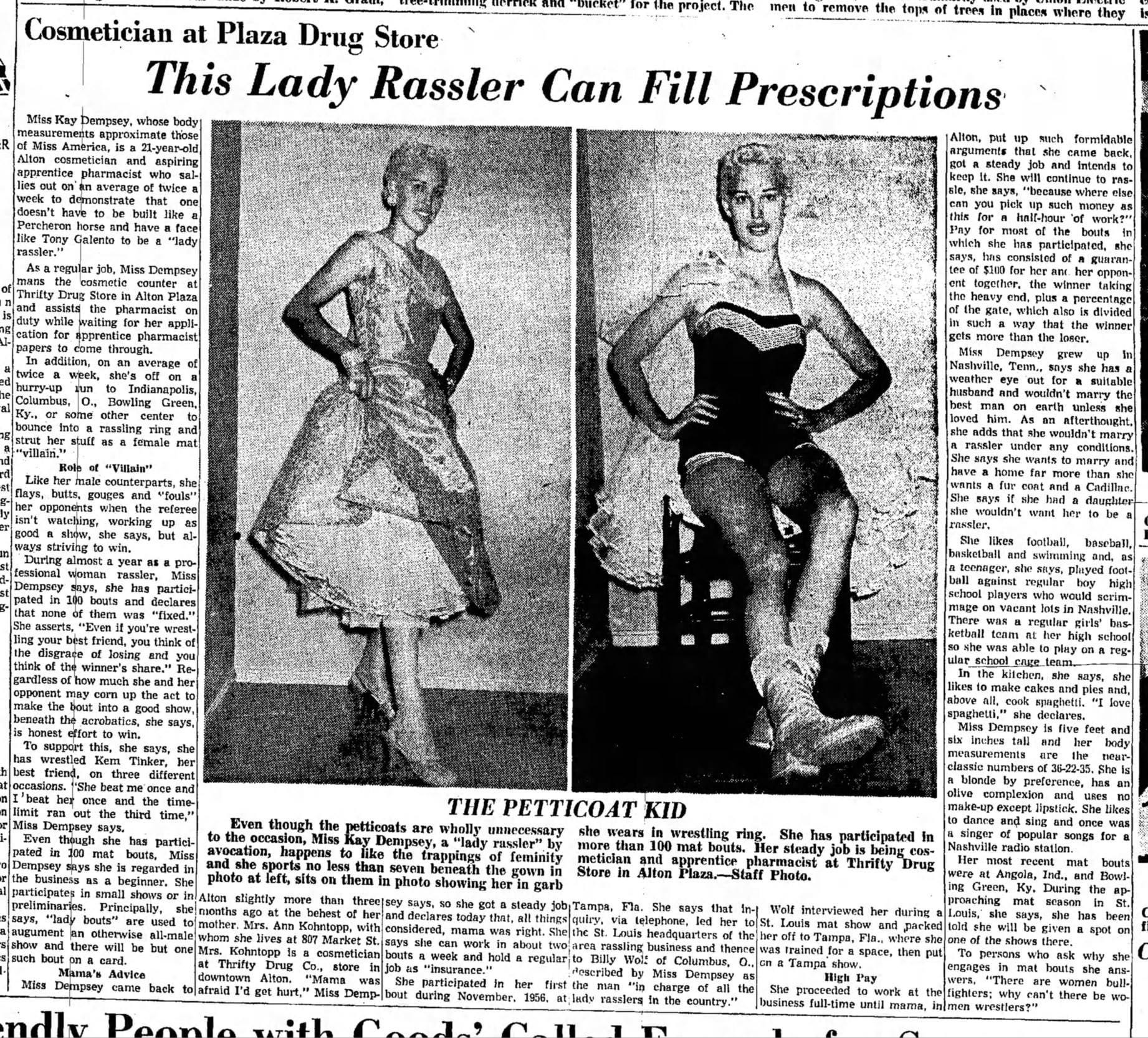
Pictured: September 25th, 1957, Alton Evening Telegraph, Alton, Illinois
A story from before her training already belongs to wrestling folklore. At seventeen, while her father was stationed at Langley Air Force Base in Virginia, she worked the soda fountain at the drugstore where her mother was employed. Wrestling posters went up in the window for cards in nearby Newport News. One night Gorgeous George’s beautician failed to appear. Someone asked the teenager if she could do his hair. She said she did her own, so she supposed she could try. George handed her a fistful of bobby pins when she finished. She was still just a fan. She had no idea yet that she would spend the next three decades inside the same world.
Training, Debut, and the First Years
Shade began training in 1957. Her first match was in Lakeland, Florida, a multi-woman elimination bout or battle royal, depending on the telling. Luttrell used it as a test. When it was over she was struggling to breathe. He asked whether she still wanted to learn. She did. She worked off and on for about three years, then stepped away. The business of the late 1950s and early 1960s was hard on women who did not have a powerful office behind them. She came back in 1968 and stayed until 1989.
That return coincided with the meeting that defined her private life. At a show at Joyland in St. Petersburg she encountered Bill Wenhold, who wrestled as Billy Blue River. In the culture of the territories, workers recognized one another by the way they shook hands: a light touch of the fingers rather than a hard grip. When he realized she was one of them, he asked her on a date and asked her to join his promotion. She accepted both. They married in 1969. They would remain married for fifty-three years, an almost unheard-of span in a trade that wrecked most relationships. They had two sons. In mixed tag matches she sometimes worked as Beverly Blue River, or Beverly Two River, opposite and alongside her husband.
Style, Nickname, and the Turn to Heel
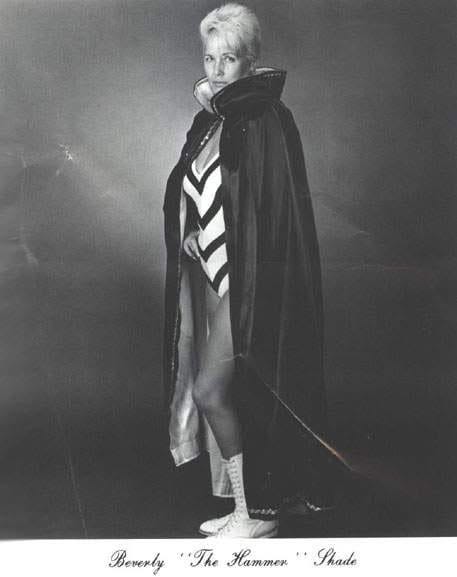
For years she worked as a babyface. The change came in Canada in 1970, on the Ontario tours of Dave “Bearman” McKigney. The woman she was booked against did not show. Shade was put in with McKigney’s daughter, Rachael Dubois, then a long-haired sixteen-year-old. Shade came out as the heel and discovered she loved it. “I guess there is a little ‘bad girl’ in me,” she said later. From that point forward the heat was part of the act.
The nickname arrived with a move. In the early 1980s, teaming with her trainee Tracy Richards as The Arm and Hammer Connection, she began finishing with a double axe handle off the top rope. It was called The Hammer. The name stuck to her. Her other tools were the Indian death lock, short-arm scissors, body scissors, the step-over toe hold, a Russian leg sweep, an armbar, and the full nelson: the vocabulary of a hooker from the territory era, not a flyer and not a pure brawler. She also worked, at various points, as Beverly Bates and Kay Dempsey, but Beverly Shade was the name that lasted.
Opponents she named with particular respect included Judy Martin, Alma Mills, Carmen Monge, Cora Combs, and Mae Weston. The list of women she feuded with over the years also took in Winona Littleheart, Sherri Lee, Peggy Patterson, Barbara Owens, Belle Starr, and Natasha the Hatchet Lady, whom she had trained and later partnered. She even worked a program against Terrible Ted, McKigney’s wrestling bear. The road extracted its price. Carmen Monge once hit her with a wrench; the cut took thirty-six stitches. In Puerto Rico, working for Carlos Colón, she wrecked a knee.
Independence in the Age of Moolah
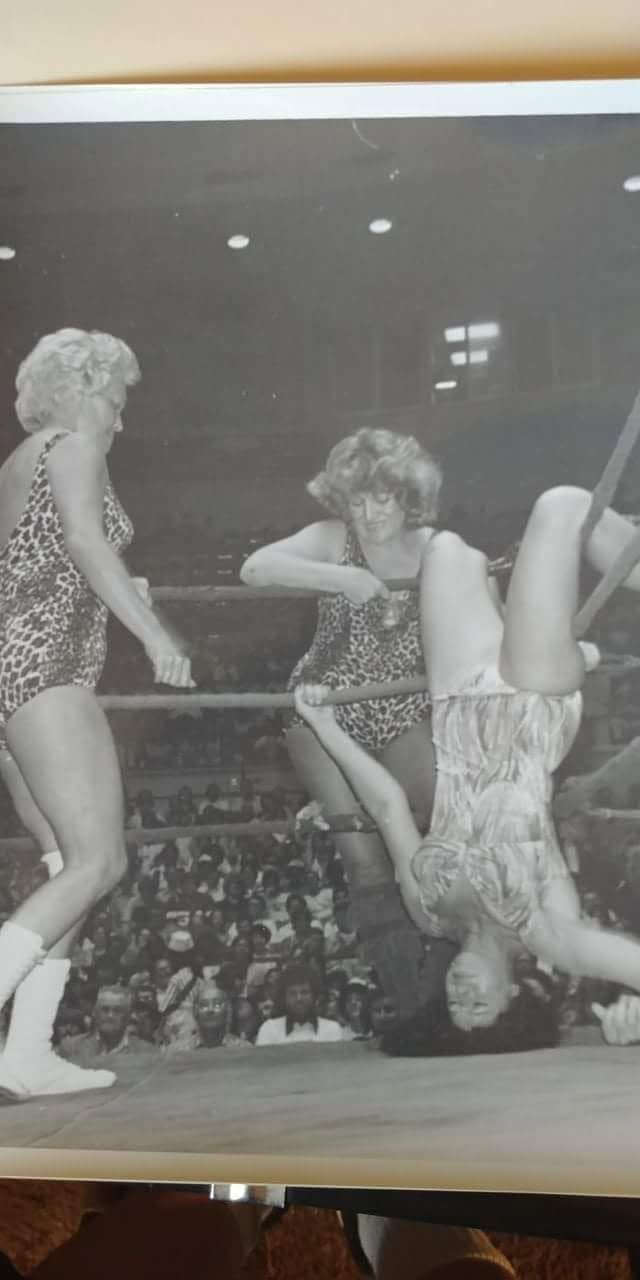
Pictured: Beverly Shade and Natasha have Ann Casey hung up in the corner
The central fact of mid-century American women’s wrestling is that The Fabulous Moolah controlled most of the bookings, the trainees, and a large share of the money. Shade was not trained by Moolah and, by her own account, never worked for her. She spent the bulk of her career in Southern promotions associated with Nick Gulas and in Florida, including the outlaw cards she and Billy ran against Eddie Graham’s NWA office. That independence is why later historians treat her as a pioneer even though she never held the NWA World Women’s Championship.
Independence did not mean isolation. Promoters still trusted her to work with Moolah’s crew. She toured Japan with Moolah in 1979. In 1980 she worked the Northeast for the World Wide Wrestling Federation and appeared on the undercard of Showdown at Shea on August 9, 1980, at Shea Stadium, teaming with Moolah against Kandi Malloy and Peggy Lee on a card headlined by Bruno Sammartino and Larry Zbyszko in a steel cage. She later said she liked Moolah’s girls and thought Moolah had done a great deal for the visibility of women’s wrestling, even if the independent women never received the same exposure.
Late in life, when accusations against Moolah of financial exploitation and worse became public, Shade rejected them in blunt language. She compared Moolah’s cut of the bookings to an agent’s percentage, said she herself had chosen which dates to take, and insisted she had never heard of the more lurid claims from anyone she trusted. Whether one accepts that defense or not, it is consistent with the way Shade always talked about the business: as a trade in which adults made their own bargains, and in which the 1950s and 1960s under men like Gulas had been, if anything, a harder school.
Championships, Partnerships, and the Road Abroad
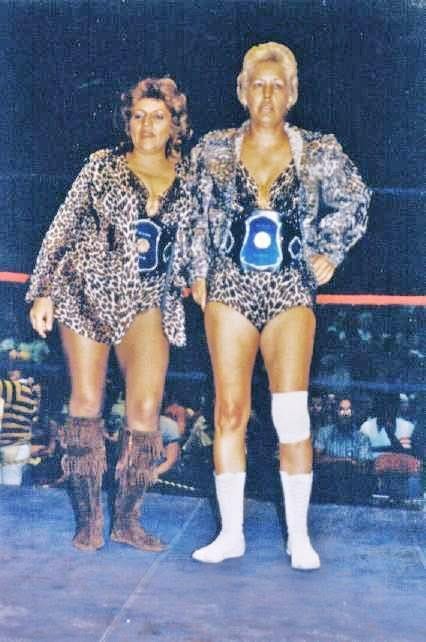
Pictured: Beverly Shade and Natasha, NWA Women’s Tag Team Champions in 1979
Her title record is modest by the standards of a national champion and substantial by the standards of a working independent. She won the All-Star Wrestling Women’s Championship in 1968 from Ann Quimby and again in 1985 from Despina Montagas, and she is credited with the Florida Women’s Championship twice. In 1978 she and Natasha the Hatchet Lady captured the NWA Women’s Tag Team Championship. Shade had trained Natasha in 1969 with Billy; they wrestled against each other for years before they became partners. They defended the belts in Memphis in 1979 against Sherri Lee and Ann Casey. In 1986 Shade and Tracy Richards won the IWA World Women’s Tag Team Championship from Judy Martin and Winona Littleheart. Some accounts also credit a WWWF women’s tag title recognized in Tennessee in 1978.
The road took her well beyond the American South. She worked Canada, Thailand, Trinidad, Japan, Puerto Rico, and Nigeria, where she finished third in what was billed as the largest women’s tournament ever held in Lagos. The Ontario summers of 1970 through 1972, on McKigney’s circuit, remained among her favorite memories. Decades later she would travel from Mississippi to Toronto for Titans in Toronto dinners simply because those tours had meant that much.
She also stepped in front of film cameras. She appeared in Fireball Jungle, with Lon Chaney Jr. and John Russell, and in the 1978 exploitation picture Mr. No Legs, with John Agar and Richard Jaeckel. A 1980 appearance on WWWF Championship Wrestling is her principal television credit as herself.
Promoter and Trainer
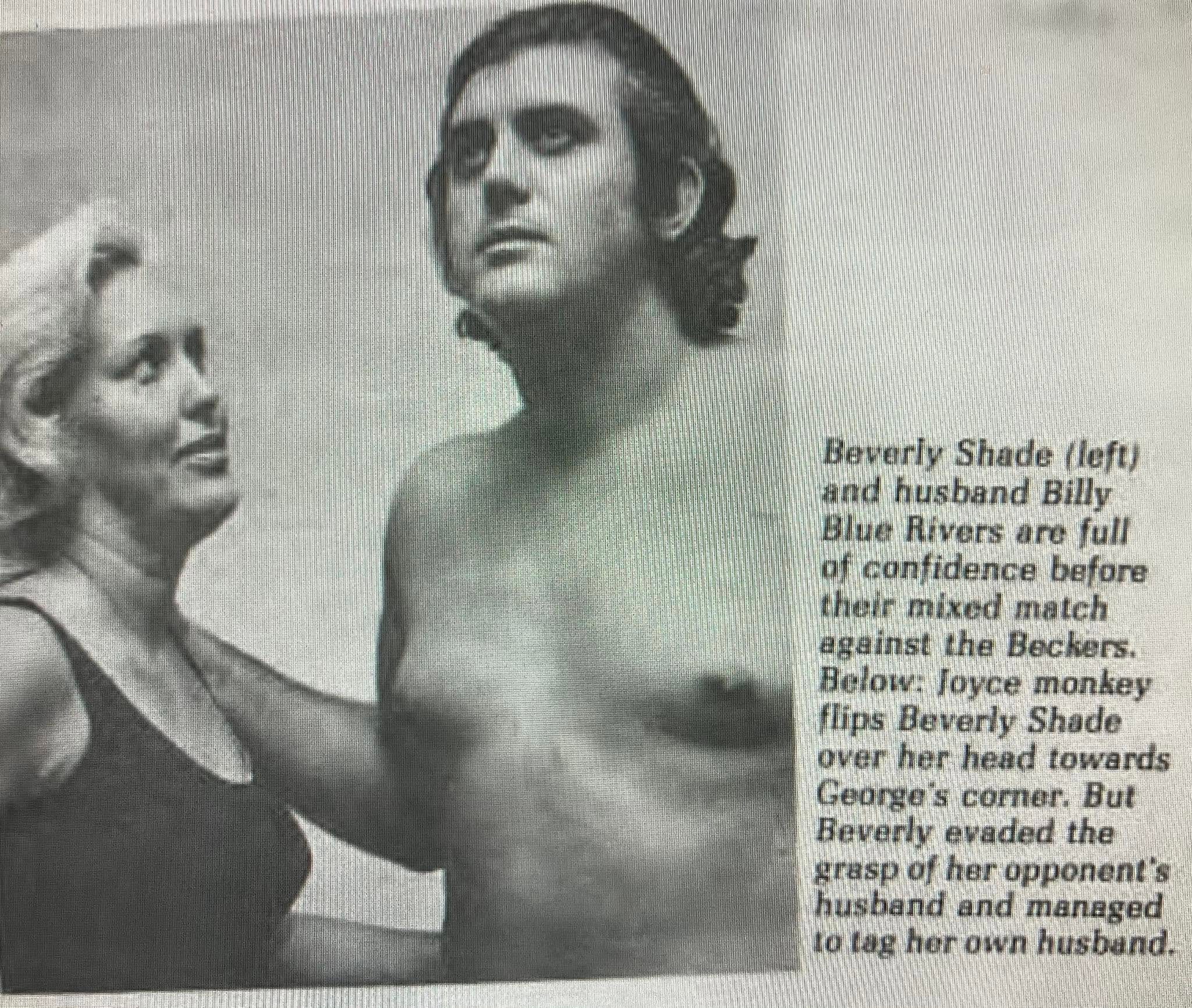
Wrestling marriages often collapse under the travel. Shade and Billy Blue Rivers did the opposite: they turned the road into a joint enterprise. They promoted for sixteen years in Florida, Georgia, and the Caribbean. In Florida they ran as an outlaw group against Eddie Graham’s established office. Billy’s later account of that war is one of the more vivid pieces of Florida wrestling oral history. Their Joyland cards drew well enough that Graham’s wrestlers tried to break them up; Shade had security remove them. After she booked Ella Waldek and Ray Villmer, crowds spilled onto U.S. 19 and the sheriff had to intervene. Graham, according to the couple, threatened Billy’s life and then Billy’s mother’s house. Billy said he was taken by Graham, Hiro Matsuda, and Duke Keomuka until the couple agreed to stop. They did not stop. Shade taught her father to build rings and expanded the operation to fourteen Florida towns. The threats, Billy said, ended only after Graham’s death in 1985.
When she tired of wrestling full time, Billy suggested she promote all-women’s cards. She assembled a roster and taped more than twenty matches. The television backer walked away, so the tapes never aired, but the talent list tells the story of her standing: Moolah, Candi Devine, Misty Blue and her New York girls, Robin Lane, Malia Hosaka, Princess Jasmine, Winona Littleheart. One of the last big shows was billed as LAW, Ladies All-Star Wrestling, in Tampa, with Moolah, then the WWF Women’s Champion, against Misty Blue, then the NWA Women’s Champion. ABC filmed it. Buddy Colt announced. The building was full. Shade was fifty-two. That night effectively closed their run as promoters.
As a trainer she left a clear line. Natasha the Hatchet Lady credited Shade with bringing her into the business after she moved to Florida in the late 1960s. Tracy Richards became her partner in The Arm and Hammer Connection. When friends from that generation died—Richards, Natasha, Princess Jasmine—Shade spoke of them with the loyalty of someone who had both made them and worked against them.
Later Years, Honors, and Death
She retired from the ring in 1989. The couple settled in Southaven, Mississippi. Billy took work in quality assurance in the aluminum industry; she trained as a customer service technician. In January 2007 she suffered a stroke that affected her speech and the right side of her body. Within a day her blood pressure had come down, her arm and leg had returned, and she was well enough to give her husband grief for telling the world she was in the hospital. A prior stroke was discovered in testing. She recovered enough to keep attending the conventions that had become her second ring.
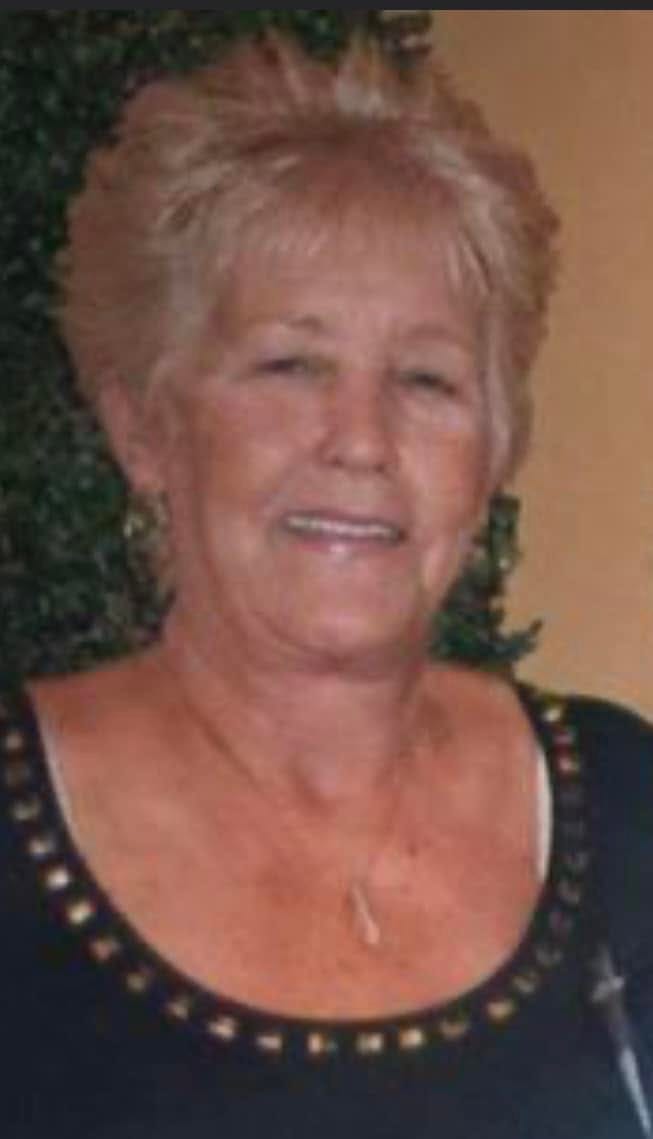
The Cauliflower Alley Club named her an honoree in 2000. In 2019 she was inducted into the Professional Wrestling Hall of Fame in Wichita Falls, Texas, in the Ladies Division, in a class that also included Ann LaVerne. Billy wrote the tribute that accompanied the induction. In 2023 she entered the inaugural class of the Women’s Wrestling Hall of Fame in the Early TV Era. Local coverage in Mississippi noted that she was the first woman recognized by that hall in four roles at once: singles wrestler, tag team wrestler, promoter, and trainer. She was already too ill to travel. On April 24, 2023, Lori McGee Hurst brought the plaque to her hospital bed.
By then she was dying of lung cancer, complicated by pneumonia, blood clots, and fluid in the lungs. She had been a heavy smoker for years; friends described her voice as honey coarsened by smoke, and at Cauliflower Alley Club reunions in Las Vegas she could usually be found at a slot machine with a cigarette. Chemotherapy and radiation were no longer possible. She was moved to hospice. On the evening of June 2, 2023, at 8:30, Billy sent a short message: his Beverly had died. She was eighty-seven. She was survived by her husband, their two sons, including Ricky, and their families. Billy Blue Rivers died the following year, on May 15, 2024, at seventy-nine.
In 2021, already in her mid-eighties, she had told an interviewer that the body had changed but not the mind or the attitude. She still loved the business and the fans. At the conventions she felt thirty-five. If she had it to do over, she said, she would not change a thing.
What Her Career Means
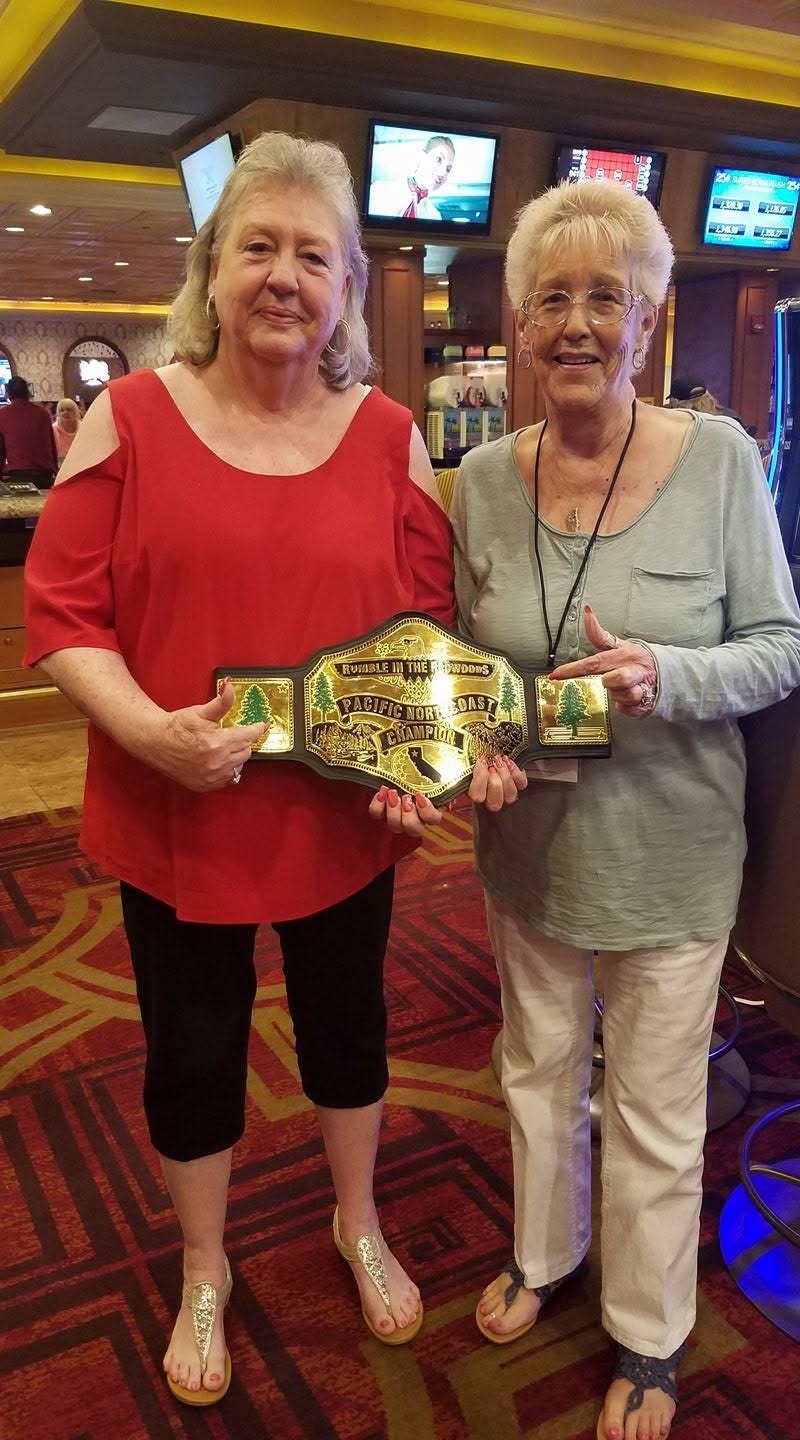
Pictured: Judy Martin and Beverly Shade
Women’s professional wrestling in the United States between the 1950s and the 1980s is often told as a story with two poles: the early champions around Mildred Burke and Billy Wolfe, and then the long Moolah era that fed into the WWF. Shade occupies the less tidy space between and beside those poles. She was formed by the Southern and Florida territories, not by Columbia, South Carolina. She made a living without surrendering her bookings. She trained women who then became her opponents and her partners. She and her husband ran shows in defiance of an NWA office and paid for it. She worked Shea Stadium with Moolah and Lagos and Ontario and Memphis with Natasha. She lasted long enough to be thanked.
The titles matter. The independence matters more. In an industry that preferred its women either glamorous under contract or invisible, Beverly Shade remained a working wrestler, a trainer, a promoter, and, for more than half a century, a wife in the same brutal trade. That combination is rarer than any belt she ever carried. The Hammer was a top-rope axe handle. The life underneath it was a long insistence on doing the work on her own terms.
One Thing I Learned About Gerry Brisco
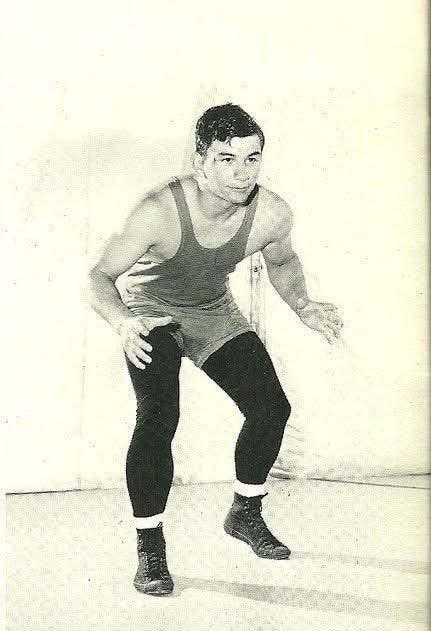
In his first professional match, Gerry Brisco gave Wally von Stroheim a cauliflower ear.
It was spring break 1968 in Missouri. Jack’s tag partner was hurt, so they threw the Oklahoma State freshman in with no real pro training. He still had to work a singles match that night as well. Von Stroheim spent years afterward telling anyone who would listen that the kid from Blackwell mashed his ear in that debut.
That is a long way from Vince’s stooge. The same guy later refused feathers and face paint when Florida started billing the Briscos as proud Native Americans. The family came off Chickasaw allotment land in Bowlegs, Oklahoma, after the Trail of Tears, and Gerry treated that as something you did not costume.
Happy 80th birthday today, Mr. Gerry Brisco!
Thank You for Watching and Listening
I’m Tony Richards, Pro Wrestling Historian, Author and Storyteller. I share pro wrestling historical items in each issue of the Time Tunnel Pro Wrestling History Newsletter and each episode of our podcast show. Thanks for your support! If you enjoy my information on select events, matches and insights, please share with folks you think might like to be a subscriber!
Remember, Premium subscribers get access to exclusive and special content such as some special issues including a multi-part deep dives on wrestling territories, wrestler bios and championship title histories, special audio and video interviews on territory pro wrestling and more available in the Pro Wrestling Time Tunnel for Premium Subscribers. Being a Premium Subscriber also means you support me in my efforts to document Pro Wrestling History through my research, writing, books, vidoes and podcasts. And…I have something very special planned for our Premium Subscribers on the Podcast side of things in 2026! Details soon here in the Pro Wrestling Time Tunnel.
In 1983, I had the pleasure of watching her and Natasha wrestle at my high school in north central Florida. In between matches, one of the wrestlers—a Chuck Norris knockoff named Ted Norris—scolded my buddies and me for harassing them outside the locker room!