


Today’s Favorite Quote: Where there is no struggle, there is no strength - Oprah Winfrey
Happy Birthday to those who have passed on and to those great wrestlers still with us:
In Memoriam:
Billy Robinson 1938
Otis Sistrunk 1946
Juan Banos\Lizmark 1949
Happy Birthday:
Gemaro Vazquez\The Blue Panther (66)
RIP Memorial: We stop & remember those who have passed on this day and gave themselves to the business for us, the fans. We salute you and thank you.
Ed Don George 9-18-1985 at the age of 80
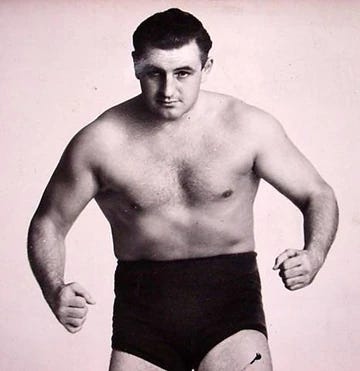
Lester Welch 9-18-2009 at the age of 85
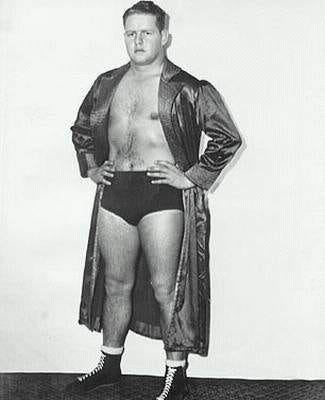
Don Hatfield\Don Fields 9-18-2012 at the age of 80
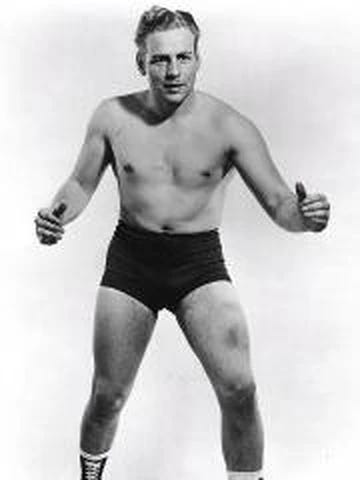
The Life and Career of Wild Bill Irwin
Barney William Irwin, known to wrestling fans as “Wild” Bill Irwin and, later, as The Goon, was born on September 17, 1954. Sources disagree on whether he was born in Duluth, Minnesota, or Pecos, Texas; what is not in dispute is that Duluth shaped him and Pecos became the billed hometown of the cowboy heel he would play for most of his career. His older brother, Scott Keegan Irwin, was born in Duluth in 1952. The two men would spend the better part of a decade as one another’s principal partners, first under masks and then as a pair of leather-clad outlaws called the Long Riders.
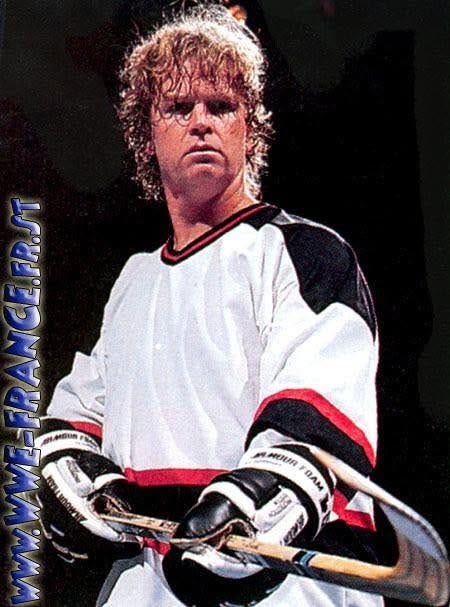
Irwin grew up in the Minnesota hockey culture that later supplied the joke at the heart of his most famous national gimmick. He played as a high-school enforcer, the kind of player whose job was to fight, protect teammates, and get thrown out of games. He later said he lasted about two and a half years of college hockey before walking off the ice for good. Scott, already in the business and traveling with men such as Ric Flair and Blackjack Mulligan, told him to get out of Duluth. Bill listened. He has said that the only wrestling card he remembered from childhood in Duluth featured a performer with a bullwhip; that image stuck. When he later needed a character, the whip and the outlaw pose were already waiting.
Accounts of his training vary. Scott is the name that appears most consistently. Verne Gagne is often listed as well, though Irwin has said Gagne was not part of his official schooling. Larry Sharpe also appears in some records. His professional debut is usually placed in 1977, with some sources citing a first match around September 16, the day before his birthday, in Lynchburg, Virginia. By 1978 and 1979 he was working Georgia Championship Wrestling and the National Wrestling Alliance’s Central States territory as a young roughneck whose job, more often than not, was to make established heels look dangerous. He lost to Abdullah the Butcher, Stan Hansen, Ernie Ladd, Ivan Koloff, Ole Anderson, and Ric Flair, the unpaid tuition of the territory system.
The first title of consequence came on May 17, 1979, when he and Bryan St. John defeated Hartford Love and Jerry Brown for the NWA Central States Tag Team Championship. In 1980 he moved through the Continental Wrestling Association in Memphis, winning the AWA Southern Heavyweight Championship in a tournament final over Jimmy Valiant on August 11 and the AWA Southern Tag Team titles with Larry Latham on October 27. Those early belts mattered less as destinations than as proof that he could work a main-event style: stiff enough to be believed, flexible enough to carry a program.
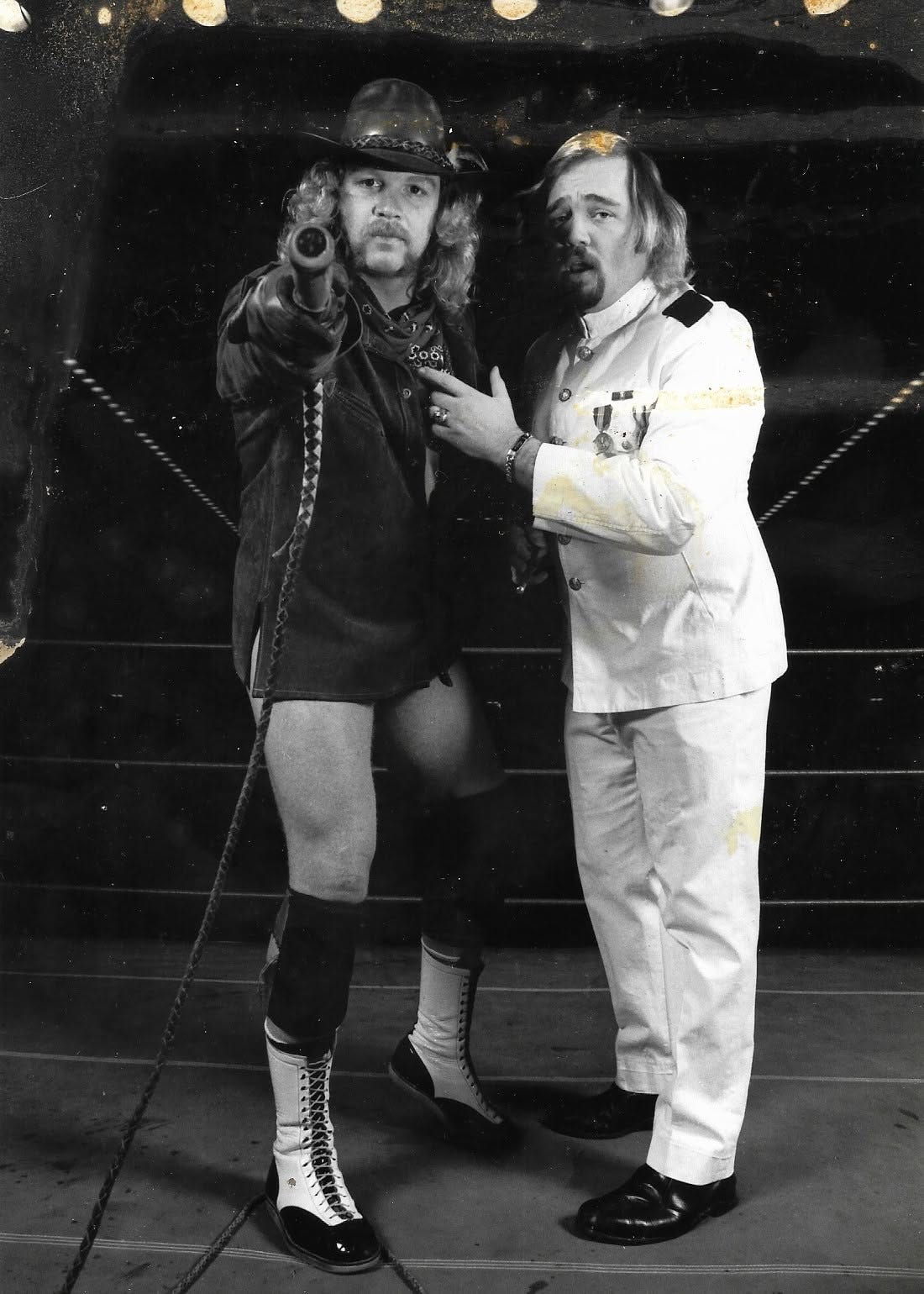
Pictured: Wild Bill Irwin and Frank Dusek in World Class in Dallas, Texas 1981
The character that would define him took shape in Texas. In 1981 he arrived in World Class Championship Wrestling after a stretch in Calgary, booked through Gary Hart after Scott arranged the introduction. The Dallas Sportatorium, a squat, sweating barn downtown, became his most important building. As “Wild” Bill Irwin he was a cowboy heel from Pecos: boots, aggression, a bullwhip, the look of a man who would rather start a fight than finish a handshake. At the end of 1981, he and Frank Dusek were the first NWA World Class Tag Team Champions.
In August 1982 he defeated Al Madril for the NWA Texas Heavyweight Championship. He also collected the WCCW Television Championship in several reigns, including wins over The Spoiler, Brian Adias, and Bugsy McGraw. Tag gold followed in bunches. He held the Texas version of the NWA World Tag Team Championship with Frank Dusek and later with McGraw, and he won the NWA American Tag Team Championship with King Kong Bundy on September 12, 1982, beating Kerry and Kevin Von Erich. After a falling-out with McGraw he kept working the same circuits, the same buildings, the same family of opponents.
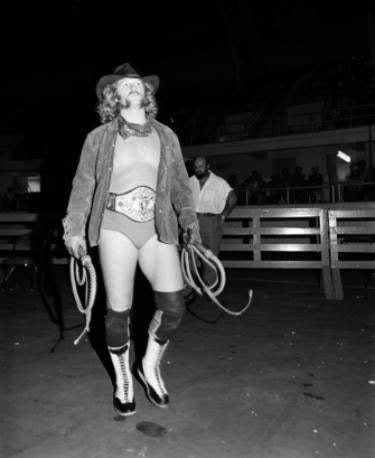
Pictured: Wild Bill Irwin, NWA Texas Heavyweight Champion
The most important partnership of his life was with Scott. Under masks they were the Super Destroyers, managed by Skandor Akbar, a pair of large, anonymous destroyers who fit the Texas heel tradition of Devastation Inc. Unmasked they became the Long Riders, cowboy brothers who could work Texas, Georgia, the American Wrestling Association, Montreal, and Japan in the same stretch of weeks. Together they won the American Tag Team titles multiple times in World Class, the NWA National Tag Team Championship in Georgia Championship Wrestling on November 18, 1984, and the Canadian International Tag Team Championship in Montreal on March 6, 1986. In the AWA they challenged teams such as Curt Hennig and Scott Hall. They were not the Road Warriors, and they were not booked as if they were. They were a traveling pair of big men who understood heat, timing, and how to make a building dislike them on purpose.
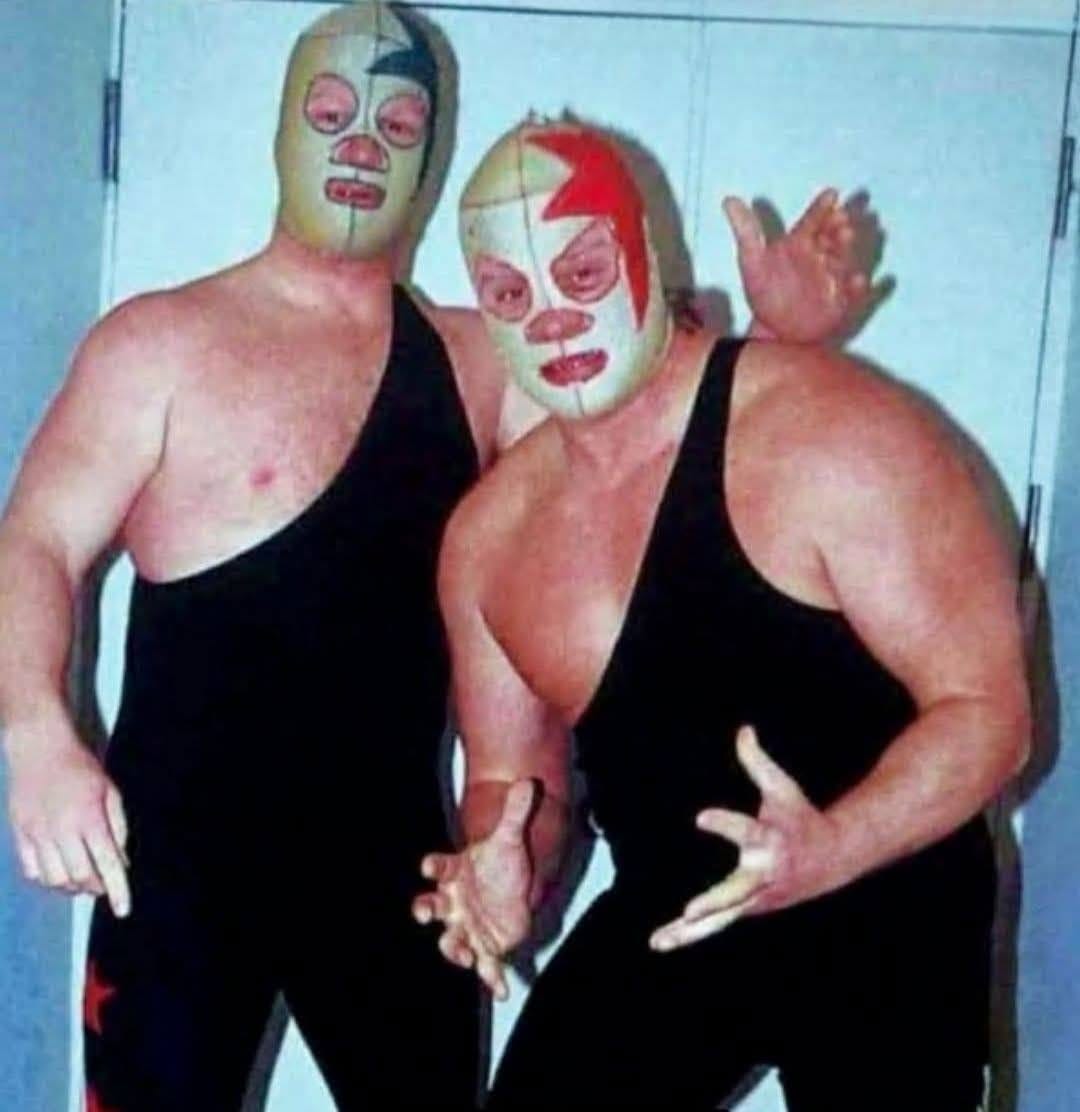
Pictured: The Super Destroyers
World Class in those years was both the best and the worst place a mid-card heel could work. The Von Erichs were local saints. The Sportatorium crowd was loud, partisan, and close enough to the ring to make every insult personal. Irwin has spoken well of Fritz Von Erich’s treatment of him and of the strange electricity of that building. He also became a witness to the family’s first public catastrophe of the 1980s. In February 1984 he was on an All Japan Pro Wrestling tour with David Von Erich. By his own later account, the Americans drank on the plane, drank after landing, ate at a steakhouse, drank at the hotel, and kept eating. Irwin went up to David’s room, sat with him, and left him on the edge of the bed saying he was going to call his wife.
The next afternoon David did not appear for the bus. Irwin followed Bruiser Brody and referee Joe Higuchi to the room. David was lying where Irwin had left him, blue. Paramedics worked on him. Food came from his mouth when they moved him. Officially the cause of death was acute enteritis and a ruptured intestine. Other stories have circulated for forty years: overdose, pills flushed by Brody, a heart attack. Irwin has said he believed David had been purging food and choked. He has also said he was the last man to see David alive. Whatever the precise medical truth, the death sat at the center of World Class’s legend, and Irwin was inside the room when the legend turned from rumor into a body.
Scott’s death was slower and, for Bill, closer. While the brothers were working Montreal, Scott thought he had a pinched nerve. It was a brain tumor, described by Bill as spreading through the brain rather than sitting as a single mass. Doctors gave him about a year and a half. He died on September 5, 1987, at thirty-five. Some later write-ups call it an aneurysm; the consistent medical account is a brain tumor. The Long Riders ended with him. Bill has said he still talks to Scott. He went back to World Class and stayed until the promotion collapsed in 1989, then worked Dallas independents and briefly ran a wrestling school while appearing for Wild West Wrestling.
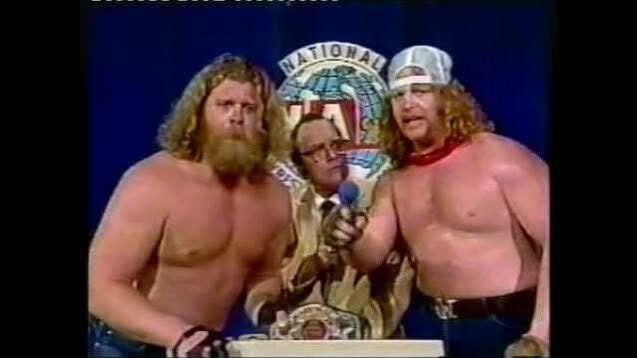
Pictured: The Long Riders, Scott and Bill Irwin
He was never unemployed for long because the territories still needed men who could lose correctly and win when asked. In World Championship Wrestling from 1989 into early 1991 he was a reliable television and house-show opponent: Dick Murdoch, Brian Pillman, Ricky Steamboat, Scott Hall, Steve Williams, Sting, Ric Flair, Tommy Rich, Terry Taylor, Junkyard Dog. He challenged Sting for the television title at Clash of the Champions VII and Flair for the world title on WCW Worldwide. He also worked house shows under a mask as the Black Scorpion during that character’s early, scattered phase.
On February 21, 1993, he lost to Davey Boy Smith in Smith’s WCW debut at SuperBrawl III. Between those WCW runs he teamed with Black Bart in the Global Wrestling Federation, winning the GWF Tag Team Championship on December 27, 1991, and later the GWF Brass Knuckles Championship from Bart himself on March 27, 1992. He worked Japan again, including All Japan, where he and Terry Gordy received a Fighting Spirit Award in the 1989 World’s Strongest Tag Determination League. On independents in Dallas he collected heavyweight, tag, and brass-knuckles titles for Big D Wrestling.
The national footnote that casual fans remember arrived in 1996. Irwin called Bruce Prichard with a pitch: wrestling had used football players, strongmen, and every other athletic type; why not a hockey player? He suggested cutting the blade off a skate and having a cobbler stack tapered foam so the boot would still look like a skate. Prichard took it to Vince McMahon. McMahon liked it and named the character The Goon. Irwin agreed. Billed from Duluth or from “the penalty box,” The Goon was an enforcer banned from the NHL and every league in between, now free to fight because fighting was legal.
He debuted on the July 20, 1996 episode of WWF Superstars, beat enhancement talent, and then spent the rest of the run putting over Marc Mero, Flash Funk, Barry Windham, Jake Roberts, and, finally, The Undertaker. He wrestled a handful of matches, won two, and was gone by early 1997. Irwin later said he thought more could have been done with the idea and wondered whether the booker at the time simply did not like him or the gimmick. The Goon became, unfairly, the thing many younger fans knew him as: one of the mid-nineties “jobbers with gimmicks,” filed beside T.L. Hopper and Salvatore Sincere. He came back as The Goon for the gimmick battle royal at WrestleMania X-Seven in 2001 and again for the Raw fifteenth-anniversary battle royal on December 10, 2007, where Repo Man threw him out.
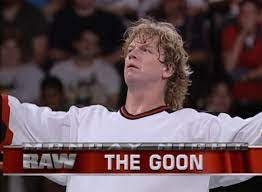
That is a distortion of the career, not a summary of it. For most of two decades Irwin was a territory professional in the strict sense. He could work a television title match in Dallas on Friday, a tag program in Georgia the next week, and a house show in Montreal after that. His style was the style of his generation’s mid-card: lariat, superplex, bicycle kick, bearhug, brawling that looked like it hurt because sometimes it did. He was never a drawing card on his own and never pretended to be. The men who kept the territories alive were the ones who could make the local hero look like a hero and the visiting champion look like a champion. Irwin did that in Georgia, Kansas City, Memphis, Dallas, the AWA, the UWF—where he and Leroy Brown won the World Tag Team Championship from Jack Victory and John Tatum on November 9, 1986—and in the dying years of the NWA’s old map.
After the WWF run he stayed on independents, appeared in stray WWF dark matches in 1998, and officially wound down a career that databases date from the late 1970s to 2014. He lived for years in Sanger, Texas, then returned to the Duluth area. He has been described as married to Clairene L. Irwin. Public records and biographical notes mention children; one older profile said seven. In later years he was reported to have run a wrestling school, worked as a loan officer, and driven a school bus for the Duluth East High School hockey team, a quiet circling back to the sport that had first taught him how to be a goon.
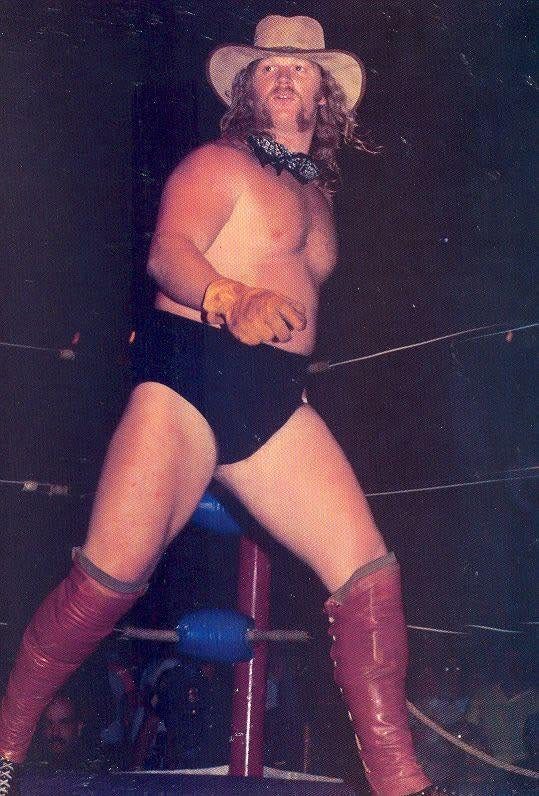
He is easy to undersell if the only tape one has is a 1996 squash. He is harder to dismiss if the tape is World Class in 1982 or 1983, when Wild Bill Irwin was a problem the Von Erichs had to solve in front of people who believed the problem was real. He was the last person to sit with David Von Erich. He was the surviving half of a brother tag team that ended in a hospital rather than a blowoff.
He lasted long enough to see the territory world disappear and to watch his own most famous costume become a trivia answer. The career underneath the costume was longer, tougher, and more representative of how American wrestling actually worked before it became a single television product: a man from the Upper Midwest, billed from West Texas, driving from town to town with his brother or without him, winning belts that mattered only in the city where they were defended, and doing the job when the job was the job.
One Thing I Learned About Ed Don George
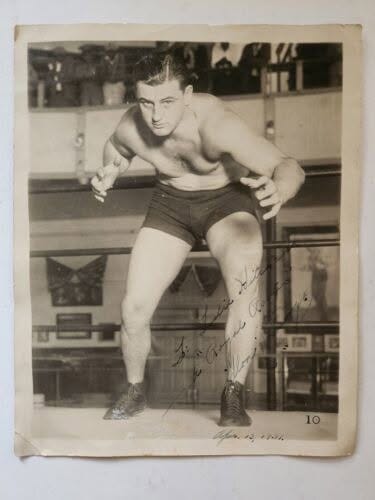
He was Edward Nicholas (or Nye) George Jr., a North Java farm kid who left Firestone Tire’s executive-training track after a chance stop at a carnival in Batavia, New York. A promoter there needed a name for the placards, forgot the first name, and borrowed “Don George” from a musician working the coast. After the bout they spliced the two together and kept it. Lou Daro later leaned into the extra syllable because it had flash.
He even ran for Erie County sheriff on the ballot as Ed Don George — not Edward George — because that was the name Buffalo already knew.
Thank You for Watching and Listening
I’m Tony Richards, Pro Wrestling Historian, Author and Storyteller. I share pro wrestling historical items in each issue of the Time Tunnel Pro Wrestling History Newsletter and each episode of our podcast show. Thanks for your support! If you enjoy my information on select events, matches and insights, please share with folks you think might like to be a subscriber!
Remember, Premium subscribers get access to exclusive and special content such as some special issues including a multi-part deep dives on wrestling territories, wrestler bios and championship title histories, special audio and video interviews on territory pro wrestling and more available in the Pro Wrestling Time Tunnel for Premium Subscribers. Being a Premium Subscriber also means you support me in my efforts to document Pro Wrestling History through my research, writing, books, vidoes and podcasts. And…I have something very special planned for our Premium Subscribers on the Podcast side of things in 2026! Details soon here in the Pro Wrestling Time Tunnel.