


Today’s Favorite Quote: We often discover what will do by finding out what will not do & probably those who never made a mistake also never made a discovery - Samuel Smiles
Happy Birthday to those who have passed on and to those great wrestlers still with us:
In Memoriam
(None)
Happy Birthday:
Saraoshi Kojima (56)
Penelope Ford (34)
RIP Memorial: We stop & remember those who have passed on this day and gave themselves to the business for us, the fans. We salute you and thank you.
Rowdy Red Roberts 9-14-1987 at the age of 74
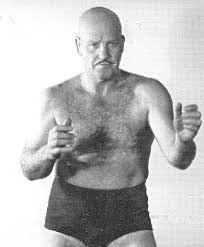
Otto Wanz 9-14-2017 at the age of 74
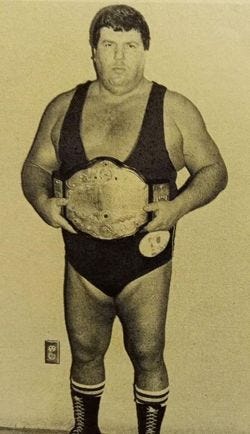
Ethel Wingo\Ethel Johnson 9-14-2018 at the age of 83
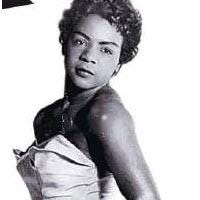
Natasha Rahme\Natasha 9-14-2021 at the age of 78
7 Stages of the Territory Era
Stage 5: Consolidation
Year Two Month 9
September 1966
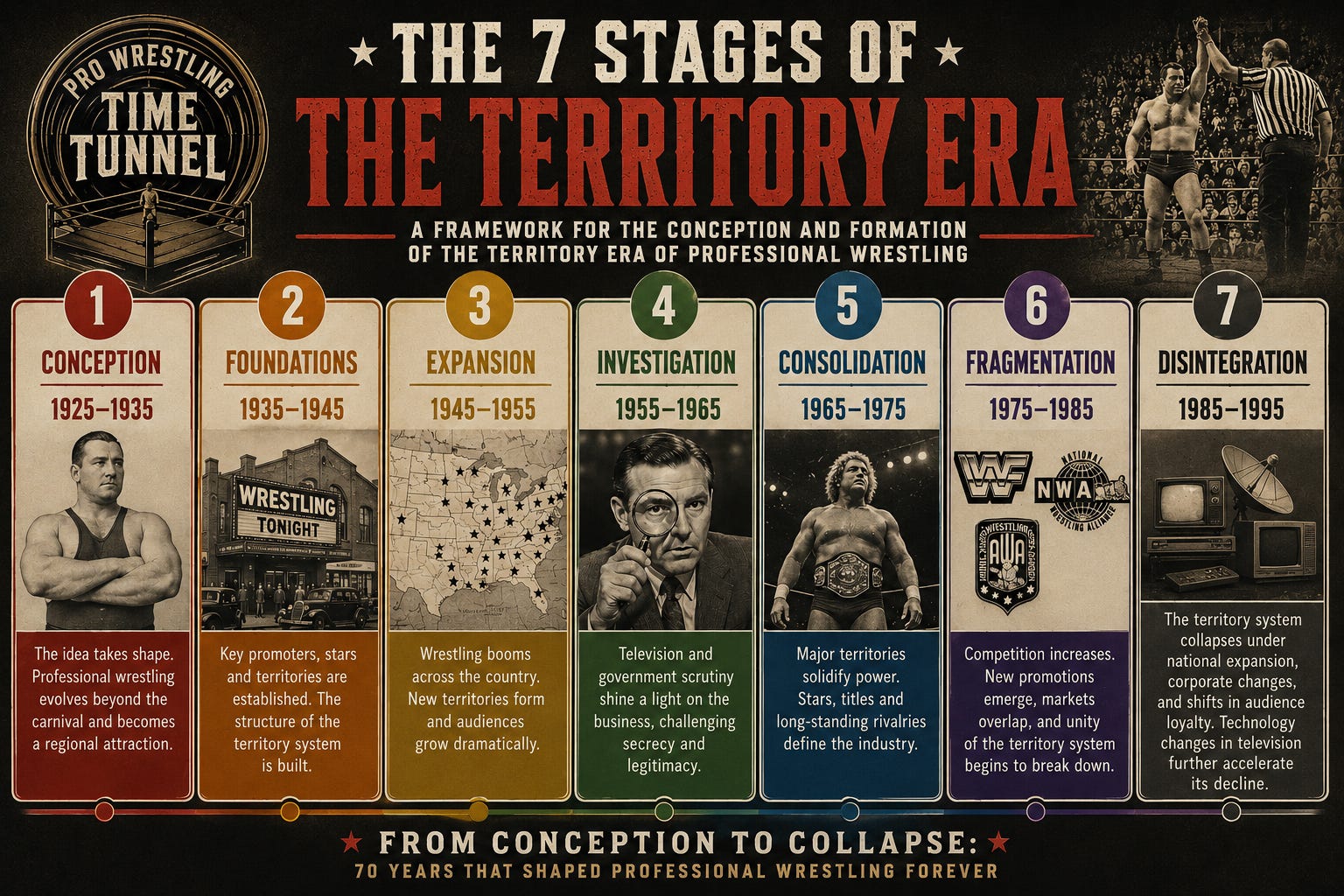
September 1966 did not invent the territorial system, it advanced it. It showed that system working the way the Consolidation stage was designed to work: a traveling world champion stitching markets together, regional offices protecting their towns, talent moving on loan rather than by invasion, and local television turning midweek studios into Saturday-night box office. After the Investigations of the previous decade — federal scrutiny, fractured recognitions, and the first serious world-title schisms — the business spent 1965–1975 putting the map back in order. This month is a clean X-ray of that order, and of the quiet fractures already forming inside it.
The calendar was dense. On any given Friday or Saturday night in September, a fan in Greensboro, St. Louis, Mexico City, Tokyo, Sydney, Toronto, Omaha, Los Angeles, or Dallas could walk into an arena and see a main event that felt like the center of the wrestling universe. That was the point of Consolidation. The universe had many centers. The Alliance, and the offices that lived beside it, existed to keep those centers from colliding.
The Architecture of Consolidation
By September 1966 the National Wrestling Alliance still functioned as the coordinating body for most of North America. Gene Kiniski, who had taken the NWA World Heavyweight Championship from Lou Thesz in St. Louis on January 7, was eight months into a reign built on mileage. The champion’s job in this stage was not merely to defend a belt. It was to ratify each territory’s local hero, collect a guarantee, leave the local champion looking strong enough to draw the next house, and move on.
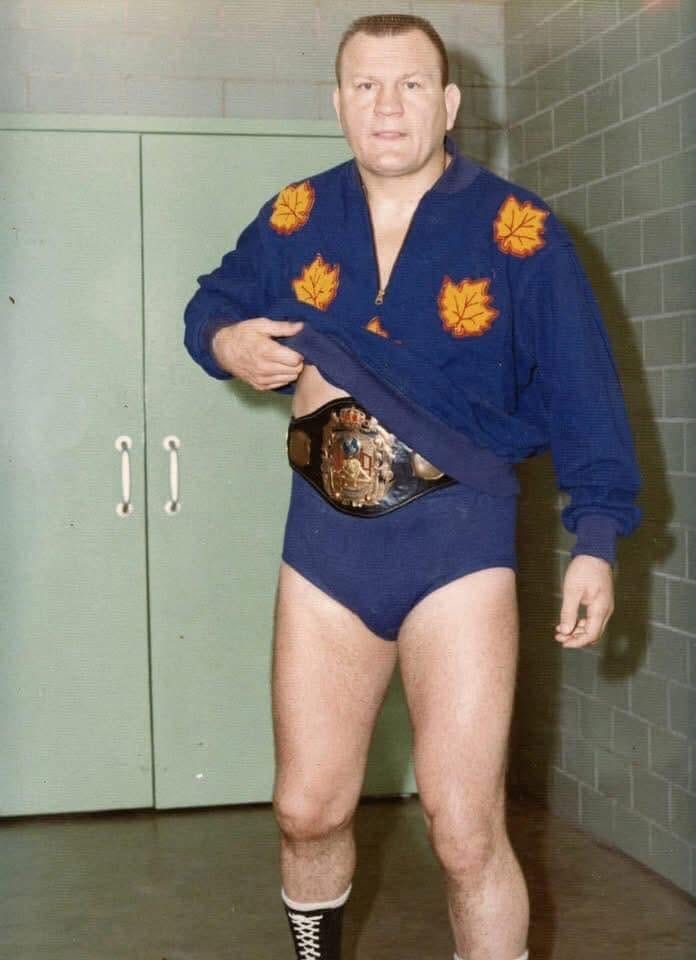
That circuit in September ran like a timetable. Kiniski beat Thesz two falls to one on September 1 at the Greensboro Coliseum in front of 4,408, a Crockett Promotions house that treated the former champion as a measuring stick rather than a nostalgia act. He worked Richmond and Spartanburg in the days that followed, then dropped into Nick Gulas and Roy Welch’s Tennessee loop: Al Costello in Memphis on the 5th, Ron Etchison in Chattanooga on the 8th, Jackie Fargo by disqualification in Nashville on the 14th before 5,022, Luke Graham the next night back in Chattanooga.
On September 16 he headlined Sam Muchnick’s Kiel Auditorium in St. Louis against Dory Funk Jr. and stopped the young Amarillo babyface in two falls before 10,995. The next night in Seattle he wrestled Thesz to a sixty-minute scoreless draw. Two days later in Vancouver he went to a time-limit draw with Don Leo Jonathan. Then he turned south again: Thesz in Jacksonville, Lester Welch in Fort Lauderdale, Thesz in Puerto Rico, Eddie Graham in Orlando with Jersey Joe Walcott as special referee, Hiro Matsuda in Tampa, Sam Steamboat in Eau Gallie, Jose Lothario in Jacksonville.
That itinerary is Stage 5: Consolidation in motion. The Carolinas, Tennessee, Missouri, the Pacific Northwest, British Columbia, Florida, and the Caribbean all received the same traveling prize. Each office kept its own television, its own midcard, and its own secondary titles. The world champion was the shared asset. The local booker decided how the asset would be used and against whom.
The system’s other pillars were equally visible. Verne Gagne’s American Wrestling Association remained the great Midwestern exception, a world title office that had walked away from the NWA in 1960 and now treated Minneapolis, Chicago, Omaha, Milwaukee, Denver, and Winnipeg as a private circuit. Vince McMahon Sr. and Toots Mondt’s World Wide Wrestling Federation, having split in 1963 over the Buddy Rogers–Lou Thesz dispute, ran the Northeast as a closed shop with Bruno Sammartino as its immovable champion. Mike LeBell’s Worldwide Wrestling Associates in Los Angeles still billed its own world title. Empresa Mexicana de Lucha Libre in Mexico City and the Japan Wrestling Association in Tokyo operated as sovereign cultures that borrowed North American names when it suited them. Consolidation did not mean monopoly. It meant negotiated coexistence.
The Traveling Champion and the Local King
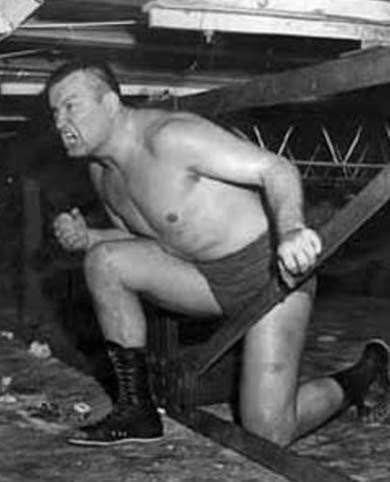
Kiniski’s September opponents tell the story of how a Consolidation-era world title was supposed to function. Thesz was the living standard. Booking him against the new champion in Greensboro, Seattle, Jacksonville, and San Juan let offices sell legitimacy without surrendering the belt. Funk Jr., still in his early twenties, was the Amarillo office’s future; a hard loss in St. Louis made him look like a man who belonged in that building. Fargo in Nashville, Graham in Orlando, Lothario in Jacksonville, Jonathan in Vancouver, and Matsuda in Tampa were the local drawing cards whose heat paid the champion’s guarantee.
The September 16 Kiel card was the month’s NWA showcase. Muchnick still ran St. Louis as the Alliance’s prestige market. Kiniski’s win over Funk Jr. sat atop a bill that also featured Fritz Von Erich defeating Dory Funk Sr. and Terry Funk by disqualification in a handicap match, and Cowboy Bob Ellis and Johnny Valentine taking two falls from Moose Cholak and Johnny Powers. That is the Consolidation mix: world title, regional star, imported names, and a building that still treated wrestling as a civic attraction. Nearly eleven thousand in Kiel in mid-September was not a crisis number. It was proof that the old Midwestern stronghold still printed money when the booking was right.
Jim Crockett Sr.’s Mid-Atlantic office used the same logic on a smaller scale. The September 1 Greensboro card paired the Kiniski–Thesz main event with a Russian Death Match in which the Missouri Mauler and Boris Malenko beat George and Sandy Scott when Sandy could not continue. Three weeks later, on September 22, the same building drew 3,657 without the world title, as Malenko and the Mauler finished George Becker and Johnny Weaver by disqualification after Weaver and Becker argued with the referee. Crockett did not need Kiniski every week. He needed Kiniski often enough to keep the world title feeling real, then he needed heels who could carry the towns in between.
Eddie Graham’s Championship Wrestling from Florida worked the same pattern with more television density. Kiniski’s late-September swing through Orlando, Tampa, Eau Gallie, Jacksonville, and Fort Lauderdale was a second Florida tour in two months. Graham, Lothario, Don Curtis, Matsuda, and Steamboat were the men the office could advertise as worthy of the belt. Florida’s towns sat close enough together that a champion could work a week of one-nighters without the travel costs that punished larger circuits. That geographic compactness is one reason CWF became a Consolidation-era model: tight loop, strong TV, a credible local babyface, and regular access to the Alliance champion.
The Northeast Closed Shop
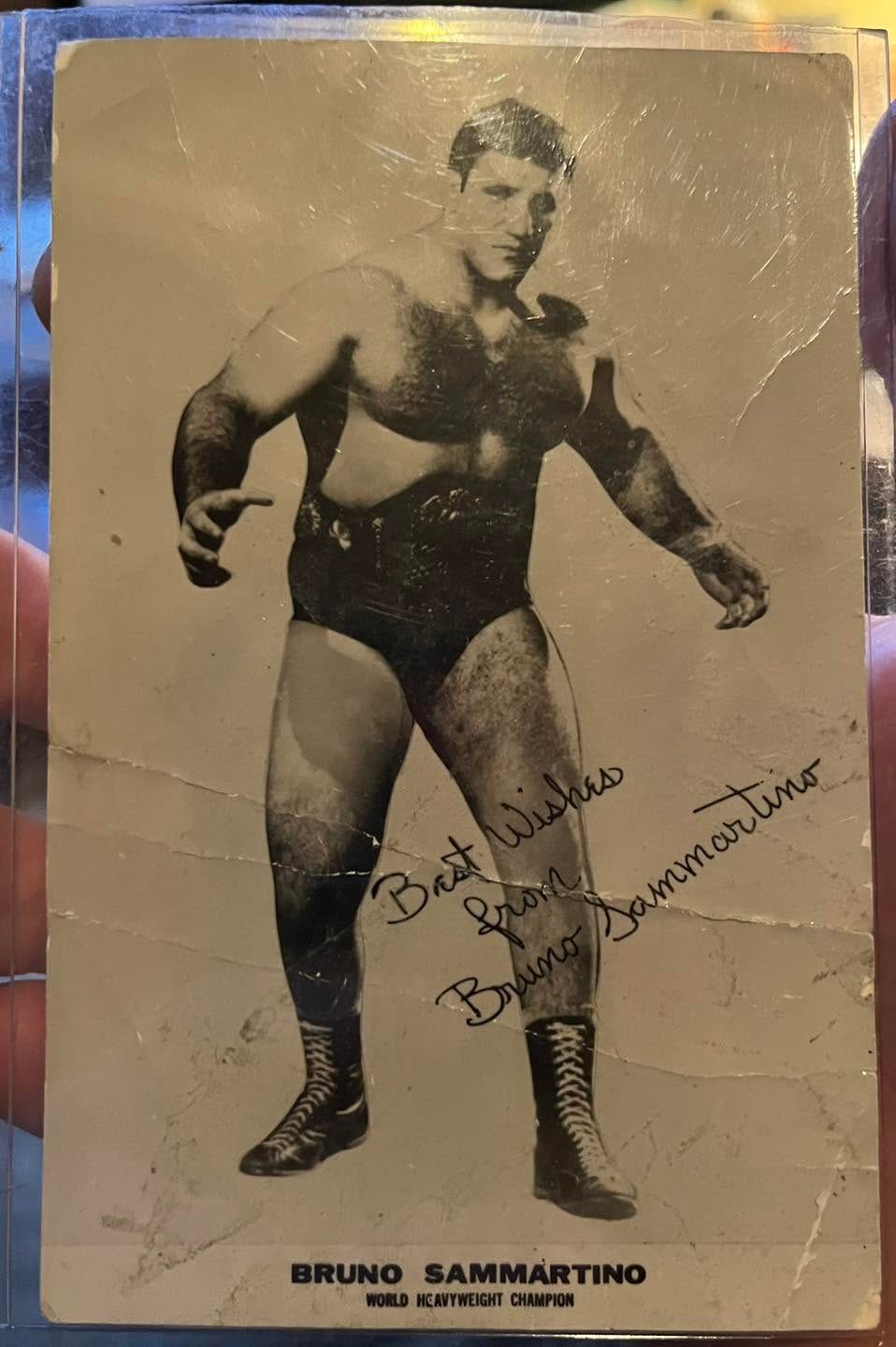
While Kiniski crisscrossed the Alliance map, Bruno Sammartino held the WWWF World Heavyweight Championship in a different kind of Consolidation. The Northeast office did not need the NWA belt to sell Madison Square Garden, the Philadelphia Arena, the Baltimore Civic Center, or the Washington television tapings. It needed Bruno, a cousin act in Antonio Pugliese, a reliable parade of heels, and the Garden as a seasonal cathedral.
September’s WWWF story was attrition and betrayal rather than a title change. Sammartino beat Prince Iaukea in Asbury Park on the 2nd and again in Jamaica, Queens, on the 6th. On September 8 in Washington, Baron Mikel Scicluna won by disqualification. On September 10 in Pittsburgh, Bruno finished Bulldog Brower. On September 17 in Baltimore, Johnny Valentine won by disqualification after Pugliese attacked the challenger. Those finishes were the WWWF’s house style: the champion stays champion, the heel looks filthy enough to draw the rematch, and the cousin or tag partner becomes part of the story.
The month’s most important Northeast booking came on September 22 in Washington. Valentine and Pugliese, the WWWF United States Tag Team Champions, lost the belts to Scicluna and Smasher Sloan in two-out-of-three-falls. The second fall was stopped when Pugliese was injured. In the third, Valentine handed the titles to the heels and said he no longer wanted Pugliese as a partner. That is a Consolidation-era angle in miniature. The office did not need a new world champion. It needed a fresh heel, a broken friendship, and a reason for Bruno to keep working the same towns through the fall.
Then the champion left the country. In late September Sammartino appeared for Jim Barnett’s World Championship Wrestling in Australia, a circuit that imported American and Canadian names the way Alliance offices imported each other. On September 21 in Brisbane he beat Skull Murphy. On September 23 in Sydney he defeated The Destroyer by disqualification but did not take the IWA World title. On September 30 he again beat The Destroyer by disqualification in two straight falls. The Australian office got a genuine world champion on the poster. The WWWF got a working vacation that did not cost Bruno the belt. That exchange — talent across oceans, titles remaining at home — is Consolidation’s international version of the NWA booking network.
The AWA Machine and the Absorption of a Market
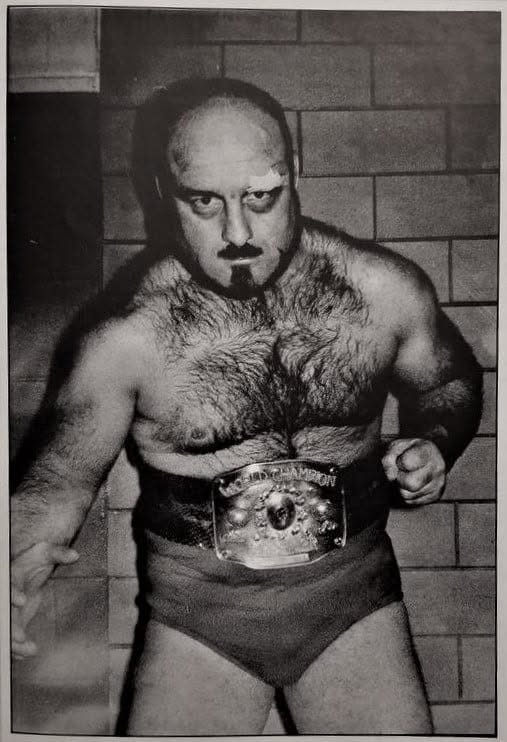
Mad Dog Vachon still held the AWA World Heavyweight Championship in September, a heel reign that Gagne used the way Alliance offices used Kiniski, except the champion lived inside the promotion instead of touring as a guest. Vachon went to disqualification against Billy Red Cloud in St. Paul on September 10 and to a double count-out with Wilbur Snyder in Milwaukee on September 16.
Dick the Bruiser and The Crusher, the AWA Tag Team Champions, were the other engine. On September 16 in Chicago they beat The Alaskan and The Big K. On September 24 in Omaha, 3,534 watched The Kentuckians — Luke “Big Boy” Brown and Jake “Tiny” Smith — beat Bruiser and Crusher by disqualification in a Midwest Tag Team title match with the AWA belts not on the line. That distinction mattered. Local titles could change. The AWA tag titles were the office’s national product and were protected accordingly.
The Omaha–Lincoln loop in early September showed how a Stage 5: Consolidation office farmed a secondary market. Harley Race and Dale Lewis, still young and still heels, dropped the Midwest Tag Team Championship to The Kentuckians on September 10 in Omaha before 1,872. Tim Woods, billed as Mr. Wrestling, retained the Nebraska Title over Bob Geigel the same night. Race, Lewis, Woods, Brown, and a very young Dick Murdoch were the undercard that kept Nebraska viable between Minneapolis television tapings. The AWA did not need to be everywhere. It needed enough towns to keep the roster paid and the world title looking busy.
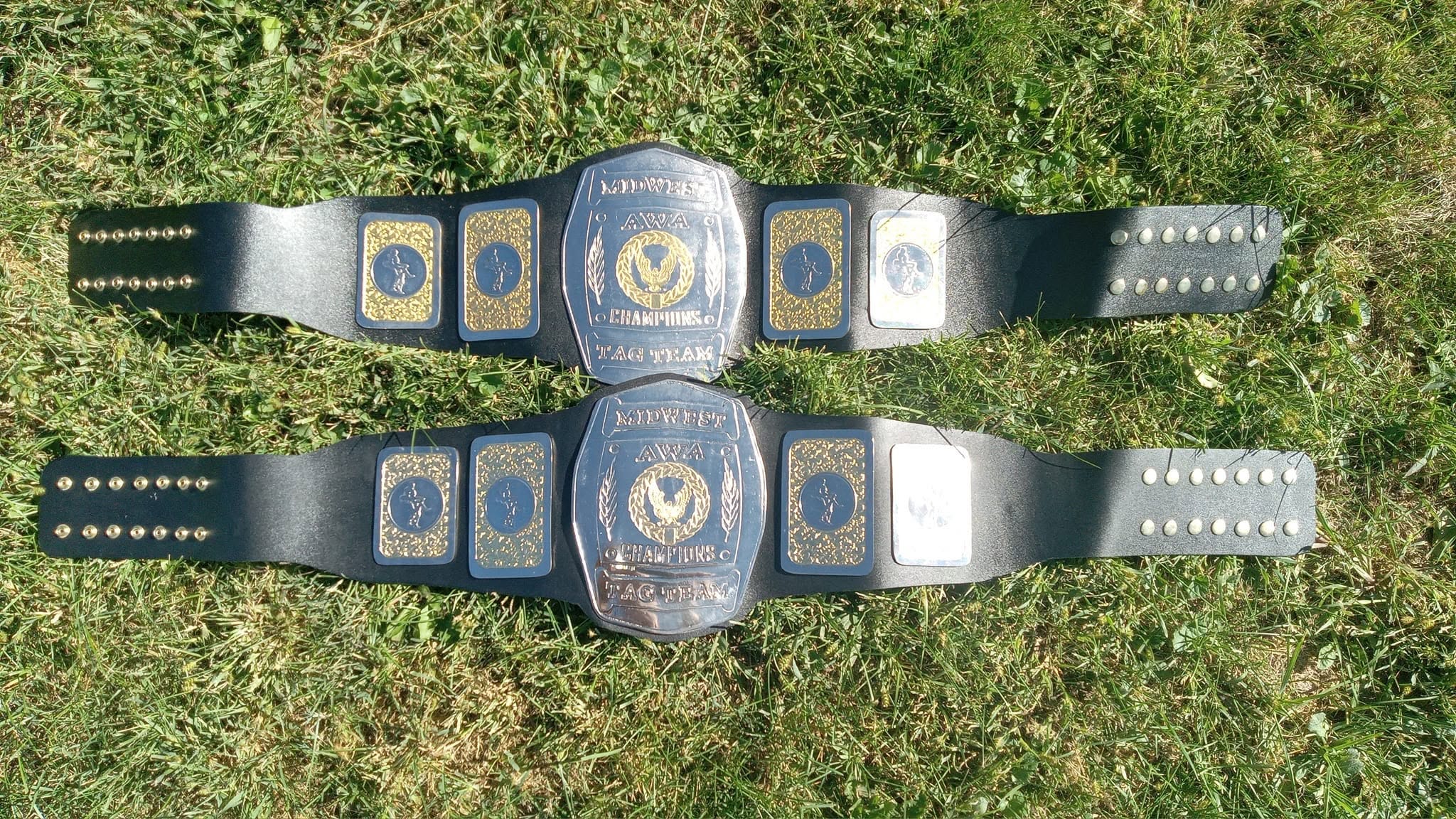
Pictured: Midwest Tag Team Championship Title Belts
Two quieter September events in the AWA sphere say as much about Consolidation as any main event. On September 16, James Raschke — amateur champion, Olympic-caliber Greco-Roman wrestler, recent ring crew and referee — debuted for Gagne and beat Johnny Kace. He was not yet Baron von Raschke. He was inventory. The office trained its own because the territory system rewarded men who could be recast, exported, and brought home. Within a year the German heel would exist. In September 1966 he was still a local amateur with a backbreaker.
The other event was a surrender. Alex Turk Promotions, after more than two decades as Winnipeg’s independent office, ceased operations after its September 3 card. The stated reason was AWA competition. By early October the Winnipeg Free Press was reporting that Al Tomko would promote with Gagne and Wally Karbo’s Minneapolis office. That is Stage 5’s hard edge. The system stabilized major territories by swallowing weaker ones. Turk had once tried to bring Winnipeg into the NWA network and had booked Thesz, Gagne, and Sammartino through the same building. In 1966 the building belonged to the larger Midwestern circuit. Cooperation and absorption were twins.
Texas: A Booking Office Changes Hands
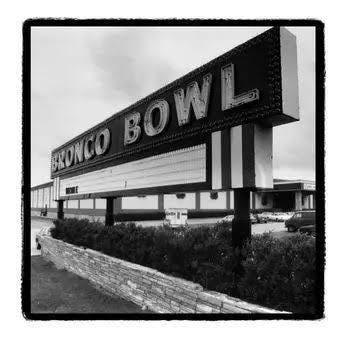
Pictured: The Bronco Bowl exterior, Dallas, Texas
If Winnipeg was Consolidation by takeover, Dallas was Consolidation by divorce and re-incorporation. For years the Dallas Wrestling Club had been tied to Houston booking through Morris Sigel’s office. In September that arrangement broke. On September 13, Ed McLemore moved his Dallas cards out of the usual loop and into the Bronco Bowl. Fritz and Waldo Von Erich beat Duke Keomuka and Ricky Romero by disqualification that night. A week later the Bronco Bowl ran Fritz and Waldo against Cowboy Bob Ellis and Keomuka to a double disqualification, while a competing Sportatorium card booked by the old Dallas Wrestling Club was canceled. On September 23, McLemore and Jack Adkisson — Fritz Von Erich in the ring, businessman outside it — established Southwest Sports, Inc., the parent company that would run Big Time Wrestling and, years later, World Class.
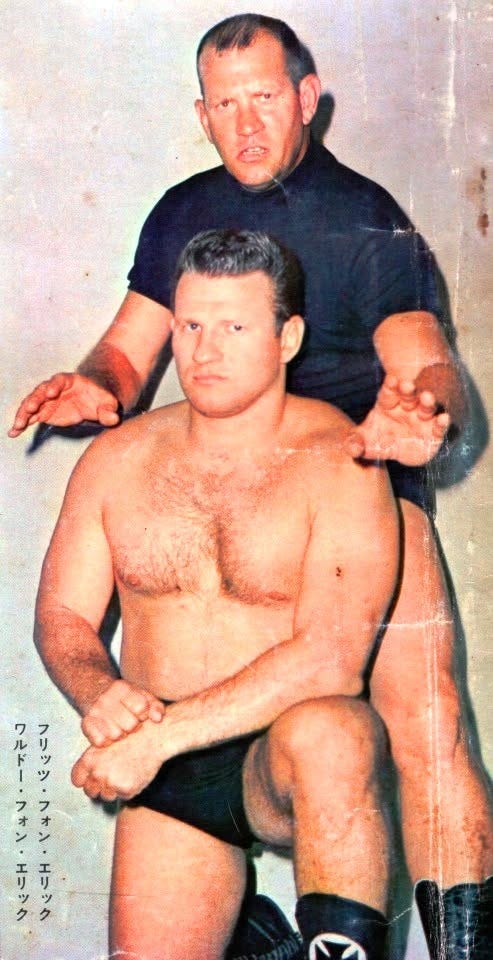
Pictured: Fritz and Waldo Von Erich
That corporate date is one of the most important in the entire Consolidation decade. The Texas United States Heavyweight Championship, created in June and already bouncing between Fritz and Johnny Valentine, gave the new office a local world-adjacent prize. Fritz held the belt through the late summer and fall. The Sportatorium remained the building. The booking office, for the first time, sat in Dallas rather than Houston. Kiniski could still come through. The Funks could still feud with Fritz, as they did on the September 16 St. Louis card. But the money and the television would now be organized by the man who also headlined the town.
That is not fragmentation. Fragmentation would come later, when offices stopped honoring maps. September 1966 in Texas was a local realignment inside the Alliance structure: a stronger promoter taking a market that had been booked from somewhere else, then remaining inside the NWA so the world champion could still pass through.
The Pacific Coast and the Other World Title
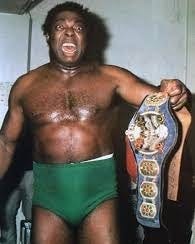
Pictured: Bobo Brazil, WWA World Champion
Los Angeles remained the most visible reminder that Consolidation was incomplete. The WWA World Heavyweight Championship, born from the Carpentier–Thesz split of the late 1950s, still sold out the Olympic Auditorium. On September 2, before 10,241, Bobo Brazil won that title from Buddy Austin when the match was stopped because Austin was bleeding. The undercard was a West Coast sampler: Professor Ito, Betty Lopez over Mae Young, Fritz Von Goering and Mike Paidousis drawing with Luis Hernandez and Pedro Morales, and The Destroyer beating Magnificent Maurice.
Brazil and Austin immediately rematched. They went to a one-fall-apiece time-limit draw at the Olympic on September 16. Austin recaptured the championship on September 23 in San Diego, two falls to one. The rest of the month was the usual Southern California loop — Long Beach, Bakersfield, San Diego, television at the Olympic — with El Mongol, The Destroyer, and Morales in support. Brazil even slipped to Detroit on September 10 and 24 to work for the Sheik’s Big Time Wrestling, beating King Curtis Iaukea and Sailor Art Thomas, then returned to the coast. That dual booking is the Consolidation talent market: a Black world champion who could headline Los Angeles on Friday and Detroit on Saturday because both offices understood he drew.
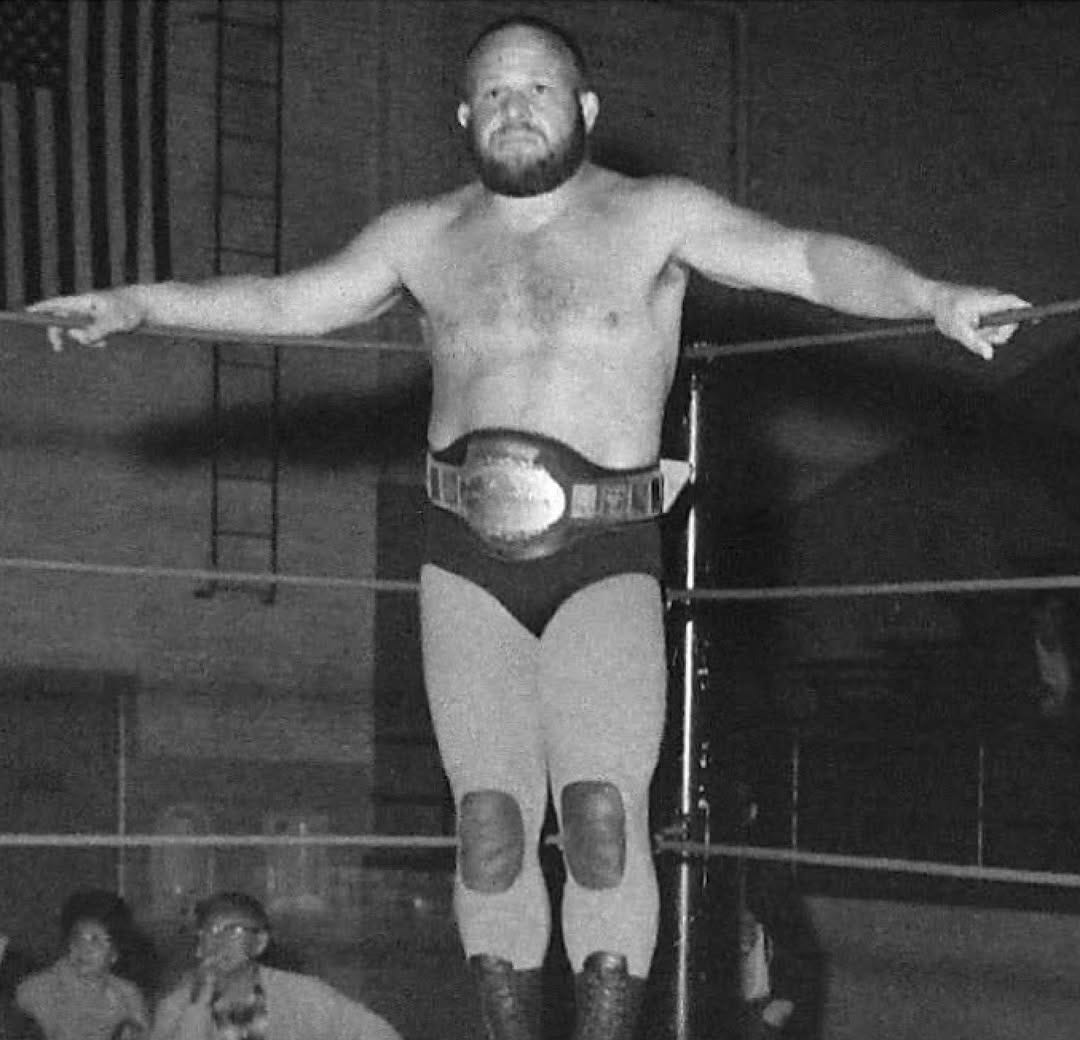
Pictured: Tough Tony Borne, NWA Pacific Northwest Champion
Farther north, Don Owen’s Pacific Northwest office and the Vancouver NWA office shared men the way Florida shared towns. On September 16 in Portland, Tony Borne took the NWA Pacific Northwest Heavyweight Championship from Pepper Martin. The next night in Seattle, Kiniski and Thesz wrestled their scoreless hour, and the women’s world title changed hands. On September 26 at the PNE Gardens in Vancouver, Dutch Savage and Don Jardine beat John Tolos and Tony Borne two falls to one for the Canadian Tag Team Championship. Savage was settling into the Northwest after years on the road. Jardine was still years from The Spoiler becoming a Texas institution. Tolos and Borne were the kind of veterans a Consolidation office could plug into either Portland or Vancouver without rewriting the map.
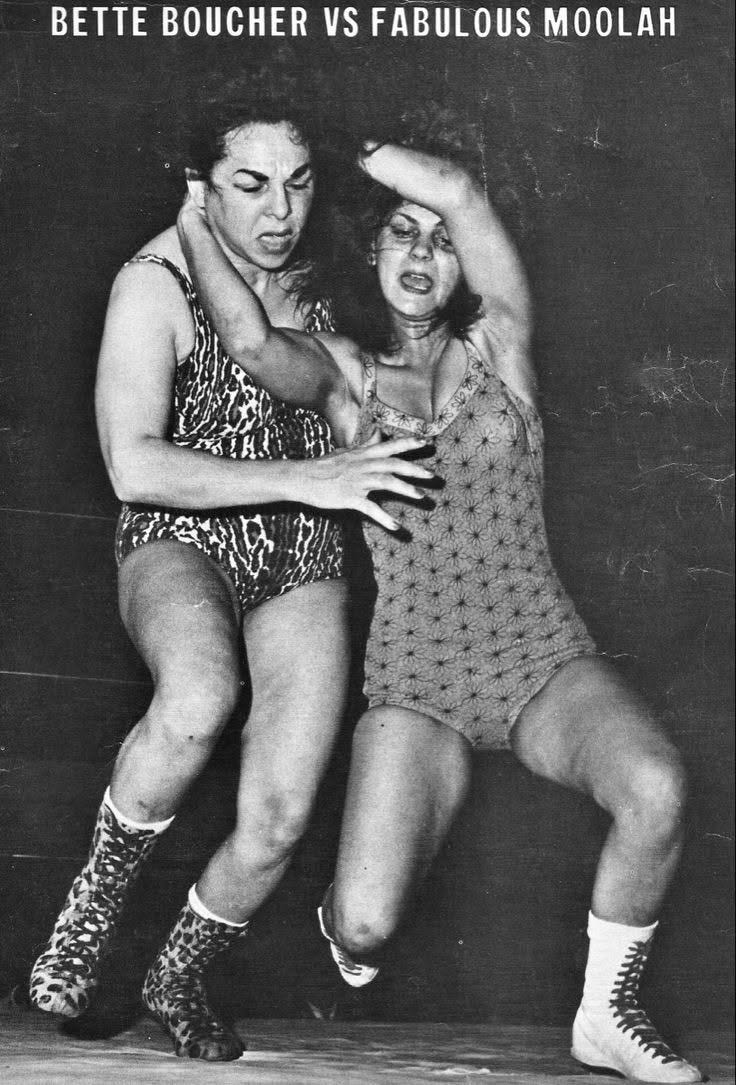
Pictured: Bette Boucher snap mares The Fabulous Moolah
The women’s title change deserves to be treated as more than a footnote. On September 17 in Seattle, Bette Boucher defeated The Fabulous Moolah for the NWA World Women’s Championship. Moolah’s office had controlled that championship since 1956 with a tightness that made even brief losses look like accounting errors. Boucher’s reign lasted only into early October, when Moolah regained the belt in Vancouver. WWE’s later official lineage would erase the change. The NWA record, and the Seattle and Vancouver crowds who saw it, did not. In a Consolidation system that ran on traveling champions, Moolah was the rare champion who traveled and still kept the booking book in her own bag.
Canada: Gardens, Stadiums, and Prairie Towns
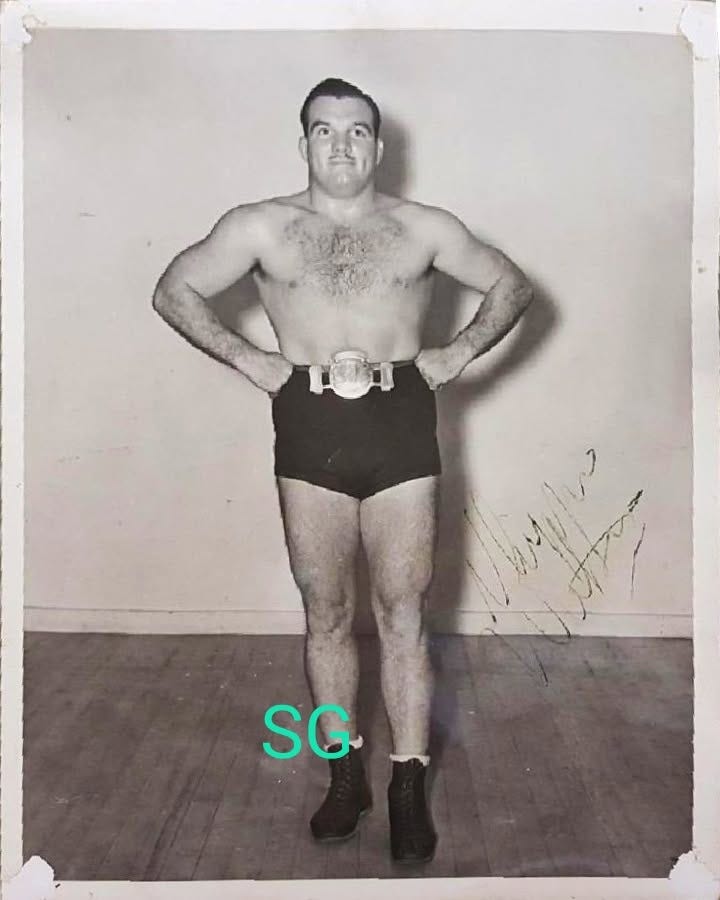
Pictured: Whipper Billy Watson, British Empire Heavyweight Champion
Frank Tunney’s Maple Leaf Wrestling entered September coming off a summer at Maple Leaf Stadium while the Gardens were renovated. The September 4 Stadium card featured Fred Atkins and Tiger Jeet Singh over Rocky Johnson and Sweet Daddy Siki. On September 18 the promotion was back in Maple Leaf Gardens before about 6,000. Whipper Billy Watson retained the British Empire Heavyweight Championship when Nanjo Singh was disqualified in 12:49. Atkins and Singh beat Georgios Kanelis and Johnny Kostas. Rocky Johnson drew Stan Stasiak. Johnny Powers drew Hans Schmidt. Bulldog Brower beat Joe Christie. A week later, 5,028 watched Atkins and Singh take two falls from Edouard Carpentier and Siki, with Athol Layton, Seaman Art Thomas, and Johnson again on the card.
Toronto in 1966 was a mature Consolidation market: a civic building, a civic hero in Watson, imported heels with foreign heat, and just enough of the new generation — Johnson, Powers, Stasiak, Tiger Jeet Singh — to keep the Gardens from feeling like a museum. Kiniski would be back in October to defend the world title against Watson. September was the local title and the tag division doing the weekly work.
On the Prairies, Stu Hart’s office still billed itself as Wildcat Wrestling, the name it had used since 1965 and would keep until the Stampede rebrand the following summer. The September route ran the familiar Alberta–Saskatchewan loop: Saskatoon, Edmonton, North Battleford, Regina. Hart’s Dungeon was already a talent factory, but the public product in 1966 was still a regional office living on one-nighters, local television, and periodic visits from names who could be spared by Minneapolis or Vancouver. Consolidation did not make every territory rich. It made the successful ones predictable and the smaller ones durable.
Mexico: Anniversary as National Ritual
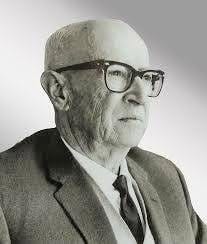
Pictured: Salvador Lutteroth
No North American office treated September the way EMLL treated it. Salvador Lutteroth’s company had been running since 1933. The anniversary shows were not extras. They were the civic calendar. On September 2 at Arena México, the first 33rd Anniversary card drew a gate later remembered at more than 160,000 pesos. El Santo beat Henry Pilusso. Mil Máscaras won by disqualification over Tigre Steiger. The two apuestas (*nod to Roy Lucier for teaching me this) that closed the night were the point of the evening: Jerry London took Karloff Lagarde’s hair, and René Guajardo took Felipe Ham Lee’s hair. The feud was a tag-team story — Guajardo and Lagarde against London and Ham Lee — broken into individual humiliations.
Four weeks later, on September 30, the second anniversary card finished the story. Guajardo beat London in another hair-versus-hair match. Between those Fridays the office ran its usual Tuesday Coliseo and Friday México cycle, plus Puebla and Guadalajara. On September 6, Black Gordman beat Pantera Negra for the Mexican National Heavyweight Championship. Karloff Lagarde still held the NWA World Welterweight Championship. El Santo remained the country’s most famous masked man even when he was not in the anniversary main event.
Lucha libre in 1966 was Consolidation without the NWA’s travel math. EMLL did not need Kiniski to prove it was major. It needed Arena México, the anniversary ritual, apuestas that cost a man his hair, and a roster deep enough to run midweek without repeating the Friday main event. When North American offices wanted a masked attraction, they borrowed from this culture. When EMLL wanted a foreign heel, it imported one for a program and sent him home. The border was porous. The institutions were not.
Japan: The Post-Rikidōzan Office Finds Its Ace
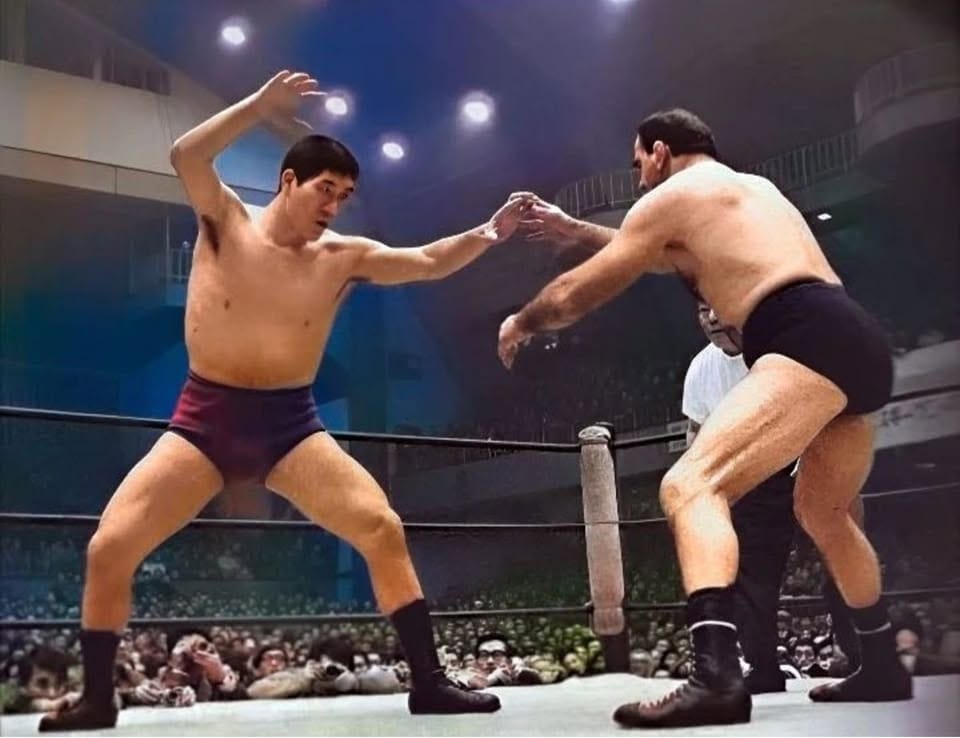
Pictured: Giant Baba and Lou Thesz in 1966
The Japan Wrestling Association entered September still rebuilding from Rikidōzan’s 1963 murder. Toyonobori had given way as company president to Yoshinosato. Giant Baba, who had spent the early 1960s proving himself in the United States, was now the domestic ace. He had won the 8th World League in May by beating Wilbur Snyder and held the NWA International Heavyweight Championship that had been vacant after Rikidōzan’s death until Baba beat Dick the Bruiser in November 1965.
September’s JWA route was a typical tour, not a Tokyo spectacular. Baba and Michiaki Yoshimura beat The Vigilantes in Machida on September 5. Late in the month the Diamond Series brought in a foreign wave: Gorilla Monsoon, Fritz Von Goering, Mike Paidousis, Bob Boyer, Man Mountain Cannon. On September 27 in Hamamatsu, Baba, Kim Il, and Yoshimura beat Boyer, Monsoon, and Von Goering by disqualification. In Osaka, Paidousis and Von Goering retained the International Tag Team Championship against Baba and Yoshimura. In Kobe on September 29, Baba, Kim Il, and Yoshinosato beat Boyer, Cannon, and Monsoon.
That booking is the Japanese version of Consolidation. The home ace tags with Korean star Kim Il and company men against a unit of American heels. Titles can stay with the foreigners for a stretch because the rematch sells the next hall. Baba does not need to win every fall in September. He needs to be the man the tour is built around when Fritz Von Erich arrives in December to challenge for the International Heavyweight Championship at Kuramae and the Budokan. The December matches would be the payoff. September was inventory and heat.
Antonio Inoki’s absence from the center of that September picture was already a political fact. Toyonobori’s attempt to pull Inoki into Tokyo Pro Wrestling had destabilized the junior ace’s position. Inoki would be back in the JWA the following year. The later split that created All Japan and New Japan still sat years ahead. In September 1966 there was still one male Japanese office that mattered, and it was consolidating around Baba.
The Midcard Economy: Who Worked, and Why It Mattered
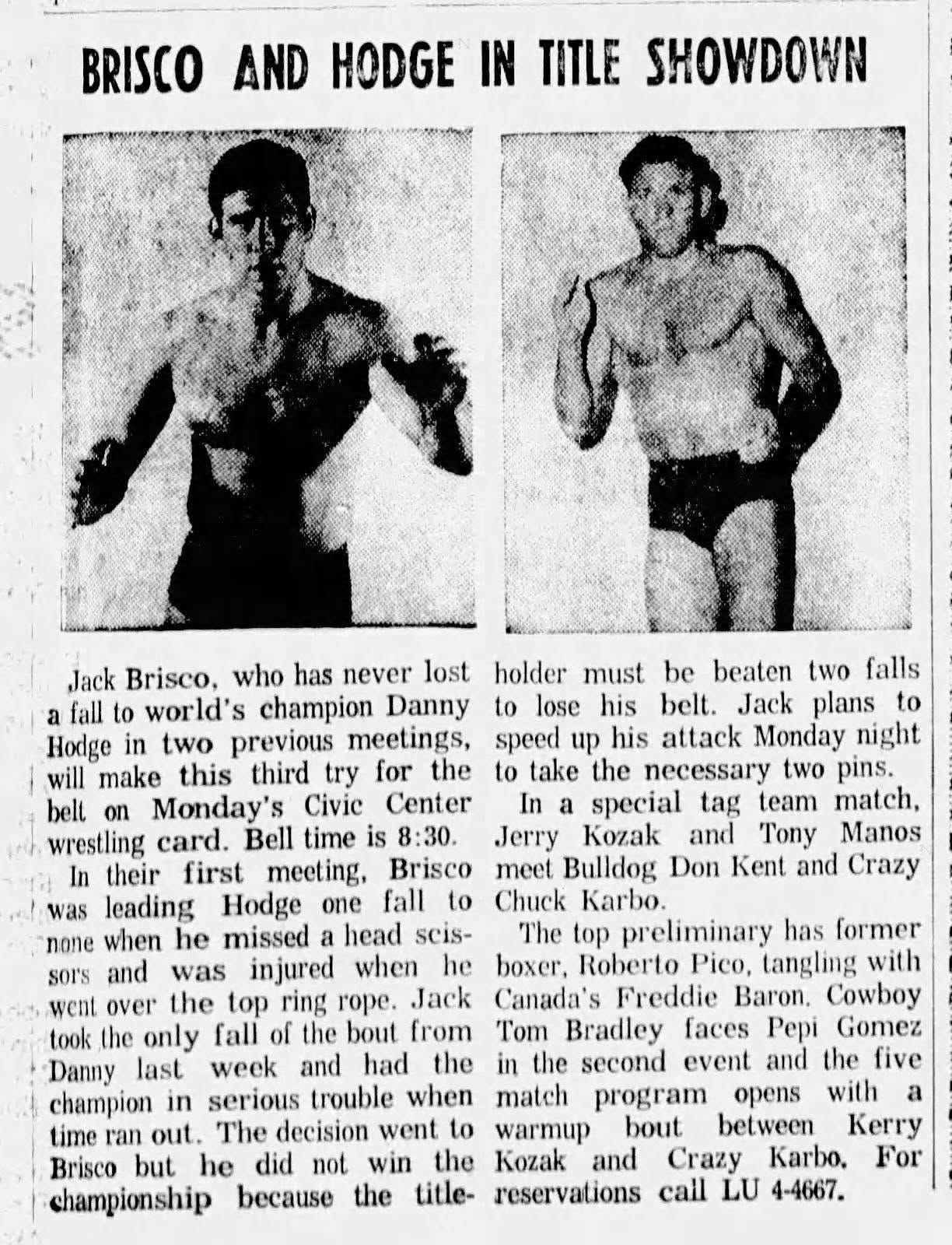
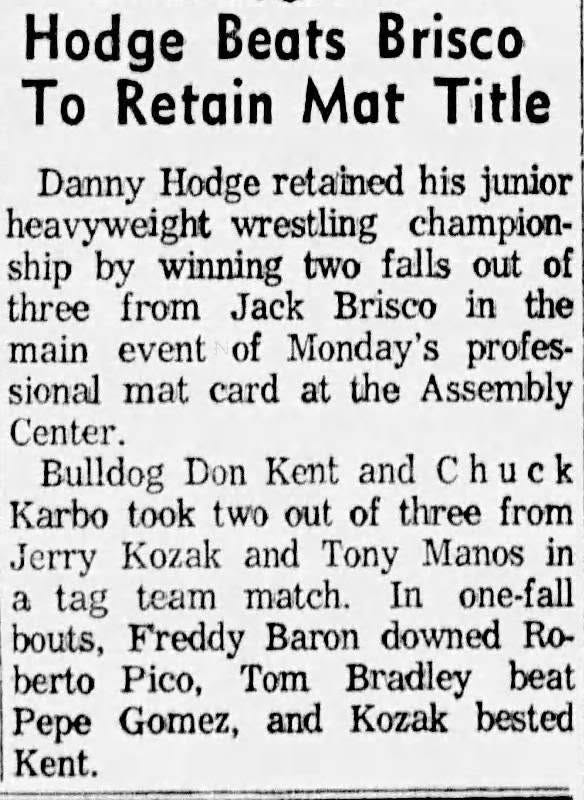
Pictured: August 15th, 1966 in Tulsa, Oklahoma
A Consolidation month is won or lost in the undercard. The names who filled September 1966 bills were not yet folklore. They were the labor market.
Harley Race was a Midwest tag specialist, not a world champion. Larry Hennig was his running mate. Dick Murdoch was a preliminary hand in Omaha. Jack Brisco was already working Danny Hodge’s junior heavyweight orbit in Tri-State and Texas; Hodge himself defended the NWA World Junior Heavyweight Championship against Nick Kozak in Houston on September 2 and Jack Brisco in New Orleans on September 7. Dory Funk Jr. was a St. Louis challenger with his father’s office behind him. Terry Funk was still the other Funk in the handicap match. Johnny Valentine was a WWWF tag champion on Friday and a Baltimore disqualification winner on Saturday. Antonio Pugliese was Bruno’s cousin until Valentine decided he was not. Pedro Morales was a Los Angeles babyface who could tag with Luis Hernandez or stand across from Buddy Austin. Mil Máscaras was already a Friday-night attraction in Arena México and would soon be a film star. The Destroyer was a Los Angeles and Australian chameleon. Gorilla Monsoon was a Japanese tour heavy. Dutch Savage was planting himself in the Northwest. Don Jardine was collecting Canadian tag gold that would look like a footnote until the mask came on.
Women’s wrestling remained a parallel circuit under Moolah’s booking, appearing on WWWF television in Washington, on Mid-Atlantic cards, and on the Seattle and Vancouver shows that hosted the title change. Midget wrestling still filled Garden and Gardens programs. Those divisions were not side shows in 1966. They were part of how an office stretched a two-hour card without burning its heavyweight champion.
The debuts of the month were seeds. Raschke in the AWA. The continuing rise of Morales, Máscaras, Brisco, and Funk Jr. The corporate birth of Southwest Sports. The death of an independent Winnipeg office. Consolidation looks stable when the main events repeat. It looks alive when the undercard is being restocked.
Business Analysis: Stage 5
September 1966 sits in Year 2 of Consolidation. The hallmarks of the stage were all present.
Territorial boundaries were being enforced, not theorized. The WWWF did not send Bruno into Chicago to take Gagne’s television. Gagne did not send Vachon into Madison Square Garden. Kiniski did not claim Los Angeles. LeBell did not claim St. Louis. When offices crossed maps, they did it as guests: Bruno in Sydney, Brazil in Detroit, Von Erich in St. Louis, Monsoon in Osaka, Thesz wherever an Alliance booker paid the guarantee. The talent exchange was the Alliance’s remaining genius. A man could be a bloodthirsty heel in Portland on Thursday and a credible challenger in Vancouver on Monday because both towns believed their local television.
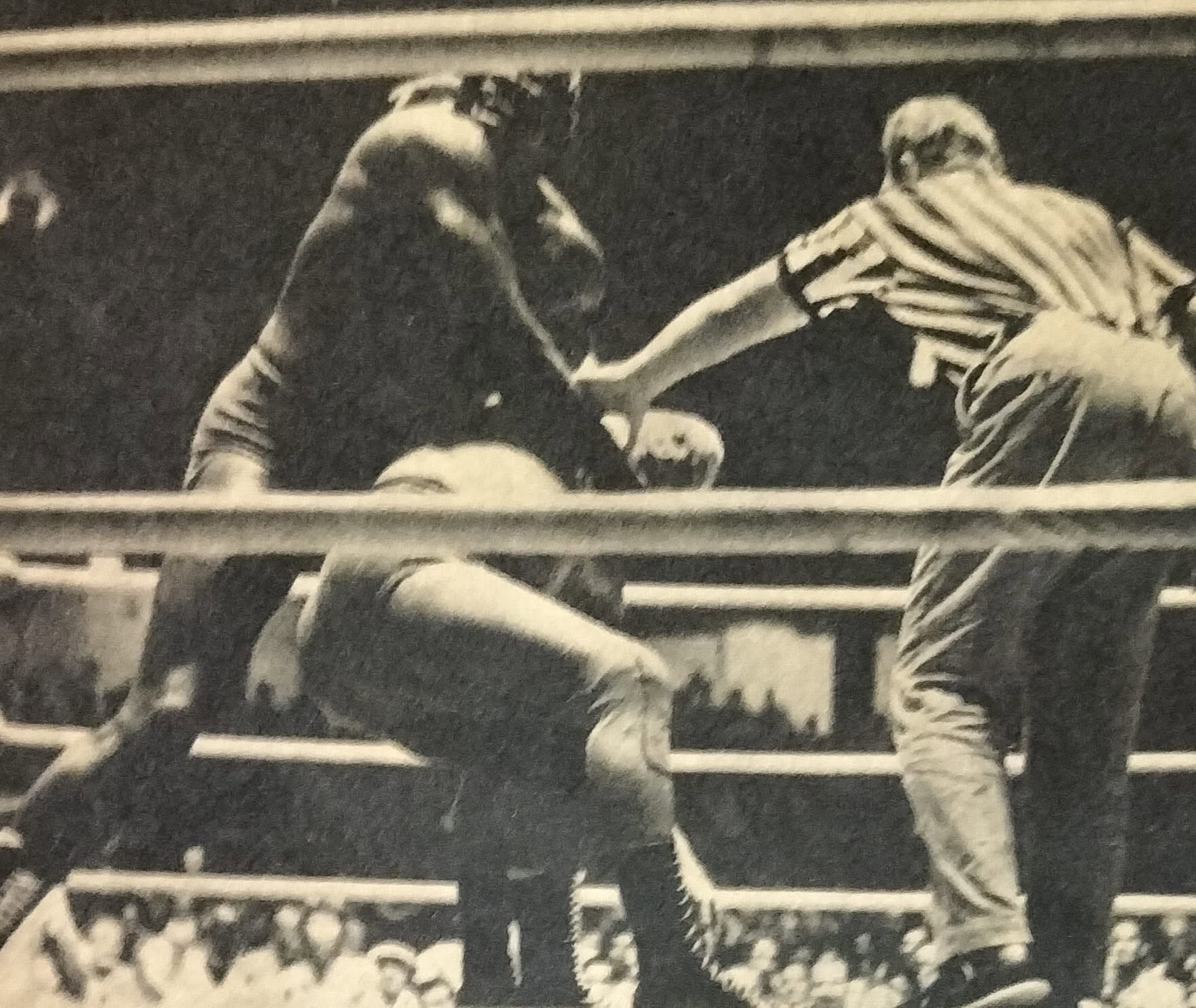
Pictured: WWA World Championship Match, Bobo Brazil with an Abdominal Stretch on Buddy Austin at the Olympic Auditorium in Los Angeles, California, September 16th, 1966
The world-title structure, however, was already a layered compromise rather than a single pyramid. Kiniski’s NWA belt was the consensus championship for most of the continent. Sammartino’s WWWF belt was the consensus championship for the Northeast and, when exported, a guest attraction. Vachon’s AWA belt was the consensus championship for the Upper Midwest and the newly absorbed Winnipeg market. Austin and Brazil’s WWA belt was the consensus championship for Southern California. Baba’s International Heavyweight Championship was the consensus championship for Japan. Lagarde’s welterweight belt and the Mexican National Heavyweight Championship were the consensus prizes for Mexico City. Consolidation meant those claims could coexist if nobody tried to settle them in public.
Television was the quiet sovereign. Florida taped and fed a peninsula. The AWA used Minneapolis tapings to justify Omaha and Chicago. The WWWF used Washington and Philadelphia tapings to justify the Garden cycle. EMLL’s Mexico City weeklies made the anniversary shows feel like culminations rather than interruptions. Japan’s network relationship, forged in the Rikidōzan years, made a midweek hall in Hamamatsu part of a national narrative. The office that controlled a weekly hour could survive a soft live gate. The office that did not, as Turk learned in Winnipeg, could not survive a neighbor with a better tape.
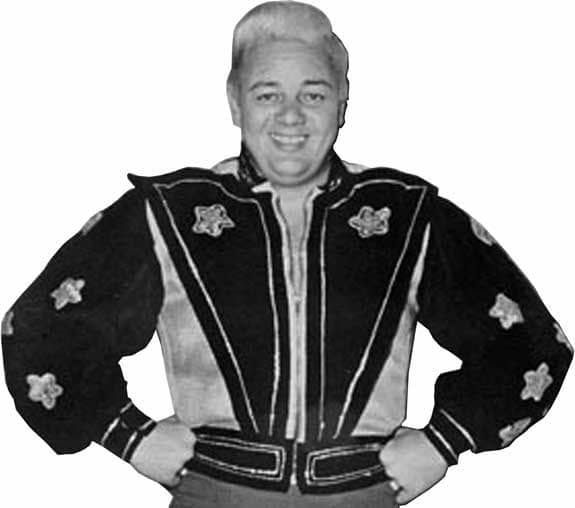
Pictured: The Fabulous Jackie Fargo
Live business in September was steady and normal for Stage 5. Kiel’s 10,995 and the Olympic’s 10,241 were the evidence of a thriving St. Louis and Los Angeles.. Greensboro’s 4,408 with Kiniski and Thesz, and 3,657 without them, sketched the value of the traveling champion to a Crockett building. Omaha’s 1,872 for a tag-title change and 3,534 for Bruiser and Crusher showed how a secondary market spiked when the AWA sent its real names. Toronto’s 6,000 and 5,028 were respectable Maple Leaf Gardens figures for local titles. Nashville’s 5,022 for Kiniski and Fargo was a great Tennessee territory number. None of these houses suggested a boom on the scale of the early television explosion, and none suggested collapse. Stage 5 Consolidation was a business of repeatable mid-thousands, punctuated by five-figure nights in the right buildings.
The month’s corporate moves were the truest leading indicators. Southwest Sports, Inc. created a Dallas-based Alliance office that would dominate Texas wrestling for the next two decades. The AWA’s absorption of Winnipeg enlarged one breakaway circuit at the expense of a local independent. Barnett’s Australian import model treated American champions as touring commodities. McLemore’s Bronco Bowl stand and the canceled rival Sportatorium card were a reminder that “territory” was a courtesy until someone tested it. The courtesy usually held in 1966. The tests were becoming more expensive.
Costs were rising in ways the old handshake system only partly covered. Champions wanted guarantees. Air travel made Kiniski’s September itinerary possible and also made it costly. Arena deals in buildings like Kiel, the Gardens, the Olympic, Arena México, and the Greensboro Coliseum required consistent cards, not occasional spectaculars. A roster had to be deep enough to run Tuesday and Friday in the same city, as EMLL did, or Monday through Friday across a state, as Texas and Florida did. The offices that owned their television and their building relationships — Muchnick, Tunney, Graham, Lutteroth, Owen, Gagne, McMahon, LeBell, the new Dallas corporation — were the ones for whom Consolidation felt like a second golden age. The offices that rented names and hoped the neighbor stayed home were already on borrowed time.
Booking Storylines as Corporate Policy
Look again at the month’s great matches and they start to resemble policy.
Kiniski versus Thesz was a legitimacy tour. The Alliance needed the previous decade’s defining champion to bless the current one in public, repeatedly, without changing the belt.
Kiniski versus Funk Jr. in St. Louis was succession planning. Amarillo and St. Louis both needed the next generation to look like it belonged under the lights.
Valentine’s turn on Pugliese was inventory management. The WWWF could not take the world title off Bruno in 1966. It could manufacture a new heel and a new tag division overnight.
Brazil versus Austin was a local world title being used the way a regional title was supposed to be used: change it, rematch it, change it back, keep the Olympic Auditorium full.
Guajardo, Lagarde, London, and Ham Lee trading hair was EMLL converting a tag feud into two anniversary gates. The apuesta is lucha’s version of a title change: a permanent visual record that the match mattered.
Baba tagging with Kim Il against Monsoon’s unit was JWA converting foreign booking into a national tour. The International Tag belts on Paidousis and Von Goering were rent. Baba’s position was equity.
Boucher beating Moolah was a rare crack in a privately held world title, closed within weeks. Even the exception proved who owned the women’s circuit.
The Kentuckians beating Bruiser and Crusher by disqualification in Omaha, with the AWA titles protected, was a master class in how a Stage 5 office could give a local crowd a win without damaging the product it needed in Chicago the following month.
Turk closing and Tomko opening under Gagne’s flag was the map being redrawn in ink.
McLemore and Adkisson incorporating Southwest Sports was the same thing with better lawyers.
What September 1966 Leaves Behind
The Consolidation stage is easy to romanticize because the work was good and the map still made sense. September 1966 deserves that romance and a colder reading.
The romance is real. A fan could see Santo and Máscaras in Arena México on the 2nd, Kiniski and Thesz in Greensboro the night before, Brazil win a world title in Los Angeles the same night as the first anniversary show, Funk Jr. challenge in St. Louis on the 16th, a women’s world title change in Seattle on the 17th, Watson defend the Empire belt in Toronto on the 18th, Bruno work Australia the following week, and Guajardo shear London on the 30th. No later national promotion ever offered that kind of simultaneous local abundance. The cooperative spirit the stage is named for was not a slogan. It was a booking sheet.
The colder reading is also real. There were already four heavyweight “world” champions who mattered in North America, plus Japan’s international title and Mexico’s national one. Television was creating offices that no longer needed the Alliance as much as the Alliance needed their dues and their dates. Dallas was incorporating its way out of Houston’s shadow. Minneapolis was incorporating Winnipeg. Los Angeles was still outside the consensus. The WWWF was teaching a generation of Northeastern fans that the world champion was the man who packed the Garden, not the man Sam Muchnick recognized. Those facts would not explode in 1966. They would wait for cable television, for a different McMahon, for promoters who stopped taking the map as scripture.
For one September, though, the system did what it was built to do. It protected towns. It moved bodies. It sold rematches. It let a Canadian former football player carry the Alliance belt through the Carolinas, Tennessee, Missouri, the Northwest, Florida, and the Caribbean without having to live in any of those places. It let a Pittsburgh strongman remain champion while he worked the Mid-Atlantic seaboard and then Sydney. It let a French-Canadian heel hold the Midwest. It let a Black headliner win in Los Angeles and still work Detroit. It let Mexico celebrate thirty-three years with hair on the floor. It let Japan send its giant around the prefectures with borrowed monsters from the States.
That is Stage 5 at working temperature. Not peace. Equilibrium. September 1966 was one of the last years in which that equilibrium still looked, from the ring apron, like a permanent arrangement.
Thank You for Watching and Listening
I’m Tony Richards, Pro Wrestling Historian, Author and Storyteller. I share pro wrestling historical items in each issue of the Time Tunnel Pro Wrestling History Newsletter and each episode of our podcast show. Thanks for your support! If you enjoy my information on select events, matches and insights, please share with folks you think might like to be a subscriber!
Remember, Premium subscribers get access to exclusive and special content such as some special issues including a multi-part deep dives on wrestling territories, wrestler bios and championship title histories, special audio and video interviews on territory pro wrestling and more available in the Pro Wrestling Time Tunnel for Premium Subscribers. Being a Premium Subscriber also means you support me in my efforts to document Pro Wrestling History through my research, writing, books, vidoes and podcasts. And…I have something very special planned for our Premium Subscribers on the Podcast side of things in 2026! Details soon here in the Pro Wrestling Time Tunnel.