


Today’s Favorite Quote: Never measure the height of the mountain until you reach the top. Then you will see how low it was _ Dag Hammerskjold
Happy Birthday to those who have passed on and to those great wrestlers still with us:
In Memoriam:
Lord Leslie Carlton 1914
Art Nelson 1927
Archie underwood\Steve Kovacs\Danny Little Bear 1937
Happy Birthday:
Jerry Stubbs (74)
Angelina Love (45)
RIP Memorial: We stop & remember those who have passed on this day and gave themselves to the business for us, the fans. We salute you and thank you.
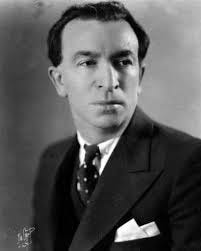
Jack Pfefer 9-13-1974 at the age of 79
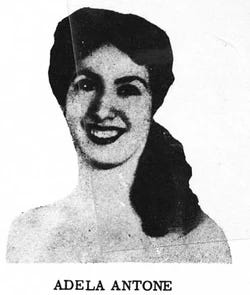
“Nature Girl” Adela Antone 9-13-2001 at the age of 70
Flashback 1976
Q3 Analysis
July-September
Georgia Championship Wrestling
Atlanta, Georgia Office
Georgia Championship Wrestling in the third quarter of 1976 was a mature NWA territory at the last moment before it became a national television product. Jim Barnett already controlled the office. Paul Jones still fronted Atlanta. Fred Ward ran Macon. Charlie Harben ran Augusta. Gordon Solie was the voice of the television tapings at WTCG. Ted Turner’s station was not yet a satellite superstation — that switch would come in mid-December — but the infrastructure, the talent pipeline, and the booking habits that would later travel nationwide were already in place. The three months from July through September were spent doing what a healthy Southern territory did in the heat: turning the Georgia Heavyweight Title, spinning the tag belts through several combinations, importing the NWA World champion on a tight schedule, and working the same feuds through Atlanta, Macon, Augusta, Columbus, Griffin, Savannah, Warner Robins, and Rome until the finishes were stale enough to change the stipulation.
The circuit itself was a weekly machine. Atlanta Friday nights at the Municipal Auditorium were the money dates and the place where title changes were made “official” for television. Macon Tuesdays at the Coliseum, under Ward, were the second-best houses and often got a version of the Atlanta finish a few days earlier or later. Augusta Mondays at William Bell Auditorium were a reliable midweek stop. Columbus used the Municipal Auditorium on midweek dates. Griffin’s Saturday Sports Palace was the small-town TV town, a place to get a second look at a feud and to give midcarders a main-event feel. Savannah, Warner Robins, Rome, Albany, and occasional one-offs such as Thomasville filled the rest of the calendar. Omni spectaculars were reserved for special attractions; the last one before this quarter had been the June 25 closed-circuit Ali–Inoki night, which had already extracted the year’s novelty gate. Q3 lived in the Auditorium and the Coliseum.
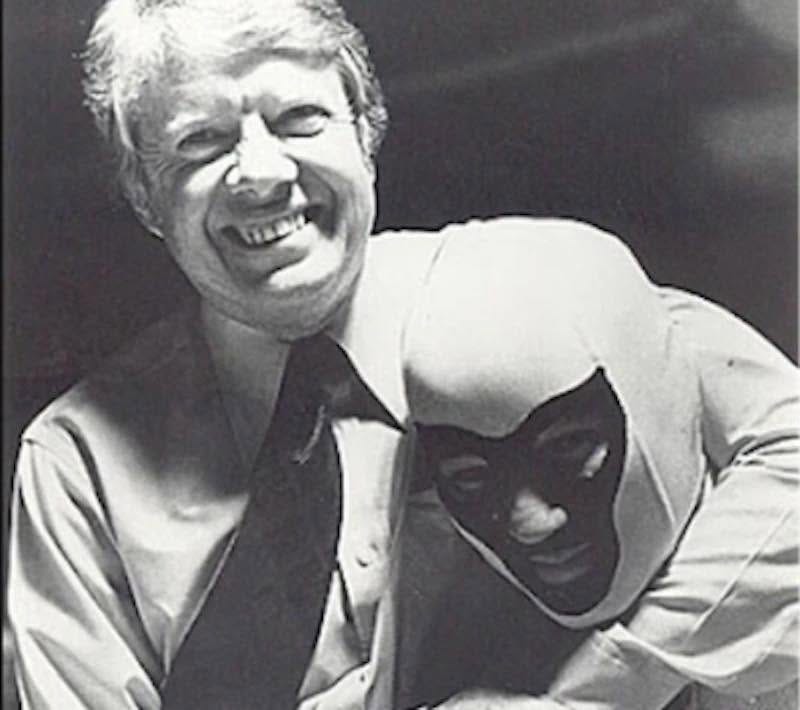
Pictured: Mr Wrestling II in a headlock applied by President Jimmy Carter
The roster was a blend of Georgia fixtures, Florida imports, and short-term national names. Mr. Wrestling II, Johnny Walker under the mask, remained the territory’s moral center: a babyface who could go sixty minutes, draw without a microphone, and make a heel look like a criminal. Thunderbolt Patterson was the other local drawing card, a talker and a brawler whose heat with Dick Slater and Abdullah the Butcher did not need much television explanation. Bob Armstrong, Ted and Jerry Oates, Roberto Soto, Dean Ho, Ken Mantell, Skip Young, and Wayne Cowan (soon better known as Dutch Mantell) filled the working midcard. Dusty Rhodes was not a full-time Georgia hand; he was the special attraction booked against Terry Funk and, later, against Pak Song. The heel side was louder. The Spoiler, Don Jardine, still held the Georgia Heavyweight Title into August. Slater was being moved from rugged antihero into the man who would take that belt.
Abdullah the Butcher, managed by Rock Hunter, was the blood attraction. Pak Song, also under Hunter, became the late-summer foreign menace. The Valiant Brothers, Jimmy and Johnny, arrived as polished WWWF-style heels and immediately went after the tag titles. Black Gordman and Great Goliath, the Red Devils, were the champions going into July. Stan Stasiak, Mark Lewin, Killer Brooks, and later the Mongolian Stomper with J.J. Dillon supplied the rest of the heat. Women’s wrestling still appeared on Atlanta and Macon cards; Fabulous Moolah defended against Joyce Grable in Atlanta on July 2, and Grable worked Macon against Leilani Kai that same week. Ricky Steamboat crossed over from Florida in mid-August and was used as a rising babyface, not yet as a main-eventer.
July:
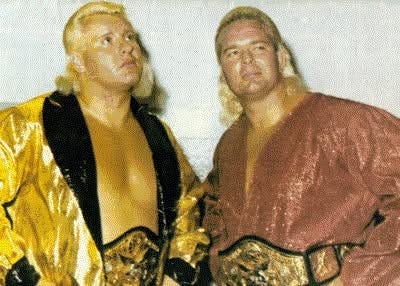
Pictured: Johnny and Jimmy Valiant
July opened with a tag-title switch designed to refresh a division that had already been through the Oates brothers and the Red Devils in the spring. On July 2 in Atlanta, Ken Mantell and Dean Ho beat Gordman and Goliath for the Georgia Tag Team Titles. Some circuit research places an earlier version of that finish in Macon on June 29; that was standard Georgia practice. A change would be worked in the Coliseum for the local crowd, then repeated in Atlanta so Solie could announce it as news. The same Atlanta card stacked a No Disqualification match between Slater and Patterson and put Abdullah against Wrestling II, with Hunter at ringside. That triangle — Slater and Abdullah against Patterson and II — was the July main-event engine. Griffin the next night replayed Slater against II and put the Spoiler over Mantell in a long match, keeping the champion visible while the new tag team got its first defense cycle.
Macon on July 6 brought the Valiants in against Mantell and Ho, with Tully Blanchard substituting when the office needed a body. Women’s wrestling sat in the middle of that card. Columbus on July 7 used a battle royal featuring Slater, both Valiants, Wrestling II, Stasiak, Lewin, Mantell, Skip Young, and the Japanese hands Yasu Fuji and Jan Nelson — a cheap way to get every name on the poster into one finish. Warner Robins on July 13 was a classic secondary-town card: the Valiants against Ted Oates and Young, Soto against Abdullah, Slater against II.
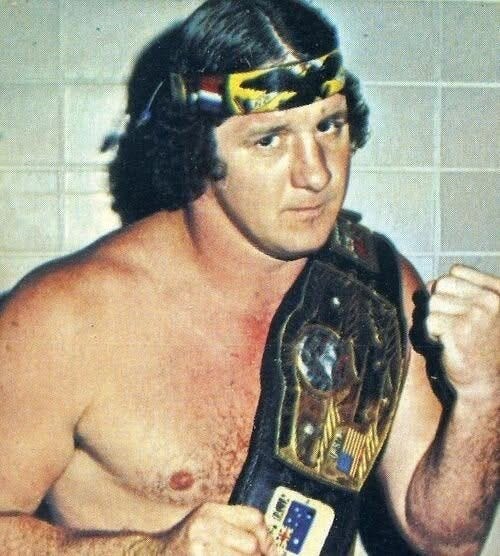
Pictured: Terry Funk, NWA World Heavyweight Champion
Atlanta on July 16 was the first true special of the quarter. Terry Funk defended the NWA World Heavyweight Title against Dusty Rhodes. Funk won by disqualification, which protected both men and guaranteed the rematch. The undercard moved the tag picture again: the Valiants against Ted Oates and Blanchard, Slater against Ho, Lewin against Stasiak. Sources disagree on the exact night the Valiants took the belts from Ho and Mantell. Atlanta on July 16, Griffin on July 17, and Atlanta on August 6 all appear in the record. The most careful title lists settle on August 6 in Atlanta as the recognized change, with July dates as either defenses or the usual repeated finish. What matters for the story is the booking idea. The Valiants were name heels with New York heat. Giving them the Georgia straps turned every Oates match and every Ho–Mantell rematch into a title match without having to create a new angle.
Funk’s July visit was the NWA’s standard champion tour: one Atlanta main event, a handful of midweek defenses or appearances, then out. Georgia did not try to beat the champion clean. It used him to put houses on Rhodes, on Slater, and later on Wrestling II. The July heat wave — Atlanta reached the low nineties through the third week of the month — made the Auditorium a hard room. One mid-month Atlanta date was even built around a Braves game at the stadium, with wrestling as the afterpiece. That is the business reality of summer 1976: wrestling competed with baseball under the same Turner umbrella and with football exhibitions starting at the end of July.
August:
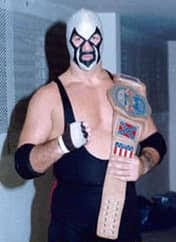
Pictured: Dan Jardine, The Spoiler
August was the title month. The Spoiler had held the Georgia Heavyweight Title since February 6, when he took it back from Rhodes. That is a long reign for this office. By early August the champion was being used as a measuring stick rather than as the center of the show. Slater beat Wrestling II in Augusta on August 9 and lost to him in Atlanta on August 6, the sort of split that keeps a program alive across towns. A one-night tournament in mid-August in Atlanta — Song against Soto, Rhodes against Johnny Valiant, Jimmy Valiant against Bill Howard, Ted Oates against Cowan, Slater against Mantell, Wrestling II against Tony Charles, then a bracket that sent Slater against Rhodes in the final — was the office’s way of manufacturing a number-one contender without a long television tournament. On August 20 at the Municipal Auditorium, Slater beat the Spoiler and won the Georgia Heavyweight Title. That same night Funk returned. Rhodes beat Funk by disqualification with Don Curtis as special referee. The card also had the Valiants defending against Ted Oates and Dean Ho, Jos LeDuc against Jim Lancaster, and Steamboat, in one of his first Atlanta matches, against Fuji.
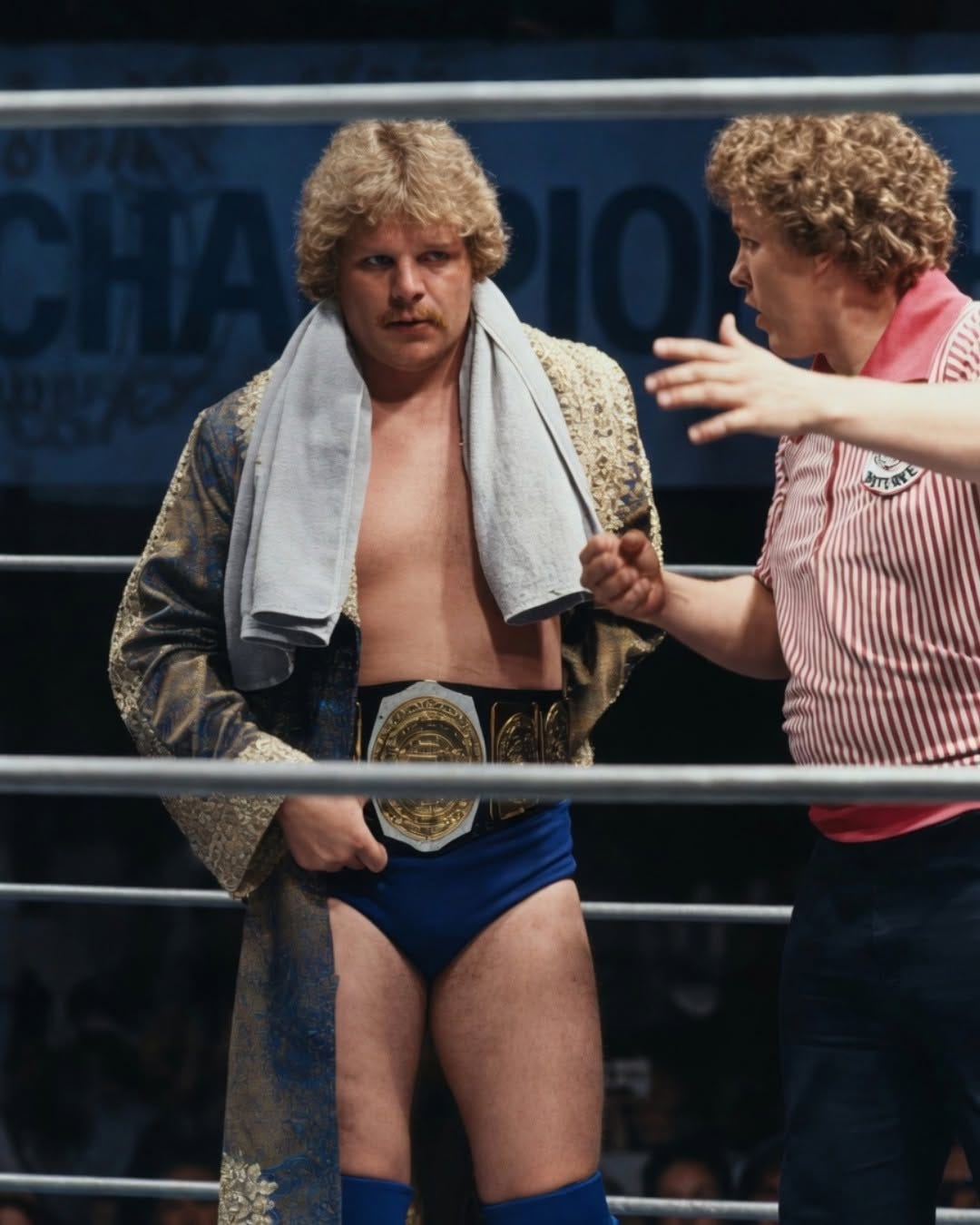
The double main event on August 20 is the quarter’s best piece of booking. The local title changed. The world title was defended in a way that made Rhodes look like the uncrowned champion. The new Georgia champion, Slater, was now in position to meet Funk in September. Augusta on August 23 gave Slater his first road defense, a disqualification win over Wrestling II. Atlanta on August 27 had Rhodes beat Slater by disqualification, which is how a territory lets the top babyface look strong without taking the belt off a new champion after one week. Steamboat beat Howard on that show. Macon and Columbus in the middle of August kept Slater and Song together as a heel tag against Wrestling II and Ted Oates, and kept Abdullah in the Soto–Oates orbit. Savannah on August 12 was one of the few Coastal dates of the quarter; Griffin on August 14 even carried a women’s tag, Darling Dagmar and Princess Little Dove against Diamond Lil and Marie LaVeau, a reminder that the office still believed a Saturday small-town card needed variety.
September:
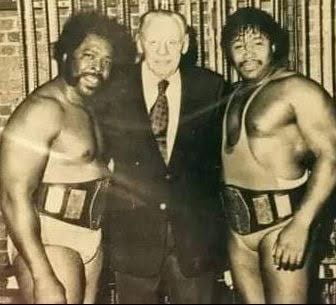
Pictured: The Black Bombers, Porkchop Cash and Tom Jones with Atlanta Promoter, Paul Jones
September tightened the programs and added stipulations. On September 3 in Atlanta, Porkchop Cash and Tom Jones — billed as the Black Bombers — beat the Valiants for the Georgia Tag Team Titles. That was a babyface turn of the belts after six or seven weeks of Valiant heat, and it gave the office a new champion team that could work the Oates brothers, the Valiants in rematches, and later the Andersons when they arrived in October. The same week Steamboat was working television at WTCG and house shows against Howard, Tony Charles, Killer Brooks, and Les Thornton. He was not yet in the title picture. He was the future being seasoned in public.
The Rock Hunter–Jerry Oates program became the quarter’s best midcard angle. Hunter was not just a manager; he was booked as a participant. Macon on September 14 put Oates against Hunter in a lumberjack match. Griffin on September 18 put them in a cage. Atlanta on September 17 handcuffed Hunter to Oates during Rhodes versus Song so the manager could not interfere. Augusta on September 13 used a Texas Death Match between Cash and Jimmy Valiant on the same card as Hunter and Song against Oates and LeDuc. That is how a territory gets a second month out of a manager. You stop using him as a corner man and start putting him in stipulations.
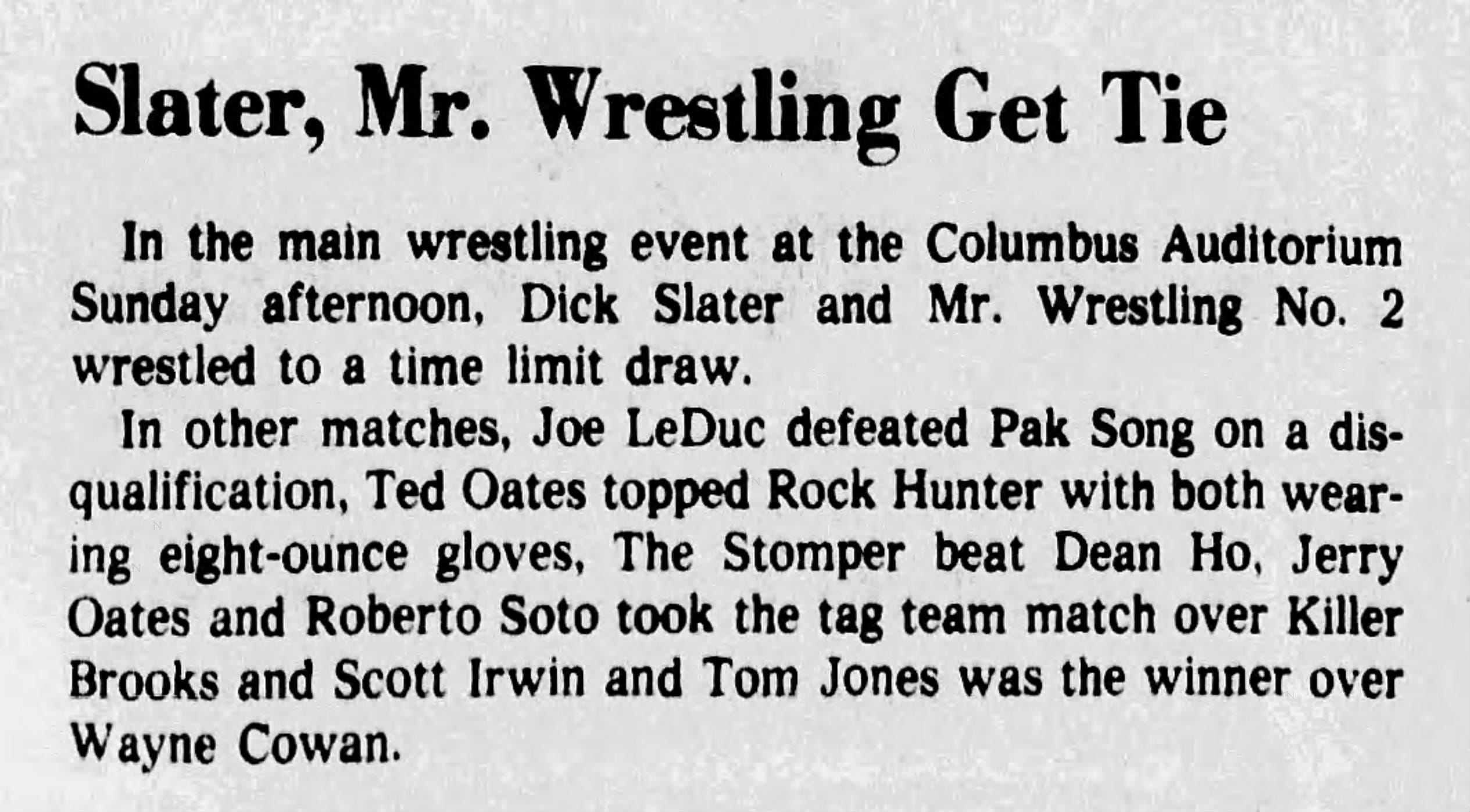
Pictured: September 20th, 1976 Columbus Ledger-Enquirer, Columbus, Georgia
Slater’s title defenses in September were built to look like wars. Macon on September 14 had him against LeDuc. Atlanta on September 17 had LeDuc against Slater on the same card as Rhodes against Song. Atlanta on September 24 teamed LeDuc and Rhodes against Slater and Song, which is the cleanest expression of the two programs: the new champion and the foreign heel against the two top babyface attractions. A Texas Death Match between LeDuc and Slater was advertised as the program grew teeth. On September 10 in Atlanta, Funk came back and went sixty minutes to a draw with Slater. That match did more for Slater than the title win itself. A man who can go the limit with the NWA champion does not need to be protected in Columbus or Griffin the next week. He can lose by count-out or disqualification to Patterson or Wrestling II and still be the champion when the circuit loops around.
Other September names filled holes. Gino Hernandez appeared on Augusta, Macon, Atlanta, and Griffin cards in the middle of the month, a young Texas hand getting a look. Ray Stevens worked Atlanta against Soto and against Ho. Billy Robinson teamed with Wrestling II against the Valiants on September 24, a short-term prestige booking. The Stomper, with Dillon, started to take undercard wins that would become a fall program. Killer Brooks and Stasiak were the veteran heels used to get Steamboat and Soto over without risking a title.
Business Analysis:
Town by town, the business logic was consistent even when the documented gates are thin. Atlanta Fridays were built as television commercials you paid to see finished. If Funk was in, the building could be expected to do better than a regular Slater–II rematch. If the tag titles changed, the next week’s Auditorium card advertised the rematch immediately. Macon Tuesdays under Ward were loyal and slightly more violent in presentation — lumberjacks, Texas Death, no-DQ rules waived — because the Coliseum crowd would buy blood that Atlanta television had to keep cleaner. Augusta Mondays were a working-class room that responded to Hunter, Song, and the Valiants. Columbus was a title town; it would later host Wrestling II winning the Georgia Title from Slater on October 26, which means the September Columbus cards were already treating II as the rightful challenger. Griffin Saturdays were where Steamboat, Cowan, and the midcard could main-event and where a cage match between Oates and Hunter made sense because the Sports Palace did not need a world-title overlay to feel important. Savannah was used sparingly, which usually meant the office did not trust the gate unless a special was available. Warner Robins and Rome were overflow dates for the same matches Macon and Atlanta had already run.
The storyline architecture of the quarter can be reduced to four strands. First, the Georgia Title passed from a long-reigning masked heel, the Spoiler, to Slater, a man the office could book as champion and as heel in the same week. Second, the tag titles were used as a hot potato: Red Devils, Ho and Mantell, the Valiants, then the Black Bombers, each change giving a different pair of babyfaces or heels a reason to be in the main event in four towns at once. Third, the world title was a rental. Funk versus Rhodes in July and August, Funk versus Slater in September, always ending in disqualification, count-out, or time-limit draw. Fourth, the manager angles — Hunter with Abdullah and Song, Dillon arriving with the Stomper — turned midcard matches into stipulation matches and kept Jerry Oates, Cash, and LeDuc on posters without needing a championship.
What the quarter did not do is also instructive. It did not put the world title on a Georgia hand. It did not blow off Slater and Wrestling II; that program was still running in October and November. It did not yet bring in Gene and Ole Anderson, who would take the tag titles on October 22. It did not yet put Steamboat with Rhodes against the Andersons, a match that would wait until the December Omni/HBO period. Q3 was inventory management. The office spent the summer making Slater a champion, making the Valiants a problem, making Hunter a wrestler, and making Steamboat familiar. The payoff dates were scheduled for fall, when the weather broke and when WTCG’s satellite era would begin.
The other item of business that reared its ugly head for the Georgia office in September of 1976 was the Jim Wilson lawsuit. This whole affair would later be documented and told in the book, Chokehold: Pro Wrestling’s Real Mayhem Outside the Ring written by Jim Wilson and Weldon T. Johnson. The book give an account of Jim Wilson's transition from an All-American college football player and NFL veteran to a professional wrestler. Back in September of 1976, the issue was just becoming public.

Pictured: September 30th, 1976, Atlanta Journal-Contistution, Atlanta, Georgia
Geographic Expansion
On the business side, Barnett’s Georgia office in 1976 was already thinking beyond the state line even if the product was still territorial. WTCG was Turner’s station. The Braves were Turner’s team. Wrestling was the cheap, reliable programming that filled Saturday and Sunday nights and sold tickets on weeknights. Barnett’s defense to other NWA promoters — that he was only using Georgia-based wrestlers on the television that would soon go national — was already a little thin in Q3. Rhodes, Funk, the Valiants, Robinson, Stevens, and Steamboat were not Georgia-based. They were NWA circulating talent. The difference was that Georgia could now show them to a growing cable audience and still send them down the road to Macon on Tuesday. That combination, local loop plus imported names, is why the territory was profitable enough to keep the Municipal Auditorium as a weekly stand rather than going all-in on occasional Omni spectaculars.
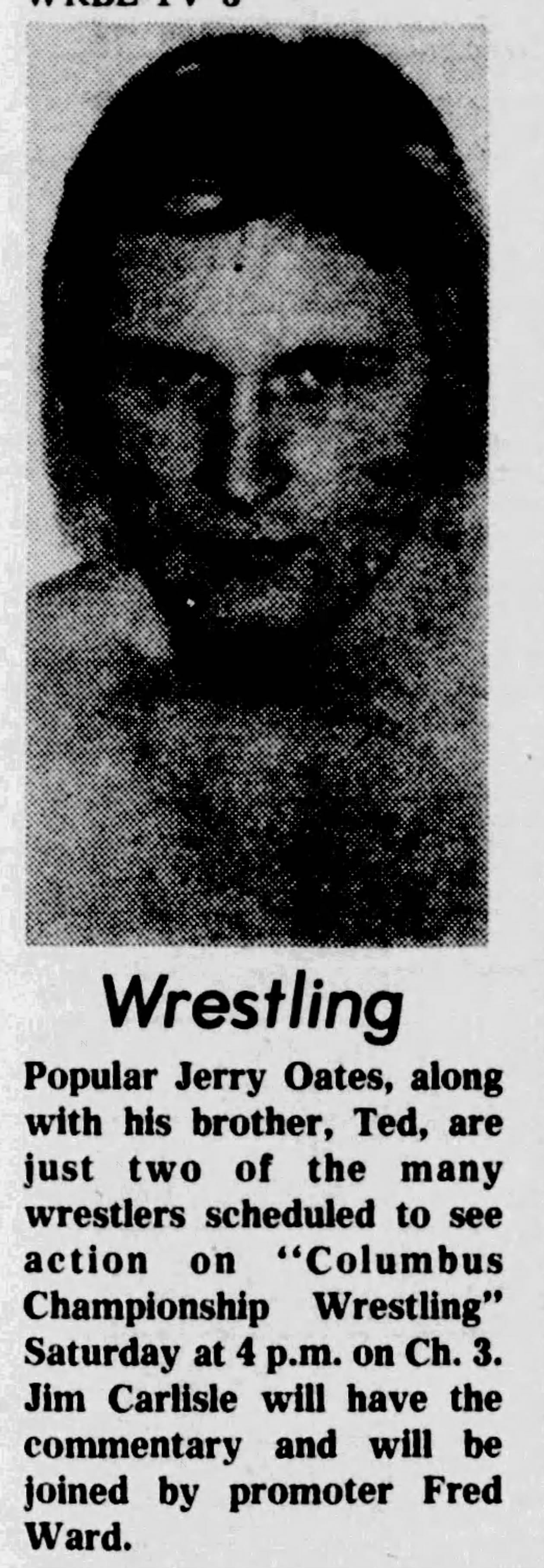
Columbus was Fred Ward’s home base and one of Georgia Championship Wrestling’s strongest secondary towns after Atlanta. Ward ran regular Wednesday-night cards at the Municipal Auditorium and treated the city as important enough to have its own titles, the decades long, NWA Columbus Heavyweight and Columbus Tag Team Championships.
Columbus remained a reliable, regularly booked town with its own local championships and a solid mid-card-to-main-event roster during that quarter. It was not Atlanta-level business, but it was the second biggest stop in the territory with its own Saturday afternoon live television show.
Many cards exist only as advertised lineups, not as results. Attendance figures for Auditorium and Coliseum shows in this quarter are scarce; the documented Omni numbers from May and November bookend the period but do not describe it. Some title-change dates conflict because the office repeated finishes. Women’s results are thin after early July. Savannah and the smaller towns are under-documented compared with Atlanta and Macon.
None of that changes the shape of the season. Georgia Championship Wrestling in July, August, and September of 1976 was a title-driven, stipulation-heavy, multi-town circuit that used the NWA champion as a spice and used its own champion as the meal. Slater leaving the Auditorium on August 20 with the Georgia belt, the Bombers leaving it on September 3 with the tag belts, and Funk leaving it on September 10 after an hour with the new champion — those three Friday nights are the quarter. Everything else was the circuit doing its job: same story, next town, different stipulation, until the leaves turned and the station went up on the satellite.
Thank You for Watching and Listening
I’m Tony Richards, Pro Wrestling Historian, Author and Storyteller. I share pro wrestling historical items in each issue of the Time Tunnel Pro Wrestling History Newsletter and each episode of our podcast show. Thanks for your support! If you enjoy my information on select events, matches and insights, please share with folks you think might like to be a subscriber!
Remember, Premium subscribers get access to exclusive and special content such as some special issues including a multi-part deep dives on wrestling territories, wrestler bios and championship title histories, special audio and video interviews on territory pro wrestling and more available in the Pro Wrestling Time Tunnel for Premium Subscribers. Being a Premium Subscriber also means you support me in my efforts to document Pro Wrestling History through my research, writing, books, vidoes and podcasts. And…I have something very special planned for our Premium Subscribers on the Podcast side of things in 2026! Details soon here in the Pro Wrestling Time Tunnel.