


Today’s Favorite Quote: If you feel uncomfortable using the word confront, use clarify instead - John Maxwell
Happy Birthday to those who have passed on and to those great wrestlers still with us:
In Memoriam:
“Moondog” Lonnie Mayne 1943
John Harris\Silo Sam 1952
Joe Laurenitis\Road Warrior Animal 1960
Happy Birthday:
(none)
RIP Memorial: We stop & remember those who have passed on this day and gave themselves to the business for us, the fans. We salute you and thank you.
Chris Von Erich 9-12-1991 at the age of 21

Manuel Rivera\Dr. Wagner 9-12-2004 at the age of 68

The Life and Career of Little Tokyo
Shigeru Akabane—known across North American arenas as Little Tokyo—was one of the defining figures of professional wrestling’s little-person division from the early 1970s through the late 1990s. Billed at four feet tall and 98 pounds, he combined a judo background with a sharp comic heel persona and, by the testimony of people who worked with him, unusually clean technique. His career stretched from Japanese undercards to NWA territories, the AWA, and WrestleMania III, and he held the NWA World Midget’s Championship a record-tying three times.
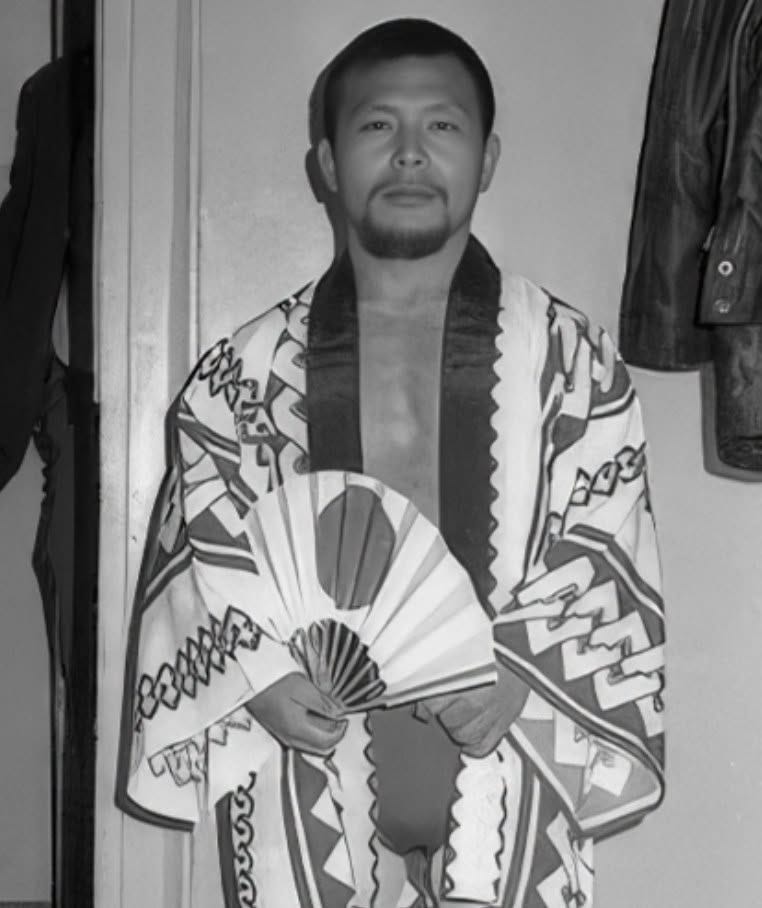
Akabane was born on July 5, 1941, in Tokyo’s Nerima district, during the last years of the Pacific War. He grew up with two brothers and two sisters of typical stature. His father was a glassblower who ran a small factory with his brothers—ordinary working-class circumstances in a city still rebuilding after the war. Sources sometimes render his given name as Shigeri rather than Shigeru; both appear in English-language wrestling records. He was later billed from Tokyo, Japan, and stood about 4 feet (122 cm).
He excelled at judo. That martial-arts foundation became the core of his ring style: crisp chops, kicks, throws, and a seriousness of execution that colleagues later contrasted with the acrobatic comedy of other little-person stars. At a judo tournament he met Yoshio Tamaie, a promoter who had brought North American little-person wrestlers to Japan. Tamaie steered him toward the professional ring. In Japan at the time only a handful of native little-person wrestlers had been trained, and the work was low-status. Akabane debuted in the early 1970s under his real name and, by later accounts, still carried bags for bigger stars.
Crossing the Pacific
The turning point was a touring troupe led by Lord Littlebrook—Eric Tovey, the English-born wrestler who became the central organizer of little-person wrestling in North America. The two men could not speak each other’s language at first. Littlebrook’s son, Chris Dube (Little Kato), later said they “communicated with their eyes.” After several Japanese tours, Littlebrook asked Akabane to come to the United States. He arrived around 1972, took the name Little Tokyo—built on his nationality and martial-arts background—and joined the traveling company that promoters booked as a specialty attraction.
Bill Howard, who met him in Kansas City about forty years before Akabane’s death, remembered a 4-foot, 98-pound newcomer who glared at everyone in the dressing room. Years later Akabane explained the look: he spoke no English and was scared. He learned the language, settled in the Kansas City–St. Joseph, Missouri orbit that was Littlebrook’s base, and became a United States citizen in 1979.
Style, Role, and Reputation
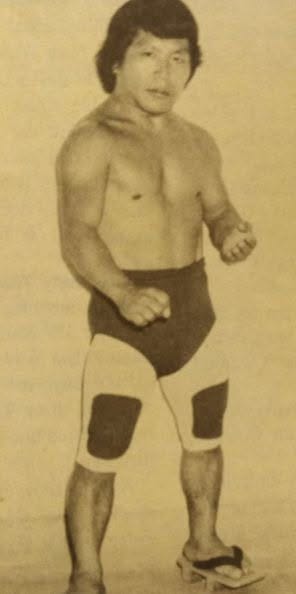
Little-person matches in the territory era were usually mid-card or undercard comedy: chase spots, oversized props, and mixed tags with full-sized wrestlers. Akabane worked that format, almost always as a heel, often beside Littlebrook. What distinguished him, according to people inside the business, was that he treated the comedy as a professional assignment rather than a novelty.
Chris Dube, trained by Akabane roughly twenty-five years before the 2011 tributes, put him “right up there” with Lord Littlebrook as the greatest little-person wrestler he had seen. Littlebrook, Dube said, specialized in backflips and acrobatics; Tokyo, with the judo base, “could do everything.” Every chop, kick, bump, and facial expression was executed to a standard Dube called perfection. Danny Campbell (Lil Nasty Boy) called him “the hardest midget I ever worked with” and said Tokyo’s timing and expressions made it difficult not to break character from the crowd. Percival A. Friend, a manager who knew him from Calgary and later Missouri, said he never heard an unkind word about him. “Pound for pound, he could wrestle just like the big boys,” Dube added—and if a partner was sloppy, Tokyo “could chop some sense into you.”
He was also, by all accounts, funny. Howard recalled a carnival in Des Moines where JJ Dillon and Buzz Tyler got the mustached, cigarette-smoking Tokyo in at the children’s price. On WWF’s Tuesday Night Titans he once appeared dressed as manager Mr. Fuji; Fuji then claimed he would pay only “a little money” because Tokyo was little and that was all he needed. The bit was cheap by later standards. It also showed how completely the character had been absorbed into 1980s national television.
Champion of a Specialized World Title

Pictured: The NWA World’s Midgets Championship Title Belt
The NWA World Midget’s Championship dated to 1949, when Sky Low Low won a thirty-man battle royal. Records for the belt are incomplete, as they are for many territorial titles, but Little Tokyo and Lord Littlebrook are both credited with three reigns, the most of any documented champions.
Akabane was first recognized as champion in August 1974, billed in Georgia, Texas, Oklahoma, and possibly other NWA territories. He lost the title at some point in the later 1970s; Cowboy Lang defeated him for it in Calgary on April 25, 1980. Tokyo was billed as champion again in December 1981, then dropped the belt to Tiny Tom on December 25, 1981, at Big Time Wrestling’s Christmas Star Wars in Dallas. After another Lang reign, Tokyo beat Lang on May 30, 1983, in Vancouver to become a three-time champion. That third reign is the best documented: about 958 days, with a successful defense against Little Mr. T on September 28, 1985, at AWA SuperClash at Chicago’s Comiskey Park. Little Mr. T ended the reign on January 12, 1986, in St. Joseph—Tokyo’s adopted hometown.
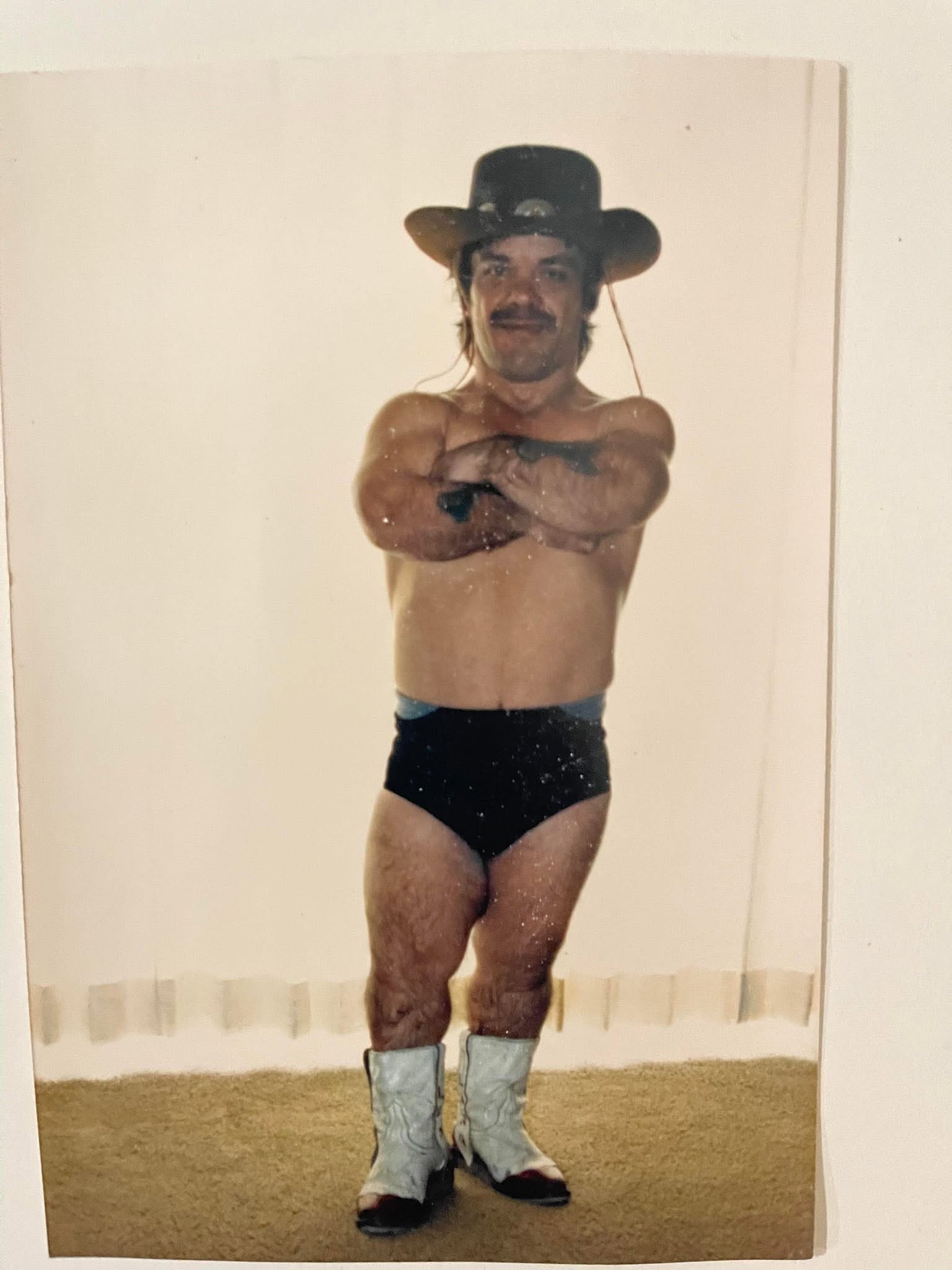
Pictured: Cowboy Lang
Cowboy Lang was his signature rival. They traded the world title and met across Calgary, Memphis, Florida, Texas, and the AWA. On April 20, 1986, Lang and Little Mr. T beat Tokyo and Littlebrook at AWA WrestleRock. Other recurring opponents included Haiti Kid, Lone Eagle, Coconut Willie, Little Coco, Tiny Tom, and later Karate Kid (Chris Dube). The World Midget Tag Team Championship was also associated with pairings such as Tokyo and Littlebrook.
The Territory Circuit
Little Tokyo’s booking map reads like a gazetteer of the territory system: Central States, World Class, Mid-South, Championship Wrestling from Florida, Continental, Georgia, Stampede, All-Star cards in Canada, Houston Wrestling, the AWA, and early WWWF/WWF dates. Midget matches were a reliable house attraction from the 1950s into the 1970s; foreign workers such as Tokyo extended that draw into the 1980s even as the specialty began to fade from major television.
He appeared on World Class Christmas Star Wars cards in Dallas—losing to Lone Eagle on the 1982 undercard after the Tiny Tom title change the previous year. He worked Memphis tags with The Spoiler, San Antonio and Houston singles against Little Coco and Cowboy Lang, and Pacific Northwest dates after the 1986 title loss. The work was relentless travel: small buildings one night, baseball parks and civic arenas the next, always as part of a packaged troupe that promoters could advertise as a change of pace.
WrestleMania III
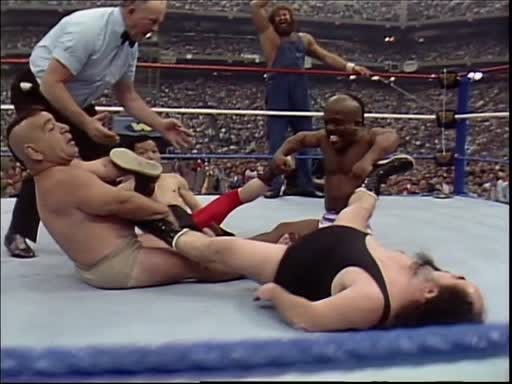
Pictured: Tokyo, Little BEaver, The Haikti Kid and Lord Littlebrook do the 4-man “rowboat” spot in their match at Wrestlemania III, March 29th, 1987.
His highest-profile night was March 29, 1987, at the Pontiac Silverdome. WrestleMania III, the peak event of the 1980s wrestling boom, drew a claimed 93,173. Tokyo teamed with Lord Littlebrook and King Kong Bundy against Hillbilly Jim, Haiti Kid, and Little Beaver. The match was a mixed six-person tag built around size contrast. It ended in disqualification after Bundy attacked Little Beaver; the four little-person wrestlers then turned on the 458-pound Bundy. For a performer who had spent fifteen years on territorial undercards, it was the largest audience of his life. It was also, in practice, his last major national-stage appearance.
Little Beaver (Lionel Giroux) was badly hurt in the Bundy spot and never fully recovered as a performer. The finish is often remembered more for that injury and for Bundy’s heel heat than for Tokyo’s work. Still, the booking placed him on the same card as Hulk Hogan vs. André the Giant—an index of how far the Japanese judo player who once carried bags had traveled.
Independents, Titles After the Territories, and Retirement
As the NWA system broke apart, Tokyo kept working independents. On January 1, 1988, he became the first Windy City Wrestling Midget Champion by beating Cowboy Cottrell; he won that title a second time in 1996. On September 29, 1994, at Herb Abrams’s Universal Wrestling Federation “Blackjack Brawl”—the promotion’s last show—he defeated Karate Kid to become the only UWF Midget World Champion. The belt was never defended. The booking was typical of late-period Abrams television: a title created for a pay-per-view special and then abandoned. It still closed a circle. Tokyo, the veteran heel, was trusted to put over a new championship on the way out of a dying company.
He trained much of Littlebrook’s later troupe. Promoters called Littlebrook; Littlebrook sent Tokyo to the ring to teach. Dube said his father would drop by to observe, but “Tok’s the one that went down there and trained all of us.” Tokyo wrestled into his late fifties. Littlebrook, in a Whatever Happened to … interview, quoted him after retirement: the bumps had become too hard. Sources place the retirement in 1997 or 1998.
Personal Life
He made St. Joseph, Missouri, his home—the same city as Lord Littlebrook. He drove a large pickup truck that friends remembered as comic next to his size. He was divorced and lived alone in later years. A son died of a heart attack while training for the Boston Marathon. A daughter lived in San Diego; another son in Hawaii. Friends from the road—Howard, Friend, Diane Devine—stayed in touch. When they visited, the conversation was lunch, jokes, and the old circuit. Howard said everyone liked him. Friends called him a perfect gentleman outside the ring who “loved life and enjoyed friends to their fullest.”
Illness and Death
Around age 69 he was diagnosed with cancer at the base of the tongue; doctors called it treatable. Reports at his death also mentioned leukemia and a second round of treatment that had produced rashes. On September 5, 2011, Howard visited him in the hospital in St. Joseph. Tokyo was in high spirits, joking in a gravelly voice about television, three meals a day, nurses, and “good drugs.” A doctor said the rashes had cleared and he would be discharged the next day. On the morning of September 6, while getting up to use the bathroom, he had a heart attack and died. He was 70. Some contemporary obituaries listed him as 71.
Legacy
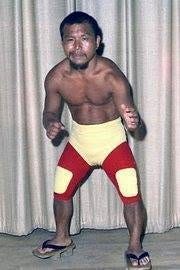
Little Tokyo’s career sits inside a form that wrestling has largely discarded. “Midget wrestling” was a billed specialty for decades: a mix of real athletic skill, ethnic and size-based comedy, and carnival presentation. By the 1990s major companies had moved away from it; later generations preferred different language and different booking. That context matters. It does not erase what colleagues said about the work itself.
He was not a main-event star in the Hogan or Flair sense. He was a specialist who, within a constrained role, became the standard. He held the principal world title of his division as often as anyone on the surviving lists. He helped transplant a Japanese judoka’s mechanics into a North American comedy act without losing the mechanics. He trained the next small troupe in the Missouri pipeline. And on one March night in Pontiac he stood in a stadium built for football, next to his mentor and a giant, in front of a crowd that would be cited for decades as the sport’s high-water mark.
The tributes in 2011 were consistent. He made people laugh in the ring and out of it. He was exacting about bumps and expressions. He was, in Dube’s phrase, a true technician who could also do all the comedy spots. For a man billed at four feet and ninety-eight pounds, that combination was the whole argument of his career: the package was small; the craft was not.
One Thing I Learned About Wendi Richter
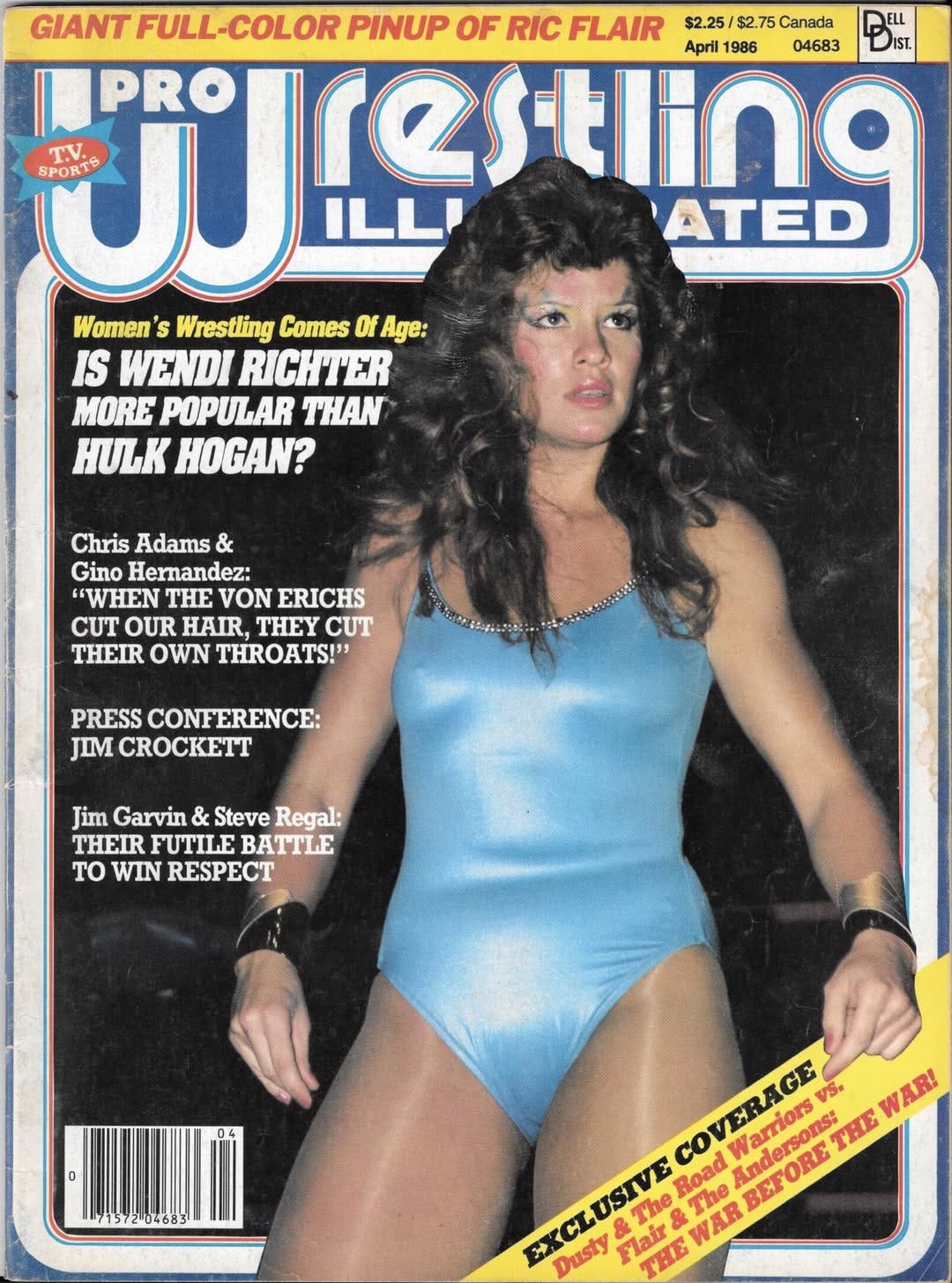
Before she was the face of Rock ’n’ Wrestling, Wendi Richter was studying computer programming at Draughon’s Business College in Dallas.
That is the part that rarely makes the highlight reels. The ranch-and-rodeo background gets mentioned; the Cyndi Lauper angle always does. The programming coursework almost never does. She was a Bossier High School athlete—volleyball, track, cross-country, shot put—who then sat in business-college classes learning to code, then walked into Fabulous Moolah’s school and debuted in 1979.
The after-story matches it. When the WWF run ended, she did not just drift. She sold real estate, then went back to school for thirteen years, picking up physical-therapy training and a master’s in occupational therapy, and she has worked as an OT since. On the side she has shown dogs, including at Westminster.
So the little-known fact is not another screwjob footnote. It is that the woman billed as “150 pounds of twisted steel and sex appeal” was, on paper, a computer-programming student from Dallas who later rebuilt an entire second profession in medicine.
Thank You for Watching and Listening
I’m Tony Richards, Pro Wrestling Historian, Author and Storyteller. I share pro wrestling historical items in each issue of the Time Tunnel Pro Wrestling History Newsletter and each episode of our podcast show. Thanks for your support! If you enjoy my information on select events, matches and insights, please share with folks you think might like to be a subscriber!
Remember, Premium subscribers get access to exclusive and special content such as some special issues including a multi-part deep dives on wrestling territories, wrestler bios and championship title histories, special audio and video interviews on territory pro wrestling and more available in the Pro Wrestling Time Tunnel for Premium Subscribers. Being a Premium Subscriber also means you support me in my efforts to document Pro Wrestling History through my research, writing, books, vidoes and podcasts. And…I have something very special planned for our Premium Subscribers on the Podcast side of things in 2026! Details soon here in the Pro Wrestling Time Tunnel.