


Today’s Favorite Quote: Humor is a serious thing. I like to think of it as one of our greatest easiest natural resources, which must be preserved at all cost-James Thurber
Happy Birthday to those who have passed on and to those great wrestlers still with us:
In Memoriam:
(none)
Happy Birthday:
Paul Heyman\Paul E. Dangerously (60)
RIP Memorial: We stop & remember those who have passed on this day and gave themselves to the business for us, the fans. We salute you and thank you.
Ray Steele 9-11-1949 at the age of 49

Karol Kalmikoff 9-11-1964 at the age of 52

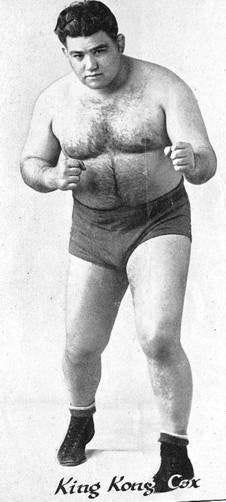
King Kong Cox 9-11-1976 at the age of 74
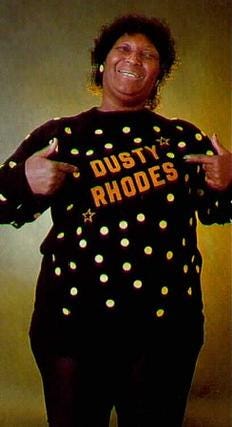
Juanita Wright\Sapphire 9-11-1996 at the age of 61
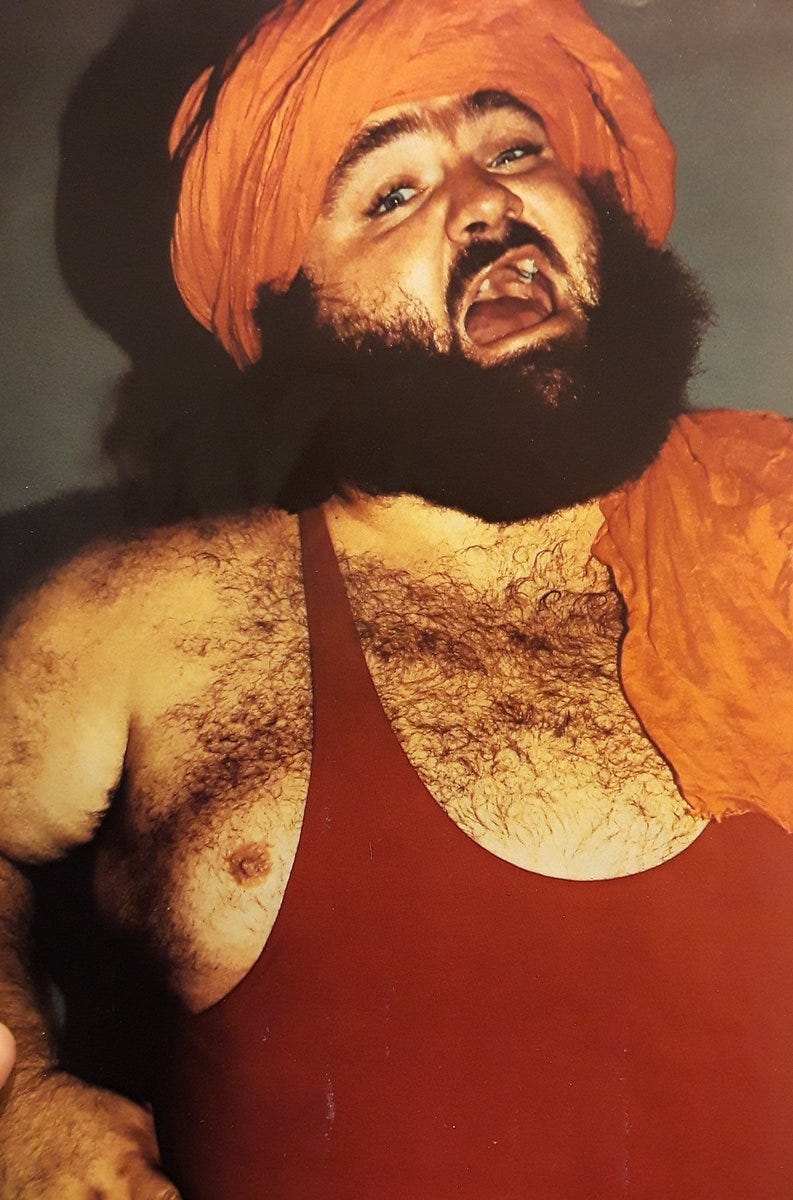
Mike Shaw\Makhan Singh 9-11-2010 at the age of 53
The Life and Career of Don Muraco
Donald Thomas Muraco was born on September 10, 1949, at Sunset Beach on the North Shore of Oahu. The place itself is part of the story. Sunset Beach is a working stretch of Hawaiian coastline, famous for winter surf and a culture that prizes physical toughness without much ceremony. Muraco grew up inside that culture. He is of Native Hawaiian heritage and has described his ancestry as half Irish, a quarter Hawaiian, and a quarter German. He was adopted into an Italian-Portuguese family, a common island pattern that mixed bloodlines, languages, and work habits under one roof. The result was a boy who belonged to Hawaii in the deepest sense: ocean, football fields, high-school gyms, and the weekly wrestling cards that passed through Honolulu like visiting weather.

He attended Punahou School in Honolulu, where he played football as a lineman and wrestled. In 1967 he won the Hawaii state amateur wrestling championship in the unlimited class. That title mattered. It told him he could impose himself on other large, trained men, and it gave him a choice that many island athletes of his generation faced: college football or something less conventional. He chose professional wrestling. He has said, without much romance, that he did not want more school. He wanted a living that used his body and his temperament.
The first classroom was a gym in Waikiki run by Dean Higuchi, who wrestled as Dean Ho. Traveling talent stopped there on the way to Japan or Australia. Luther Lindsay, Karl Gotch, Mr. Fuji, Lonnie Mayne, and other veterans passed through. Muraco, still a teenager coming off a childhood hip problem that had limited some sports, learned holds, timing, and the unwritten rules of the road. His formal debut came in 1970 under the name Don Morrow, working for Gene Kiniski and Sandor Kovacs in Vancouver and for Don Owen in Portland. He was a preliminary wrestler, the kind of young heavyweight who absorbs punishment so the main-event men can look dangerous. Those early months in the Pacific Northwest, Los Angeles, Florida, and Hawaii were the apprenticeship that later made him look finished on national television.

Verne Gagne’s American Wrestling Association gave him his first real break. In Minneapolis he wrestled as a babyface, often tagging with Jimmy Snuka against Larry “The Axe” Hennig, Ivan Koloff, and Dusty Rhodes. The AWA was a serious territory with serious wages and a television audience that stretched across the Midwest. Muraco could have stayed. He left in 1973 because he was tired of Minneapolis winters and because the territorial system rewarded movement. Roy Shire’s San Francisco office taught him something more useful than another title shot: how to be a heel. The switch was not cosmetic. Muraco discovered that he enjoyed drawing heat. He had the size, the scowl, and the island-bred indifference to other people’s approval. Playing the villain, he later said, was more fun.
The mid-1970s were the years he became a complete wrestler. He won the NWA Americas Heavyweight Championship in Los Angeles and the San Francisco version of the NWA World Tag Team Championship with Masked Invader No. 1. He worked Georgia, Texas, Hawaii, Australia, and New Zealand. In Championship Wrestling from Florida he was compared, physically, to Jack Brisco, then the NWA World Heavyweight Champion. On May 28, 1974, he faced Brisco and reversed the figure-four before losing by disqualification, a result that put him on the map as a man who could hang with a world champion.

Florida also produced two of his most memorable early angles. In 1979 he appeared under a mask as “The Magnificent M,” a Buddy Rogers–Eddie Graham creation. When he was unmasked, the shock was his shaved head. Crowds that had accepted a handsome Hawaiian babyface now saw a bald, smirking heel, and they hated him for it. In 1980 he piledrove a young Barry Windham onto the concrete floor, a piece of violence that made Windham a star when the rookie finally got even.
By then Muraco had the package that would travel: 6-foot-3, roughly 270 to 275 pounds, a stiff power style built on clotheslines, suplexes, and an inverted piledriver that later generations would recognize as the tombstone. He also used the Asian Spike, a nerve hold that looked nasty on television. He could talk. He could sell. He could make a fifteen-minute television match feel like a grudge.
He debuted in the World Wrestling Federation on February 24, 1981, in Allentown, Pennsylvania, beating Steve King. Vince McMahon Sr. still ran the company. The Grand Wizard, Ernie Roth, became his manager. Four months later, on June 20, 1981, in Philadelphia, Muraco defeated Pedro Morales for the WWF Intercontinental Heavyweight Championship. The win was not a midcard afterthought. Morales was a former world champion and a beloved figure in New York and Puerto Rico. Taking the belt from him made Muraco one of the most hated men in the Northeast. He held the title for 156 days and dropped it back to Morales on November 23 in a Texas Death Match, a bloody finish that closed one chapter and advertised the next.

That same autumn he wrestled WWF Champion Bob Backlund in a series of matches that still hold up among people who care about psychology. On October 24, 1981, they went to a sixty-minute draw. Muraco was not a high-flyer and Backlund was not a cartoon. They worked a long, physical match that treated the Intercontinental Champion as a credible threat to the world title. Muraco also bled with Tony Atlas and Rocky Johnson. He ate a submarine sandwich in the ring. He dedicated piledrivers to commentators. Crowds chanted “Beach Bum,” a slur that he absorbed and turned into part of the act. The arrogance was the point. He demanded respect while giving none.
He spent parts of 1982 in Mid-Atlantic with Roddy Piper, in Georgia as the masked Dr. X, and in New Japan’s MSG League, then returned to the WWF with Captain Lou Albano. On January 22, 1983, he beat Morales again for the Intercontinental Championship. The second reign lasted 385 days, one of the longest in the title’s history, and it is the run that fixed Muraco in wrestling memory.
The defining night was October 17, 1983, at Madison Square Garden. Jimmy Snuka, once his tag-team partner in the AWA and now Albano’s former protégé, challenged him in a steel cage. Muraco retained. After the bell, Snuka climbed the cage and hit the Superfly Splash from the top. The spot did not change the decision. It changed the culture. Mick Foley, Tommy Dreamer, The Sandman, and Bubba Ray Dudley have all said they were in that building, or watched the tape until the tape wore out, and decided that professional wrestling was what they wanted to do. A heel championship match became a creation myth for the next generation of hardcore wrestlers.

Tito Santana finally took the belt on February 11, 1984. Muraco left for a stretch in NWA Polynesian and Japan, then came back in 1985 with Mr. Fuji. Hulkamania was the company’s new engine, and Muraco was one of the men assigned to test it. He headlined three straight Madison Square Garden cards against Hulk Hogan, the last a bloody cage match on June 21 that Hogan won. Two weeks later, on July 8, Muraco won the first King of the Ring tournament, beating Junkyard Dog, Les Thornton, Pedro Morales, and The Iron Sheik in the final. The tournament was not yet a pay-per-view institution. It was a house-show experiment that later became part of WWE lore, and Muraco was its first king.
The Fuji years were also comedy. On Tuesday Night Titans they filmed “Fuji Vice,” a Miami Vice parody, then “Fuji General,” a soap-opera send-up. The sketches look cheap now. They were, for 1985, a sign that the WWF understood television as variety as much as sport. In the ring Muraco feuded with Ricky Steamboat, hanging him from the top rope with Steamboat’s own karate belt. He aligned with Adrian Adonis and Bob Orton Jr. against Piper. At WrestleMania 2 he went to a double count-out with Paul Orndorff. At WrestleMania III, in front of a claimed 93,173 people at the Pontiac Silverdome, he and Orton lost to the Can-Am Connection of Rick Martel and Tom Zenk. It was an opening match on the biggest card the business had ever staged. Muraco was no longer the company’s top heel. He was still a name that belonged on that stage.
The partnership with Orton collapsed into a feud, and Muraco turned face. He has said, out of character, that he did not enjoy the babyface run and thought he was better as a heel. The company tried anyway. In November 1987 he saved Superstar Billy Graham from a beating and took Graham as his manager. He borrowed Graham’s tie-dye and the nickname “The Rock.” Gorilla Monsoon still called him Magnificent Muraco on commentary, but the billing was new. He was the first WWF wrestler to carry that name. He joined Hogan’s team at the first Survivor Series, lasted deep into the 1988 Royal Rumble, and reached the quarterfinals of the WrestleMania IV world-title tournament by beating Dino Bravo before losing to Ted DiBiase. At the first SummerSlam he lost to Bravo. In October 1988, on a tour of Italy, he wrestled Barry Horowitz in what became his last WWF match. He was let go after a dispute involving management on the road. He was thirty-eight, coming off a torn groin, and, by his own later account, a step slower than the man who had beaten Morales in 1981.
He called the firing the best thing that ever happened to him.

After the WWF he did not vanish. In December 1988 he beat Makhan Singh for Stampede Wrestling’s North American Heavyweight Championship. He worked All Japan, the dying AWA, Herb Abrams’s chaotic Universal Wrestling Federation (including matches with a young Cactus Jack), and New Zealand. In 1992 he arrived in Eastern Championship Wrestling, the Philadelphia promotion that had not yet become Extreme Championship Wrestling. On September 30 he beat Jimmy Snuka for the ECW Heavyweight Championship. He lost it to The Sandman that November, won it back on April 3, 1993, and dropped it to Tito Santana on October 1. The reigns were short by his WWF standards, but they gave a veteran heel a last run as a world champion in a company that would soon rewrite the rules of American wrestling. In May 1993 he appeared for WCW at Slamboree, teaming with Dick Murdoch and Snuka in a legends brawl. In 1994 he went to Japan’s Wrestle Association-R as the masked Aka Oni. Regular in-ring work wound down around 1995.
He went home.
Hawaii had never stopped being the center of his life. He had married Sharon Caldwell on December 31, 1981. They raised three children; one of them, Joe, wrestled briefly and teamed with his father on August 27, 2005, at WrestleReunion 2, beating Bob and Brad Armstrong. After leaving the WWF, Muraco moved the family back from New Jersey because he missed the islands and because he wanted a stable household more than another territory loop. He had saved money from the main-event years. He did some television, including work on Hawaii Five-O and Magnum, P.I. He did not chase the convention circuit.
In 1991 he got hired as a longshoreman by McCabe, Hamilton & Renny through friends on the Honolulu docks. He has joked that he did not know a padlock from a hammerlock. He learned to drive forklifts, tighten rods, and clerk cargo. He joined ILWU Local 142, worked the job for twenty-five years, and retired in 2016 with a pension, medical coverage, and the particular pride of a man who had gone from Madison Square Garden to the waterfront without collapsing into nostalgia. He compared the two trades more than once. Both require trust. Both put bodies at risk. Both create a kind of family among people who understand that the work is dangerous and the paycheck is real.
He did not leave wrestling entirely. In 2003 he co-founded Hawai‘i Championship Wrestling with television producer Linda Bade. The promotion ran until 2008; Muraco served as its on-screen commissioner into 2006. In 1996 he inducted Jimmy Snuka into the WWE Hall of Fame. On March 13, 2004, Mick Foley inducted Muraco. Foley’s speech was personal: he had been the kid in the Garden the night Snuka flew. In 2007 Muraco returned the favor for Mr. Fuji. In 2014 he entered the Professional Wrestling Hall of Fame in the Modern Era category.
The record is easy to list and harder to weigh. Two WWF Intercontinental Championship reigns totaling 541 days. First King of the Ring. Two ECW Heavyweight Championships. Stampede North American Champion. A stack of territorial titles in Florida, Hawaii, California, and Georgia. Four WrestleManias. Main events at the Garden against Backlund, Morales, Snuka, and Hogan. A finishing hold that the Undertaker would later make famous. A nickname that another Hawaiian-connected star would take worldwide.

What lasts is the particular texture of Muraco’s prime. He was a territorial heavyweight who arrived in the WWF just as the company began to go national, still working in a style that assumed the audience understood holds and heat. He was handsome enough to be a babyface and mean enough that the face run never quite fit. He could be funny without becoming a joke. He could be vicious without becoming a cartoon, at least until the company itself became a cartoon. The Snuka cage match is the clip that survives because it is both a wrestling finish and a piece of folk art: a champion who will not stay down, a challenger who will not stay on the mat, a building that believed the splash might change the world.
Muraco’s later life complicates the usual retirement story. He did not become a commentator, a road agent, or a permanent Hall of Fame ambassador. He loaded ships. He raised children in Haleiwa and the North Shore towns he had known as a boy. He kept the island’s sense that a man is what he does after the applause stops. In interviews he has been blunt about the old business and protective of the people in it. He has said modern wrestlers take too many risks. He has said the day the WWF cut him loose saved his life. He has said the union job was a brilliant move.
That combination—magnificent heel, original Rock, longshore pensioner—is the full career. Don Muraco was never the most colorful man of the 1980s boom, and he was never the most beloved. He was one of the most believable. He looked like a man who could hurt you, talked like a man who enjoyed the idea, and then, when the territory system and the national expansion had both used him up, he went home and did another hard job until he was done. The beach bum the New York crowds mocked had the last, quiet word. He outlasted the chant.
One Thing I Learned About Paul Heyman

At nineteen — still too young to drink in the building — Paul Heyman was producing Friday nights at Studio 54.
He had talked his way from ringside photographer to house photographer to in-house publicist at the club, then stepped into the open Friday-night slot when a chunk of the staff bolted for the Palladium. On August 23, 1985, he staged Wrestle Party ’85 inside the most famous nightclub in America: he invented an award so he could fly Ric Flair in, brought Dusty Rhodes and Magnum T.A. with him, and used the night for Bam Bam Bigelow’s wrestling debut. Bigelow is the one who then pushed him to get in front of the camera as a manager — on the condition he could call himself Paul E. Dangerously.
The whole arc is the Heyman origin in miniature: invent the credential, invent the event, invent the character, then let the room catch up.

Thank You for Watching and Listening
I’m Tony Richards, Pro Wrestling Historian, Author and Storyteller. I share pro wrestling historical items in each issue of the Time Tunnel Pro Wrestling History Newsletter and each episode of our podcast show. Thanks for your support! If you enjoy my information on select events, matches and insights, please share with folks you think might like to be a subscriber!
Remember, Premium subscribers get access to exclusive and special content such as some special issues including a multi-part deep dives on wrestling territories, wrestler bios and championship title histories, special audio and video interviews on territory pro wrestling and more available in the Pro Wrestling Time Tunnel for Premium Subscribers. Being a Premium Subscriber also means you support me in my efforts to document Pro Wrestling History through my research, writing, books, vidoes and podcasts. And…I have something very special planned for our Premium Subscribers on the Podcast side of things in 2026! Details soon here in the Pro Wrestling Time Tunnel.
Muraco was one of my favorite heels. Before he got on the egg whites (allegedly), he was just this thick brute who would beat you up bad and laugh while doing it.
He used to do interviews while chewing an apple and spewing chunks on the poor interviewer long before Carlito did it. Wotta jerk lol 😂
Thank you for the article. Great job as always