


Today’s Favorite Quote: The early bird gets the worm & the second mouse gets the cheese-Warren Buffett
Happy Birthday to those who have passed on and to those great wrestlers still with us:
In Memoriam:
Johnny Walker\Mr. Wrestling 2 1934
Jerry Morrow 1949
Happy Birthday:
Don Muraco (76)
Steve Keirn (74)
Matt Morgan (49)
William Mueller\Trevor Murdoch )45)
Drake Younger (41)
RIP Memorial: We stop & remember those who have passed on this day and gave themselves to the business for us, the fans. We salute you and thank you.
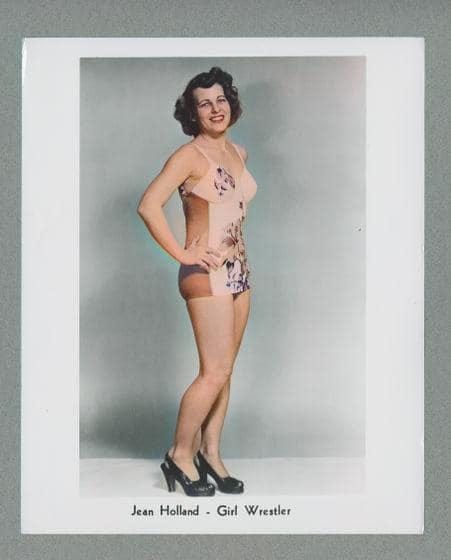
Jean Holland 9-10-1996 at the age of 73
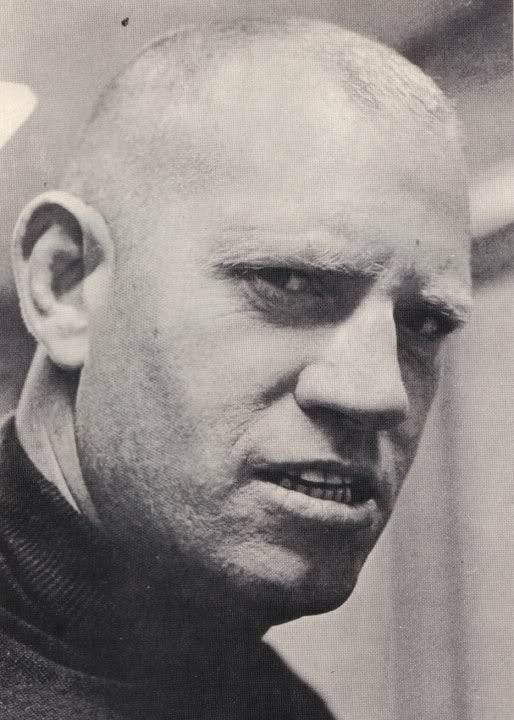
Jack Adkisson\Fritz Von Erich 9-10-1997 at the age of 68
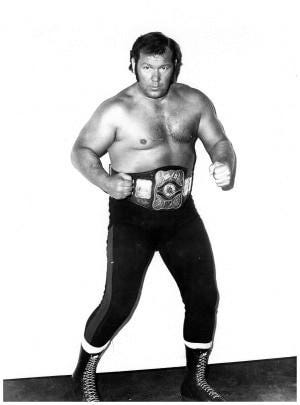
Enrique Torres 9-10-2007 at the age of 85

Moose Morowski 9-10-2016 at the age of 81
7 Stages of the Territory Era
Stage 4: investigation
September 1956
The NWA Women’s Title Is Split
The September 18, 1956 battle royal did not simply crown a new champion. It split women’s world-title history into two lineages and put the championship in the hands of one booker for a generation.
The Seven Stages of the NWA Women’s Championship, and the Night Moolah Took the Belt
On September 18, 1956, in Baltimore, Maryland, Lillian Ellison—then still billed as Slave Girl Moolah—last eliminated Judy Grable in a thirteen-woman battle royal and walked out as women’s world champion. Vince McMahon Sr. immediately recast her as The Fabulous Moolah. That single house-show finish became the hinge of modern women’s championship history. It did not settle every political claim then circulating in the National Wrestling Alliance. It did, however, give one woman physical possession of a belt, booking leverage over most of the working girls, and a lineage that WWE would later treat as a twenty-eight-year reign. The night also fractured the NWA women’s title into the version Moolah carried and the version the Alliance would have to rebuild after she sold the rights away.
What follows is the championship in seven stages: how it was built before Baltimore, what happened in that battle royal, how Moolah kept the prize for decades, and how her win reshaped the NWA women’s title long after 1956.
Stage One: A World Title Before There Was an Alliance
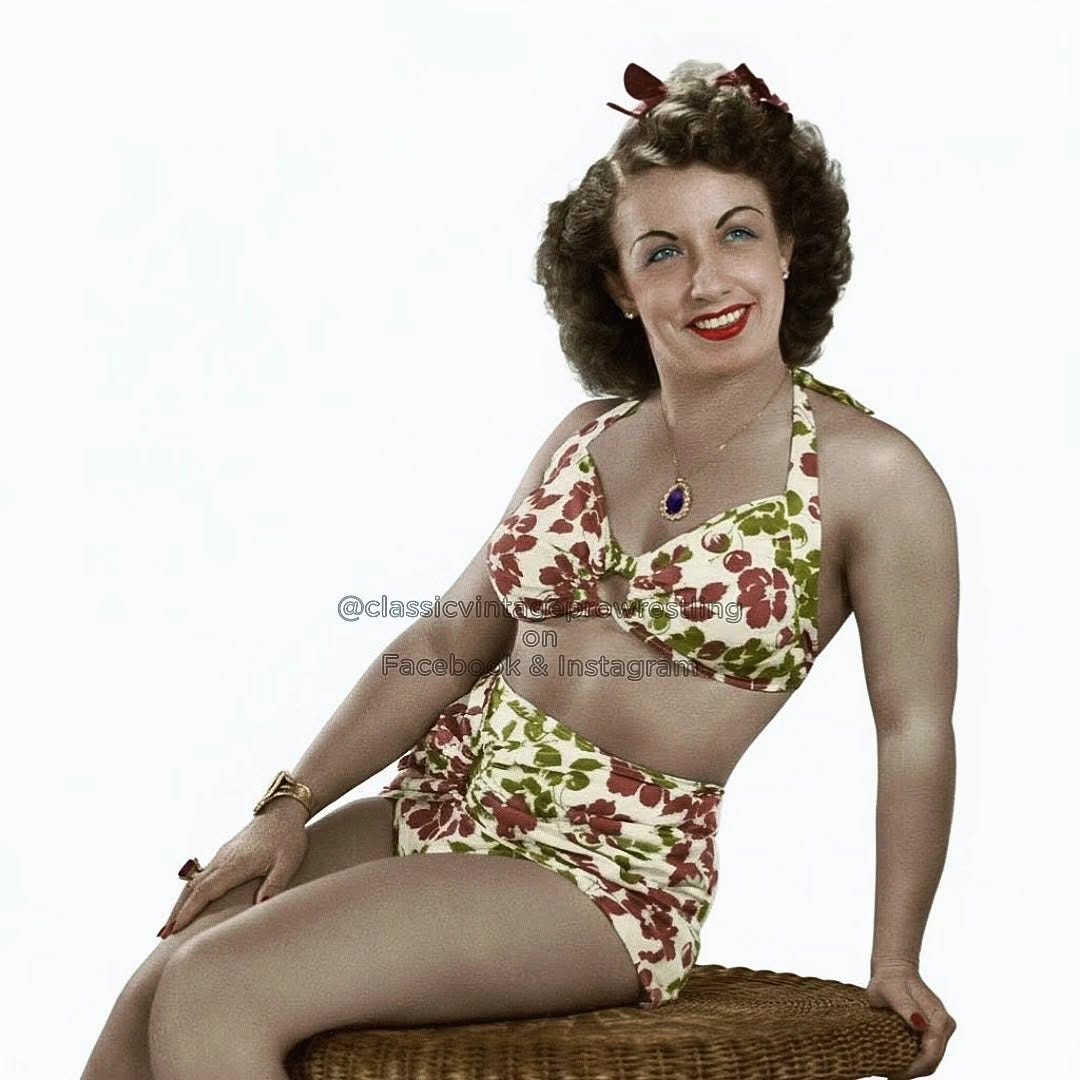
Women’s world championships in American professional wrestling predate the NWA. Mildred Burke rose in the 1930s under promoter Billy Wolfe and became the dominant drawing card of the women’s circuit. When the Alliance formed in 1948 and began recognizing a unified women’s world title around 1950, Burke was the natural inaugural champion. She packed houses, toured widely, and proved that women could headline. The title she carried was not yet a corporate property in the modern sense. It was a traveling claim, backed by commissions, newspapers, and whichever promoters agreed to book the champion.
That informal system worked only as long as the champion and the booker stayed aligned. Burke and Wolfe did not. Their personal and business break in the early 1950s turned the championship into a weapon. Wolfe pushed other women—Nell Stewart and, above all, June Byers, who married into the Wolfe family—as replacements. Burke refused to lay down. The Alliance wanted a clean succession. It did not get one.
Stage Two: Atlanta, 1954, and Two Champions at Once
On August 20, 1954, in Atlanta, Burke met Byers in a two-out-of-three-falls match that was widely understood as a shoot. Byers took the first fall. The second never produced a second decisive fall. Officials stopped the bout after about an hour. Technically, two falls had not been scored. Politically, that did not matter. The athletic commission and most NWA promoters recognized Byers. Burke left with the physical belt in some accounts, rejected the ruling, and soon established the World Women’s Wrestling Association title, under which she continued to bill herself as world champion until she left the ring in the mid-1950s.
From that night forward, “the” women’s world title was already split. Byers held the NWA recognition in the majority of territories. Burke held a rival claim and a separate belt. The original NWA women’s strap last appeared in an Alliance ring on the night of the Atlanta match. Everything after that was a new plate, a new political bargain, or both.
Stage Three: The Northeast Vacancy and the Baltimore Battle Royal
By 1956, the northeastern offices—New York, New Jersey, and Baltimore, with Vince McMahon Sr. prominent among them—stopped recognizing Byers. The Baltimore Athletic Commission stripped her of the championship. Byers, still backed by Wolfe, continued to be treated as champion in much of the rest of the Alliance. She was still defending the title on cards later in 1956 in places such as Nashville, Dallas, and Phoenix. The Northeast simply chose not to use her.
That created a local vacancy and a chance to crown a champion the Capitol Wrestling office could control. On September 18, 1956, Baltimore hosted a thirteen-woman battle royal for the vacant world women’s title. Some contemporary and later accounts also describe the night as a one-night tournament whose final was Moolah against Grable. The result is not in dispute. Moolah was the last woman standing. Grable was the last woman she beat. McMahon dropped the “Slave Girl” billing and gave her the name that would follow her for half a century: The Fabulous Moolah.
The field was not a full NWA referendum. Byers was not invited. Wolfe still had enough weight in the Alliance that Moolah was not universally recognized as NWA World Women’s Champion in 1956. She was the champion of the offices that had created the vacancy. Penny Banner later said the NWA never fully sanctioned Moolah’s group in those early years and that Moolah was, at first, champion of Vince Sr.’s circuit rather than of the entire Alliance. That distinction mattered then. It would matter less after Byers retired in 1964. Once Byers was gone, Moolah became the only plausible national claimant, even if a few territories briefly nodded toward Banner’s AWA women’s title.
Stage Four: A Decade That Looked Like Forever
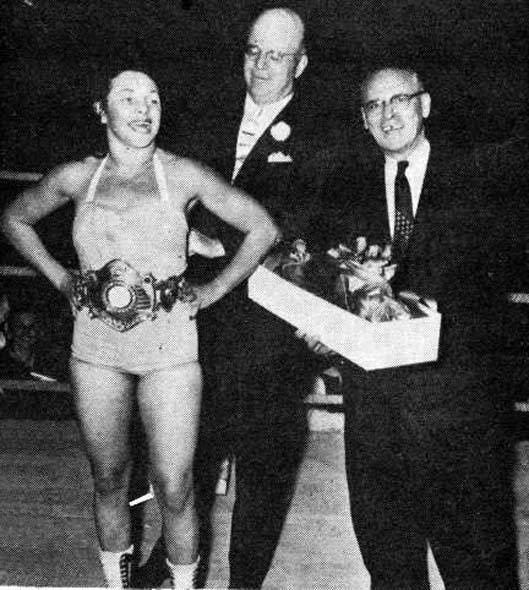
Moolah’s first recognized reign ran from September 18, 1956, to September 17, 1966—3,651 days. She defended against the women who could draw: Grable again and again, Donna Christanello, and, after Byers came out of retirement to challenge the new claimant, Byers herself. Moolah won that meeting and kept the belt.
The reign was not only athletic. It was administrative. Moolah and her husband, Buddy Lee, built a school in Columbia, South Carolina. She trained the next generation, owned many of their ring names, and packaged a traveling women’s crew that territories could buy as a unit. Promoters who wanted women’s matches usually wanted Moolah’s girls, which meant they wanted Moolah’s finishes. A woman who booked around her could find herself shut out of the NWA loop. The championship became less a prize that changed hands on merit than a property that traveled with its owner.
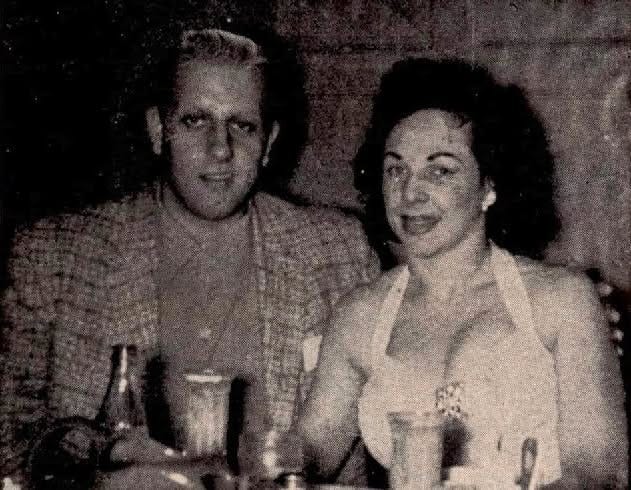
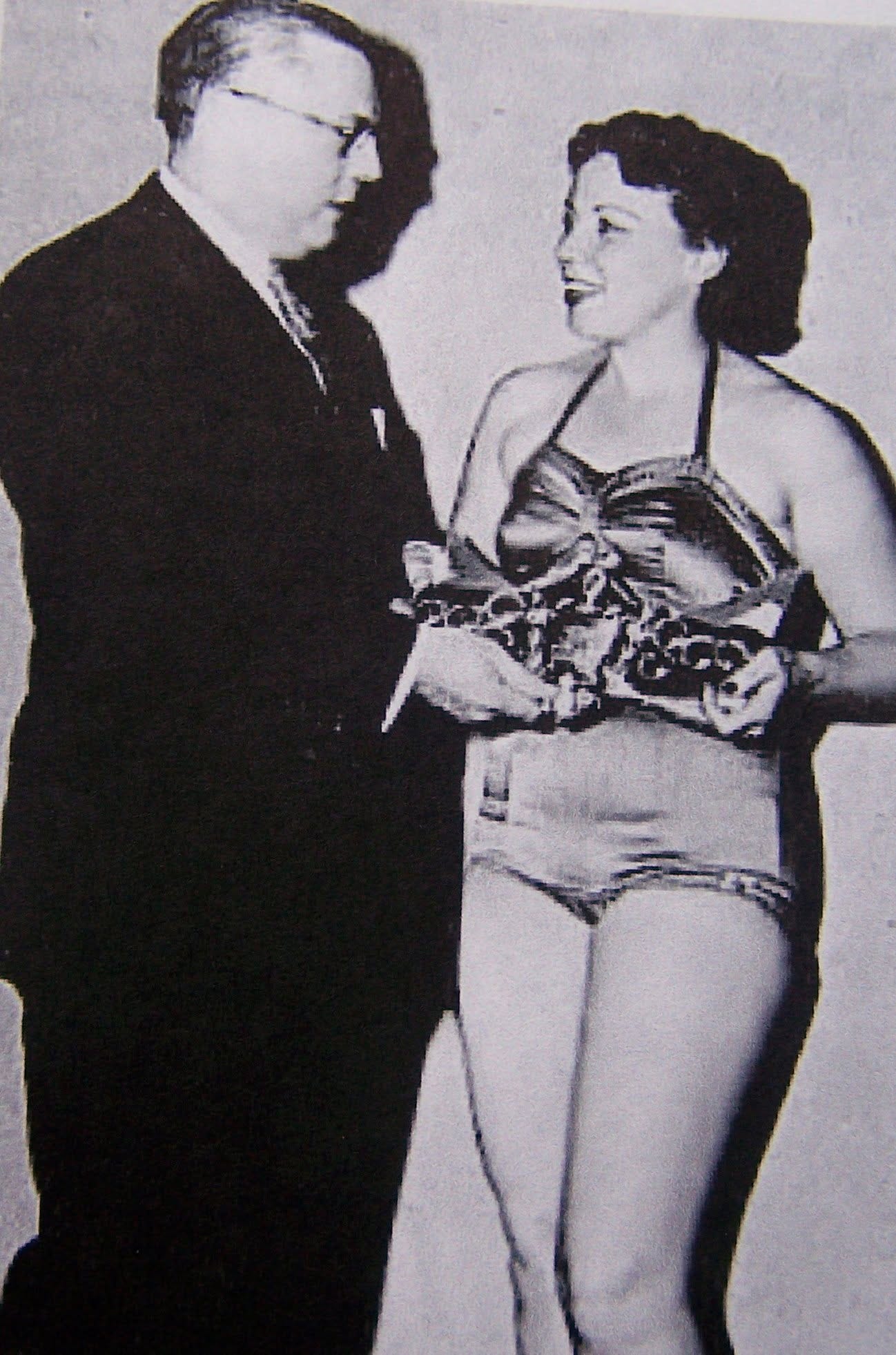
Pictured: Buddy Lee and Moolah
That is why the first loss, when it came, was so short. On September 17, 1966, in Seattle, Bette Boucher—one of Moolah’s own circuit regulars—pinned her. Boucher held the title about two weeks. Moolah took it back on October 3 in Vancouver. The pattern repeated in Japan. On March 10, 1968, in Osaka, Yukiko Tomoe beat Moolah. Twenty-three days later, on April 2 in Hamamatsu, Moolah won the return. A later, still-disputed switch to Sue Green in 1976 appears in some records and not in others. The next clearly documented loss was Evelyn Stevens on October 8, 1978, in Dallas. Moolah regained the belt the next night in Fort Worth.
Those interruptions totaled weeks, not years. Combined, Moolah’s four NWA-recognized reigns from 1956 through the early 1980s account for more than ten thousand days. WWE later flattened the whole span into one continuous reign from 1956 to 1984, ignoring Boucher, Tomoe, and Stevens. The NWA kept the switches on its books. Both versions of the story agree on the essential point: for a generation, the title did not leave Moolah’s orbit.
Stage Five: What That Monopoly Did to Women’s Wrestling
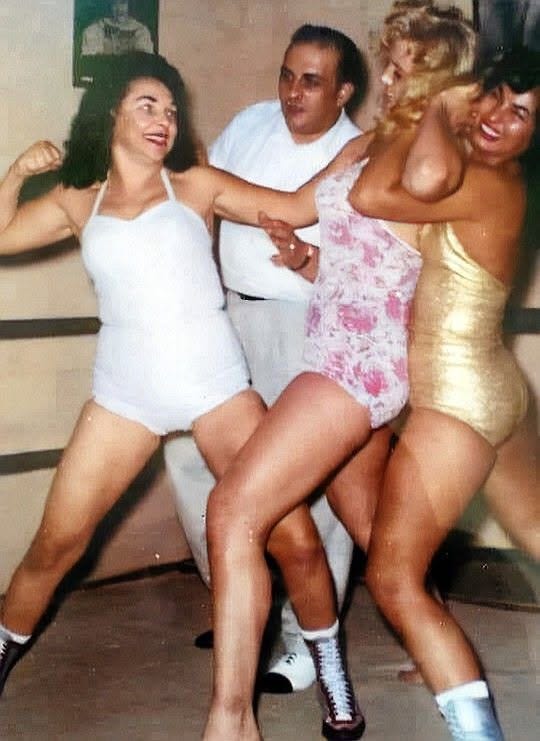
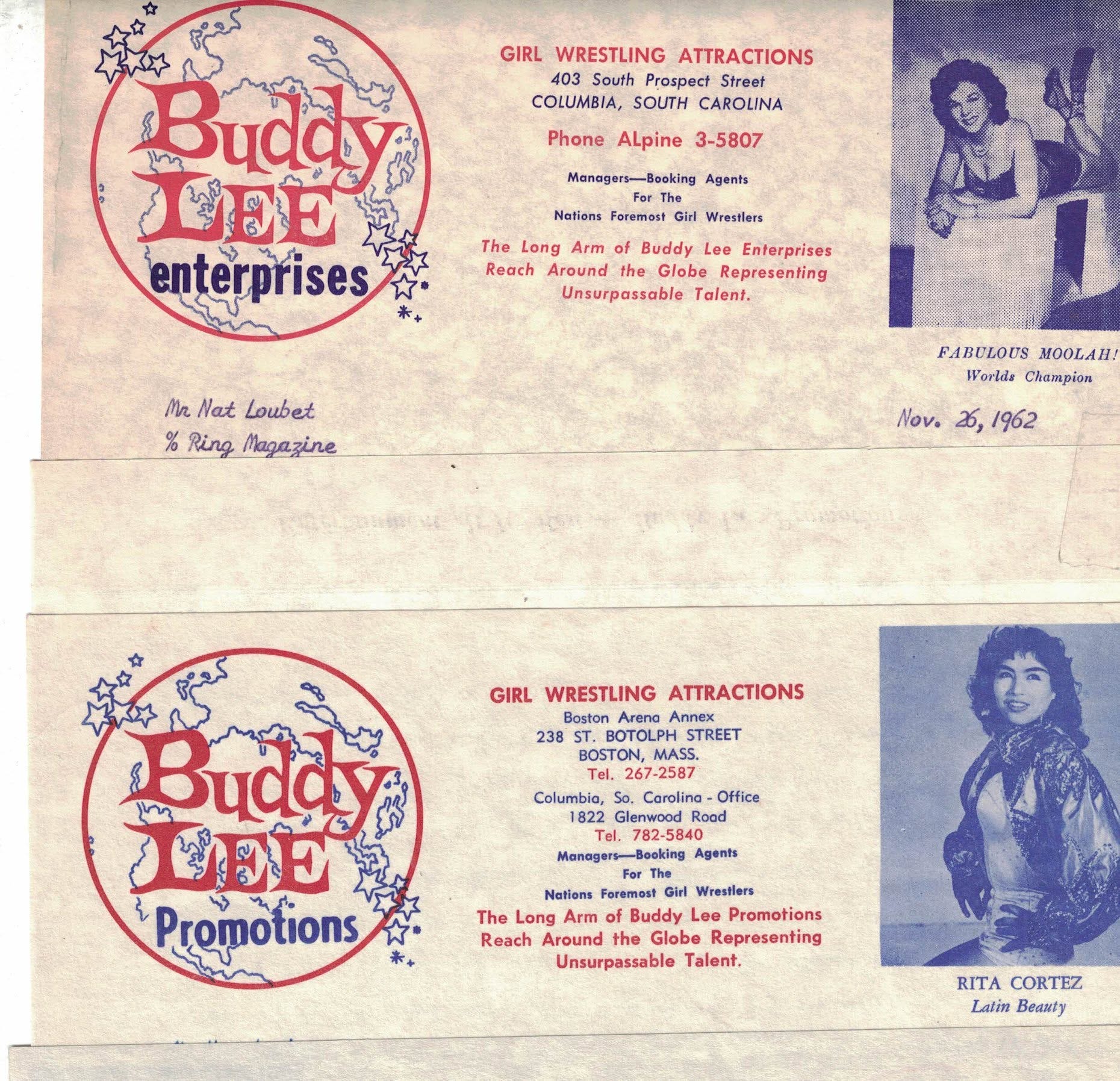
Pictured: Moolah, Vicky Page, Rita Cortez and Buddy Lee
Control of the belt was control of the division. Moolah decided who was a babyface and who was a heel, who got the win in Amarillo or Greensboro, and who sat home. She could drop the championship for a local pop and retrieve it before the crew left town. Because she also supplied the opponents, there was rarely an independent challenger with enough office backing to keep the title.
The effect on the NWA women’s championship was double-edged. On one side, the title stayed visible. Moolah worked Capitol Wrestling, Mid-Atlantic, Florida, Texas, Japan, and dozens of towns in between. The championship appeared on television and in buildings that still treated women’s matches as a special attraction rather than a weekly division. On the other side, the title stopped functioning as an open world championship. It became a house belt for a private booking office that happened to travel under the NWA name. Talent development narrowed to Moolah’s school. Careers that did not pass through Columbia often stalled.
That structure also set up the later sale. If one person owns the recognition, the bookings, and the physical strap, that person can sell all three.
Stage Six: The Sale, the Split, and an Empty Alliance Title
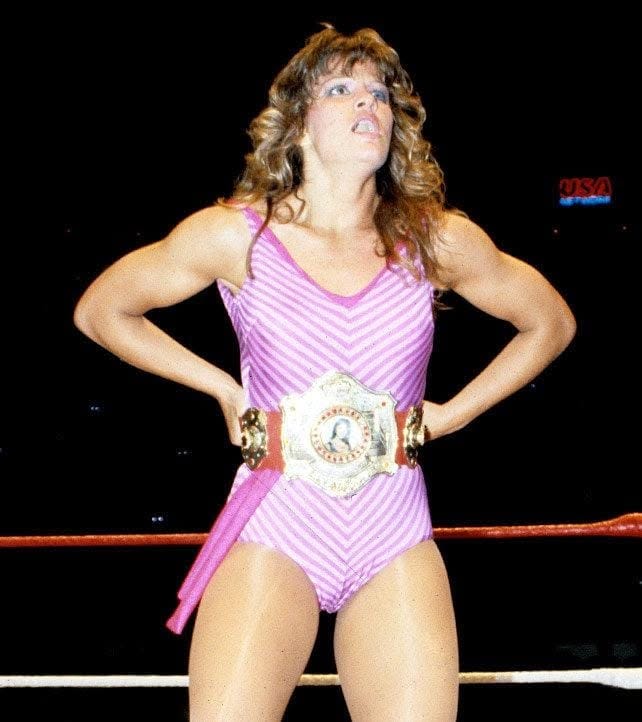
Pictured: Wendi Richter, WWF Women’s World Champion
Moolah acquired formal rights to the championship in the 1970s. In 1983 the World Wrestling Federation left the NWA for good. In 1984 she sold the belt and the right to recognize her as champion to Vince McMahon. The title was renamed the WWF Women’s Championship. The WWF did not start her reign in 1984. It dated the championship to September 18, 1956, and treated every NWA change after that date as unofficial. Wendi Richter finally ended the WWF version of the Moolah era at The Brawl to End It All on July 23, 1984.
The NWA was left without a women’s world champion and without the belt it had allowed Moolah to carry. The Alliance title sat vacant from late 1983 until February 12, 1986, when Debbie Combs won a nine-woman battle royal in Honolulu against a field that included Sherri Martel and Candi Devine. That match did not restore a single national women’s circuit. The territories were already dying. Jim Crockett Promotions and later WCW recognized other women at other times—Misty Blue Simmes, Susan Sexton, Bambi, Peggy Lee Leather—while Combs continued to defend an NWA-recognized version for years. The championship that had been one traveling claim under Burke, then two claims under Burke and Byers, then one property under Moolah, became a name used by whoever still wanted a women’s world title on a local card.
Stage Seven: Two Lineages After One Battle Royal
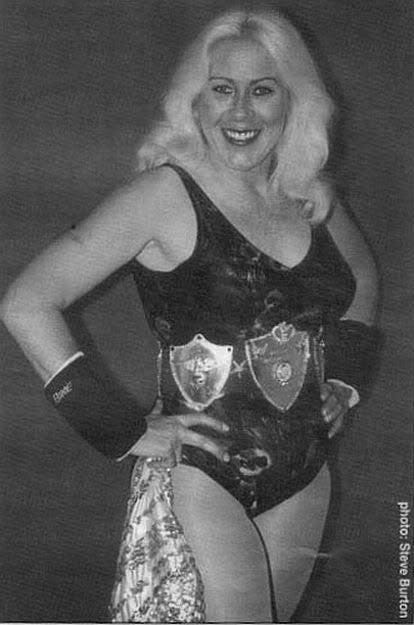
Pictured: Debbie Combs, NWA Women’s World Champion
From 1986 onward, the NWA World Women’s Championship lived a second life on a different belt. Combs’s long reigns gave way to a string of independent-era champions in the 1990s and 2000s: Malia Hosaka for a day, then Madison, Char Starr, Leilani Kai, Kiley McLean, Lexie Fyfe, Christie Ricci, MsChif, Amazing Kong, Tasha Simone, and others. The title was vacated, disputed, and revived more than once. A more visible modern chapter opened when Jazz won the championship in 2016. Later champions included Santana Garrett, Thunder Rosa, Kamille, Kenzie Paige, and Natalia Markova, with the belt still active on NWA programming.
WWE’s lineage, by contrast, runs from Moolah in 1956 through the WWF and WWE Women’s Championship until that belt was unified with the Divas Championship in 2010. The company still presents Moolah as the inaugural champion of that line. Burke and Byers do not appear on that list. Boucher, Tomoe, and Stevens do not appear either.
That is the long consequence of September 18, 1956. The battle royal did not erase Burke’s decades or Byers’s NWA recognition. It created a third claim in the Northeast, attached that claim to a booker who outlasted Wolfe and Byers, and gave McMahon Sr.’s office a champion it could rename and promote. When Moolah later sold what she had won, she sold not only a strap but the right to start history in Baltimore. The NWA had to begin again in 1986 with another battle royal. WWE never had to, because it chose Moolah’s night as year zero.
The 1956 finish therefore sits at the center of both stories.
For WWE, it is the birth of the women’s championship.
For the NWA, it is the night a regional vacancy became a decades-long private reign, followed by a sale that emptied the Alliance title and forced a reconstruction that is still unfolding.
Moolah kept the belt, in one form or another, until the business around her changed. The championship she won in thirteen-woman chaos outlived the territory system that made her win possible. That is why a house show in Baltimore remains the most important date on the NWA women’s title’s calendar, even for people who start the story with Burke in the 1930s or with Jazz in 2016. Every later version of the belt is still answering the question that ring asked on September 18, 1956: who owns the championship when the offices do not agree? For a very long time, the answer was Moolah.
Thank You for Watching and Listening
I’m Tony Richards, Pro Wrestling Historian, Author and Storyteller. I share pro wrestling historical items in each issue of the Time Tunnel Pro Wrestling History Newsletter and each episode of our podcast show. Thanks for your support! If you enjoy my information on select events, matches and insights, please share with folks you think might like to be a subscriber!
Remember, Premium subscribers get access to exclusive and special content such as some special issues including a multi-part deep dives on wrestling territories, wrestler bios and championship title histories, special audio and video interviews on territory pro wrestling and more available in the Pro Wrestling Time Tunnel for Premium Subscribers. Being a Premium Subscriber also means you support me in my efforts to document Pro Wrestling History through my research, writing, books, vidoes and podcasts. And…I have something very special planned for our Premium Subscribers on the Podcast side of things in 2026! Details soon here in the Pro Wrestling Time Tunnel.