


Today’s Favorite Quote: Great players and great teams want to be driven. They want to be pushed to the edge. They don’t want to be cheated. Ordinary players and average teams want it to be easy-Pat Riley
Happy Birthday to those who have passed on and to those great wrestlers still with us:
In Memoriam:
Micheal James Penzel\Corporal Kirchner 1957
Happy Birthday:
George South (63)
Nora Greenwald\Molly Holly (48)
Colin Delaney (39)
RIP Memorial: We stop & remember those who have passed on this day and gave themselves to the business for us, the fans. We salute you and thank you.
Eduardo Perez 9-7-1989 at the age of 61

Frankie Talaber 9-7-1994 at the age of 82

Jean Kennedy\Gypsy Tanya at the age of 79
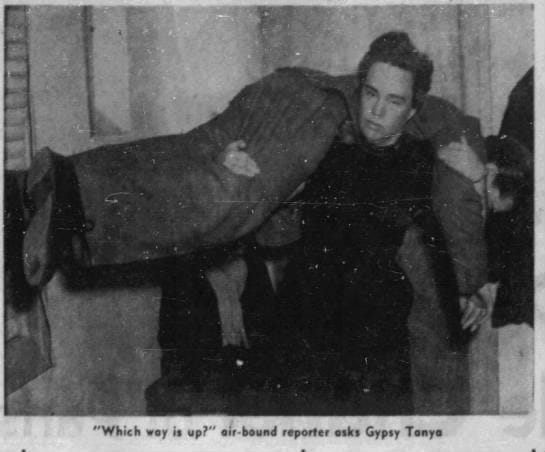
The Great Antonio 9-7-2003 at the age of 77
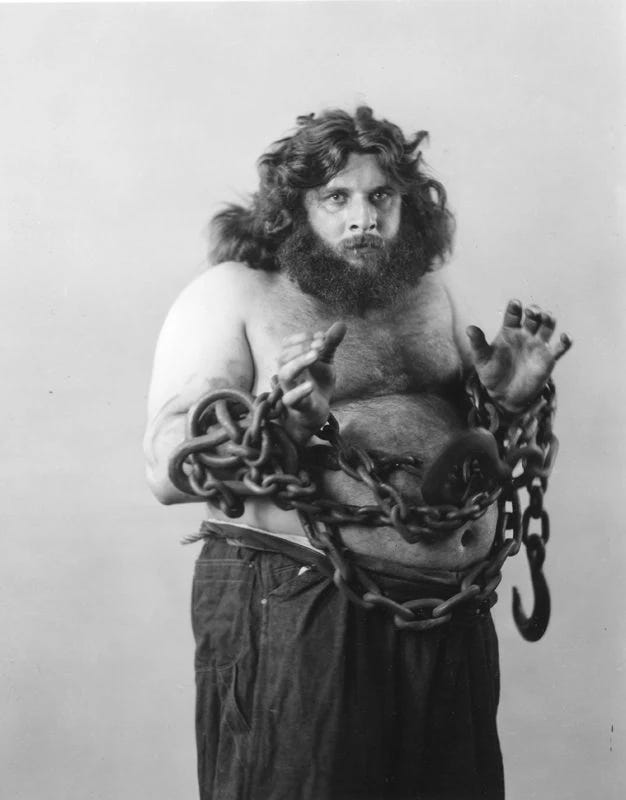
Billy Darnell 9-7-2007 at the age of 81

7 Stages of the Territory Era
Stage 4: Investigation
September 1956
Year Two Month 9 of Stage 4
The Month the Cartel Signed Its Own Reform

September 1956 is the hinge month of Stage 4. The territorial system still looked, from the arena floor, like a finished machine: a traveling world champion, packed midweek houses from Dallas to Montreal, a Japanese national hero beating imported Americans, and El Santo unmasking a rival in Mexico City. Behind the curtain, the National Wrestling Alliance was already under federal glass.
The ninth annual NWA convention had closed at the Claridge Hotel in St. Louis on September 1. Twenty-four of thirty-six members signed the consent-decree papers that the Antitrust Division of the Department of Justice had been drafting since late 1955. Ten more had signed by mail. Joe Malcewicz of San Francisco and Rod Fenton were the holdouts; they were told they would be expelled if they did not join. By mid-September, thirty-three of thirty-six members were on the document. The civil complaint itself would be filed on October 15 in Des Moines as United States v. National Wrestling Alliance, Civil Action No. 3-729. September was the last quiet month before the paper became public.
The charges were the architecture of the business itself: exclusive territories, blacklisting of wrestlers who jumped offices, pressure on arena managers and television stations to freeze out independents, and a shared world champion used as both product and enforcement tool. Sam Muchnick, still president, would later insist the Alliance admitted no violation and merely agreed to rewrite its bylaws. That was the official line. The real work of September was keeping the towns hot while the lawyers finished the rewrite.
Stage 4 is defined by that contradiction. The product on the circuit was still booming. The legal theory of the product was being dismantled.
The World Title on the Road: Whipper Billy Watson’s Mid-Reign
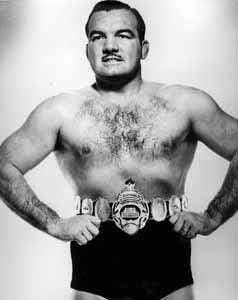
Whipper Billy Watson had taken the NWA World Heavyweight Championship from Lou Thesz on March 15 in Toronto by count-out, with Jack Dempsey as referee, before about 15,000 at Maple Leaf Gardens. By September he was six months into a 239-day reign and working the only schedule that made the Alliance function: a different city almost every night, two-out-of-three-falls main events, finishes designed to protect the belt and sell the rematch.
The September itinerary tells the story of how a champion was used as currency.
• September 5, Montreal: time-limit/curfew draw with Don Leo Jonathan.
• September 7, Buffalo: Karl Von Schoeber.
• September 11, Hamilton: Dick Hutton.
• September 13, Toronto, Maple Leaf Gardens (about 6,000): Watson over Hard Boiled Haggerty after a disputed pin when Watson’s foot was on the rope.
• September 14, St. Louis, Kiel Auditorium (5,995): Watson over Buddy Rogers by disqualification after Rogers tore the referee’s shirt. Rogers drew a $25 fine from Missouri Athletic Commissioner Charles W. Pian. Promoter of record that night was Bill Longson under the Mississippi Valley Sports Club banner; Sam Muchnick was the political center of the town.
• September 15, Kansas City: Lee Grable, two falls to one, last fall by DQ.
• September 18, San Francisco, Winterland (5,434): the month’s most important title match. Watson defeated Lou Thesz two falls to one, the third fall by disqualification, in 32:51.
• Then the prairie swing: September 25 Edmonton, draw with John Paul Henning; September 26 Saskatoon, Doc Gallagher by DQ; September 27 Regina, John Foti; September 28 Calgary, Mike Gallagher by DQ.
The finishes were not accidents. Count-outs, disqualifications, and curfews were the grammar of a touring championship. Watson could not afford to look beatable in Toronto or St. Louis. He also could not afford to bury Thesz, Rogers, Hutton, or Haggerty, because those men were the next gates. The September 18 Winterland match is the month in miniature: the former champion still drawing as the scientific standard, the sitting champion still needing a tainted finish to leave town with the belt.
Attendance around Watson was healthy but not 1952–53 peak. St. Louis at just under 6,000 and Toronto in the 5,000–6,000 range were respectable Thursday and Friday houses. They were not the 15,000 that had made the title change in March. That gap is part of the Stage 4 story. Television had already done the work of making wrestling familiar. Familiarity filled the midcard. It did not automatically refill the building when the same champion came back every month.
Lou Thesz After the Belt
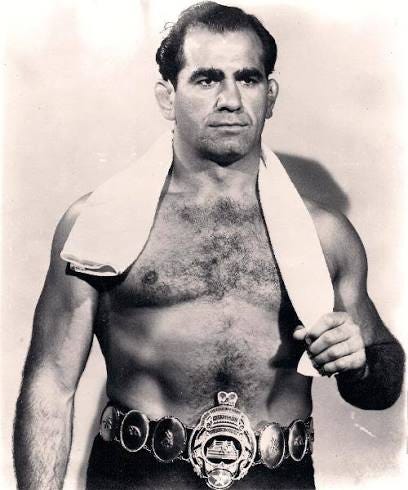
Thesz spent September as the most valuable non-champion in North America. He was still the hooker the offices trusted, still the man athletic commissions recognized as a legitimate wrestler, and still the attraction promoters could advertise as “ex-world champion” without explanation.
After the Winterland loss, he dropped into Texas, where Morris Sigel’s Houston office and Ed McLemore’s Dallas Sportatorium could still sell a scientific main event to a football town.
• September 21, Sam Houston Coliseum: Texas Heavyweight champion Pepper Gomez defeated Thesz two falls to one by count-out.
• September 22, Beaumont: Thesz over Gene Kelly (Gene Kiniski working under the Kelly name) two falls to one.
• September 25, Dallas Sportatorium: Thesz and Ray Gunkel beat Texas Tag Team champions Len Crosby (Lenny Montana) and Gene Kelly by disqualification. No title change; Count Rossi’s interference was the out.
• September 26, San Antonio: sixty-minute draw with Chief Suni War Cloud.
• September 27, Amarillo Sports Arena: sixty-minute draw with Bob Geigel.
Thesz as challenger was better business in Texas than Thesz as traveling champion had sometimes been. Gomez was the local Latin babyface with the muscle-beach look. Kiniski, still young and still billed as Kelly in parts of the state, was the future world champion learning how to work a two-fall main. El Médico made his Houston debut on the same September 21 Coliseum card, bloodied Larry Chene, and knocked ringside announcer Paul Boesch unconscious — a heat angle so raw the police later led him from the building in handcuffs after a subsequent show. That is 1956 Texas booking: a world-class grappler in the main event, a masked sadist on the undercard, and a television announcer as collateral damage.
Buddy Rogers and the Nature Boy Problem
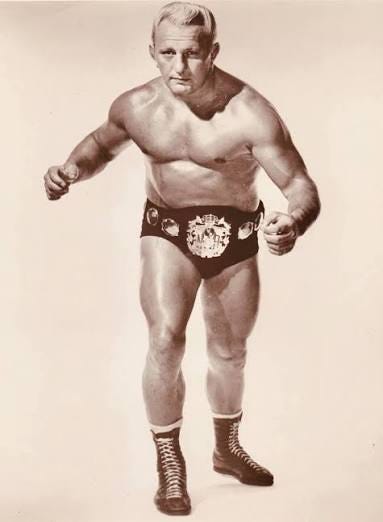
Rogers was the other traveling heel the Alliance could not live without. He was not champion. He was the man who made champions look like champions.
The September 14 St. Louis disqualification against Watson was a classic Rogers night: the referee’s shirt ripped, other wrestlers in the ring to restore order, a commission fine, and a rematch already sold. He would be back in Kiel on October 5 for a no-contest with Watson, then again through Ohio and the East. Rogers’ value in Stage 4 was not a title reign. It was his ability to make a count-out or a DQ feel like a robbery rather than a cop-out. That skill became more important, not less, as television made the same finishes visible every week.
The Women’s Title Split: Baltimore, September 18
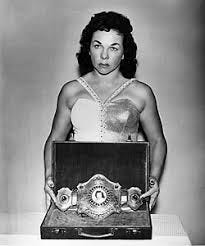
On September 18 in Baltimore, Jack Pfefer staged a thirteen-woman battle royal. Slave Girl Moolah, Lillian Ellison, last eliminated Judy Grable and walked out with a world women’s championship that Vince McMahon Sr. would soon rebrand by calling her The Fabulous Moolah.
The date is now treated as the starting line of the WWE Women’s Championship. In September 1956 it was not that simple. Many NWA offices still recognized June Byers, who had beaten Mildred Burke in a brutal 1954 encounter and who would not retire until 1964. Billy Wolfe’s old booking network, the same network that had controlled women’s wrestling for a generation, did not instantly accept a Pfefer tournament in Baltimore. Moolah’s claim was strongest in the Northeast, where McMahon Sr.’s Capitol Wrestling and the residual Toots Mondt/Paul Bowser circuit could use her. Elsewhere, Byers remained the name on the poster.
That split is Stage 4 in the women’s division. The Alliance had already stepped back from formally sanctioning women’s wrestling at an earlier convention. The result was not the end of women’s wrestling. It was a market of competing claims, local champions, and traveling packages — Moolah and Grable, Barbara Baker, Ida Mae Martinez, Penny Banner coming into view — booked town by town rather than from a single recognized throne. Mildred Burke’s retirement belongs to the same year. The old monopoly over women’s dates was breaking at the same moment the men’s Alliance was signing a decree that said monopolies were illegal.
Moolah and Grable were already working New England earlier in the month: Lewiston on September 11, Holyoke on September 12. The battle royal was not a debut. It was a coronation arranged by a promoter who understood that a vacant title and a last-woman-standing finish photographed better than another two-out-of-three-falls match on a weeknight card.
United States Territories
St. Louis and the Political Center
St. Louis remained the Alliance’s capital even when Bill Longson was the listed promoter of the Mississippi Valley cards. The Kiel Auditorium show of September 14 was the month’s NWA showcase in the home office: world title, Rogers heat, a women’s match (Barbara Baker over Millie Stafford), Tex McKenzie over Frank Valois, and a forty-five-minute tag draw with Mike DiBiase and Joe Dusek against Dick Brown and Dr. Lee Grable. Just under 6,000 paid.
The deeper St. Louis story was corporate. Lou and Martin Thesz had already sold their local interests to Muchnick. Longson’s club and Muchnick’s office were in an awkward coexistence that would resolve, as these things did, with Muchnick holding the town. The convention at the Claridge had just made Muchnick responsible for getting every member to sign the decree. He was, in September, both booker-president and defendant-in-waiting.
Chicago and Fred Kohler’s Television Hangover

Fred Kohler’s Chicago office still had Marigold Arena on Saturdays and the International Amphitheater when a bigger card could be sold. The television boom that had made Wrestling from Marigold a national DuMont property was over. DuMont was dying. WGN kept a local window. The live business had to stand on its own again.
September 1 at Marigold: Verne Gagne over Hans Hermann; Angelo Poffo over Nick Bockwinkel two falls to one; Dick the Bruiser over Maurice Roberre.
September 8 at Marigold (1,118): Wilbur Snyder over Bill Melby for the United States television title picture; women’s tag with Raymonde Cote and Rose Roman.
September 14 at the International Amphitheater (8,223): the month’s Chicago event. Gagne, Antonino Rocca, and Wilbur Snyder beat Dick the Bruiser and the Lisowski Brothers, Reggie and Stan, two falls to one. That is the Midwest formula at full strength — amateur-styled babyfaces against a street-fight heel and a wrecking tag team — and it still drew eight thousand on a Friday.
September 15 at Marigold: Hans Schmidt beat Snyder two falls to one by count-out to take the United States Heavyweight Television Title.
September 29 at Marigold: Snyder over Bruiser, the return fire.
Gagne was Chicago’s money wrestler whether or not Muchnick wanted to recognize every version of a United States title. Rocca was the imported attraction who made the Amphitheater feel like a special. The Lisowskis were the future Crusher and a tag-team prototype. Bockwinkel was already good enough to lose to Poffo and look like a prospect. Chicago in September 1956 was not a dying territory. It was a territory learning how to live after network television.
Texas: Dallas, Houston, Amarillo, San Antonio
Southwest Sports in Dallas under Ed McLemore and the Houston office under Morris Sigel were among the most reliable weekly operations in the country. The Dallas Sportatorium on Tuesday nights and the Houston City Auditorium or Coliseum on Fridays formed a two-city engine.
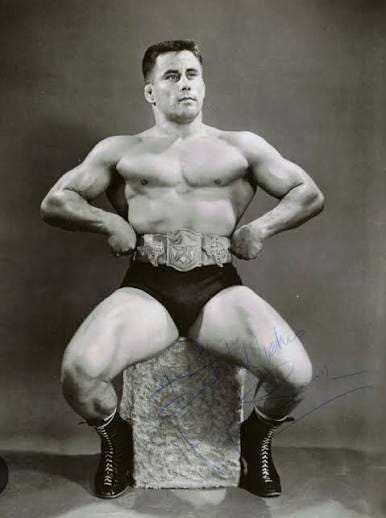
Pictured: Pepper Gomez, NWA Texas Heavyweight Champion
Pepper Gomez held the Texas Heavyweight Championship through the month after beating Gene Kelly on September 7 in Houston to settle a vacated-title mess from August. He defended against Kelly in Dallas on September 11 and against the Sheik of Araby on September 18. Thesz’s count-out loss to Gomez on September 21 in the Coliseum was booked as a local champion standing up to the former world champion, not as a world-title change. That distinction mattered. Texas titles sold Texas towns. The NWA belt was a visiting circus.
Tag titles flipped twice in Dallas: Freeman and Gunkel won them on September 11 from Keomuka and Tony Martin; Crosby and Kelly took them back on September 18 when Freeman was injured and Gunkel had to wrestle two-on-one. Thesz and Gunkel’s DQ win on September 25 kept the champions in place and the angle alive.
Supporting cast: Duke Keomuka as the veteran Japanese heel, Danny McShain in the junior picture earlier in the year, Red Donovan as Texas Junior Heavyweight champion, Larry Chene, Ray Gunkel as the Georgia-trained amateur who could work with anyone, El Médico as the new masked problem, Tiger Conway billed with a Texas “colored championship” on the Houston undercard. Segregated billing was still part of the Southern ledger. It is not a footnote. It is how the business priced tickets and built cards in 1956.
Amarillo under Doc Sarpolis’ emerging Western States office hosted Thesz and Geigel on September 27. San Antonio’s Livingood\Brown promotion and Wrestlethon Arena had Thesz and War Cloud the night before. The Texas circuit was not one promotion. It was a set of cooperating offices using the same talent pool and the same world-title visit to keep four cities in motion.
California: Los Angeles, San Francisco, and the Fringe
NWA Los Angeles and NWA San Francisco were still Alliance towns in September, though the West Coast had already seen the Nomellini–Thesz recognition war in 1955 and would see Southern California promoter Hugh Nichols’ suicide in December. The September calendar is dense: Hollywood, San Bernardino, Pasadena, Santa Monica, Bakersfield, Fresno, Stockton, Santa Rosa, Oakland. Joe Malcewicz in San Francisco was one of the two men who had not yet signed the decree. That fact sat under every Winterland advertisement.
The September 18 Winterland card was the coast’s showpiece: Watson versus Thesz in the main event, Enrique Torres and Ronnie Etchison going a time-limit draw with Ben and Mike Sharpe, Johnny Barend over Pedro Godoy. The Sharpe Brothers were the tag team that had spent the spring in Japan dropping and regaining NWA World Tag Team recognition against Rikidozan and Kokichi Endo. Seeing them in San Francisco in mid-September is a reminder that the Alliance’s talent pipeline already reached across the Pacific.
Ad Santel still promoted in Oakland. Mid-Pacific in Honolulu closed the month on September 30. The islands were an NWA outpost and a layover for talent moving between California and Japan.
The Northeast: Capitol Wrestling, Mondt, Pfefer, and Rocca
New York was not yet the World Wide Wrestling Federation. It was a contested marketplace of Toots Mondt booking, Vince McMahon Sr.’s Washington-based Capitol Wrestling television, Jack Pfefer’s odd independent dates, and Manhattan Wrestling Enterprises cards that could land in the Winter Garden or, when the Garden itself was available, Madison Square Garden.
September 24 at the Winter Garden: Rocca and Gagne over Buddy Rogers and Hans Schmidt, two falls to one. That match is the Northeast in one sentence — the two biggest babyfaces in the region against the Nature Boy and the German heel, in a house that was not the Garden but still sold the combination that would fill the Garden later in the fall.
Rocca’s September itinerary is a map of the East: Portland and North Attleboro early in the month on smaller New England cards, Montreal on the 19th, Baltimore on the 25th with Gagne against Schmidt and Gino Garibaldi, Rochester on the 27th with Gagne against Schmidt and Jack Allen. McMahon Sr.’s Heavyweight Wrestling from Washington’s Capitol Arena had been on air since January and had moved into New York syndication earlier in the year. The studio-to-arena model that would define the next twenty-five years was already in place. Network wrestling was finished. Local wrestling on local channels, used to sell the next live date, was the business.
The South, Midwest, and Mountains

Pictured: Irish Mike Clancy, NWA World Junior Heavyweight Champion
Jim Crockett’s Mid-Atlantic towns, Cowboy Luttrall’s Florida, Roy Welch and Nick Gulas in Tennessee, Leroy McGuirk’s junior-heavyweight circuit in Oklahoma and Missouri, Don Owen’s Pacific Northwest, and the Idaho-Utah armories all ran September dates. The NWA World Junior Heavyweight Championship sat on Mike Clancy, who had beaten Ed Francis on April 10 in Oklahoma City and spent September in the Tennessee-Arkansas loop: Kingsport on the 12th, Blytheville on the 17th. In this era of pro wrestling, Junior heavyweights were not a developmental brand. In Tulsa, Memphis, and Nashville they were the primary regional titleholders and the main event on nights the world heavyweight champion was in another time zone.
Pocatello’s National Guard Armory ran almost every Saturday: Kit Fox, Roy Shire, Great Sasake, Woody Strode. Akron, Ohio went dark most of the summer and returned September 29 with Frankie Talaber over Ray Stevens by DQ. Those towns do not make encyclopedias. They made the territory system solvent. A champion’s visit was the spice. Weekly cards in armories were the meal.
Roy Shire’s September 8 boxer-versus-wrestler loss by knockout to light-heavyweight champion Archie Moore in Ogden, Utah, belongs on the ledger as a curiosity and a warning. When wrestling rented its credibility to boxing, boxing usually kept the credibility.
Canada
Toronto: Maple Leaf Wrestling
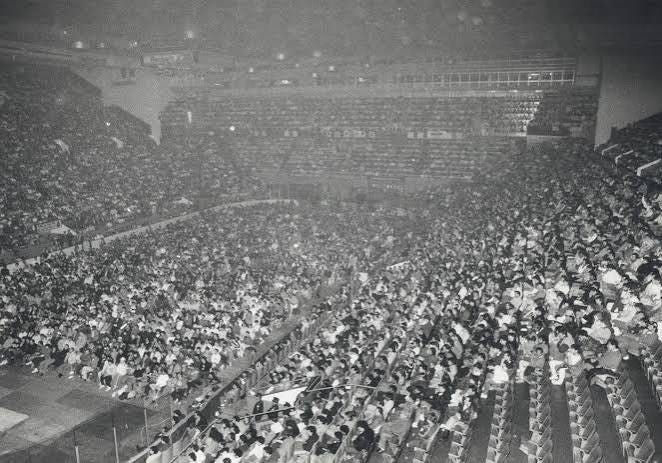
Pictured: A pro wrestling crowd at the Maple Leaf Gardens in the 1950s
Frank Tunney’s Maple Leaf Gardens operation was the most stable big-city office in the Alliance. Watson as world champion was both a gift and a programming problem. The hometown hero had already had his coronation. September had to be about defenses and tag-title movement, not about repeating March.
September 6 (about 5,000): Canadian Open Tag Team champions Guy and Joe Brunetti beat Fritz Von Erich and Karl Von Schober. Mr. Hito and Mr. Moto, the Japanese heel tandem, put Bob Leipler out with a sleeper. Yukon Eric squashed Roberto Pico.
September 13 (about 6,000): Watson over Haggerty; Dick Hutton submitted Lionel Baillargeon with the abdominal stretch; Hito and Moto beat the Lewin brothers, Donn and Mark.
September 20: Haggerty and Hutton beat the Brunettis for the Canadian Open Tag Team Title and the George Richards trophy; the Brunettis refused to surrender the hardware.
September 27 (about 6,000): Brunettis beat Haggerty and Hutton by disqualification; the trophy angle continued.
Tunney’s supporting cast — Pat Flanagan, Sky-Hi Lee, Tex McKenzie, Red Lyons, Shag Thomas, Fred Atkins, Timothy Geohagan — was a model midcard. Hutton was being built as a legitimate shooter who could one day take the world title (he would, from Thesz, in 1957). Von Erich was already working the Nazi-adjacent heel that would make him a drawing card in Dallas later. Mark Lewin was a kid with a dropkick. The Gardens in September 1956 was not a 15,000-seat explosion. It was a well-run weekly that could still put 6,000 in the building on a Thursday and send the same men to Hamilton, Niagara Falls, and Buffalo the next night.
Montreal: Eddie Quinn and the Other World Title
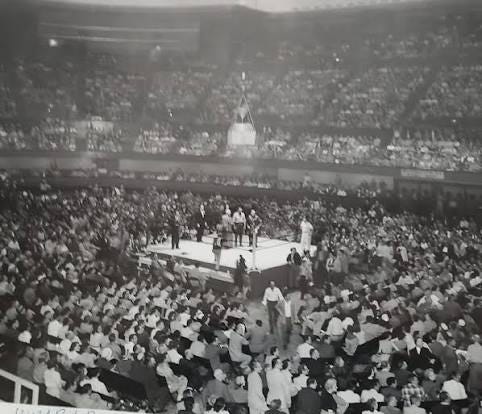
Pictured: A pro wrestling crowd at Montreal Canada’s Forum in the 1950s
Eddie Quinn’s Forum operation recognized its own Montreal World Heavyweight Championship, and in September that belt mattered as much to Quebec as Watson’s belt mattered to Ontario.
September 19 at the Forum (about 9,000): Rocca versus Wladek “Killer” Kowalski went to a double count-out after they split falls. Don Leo Jonathan and Yvon Robert went double DQ. Haggerty beat Larry Moquin. That is a packed Forum card built on unfinished business.
September 26 at the Forum (about 11,000): Kowalski regained the Montreal World Heavyweight Title from Édouard Carpentier by referee’s decision after they split falls and Carpentier could not continue at 31:47. Carpentier had taken the belt from Kowalski on August 15 at Delorimier Stadium with Rocky Marciano as special referee. The September return was the indoor get-back. Carpentier, the French gymnast-turned-wrestler, was already the most important new attraction in eastern Canada. Within nine months he would be in Chicago with Thesz in the match that cracked the world title’s unity. September 26 is an early chapter of that story: a local world title, an injured babyface, a heel champion restored, 11,000 in the Forum on a Wednesday.
Quinn also ran Ottawa. Rocca and Don Eagle went to a curfew draw there on September 18. The Montreal-Ottawa-Boston triangle, with talent crossing to Tunney’s towns when the price was right, was the strongest international circuit inside North America.
Calgary, Edmonton, Regina, Saskatoon, Winnipeg
Stu Hart’s Big Time Wrestling — the promotion later famous as Stampede — ran the Alberta and Saskatchewan loop all month. Watson’s late-September prairie defenses were the visiting-champion dates. Hart himself was still an active wrestler and an NWA convention attendee; he was in St. Louis at the Claridge Hotel when the decree was signed. On September 26 in Vancouver, Hart and Pat Meehan were billed as winning the NWA Northwest Tag Team Title from Kurt von Poppenheim and Carl Redi, a reminder that Hart’s reach was not only Calgary.
Winnipeg, under All Star/ATP booking, had a German-heel program that packed the Civic Auditorium. September 14: Fritz Von Erich and Karl Von Schoberg beat Ilio DiPaolo and Prince Maiava two falls to one in a “packed house.” September 21 at the Olympic Rink: the Vons beat Butch Levy and Bronko Nagurski. September 28 at the Civic Auditorium: Guy and Joe Brunetti beat the Vons when Von Erich was disqualified in the third fall, Bronko Nagurski as special referee. Al Kashey worked the midcard with the abdominal stretch. Lord Littlebrook and Tom Thumb handled the midget match. Winnipeg in September was a complete territory show: heels, football names, tag specialists, and a specialty bout, with reported crowds that could swell toward 7,000 by early October.
Mexico: EMLL in the Anniversary Month
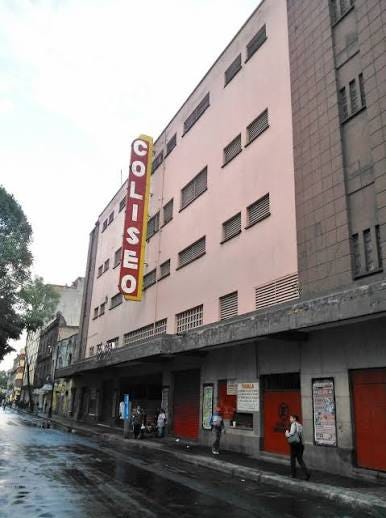
Pictured: Arena Coliseo in Mexico City, Mexico
Empresa Mexicana de Lucha Libre, Salvador Lutteroth’s Mexico City office, was an NWA member in a way no other non-U.S. promotion quite was. Lutteroth was third vice president of the Alliance. He had been in St. Louis for the convention. He then went home to the richest month on the lucha calendar.
September 7 at Arena México: tournament finals. Tarzán López won the vacant Mexican National Light Heavyweight Championship from Joe Grant. Médico Asesino won the vacant Mexican National Heavyweight Championship from Lotario. Masahiko Kimura, the judoka who had been Rikidozan’s great rival and victim in Japan, worked a judo exhibition.
September 14 at Arena Coliseo: El Santo beat El Gladiador two falls to three to win the vacant Mexican National Middleweight Championship, catching Gladiador with a hold in the last fall. Mask challenges followed immediately. Médico Asesino’s farewell match against Kimura sat just under the title final. Black Shadow beat Cavernario Galindo. The card was a changing of the guard dressed as a title tournament.
September 21, EMLL 23rd Anniversary Show, Arena México: Santo versus Gladiador, mask versus mask, best two of three falls. Santo won. Luis Ramírez Romero removed the gold mask in the building already called the cathedral of lucha libre. Reported attendance ranges from just over 15,000 in the contemporary Box y Lucha count to 17,678 in later tallies. Either figure is a major-league gate. Payoffs reconstructed from the magazine’s estimates put the undercard in the hundreds of pesos and the mask match at the top of the scale, still modest by U.S. main-event standards and enormous by the standards of a weekly Mexico City roster.
The rest of the month kept the tournament logic going. Black Shadow beat Santo in a quarterfinal of a separate middleweight contendership tournament — a result that only lucha booking would dare so close to an anniversary mask match. Blue Demon, Ray Mendoza, Huracán Ramírez, Cavernario Galindo, and Bobby Bonales filled the week-night Coliseo cards. Lucha libre in September 1956 was not an imitation of the NWA. It was a parallel industry with its own championship ecology, its own television and magazine culture, and a promoter who sat on the Alliance board so that talent and recognition could move when it was useful.
Japan: JWA at the End of a Gaijin Tour
The Japan Wrestling Association, Rikidōzan’s office, closed International Series 1956 No. 2 on September 3. The tour had run since July 23 with Tom Rice, Lucky Simunovich, Mike Mazurki, and a cluster of lesser imports working against Rikidōzan, Azumafuji, Kokichi Endo, Toyonobori, Surugaumi, and Yoshinosato.
September 1, Tokyo, Denen Coliseum: Rikidōzan beat Tom Rice to take the Pacific Coast Heavyweight Title. That belt was a touring prop with West Coast lineage, useful because it let Japanese newspapers print the word “championship” over a Rikidōzan victory against an American.
September 2, Sendai: Rikidōzan and Azumafuji beat Rice and Simunovich.
September 3, Yokosuka: Rikidōzan and Endo beat Rice and Simunovich.
Then the office went quiet until the Japanese Championship Series opened in mid-October, when JWA would start carving out domestic singles titles below Rikidōzan’s Japanese Heavyweight and All Asia Heavyweight championships. Rikidōzan had already held, with Endo, the NWA World Tag Team Championship earlier in the spring after beating the Sharpe Brothers in Osaka on May 4, then dropped it back in Sapporo on May 19. The tag-title traffic with San Francisco was the live wire between the Alliance and puroresu.
Japan in September 1956 was not yet the television nation of the 1957–58 Thesz matches, when ratings would become folklore. It was a touring promotion built on a single national hero, sumo and judo converts in the midcard, and imported heels who existed to lose in ways that felt like postwar redress. The business analysis is simple. One star made the territory. Everything else was structure around that star.
Storylines and Booking Logic
The month’s angles, stripped of hometown language, were few and reusable.
The tainted finish. Watson’s title was preserved by DQ, count-out, and curfew from St. Louis to Calgary. Carpentier lost Montreal by injury decision. Gomez beat Thesz by count-out. Moolah won a battle royal rather than a clean pinfall tournament final. The business preferred a disputed ending to a dead ending.
The visiting champion as guest of honor. Watson did not take local titles. Thesz, without the world belt, could lose to Gomez and still leave Texas as Thesz. That hierarchy kept regional belts meaningful.
The tag-team trophy. Toronto’s refusal to surrender the George Richards trophy after a title change is the same angle Dallas used when a partner was injured and the champions kept the belts on a DQ. Hardware that can be stolen or withheld is better television than hardware that simply changes hands.
The masked man and the unmasking. El Médico in Houston and El Gladiador in Mexico City are the same tool in different cultures. In Texas the mask was a license for violence. In Mexico City the mask was a soul. Santo taking Gladiador’s mask on the anniversary show was the highest-stakes version of a gimmick American offices used for cheap heat.
The foreign heel. Von Erich and Von Schober in Winnipeg and Toronto, Schmidt in Chicago and the East, Keomuka in Texas, Hito and Moto in Ontario, Rice and Simunovich in Japan. Eleven years after the world war, the nationality heel was still the most efficient way to fill a building.
The scientific babyface. Gagne, Snyder, Thesz, Gomez, Santo, Rikidōzan, Watson when he was at home. Stage 4 still believed the audience wanted to see a wrestler who could wrestle, provided someone nearby was willing to cheat.
Business Analysis: What September 1956 Was Worth
Structure
The NWA, as a governing cooperative, was the only game in North America and was worldwide in scope in September listed thirty-six (36) members and collected $100 annual dues. Twenty-four (24) paid at the convention. Officers were Muchnick as president and secretary, Frank Tunney as vice president, Leroy McGuirk as second vice president, Lutteroth as third, Sam Avey as treasurer. The membership roll ran from Jim Crockett and Cal Eaton to Stu Hart, Fred Kohler, Eddie Quinn, Toots Mondt, Hugh Nichols, Don Owen, Morris Sigel, and Paul Bowser. That list is the map of professional wrestling in North America.
The consent decree, once entered, would order the Alliance to void its existing bylaws, stop enforcing exclusive territories, stop blacklisting, and stop punishing promoters who booked non-members. The investigators had interviewed disgruntled bookers, including Johnny Doyle after he left Los Angeles. They had enough to consider a criminal case and chose a civil one. Muchnick’s political friends — the names historians keep circling are Congressman Mel Price and, more speculatively, senators with wrestling towns in their states — helped keep the matter in the consent-decree column. Wrestling was not declared a work in open court. That omission was the industry’s real victory in 1956.
Television
The first network television boom was over. DuMont was collapsing. National network wrestling had made stars of Gorgeous George, Thesz, Rocca, and Gagne and had then overexposed the finishes. What remained, and what would carry the business through Stage 4 and into Stage 5, was local and syndicated television used as a commercial for the Friday night armory. McMahon Sr. in Washington, Kohler in Chicago, McLemore in Dallas, Don Owen in Portland, Tunney in Toronto, Quinn in Montreal, Lutteroth in Mexico City, and, soon, Rikidōzan’s Japanese broadcast partners were all running versions of the same model. September 1956 sits after the network peak and before the Studio Wrestling\Saturday-afternoon regional empires of the 1960s. The WABD experiment had been tried with limited success in New Jersey. The offices that understood the shift stayed rich. The offices that kept waiting for the cheese to come back in the form of another DuMont did not.
Gates and Pricing
Documented September houses: Chicago Amphitheater 8,223; St. Louis Kiel 5,995; San Francisco Winterland 5,434; Toronto Gardens 5,000–6,000; Montreal Forum 9,000 and 11,000; Winnipeg packed, with the next month’s follow-up near 7,000; Arena México anniversary in the mid-to-high 15,000s. Those numbers are not 25,000 at Gilmore Field in 1952. They are the numbers of a mature entertainment business with a floor. A territory that could put 5,000 in a building every week and 10,000 when the champion or Rocca came to town was a viable company.
The mix of revenue was live gates, television rights or purchased airtime, concessions, and the quiet sale of dates between offices. Wrestlers were independent contractors moving on handshake guarantees. The world champion’s guarantee was the largest line item on any card he worked. That is why the Alliance existed. A shared champion lowered the cost of a main event for every member and raised the cost of defection.
Labor and Risk
The roster was deep and interchangeable by design. A man could be Gene Kelly in Dallas and Gene Kiniski in Toronto. Lenny Montana could be Len Crosby. The Sheik of Araby in Texas was not yet the Detroit Sheik. Identity was local. The work rate was brutal: Watson’s September itinerary alone is a different city every two or three days, two-out-of-three-falls, often sixty-minute limits. Injuries were written into finishes, as with Carpentier on September 26, because they were also real.
Women’s wrestling, midget wrestling, judo exhibitions, and boxer-versus-wrestler novelties were not side shows in the modern sense. They were pricing tools. A women’s match put a different ticket buyer in the building. A midget match gave the newspaper a photograph. Kimura versus Médico Asesino in Mexico City and Archie Moore versus Roy Shire in Ogden were attempts to borrow legitimacy from adjacent sports. One built a farewell. The other ended in a knockout.
International Balance Sheet
Canada was not a satellite. Tunney and Quinn were among the Alliance’s strongest promoters, and Watson as champion was a Canadian story that sold in Missouri and California because the offices agreed it would. Mexico was a full partner with a larger weekly metropolitan audience than most U.S. territories. Japan was still a junior partner in NWA terms and already a senior partner in national-cultural terms; Rikidōzan’s houses did not need an American world champion to make sense to Japanese fans. The consent decree did not name Lutteroth, Tunney, Quinn, or Hart as U.S. conspirators in the same way it named the American bookers. Geography was a legal defense.
The Stage 4 Verdict on the Month
September 1956 looks, if you only read the results, like a healthy territorial peak. Watson is a credible champion on a dense tour. Thesz still draws. Rocca and Gagne still fill buildings from Chicago to Rochester. Santo has the anniversary show of his life. Rikidōzan closes a tour with a title win. Moolah gets a belt that will outlive every man on this page’s booking committee.
Read next to the Claridge Hotel signatures, the same month is the beginning of the argument that would run for the next decade. If exclusive territories were now, on paper, illegal, what was a territory? If blacklisting was forbidden, how did an office protect a program? If the world champion was supposed to be available to members and non-members alike, what was the point of membership?
The Alliance’s answer, worked out in practice rather than in bylaws, was to pretend the decree was a technicality and to keep doing the same work with softer language. Towns still had bookers. Bookers still had wrestlers. Wrestlers who crossed the wrong man still found the phone quiet. The difference was that the quiet could now be described, if anyone asked, as a series of independent decisions.
That is why September 1956 belongs to Investigation rather than to Expansion. The houses were still good. The storylines were still simple. The machine still ran on cooperation. But the federal government had already written the sentence that would hang over every later split, every outlaw title, every promoter who decided the Alliance’s services were no longer worth the dues. The sentence would be filed in October. The signatures were gathered in September. The matches, as they always did, went on tonight.
Thank You for Watching and Listening
I’m Tony Richards, Pro Wrestling Historian, Author and Storyteller. I share pro wrestling historical items in each issue of the Time Tunnel Pro Wrestling History Newsletter and each episode of our podcast show. Thanks for your support! If you enjoy my information on select events, matches and insights, please share with folks you think might like to be a subscriber!
Remember, Premium subscribers get access to exclusive and special content such as some special issues including a multi-part deep dives on wrestling territories, wrestler bios and championship title histories, special audio and video interviews on territory pro wrestling and more available in the Pro Wrestling Time Tunnel for Premium Subscribers. Being a Premium Subscriber also means you support me in my efforts to document Pro Wrestling History through my research, writing, books, vidoes and podcasts. And…I have something very special planned for our Premium Subscribers on the Podcast side of things in 2026! Details soon here in the Pro Wrestling Time Tunnel.