


Today’s Favorite Quote: Snowflakes are one of nature’s most fragile things, but just look what they can do when they stick together ~ Vista M. Kelly
Happy Birthday to those who have passed on and to those great wrestlers still with us:
In Memoriam:
Chief Don Eagle 1925
Orral Perras\Ivan Koloff 1942
Bobby Shane 1945
“Mr. Electricity” Steve Regal 1951
Happy Birthday:
Len Denton\The Grappler (68)
Nick Kiniski (65)
Michael Lockwood\Crash Holly (34)
Jermaine Haley\Bronson Reed (38)
Briana Sparrey\Kylie Rae (34)
RIP Memorial: We stop & remember those who have passed on this day and gave themselves to the business for us, the fans. We salute you and thank you.
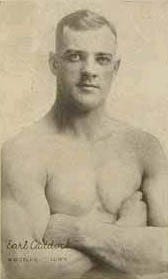
Earl Caddock 8-25-1950 at the age of 62
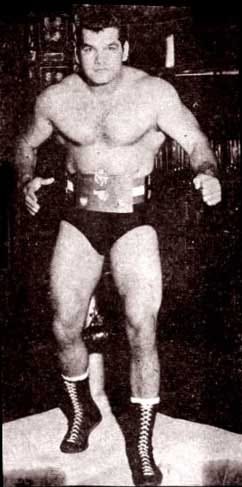
Pete Managoff 8-25-1966 at the age of 52

Maurice LaChappelle 8-25-1970 at the age of 60

Ramon Torres 8-25-2000 at the age of 68
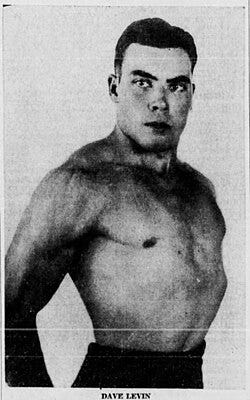
Dave Levin 8-25-2004 at the age of 91
Donna Christianello 8-25-2011 at the age of 69

7 Stages of the Territory Era
Stage 6: Fragmentation
August 1976
Annual NWA Member Convention
On August 7, 1976, the National Wrestling Alliance held its annual convention in Lake Tahoe, Nevada. The gathering marked a formal transition in leadership as Eddie Graham of Championship Wrestling from Florida was elected President of the Alliance. The election came at a moment when the territorial system still functioned with considerable strength yet was already showing the early stresses that would define Stage 6 Fragmentation. Graham’s elevation represented both continuity and a shift toward a younger generation of promoters who had risen through the ranks as active wrestlers.
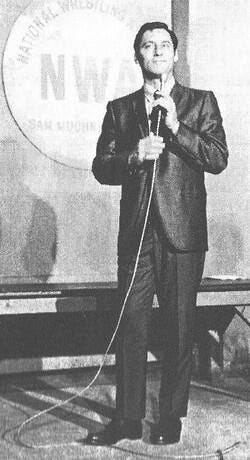
Pictured: Mike LeBell, Los Angeles Booking Office Representative, 1st Vice President
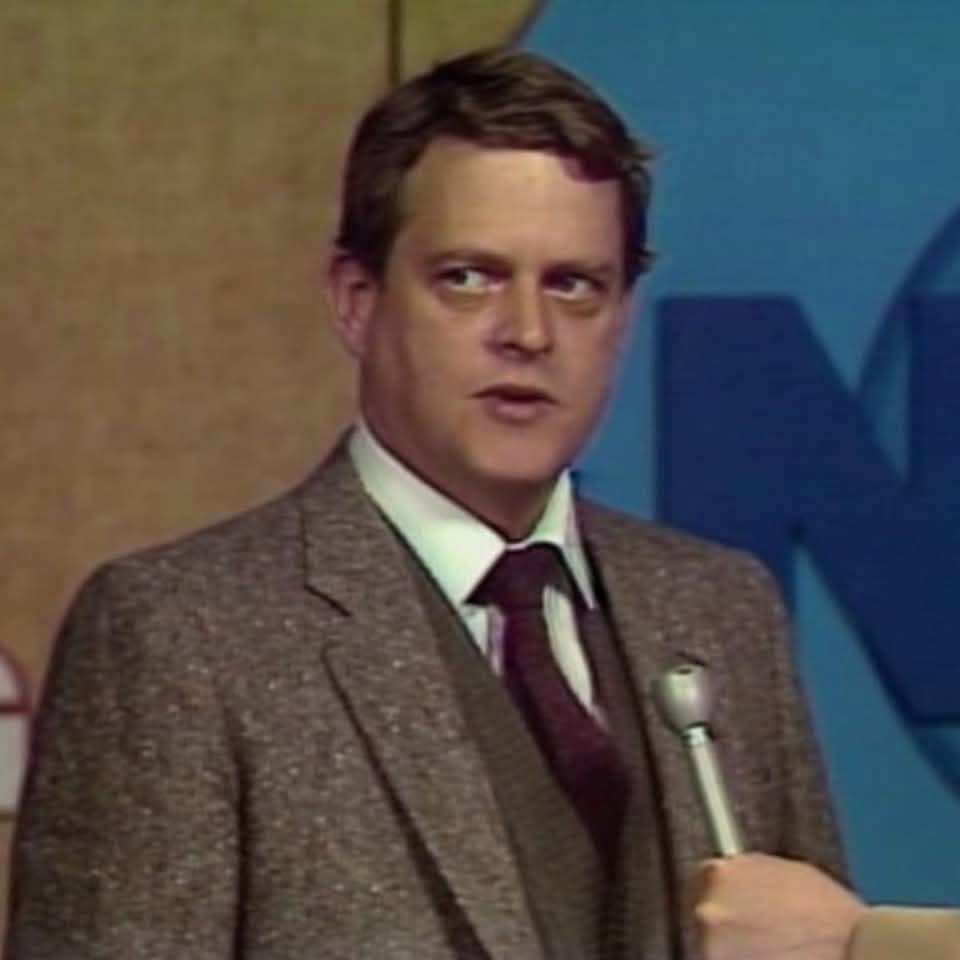
Pictured: Jim Crockett, Jr, Charlotte, North Carolina Booking Office Representative, 2nd Vice President

Jim Barnett, Atlanta, Georgia Booking Office Representative, Secretary & Treasurer
The slate of officers installed that day reflected the balance of power among the major offices. Mike LeBell of the Los Angeles territory was named First Vice President. Jim Crockett Jr. of Mid-Atlantic Championship Wrestling became Second Vice President. Jim Barnett, the powerful Atlanta-based promoter, was appointed Secretary and Treasurer by Graham himself. Sam Muchnick, the long-time St. Louis promoter who had guided the Alliance for the better part of two decades before stepping down in 1975, was named Advisor to the President. The membership roster at the time still encompassed the core American territories, Canadian offices, Mexican representation, and the Japanese promotions of All Japan and New Japan.
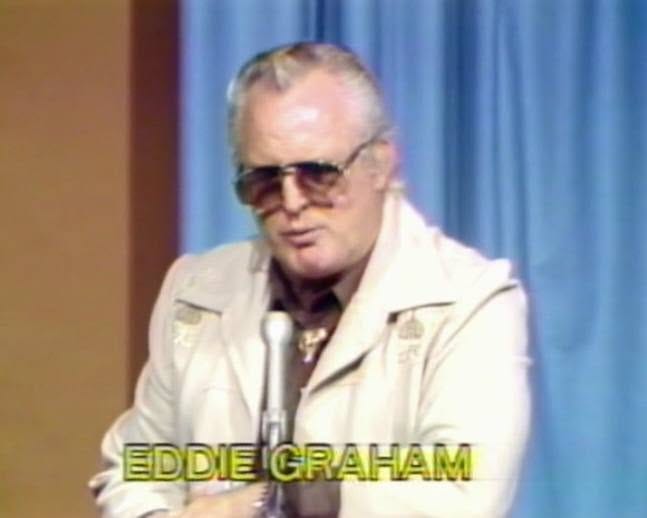
Pictured: Eddie Graham, Tampa, Florida Booking Office Representative, President-elect
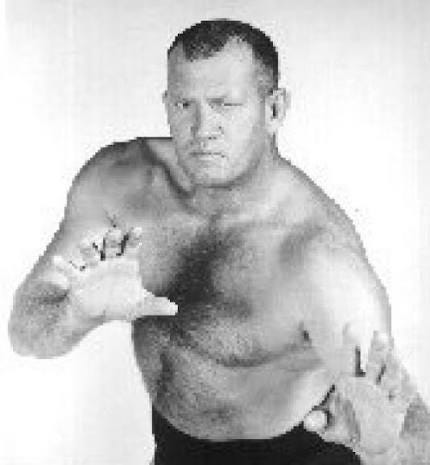
Pictured: Fritz Von Erich, Dallas, Texas Booking Office Representative, Outgoing President
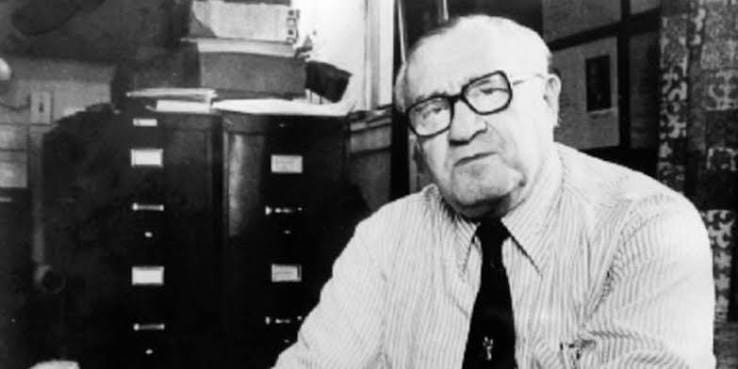
Pictured: Sam Muchnick, Special Advisor to the President
Graham succeeded Fritz Von Erich (Jack Adkisson), who had held the presidency for a single term after Muchnick’s long stewardship. The choice of Graham was widely viewed as a recognition of the consistent strength of the Florida territory under his direction. Championship Wrestling from Florida had become one of the most reliable and creatively respected offices in the Alliance during the first half of the 1970s, producing major stars, maintaining strong television with Gordon Solie, and generating solid houses across the state.
The World Heavyweight Championship at the 1976 Convention
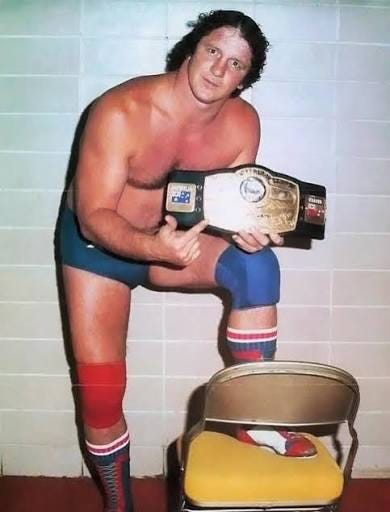
Pictured: NWA World Heavyweight Champion, Terry Funk
As part of the standard agenda, the Championship Committee and membership reviewed the status of the NWA World Heavyweight Championship. Terry Funk had been champion since December 10, 1975, when he defeated Jack Brisco in Miami Beach. By the time of the Lake Tahoe meeting he was approaching nine months into the reign and had already logged a heavy schedule of defenses across the United States, Canada, Japan, and other markets.
Available evidence indicates that both Funk and the NWA Committee were satisfied with his performance as champion at that point. Funk himself later wrote in More Than Hardcore that he had hoped to keep the title for a full two years. There is no record of dissatisfaction, formal complaints, or a decision at the August 1976 meeting to shorten the reign or begin planning an immediate change. Jim Barnett continued as the primary booker of the World title, and the championship remained on Funk without interruption through the remainder of 1976.
The actual title change did not occur until February 6, 1977, when Harley Race defeated Funk in Toronto. The intervening months saw Funk continue as a hard-working, traveling champion. The decision to move the belt therefore came later, after Funk had already exceeded the typical length of many previous reigns and after he had indicated to the Alliance (citing a knee issue while also motivated by personal considerations involving Vicki) that he was ready to step aside.
This context reframes the August 1976 meeting: it was not a moment of crisis or discontent regarding the championship. Instead, the Committee and membership appear to have viewed Funk’s reign as successful and ongoing, consistent with his own stated hope of carrying the title for two full years.
The NWA World Junior Heavyweight Championship
At the August 7, 1976 NWA convention in Lake Tahoe, the World Junior Heavyweight Championship was vacant.
Danny Hodge had regained the title for a record seventh time on March 2, 1976, defeating Hiro Matsuda in Shreveport. Only thirteen days later, on March 15, Hodge suffered a broken neck in an automobile accident and was forced to retire. He vacated the championship, and it remained empty through the spring and summer of 1976.
The Championship Committee and membership received the standard report on the status of the junior heavyweight division (along with the heavyweight and light-heavyweight titles). With the belt vacant, the practical outcome was that the Alliance left the process of filling it in the hands of the promoters who traditionally controlled the title—primarily Leroy McGuirk’s Tri-State office (Oklahoma/Louisiana/Arkansas territory). No new champion was crowned at the Lake Tahoe meeting itself, and there is no record of any major structural change, name alteration, or reallocation of booking rights for the junior title at that convention.
The vacancy was resolved about seven weeks later. On September 28, 1976, in Shreveport, Louisiana, a tournament final saw Pat Barrett defeat Nelson Royal to claim the vacant NWA World Junior Heavyweight Championship. Barrett’s reign was short (65 days); he lost the title to Ron Starr on December 2, and Starr in turn dropped it to Nelson Royal four days later on December 6. Royal then held it into 1977–78.
In short, the Board and Committee at the 1976 meeting simply acknowledged the ongoing vacancy created by Hodge’s retirement and allowed the traditional junior-title territory to organize a tournament to restore a champion. No dramatic intervention or new policy regarding the junior heavyweight title appears to have been enacted at Lake Tahoe.
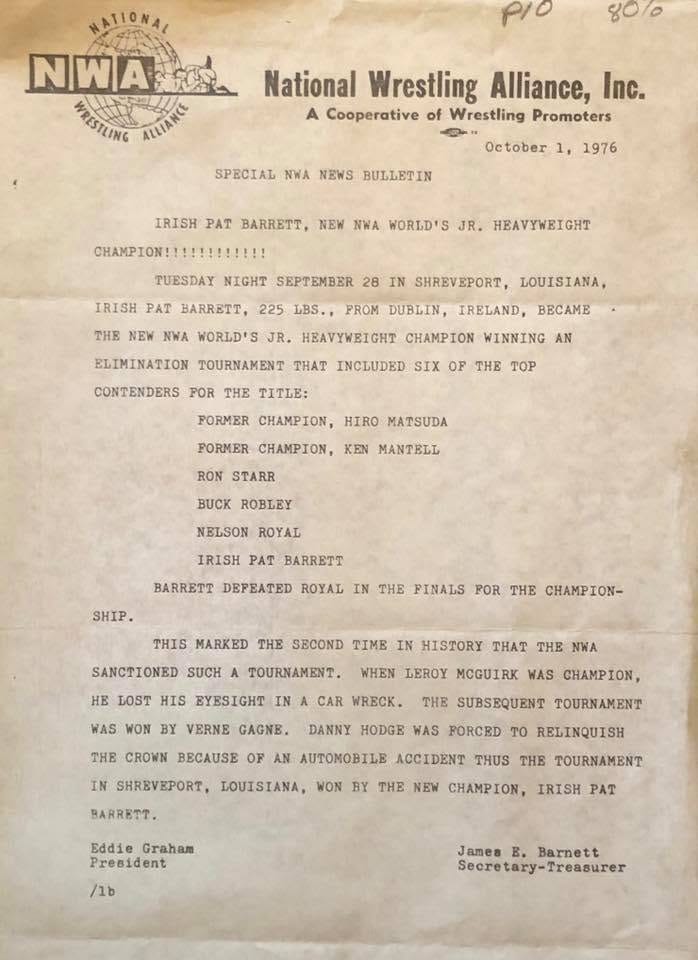
Pictured: Letter to NWA Membership from Eddie Graham announcing Pat Barrett as the new NWA World Junior Heavyweight Champion
Eddie Graham’s Path to the Presidency
Edward F. Gossett, known professionally as Eddie Graham, had built his reputation first as a wrestler and then as a promoter. After early years in Texas and a successful run in the Northeast as part of the Golden Graham brothers with Dr. Jerry Graham, he settled in Florida in 1960. He became the top babyface and multi-time champion in the territory before gradually shifting into ownership and booking, helping usher in the Jack Brisco babyface era in Florda by 1969..
By 1971 he had assumed primary control of Championship Wrestling from Florida following the retirement of longtime promoter Cowboy Luttrall. Under Graham the territory thrived, developing or elevating talent that included Dusty Rhodes, the Brisco Brothers, the Funks on frequent tours, and a deep supporting cast. Graham also trained a generation of performers and future bookers, among them his son Mike, Bob Orton Jr., Dick Slater, Bob Roop, Steve Keirn, Paul Orndorff, and a young Hulk Hogan.
His election in 1976 was supported by key figures within the Alliance, including Jim Barnett, Jim Crockett, Jr, Vince McMahon, Sr, and Sam Muchnick himself. Graham was seen as a practical, detail-oriented operator who understood both the wrestling and business sides of the industry. As President he was expected to help coordinate the movement of the NWA World Heavyweight Championship—then held by Terry Funk—and to maintain the cooperative framework that allowed member promotions to exchange talent and protect their geographic territories.
Health Issues: Origins and Escalation
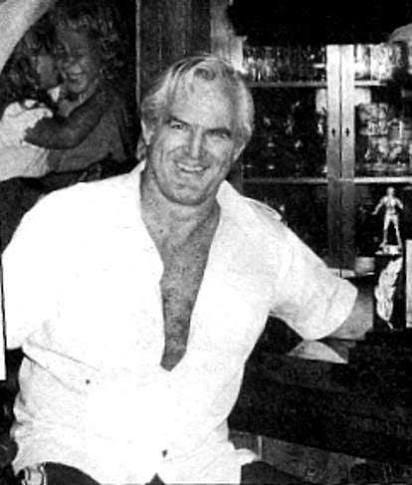
Graham’s physical and mental health problems had deep roots. In 1968 a freak accident in the locker room at the Fort Homer Hesterly Armory in Tampa nearly ended his career. A heavy steel window fell on his head while he was preparing for a match. Already blind in one eye, he suffered torn retinas in both eyes, extensive facial lacerations requiring hundreds of stitches, and significant trauma. He was sidelined for approximately fifteen months. The injury left lasting effects and marked the beginning of a long decline in his ability to perform consistently in the ring.
By the mid-1970s Graham had scaled back his in-ring schedule. He continued to appear in tag matches with his son Mike and occasional singles bouts, but health concerns limited his activity. Sources indicate he formally stepped away from regular competition around 1977 because of these issues, though he made limited returns afterward, including matches as late as 1982.
The problems intensified during his presidency. Graham was largely absent from active leadership duties in 1977 and 1978 due to serious health difficulties. In April 1978 he stepped down from the presidency; First Vice President Bob Geigel assumed the role on an interim basis and was later formally elected. The precise medical nature of the 1977–78 decline is not fully detailed in records, but it combined lingering effects of the 1968 head trauma with emerging struggles against depression and alcoholism—conditions that would worsen over the subsequent years.
Alcoholism and depression became central features of Graham’s later life. Financial pressures from real-estate investments that soured added to the burden. By the early 1980s these issues were severe. On January 20, 1985, Graham shot himself at his Tampa home. He died the following day at age 55. The tragedy closed a career that had spanned nearly four decades and left a complicated legacy that extended into subsequent generations of his family.
Graham’s Effect on the NWA
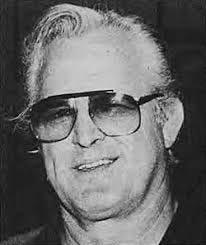
As President, Graham’s tenure was relatively short and interrupted by illness, yet it occurred at a pivotal transitional moment. He helped maintain the formal structures of the Alliance while the larger promotions—particularly the WWWF under Vince McMahon Sr. and the AWA under Verne Gagne—operated with increasing independence. One notable initiative associated with his presidency was the promotion of the first NWA versus WWWF World Championship match in 1978, pitting NWA World Champion Harley Race against WWWF Champion Superstar Billy Graham. The bout, while not a true unification, represented an attempt to create crossover interest between the two major American titles during a period when such collaborations were still rare.
More enduring was Graham’s influence as a territory operator. Championship Wrestling from Florida under his guidance exemplified many of the strengths of the mature territorial model: strong local television, logical long-term storytelling, effective talent development, and consistent house-show business. The Florida office served as a finishing school and a proving ground for performers who later became national stars. Graham’s booking philosophy emphasized clear character work, credible violence, and the careful mentoring of bookers, such as Bill Watts in 1973 and 1974 and the building of local heroes, most notably the transformation of Dusty Rhodes into the American Dream in 1974.
Within the broader NWA structure, Graham’s election signaled a shift toward promoters who had recent in-ring experience and who operated successful mid-sized territories rather than the older generation of office-based administrators. His short active presidency limited the scope of structural reforms he might have pursued, yet the respect he commanded helped stabilize the Alliance during the mid-to-late 1970s. When health forced his resignation, the transition to Bob Geigel and later Jim Crockett Jr. continued the pattern of rotating leadership among the stronger territorial offices.
Eddie Graham’s story is inseparable from both the peak and the emerging fractures of the territorial system. The 1976 Lake Tahoe convention elevated a capable operator at a moment when the Alliance still held considerable cohesion. The World title remained in capable hands under Terry Funk, with both champion and Committee expressing satisfaction and with Funk himself hoping for a full two-year reign. The health problems that had begun with a severe 1968 injury and escalated through the later 1970s forced an early end to Graham’s national leadership role and ultimately contributed to the personal tragedy of 1985. His lasting contribution remains the Florida territory he built and the generation of talent and booking minds shaped under his influence—an impact that outlived both his presidency and the classic territorial era itself.
Thank You for Watching and Listening
I’m Tony Richards, Pro Wrestling Historian, Author and Storyteller. I share pro wrestling historical items in each issue of the Time Tunnel Pro Wrestling History Newsletter and each episode of our podcast show. Thanks for your support! If you enjoy my information on select events, matches and insights, please share with folks you think might like to be a subscriber!
Remember, Premium subscribers get access to exclusive and special content such as some special issues including a multi-part deep dives on wrestling territories, wrestler bios and championship title histories, special audio and video interviews on territory pro wrestling and more available in the Pro Wrestling Time Tunnel for Premium Subscribers. Being a Premium Subscriber also means you support me in my efforts to document Pro Wrestling History through my research, writing, books, vidoes and podcasts. And…I have something very special planned for our Premium Subscribers on the Podcast side of things in 2026! Details soon here in the Pro Wrestling Time Tunnel.
Good job!