


Today’s Favorite Quote: People say you are going the wrong way when it’s simply a way of your own - Angelina Jolie
Happy Birthday to those who have passed on and to those great wrestlers still with us:
In Memoriam:
(none)
Happy Birthday:
(none)
RIP Memorial: We stop & remember those who have passed on this day and gave themselves to the business for us, the fans. We salute you and thank you.
Mars Bennett 8-23-1957 at the age of 35

Terry Funk 8-23-2023 at the age of 78
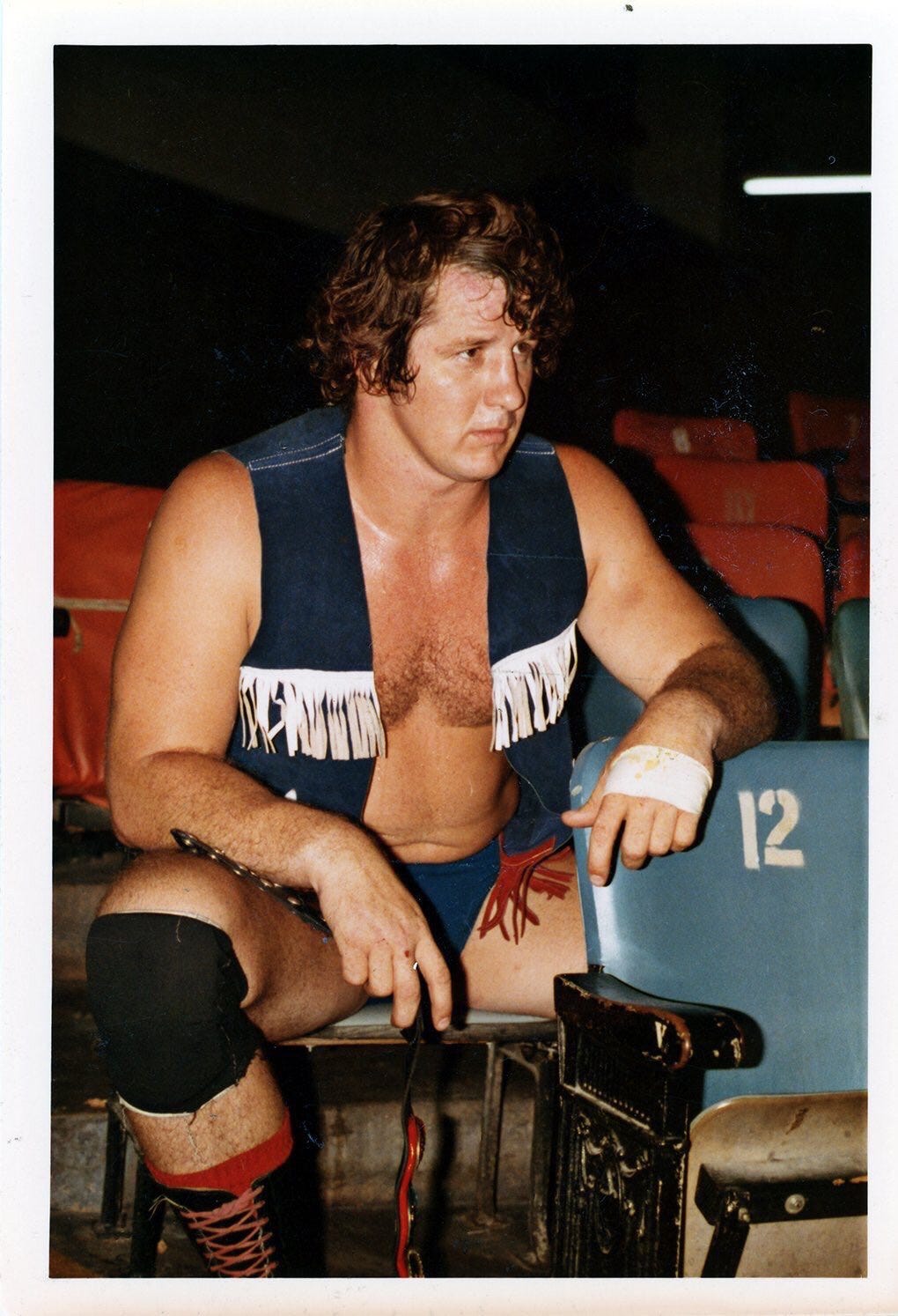
Flashback 1976
Q3 Analysis
July-September
Mid-Atlantic Championship Wrestling
Jim Crockett Promotions
Charlotte, North Carolina Office
This quarter sits squarely in Stage 6 of the Territory Era (Fragmentation, 1975–1985). Jim Crockett Promotions was still a pure regional powerhouse centered on the Carolinas and Virginia, with strong weekly television from the WRAL studios in Raleigh (Bob Caudle and David Crockett on the call), consistent house-show circuits, and a roster deep enough to sustain multiple simultaneous main-event programs. The bicentennial summer of 1976 delivered peak territorial heat: long-running feuds reached boiling points, title belts changed hands in dramatic fashion, and key roster transitions set the stage for the next wave of stars.
July 1976
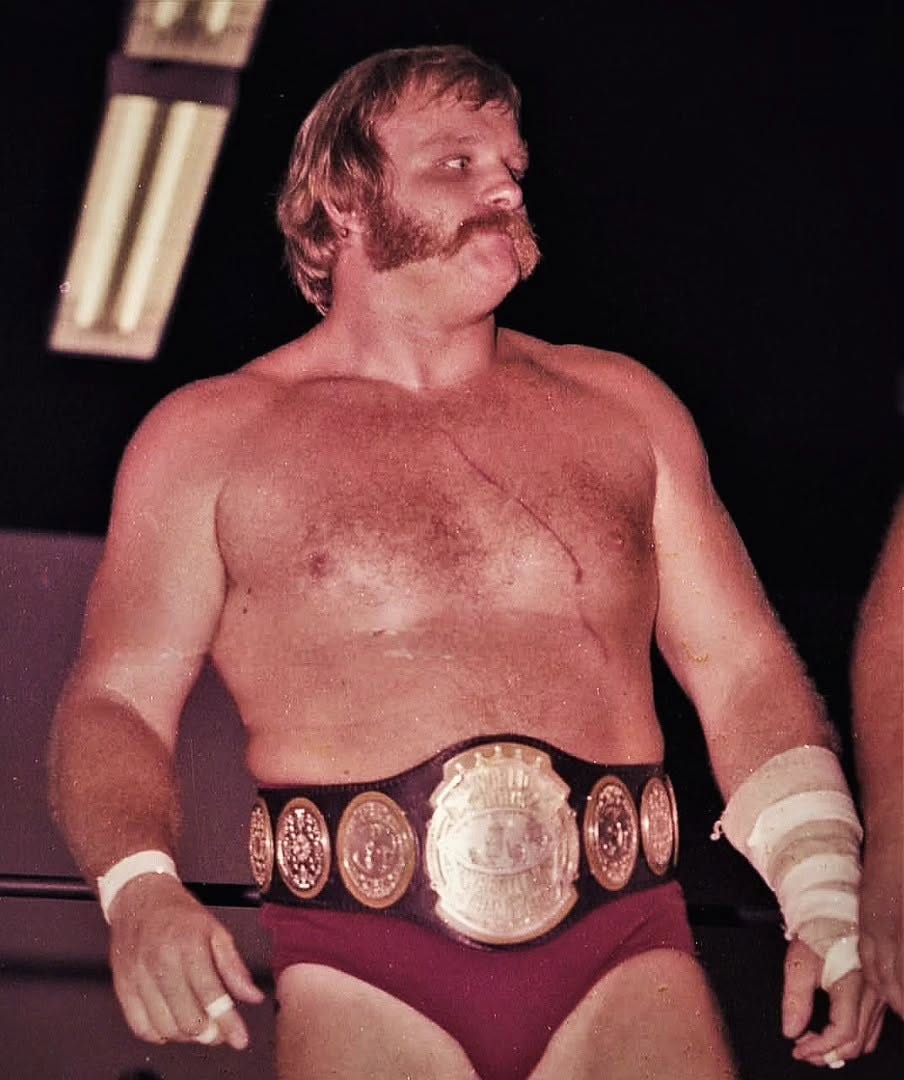
Pictured: Ole Anderson NWA World Tag Team Champion with casted arm
July was defined by two dominant storylines and high-profile visitors.
The NWA World Tag Team Championship program between Gene and Ole Anderson (the Minnesota Wrecking Crew) and the former champions Dino Bravo and “Mr. Wrestling” Tim Woods hit its peak. The Andersons had regained the titles on June 28 in Greenville. Throughout July the matches remained extremely close; Ole’s casted arm repeatedly became the deciding factor that allowed the Andersons to retain. These bouts were physical, roughhouse affairs that drew strong heat across the territory.
Simultaneously, the personal war between Mid-Atlantic Heavyweight Champion Ric Flair and Wahoo McDaniel intensified. Flair had taken the title from Wahoo in the infamous May 24 Charlotte “table leg” match (Wahoo required dozens of stitches). By late July the two were colliding in fence matches that generated major gates. Flair held on, but Wahoo was closing the gap.
Blackjack Mulligan continued his dominant reign as United States Heavyweight Champion, moving from Paul Jones to Rufus R. “Freight Train” Jones as primary challenger. Mulligan handled the competition with relative ease and extended his already lengthy title run.
Notable visitors included Andre the Giant, who worked a short swing against Mulligan and served as special referee in U.S. Title matches. Olympic wrestler Chris Taylor also appeared briefly, primarily against Jerry “Crusher” Blackwell in “Battle of the 400 Pounders” matches before departing after a television appearance. Young talent such as Randy and Lanny Poffo (with father Angelo) began appearing on the undercard.
No titles changed hands in July, which was unusual for the territory, but the intensity of the existing programs more than compensated.
August 1976 – “The Month of the Casts”
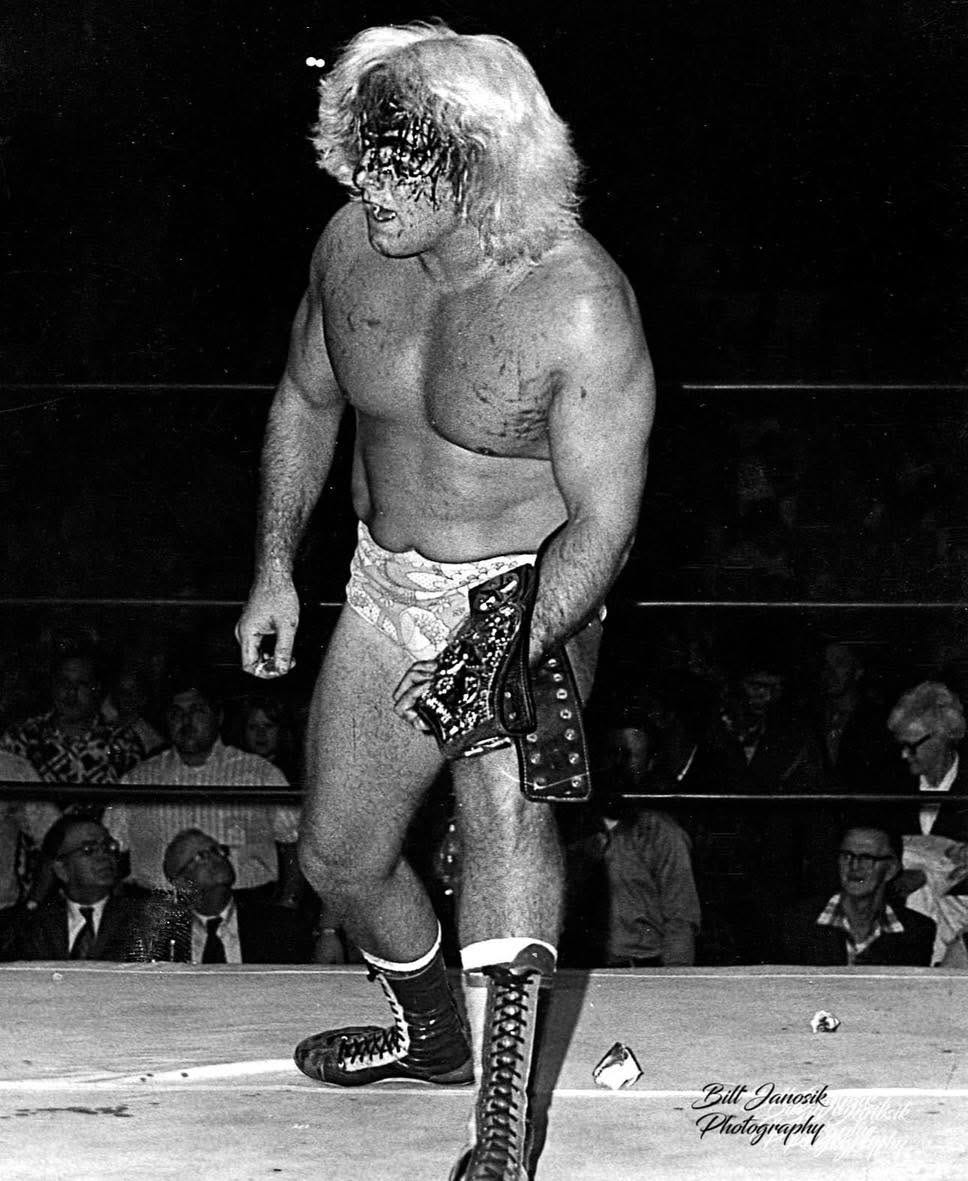
Pictured: Ric Flair NWA Mid-Atlantic Heavyweight Champion after a bloody match with Wahoo McDaniel
August became defined by weapons of opportunity—specifically casts.
Ole Anderson continued using his cast as a weapon against Bravo, Woods, and eventually Wahoo McDaniel. The Andersons successfully defended the World Tag Titles throughout the month, with the cast again proving decisive. Ole’s interference as a lumberjack in a Flair–Wahoo match further escalated tensions, leading to a series of Indian Strap Matches between Ole and Wahoo in which both men wore casts. Wahoo generally came out on top in those encounters.
The only title change of the month occurred on the August 11 television taping in Raleigh (aired August 14). Angelo “Big Nasty” Mosca, with help from Blackjack Mulligan, defeated Paul Jones to capture the Mid-Atlantic Television Championship. Jones suffered a broken jaw in the process. The following night Mulligan broke Jones’s hand in a separate match. Jones returned wearing a cast of his own and used it as a weapon in rematches against Mosca, but Mosca retained the TV title through the end of the month.
Flair continued to hold the Mid-Atlantic Heavyweight Title against Wahoo, though the challenger was getting closer. The overall product remained solid—strong television angles, consistent house-show business, and multiple heated programs running concurrently—but September would eclipse it in terms of long-term impact.
September 1976

Pictured: Wahoo McDaniel NWA Mid-Atlantic Heavyweight Champion
September proved the most consequential month of the year to date for Jim Crockett Promotions.
The central story reached its climax on September 11 in Greenville, South Carolina. In a steel cage / fence match, Wahoo McDaniel defeated Ric Flair to regain the Mid-Atlantic Heavyweight Championship. This was the payoff to a summer-long chase rooted in the May Charlotte table-leg incident. Flair immediately vowed the feud was not over, setting up further title exchanges later in the year.
Wahoo was also heavily involved with Professor Boris Malenko and the Mongols. After a television confrontation in which Malenko claimed Wahoo had broken his teeth, a series of Loser Leaves Town and Hair vs. Hair matches followed. Wahoo defeated Bolo Mongol, shaved only the top-knot of his hair, and forced him out of the territory. Geto Mongol had already departed. On the September 29 television program, Malenko introduced a new masked mystery man: the Masked Superstar (Bill Eadie, freshly rebranded from Bolo Mongol). The Superstar was hyped as an Olympic gold medalist and dual-doctor (psychology and neurology) with a devastating clothesline and cobra clutch.
Another major arrival occurred late in the month when Greg “The Hammer” Valentine (promoted as the “brother” of Johnny Valentine). debuted. He immediately began teaming with Flair.
The biggest structural change came when Gene and Ole Anderson left the territory in late September, taking the NWA World Tag Team Titles with them to Georgia Championship Wrestling. Ole had lost a series of Indian Strap Matches to Wahoo and then Loser Leaves Town matches to Rufus R. Jones, signaling the end of their regular Mid-Atlantic run (they would not return as full-time regulars until 1981). With the World Tag Titles gone, Crockett reactivated the dormant Mid-Atlantic Tag Team Championship and announced a tournament on the September 25 television show to crown new champions. The tournament would run into early November.
Overall Business Analysis and Context for Q3 1976
Jim Crockett Promotions operated from a position of genuine strength in the third quarter of 1976. The core cities—Charlotte, Greensboro, Raleigh, Greenville, Columbia, Richmond, Roanoke, and others—continued to deliver reliable houses. Television remained the engine that drove the live events, with clear, consistent storytelling that rewarded weekly viewers.
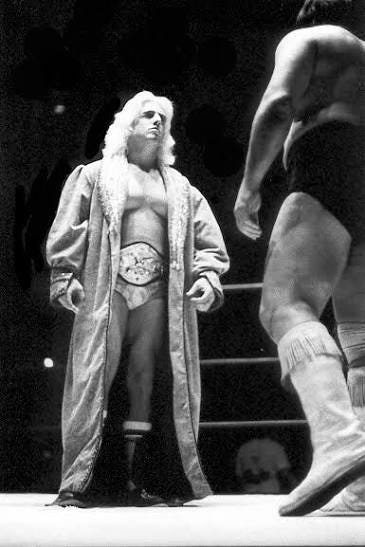
The Flair–Wahoo program was the emotional and commercial centerpiece of the summer. Their series of increasingly violent matches (fence matches, lumberjack matches, and the decisive Greenville cage match) represented peak territorial booking: personal heat, physicality, and a logical progression that paid off with a title change. Blackjack Mulligan’s lengthy United States Title reign provided stability at the top of the card, while the Andersons’ World Tag Title defenses (until their departure) gave the territory a legitimate “world” championship presence.
Roster management was shrewd. The promotion successfully transitioned out of the Anderson era and immediately introduced two future main-event pieces—Greg Valentine and the Masked Superstar—while elevating existing talent such as Dino Bravo and Tim Woods. The reactivation of the Mid-Atlantic Tag Titles created fresh opportunities and prevented a vacuum after the Andersons left with the World belts.
From a broader Territory Era perspective, Q3 1976 illustrates Stage 6 Fragmentation in healthy form, early on in the growth stage. The Mid-Atlantic office was still self-contained and profitable, yet the movement of the Andersons (and the titles) to Georgia hinted at the increasing talent and championship fluidity that would accelerate in later years. Crockett’s ability to absorb the loss of its top tag team and immediately generate new angles demonstrated the depth and flexibility that made the territory one of the strongest in the NWA during this period.
In short, July built intensity, August weaponized the storytelling with the cast angles, and September delivered major title changes, high-profile arrivals, and a clean roster reset. The foundation laid in these three months directly fueled the strong fourth quarter of 1976 and the continued rise of Flair, Wahoo, Valentine, and the Masked Superstar as the decade progressed.
Thank You for Watching and Listening
I’m Tony Richards, Pro Wrestling Historian, Author and Storyteller. I share pro wrestling historical items in each issue of the Time Tunnel Pro Wrestling History Newsletter and each episode of our podcast show. Thanks for your support! If you enjoy my information on select events, matches and insights, please share with folks you think might like to be a subscriber!
Remember, Premium subscribers get access to exclusive and special content such as some special issues including a multi-part deep dives on wrestling territories, wrestler bios and championship title histories, special audio and video interviews on territory pro wrestling and more available in the Pro Wrestling Time Tunnel for Premium Subscribers. Being a Premium Subscriber also means you support me in my efforts to document Pro Wrestling History through my research, writing, books, vidoes and podcasts. And…I have something very special planned for our Premium Subscribers on the Podcast side of things in 2026! Details soon here in the Pro Wrestling Time Tunnel.