



Today’s Favorite Quote: The best way to escape a problem is to solve it - Anonymous
Happy Birthday to those who have passed on and to those great wrestlers still with us:
In Memoriam:
Sam Muchnick 1905
Pat O’Connor 1924
Dean Peters\Brady Boone 1958
Happy Birthday:
Paul Ellering (73)
Stevie Ray (68)
Jimmy Uso (41)
Jey Uso (41)
Apollo Crews (39)
RIP Memorial: We stop & remember those who have passed on this day and gave themselves to the business for us, the fans. We salute you and thank you.
Bert Deuer\Original Leo Burke 8-22-1980 at the age of 69

Professor Toru Tanaka 8-22-2000 at the age of 70
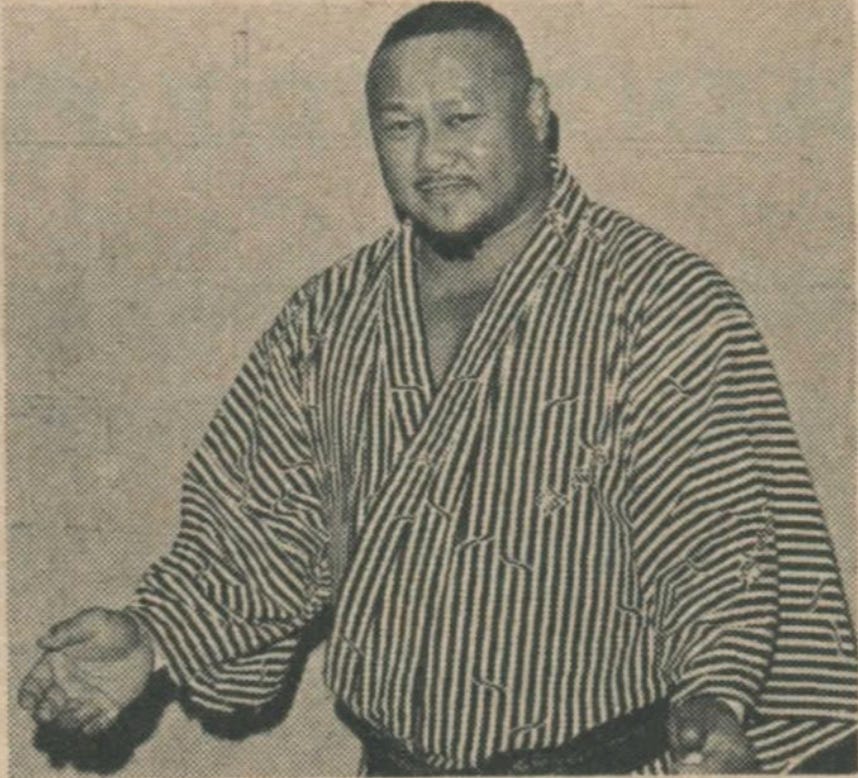
Duke Meyers 8-22-2015 at the age of ?
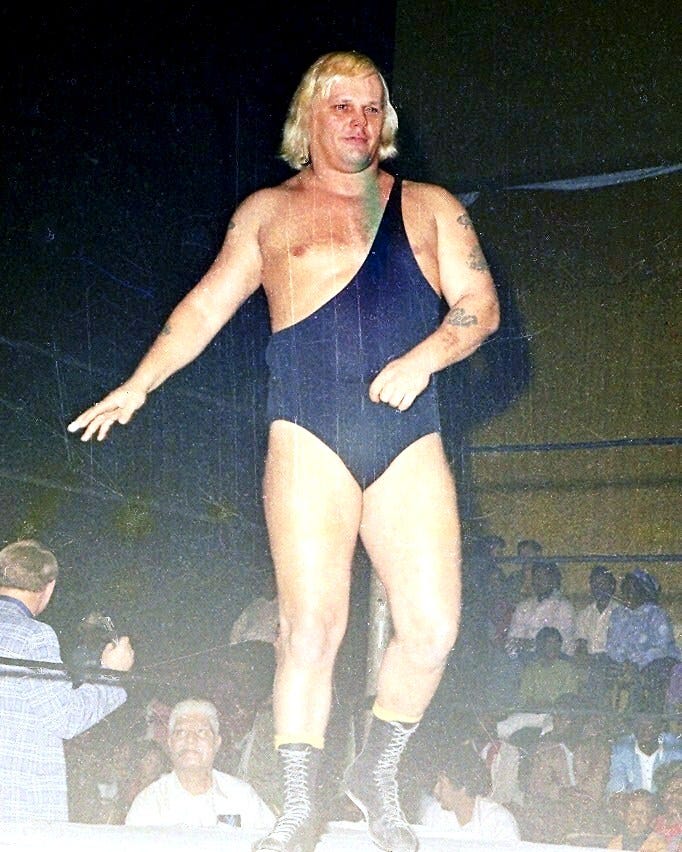
Chris Champion 8-22-2018 at the age of 57
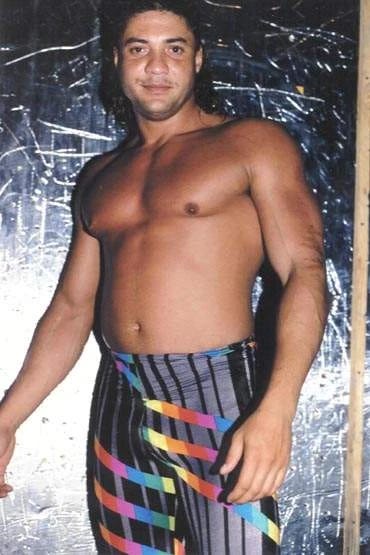
Norman Frederick Charles III 8-22-2019 at the age of 78

Abe Jacobs 8-22-2023 at the age of 95

The Life and Career of Irma Gonzalez
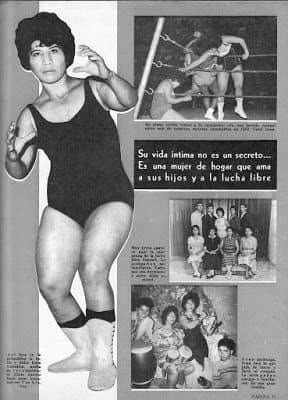
Irma Morales Muñoz, known throughout the world of professional wrestling as Irma González, stands as one of the foundational figures of women’s lucha libre in Mexico. Born on August 20, 1936, in Cuernavaca, Morelos, she built a career that spanned more than four decades, from the mid-1950s into the mid-1990s. In an era when women were actively discouraged, restricted, and at times formally barred from competing in the capital, González helped establish the legitimacy, technical credibility, and drawing power of Mexican luchadoras. She captured the Mexican National Women’s Championship five times, the UWA World Women’s Championship twice, additional world titles recognized in the United States and Indonesia, and, with her daughter, became the inaugural Mexican National Women’s Tag Team Champion. In 2020, LuchaWorld named her the greatest female wrestler in the history of lucha libre. Her story is one of athletic transformation, personal resilience, and quiet defiance of the social and institutional barriers of her time.
From Circus Canvas to Wrestling Ring
González grew up in a large family connected to the traveling circus world. Her father’s circus operation took the family through towns in central and northern Mexico, including periods in Zacatecas. From a young age she trained as an acrobat, contortionist, and trapeze artist. That background gave her exceptional body control, balance, and aerial awareness that later translated directly into the ring. When the circus burned down, the family relocated to a working-class neighborhood in Mexico City and lived with her grandmother while her father sought work in the United States. The household was large—accounts mention twelve siblings—and resources were scarce.
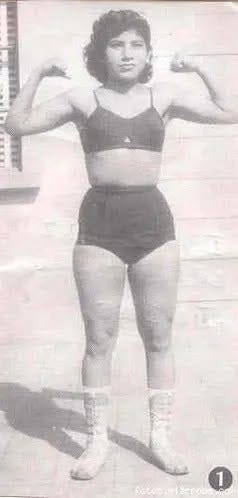
It was in this setting that a neighbor involved in wrestling approached the athletic teenager about filling in for a missing performer on a card in Puebla. González had no prior experience with professional wrestling and initially thought the invitation involved boxing. She went anyway, accompanied by her mother, and discovered that the physical demands felt familiar. The combination of circus athleticism and the competitive environment of the ring proved compelling. She began training seriously under a group of coaches that included Jorge Rojas, Tarzán López, Gory Guerrero, Raúl Romero, and the influential trainer Jack O’Brien in León, Guanajuato. Among her early training contemporaries were Chabela Romero, Rosita Williams, La Enfermera, and Magdalena Caballero (La Dama Enmascarada).
Her professional debut is generally dated to August 20, 1955—her nineteenth birthday—at the Cancha San Pedro in Puebla. Within months she had risen rapidly. On February 28, 1955 (records place the title change near the beginning of her recognized career), she defeated La Dama Enmascarada to become the second Mexican National Women’s Champion. That first reign lasted 489 days. She would go on to hold the title on four additional occasions across the next three decades, more than any other wrestler in its history.
Barriers and the Long Ban
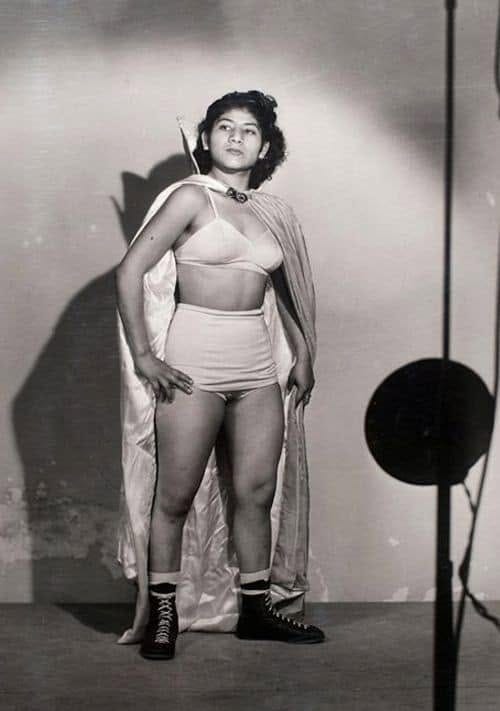
Women’s wrestling faced open hostility in Mexico City. In 1954, Regent Ernesto P. Uruchurtu imposed restrictions that effectively banned female matches within the Federal District on grounds of morality and public order. The prohibition lasted roughly three decades, until 1986. During those years, González and her peers worked the provinces, provincial arenas, and border towns. Male wrestlers often treated the women with open contempt—insults, practical jokes such as loading suitcases with rocks, and the repeated insistence that they belonged at home. González later recalled the constant pressure and the determination to prove that women could deliver technical, athletic, and dramatic matches rather than mere catfights.
The ban forced creativity and mobility. González became a regular on cards across northern and central Mexico and began developing the masked personas that allowed her to work under different identities when needed: Flor Negra, Rosa Blanca, La Tirana, La Dama del Enfermero, and La Enfermera. These characters gave her flexibility while she continued building her reputation as a reliable, high-work-rate performer.
La Novia del Santo and Personal Turning Points
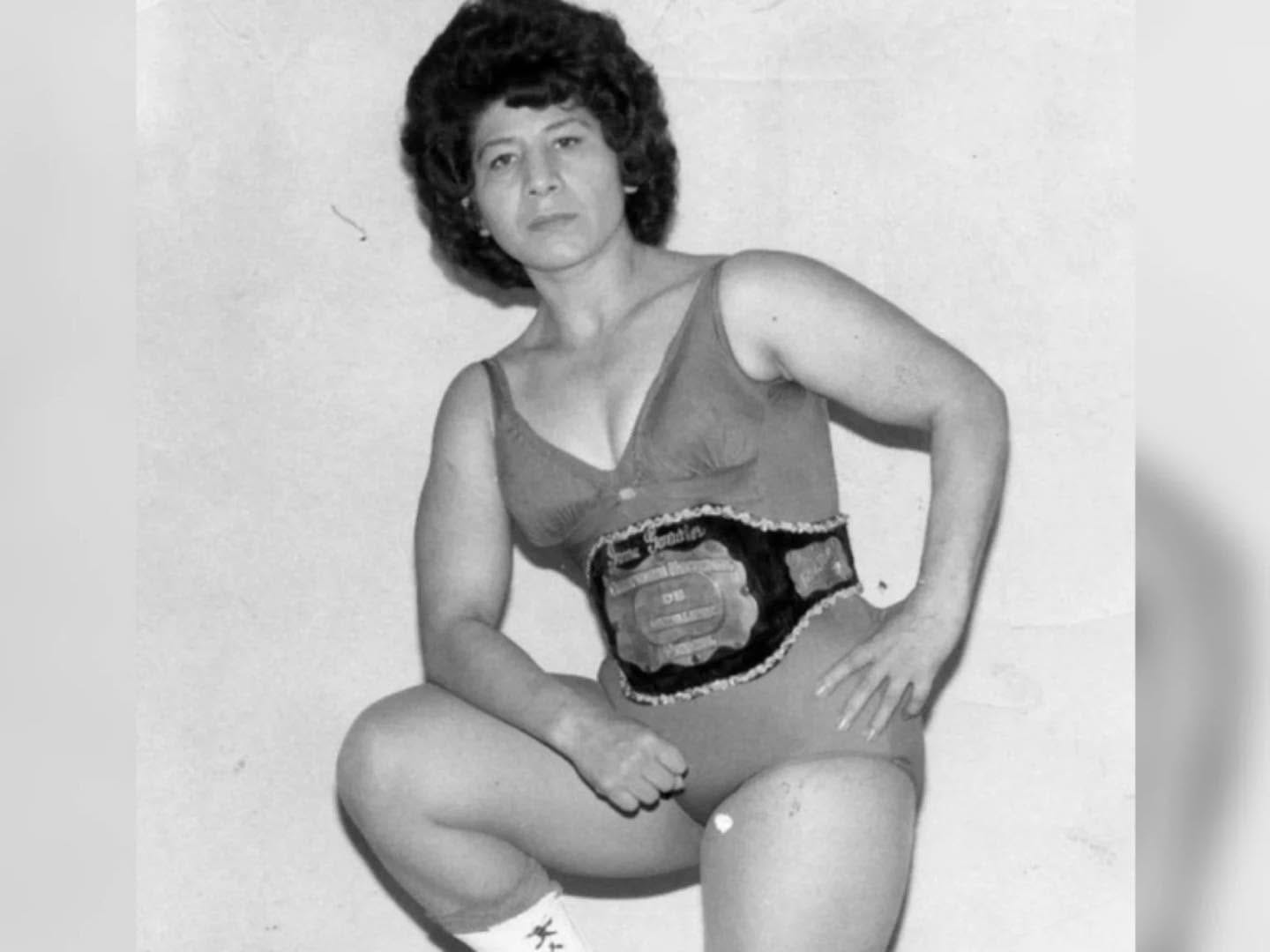
In the late 1950s or early 1960s, González became engaged to a man living in the United States who insisted she leave wrestling before marriage. With months remaining before the wedding, she chose neither full retirement nor open defiance. Instead she adopted a mask and, after obtaining permission from El Santo himself, worked as La Novia del Santo—the only non-family member ever authorized to use the Santo name and silver aesthetic in that fashion. The character was short-lived, lasting roughly seven months. Fans often recognized her by her distinctive movement and curly hair escaping the mask, but the device allowed her to continue competing while formally complying with her fiancé’s demand.
The marriage did not last. Shortly after the wedding she became pregnant; her husband left. In July 1957 she gave birth to a daughter, Irma Eugenia Aguilar Morales, known professionally as Irma Aguilar. As a single mother, González returned to the ring with renewed purpose. Wrestling became both vocation and livelihood. She bought a house, supported her family, and continued to travel extensively.
Rivalries, Titles, and International Reach
The defining rivalry of González’s mid-career was with Chabela Romero. The two met repeatedly in high-stakes luchas de apuestas. González defeated Romero in hair-versus-hair matches in Torreón (1971), Pachuca (1974), and Naucalpan (1979). She also collected other notable victories: the mask of La India in 1963, the hair of Charito Silva, Chela Salazar, Marina Rey, and Martha la Sarapera (twice), and the mask of La Mujer X. Early in her career she had been the first woman to force an opponent (La Dama Enmascarada) to unmask in a formal apuestas match in Mexico.
In the Universal Wrestling Association era she added world-title credibility. On May 25, 1980, she defeated American Vicki Williams for the UWA World Women’s Championship; she held it for 133 days before Williams regained it. She captured the title a second time on August 27, 1982, defeating Lola González, and held it for more than two hundred days. Additional recognized world titles from U.S. and Indonesian promotions further underlined her international standing. She toured Japan multiple times with All Japan Women’s Pro-Wrestling beginning in the mid-1970s, worked in the United States (including appearances in Texas promotions), and competed in Panama, Venezuela, and elsewhere. Her compact frame, low center of gravity, and aerial ability—rooted in circus training—made her effective in varied styles. Signature holds included the Gori Special and Romero Special; she was also known for a hard-hitting senton and technical control.
Outside the ring she recorded music, releasing material that included the singles “La Campeona” and “Puro Mandilón” and an album oriented toward her wrestling audience. She appeared in lucha libre films of the 1960s and 1970s, including Las luchadoras contra el médico asesino and Las luchadoras contra la momia.
Las Irmas: Mother and Daughter
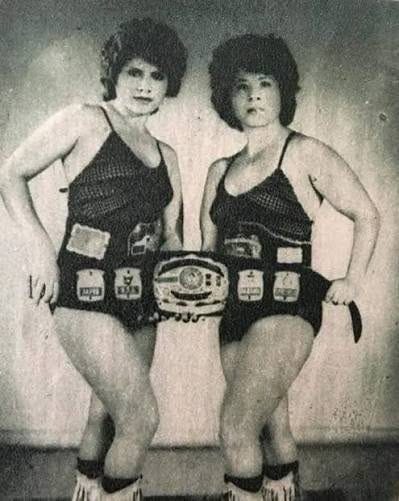
Irma Aguilar debuted in the mid-1970s and eventually became her mother’s most important tag-team partner. Billed as Las Irmas, the pair worked together for roughly a quarter-century. Aguilar brought height and a complementary style to González’s compact power. In August 1990 they became the first holders of the Mexican National Women’s Tag Team Championship, defeating Neftali and Satanakia in a tournament final. Their reign lasted 497 days. The mother-daughter team headlined cards, challenged for titles in Japan, and symbolized continuity across generations of Mexican women’s wrestling.
When the Mexico City ban finally lifted in 1986, González and Aguilar were among the central figures who returned women’s matches to major arenas, including early high-profile cards at the Toreo de Cuatro Caminos and later appearances associated with Arena México.
The Music Career
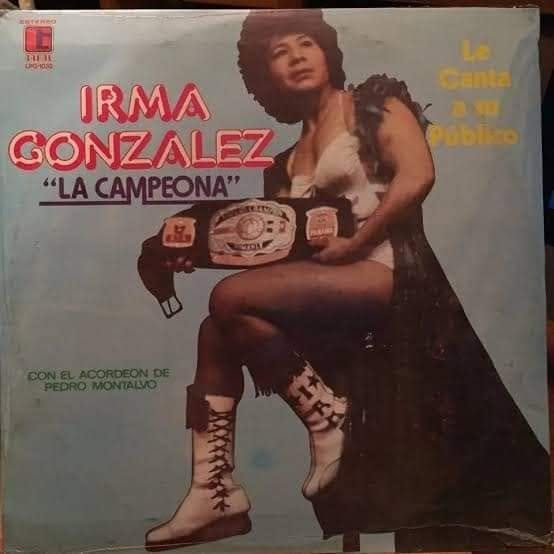
It was a brief but colorful side venture that took place primarily in 1982, during the later peak of her wrestling career. It was never a full parallel profession, but it produced a small body of recorded work that fans still associate with her and that she has continued to perform informally decades later.
In 1982 she released material on the Mexican label Discos Gabal (sometimes listed simply as Gabal). The known commercial output consists of:
• One album: Le canta a su público (1982). It is frequently linked to or credited under the billing “Irma Gonzalez ‘La Campeona’ con el acordeón de Pedro Montalvo.” The “La Campeona” moniker directly referenced her wrestling persona and championship status.
• A single: “Puro Mandilón” / “Salgo Ganando” (1982).
“Puro Mandilón” (also referred to as “El Mandilón”) is by far the best-known track. It is a humorous, sharp-tongued song in a popular Mexican style (ranchera or norteño-leaning with accordion). The lyrics mock a man who abandons her, labeling him a “mandilón”—Mexican slang for a weak, henpecked, or cowardly man. Surviving fragments that González herself has sung in interviews capture the tone:
The song’s mix of personal disappointment and defiant humor fits the resilient public image she projected both in and out of the ring. “Salgo Ganando” and other material on the album appear to follow a similar popular, accessible style aimed at her existing wrestling audience rather than a crossover pop market.
González is credited as both composer and interpreter. Sources describe her voice as strong and characterful rather than classically trained. She has spoken of performing mariachi-style material in Plaza Garibaldi and of writing songs dedicated to the Virgin of Guadalupe, though these seem to have been more informal or local performances rather than additional commercial releases.
The music project was short-lived. After the 1982 recordings she returned her primary focus to wrestling (still competing into the mid-1990s) and later to training younger luchadoras. There is no evidence of further studio albums or sustained promotional activity as a recording artist.
Later Performances
Even in advanced age, González has continued to sing “Puro Mandilón” and other songs from her repertoire when the opportunity arises. She performed it during interviews and promotional appearances around her 2023 CMLL Homenaje a Dos Leyendas tribute (the first time CMLL formally honored a female wrestler in that major annual event). Video clips from that period show her singing the song with clear enjoyment and the same spirited delivery that characterized her ring work.
González’s music career is a footnote compared with her pioneering role in women’s lucha libre, but it is a revealing one. It demonstrates the same independence, sense of humor, and willingness to step outside expected roles that defined her wrestling life. At a time when she was already a multi-time national and world champion and a single mother supporting her family through the ring, she took the extra step of recording under her own name and champion persona. The songs remain a personal expression rather than a major commercial success, yet they form a genuine part of her legacy that she still claims with pride.
Final Years and Recognition
González continued competing into her late fifties. On June 10, 1995, at age 59, she appeared on the undercard of AAA’s Triplemanía III-A. Her last confirmed match took place on April 13, 1996, for Promo Azteca in Mexico City, teaming with her daughter against La Chola and La Rebelde. Accumulated knee injuries, including the eventual need for a prosthesis, led to her retirement from full-time competition, though she maintained that she never fully left the sport and continued training younger wrestlers.
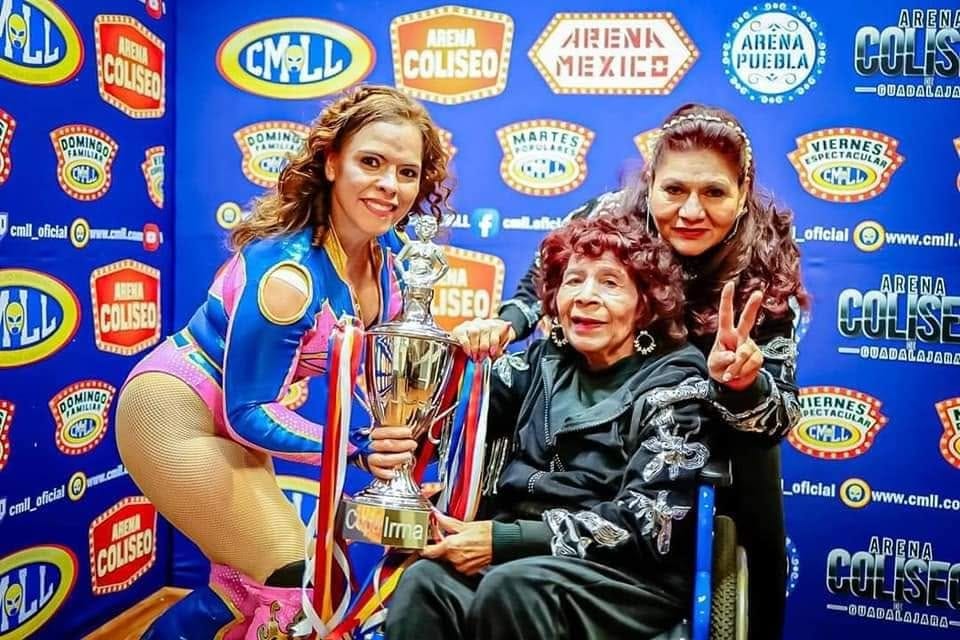
In later years official recognition caught up with her contributions. In 2020 she received formal acknowledgments for sporting merit from Mexican governmental and professional bodies. In March 2023 the Consejo Mundial de Lucha Libre honored her at Homenaje a Dos Leyendas and instituted the annual Copa Irma González, a women’s cibernético tournament that has continued in subsequent years. She remains, into her late eighties, a living link to the first generation of Mexican luchadoras.
Legacy
Irma González did not merely participate in women’s lucha libre; she helped create the conditions under which it could survive and eventually flourish. She proved that Mexican women could deliver sustained technical performances, draw audiences, travel internationally, and pass the craft to the next generation. She navigated a formal ban in the capital, open sexism within the locker room culture of her era, single motherhood, and the physical toll of a long career without losing the core athletic identity forged in the circus. Through multiple championship reigns, high-stakes apuestas victories, international tours, and the pioneering mother-daughter partnership of Las Irmas, she established a standard of professionalism and resilience that later generations of luchadoras continue to reference.
Her career bridges the experimental, often marginalized women’s matches of the 1950s and the more structured, respected women’s divisions of the modern era. In the history of Mexican professional wrestling, few figures embody both the struggle for recognition and the eventual triumph of sustained excellence as completely as Irma González.
One Thing I Learned About Precious Paul Ellering
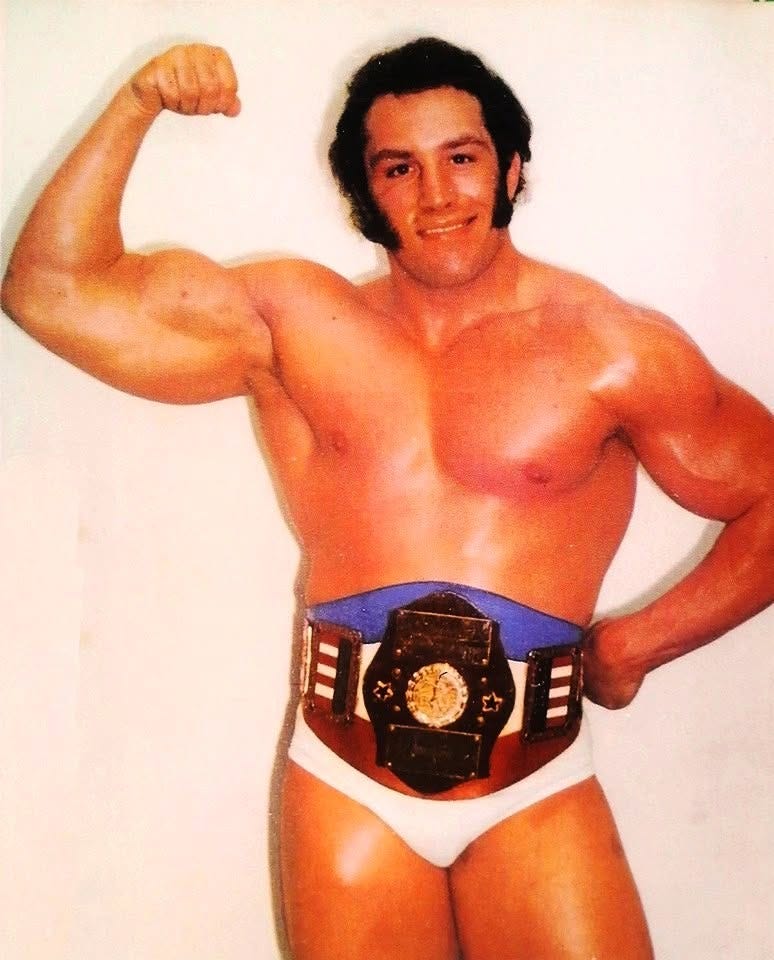
The famous “Precious” nickname had nothing to do with his appearance or wrestling persona’s flashiness. It came from his real-life interest in investing in precious metals and the stock market.
He was an active investor who followed the markets closely, and his on-screen character reflected that by often carrying a rolled-up Wall Street Journal to the ring. The moniker stuck and became one of the most recognizable manager nicknames in wrestling history.

Thank You for Watching and Listening
I’m Tony Richards, Pro Wrestling Historian, Author and Storyteller. I share pro wrestling historical items in each issue of the Time Tunnel Pro Wrestling History Newsletter and each episode of our podcast show. Thanks for your support! If you enjoy my information on select events, matches and insights, please share with folks you think might like to be a subscriber!
Remember, Premium subscribers get access to exclusive and special content such as some special issues including a multi-part deep dives on wrestling territories, wrestler bios and championship title histories, special audio and video interviews on territory pro wrestling and more available in the Pro Wrestling Time Tunnel for Premium Subscribers. Being a Premium Subscriber also means you support me in my efforts to document Pro Wrestling History through my research, writing, books, vidoes and podcasts. And…I have something very special planned for our Premium Subscribers on the Podcast side of things in 2026! Details soon here in the Pro Wrestling Time Tunnel.